Anti-adhesion balloons
US20050163748A1
2005-07-28
11/041,647
2005-01-24
Abstract:
An anti-adhesion device in the form of a fillable balloon having a wall structure permits suturing or other attachment of the balloon to surrounding tissues. The balloon may be filled with a gas, liquid, or gel, and may be constructed of a resorbable material. The balloon may contain one or more growth factors and one or more antibodies to the growth factors may also be provided. Cytokines may be incorporated into the wall structure. The associated surgical procedure includes suturing or otherwise attaching the balloon between healing tissues and surrounding tissues. The healing tissues may include the vagina and the surrounding tissues include the small intestines, the great vessels and the spine following anterior spinal surgery, or any other appropriate location(s). The balloon may be placed immediately after an open surgical procedure or, alternatively, through smaller incisions as part of a minimally invasive procedure. Thus, the balloon may be filled prior to introduction or following placement. In the preferred embodiment the balloon ruptures and resorbs after the surgically treated tissues are partly or completely healed.
Interested in similar patents?
Get notified when new applications in this technology area are published.
Classification:
A61L31/148 » CPC further
Materials for other surgical articles, e.g. stents, stent-grafts, shunts, surgical drapes, guide wires, materials for adhesion prevention, occluding devices, surgical gloves, tissue fixation devices; Materials characterised by their function or physical properties, e.g. injectable or lubricating compositions, shape-memory materials, surface modified materials Materials at least partially resorbable by the body
A61L31/16 » CPC further
Materials for other surgical articles, e.g. stents, stent-grafts, shunts, surgical drapes, guide wires, materials for adhesion prevention, occluding devices, surgical gloves, tissue fixation devices; Materials characterised by their function or physical properties, e.g. injectable or lubricating compositions, shape-memory materials, surface modified materials Biologically active materials, e.g. therapeutic substances
A61B17/42 » CPC further
Surgical instruments, devices or methods, e.g. tourniquets Gynaecological or obstetrical instruments or methods
A61B2090/0816 » CPC further
Instruments, implements or accessories specially adapted for surgery or diagnosis and not covered by any of the groups - , e.g. for luxation treatment or for protecting wound edges; Accessories or related features not otherwise provided for; Implantable devices for insertion in between organs or other soft tissues for preventing adhesion
A61L2300/424 » CPC further
Biologically active materials used in bandages, wound dressings, absorbent pads or medical devices characterised by a specific therapeutic activity or mode of action Anti-adhesion agents
A61K38/1841 » CPC main
Medicinal preparations containing peptides; Peptides having more than 20 amino acids; Gastrins; Somatostatins; Melanotropins; Derivatives thereof from animals; from humans; Growth factors; Growth regulators Transforming growth factor [TGF]
A61K38/1858 » CPC further
Medicinal preparations containing peptides; Peptides having more than 20 amino acids; Gastrins; Somatostatins; Melanotropins; Derivatives thereof from animals; from humans; Growth factors; Growth regulators Platelet-derived growth factor [PDGF]
A61K38/1866 » CPC further
Medicinal preparations containing peptides; Peptides having more than 20 amino acids; Gastrins; Somatostatins; Melanotropins; Derivatives thereof from animals; from humans; Growth factors; Growth regulators; Platelet-derived growth factor [PDGF] Vascular endothelial growth factor [VEGF]
A61K2300/00 » CPC further
Mixtures or combinations of active ingredients, wherein at least one active ingredient is fully defined in groups -
Description
REFERENCE TO RELATED APPLICATIONThis application claims priority from U.S. provisional Patent Application Ser. No. 60/538,185, filed Jan. 22, 2004, the entire content of which is incorporated herein by reference.
FIELD OF THE INVENTIONThis invention relates generally to surgical instruments and procedures and, in particular, to inflatable structures that reduce adhesions.
BACKGROUND OF THE INVENTIONAdhesions often form between the small intestines and surrounding tissues. Adhesions are particularly common following hysterectomies. Gravity pulls the small intestines into the pelvis. The intestines can become attached to the healing tissues in the pelvis following removal of the uterus. Adhesions can cause bowel obstructions. Bowel obstructions can lead to additional surgeries, pain, and even death.
SUMMARY OF THE INVENTIONThis invention improves upon the prior art by providing an anti-adhesion device in the form of a fillable balloon having a wall structure. One or more portions are provided on the balloon to permit suturing or other attachment of the balloon to surrounding tissues.
The balloon may be filled with a gas, liquid, or gel, and may be constructed of a resorbable material. The balloon may contain one or more growth factors, including TGF-Beta, Platelet Derived Growth Factor, or Vascular Endothelial Growth Factor. One or more antibodies to the growth factors may also be provided. Cytokines may be incorporated into the wall structure.
The associated surgical procedure includes suturing or otherwise attaching the balloon between healing tissues and surrounding tissues. The healing tissues may include the vagina and the surrounding tissues include the small intestines, the great vessels and the spine following anterior spinal surgery, or any other appropriate location(s).
The balloon may be placed immediately after an open surgical procedure or, alternatively, through smaller incisions as part of a minimally invasive procedure. Thus, the balloon may be filled prior to introduction or following placement. In the preferred embodiment the balloon ruptures and resorbs after the surgically treated tissues are partly or completely healed.
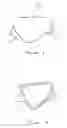
BRIEF DESCRIPTION OF THE DRAWINGSFIG. 1 is an anterior view of a balloon according to the present invention;
FIG. 2 is a cross section of the novel balloon; and
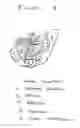
FIG. 3 is sagittal cross section of the pelvis of a female.
DETAILED DESCRIPTION OF THE INVENTIONAccording to this invention, a balloon according to the invention is placed between healing tissues and surrounding tissues. For example, the balloon can be placed between the tissues that are sutured following hysterectomy and the small intestines. The balloon prevents the small intestines from entering the pelvis. The balloon is made of a resorbable material in the preferred embodiment of the invention. The balloon ruptures and resorbs after the surgically treated tissues are partly or completely healed. The balloon may be placed immediately after an open surgical procedure or, alternatively, through smaller incisions as part of a minimally invasive procedure. Thus, the balloon may be filled prior to introduction or following placement.
The balloon can contain growth factors such as TGF-Beta, Platelet Derived Growth Factor, Vascular Endothelial Growth Factor, etc. The cytokines can also be incorporated into the walls of the balloon. Antibodies to the growth factors can also be incorporated into the balloon. The novel balloon can be used in other areas of the body. For example, the balloon can be placed between the great vessels and the spine following anterior spinal surgery.
FIG. 1 is an anterior view of a balloon according to the invention. Flaps 102, 104 extending from the sides of the balloon 110 can be sutured to the surrounding tissues. FIG. 2 is a cross section of the novel balloon. The balloon can be filled with air or other gasses, liquids, or gel(s).
FIG. 3 is sagittal cross section of the pelvis of a female. The balloon 110 can be seen between the vagina and the small intestines. The balloon could be placed in location shown in FIG. 3 following hysterectomy. The balloon prevents contact between the sutured tissues above the vagina and the small intestines until the sutured tissues are at least partially healed.
Claims
1. An anti-adhesion device, comprising:
a fillable balloon having a wall structure; and
one or more portions that permit suturing or other attachment of the balloon to surrounding tissues.
2. The an anti-adhesion device of claim 1, wherein the balloon is filled with a gas, liquid, or gel.
3. The an anti-adhesion device of claim 1, wherein the balloon is constructed of a resorbable material.
4. The an anti-adhesion device of claim 1, wherein the balloon contains one or more growth factors.
5. The an anti-adhesion device of claim 1, wherein the growth factor is TGF-Beta.
6. The an anti-adhesion device of claim 1, wherein the growth factor is Platelet Derived Growth Factor.
7. The an anti-adhesion device of claim 1, wherein the growth factor is Vascular Endothelial Growth Factor.
8. The an anti-adhesion device of claim 1, further including one or more antibodies to the growth factors.
9. The an anti-adhesion device of claim 1, further including cytokines incorporated into the wall structure.
10. A method of reducing or preventing adhesions, comprising the steps of:
providing the balloon of claim 1; and
suturing or otherwise attaching the balloon between healing tissues and surrounding tissues.
11. The method of claim 10, wherein the healing tissues include the vagina and the surrounding tissues include the small intestines.
12. The method of claim 10, wherein the balloon is placed between the great vessels and the spine following anterior spinal surgery.
13. The method of claim 10, wherein the balloon ruptures and resorbs after the surgically treated tissues are partly or completely healed.
Images & Drawings included:
Sources:
- United States Patent and Trademark Office - verify current appl. status at the USPTO↗
Similar patent applications:
- » 20180000517
ANTI-ADHESION INTRAUTERINE BALLOON
Recent applications in this class:
- » 20250090635 2025-03-20
TREATMENT OF INTERVERTEBRAL DISC DEGENERATION - » 20250018011 2025-01-16
TREATMENT OF INTERVERTEBRAL DISC DEGENERATION - » 20240390461 2024-11-28
TREATMENT WITH TRANSFORMING GROWTH FACTOR-BETA PROTEINS TO PREVENT AND TREAT HEARING LOSS - » 20240293509 2024-09-05
METHODS OF TREATING INFLAMMATORY BOWEL DISEASE - » 20240189391 2024-06-13
COMPOSITIONS AND METHODS FOR TREATING SPINAL MUSCULAR ATROPHY - » 20240123033 2024-04-18
THERAPEUTIC COMBINATIONS OF TDFRPs AND ADDITIONAL AGENTS AND METHODS OF USE FOR THE REVERSAL OF FIBROSIS - » 20240082354 2024-03-14
COMPOSITION FOR PREVENTING OR TREATING NON-ALCOHOLIC FATTY LIVER DISEASE OR NON-ALCOHOLIC STEATOHEPATITIS COMPRISING GROWTH DIFFERENTIATION FACTOR-15 VARIANT - » 20240009273 2024-01-11
Treatment of connective tissue injuries - » 20240000891 2024-01-04
GROWTH AND DIFFERENTIATION FACTOR 15 FOR TREATMENT OF PROLIFERATIVE VITREORETINOPATHY THERAPY - » 20230398182 2023-12-14
TREATMENTS FOR HERMANSKY-PUDLAK SYNDROME