Method of connecting an UMTS mobile radio to a network
US20050164723A1
2005-07-28
10/515,081
2003-05-19
✅ Patent granted
US 7,684,832 B2
2010-03-23
WO; PCT/IB03/01910; 20030519
WO; WO03/100998; 20031204
Sharad Rampuria
2023-05-19
Abstract:
To achieve a shortening of the initial synchronization time and/or extension of the stand-by time with a method of connecting an UMTS mobile radio to a network, the UMTS mobile radio receives and stored in one or more time-limited RF receive windows the signals that are subsequently evaluated when the HF receiver is switched off.
Inventors:
- Cornelis Hermanus van Berkel 7 🇳🇱 Heeze, Netherlands
- Patrick Peter Elizabeth Meuwissen 10 🇳🇱 Eindhoven, Netherlands
- Frank Heinle 2 🇩🇪 Nurnberg, Germany
- Axel Hertwig 4 🇩🇪 Nurnberg, Germany
- Cornelius Hermanus Van Berkel 1 🇳🇱 Heeze, Netherlands
Assignee:
- Koninklijke Philips Electronics, N.V. 13,903 🇳🇱 Eindhoven, Netherlands
- ST-ERICSSON SA 561 🇨🇭 Plan-les-Ouates, Switzerland
Interested in similar patents?
Get notified when new applications in this technology area are published.
Classification:
H04W48/16 » CPC main
Access restriction ; Network selection; Access point selection Discovering, processing access restriction or access information
H04W52/0216 » CPC further
Power management, e.g. TPC [Transmission Power Control], power saving or power classes; Power saving arrangements in terminal devices managed by the network, e.g. network or access point is master and terminal is slave using a pre-established activity schedule, e.g. traffic indication frame
H04W52/0229 » CPC further
Power management, e.g. TPC [Transmission Power Control], power saving or power classes; Power saving arrangements in terminal devices using monitoring of external events, e.g. the presence of a signal where the received signal is a wanted signal
Y02D30/70 » CPC further
Reducing energy consumption in communication networks in wireless communication networks
Y02D30/70 » CPC further
Reducing energy consumption in communication networks in wireless communication networks
H04B1/38 IPC
Details of transmission systems, not covered by a single one of groups - ; Details of transmission systems not characterised by the medium used for transmission Transceivers, i.e. devices in which transmitter and receiver form a structural unit and in which at least one part is used for functions of transmitting and receiving
Description
The invention relates to a method of connecting an UMTS mobile radio to a network, more particularly of shortening the initial synchronization time and/or extending the standby time of an UMTS mobile radio, the UMTS mobile radio, when its HF receiver is switched on, receiving signals from the base stations around it on various physical channels of the UMTS (Universal Mobile Telecommunication System), which signals are particularly used for initial synchronization, neighbor cell measurement and paging reception and occur in certain frames of the UMTS.
Such a method is known from technical specification 3 GPPTS 25.214 V3.10.0 (2002 to 2003), more particularly Annex C, p. 49, and from the title WCDMA for UMTS, Radio Access For Third Generation Mobile Communications, Harri Holma, Antti Toskala, John Wiley & Sons, Ltd., Chichester, N.Y., Weinheim, Brisbane, Singapore, Toronto.
Contrary to the GSM system, UMTS has CDMA (code-division multiple access). The information is then always simultaneously available in the various physical channels. The various physical channels are particularly used for the initial synchronization, for the neighbor cell measurement and the paging reception. The channels are in particular:
-
- PSCH primary synchronization channel
- SSCH secondary synchronization channel
- CPICH common pilot channel
- PICH paging indication channel
- PCH paging channel,
where further channels are added for further functions which, however, may be ignored in this context.
With mobile radios the standby time, that is the period of time up to the necessary recharging of the battery, is an important property of use. Mobile radios usually switch to an energy-saving mode when there is no active speech or data connection. However, the mobile radio is to periodically receive information from the network to be informed of an incoming call and to establish changes of base stations in the environment. For this purpose the high-frequency (HF) receiver of the mobile radio is to be switched on. The standby time is determined by the power consumption of the HF receiver. The power consumption of the HF receiver is high compared to the other systems of the mobile radio. The shorter the HF receiving windows are the longer will be its availability.
The time necessary for an initial synchronization of the mobile radio is to be short so that the mobile radio, once it has changed its location, finds a network connection in minimal time and goes to the standby mode.
In UMTS mobile radios the greater part of the signal processing functions is usually implemented in real-time hardware. Due to the high data rate at the input of the digital baseband receiver of the UMTS mobile radio, the incoming data are processed as they come in (on the fly). Only the final results of the respective bills are stored. All processing steps which need information from previous steps are executed sequentially. During this time the HF receiver is to be switched on. Since the sequential processing requires a long time, the RF receive window is to be equally long. Due to the high power consumption when the HF receiver is switched on, the standby time is reduced accordingly. This holds both for the initial synchronization and for the neighbor cell measurement and paging reception to be executed during the standby time.
It is an object of the invention in a method of the type defined in the opening paragraph to shorten the initial synchronization time and/or lengthen the standby time.
The above object is achieved by the features of the characterizing part of claim 1.
In a time-limited receive window the signals of all interesting channels are received simultaneously and stored. At the beginning of the receive window the HF receiver is switched on. At the end of the receive window the HF receiver is switched off. The evaluation of the stored signals then takes place when the HF receiver is switched off, thus in a time in which the power consumption of the mobile radio is comparatively low. All in all this leads to a lengthening of the standby time. The digital signal processing thus takes place off-line.
In addition to the shortening of the initial synchronization time and the lengthening of the standby time there are the following further advantages:
- a) since the same receiving data are used for the various processing steps, it is very simple to keep intermediate results consistent, which is problematic with a real-time hardware solution because the channel conditions may change significantly between the processing steps;
- b) because of the off-line processing and data buffering, the digital signal processing can clearly be scaled more flexibly and planned and executed in time than in conventional UMTS mobile radios. This allows to carry out the processing efficiently in dependence on the respective conditions.
The RF receive window preferably has the time length of a frame of the UMTS. This frame is 10 ms long. The RF receive window, however, may also have a variable length of time in dependence on the receiving conditions.
These and other aspects of the invention are apparent from and will be elucidated with reference to the embodiments described hereinafter.
In the drawings:
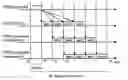
FIG. 1 shows the idealized time ratios with a usual UMTS initial synchronization;
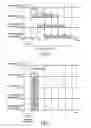
FIG. 2 shows the time ratios with an initial synchronization according to the invention;
FIG. 3 shows the usual time ratios periodically recurring during the standby time for a paging signal and a neighbor cell measurement for UMTS;
FIG. 4 shows the ratios occurring during the standby time with a method according to the invention;
FIG. 5 shows a further possibility where it is assumed that the respective mobile radio is not called by the paging signal and that the measuring period of the neighbor cell measurement is longer than the paging period.
In FIGS. 1 to 4 only three relevant neighbor cells are assumed to simplify the drawing. In practice, up to 32 neighbor cells are to be captured.
The basic method for the initial synchronization in conventional UMTS mobile radios is the following (compare FIG. 1):
- 1. The user switches the mobile radio on at a random instant t0. In a first step the primary synchronization channel (PSCH) is evaluated to find all propagation paths of all the base stations or cells respectively in the environment. This first step is made in any one of the predefined UMTS frames that lasts 10 ms. With the data information transmitted over the PSCH it is not possible yet to distinguish the various base stations and establish the start of the UMTS frame.
- 2. Therefore, propagation paths that seem to be effective as regards their power are selected from the number of propagation paths found in the first step. Based on this selection the scrambling code group and the position in time of the frame i.e. the frame timing of the base station that belongs to the selected paths is identified in the secondary synchronization channel (SSCH). The evaluation of the SSCH starts around instant t1 after the first frame and lasts again 1 frame up to instant t2.
- 3. In a third step the selected paths are identified as regards their timing and as regards the scrambling code group of the respective base station (cell 1) via the common control channel, the so-called common pilot channel (CPICH).
- 4. In a fourth step, beginning at instant t3, all the paths occurring in a certain time interval are detected with the aid of the CPICH. The paths found are struck off a path list and earmarked. Then said steps are executed for further paths of the neighboring base stations (cell 2, cell 3, cell 4) which lasts until instant t5. At instant t4 the initial synchronization has then been carried out. During the period of time T between instant t0 and t4 the HF receiver of the mobile radio is to be switched on. This time ideally lasts at least 7 frames i.e. 70 ms. In practice this may even be several minutes if the mobile radio in switched-off mode is brought within range of remote base stations.
In contrast to this, the initial synchronization according to the suggested solution is carried out in the following way (compare FIG. 2).
The user switches the UMTS mobile radio on at a random instant. After a certain build-up time at instant t0 a memory of the mobile radio receives all the information occurring in a single frame of the PSCH, SSCH, CPICH of the accepted four cells (compare frame buffering in FIG. 2). This takes place in the period of time t0 to t1, within a single frame i.e. 10 ms. At the instant t1 the HF receiver switches off. The period of time Ta between t0 and t1 is the receive window. The stored information is evaluated after the instant t1 in the mobile radio while the HF receiver is switched off.
Comparison of the FIGS. 1 and 2 shows that with the method shown in FIG. 2 the necessary receive window is shorter by a factor of 7 than with the method shown in FIG. 1.
In the standby mode most components of an UMTS mobile radio are normally switched off to save current. They are activated periodically for receiving pagings i.e. call announcements and system measurements with respect to neighbor cells. The basic method in the commercial UMTS receivers is in essence the following (compare FIG. 3):
- 1. The mobile radio periodically resynchronizes in the standby mode with the current base station or cell of the network determined during the previous initial synchronization. In the following example this is cell 1. Generally, not always a complete initial synchronization is carried out because this complete initial synchronization is not necessary, but only a path search is made on the CPICH (compare FIG. 3, CPICH propagation path detection on serving cell). This operation lasts 1 frame i.e. 10 ms.
- 2. Subsequently, the paging reception is executed (compare FIG. 3 paging reception), which takes place on a higher-order paging channel, on the paging indication channel (PICH) and on the special paging channel, the so-called paging channel (PCH). The PICH relates to a group of mobile radios and the PCH then pages a single mobile radio from this group. The PCH completely contains the concrete identification number of the mobile radio to be paged.
A measurement of the neighbor cells cell 2, cell 3, cell 4 starts simultaneously with the evaluation of the paging signals on the channels PICH, PCH. The paging period lasts at least 8 frames (not shown in FIG. 3). In the method shown in FIG. 3 the HF receiver is to be switched on for at least four frames in a paging period that contains eight frames.
In the method according to the invention, on the other hand, the procedure is as follows (compare FIG. 4):
- 1. The HF receiver is switched on at a defined instant t0′ shortly before the necessary information of the PCH is transmitted by the base station.
- 2. After a build-on time of the receiver the complete information of a frame of the UMTS signal is received and stored in the mobile radio. This is effected between the instants t0′ and t1′ (compare FIG. 4 frame buffering).
- 3. The HF receiver is again switched off after the end of one frame, at t1′. The frame situated between t0′ and t1′ is stored. The information contained therein and dealing with the respective channels can then further be processed while the HF receiver is switched off (compare FIG. 4 processing time window).
- 4. The information contained in the PICH may be ignored because the necessary information is also available on the PCH.
The received data are used for resynchronization with the serving cell of the network. By means of the data received between t0′ and t1′ also the necessary UMTS system measurements of the neighbor cells are evaluated.
The comparison of the examples of embodiment described (compare FIGS. 3, 4) shows that with the method according to the invention shown in FIG. 4 the RF receive window is shorter by a factor of 4 than with the method shown in FIG. 3, which means a considerable lengthening of the standby time. The proposed solution allows the shortening of the RF receive window by the number of the neighbor cells. If, in addition, the gap between the PICH signal and the PCH signal is ignored, a further reduction of the switch-on time of the HF receiver can be achieved if the UMTS measuring period for the neighbor cell measurements is longer than the paging period (compare FIG. 5).
In FIG. 5 are shown a paging period PP which comprises 8 to 512 frames and a measuring period MP used for the neighbor cell measurement, which lasts 8 paging periods. PICH and PCH signals occur in each paging period. HF receive time windows (RF receive windows) are found in each PICH signal and only in one PCH signal of the measuring period MP. Further to the respective RF receive window, as also found in FIG. 4, the post-synchronization with the serving cell (compare FIG. 5 CPICH propagation path detection on serving cell), the paging evaluation (compare FIG. 5 paging processing) and the neighbor cell measurement (compare FIG. 5, CPICH system measurements on neighbor cells). The RF receive windows are 533 μs long at the most in PICH. The RF receive window has the length of a frame in PCH. After storage, the signals are processed off-line, as is described. The total RF receive time is 10 ms+7×533 μs i.e. 13.73 ms. Compared with the 8 frames (80 ms) which are needed for a full PCH reception, this is a further saving by the factor of 80/13.73=5.82.
The RF receive windows need not have the time length of one frame. They may also be shorter or longer or variable. For example, the RF receive window may be selected to be as long as the longest individual processing step lasts to completely store this information for the next evaluation.
Claims
1. A method of connecting an UMTS mobile radio to a network, more particularly of shortening the initial synchronization time and/or extending the standby time of an UMTS mobile radio, the UMTS mobile radio, when its HF receiver is switched on, receiving signals from the base stations around it on various physical channels of the UMTS (Universal Mobile Telecommunication System), which signals are particularly used for initial synchronization, neighbor cell measurement and paging reception and occur in certain frames of the UMTS, characterized in that the signals lying in one or more RF receive windows are received by the UMTS mobile radio and storaed and after storage of the signals of the RF receive windows the HF receiver is switched off and in that, subsequently, when the HF receiver is switched off the stored signals are evaluated in the UMTS mobile radio.
2. A method as claimed in claim 1, characterized in that the RF receive window has at most the time length of the individual processing step that lasts longest.
3. A method as claimed in claim 1, characterized in that the RF receive window at most has the time length of one frame of the UMTS.
4. A method as claimed in claim 1, characterized in that the RF receive windows have a variable time lengt in dependence on the receive conditions.
5. A method as claimed in claim 1, characterized in that for an initial synchronization the HF receiver is switched on at a random instant and in that after a build-up time a frame of the UMTS signal from the base stations is received and stored.
6. A method as claimed in claim 1, characterized in that in the standby mode of the UMTS mobile radio the HF receiver is periodically switched on at defined instants to receive paging signals (PICH, PCH) and carry out a neighbor cell synchronization while the defined instants are shortly before the reception of the necessary PCH (paging channel) information.
7. A method as claimed in claim 1, characterized in that the PICH (paging indication channel) is ignored i.e. its information is not received and stored if the PCH (paging channel) is received and stored in the received frame.
8. A method as claimed in claim 1, characterized in that the moment when a measuring period in which particularly the neighbor cell measurement takes place longer than the paging period, the PCH is received and stored and evaluated only once per measuring period and otherwise in each paging period only the PICH is stored and evaluated.
9. A mobile radio that receives signals from the neighboring base stations when its HF receiver is switched on, which signals occur in certain frames, characterized in that the mobile radio receives and stores the signals situated in one or more RF receive windows and the HF receiver is switched off after the signals of the RF receive window or RF receive windows are stored and in that, subsequently the stored signals are evaluated in the mobile radio while the HF receiver is switched off.
Images & Drawings included:


Sources:
- United States Patent and Trademark Office - verify current appl. status at the USPTO↗
Recent applications in this class:
- » 20250294435 2025-09-18
METHOD AND APPARATUS FOR HANDLING CELL SELECTION AND RE-SELECTION IN MR-DC SYSTEM - » 20250294434 2025-09-18
NETWORK ENTITY, USER EQUIPMENT AND METHOD FOR THE CONTROL AND USE OF NETWORK SLICES - » 20250294433 2025-09-18
NETWORK DATA ANALYTICS FUNCTION SLICE LOAD ENHANCEMENT - » 20250287295 2025-09-11
SYSTEM INFORMATION SENDING METHOD, SYSTEM INFORMATION RECEIVING METHOD, AND RELATED APPARATUS - » 20250287294 2025-09-11
METHODS AND APPARATUSES FOR EDGE APPLICATION SERVICE - » 20250280358 2025-09-04
DETECTION OF PARALLEL OPERATING WI-FI NETWORKS - » 20250280357 2025-09-04
Wireless Communication Method, Storage Medium, and Terminal Device - » 20250280356 2025-09-04
Cell Selection for Wireless Communications - » 20250280355 2025-09-04
METHODS AND APPARATUSES TO HANDLE PLMN LIST - » 20250280354 2025-09-04
ACCESS FILTERING FOR UNAUTHOIRIZED DEVICES BY AN EDGE DEVICE
Recent applications for this Assignee:
- » 20210337645 2021-10-28
METHOD AND ADJUSTMENT SYSTEM FOR ADJUSTING SUPPLY POWERS FOR SOURCES OF ARTIFICIAL LIGHT - » 20210290972 2021-09-23
BODY ILLUMINATION SYSTEM USING BLUE LIGHT - » 20190191921 2019-06-27
METHOD AND SYSTEM FOR BREWING INGREDIENTS IN A SOLVENT, APPARATUS USING SAID SYSTEM - » 20170325686 2017-11-16
System and method for extracting physiological information from remotely detected electromagnetic radiation - » 20160274173 2016-09-22
Presence and Operability Test of a Decoupling Capacitor - » 20160170936 2016-06-16
Architecture for vector memory array transposition using a block transposition accelerator - » 20160127159 2016-05-05
Three-wire three-level digital interface - » 20160050064 2016-02-18
Method, apparatus, mobile communication terminal, computer program and storage medium for adjusting frequency error of terminal - » 20150380899 2015-12-31
Eye-safe laser-based lighting - » 20150377937 2015-12-31
Calculating Power Consumption of Electonic Devices