Moldable heat shield
US20050176327A1
2005-08-11
10/773,603
2004-02-07
✅ Patent granted
US 7,521,386 B2
2009-04-21
-
-
Andrew T Piziali
2025-05-26
Abstract:
A moldable heat shield with a needled nonwoven core layer and needled nonwoven shell layers. The core layer has a blend polyester staple fibers and low melt polyester staple fibers. The shell layers have a blend of staple fibers of partially oxidized polyacrylonitrile, and staple fibers of polyester, and staple fibers of a low melt polyester. The layers are needled together such that fibers from the core layer do not reach the outer surfaces of the shell layers. The shell layers are calendared such that an outer surface layer is formed thereon, which provides the moldable heat shield with a water and oil resistant surface.
Inventors:
- Gregory J. Thompson 14 🇺🇸 Simpsonville, SC, United States
- David Edward Wenstrup 1 🇺🇸 Greer, SC, United States
- Timothy Mitchell Meade 1 🇺🇸 Duncan, SC, United States
Assignee:
- Milliken & Company 635 🇺🇸 Spartanburg, SC, United States
Interested in similar patents?
Get notified when new applications in this technology area are published.
Classification:
B32B5/08 » CPC further
Layered products characterised by the non- homogeneity or physical structure, i.e. comprising a fibrous, filamentary, particulate or foam layer; Layered products characterised by having a layer differing constitutionally or physically in different parts characterised by structural features of a layer the fibres or filaments of a layer being of different substances, e.g. conjugate fibres, mixture of different fibres
D04H1/43 » CPC further
Non-woven fabrics formed wholly or mainly of staple fibres or like relatively short fibres from fleeces or layers composed of fibres without existing or potential cohesive properties characterised by the use of certain kinds of fibres insofar as this use has no preponderant influence on the consolidation of the fleece; Addition polymers Acrylonitrile series
D04H1/4374 » CPC further
Non-woven fabrics formed wholly or mainly of staple fibres or like relatively short fibres from fleeces or layers composed of fibres without existing or potential cohesive properties characterised by the use of certain kinds of fibres insofar as this use has no preponderant influence on the consolidation of the fleece using different kinds of webs, e.g. by layering webs
D04H1/498 » CPC further
Non-woven fabrics formed wholly or mainly of staple fibres or like relatively short fibres from fleeces or layers composed of fibres without existing or potential cohesive properties the fleeces or layers being consolidated by mechanical means, e.g. by rolling by needling or like operations to cause entanglement of fibres entanglement of layered webs
D04H1/542 » CPC further
Non-woven fabrics formed wholly or mainly of staple fibres or like relatively short fibres from fleeces or layers composed of fibres without existing or potential cohesive properties by welding together the fibres, e.g. by partially melting or dissolving Adhesive fibres
B32B2307/102 » CPC further
Properties of the layers or laminate having particular acoustical properties Insulating
B32B2307/304 » CPC further
Properties of the layers or laminate having particular thermal properties Insulating
B32B2605/00 » CPC further
Vehicles
Y10T428/31583 » CPC further
Stock material or miscellaneous articles; Composite [nonstructural laminate]; Of polyamidoester [polyurethane, polyisocyanate, polycarbamate, etc.]; Next to addition polymer of ethylenically unsaturated monomer Nitrile monomer type [polyacrylonitrile, etc.]
Y10T442/607 » CPC further
Fabric [woven, knitted, or nonwoven textile or cloth, etc.]; Nonwoven fabric [i.e., nonwoven strand or fiber material]; Including strand or fiber material precoated with other than free metal or alloy Strand or fiber material is synthetic polymer
Y10T442/612 » CPC further
Fabric [woven, knitted, or nonwoven textile or cloth, etc.]; Nonwoven fabric [i.e., nonwoven strand or fiber material]; Including strand or fiber material which is of specific structural definition; Cross-sectional configuration of strand or fiber material is specified Hollow strand or fiber material
Y10T442/633 » CPC further
Fabric [woven, knitted, or nonwoven textile or cloth, etc.]; Nonwoven fabric [i.e., nonwoven strand or fiber material]; Including strand or fiber material which is of specific structural definition; Strand or fiber material is specified as non-linear [e.g., crimped, coiled, etc.]; A single nonwoven layer comprising non-linear synthetic polymeric strand or fiber material and strand or fiber material not specified as non-linear Synthetic polymeric strand or fiber material is of staple length
Y10T442/635 » CPC further
Fabric [woven, knitted, or nonwoven textile or cloth, etc.]; Nonwoven fabric [i.e., nonwoven strand or fiber material]; Including strand or fiber material which is of specific structural definition; Strand or fiber material is specified as non-linear [e.g., crimped, coiled, etc.] Synthetic polymeric strand or fiber material
Y10T442/636 » CPC further
Fabric [woven, knitted, or nonwoven textile or cloth, etc.]; Nonwoven fabric [i.e., nonwoven strand or fiber material]; Including strand or fiber material which is of specific structural definition; Strand or fiber material is specified as non-linear [e.g., crimped, coiled, etc.]; Synthetic polymeric strand or fiber material Synthetic polymeric strand or fiber material is of staple length
Y10T442/659 » CPC further
Fabric [woven, knitted, or nonwoven textile or cloth, etc.]; Nonwoven fabric [i.e., nonwoven strand or fiber material] Including an additional nonwoven fabric
Y10T442/662 » CPC further
Fabric [woven, knitted, or nonwoven textile or cloth, etc.]; Nonwoven fabric [i.e., nonwoven strand or fiber material]; Including an additional nonwoven fabric; Additional nonwoven fabric is a spun-bonded fabric Needled
Y10T442/663 » CPC further
Fabric [woven, knitted, or nonwoven textile or cloth, etc.]; Nonwoven fabric [i.e., nonwoven strand or fiber material]; Including an additional nonwoven fabric; Additional nonwoven fabric is a spun-bonded fabric Hydroentangled
Y10T442/667 » CPC further
Fabric [woven, knitted, or nonwoven textile or cloth, etc.]; Nonwoven fabric [i.e., nonwoven strand or fiber material]; Including an additional nonwoven fabric; Mechanically interengaged by needling or impingement of fluid [e.g., gas or liquid stream, etc.] Needled
Y10T442/668 » CPC further
Fabric [woven, knitted, or nonwoven textile or cloth, etc.]; Nonwoven fabric [i.e., nonwoven strand or fiber material]; Including an additional nonwoven fabric Separate nonwoven fabric layers comprise chemically different strand or fiber material
Y10T442/671 » CPC further
Fabric [woven, knitted, or nonwoven textile or cloth, etc.]; Nonwoven fabric [i.e., nonwoven strand or fiber material]; Including an additional nonwoven fabric Multiple nonwoven fabric layers composed of the same polymeric strand or fiber material
Y10T442/682 » CPC further
Fabric [woven, knitted, or nonwoven textile or cloth, etc.]; Nonwoven fabric [i.e., nonwoven strand or fiber material] Needled nonwoven fabric
Y10T442/697 » CPC further
Fabric [woven, knitted, or nonwoven textile or cloth, etc.]; Nonwoven fabric [i.e., nonwoven strand or fiber material] Containing at least two chemically different strand or fiber materials
B32B5/26 » CPC main
Layered products characterised by the non- homogeneity or physical structure, i.e. comprising a fibrous, filamentary, particulate or foam layer; Layered products characterised by having a layer differing constitutionally or physically in different parts characterised by the presence of two or more layers which are next to each other and are fibrous, filamentary, formed of particles or foamed one layer being a fibrous or filamentary layer another layer also being fibrous or filamentary
Description
BACKGROUNDThe present invention generally relates to a moldable substrate which exhibits surface barrier properties as well as thermal and sound insulation properties.
The transportation industry currently uses moldable materials in a variety of applications which require both thermal and sound insulating performance features. In a number of applications the primary purpose of these materials is to act as a heat shield to vehicle components or occupants. Examples of heat shielding parts would include vehicle hood liners, firewall barriers, automotive transmission tunnel insulators, etc.. Often a heat shield will have a moldable foam core, a resinated fiberglass core, a resinated cotton shoddy core, or other to give the shield volume and aid in the in absorption of heat and sound. The heat shield may also include a textile shell material enclosing the moldable core. The shell material gives the composite a desired aesthetic appearance and can provide an oil and water impermeable surface.
The present invention uses a blended synthetic fiber core to provide the heat shield with volume and moldability. A blend of common synthetic fibers and fibers of partially oxidized polyacrylonitrile are used to construct a low weight skin that is subsequently attached to the core on one or both sides. The invention has superior molding process performance, superior sound and heat absorptive performance, and the potential to be recycled. All of these benefits were achieved at competitive costs and weight to the existing products.
BRIEF DESCRIPTION OF THE DRAWINGSThese and other features, aspects, and advantages of the present invention will become better understood with regard to the following description, appended claims, and accompanying drawings where:
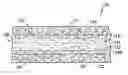
FIG. 1 shows an enlarged cross-section of a one embodiment of the present invention;
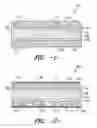
FIG. 2 shows an enlarged cross-sectional view of another embodiment of the present invention; and,
FIG. 3 shows a block diagram of a process for forming the moldable heat shield in FIGS. 1 and 2.
DETAILED DESCRIPTIONReferring now to the figures, and in particular to FIGS. 1 and 2, there is shown an enlarged cross-sectional view of a moldable heat shield 100 illustrating an embodiment of the present invention. The non-woven textile 100 generally includes a core 130 with a first shell layer 110 and a second shell layer 120. The first and second shell layers 110,120, are from about 5% to about 50% of the total weight of the moldable heat shield 100.
Referring now to FIG. 1, the first and second shell layer 110, 120, are a nonwoven material of entangled blend of first shell fibers 111, 121, second shell fibers 112,122, respectively. The first shell fibers 111, 121, are staple fibers of partially oxidized polyacrylonitrile (PAN). The second shell fibers 112,122, are synthetic thermoplastic staple fibers. In a preferred embodiment, the second shell fibers 112,122, are polyester. The first shell fibers 111,121, are from about 25% to about 90% of the combined total weight of respective the first or second shell layer 110,120.
In another embodiment illustrated in FIG. 2, the first and second outer shell layer 110, 120, also have an outer zone that the first shell fibers 111,121, the second shell fibers 112,122, and third shell fibers 113,123 have been fused to form an outer surface layer 115, 125, respectively. The third fibers are a synthetic thermoplastic polymer with a lower melting temperature than the second shell fibers 112, 122. In a preferred embodiment, the third shell fibers 113,123, are a low melt polyester fiber. In this embodiment, the first fibers 111 can comprise from about 25% to about 90% of the total combined weight of the respective first or second shell layer 110, 120, and the third fibers 113, 123, can comprise from about 5% to about 40% of the total combined weight of the respective first or second shell layer 110,120.
Still referring to FIG. 2, the outer surface layers 115,125, can provide water and oil repellency without the use of additional chemistries, such as fluorocarbons. The fusing of these fibers can commonly be done on a standard hot oil calendar. Typically the fibers are fused to a point to reduce the air permeability of the skin material to below 50 cfm at 125 pascals.
Referring now to FIGS. 1 and 2, the core 130 comprises a nonwoven of blended first and second core fibers 131 and 132. The first core fibers 131 are staple fibers of a thermoplastic polymer. In a preferred embodiment first core fibers 131 are polyester of denier 6 dpf or greater. In a further preferred embodiment first core fibers 131 are hollow-fill. The relative large denier and hollow-fill characteristics give the heat shield 100 volume and rebound for the molding process. The second core fibers 132 are lower melt temperature thermoplastic fibers, and provide the core 130 with moldable characteristics. The second core fibers 132 are from about 5% to about 40% of the total weight of the core layer 130. The second core fibers 132 can be selected to be the same polymeric material as used in first core fibers 131, with a lower melt temperature. Additionally, in the embodiment in FIG. 2, the first core fiber 131 can be chosen such that they are of the same polymeric material as second shell fibers 112, 122; and that second core fibers 132 are the same as third shell fibers 113 and 123. In this manner, the percent of partially oxidized polyacrylonitrile in the heat shield 100 is maintained at a low weight percent of the entire product, typically less than 10 percent, and the recyclability of the heat shield 100 is improved.
Referring now to FIG. 1 and 2, the first and second shell layers 110, 120, are connected to the core 130 by the cross-entanglement of fibers from the respective layers. The core layer 130 has a first core layer entanglement zone 137 adjacent to the first shell layer 110, where fibers from the first shell layer 110 entangle with fibers in the core layer 130. The core layer 130 also has a second core layer entanglement zone 138 adjacent to the second shell layer 120, where fibers from the second shell layer 110 entangle with fibers in the core layer 130.
Referring now to FIG. 3, there is shown a block diagram illustrating one embodiment of a method for forming the moldable heat shield 100 in FIG. 1 and 2. In the process illustrated in FIG. 3, the shell layers 110, 120 are formed in steps 210 and 220 as a needled nonwoven material with the appropriate blend and weight of fibers. In a preferred embodiment in which the outer surface of the shell materials are calendared, as previously described, the shell layers 110,120, are calendared in steps 215 and 225 at a temperature above the melt temperature of the low melt shell thermoplastic fibers 113 and 123. In step 230, the core layer 130 is formed as a separate needled nonwoven material, with the appropriate blend and weight of core fibers 131 and 132. The nonwoven material of the shell layers 110,120, are located on opposite surfaces of the core layer 130 in step 240. In step 250, the shell layers 110, 120, are joined to the core layer 130 by needling the composite from the outer surface of the shell layers 110,120, into the core layer 130. During the needling in step 250, the needle stroke is set such that the barbs of the needles do not pass through the core layer 130 into the shell layer 110,120, of the opposite side. This is done to prevent core fibers from reaching the outer surface of shell layers 110,120. In another embodiment of steps 240 and 250, the shell layers 110,120, can be bonded to the core layer 130 by placing an adhesive material between the core nonwoven mat and each shell nonwoven mat, and heating the collective shell nonwoven mats, core nonwoven mat, and adhesive to a temperature which activates the adhesive.
Although the present invention has been described in considerable detail with reference to certain preferred versions thereof, other versions are possible. Therefore, the spirit and scope of the appended claims should not be limited to the description of the preferred versions contained herein.
Claims
1. A moldable heat shield comprising a nonwoven composite of a core layer and outer shell layers adjoining the core layer, the core layer having entangled staple core fibers, the entangled core fibers comprising a blend of thermoplastic fibers and lower melting thermoplastic fibers, and the shell layers having entangled shell fibers, the entangled shell fibers comprising a blend of partially oxidized polyacrylonitrile staple fibers and thermoplastic staple fibers.
2. The moldable heat shield according to claim 1, wherein the core layer has an entanglement zone, within which shell fibers from the shell are entangled with core fibers from the core.
3. The moldable heat shield according to claim 1, wherein the thermoplastic staple fibers of the shell comprise polyester staple fibers.
4. The moldable heat shield according to claim 1, wherein the core fibers comprise polyester staple fibers.
5. The moldable heat shield according to claim 1, wherein the low melt core fibers comprise low melt polyester staple fibers.
6. The moldable heat shield according to claim 1, wherein the core fibers comprise hollow-fill fibers.
7. A moldable heat shield comprising a nonwoven composite of a core layer and outer shell layers adjoining the core layer, the core layer having entangled staple core fibers, the entangled core fibers comprising a blend of thermoplastic fibers and lower melting thermoplastic fibers, and the shell layers having entangled shell fibers, the entangled shell fibers comprising a blend of partially oxidized polyacrylonitrile staple fibers, thermoplastic staple fibers, and a lower melting thermoplastic staple fibers.
8. The moldable heat shield according to claim 7, wherein the core layer has an entanglement zone, within which shell fibers from the shell are entangled with core fibers from the core.
9. The moldable heat shield according to claim 7, wherein the thermoplastic staple fibers of the shell comprise polyester staple fibers.
10. The moldable heat shield according to claim 7, wherein the low melt thermoplastic staple fibers of the shell comprise low melt polyester staple fibers.
11. The moldable heat shield according to claim 7, wherein the core fibers comprise polyester staple fibers.
12. The moldable heat shield according to claim 7, wherein the low melt core fibers comprise low melt polyester staple fibers.
13. The moldable heat shield according to claim 7, wherein the core fibers comprise hollow-fill fibers.
14. The moldable heat shield according to claim 7, wherein the outer shell layers have an outer surface of fused shell fibers.
15. A method of forming a moldable heat shield comprising the steps of:
a) forming a first shell nonwoven mat by needling together a blend of partially oxidized polyacrylonitrile staple fibers and thermoplastic staple fibers;
b) forming a second shell nonwoven mat by needling together a blend of partially oxidized polyacrylonitrile staple fibers and thermoplastic staple fibers;
c) forming a core nonwoven mat by needling together low melt temperature thermoplastic staple fibers;
d) disposing the first shell nonwoven mat and the second shell nonwoven mat onto opposite surfaces of the core nonwoven mat;
e) needling the first shell nonwoven mat onto the core mat such that the barbs of the needles pass through the first shell nonwoven mat and do not pass through the second shell nonwoven mat; and,
f) needling the first shell nonwoven mat onto the core mat such that the barbs of the needles pass through the first shell nonwoven mat and do not pass through the second shell nonwoven mat.
16. The method according to claim 15, wherein the thermoplastic staple fibers of the first nonwoven shell mat comprise a low melt temperature thermoplastic staple fiber.
17. The method according to claim 16, further including the step of calendaring the outer surface of the first nonwoven shell mat prior to the step of disposing the first nonwoven shell mat onto the core mat.
18. The method according to claim 17, wherein the thermoplastic staple fibers of the second nonwoven shell mat comprise a low melt temperature thermoplastic staple fiber.
19. The method according to claim 18, further including the step of calendaring the outer surface of the second nonwoven shell mat prior to the step of disposing the second nonwoven shell mat onto the core mat.
20. A method of forming a moldable heat shield comprising the steps of:
a) forming a first shell nonwoven mat by needling together a blend of partially oxidized polyacrylonitrile staple fibers and thermoplastic staple fibers;
b) forming a second shell nonwoven mat by needling together a blend of partially oxidized polyacryl nitrile staple fibers and thermoplastic staple fibers;
c) forming a core nonwoven mat by needling together low melt temperature thermoplastic staple fibers;
d) positioning the shell nonwoven mats adjacent to the outer surfaces of the core nonwoven mat with an adhesive material disposed between the core nonwoven mat and each shell nonwoven mat.
e) heating the collective shell nonwoven mats, core nonwoven mat, and adhesive to a temperature which activates the adhesive.
Images & Drawings included:

Sources:
- United States Patent and Trademark Office - verify current appl. status at the USPTO↗
Recent applications in this class:
- » 20250282118 2025-09-11
PROTECTIVE COMPOSITE FABRICS AND METHODS OF MANUFACTURE AND USE - » 20250269625 2025-08-28
COMPOSITE SOUND-ABSORBING MATERIAL - » 20250262840 2025-08-21
LAMINATED ADHESIVE TAPE AND COMPOSITION THEREFOR - » 20250187300 2025-06-12
AEROSPACE THERMAL ACOUSTIC FIBERGLASS INSULATION USEFUL IN SUPPORTING APPLICATIONS BACKGROUND - » 20250144911 2025-05-08
HIGH-DURABILITY DUAL COMPOSITE WATERPROOF STRUCTURE THROUGH INORGANIC ELASTIC UNDERCOAT BODY AND COMPOSITE SHEET WATERPROOF STRUCTURE WITH HEAT SHIELDING AND HEAT DISSIPATION PERFORMANCE - » 20250100247 2025-03-27
COMPOSITE LAMINATE BODY AND DISPOSABLE DIAPER - » 20250083408 2025-03-13
STRETCHY THERMAL INSULATION COMPOSITE MATERIAL - » 20250042128 2025-02-06
CELLULOSE PRECURSOR MATERIAL AND APPARATUS AND METHOD FOR FIELD CONVERSION OF THE PRECURSOR INTO CELLULOSE INSULATION - » 20250026104 2025-01-23
POROSITY GRADIENT PREFORM ARCHITECTURE FOR HIGH TEMPERATURE COMPOSITES - » 20250026103 2025-01-23
POROSITY GRADIENT PREFORM ARCHITECTURE FOR HIGH TEMPERATURE COMPOSITES
Recent applications for this Assignee:
- » 20250027236 2025-01-23
FIRE RESISTANT DOUBLE-KNIT FABRIC - » 20240401250 2024-12-05
METHOD OF MAKING AN ELONGATED ENCLOSED PATHWAY - » 20240255260 2024-08-01
Spike resistant package and article - » 20240167222 2024-05-23
Washable multi-component magnetic floor mat - » 20240100738 2024-03-28
Recyclable Single Polymer Floorcovering Article - » 20240084107 2024-03-14
POLYPROPYLENE POLYMER COMPOSITIONS AND ARTICLES MADE FROM THE SAME - » 20240025842 2024-01-25
Trisamide compounds and compositions comprising the same - » 20230340371 2023-10-26
Composition comprising hueing agent - » 20230331660 2023-10-19
TRISAMIDE COMPOUNDS AND COMPOSITIONS COMPRISING THE SAME - » 20230313423 2023-10-05
INSULATING DOUBLE-KNIT FABRIC