Process for producing 4-phenyl-4-oxo-2-butenoic ester derivative
US20050176994A1
2005-08-11
10/513,332
2003-05-14
✅ Patent granted
US 7,161,022 B2
2007-01-09
WO; PCT/JP03/06015; 20030514
WO; WO03/097568; 20031127
Samuel A Barts | Lalitha Nagubandi
2023-08-05
Abstract:
A 4-phenyl-4-oxo-2-butenoate derivative is stably supplied in a short period of time, at low cost, in high purity and on an industrial scale by a process for producing the 4-phenyl-4-oxo-2-butenoate derivative, which comprises simultaneously or continuously reacting a sulfuric ester, an aromatic hydrocarbon and a maleic anhydride derivative.
Inventors:
- Taichi Shintou 2 🇯🇵 Hiratsuka-shi, Japan
- Isamu Itoh 1 🇯🇵 Hiratsuka-shi, Japan
- Isamu Itoh 1 🇯🇵 Kanagawa, Japan
- Taichi Shintou 1 🇯🇵 Kanagawa, Japan
Assignee:
- MEIJI SEIKA KAISHA, LTD. 63 🇯🇵 Tokyo, Japan
- FUJIFILM FINECHEMICALS CO., LTD 9 🇯🇵 Tokyo, Japan
- SANKIO CHEMICAL CO., LTD. 1 🇯🇵 Tokyo, Japan
Interested in similar patents?
Get notified when new applications in this technology area are published.
Classification:
C07C69/76 IPC
Esters of carboxylic acids; Esters of carbonic or haloformic acids Esters of carboxylic acids having a carboxyl group bound to a carbon atom of a six-membered aromatic ring
C07C69/95 IPC
Esters of carboxylic acids; Esters of carbonic or haloformic acids Esters of quinone carboxylic acids
C07C233/33 » CPC further
Carboxylic acid amides having carbon atoms of carboxamide groups bound to hydrogen atoms or to acyclic carbon atoms having the nitrogen atom of at least one of the carboxamide groups bound to a carbon atom of a hydrocarbon radical substituted by doubly-bound oxygen atoms with the substituted hydrocarbon radical bound to the nitrogen atom of the carboxamide group by a carbon atom of a six-membered aromatic ring
C07C235/34 » CPC further
Carboxylic acid amides, the carbon skeleton of the acid part being further substituted by oxygen atoms having carbon atoms of carboxamide groups bound to acyclic carbon atoms and singly-bound oxygen atoms bound to the same carbon skeleton the carbon skeleton containing six-membered aromatic rings having the nitrogen atoms of the carboxamide groups bound to hydrogen atoms or to acyclic carbon atoms
C07C235/38 » CPC further
Carboxylic acid amides, the carbon skeleton of the acid part being further substituted by oxygen atoms having carbon atoms of carboxamide groups bound to acyclic carbon atoms and singly-bound oxygen atoms bound to the same carbon skeleton the carbon skeleton containing six-membered aromatic rings having the nitrogen atom of at least one of the carboxamide groups bound to a carbon atom of a six-membered aromatic ring
C07C255/56 » CPC further
Carboxylic acid nitriles having cyano groups bound to carbon atoms of six-membered aromatic rings of a carbon skeleton containing cyano groups and doubly-bound oxygen atoms bound to the carbon skeleton
C07D213/55 » CPC further
Heterocyclic compounds containing six-membered rings, not condensed with other rings, with one nitrogen atom as the only ring hetero atom and three or more double bonds between ring members or between ring members and non-ring members having three double bonds between ring members or between ring members and non-ring members having no bond between the ring nitrogen atom and a non-ring member or having only hydrogen or carbon atoms directly attached to the ring nitrogen atom with substituted hydrocarbon radicals attached to ring carbon atoms; Radicals substituted by carbon atoms having three bonds to hetero atoms with at the most one bond to halogen, e.g. ester or nitrile radicals Acids; Esters
C07D317/60 » CPC further
Heterocyclic compounds containing five-membered rings having two oxygen atoms as the only ring hetero atoms having the hetero atoms in positions 1 and 3 ortho- or peri-condensed with carbocyclic rings or ring systems condensed with one six-membered ring; Methylenedioxybenzenes or hydrogenated methylenedioxybenzenes, unsubstituted on the hetero ring with only hydrogen atoms, hydrocarbon or substituted hydrocarbon radicals, directly attached to atoms of the carbocyclic ring Radicals substituted by carbon atoms having three bonds to hetero atoms with at the most one bond to halogen, e.g. ester or nitrile radicals
C07D333/38 » CPC further
Heterocyclic compounds containing five-membered rings having one sulfur atom as the only ring hetero atom not condensed with other rings not substituted on the ring sulphur atom with hetero atoms or with carbon atoms having three bonds to hetero atoms with at the most one bond to halogen, e.g. ester or nitrile radicals, directly attached to ring carbon atoms Carbon atoms having three bonds to hetero atoms with at the most one bond to halogen, e.g. ester or nitrile radicals
C07C45/004 » CPC further
Preparation of compounds having >C = O groups bound only to carbon or hydrogen atoms; Preparation of chelates of such compounds by reaction with organometalhalides
C07C49/84 » CPC further
Ketones; Ketenes; Dimeric ketenes ; Ketonic chelates; Ketones containing a keto group bound to a six-membered aromatic ring containing ether groups, groups, groups, or groups
C07C65/40 » CPC further
Compounds having carboxyl groups bound to carbon atoms of six—membered aromatic rings and containing any of the groups OH, O—metal, —CHO, keto, ether, groups, groups, or groups containing keto groups containing singly bound oxygen-containing groups
C07C51/083 » CPC main
Preparation of carboxylic acids or their salts, halides or anhydrides from carboxylic acid anhydrides
C07C65/21 » CPC further
Compounds having carboxyl groups bound to carbon atoms of six—membered aromatic rings and containing any of the groups OH, O—metal, —CHO, keto, ether, groups, groups, or groups containing ether groups, groups, groups, or groups
C07C67/00 » CPC further
Preparation of carboxylic acid esters
C07C67/10 » CPC further
Preparation of carboxylic acid esters by reacting carboxylic acids or symmetrical anhydrides with ester groups or with a carbon-halogen bond
C07C67/11 » CPC further
Preparation of carboxylic acid esters by reacting carboxylic acids or symmetrical anhydrides with ester groups or with a carbon-halogen bond being mineral ester groups
C07C69/738 » CPC further
Esters of carboxylic acids; Esters of carbonic or haloformic acids; Esters of carboxylic acids having esterified carboxylic groups bound to acyclic carbon atoms and having any of the groups OH, O—metal, —CHO, keto, ether, acyloxy, groups, groups, or in the acid moiety of unsaturated acids Esters of keto-carboxylic acids or aldehydo-carboxylic acids
C07C315/04 » CPC further
Preparation of sulfones; Preparation of sulfoxides by reactions not involving the formation of sulfone or sulfoxide groups
C07C317/46 » CPC further
Sulfones; Sulfoxides having sulfone or sulfoxide groups and carboxyl groups bound to the same carbon skeleton the carbon skeleton being further substituted by singly-bound oxygen atoms
C07C319/20 » CPC further
Preparation of thiols, sulfides, hydropolysulfides or polysulfides of sulfides by reactions not involving the formation of sulfide groups
C07C323/62 » CPC further
Thiols, sulfides, hydropolysulfides or polysulfides substituted by halogen, oxygen or nitrogen atoms, or by sulfur atoms not being part of thio groups containing thio groups and carboxyl groups bound to the same carbon skeleton having the sulfur atom of at least one of the thio groups bound to a carbon atom of a six-membered aromatic ring of the carbon skeleton
C07C303/40 » CPC further
Preparation of esters or amides of sulfuric acids; Preparation of sulfonic acids or of their esters, halides, anhydrides or amides of amides of sulfonic acids by reactions not involving the formation of sulfonamide groups
C07C311/29 » CPC further
Amides of sulfonic acids, i.e. compounds having singly-bound oxygen atoms of sulfo groups replaced by nitrogen atoms, not being part of nitro or nitroso groups; Sulfonamides, the carbon skeleton of the acid part being further substituted by singly-bound oxygen atoms having the sulfur atom of at least one of the sulfonamide groups bound to a carbon atom of a six-membered aromatic ring
C07C201/12 » CPC further
Preparation of esters of nitric or nitrous acid or of compounds containing nitro or nitroso groups bound to a carbon skeleton; Preparation of nitro compounds by reactions not involving the formation of nitro groups
C07C205/56 » CPC further
Compounds containing nitro groups bound to a carbon skeleton the carbon skeleton being further substituted by carboxyl groups having nitro groups bound to carbon atoms of six-membered aromatic rings and carboxyl groups bound to acyclic carbon atoms of the carbon skeleton
C07C255/41 » CPC further
Carboxylic acid nitriles having cyano groups bound to acyclic carbon atoms having cyano groups bound to acyclic carbon atoms of a carbon skeleton containing at least one six-membered aromatic ring the carbon skeleton being further substituted by carboxyl groups, other than cyano groups
C07C231/12 » CPC further
Preparation of carboxylic acid amides by reactions not involving the formation of carboxamide groups
C07C235/84 » CPC further
Carboxylic acid amides, the carbon skeleton of the acid part being further substituted by oxygen atoms having carbon atoms of carboxamide groups and doubly-bound oxygen atoms bound to the same carbon skeleton with the carbon atom of at least one of the carboxamide groups bound to a carbon atom of a six-membered aromatic ring
C07C253/30 » CPC further
Preparation of carboxylic acid nitriles by reactions not involving the formation of cyano groups
C07C255/57 » CPC further
Carboxylic acid nitriles having cyano groups bound to carbon atoms of six-membered aromatic rings of a carbon skeleton containing cyano groups and carboxyl groups, other than cyano groups, bound to the carbon skeleton
C07C227/16 » CPC further
Preparation of compounds containing amino and carboxyl groups bound to the same carbon skeleton from compounds containing already amino and carboxyl groups or derivatives thereof by reactions not involving the amino or carboxyl groups
C07C229/44 » CPC further
Compounds containing amino and carboxyl groups bound to the same carbon skeleton having amino groups bound to carbon atoms of at least one six-membered aromatic ring and carboxyl groups bound to acyclic carbon atoms of the same carbon skeleton with carboxyl groups linked to the six-membered aromatic ring, or to the condensed ring system containing that ring, by unsaturated carbon chains
Description
TECHNICAL FIELDThe present invention relates to a process for producing a 4-phenyl-4-oxo-2-butenoate derivative which is an important intermediate for producing medicines, pesticides, perfumes, and the like.
BACKGROUND ART4-Phenyl-4-oxo-2-butenoate derivatives are useful in the fields of medicines, pesticides, perfumes, and the like and particularly are important key compounds as intermediates for medicines. Various processes for producing the derivatives have been reported and, for example, a process for esterification of 4-phenyl-4-oxo-2-butenoic acid (JP-A-62-103042 and JP-A-63-130564) has been disclosed. In this process, however, 4-phenyl-4-oxo-2-butenoic acid derivatives as starting materials are not commercially available and are difficult to obtain. In the case of synthesizing the starting material 4-phenyl-4-oxo-2-butenoic acid derivatives, Friedel-Crafts reaction of aromatic compounds using maleic anhydride and aluminum chloride (J. Am. Chem. Soc., 70, 3356 (1948)) and the like have been known but the reaction takes a long period of time. Moreover, in the work-up after completion of the reaction, since both of the aimed 4-Phenyl-4-oxo-2-butenoic acid derivative and aluminum hydroxide are contained in an aqueous layer, separation thereof requires a special operation such as steam distillation and hence it is very difficult to conduct the operation on an industrial scale. Aldol condensation of an acetophenone with glyoxylic acid (JP-B-52-39020) or the like process has also been reported but this case also requires a long period of time for the reaction and operations are complicated. Furthermore, in these processes, it is necessary to esterify the 4-phenyl-4-oxo-2-butenoic acid derivative in a next step and the yield of the aimed 4-phenyl-4-oxo-2-butenoate derivative is very low, so that the processes are industrially not useful.
As the other process, a process of azeotropic dehydration of an aryl methyl ketone and a glyoxylic alkyl ester alkyl acetal under heating in the presence of an acid (JP-A-4-235142) has been reported. However, the glyoxylic alkyl ester alkyl acetal is very expensive and stable supply thereof on an industrial scale is also problematic.
In addition, Friedel-Crafts acylation of an aromatic hydrocarbon with a dicarboxylic acid monoester halide in the presence of an acidic catalyst (JP-A-2-10816) has also been reported. However, the process has defects that the dicarboxylic acid monoester halide is difficult to obtain, control is difficult owing to a low yield at the synthesis and a formation of a large amount of by-products, stable supply on an industrial scale is also problematic, and the like.
DISCLOSURE OF THE INVENTIONAn object of the invention is to provide a production process capable of stably supplying a 4-phenyl-4-oxo-2-butenoate derivative useful as an intermediate for medicines, pesticides, perfumes, and the like, at low cost, in high purity and on an industrial scale.
As a result of the extensive studies for achieving the above object, the present inventors have found the following process and thus accomplished the invention. Namely, the invention comprises the following constitution.
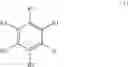
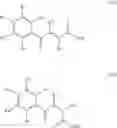
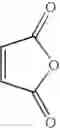
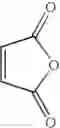
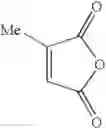
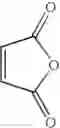
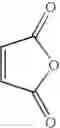
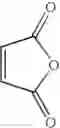
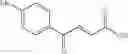
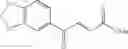
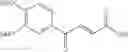
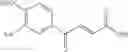
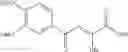
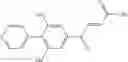
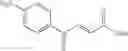
1. A process for producing a 4-phenyl-4-oxo-2-butenoate derivative represented by the following general formula (III) or (IV), which comprises simultaneously or continuously reacting an aromatic hydrocarbon represented by the following general formula (I) and a maleic anhydride derivative represented by the following general formula (II) in the presence of an acid catalyst and an alkylating agent:
wherein R1 to R5 each independently represents a hydrogen atom, an electron-donating group, or an electron-withdrawing group, and adjacent groups of R1 to R5 may be combined to form a ring;
wherein R6 or R7 each independently represents a hydrogen atom, an alkyl group, an alkenyl group, an alkynyl group, an aryl group, an alkoxy group, an aryloxy group, a carbonyl group, a sulfonyl group, a carbonyloxy group, a carbonylamino group, a sulfonylamino group, an amino group, a cyano group, an alkylthio group, an arylthio group, a heterocyclic residual group, or a halogen atom, and R6 and R7 may be combined to form a partially saturated ring, an aromatic ring, or a heterocyle;
wherein R1 to R7 have the same meanings as above and R8 represents an alkyl group.
2. The process for producing the 4-phenyl-4-oxo-2-butenoate derivative according to the above 1., wherein R1 to R5 in the above general formula (I) each independently is a hydrogen atom or an electron-donating group.
3. The process for producing the 4-phenyl-4-oxo-2-butenoate derivative according to the above 1., wherein the above general formula (I) has at least one electron-donating group and at least one electron-withdrawing group, and the total of Hammett's substituent constant σ values of R1 to R5 is 0 or more.
4. The process for producing the 4-phenyl-4-oxo-2-butenoate derivative according to any one of the above 1. to 3., wherein the electron-donating group for R1 to R5 in the above general formula (I) is a group in which a heteroatom intervenes.
5. The process for producing the 4-phenyl-4-oxo-2-butenoate derivative according to any one of the above 1. to 4., wherein the acid catalyst is aluminum chloride.
6. The process for producing the 4-phenyl-4-oxo-2-butenoate derivative according to any one of the above 1. to 5., wherein the alkylating agent is a sulfuric ester.
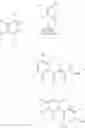
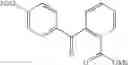
7. The process for producing the 4-phenyl-4-oxo-2-butenoate derivative according to any one of the above 1. to 6., which is used for producing a 4-phenyl-2-butene-1,4-dione derivative represented by the following general formula (V) or (VI):
wherein R1 to R7 have the same meanings as above and R9 represents a hydrogen atom, an alkyl group, an aryl group, a hydroxyl group, an amino group, or a hydroxylamino group.
The following will describe the invention in further detail.
The invention is in the category of Friedel-Crafts reaction.
First, one embodiment of the invention is described in detail but scope of the invention is by no means limited thereto.
In the presence of an acid catalyst and an alkylating agent, the reaction of an aromatic hydrocarbon (I) and a maleic anhydride derivative (II) proceeds according to the following scheme to form a 4-phenyl-4-oxo-2-butenoate derivative (III) or (IV).
Furthermore, the invention enables facile production of aimed compounds in one step.
In the invention, simultaneous or continuous addition of each component means that those components are subjected to a reaction in the same reaction system without changing the reaction system by conducting, for example, extraction, crystallization, or the like.
wherein
-
- R1 to R5 each independently represents a hydrogen atom, an electron-donating group, or an electron-withdrawing group or adjacent groups of R1 to R5 may be combined to form a ring;
- R6 and R7 each independently represents a hydrogen atom, an alkyl group, an alkenyl group, an alkynyl group, an aryl group, an alkoxy group, an aryloxy group, a carbonyl group, a sulfonyl group, a carbonyloxy group, a carbonylamino group, a sulfonylamino group, an amino group, a cyano group, an alkylthio group, an arylthio group, a heterocyclic residual group, and a halogen atom or R6 and R7 may be combined to form a partially saturated ring, an aromatic ring, or a heterocyle; and
- R8 represents an alkyl group.
The following may be conceivable as a reaction mechanism of the invention. First, a reaction mechanism of the conventional process is explained with reference to an example of E-form (E)-4-phenyl-4-oxo-2-butenoate derivative using aluminum chloride as an acid catalyst. In the reaction system, the maleic anhydride derivative and aluminum chloride are in an equilibrium state and the equilibrium is shifted to a state where the maleic anhydride derivative is ring-closed. Therefore, the amount of acyl cation formed in the system is small and hence formation of 4-phenyl-4-oxo-2-butenoic acid is very slow. Moreover, in the conventional process, further esterification should be conducted in order to obtain an aimed 4-phenyl-4-oxo-2-butenoate.
wherein R1 to R8 have the same meanings as above.
Next, one example of the invention will be described wherein diethyl sulfate is used as an alkylating agent. In the case that an alkylating agent is added like the invention, namely, in the case that diethyl sulfate is present at the time of ring-opening of the maleic anhydride derivative, the maleic anhydride derivative reacts with the ethyl group of diethyl sulfate and is converted into ethyl maleate, which is a state difficult to eliminate. As a result, it is conceivable that the equilibrium disappears, ring-closure of maleic acid does not occur, a lot of acyl cations are formed in the system, and hence the reaction proceeds. As the reaction proceeds, the acyl cations are consumed and the equilibrium between ring-opening and ring-closure of the maleic anhydride derivative is further shifted to the direction of ring-opening, i.e., the direction of acyl cation formation, so that the reaction is increasingly accelerated. As a result, it is conceivable that the reaction rate in the invention is remarkably high. In the invention, the same effect is also obtained in the case of Z-form (Z)-4-phenyl-4-oxo-2-butenoate derivative.
In the compound represented by the general formula (I), R1 to R5 each independently represents a hydrogen atom, an electron-donating group, or an electron-withdrawing group. Preferably, at least one of R1 to R5 is an electron-donating group.
The electron-donating group is not particularly limited as far as it is a substituent having an electron-donating action and examples thereof include linear alkyl groups such as methyl, ethyl, n-octyl, and n-dodecyl; branched alkyl groups such as i-propyl, tert-butyl, and iso-decyl; cyclic alkyl groups such as cyclopentyl and cyclohexyl; alkenyl groups such as vinyl, allyl, butenyl, and pentenyl; alkynyl groups such as ethynyl, 1-propynyl, and 1-butynyl; aryl groups such as phenyl and naphthyl; alkoxy groups such as methoxy, ethoxy, tert-butoxy, n-hexyloxy, and n-dodecyloxy; aryloxy groups such as phenoxy and naphthyloxy; hydroxyl group; monosubstituted amino groups such as methylamino, ethylamino, n-hexylamino, and phenylamino; disubstituted amino groups such as N,N-dimethylamino, N,N-diethylamino, N,N-dioctylamino, and N,N-diphenylamino; carbonylamino groups such as acetylamino, tert-butylcarbonylamino, and benzoylamino; sulfonylamino groups such as ethylsulfonylamino, n-dodecylsulfonylamino, and phenylsulfonylamino; alkylthio groups such as ethylthio, n-hexylthio, and iso-tetradecylthio; arylthio groups such as phenylthio and naphthylthio; and the like. Among these electron-donating groups, groups in which a heteroatom intervenes may be preferably mentioned and specifically, alkoxy groups, alkylthio groups, monosubstituted amino groups, and disubstituted amino groups may be mentioned. Among them, alkoxy groups are more preferred and a methoxy group and an ethoxy group are especially preferred.
The electron-withdrawing group is not particularly limited as far as it is a substituent having an electron-withdrawing action and examples thereof include halogen atoms such as chlorine, bromine, and iodine; a nitro group; a cyano group; fluoroalkyl groups such as trifluoromethyl; sulfonyl groups such as methylsulfonyl, iso-propylsulfonyl, and phenylsulfonyl; carbonyl groups such as acetyl, n-hexylcarbonyl, benzoyl, and naphthoyl; carbamoyl groups such as carbamoyl, N-phenylcarbamoyl, and N,N-diethylcarbamoyl; sulfamoyl groups such as sulfamoyl, N-methylsulfamoyl, and N,N-diethylsulfamoyl; heterocyclic residual groups such as 2-pyridyl and 4-pyridyl; and the like. Among these electron-withdrawing groups, there may be preferably mentioned halogen atoms, carbamoyl groups, sulfamoyl groups, and the like, and more preferred are halogen atoms.
These electron-donating groups and electron-withdrawing groups may further have substituent(s) and the substituent is not particularly limited unless it does not participate in the reaction.
Moreover, adjacent groups of R1 to R5 may be combined to form a ring. Specifically, there may be mentioned cyclobutane, cyclopentane, cyclohexane, 1,3-dioxolane, 1,3-oxazolane, 1,3-oxazolan-2-one, 2-pyrrolidinone, and the like.
In the combinations of R1 to R5, R1 to R5 each is preferably a hydrogen atom or an electron-donating group.
Moreover, in the combinations of R1 to R5, combinations where they have at least one electron-donating group and at least one electron-withdrawing group are also preferred. The combinations in this case are not particularly limited as far as the total of Hammett's substituent constant σ values of R1 to R5 is 0 or more, and examples thereof include alkoxy group(s) and halogen atom(s), alkoxy group(s) and sulfamoyl group(s), alkoxy group(s) and carbamoyl group(s), and the like. Preferred are combinations where the total of Hammett's substituent constant σ values of R1 to R5 is 0.5 or more.
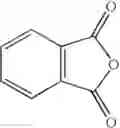
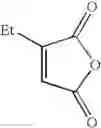
In the compound represented by the general formula (II), R6 and R7 each independently represents specifically a hydrogen atom; a linear alkyl group such as methyl, ethyl, n-octyl, or n-dodecyl; a branched alkyl group such as i-propyl, tert-butyl, or iso-decyl; a cyclic alkyl group such as cyclopentyl or cyclohexyl; an alkenyl group such as vinyl, allyl, butenyl, or pentenyl; an alkynyl group such as ethynyl, 1-propynyl, or 1-butynyl; an aryl group such as phenyl or naphthyl; an alkoxy group such as methoxy, ethoxy, tert-butoxy, n-hexyloxy, or n-dodecyloxy; an aryloxy group such as phenoxy or naphthyloxy; a carbonyl group such as acetyl, n-hexylcarbonyl, benzoyl, naphthoyl, methoxycarbonyl, 1-octyloxycarbonyl, or phenoxycarbonyl; a sulfonyl group such as methylsulfonyl, iso-propylsulfonyl, or phenylsulfonyl; a carbamoyl group such as carbamoyl, N-phenylcarbamoyl, or N,N-diethylcarbamoyl; a sulfamoyl group such as sulfamoyl, N-methylsulfamoyl, or N,N-diethylsulfamoyl; a carbonyloxy group such as acetyloxy, n-octylcarbonyloxy, or benzoyloxy; a carbonylamino group such as acetylamino, tert-butylcarbonylamino, or benzoylamino; a sulfonylamino group such as methylsulfonylamino, n-octylsulfonylamino, or phenylsulfonylamino; an amino group such as amino, methylamino, ethylamino, n-hexylamino, phenylamino, N,N-dimethylamino, N,N-diethylamino, N,N-dioctylamino, or N,N-diphenylamino; a cyano group; an alkylthio group such as ethylthio, n-hexylthio, or iso-tetradecylthio; an arylthio group such as phenylthio or naphthylthio; a heterocyclic residual group such as 2-thienyl, 4-pyridyl, 4-pyrimidyl, or 2-furyl; a halogen atom such as chlorine, bromine, or iodine. Preferred is a hydrogen atom, an alkyl group, an aryl group, an alkoxy group, or a halogen atom and more preferred is a hydrogen atom. These groups may further have substituent(s) and the substituent is not particularly limited unless it does not participate in the reaction. Moreover, R6 and R7 may be combined to form a partially saturated ring, an aromatic ring, or a heterocyle. Specifically, there may be mentioned cyclobutene, cyclopentene, cyclohexene, benzene, pyridine, 2,3-dihydro-1,4-dithin, 1-methyl-1H-pyrrole, or the like.
In the compound represented by the general formula (III) or (IV), R8 represents an alkyl group. It is preferably a linear or branched alkyl group having 1 to 20 carbon atoms, more preferably a linear or branched alkyl group having 1 to 4 carbon atoms. These groups may further have substituent(s) and the substituent is not particularly limited unless it does not participate in the reaction.
In the compound represented by the general formula (V) or (VI), R9 represents a hydrogen atom, an alkyl group, an aryl group, a hydroxyl group, an amino group, or a hydroxylamino group. These groups may further have substituent(s) and the substituent is not particularly limited unless it does not participate in the reaction.
As the acid catalyst for use in the invention, any one can be used as far as it is used for Friedel-Crafts reaction. Specifically, there may be mentioned aluminum chloride, boron trifluoride, bismuth chloride, zinc chloride, ferric chloride, ferric sulfate, iron oxide, antimony pentachloride, gallium chloride, indium chloride, stannic chloride, titanium tetrachloride, hydrochloric acid, hafnium triflate, scandium triflate, copper triflate, polyphosphoric acid, iodine, lithium perchlorate, sulfuric acid, p-toluenesulfonic acid, methanesulfonic acid, trifluoromethanesulfonic acid, fluorosulfonic acid, zeolite β, zeolite H—Y, Nafion-H, ionic liquids (e.g., 1-ethyl-3-methyl-1H-imidazolium tetrachloroaluminium salt, 1-ethyl-3-methyl-1H-imidazolium hexafluoroantimonium salt, 1-ethyl-3-methyl-1H-imidazolium trifluoromethanesulfonium salt, 1-butyl-3-methyl-1H-imidazolium-tetrachloroaluminium salt, 1-butyl-3-methyl-1H-imidazolium hexafluorophosphonium salt, 1-butyl-2,3-dimethyl-1H-imidazolium tetrachloroaluminium salt, etc.), and the like. Preferred are aluminum chloride, stannic chloride, boron trifluoride, bismuth chloride, ferric chloride, hafnium triflate, scandium triflate, zeolite β, zeolite H—Y, and ionic liquids and more preferred is aluminum chloride.
The amount of the acid catalyst for use in the invention is not limited as far as the amount is 0.01 mol or more per mol of the aromatic hydrocarbon represented by the general formula (I). The amount is preferably from 1.0 mol to 10.0 mol, more preferably from 2.0 to 3.5 mol in the case of aluminum chloride, and the amount is preferably from 0.01 to 0.5 mol, more preferably from 0.02 to 0.2 mol in the case of the other acid catalysts.
A variety of the alkylating agents for use in the invention are offered commercially and easily available and they can be used as they are. Specifically, the following may be mentioned.
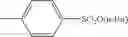
- 1) Alkyl halides: chlorobutyl, bromomethyl, bromoethyl, bromopropyl, bromobutyl, methyl iodide, ethyl iodide, propyl iodide, butyl iodide, etc.
- 2) Sulfuric esters: methyl sulfate, ethyl sulfate, propyl sulfate, butyl sulfate, dimethyl sulfate, diethyl sulfate, dipropyl sulfate, dibutyl sulfate, etc.
- 3) Sulfonic esters: methyl benzenesulfonate, ethyl benzenesulfonate, propyl benzenesulfonate, butyl benzenesulfonate, methyl p-toluenesulfonate, ethyl p-toluenesulfonate, propyl p-toluenesulfonate, butyl p-toluenesulfonate, pentyl p-toluenesulfonate, hexyl p-toluenesulfonate, heptyl p-toluenesulfonate, octyl p-toluenesulfonate, octadecyl p-toluenesulfonate, 2-methylbutyl p-toluenesulfonate, 2-methoxyethyl p-toluenesulfonate, methyl methanesulfonate, ethyl methanesulfonate, propyl methanesulfonate, butyl methanesulfonate, methyl trifluoromethanesulfonate, ethyl trifluoromethanesulfonate, propyl trifluoromethanesulfonate, butyl trifluoromethanesulfonate, etc.
- 4) Sulfurous esters: dimethyl sulfite, diethyl sulfite, dipropyl sulfite, dibutyl sulfite, etc.
- 5) Phosphoric esters: trimethyl phosphate, triethyl phosphate, tripropyl phosphate, tributyl phosphate, trioctyl phosphate, tris(2-ethylhexyl)phosphate, tris(2-chloroethyl)phosphate, tris(2-chloro-1-methylethyl) phosphate, dimethyl phosphate, diethyl phosphate, dipropyl phosphate, dibutyl phosphate, etc.
- 6) Phosphorous esters: trimethyl phosphite, triethyl phosphite, tripropyl phosphite, tributyl phosphite, dimethyl phosphite, diethyl phosphite, dipropyl phosphite, dibutyl phosphite, dilauryl phosphite, etc.
- 7) Carbonic esters: dimethyl carbonate, diethyl carbonate, dipropyl carbonate, dibutyl carbonate, etc.
- 8) Boric esters: trimethyl borate, triethyl borate, tripropyl borate, tributyl borate, etc.
- 9) Ortho acid esters: methyl orthoformate, ethyl orthoformate, propyl orthoformate, butyl orthoformate, trimethyl orthoacetate, triethyl orthoacetate, tripropyl orthoformate, tributyl orthoformate, triethyl orthopropionate, diethylphenyl orthoformate, trimethyl orthovalerate, tetraethyl orthosilicate, tetrabutyl orthosilicate, tetramethyl orthotitanate, tetraethyl orthotitanate, tetrapropyl orthotitanate, tetrabutyl orthotitanate, etc.
Preferably, sulfuric esters and sulfonic esters may be mentioned. Among them, preferred are dimethyl sulfate, diethyl sulfate, methyl benzenesulfonate, ethyl benzenesulfonate, methyl p-toluenesulfonate, ethyl p-toluenesulfonate, methyl methanesulfonate, ethyl methanesulfonate, methyl trifluoromethanesulfonate, and ethyl trifluoromethanesulfonate. Particularly preferred are sulfuric esters and most preferred is diethyl sulfate.
The amount of the alkylating agent to be used is not limited as far as the amount is 0.5 mol or more per mol of the aromatic hydrocarbon represented by the general formula (I). The alkylating agent is used in the range of usually from 0.5 to 20 mol, preferably from 1.0 mol to 10.0 mol, more preferably from 1.2 to 3.5 mol.
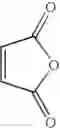
The amount of the maleic anhydride derivative represented by the general formula (II) for use in the invention is not limited as far as the amount is 1 mol or more per mol of the aromatic hydrocarbon represented by the general formula (I). The maleic anhydride derivative is used in the range of usually from 1.1 to 20 mol, preferably from 1.5 mol to 10.0 mol, more preferably from 2.0 to 5.0 mol.
In the invention, a reaction accelerator may be used or may not be used but the reaction accelerator is preferably added in order to obtain the aimed compound in a short period of time and in high yields. As the reaction accelerator, there may be mentioned halogen compounds such as copper iodide, potassium iodide, iodine, copper bromide, and copper chloride; quaternary ammonium salts such as tetra(n-butyl)ammonium iodide and tetra(n-butyl)ammonium-bromide; and nitrile compounds such as acetonitrile, propionitrile, and benzonitrile. Preferred are copper iodide, tetra(n-butyl)ammonium iodide, and acetonitrile, and more preferred are copper iodide and acetonitrile.
The amount of the above reaction accelerator to be used is in the range of 0.001 to 0.1 mol, preferably 0.001 to 0.05 mol, more preferably 0.001 to 0.01 mol per mol of the aromatic hydrocarbon represented by the general formula (I). In the case of a nitrile compound, the accelerator is used in the range of 0.001 to 2 mol, preferably 0.001 to 1 mol, more preferably 0.01 to 0.6 mol per mol of the aromatic hydrocarbon represented by the general formula (I).
In the invention, a reaction solvent may be used or may not be used but usually, any one can be used as far as it is inert to the reaction. The following may be mentioned as solvents inert to usual Friedel-Crafts reaction.
- (i) Aromatic hydrocarbon compounds having an electron-withdrawing group: chlorobenzene, dichlorobenzene, trichlorobenzene, bromobenzene, dibromobenzene, nitrobenzene, etc.
- (ii) Aliphatic halogenated hydrocarbon compounds: dichloromethane, chloroform, carbon tetrachloride, dibromomethane, 1,2-dichloroethane, etc.
- (iii) Aliphatic nitrated hydrocarbon compounds: nitromethane, nitroethane, etc.
- (iv) Ionic liquids: 1-ethyl-3-methyl-1H-imidazolium tetrachloroaluminium salt, 1-ethyl-3-methyl-1H-imidazolium hexafluorophosphonium salt, 1-ethyl-3-methyl-1H-imidazolium hexafluoroantimonium salt, 1-butyl-3-methyl-1H-imidazolium hexafluorophosphonium salt, 1-ethyl-3-methyl-1H-imidazolium trifluoromethanesulfonium salt, methylimidazolium bis(trifluoromethanesulfone)imide salt, 1,2-dimethyl-3-propylimidazolium hexafluorophosphonium salt, trimethylpropylammonium tetrafluoroborate salt, tetra-n-butylphosphonium bromide, etc.
These solvents can be used solely or in combination of two or more of them as a reaction solvent. Among the above solvents, preferred are chlorobenzene, nitrobenzene, dichloromethane, chloroform, and 1,2-dichloroethane, and more preferred are chlorobenzene and dichloromethane. By the use of these solvents, the reaction is completed in a short period of time and the aimed compound is obtained in high yields.
The amount of the reaction solvent to be used is in the range of usually 1 to 1000 ml, preferably 5 to 500 ml, more preferably 35 to 150 ml per 0.1 mol of the aromatic hydrocarbon represented by the general formula (I).
The reaction is carried out at a temperature of the range of usually −20 to 150° C., preferably 0 to 80° C., more preferably 5 to 50° C. The reaction is completed within a reaction time of usually 1 to 10 hours, more preferably 1 to 4 hours.
After completion of the reaction, the acid catalyst is decomposed or filtrated and then the organic layer is neutralized with a base such as sodium hydrogen carbonate to remove excess maleic anhydride derivative. Furthermore, after the solvent is concentrated under reduced pressure, a highly pure 4-phenyl-4-oxo-2-butenoate derivative can be obtained by crystallization with adding an alcohol, hexane, or the like.
Furthermore, the invention is particularly effective as a process for producing an intermediate for the synthesis of compounds easily derived by functional group conversion of conventional ester derivatives, such as 4-phenyl-4-oxo-2-butenamides, 4-phenyl-4-oxo-2-butenoic acids, 4-phenyl-4-oxo-2-butenehydroxamic acids, and 4-phenyl-2-butene-1,4-diones. After a 4-phenyl-4-oxo-2-butenoate derivative is obtained according to the invention, these compounds can be derived directly in the reaction system or, after once isolated, using various conventional methods. Incidentally, these compounds are not limited to the above.
EXAMPLESThe following will explain the present invention more specifically with reference to Examples but the invention is not limited thereto. Evaluation of purity in Examples was based on high performance liquid chromatography (abbreviated as HPLC). In this connection, those described as “HPLC analysis” in Examples were measured under the following conditions and when the conditions were changed, conditions therefor were described in detail.
(Measuring Conditions by HPLC Analysis)
- Column: Inertsil ODS-2 φ4.6×250 mm (manufactured by GL Science)
- Detecting UV wavelength: 270 nm
- Eluting liquid: acetonitrile/10 mM phosphate buffer (pH 2.6)=45/55
- Flow rate of eluting liquid: 1.0 ml/min
- Column temperature: 40° C.
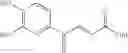
Into a 500 ml four-neck flask were charged 66.9 g (0.682 mol) of maleic anhydride, 150 ml of chlorobenzene, 71.6 ml (0.546 mol) of diethyl sulfate under a nitrogen atmosphere. Then, the whole was cooled to 10° C. or lower and 67.6 g (0.507 mol) of aluminum chloride was added thereto. While temperature was maintained at 10 to 15° C., 25 ml (0.195 mol) of 1,2-dimethoxybenzene was added dropwise, followed by 4 hours of reaction. After termination of the reaction was confirmed by HPLC analysis, the reaction solution was added dropwise to 200 ml of a 1N hydrochloric acid aqueous solution cooled to 0° C. to decompose excess aluminum chloride. After liquid separation, the organic layer was washed with 200 ml of a 10% sodium bicarbonate aqueous solution to remove excess maleic anhydride. After the solvent was removed by evaporation under reduced pressure, the residue was crystallized from 5 ml of ethanol to obtain 36.2 g (yield 70.3%) of the aimed compound as light yellow crystals. As a result of HPLC analysis, the purity was found to be 99.8%.
Example 2Synthesis was conducted under similar conditions to those in Example 1 except that 0.186 g (0.975 mmol) of copper iodide was added as a reaction accelerator.
Comparative Example 1 Synthesis of ethyl (E)-4-(3,4-dimethoxyphenyl)-4-oxo-2-butenoateStep 1
Synthesis of (E)-4-(3,4-dimethoxyphenyl)-4-oxo-2-butenoic acidInto a 500 ml four-neck flask were charged 66.9 g (0.682 mol) of maleic anhydride and 150 ml of chlorobenzene under a nitrogen atmosphere. Then, the whole was cooled to 10° C. or lower and 67.6 g (0.507 mol) of aluminum chloride was added thereto. While temperature was maintained at 10 to 15° C., 25 ml (0.195 mol) of 1,2-dimethoxybenzene was added dropwise, followed by 48 hours of reaction at 20 to 30° C. After termination of the reaction was confirmed by HPLC analysis, the reaction solution was added dropwise to 200 ml of a 1N hydrochloric acid aqueous solution cooled to 0° C. to decompose excess aluminum chloride. The resulting mixture was extracted with 400 ml of ethyl acetate and washing was conducted twice with 200 ml of a 1N hydrochloric acid aqueous solution. The organic layer was washed three times with 200 ml of a saturated sodium hydrogen carbonate aqueous solution to extract (E)-4-(3,4-dimethoxyphenyl)-4-oxo-2-butenoic acid into the aqueous layer, followed by adjusting the aqueous layer to pH 2.0. After 24 h of stirring at 5° C., filtration was carried out to obtain 28.6 g (yield 62.1%) of the aimed compound as light yellow crystals. As a result of HPLC analysis, the purity was found to be 96.5%.
Step 2
Synthesis of ethyl (E)-4-(3,4-dimethoxyphenyl)-4-oxo-2-butenoateInto a 500 ml four-neck flask were charged 26.0 g (0.11 mol) of (E)-4-(3,4-dimethoxyphenyl)-4-oxo-2-butenoic acid obtained in Comparative Example 1, 260 ml of dimethylformamide (DMF), 24.7 g (0.16 mol) of diethyl sulfate, and 30.4 g (0.22 mol) of potassium carbonate under a nitrogen atmosphere, followed by 2 hours of reaction at 35 to 45° C. After completion of the reaction was confirmed by HPLC analysis, a mixed solution of 3.6 g (0.06 mol) of acetic acid/3.6 g of DMF was added dropwise and the whole was stirred at 30 to 35° C. for 1 hour to decompose excess diethyl sulfate. Extraction with a mixed solution of 400 ml of ethyl acetate/400 ml of water/23.4 g of hydrochloric acid was conducted and the organic layer was washed twice with 400 ml of water. After the solvent was removed by evaporation under reduced pressure, the residue was crystallized from 9 ml of ethanol, and 19 ml of water to obtain 25.3 g (yield 87%) of the aimed compound as light yellow crystals. The total yield from 1,2-dimethoxybenzene was 54.0% and the purity was found to be 99.6%.
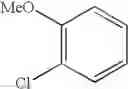
Example 3 Synthesis of ethyl (E)-4-(3-chloro-4-methoxyphenyl)-4-oxo-2-butenoateSynthesis was conducted under similar conditions to those in Example 1 except that 23.2 ml (0.195 mol) of 1-chloro-2-methoxybenzene was added dropwise instead of 25 ml (0.195 mol) of 1,2-dimethoxybenzene in Example 1. After the solvent was removed by evaporation under reduced pressure, the residue was crystallized from 5 ml of ethanol to obtain 35.7 g (yield 68.0%) of the aimed compound as light yellow crystals. As a result of HPLC analysis, the purity was found to be 99.6%.
Example 4Synthesis was conducted under similar conditions to those in Example 3 except that 0.186 g (0.975 mmol) of copper iodide was added as a reaction accelerator.
Comparative Example 2 Synthesis of ethyl (E)-4-(3-chloro-4-methoxyphenyl)-4-oxo-2-butenoateStep 1
Synthesis of (E)-4-(3-chloro-4-methoxyphenyl)-4-oxo-2-butenoic acidInto a 500 ml four-neck flask were charged 66.9 g (0.682 mol) of maleic anhydride and 150 ml of chlorobenzene under a nitrogen atmosphere. Then, the whole was cooled to 10° C. or lower and 67.6 g (0.507 mol) of aluminum chloride was added thereto. While temperature was maintained at 10 to 15° C., 23.2 ml (0.195 mol) of 1-chloro-2-methoxybenzene was added dropwise, followed by 51 hours of reaction at 20 to 30° C. After termination of the reaction was confirmed by HPLC analysis, the reaction solution was added dropwise to 200 ml of a 1N hydrochloric acid aqueous solution cooled to 0° C. to decompose excess aluminum chloride. Extraction with 400 ml of ethyl acetate was conducted and the organic layer was washed twice with 200 ml of a 1N hydrochloric acid aqueous solution. Then, the organic layer was extracted three times with 200 ml of a saturated sodium hydrogen carbonate aqueous solution to extract (E)-4-(3-chloro-4-methoxyphenyl)-4-oxo-2-butenoic acid into the aqueous layer, followed by adjusting the aqueous layer to pH 2.0. After 24 hours of stirring at 5° C., filtration was carried out to obtain 28.4 g (yield 60.5%) of the aimed compound as light yellow crystals. As a result of HPLC analysis, the purity was found to be 96.3%.
Step 2
Synthesis of ethyl (E)-4-(3-chloro-4-methoxyphenyl)-4-oxo-2-butenoateInto a 500 ml four-neck flask were charged 26.5 g (0.11 mol) of (E)-4-(3-chloro-4-methoxyphenyl)-4-oxo-2-butenoic acid obtained in Step 1, 260 ml of dimethylformamide (DMF), 24.7 g (0.16 mol) of diethyl sulfate, and 30.4 g (0.22 mol) of potassium carbonate under a nitrogen atmosphere, followed by 2 hours of reaction at 35 to 45° C. After completion of the reaction was confirmed by HPLC analysis, a mixed solution of 3.6 g (0.06 mol) of acetic acid/3.6 g of DMF was added dropwise and the whole was stirred at 30 to 35° C. for 1 hour to decompose excess diethyl sulfate. Thereafter, extraction with a mixed solution of 400 ml of ethyl acetate/400 ml of water/23.4 g of hydrochloric acid was conducted and the organic layer was washed twice with 400 ml of water. After the solvent was removed by evaporation under reduced pressure, the residue was crystallized from 9 ml of ethanol, and 19 ml of water to obtain 25.4 g (yield 86.0%) of the aimed compound as light yellow crystals. The total yield from 1-chloro-2-methoxybenzene was 52.0% and the purity was found to be 99.6%.
Results of Examples 1 to 4 and Comparative Examples 1 and 2 are shown in Table 1. In this connection, the reaction time of Comparative Examples is described as the total of those in Steps 1 and 2.
| TABLE 1 | |||||
| Aromatic | Reaction | Reaction | Yield | Purity | |
| hydrocarbon | accelerator | time (h) | (%) | (%) | |
| Example 1 | 1,2-Dimethoxy- | Not added | 4 | 70.3 | 99.8 |
| benzene | |||||
| Example 2 | 1,2-Dimethoxy- | Copper | 2 | 61.2 | 99.7 |
| benzene | iodide | ||||
| Comparative | 1,2-Dimethoxy- | Not added | Total | Total | 99.6 |
| Example 1 | benzene | 50 | 54.0 | ||
| Example 3 | 1-Chloro-2- | Not added | 4 | 68.0 | 99.6 |
| methoxybenzene | |||||
| Example 4 | 1-Chloro-2- | Copper | 2 | 64.5 | 99.8 |
| methoxybenzene | iodide | ||||
| Comparative | 1-Chloro-2- | Not added | Total | Total | 99.6 |
| Example 2 | methoxybenzene | 53 | 52.0 | ||
From the results shown in Table 1, the following are apparent. By the process of the invention, it is possible to obtain aimed ethyl (E)-4-(3,4-dimethoxyphenyl)-4-oxo-2-butenoate or ethyl (E)-4-(3-chloro-4-methoxyphenyl)-4-oxo-2-butenoate in a remarkably short period of time and in high purity. On the other hand, in the cases of Comparative Examples, the reaction time is very long, i.e., 48 hours for the synthesis of (E)-4-(3,4-dimethoxyphenyl)-4-oxo-2-butenoic acid and 51 hours for (E)-4-(3-chloro-4-methoxyphenyl)-4-oxo-2-butenoic acid and, in addition, the step of ethyl esterification should be further carried out for obtaining the aimed compounds, so that the process costs very high as compared with the process of the invention and hence is not preferred as an industrial production process.
Examples 5 to 10Synthesis was conducted under similar conditions to those in Example 1 except that the acid catalyst was changed from aluminum chloride to each of the acid catalysts shown in Table 2 in Example 1. Table 2 shows the results.
Examples 11 to 15Synthesis was conducted under similar conditions to those in Example 3 except that the acid catalyst was changed from aluminum chloride to each of the acid catalysts shown in Table 2 in Example 3. Table 2 shows the results.
| TABLE 2 | |||||
| Amount | |||||
| of acid | Reaction | ||||
| Exam- | catalyst | time | Yield | Purity | |
| ple | Acid catalyst | (mol) | (h) | (%) | (%) |
| 5 | Ferric chloride | 0.039 | 3 | 58.4 | 99.4 |
| 6 | p-Toluenesulfonic acid | 0.020 | 3 | 55.7 | 99.3 |
| 7 | Stannic chloride | 0.039 | 4 | 62.8 | 99.4 |
| 8 | Titanium tetrachloride | 0.039 | 3 | 61.0 | 99.2 |
| 9 | Zinc chloride | 0.008 | 4 | 65.9 | 99.2 |
| 10 | Iodine | 0.020 | 4 | 50.3 | 99.0 |
| 11 | 1-Ethyl-3-methyl-1H- | 0.005 | 3 | 66.8 | 99.5 |
| imidazolium tetrachloro- | |||||
| aluminium salt | |||||
| 12 | Ferric chloride | 0.039 | 3 | 65.2 | 99.3 |
| 13 | Bismuth chloride | 0.020 | 3 | 55.9 | 99.3 |
| 14 | Boron trifluoride | 0.039 | 4 | 60.3 | 99.4 |
| 15 | 1-Ethyl-3-methyl-1H- | 0.010 | 3 | 66.8 | 99.5 |
| imidazolium trifluoro- | |||||
| methanesulfonium salt | |||||
Synthesis was conducted under similar conditions to those in Example 1 except that the alkylating agent was changed from diethyl sulfate to each of the alkylating agents shown in Table 3 in Example 1. Table 3 shows the results.
Examples 31 to 37Synthesis was conducted under similar conditions to those in Example 3 except that the alkylating agent was changed from diethyl sulfate to each of the alkylating agents shown in Table 3 in Example 3. Table 3 shows the results.
| TABLE 3 | |||||
| Amount | |||||
| of | |||||
| Ex- | Alkylating | Reaction | |||
| am- | agent | time | Yield | Purity | |
| ple | Alkylating agent | (mol) | (h) | (%) | (%) |
| 16 | Bromopropyl | 0.507 | 3 | 60.4 | 99.4 |
| 17 | Iodooctadecane | 0.507 | 4 | 55.6 | 99.3 |
| 18 | Ethyl trifluoromethane- | 0.507 | 4 | 55.6 | 99.4 |
| sulfonate | |||||
| 19 | Ethyl methanesulfonate | 0.507 | 3 | 60.9 | 99.5 |
| 20 | Diethyl sulfite | 0.507 | 4 | 68.4 | 99.2 |
| 21 | Trioctyl phosphate | 0.507 | 4 | 59.8 | 99.2 |
| 22 | Dibutyl phosphate | 0.507 | 4 | 55.6 | 99.0 |
| 23 | Trimethyl phosphite | 0.507 | 4 | 65.7 | 99.1 |
| 24 | Dilauryl phosphite | 0.507 | 4 | 65.0 | 99.2 |
| 25 | Diethyl carbonate | 0.507 | 4 | 58.1 | 98.9 |
| 26 | Trimethyl borate | 0.253 | 3 | 66.9 | 99.3 |
| 27 | Methyl orthoformate | 0.253 | 3 | 67.3 | 99.4 |
| 28 | Triethyl orthopropionate | 0.253 | 3 | 62.4 | 99.3 |
| 29 | Tetrapropyl | 0.253 | 3 | 64.6 | 99.0 |
| orthotitanate | |||||
| 30 | Tetraethyl orthosilicate | 0.253 | 3 | 55.8 | 99.3 |
| 31 | Methyl benzenesulfonate | 0.507 | 4 | 70.1 | 99.2 |
| 32 | Diethyl sulfate | 0.507 | 4 | 70.9 | 99.5 |
| 33 | Tris(2-chloromethyl) | 0.507 | 3 | 61.1 | 99.2 |
| phosphate | |||||
| 34 | Ethyl p-toluenesulfonate | 0.507 | 4 | 68.2 | 99.3 |
| 35 | Tributyl phosphite | 0.507 | 3 | 65.7 | 99.2 |
| 36 | Tripropyl borate | 0.253 | 4 | 64.7 | 99.3 |
| 37 | Triethyl orthoacetate | 0.253 | 4 | 59.8 | 98.9 |
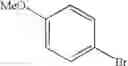
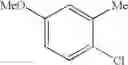
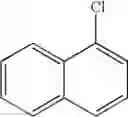
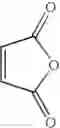
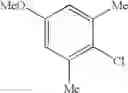
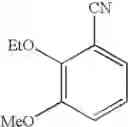
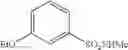
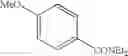
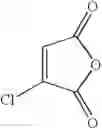
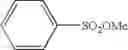
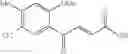
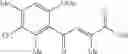
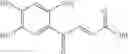
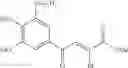
Synthesis was conducted under similar conditions to those in Example 1 using each combination of the hydrocarbons, the alkylating agents, and the maleic anhydride derivatives shown in the following Table 4 instead of the combination of 1,2-dimethoxybenzene, diethyl sulfate, and maleic anhydride in Example 1. Table 4 shows the results.
| TABLE 4 | |||
| Maleic | |||
| Aromatic | anhydride | ||
| Example | hydrocarbon | Alkylating agent | derivative |
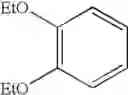
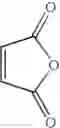
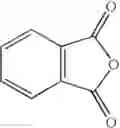
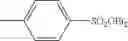
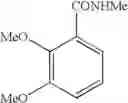
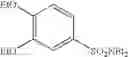
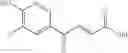
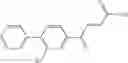
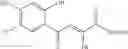
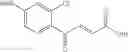
| 38 | (EtO)2SO2 | ||
| 39 | |||
| 40 | |||
| 41 | (MeO)2SO2 | ||
| 42 | (EtO)2SO2 | ||
| 43 | (EtO)2SO2 | ||
| 44 | (EtO)2SO2 | ||
| 45 | (EtO)2SO2 | ||
| 46 | (MeO)2SO2 | ||
| 47 | (EtO)2SO2 | ||
| 48 | |||
| 49 | |||
| 50 | (MeO)2SO2 | ||
| 51 | (EtO)2SO2 | ||
| 52 | (EtO)2SO2 | ||
| 53 | (EtO)2SO2 | ||
| 54 | (EtO)2SO2 | ||
| 55 | (MeO)2SO2 | ||
| 56 | (EtO)2SO2 | ||
| 57 | (MeO)2SO2 | ||
| 58 | (EtO)2SO2 | ||
| 59 | (MeO)2SO2 | ||
| 60 | CH3SO3Et | ||
| 61 | |||
| 62 | |||
| 63 | CF3SO3Et | ||
| 64 | CH3SO3Me | ||
| 65 | CF3SO3Me | ||
| 66 | CF3SO3Et | ||
| 67 | |||
| Example | Product | Yield (%) | Purity (%) | |
| 38 | 70.5 | 99.8 | ||
| 39 | 60.9 | 99.4 | ||
| 40 | 66.9 | 99.5 | ||
| 41 | 61.1 | 99.3 | ||
| 42 | 69.7 | 99.7 | ||
| 43 | 65.5 | 99.6 | ||
| 44 | 61.3 | 99.6 | ||
| 45 | 66.2 | 99.5 | ||
| 46 | 61.3 | 99.6 | ||
| 47 | 65.3 | 99.5 | ||
| 48 | 62.8 | 99.4 | ||
| 49 | 60.9 | 99.3 | ||
| 50 | 51.7 | 99.3 | ||
| 51 | 57.0 | 99.7 | ||
| 52 | 62.1 | 99.6 | ||
| 53 | 60.3 | 99.6 | ||
| 54 | 63.0 | 99.5 | ||
| 55 | 66.4 | 99.6 | ||
| 56 | 60.3 | 99.2 | ||
| 57 | 62.9 | 99.5 | ||
| 58 | 65.7 | 99.5 | ||
| 59 | 58.1 | 99.4 | ||
| 60 | 59.9 | 99.2 | ||
| 61 | 65.2 | 99.5 | ||
| 62 | 63.9 | 99.3 | ||
| 63 | 59.8 | 99.3 | ||
| 64 | 60.3 | 99.3 | ||
| 65 | 58.1 | 99.4 | ||
| 66 | 57.4 | 99.2 | ||
| 67 | 58.9 | 99.5 | ||
Synthesis was conducted under the same conditions as in Example 3 changing the combination of 1-chloro-2-methoxybenzene and maleic anhydride in Example 3 to produce the following compounds III-1 to III-8.
Example 68 Synthesis of (E)-4-(3-chloro-4-methoxyphenyl)-4-oxo-2-butenamideInto a 500 ml four-neck flask were charged 66.9 g (0.682 mol) of maleic anhydride, 150 ml of chlorobenzene, 71.6 ml (0.546 mol) of diethyl sulfate under a nitrogen atmosphere. Then, the whole was cooled to 10° C. or lower and 67.6 g (0.507 mol) of aluminum chloride was added thereto. While temperature was maintained at 10 to 15° C., 23.2 ml (0.195 mol) of 1-chloro-2-methoxybenzene was added dropwise, followed by 4 hours of reaction. After termination of the reaction was confirmed by HPLC analysis, the reaction solution was added dropwise to 200 ml of a 1N hydrochloric acid aqueous solution cooled to 0° C. to decompose excess aluminum chloride. After liquid separation, the organic layer was washed with 200 ml of a 10% sodium bicarbonate aqueous solution to remove excess maleic anhydride. After the solvent was removed by evaporation under reduced pressure, the residue was treated with 200 ml of concentrated ammonia water for 1 hour while temperature was maintained at 0° C. and the resulting mixture was extracted with 200 ml of ethyl acetate. Then, the solvent was removed by evaporation under reduced pressure and the residue was crystallized from 5 ml of ethanol to obtain 23.9 g (yield 51.1%) of the aimed compound. As a result of HPLC analysis, the purity was found to be 99.2%.
Example 69 Synthesis of N-phenyl-(E)-4-(3-chloro-4-methoxyphenyl)-4-oxo-2-butenamideInto a 500 ml four-neck flask were charged 66.9 g (0.682 mol) of maleic anhydride, 150 ml of chlorobenzene, 71.6 ml (0.546 mol) of diethyl sulfate, and 0.186 g (0.975 mmol) of copper iodide under a nitrogen atmosphere. Then, the whole was cooled to 10° C. or lower and 67.6 g (0.507 mol) of aluminum chloride was added thereto. While temperature was maintained at 10 to 15° C., 23.2 ml (0.195 mol) of 1-chloro-2-methoxybenzene was added dropwise, followed by 2 hours of reaction. After termination of the reaction was confirmed by HPLC analysis, the reaction solution was added dropwise to 200 ml of a 1N hydrochloric acid aqueous solution cooled to 0° C. to decompose excess aluminum chloride. After liquid separation, the organic layer was washed with 200 ml of a 10% sodium bicarbonate aqueous solution to remove excess maleic anhydride. Then, 13.3 g (0.143 mol) of aniline was added to the organic layer, followed by 4 hours of reflux while ethanol formed during the reaction was removed. After completion of the reaction, the solvent was removed by evaporation under reduced pressure and the residue was crystallized from 10 ml of ethanol to obtain 32.3 g (yield 52.5%) of the aimed compound. As a result of HPLC analysis, the purity was found to be 99.1%.
Example 70 Synthesis of (E)-4-(3-chloro-4-methoxyphenyl)-4-oxo-2-butenoic acidInto a 500 ml four-neck flask were charged 66.9 g (0.682 mol) of maleic anhydride, 150 ml of chlorobenzene, and 71.6 ml (0.546 mol) of diethyl sulfate under a nitrogen atmosphere. Then, the whole was cooled to 10° C. or lower and 67.6 g (0.507 mol) of aluminum chloride was added thereto. While temperature was maintained at 10 to 15° C., 23.2 ml (0.195 mol) of 1-chloro-2-methoxybenzene was added dropwise, followed by 4 hours of reaction. After termination of the reaction was confirmed by HPLC analysis, the reaction solution was added dropwise to 200 ml of a 1N hydrochloric acid aqueous solution cooled to 0° C. to decompose excess aluminum chloride. After liquid separation, the organic layer was washed with 200 ml of a 10% sodium bicarbonate aqueous solution to remove excess maleic anhydride. Then, 42.9 g (0.286 mol) of sodium iodide and 31.1 g (0.286 mol) of chlorotrimethylsilane were added to the organic layer, followed by heating and refluxing. After completion of the reaction, the organic layer was washed with 100 ml of a 5% sodium thiosulfate aqueous solution and 100 ml of a saturated sodium hydrogen carbonate aqueous solution to extract (E)-4-(3,4-dimethoxyphenyl)-4-oxo-2-butenoic acid into the aqueous layer, followed by adjusting the aqueous layer to pH 2.0. After 24 h of stirring at 5° C., filtration was conducted to obtain 21.1 g (yield 45.0%) of the aimed compound as light yellow crystals. As a result of HPLC analysis, the purity was found to be 99.1%.
Example 71 Synthesis of (E)-1-(3-chloro-4-methoxyphenyl)-4-phenyl-2-butene-1,4-dioneInto a 200 ml four-neck flask were added 10 g (0.038 mol) of ethyl (E)-4-(3-chloro-4-methoxyphenyl)-4-oxo-2-butenoate obtained in Example 3 and 50 ml of tetrahydrofuran under a nitrogen atmosphere, and 22.5 ml (0.045 mol) of a tetrahydrofuran solution of 32% phenylmagnesium bromide was slowly added dropwise so as to maintain inner temperature at 10° C. or lower. Then, after 1 hour of stirring at room temperature, the whole was again cooled and 50 ml of a 5% ammonium chloride aqueous solution was added thereto. After liquid separation, the resulting organic layer was washed with 50 ml of a 10% sodium bicarbonate aqueous solution and then with 50 ml of water. After the solvent was removed by evaporation under reduced pressure, the residue was crystallized from 10 ml of ethanol to obtain 8.9 g (yield 78.0%) of the aimed compound. As a result of HPLC analysis, the purity was found to be 99.3%.
Example 72 Synthesis of (E)-4-(3,4-dimethoxyphenyl)-4-oxo-2-butenamideInto a 500 ml four-neck flask were charged 66.9 g (0.682 mol) of maleic anhydride, 150 ml of chlorobenzene, 71.6 ml (0.546 mol) of diethyl sulfate, and 0.186 g (0.975 mmol) of copper iodide under a nitrogen atmosphere. Then, the whole was cooled to 10° C. or lower and 67.6 g (0.507 mol) of aluminum chloride was added thereto. While temperature was maintained at 10 to 15° C., 25 ml (0.195 mol) of 1,2-dimethoxybenzene was added dropwise, followed by 2 hours of reaction. After termination of the reaction was confirmed by HPLC analysis, the reaction solution was added dropwise to 200 ml of a 1N hydrochloric acid aqueous solution cooled to 0° C. to decompose excess aluminum chloride. After liquid separation, the organic layer was washed with 200 ml of a 10% sodium bicarbonate aqueous solution to remove excess maleic anhydride. After the solvent was removed by evaporation under reduced pressure, the residue was treated with 200 ml of concentrated ammonia water for 1 hour while temperature was maintained at 0° C. and the resulting mixture was extracted with 200 ml of ethyl acetate. Then, the solvent was removed by evaporation under reduced pressure and the residue was crystallized from 5 ml of ethanol to obtain 28.9 g (yield 63.2%) of the aimed compound. As a result of HPLC analysis, the purity was found to be 99.1%.
Example 73 Synthesis of N-phenyl-(E)-4-(3,4-dimethoxyphenyl)-4-oxo-2-butenamideInto a 500 ml four-neck flask were charged 66.9 g (0.682 mol) of maleic anhydride, 150 ml of chlorobenzene, and 71.6 ml (0.546 mol) of diethyl sulfate under a nitrogen atmosphere. Then, the whole was cooled to 10° C. or lower and 67.6 g (0.507 mol) of aluminum chloride was added thereto. While temperature was maintained at 10 to 15° C., 25 ml (0.195 mol) of 1,2-dimethoxybenzene was added dropwise, followed by 4 hours of reaction. After termination of the reaction was confirmed by HPLC analysis, the reaction solution was added dropwise to 200 ml of a 1N hydrochloric acid aqueous solution cooled to 0° C. to decompose excess aluminum chloride. After liquid separation, the organic layer was washed with 200 ml of a 10% sodium bicarbonate aqueous solution to remove excess maleic anhydride. Then, 13.3 g (0.143 mol) of aniline was added, followed by 4 hours of refluxing while removing ethanol formed during the reaction. After completion of the reaction, the solvent was removed under reduced pressure and the residue was crystallized from 10 ml of ethanol to obtain 34.8 g (yield 57.4%) of the aimed compound. As a result of HPLC analysis, the purity was found to be 99.0%.
Example 74 Synthesis of (E)-4-(3,4-dimethoxyphenyl)-4-oxo-2-butenoic acidInto a 500 ml four-neck flask were charged 66.9 g (0.682 mol) of maleic anhydride, 150 ml of chlorobenzene, 71.6 ml (0.546 mol) of diethyl sulfate, and 0.186 g (0.975 mmol) of copper iodide under a nitrogen atmosphere. Then, the whole was cooled to 10° C. or lower and 67.6 g (0.507 mol) of aluminum chloride was added thereto. While temperature was maintained at 10 to 15° C., 25 ml (0.195 mol) of 1,2-dimethoxybenzene was added dropwise, followed by 2 hours of reaction. After termination of the reaction was confirmed by HPLC analysis, the reaction solution was added dropwise to 200 ml of a 1N hydrochloric acid aqueous solution cooled to 0° C. to decompose excess aluminum chloride. After liquid separation, the organic layer was washed with 200 ml of a 10% sodium bicarbonate aqueous solution to remove excess maleic anhydride. Then, 42.9 g (0.286 mol) of sodium iodide and 31.1 g (−0.286 mol) of chlorotrimethylsilane were added to the organic layer, followed by heating and refluxing. After completion of the reaction, the organic layer was washed with 100 ml of a 5% sodium thiosulfate aqueous solution and 100 ml of a saturated sodium hydrogen carbonate aqueous solution to extract (E)-4-(3,4-dimethoxyphenyl)-4-oxo-2-butenoic acid into the aqueous layer, followed by adjusting the aqueous layer to pH 2.0. After 24 h of stirring at 5° C., filtration was conducted to obtain 24.9 g (yield 54.2%) of the aimed compound as light yellow crystals. As a result of HPLC analysis, the purity was found to be 98.5%.
Example 75 Synthesis of (E)-1-(3,4-dimethoxyphenyl)-4-phenyl-2-butene-1,4-dioneInto a 200 ml four-neck flask were added 10 g (0.038 mol) of ethyl (E)-4-(3,4-dimethoxyphenyl)-4-oxo-2-butenoate obtained in Example 1 and 50 ml of tetrahydrofuran under a nitrogen atmosphere, and 22.5 ml (0.045 mol) of a tetrahydrofuran solution of 32% phenylmagnesium bromide was slowly added dropwise so as to maintain inner temperature at 10° C. or lower. Then, after 1 hour of stirring at room temperature, the whole was again cooled and 50 ml of a 5% ammonium chloride aqueous solution was added to effect hydrolysis. After liquid separation, the resulting organic layer after completion of the reaction was washed with 50 ml of a 10% sodium bicarbonate aqueous solution and then with 50 ml of water. After the solvent was removed by evaporation under reduced pressure, the residue was crystallized from 10 ml of ethanol to obtain 8.8 g (yield 78.0%) of the aimed compound. As a result of HPLC analysis, the purity was found to be 99.2%.
INDUSTRIAL APPLICABILITYAccording to the process of the invention, it is possible to stably supply a 4-phenyl-4-oxo-2-butenoate derivative useful as an intermediate for medicines, pesticides, perfumes, and the like, in a short period of time, at low cost, in high purity and on an industrial scale, and thus the process has industrially extremely high practical use.
Claims
1. A process for producing a 4-phenyl-4-oxo-2-butenoate derivative represented by the following general formula (III) or (IV), which comprises simultaneously or continuously reacting an aromatic hydrocarbon represented by the following general formula (I) and a maleic anhydride derivative represented by the following general formula (II) in the presence of an acid catalyst and an alkylating agent:
wherein R1 to R5 each independently represents a hydrogen atom, an electron-donating group, or an electron-withdrawing group, and adjacent groups of R1 to R5 may be combined to form a ring;
wherein R6 or R7 each independently represents a hydrogen atom, an alkyl group, an alkenyl group, an alkynyl group, an aryl group, an alkoxy group, an aryloxy group, a carbonyl group, a sulfonyl group, a carbonyloxy group, a carbonylamino group, a sulfonylamino group, an amino group, a cyano group, an alkylthio group, an arylthio group, a heterocyclic residual group, or a halogen atom, and R6 and R7 may be combined to form a partially saturated ring, an aromatic ring, or a heterocyle;
wherein R1 to R7 have the same meanings as above and R8 represents an alkyl group.
2. The process for producing the 4-phenyl-4-oxo-2-butenoate derivative according to claim 1, wherein R1 to R5 in the above general formula (I) each independently is a hydrogen atom or an electron-donating group.
3. The process for producing the 4-phenyl-4-oxo-2-butenoate derivative according to claim 1, wherein the above general formula (I) has at least one electron-donating group and at least one electron-withdrawing group, and the total of Hammett's substituent constant σ values of R1 to R5 is 0 or more.
4. The process for producing the 4-phenyl-4-oxo-2-butenoate derivative according to claim 1, wherein the electron-donating group of R1 to R5 in the above general formula (I) is a group in which a heteroatom intervenes.
5. The process for producing the 4-phenyl-4-oxo-2-butenoate derivative according to claim 1, wherein the acid catalyst is aluminum chloride.
6. The process for producing the 4-phenyl-4-oxo-2-butenoate derivative according to claim 1, wherein the alkylating agent is a sulfuric ester.
7. The process for producing the 4-phenyl-4-oxo-2-butenoate derivative according to claim 1, which is used for producing a 4-phenyl-2-butene-1,4-dione derivative represented by the following general formula (V) or (VI):
wherein R1 to R7 have the same meanings as above and R9 represents a hydrogen atom, an alkyl group, an aryl group, a hydroxyl group, an amino group, or a hydroxylamino group.
Images & Drawings included:


























Sources:
- United States Patent and Trademark Office - verify current appl. status at the USPTO↗
Recent applications in this class:
- » 20130137894 2013-05-30
Chemically-modified graphene and method for producing the same - » 20100069666 2010-03-18
IMPROVED METHOD FOR THE PRODUCTION OF UNSATURATED CARBOXYLIC ACID ANHYDRIDES - » 20090270649 2009-10-29
Process for alkaline hydrolysis of carboxylic acid derivatives to carboxylic acids - » 20080009652 2008-01-10
Process of Making Butyric Acid - » 20050014974 2005-01-20
Process for the manufacture of isobutyric anhydride
Recent applications for this Assignee:
- » 20110237784 2011-09-29
10a-Azalide compound crosslinked at 10a- and 12-positions - » 20110172433 2011-07-14
Imino derivatives, methods for producing the same and insecticides containing the same - » 20110152239 2011-06-23
10a-azalide compound having 4-membered ring structure - » 20110052779 2011-03-03
ACIDIC SOLUBLE PROTEIN-CONTAINING BEVERAGE COMPOSITION AND METHOD FOR PRODUCING SAME - » 20110009662 2011-01-13
Process for producing phosphorus-containing dehydroamino acid - » 20110003834 2011-01-06
PRODUCTION METHOD AND PRODUCTION APPARATUS FOR A HIGH THEOBROMINE-CONTAINING COMPOSITION - » 20100330100 2010-12-30
PSEUDOMONAS AERUGINOSA-OUTER MEMBRANE PROTEIN PA4710 - » 20100130475 2010-05-27
Therapeutic agent for inflammatory bowel diseases - » 20100113525 2010-05-06
Pest control composition - » 20100098807 2010-04-22
Endoglucanase PPCE and cellulase preparation containing the same