Combustible in the form of compressed elements containing plant material and method for the production of such a combustible
US20050178053A1
2005-08-18
10/511,866
2003-04-16
Abstract:
The invention relates to a fuel in the form of compacts containing plant material, characterized in that the fuel of a) straw or straw components and b) comminuted hardwood and/or cocoanut shells wherein both the straw and the straw component and also the hardwood and cocoanut shells are digested by microorganisms. The invention also relates to a method of making the fuel compacts.
Interested in similar patents?
Get notified when new applications in this technology area are published.
Classification:
C10L5/44 » CPC main
Solid fuels essentially based on materials of non-mineral origin on vegetable substances
C10L5/361 » CPC further
Solid fuels briquettes consisting mainly of carbonaceous materials of mineral origin; Other details of the shaped fuels, e.g. briquettes; Shape Briquettes
Y02E50/10 » CPC further
Technologies for the production of fuel of non-fossil origin Biofuels, e.g. bio-diesel
Y02E50/10 » CPC further
Technologies for the production of fuel of non-fossil origin Biofuels, e.g. bio-diesel
Y02E50/30 » CPC further
Technologies for the production of fuel of non-fossil origin Fuel from waste, e.g. synthetic alcohol or diesel
Y02E50/30 » CPC further
Technologies for the production of fuel of non-fossil origin Fuel from waste, e.g. synthetic alcohol or diesel
Description
The invention relates to a combustible [fuel] in the form of compressed bodies or elements [compacts] with a content of plant material and a method of producing such a fuel.
The fuel so produced is especially suitable for grilling in the preparation of foods and it is known that the quality of the fuel and its combustion properties has a significant influence on the quality of the food to be prepared. Further the invention is intended to find a way to economically utilize plant components which are available in large volumes like straw, hardwood particles or cocoanut shells.
In fuels for grilling on an open flame or from glowing briquettes or incandescence, the fuel and the combustion gases must not be objectionable from a point of view of the foodstuff technology. In addition the fuel must ensure that there will be no falsification of the taste or aroma of the grilled food product or, preferably, must impart a satisfactory seasoning or taste to the product. In addition, the fuel should be easily handleable and reliable. The ability to handle the fuel means that the fuel should be easily ignitable. The burning properties which are especially desirable for grilling include the ability of the fuel upon generation of heat by burning to store the heat so that in subsequent incandescent phases a uniform and uniform delivery of the heat to the grilled product over the longest possible time can occur. The fuel should also be usable advantageously for general heating purposes.
The fuel according to the invention is characterized in significant respects by the following:
-
- a. a content of straw or straw components and
- b. comminuted hardwood and/or coconut shells, whereby the straw or straw components and also the hardwood or coconut shells have been subjected to a loosening up [digestion] by microorganisms. A further feature is that the fuel is binder free.
Further advantageous features of the fuel can be deduced from the patent claims and the following description and the drawing.
The method according to the invention of producing the fuel compact [briquette] is characterized in that the straw or straw components and the comminuted hardwood and or coconut sells are moistened with a microorganism suspension and permitted to ferment for about two to four seeks, whereby the fermentation of the straw components is effected aerobically or anaerobically and the fermentation of the hardwood particles or coconut shell particles is effected anaerobically and that the fermented components to the extent necessary are comminuted, are mixed optionally with an addition or a preparation of inorganic substances like limestone granulate, and dried and then pressed into compacts under a pressure of preferably 700 to 900 kg/cm2. In accordance with a further feature of the method, the compacts are preferably coated with a water-shedding coating of stearin by immersion or spraying to form a coating which burns without a residue.
The invention is described hereinafter with reference to the drawing in a number of variants or embodiments.
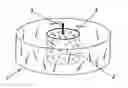
FIG. 1 shows in a perspective view an embodiment of the fuel and
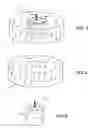
FIGS. 2 and 3 show the compact and an ignition promoter separate from the compact.
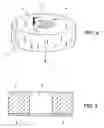
FIG. 4 shows in a perspective view a further embodiment of the fuel.
FIG. 5 shows in section a third embodiment of the fuel in a radial cut.
Basically the fuel consists of a compact with a count of plant material which is a combination of two components:
-
- a. straw or straw components
- b. comminuted hardwood and/or coconut shells.
Both the straw or straw components and the hardwood particles or coconut shell particles are digested up prior to pressing by fermentation.
The straw can be practically any kind of straw. With respect to the quantity requirements of the straw, hemp straw, linen [flax] straw, rye straw, rice straw and barley straw the straw is preferably comminuted to a particle size of 0.5 to 2.0 cm. The straw can be processed as it is available naturally or in the form of so-called straw scrapings, or as the residue of straw which has been freed from its fiber component. The latter can arise from the treatment of straw to recover the fiber component form the raw straw leaving the straw scrapings as an inexpensive waste product.
The hardwood or coconut shell particles have preferably a size of 0.5 to 0.7 cms and also arise as waste products which are available inexpensively.
The hardwood particles can derive preferably from beech, oak, maple, birch, cherry, plum or eucalyptus wood and can be produced in the process of those woods. Of the types of straw described, the hemp straw is especially suitable because of its high fuel value and its burning properties for the purposes of the present invention. To produce the straw raw material, unbroken straw or residues from the breaking of straw can be used.
The mentioned plant raw materials are used in a fermented form. The fermentation results in a digestion of the components of the plant material or an opening up of the structure thereof which has an advantageous effect on the burning properties of the fuel and the aroma development upon combustion.
For the fermentation, fermenting agents can be used which, for example, are commercially available as composting promoters or as auxiliary agents in the animal feed field.
Basically these include mixtures of microorganisms and fermenting agents which can digest cellulose contained in the plant materials. The fermenting agents which have been found to be effective for the present invention are for example those marketed under the designation EM-1 of the Firm Multi kraft Futtermittel Ges. M.b.H.
The fermentation of the straw or the straw components can be carried out aerobically, for example even free in the field. For preparation of the fermentation solution, the material to be fermented is dissolved in a 3% aqueous solution, and 3% raw sugar and an additional 1% molasses (turnip or beet or raw molasses) are added. After a heating to about 65° Cm the solution is incubated for two weeks at about 35° C. so that a corresponding multiplication of the microorganisms occurs. The microorganisms comprise a mixture of lactic acid bacteria, yeasts, photosynthesis bacteria, actinomactinomycetes and other fungi.
The thus-obtained culture solution is applied to the straw material for aerobic digestion in a dilution of 1 to 100 weight water. After a fermentation duration of about 2 to 4 weeks, the fermentation process was terminated. The fermentation of the straw could be carried out anaerobically in a silo.
For the fermentation of the wood particles or the cocoanut shell particles the fermentation is preferably carried out anaerobically in a silo. In this case, the fermentation duration also is up to four weeks. The fermentation solution can in this case be used in a higher dosage, for example with a dilution of 1 to 50, by comparison using the aforementioned culture substrate.
The fermented raw product is dried, preferably comminuted and mixed in desired proportion, for example 70% by weight straw and 30% by weight coconut shell and then pressed into compacts as desired with a press pressure between 700 and 900 kg/cm2 preferably a continuous press is used in which the aforementioned high press pressure is obtained with pressing pulses (for example 200 pulses per minute). At the output of the continuous press, the individual pieces of the compact are cut from the pressed strand. Typically the individual pieces are around disks or rings with a diameter of for example 10 cm and a disk thickness of 4 cm. The high pressure produces a stabile compact which is mechanically strong.
The compacts are then provided with a water repellent coating which can burn without residue. Preferably stearin is used as the coating material since it can be burned completely and produces no taste or aroma variations in the grilled food product.
The compacts preferably are provided with holes to facilitate both ignition and burning. In the case of a disk, a ring-shaped compact is produced which has a central hole. The hole however can also be located off-center.
Preferably the compact is provided with an ignition promoter. The ignition promoter is preferably so constructed so that it can burn completely without influencing taste or aroma. A preferred ignition promoter is comprised of an easily ignitable fuel like straw component or wood meal with stearin as a binder. A paste is made from these components and can be applied hot to one of these surfaces of the compact. Another alternative is to insert the ignition promoter into the hole of the compact. Preferably the ignition promoter is itself ring shaped so that a hole remains in the fuel at which ignition can occur and to simplify construction.
The hole in the center of the compact preferably has a diameter of 2 to 3 cm. Upon filling of this hole with a perforated ignition promoter, a free hole diameter of 1 to 2 cms can remain. For ignition the ignition promoter can also be provided with a wick.
As to the raw materials a ratio between the straw component and the hardwood or coconut shell component should be selected as will be appropriate. An example of a suitable mixing ratio is for example 70% straw and 30% hardwood and/or coconut shell.
In one embodiment the ignition promoter is comprised of 25% hemp fiber and up to 75% hemp shavings. The wick can be comprised of twisted hemp fiber and can have a thickness of 2 to 3 mm. These numerical values however are merely exemplary.
In accordance with a further preferred embodiment, an additive in the form of inorganic material is admixed with the fermented material of the compact. Preferably this inorganic material is a limestone granulate. The limestone has the advantage of storing heat which arises from the combustion of the fuel without exploding. The stored heat contributes to a greater incandescent property and contributes to uniformity of the heating of the grilled product or the ambient space [in the case of space heating].
FIGS. 1 to 3 show a first embodiment. The compact 1 is of ring-shape configuration and has a central hole 4 passing completely through the compact. The ignition promoter 2 with a wick 3 is seated in this hole. The ignition promoter is comprised of pressed straw components and, for example, hemp fibers.
In the embodiment according to FIG. 4 the ignition promoter 2 is also arranged in the hole 4 but however has internally the aforedescribed hole 5. The wick 3 can also here be provided although it is not absolutely necessary. This ignition promoter can be composed for example of wood dust and a stearin binder. In the fabrication of these two variants the ignition promoter is inserted as a finished element in the fuel according to FIGS. 1 to 3. In the variant of FIG. 4 the ignition promoter is injected in a pasty form and the hole 5 is produced by an appropriate mandrel.
FIG. 5 shows a third variant of the fuel in cross section and in this embodiment the ignition promoter 2 can have a different configuration, here as a layer of a thickness of 2 to 3 mm on a flat side of the compact 1.
Claims
1. A fuel in the form of compacts with a content of plant material, characterized in that the fuel is comprised substantially of:
a) a straw or straw components and
b) comminuted hardwood and/or coconut shells
whereby both the straw or the straw components as well as the hardwood or coconut shells are digested with microorganisms.
2. The fuel according to claim 1 or claim 2 which is binder free.
3. The fuel according to claim 1 wherein the straw is selected from the group of hemp straw, linen straw and rye straw, rice straw, barley straw or components of this type of straw (straw shavings) from which fiber components have been removed.
4. The fuel according to claim 1 wherein the straw or straw component has a particle size of 0.5 to 2.0 cm and the hardwood or coconut shell particles a particle size of about 0.5 to 0.7 cm.
5. A fuel according to claim 1 wherein the microorganisms used for the digestion (fermentation) comprises a mixture of lactic acid bacteria, yeasts, photosynthesis bacteria, actinomactinomycetes and fungi.
6. The fuel according to claim 1 wherein the compacts have holes and are of ring shape.
7. The fuel according to claim 6 wherein an ignition promoter is arranged in the hole and optionally also has a hole.
8. The fuel according to claim 6 wherein an ignition promoter is arranged on one of the flat sides of the compact.
9. The fuel according to claim 1 wherein the compact is externally coated with a water repellant coating which can burn without residue in the form of stearin.
10. The fuel according to claim 1 wherein the compacts are provided with an ignition promoter comprised of a combustible mixture of plant chips or dust and a binder like stearin which burns without a residue.
11. The fuel according to claim 1 wherein each compact has a proportion of inorganic material in the form of limestone granules admixed thereto.
12. A method of producing fuel compacts wherein straw or straw components and comminuted hardwood and/or coconut shell components are moistened with a microorganism suspension and allowed to ferment for about 2 to 4 weeks, whereby the fermentation of the straw component is effected aerobically or anaerobically and the fermentation of the hardwood particles or coconut shell particles is carried out anaerobically, and the fermented components, comminuted if necessary, optionally with addition of a proportion of inorganic substance like limestone granules, are mixed and dried and then pressed at a pressure of preferably 700 to 900 kg/cm2 to compacts.
13. The method according to claim 12 wherein the compacts are provided with a water repellant coating like stearin which burns without a residue by immersion or spraying.
Images & Drawings included:
Sources:
- United States Patent and Trademark Office - verify current appl. status at the USPTO↗
Recent applications in this class:
- » 20250115819 2025-04-10
Cannabinoid Infused Biodegradable Briquettes and Fire Logs - » 20240084209 2024-03-14
Method of producing a solid biomass-based fuel - » 20230126550 2023-04-27
MICROWAVE HEATING APPLIED TO BIOMASS AND RELATED FEATURES - » 20220306957 2022-09-29
Biofuel product with fat, oil and/or grease components - » 20220162512 2022-05-26
Melt-flowable extracts from biomass as a selective additive for agglomerated biomass with binding and moisture resistance properties - » 20220041947 2022-02-10
COCONUT SHELL CHARCOAL LOG - » 20210332304 2021-10-28
Process for producing solid biomass fuel - » 20210230494 2021-07-29
Hydrothermal treatment device, biomass fuel manufacturing plant, hydrothermal treatment method, and biomass fuel manufacturing method - » 20210009914 2021-01-14
NOVEL APPLICATIONS OF PULSED ELECTRIC FIELD AND E-BEAM TECHNOLOGY - » 20200239799 2020-07-30
Biomass solid fuel