Cup support
US20050178769A1
2005-08-18
10/779,182
2004-02-13
Abstract:
A cup support structure to prevent collapse of a cup under pressure. In the preferred embodiment, the cup support comprises of a support structure inserted inside a cup with multiple webs extending radially from a central axis and terminate at a radius approximately the inside diameter of the cup with an angle formed at its leading edge to coincide generally with the angle of the cup wall.
Interested in similar patents?
Get notified when new applications in this technology area are published.
Classification:
B65D1/265 » CPC main
Containers having bodies formed in one piece, e.g. by casting metallic material, by moulding plastics, by blowing vitreous material, by throwing ceramic material, by moulding pulped fibrous material, by deep-drawing operations performed on sheet material; Boxes or like containers with side walls of substantial depth for enclosing contents; Thin-walled containers, e.g. formed by deep-drawing operations Drinking cups
B65D1/48 » CPC further
Containers having bodies formed in one piece, e.g. by casting metallic material, by moulding plastics, by blowing vitreous material, by throwing ceramic material, by moulding pulped fibrous material, by deep-drawing operations performed on sheet material; Details of walls; Reinforcing or strengthening parts or members Reinforcements of dissimilar materials, e.g. metal frames in plastic walls
Description
BACKGROUND1. Field of Invention
The present invention relates generally to a cup support structure. In particular, the present invention is a cup support that prevents a paper cup from collapsing under pressure.
BACKGROUND2. Description of Related Art
Cups may be made of a variety of material such as paper, plastic, Styrofoam, or glass. Cups are used to hold a variety of liquids such as water, milk, soft drinks, coffee, tea, and juice. Most fast food restaurants use paper cups for cold drinks such as cold water, cold milk, soft drink and juice, and Styrofoam cups for hot drinks such as hot water, coffee, and tea. The main advantage of paper and Styrofoam cups are their low cost and light weight.
However, these cups have a relatively weak structure and will collapse easily if too much pressure is applied to them when one is holding or picking-up the cups. This may result in a spilled mess and inconvenience when the cup is holding cold liquids. When the cup is holding a hot liquid, however, the consequence of a collapsed cup is much more severe. The hot liquid may spill on the user's hand which is exactly what was alleged to have happened in the lawsuit filed on Jan. 23, 2004 in Madison County, Ill., against Starbucks Corp. by Molly Alter, a Southern Illinois University-Edwardsville graduate student who bought a cup of coffee at the Starbucks shop on campus on Dec. 3, 2003. Alter claims that the cup was bent or creased, causing hot coffee to spill onto Alter's hands and suffered second-degree burns and lost a layer of skin on both hands.
People have attempted different ways to overcome this structural deficiency with cups, particularly with cups that hold hot liquids. One method places a thick cardboard cylinder around the cup to strengthen the walls of the cup and to insulate the high temperature liquid from one's hand. Another method simply places one cup inside another identical cup to increase the wall thickness and strength of the cup. Both of these methods substantially increase the cost of the cup and are not very effective at preventing collapse of the cup.
BRIEF SUMMARY OF THE INVENTIONThe present invention is a cup support structure to prevent collapse of a cup under pressure. In the preferred embodiment, the cup support comprises of a support structure inserted inside a cup with multiple webs extending radially from a central axis and terminate at a radius approximately the inside diameter of the cup with an angle formed at its leading edge to coincide generally with the angle of the cup wall. The structure may be a single unit or may be an assembly of webs. In another embodiment, the cup support comprises of a ring with multiple flexible curved members extending away from the ring forming a generally conical shape with curved walls that can be inserted into a cup to be supported.
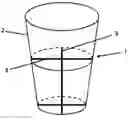
DESCRIPTION OF THE DRAWINGSFIG. 1 shows the preferred embodiment of the cup support inserted inside a cup.
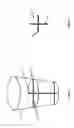
FIG. 2 shows the top view of the preferred embodiment of the cup support.
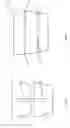
FIG. 3 shows another embodiment of the cup support.
FIG. 4 shows another embodiment of the cup support.
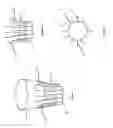
FIG. 5 shows another embodiment of the cup support inserted inside a cup.
FIG. 6 shows a perspective view of the cup support shown in FIG. 5.
FIG. 7 shows a top view of the cup support shown in FIG. 5.
DETAILED DESCRIPTION OF THE PREFERRED EMBODIMENTThe following description and figures are meant to be illustrative only and not limiting. Other embodiments of this invention will be apparent to those of ordinary skill in the art in view of this description.
The cup support structure of the present invention will prevent collapse of a cup under pressure when held by hand. In the preferred embodiment shown in FIGS. 1 and 2, the cup support comprises of a support structure 1 inserted inside a cup 2 with multiple webs 3 extending radially from a central axis and terminate at a radius approximately the inside diameter of the cup 2 with an angle formed at its leading edge to coincide generally with the angle of the cup wall. The number of webs may vary from three webs to eight or more webs depending on the cup 2 dimension and the temperature of the liquid held by the cup 2. The support structure 1 is preferably made of plastic. When the cup support is inserted into a cup 2, it provides structural support to the wall of the cup 2 to prevent collapse of the cup 2 due to pressure applied by hand when the cup 2 is picked up or held.
The support structure 1 may also be an assembly of two pairs of webs 4, 5 as shown in FIG. 3, which before assembly are pairs of opposing webs 4, 5 joined at a mid-section with an engagement means 6, 7 at said mid-section such as a notch or other engagement means that are taught by prior arts. With the notch engagement means 6, 7, one pair of webs 5 will have the notch 7 at its centerline extending from the top edge to near the bottom edge. The other pair of webs 4 will have the notch 6 at its centerline extending from the bottom edge to near the top edge. The pairs of the webs 4, 5 may be assembled with each other at their centerlines to form the final support structure 1 for placement into the cup 2 to support the cup wall.
The support structure 1 may also be a one piece flat trapezoid structure as shown in FIG. 4 with a pair of cut-outs 8 on each side and with a continuous central portion from top to bottom. The non-parallel sides have an angle that coincides with the cup wall. The mid-section of the support structure 1 defined by the two pairs of cut-outs 8 can be rotated ninety degrees to form the final support structure for placement into the cup 2. In this configuration, the support structure 1 may be stored flat in the minimum amount of space.
In another embodiment, the cup support comprises of a ring 9 with multiple flexible curved members 10 extending away from the ring 9 forming a generally conical shape with curved walls as shown in FIGS. 5, 6, and 7 that can be inserted into a cup 2 to be supported. The number of flexible curved members 10 may vary from three flexible curved members 10 to eight or more flexible curved members 10 depending on the cup dimension and the temperature of the liquid held by the cup 2. The support structure 1 is preferably made of plastic. The flexible curved members 10 provide structural support to the cup wall by exerting an outward force against the cup wall.
Although the invention has been described in terms of particular embodiments and applications, one of ordinary skill in the art, in light of this teaching, can generate additional embodiments and modifications without departing from the spirit of or exceeding the scope of the claimed invention. Accordingly, it is to be understood that the drawings and descriptions herein are proffered by way of example to facilitate comprehension of the invention and should not be construed to limit the scope thereof.
Claims
1. A cup support comprising a support structure with multiple webs extending radially from a central axis and terminate at a radius approximately the inside radius of a cup with an angle formed at its leading edge to coincide generally with the angle of the cup wall wherein said cup support is inserted into a cup to support the wall of the cup.
2. A cup support as in claim 1, wherein said support structure is made of plastic.
3. A cup support as in claim 2, wherein said plastic is heat resistant.
4. A cup support as in claim 1, wherein said multiple webs comprises of three webs, four webs, five webs, six webs, seven webs, or eight webs.
5. A cup support comprising a one piece support structure generally in the shape of a trapezoid with two parallel sides and two non-parallel sides and with a pair of cut-outs on each of the non-parallel sides with a continuous central portion from one parallel side to the other parallel side.
6. A cup support as in claim 5, wherein said support structure is made of plastic.
7. A cup support as in claim 6, wherein said plastic is heat resistant.
8. A cup support comprising a ring with multiple flexible curved members extending away from the ring forming a generally conical shape with curved walls that can be inserted into a cup to be supported.
9. A cup support as in claim 8, wherein said support structure is made of plastic.
10. A cup support as in claim 9, wherein said plastic is heat resistant.
11. A cup support as in claim 8, wherein said multiple flexible curved members comprises of three, four, five, six, seven, or eight flexible curved members.
Images & Drawings included:
Sources:
- United States Patent and Trademark Office - verify current appl. status at the USPTO↗
Similar patent applications:
- » 20110233158
Dishwasher basket with a cup support - » 20130112318
Secure cup support for beverage machine - » 20100263550
Liquid food or beverage machine having a drip tray and a cup support - » 20110159780
BRASSIERE CUP SUPPORT - » 20070026766
Bra support cup - » 20050104422
Structure for securing cup support element in automotive seat - » 20050010156
Athletic protective cup supporter - » 20080197535
Apparatus for seamless applying to a bra a casing for housing a bra-cup supporting element - » 20050008419
Elastic-cup support for computer keyboard - » 20140124632
Strap Supported Cup and Article Holder
Recent applications in this class:
- » 20240367847 2024-11-07
METAL CONTAINER AND MANUFACTURING METHOD THEREFOR - » 20240336391 2024-10-10
Moulded Fiber Container for Dairy Products, Method for Manufacturing Such Container and Use Thereof - » 20240327054 2024-10-03
SLEEVE-SHAPED OUTER PART, COMBINATION PACKAGING CONTAINER EQUIPPEDTHEREWITH, AND METHOD FOR SEPARATING THE COMBINATION PACKAGING CONTAINER - » 20240294296 2024-09-05
SYSTEMS, METHODS, AND DEVICES FOR BEVERAGE CONTAINERS WITH A FOAMED BASE - » 20240116665 2024-04-11
REUSABLE PLASTIC CONTAINER AND METHOD FOR REPROCESSING - » 20240002098 2024-01-04
PET CUP CONTAINERS AND PROCESS OF MAKING THE SAME - » 20230322430 2023-10-12
SINGLE SERVING BEVERAGE PREPARATION CUP - » 20230271743 2023-08-31
CUP AND METHOD OF USE - » 20230211916 2023-07-06
CUP AND METHOD OF MANUFACTURING THE SAME - » 20230140186 2023-05-04
BEVERAGE CONTAINER