Word game
US20050179204A1
2005-08-18
10/504,878
2003-02-18
Abstract:
A method of game play, wherein: a game word is selected; a first player forms a clue word or words using allocated letters; and a second player attempts to guess the game word, based on the clue word(s).
Interested in similar patents?
Get notified when new applications in this technology area are published.
Classification:
A63F3/0423 » CPC main
Board games; Raffle games; Geographical or like games ; Educational games Word games, e.g. scrabble
A63F1/04 » CPC further
Card games Card games combined with other games
A63F11/0002 » CPC further
Game accessories of general use, e.g. score counters, boxes Dispensing or collecting devices for tokens or chips
A63F2003/00018 » CPC further
Board games; Raffle games; Types of board games; Board games played along a linear track, e.g. game of goose, snakes and ladders, along an endless track played along an endless track
A63F2250/1063 » CPC further
Miscellaneous game characteristics with measuring devices Timers
Description
FIELD OF THE INVENTIONThe present invention relates to a word game.
SUMMARY OF THE INVENTIONIn accordance with the invention, there is provided a method of game play, wherein:
-
- a game word is selected;
- a first player forms a clue word or words using allocated letters; and
- a second player attempts to guess the game word, based on the clue word(s).
Preferably, the game is played with at least two teams and each team has at least one second player attempting to guess the game word.
Preferably, the clue word(s) relates to the game word but cannot form part of the game word or be a phonetic equivalent.
Preferably, the game play includes one of the teams guessing the word and rolling a dice to advance a team token an associated number of spaces along a path of a game board, with a new game word being selected after the token has been advanced.
Preferably, if the game word is not guessed within a predetermined time, an extended time is allowed, and the value rolled on the dice, once one of the teams guesses the game word within the extended time, is doubled.
Preferably, a team wins the game by advancing their token to an end space on the game board and successfully guessing two successive game words.
Preferably, once a team advances their token to the end space, the value rolled on the dice is doubled for any other team able to guess a game word prior to the end of the game.
Preferably, the game play includes one of the team tokens being advanced to a shortcut space provided on the game board, the shortcut space allowing the token to be moved forward, across a shortcut in the path, but only if the associated team is able to guess the next game word.
Preferably, the game play includes doubling the value rolled on the dice when a game-playing token is advanced to a double value space provided on the game-playing board.
Preferably, selection of the game word occurs by the first player drawing a game card from a pack of game-word cards. More preferably, each of the game-word cards includes a plurality of words, differentiated by colours which correspond to different colours of the game board spaces and the first player selects the word with the same colour as the space on which their token is placed.
In another aspect, there is provided a game board for use in the above-described method, including a game-play path with an end space which indicates, once a team token is advance thereto, that a dice value rolled by any other team is doubled.
Preferably, the path includes at least one space which indicates a value rolled on the dice, for advancing a game-playing token, is to be doubled.
Preferably, the path includes at least one shortcut space which indicates a start position for a shortcut in the path.
In another aspect, there is provided a game, including the above-described game board and game-word cards, wherein the path is divided into differently coloured spaces and the cards each include a plurality of words differentiated by colours corresponding to the colours of the spaces.
Preferably, the game includes letter tiles.
Preferably, the game further includes a dispensing unit for dispensing the letter tiles, as disclosed in International Patent Application No. PCT/AU01/01401. More particularly, such a dispensing unit includes:
-
- a hopper section for holding the tokens;
- a dispenser section arranged to selectively receive a pre-determined number of tokens from the hopper section;
- a release mechanism for dispensing the tokens from the dispenser section; and
- a central peg to facilitate distribution of the tokens within the hopper section away from the peg and through openings which communicate with the dispenser section.
Preferably, the dispenser section includes a chamber, for receiving the tokens. More preferably, a partition member is provided to selectively block respective openings during dispensing of the tokens.
Preferably, the chamber is rotatably housed within the dispenser section and the release mechanism includes a lever for rotating the chamber from a first position, for receiving the tokens from the hopper section, to a second position, where the respective opening is blocked by the partition member, for releasing the tokens.
Preferably, the unit includes an end cap with at least one outlet port arranged to register with the at least one opening of the chamber, when in the second position, to allow the tokens to be dispensed therefrom.
Preferably, the chamber includes six tubes with associated openings, for selectively receiving the tokens.
Preferably, the end cap includes six outlet ports such that rotation of the chamber from the first to the second position causes the openings of the tubes to be blocked by the partition member whilst simultaneously aligning the tubes with the outlet ports to facilitate dispensing of the tokens.
Preferably, the tokens are die with letters provided on the faces thereof. Alternatively, the tokens are tiles with letters provided on one side thereof.
Preferably, the game includes a dice and a timer.
BRIEF DESCRIPTION OF THE DRAWINGThe invention is described, by way of non-limiting example only, with reference to the accompanying drawing in which:
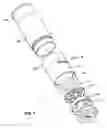
FIG. 1 is an exploded perspective view of a dispensing unit;
FIG. 2 is a partially sectioned view of the dispensing of FIG. 1;
FIG. 3 is a perspective view of a partition member used in the dispensing unit;
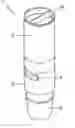
FIG. 4 is a perspective view of the dispenser in an assembled condition; and
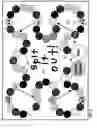
FIG. 5 is a diagrammatic view of a game board.
DETAILED DESCRIPTIONThe game is played by firstly determining teams, with at least two players in each team. Letter tiles (not shown) are then allocated to each team. The tiles may be dispensed using, for example, a dispensing unit 1, as described in International Patent Application No. PCT/AU01/01401.
More particularly, the dispensing unit 1, shown in FIGS. 1 to 4 comprises a hopper section 2, divided into upper and lower parts 2a and 2b for holding game tokens, a dispenser section 3 for selectively receiving a predetermined number of tokens from the hopper section and a release mechanism 4 for dispensing the tokens from the dispenser section 3 into a cup 5.
The dispenser section 3 includes a chamber 6 which has a plurality of tubes 7 provided therein so as to define respective openings 8, for receiving the tokens from the hopper section 2. The chamber 6 is housed in the dispenser section between a partition member 9 and an end cap 10. The arrangement of the chamber 6 and partition member 9 is such that when the chamber is in a first position, the partition member 9 selectively uncovers the openings 8, to allow tokens to freely fall into the tubes 7. After the tubes 6 are filled, the chamber 6 may be rotated via actuation of the attached mechanism 4 to a second position, where radial blades 9a, shown most clearly in FIG. 3, of the partition member 9 cover the tube openings 8 previously filled with tokens. Whilst the tubes are covered by the partition member 9, as the chamber 6 moves into the second position, outlet ports 11 in the end cap 10 register with the previously filled tubes in order to allow the tokens to fall free of the dispenser section and into the cup 5.
In the arrangement shown, six tubes are provided although the number of tubes may vary, as required, dependent on the size of the tokens to be dispensed and the number required.
The size of the openings 8 in relation the dice being used is optimised such that only one dice can fall into the barrel at a time, to thereby avoid jamming.
Using the maximum number of barrels possible ensures that the dice will have to “fall” somewhere. The distance between each hole is so small that a dice cannot balance between holes.
Also, having a minimal distance between the openings at the top of the chamber 6, enables the lever mechanism 4 to move the minimum distance to release the dice. This avoids the possibility of a child jamming their fingers in one or more tubes and then moving the lever. It is virtually impossible for someone to jam or hurt their fingers as a result.
In order to ensure the tokens are sufficiently distributed into each of the tubes prior to dispensing, the hopper section 2 is preferably rotatably mounted relative to the dispenser section 3 and a paddle (not shown) may be provided therein to agitate the tokens during rotational motion of the hopper section. For that purpose, the hopper section 2 is preferably coaxially mounted relative to the dispenser section 3 with a male/female connection therebetween which allows for the relative rotation of the hopper section, although other forms of coupling may instead be employed if required. Further, the hopper section 2 is preferably provided with a lid 14 which may be easily removed to allow for return of previously dispensed tokens for subsequent “shuffling” or agitation by rotation of the section prior to another dispensing operation.
In any event, however, the unit is provided with a domed central peg 20 to help facilitate filling of the tubes. This serves to spread the dice away from the peg and over the openings 8 in the chamber 6. The distance between the peg and the inner wall of the hopper is optimised to enable only one dice to fit therebetween, thereby eliminating jamming and greatly reducing any lateral pressure on the dice, allowing them to fall freely into the barrel. Having a “domed” shape on the top of the peg ensures that no dice can stay sitting on top of the peg, they must fall downwards and ultimately into the barrel.
The peg height is also optimised to reduce lateral pressure on the dice, allowing them to fall freely into the barrel.
Lastly, the unique reaction between the blades 9a and the leading edge of the tubes 7 as the lever mechanism 4 is moved, enables the dispenser to accommodate a variance in dice size of up to 5%. The unique chamfered leading edge makes it impossible for a dice to jam when the lever is being moved into the release position.
The dispenser unit 1 thereby provides a quick, reliable and convenient means of dispensing tokens, and, as shown in FIG. 4, only a single movement of the release mechanism to either the left or right, as shown, will result in a full number of tokens being dispensed into the cup 5.
The dispenser 1 is particularly suited for distributing tokens in the form of letter dice for use in a word game played in accordance with the following method and using the component parts listed below.
In order to play the game, a game board 50 is set up. The game board 50, as shown in FIG. 1, includes a game-playing path 52 which is divided into a number of spaces 53, extending from a start space 54 to a finish space 55, which is identified by the words “Double Trouble!”. The spaces 53 are preferably differentiated by colour, with various ones of those spaces being identified as either an “SC” space 56 or a “×2” space 57. The “SC” designates the start of a shortcut 58 to advance a game-playing token along the path, while the “×2” space indicates that a value of any dice roll, for a token which lands on the space, should be doubled, in order to allow the token to be advanced further along the path 52.
Once the tiles are dispensed, a card is drawn from a pack of game-word cards (also not shown). Each card has a plurality of words differentiated by colours which correspond to the colours of the spaces on board. Each team nominates a first player to be a “Speller” and they are given the letter tiles and the game-word card.
To initiate play, a timer is activated and the speller in each team then attempts to form a clue word or words using the letter tiles, to assist the second player or players of each team to guess the game word. The clue words need to relate to the game word but cannot form part of the game word or be a phonetic equivalent.
The first team to guess the game word rolls a dice to advance their token along the game path, using the various shortcuts 58 and double value spaces 57, where possible.
If, however, none of the teams guess the game word within a predetermined time, the game may be played into extended time, where the teams play for double the value rolled on the dice. If the game word has still not been guessed by the end of the extended time, then a fresh game-word card may be selected.
The team that is first to reach the Double Trouble! space 55 and guess two successive game words wins the game.
In one specific form, the game is intended to be marketed under the brand name “Spit it Out!” and, for completeness, the game is again described, in somewhat more detail, with specific reference to that brand name.
Spit it Out!
The object of the game is to be the first team to guess the designated word on the card.
How to Win
Be the first team to reach the Double Trouble! space and win two rounds in a row.
Teams
Teams consist of two or more players. There is a maximum of three teams. If you have seven people, just have two teams of two players and one team of three with one Speller and two people guessing.
Starting
- 1. Shuffle the game-word cards and place them in the middle of the table with the same colour facing up (either black or maroon).
- 2. Give the dice, dispenser and timer to the Dealer.
- 3. Using the dispenser the Dealer gives each team twenty-four letter tiles for four rounds. After the fourth round, return all the tiles into the dispenser and give each team twenty-four new tiles.
- 4. One player from each team is designated the “SPELLER”. The Speller alternates each round.
- 5. The “Speller” on the team to the left of the Dealer selects the top card from the deck and looks at the word on the card that corresponds to the colour of the space they are on, then passes the card to the Speller on the next team.
- 6. When all Spellers have seen the card the Dealer turns the timer over and calls GO!.
- 7. The Spellers make words to help their team members guess the word on the card.
- 8. The first team to guess the word correctly before the timer runs out wins a roll of the dice. They move forward the amount on the dice and play continues as in point 5.
- 9. Double Time
- If no team gets the word before the timer runs out, the timer is re-set and teams play for DOUBLE the value rolled on the dice. If no team gets the word after double time, then play continues as in point 5.
- 10. Double Trouble!
- When one team reaches the Double Trouble! space, then the value of the dice is doubled for the remainder of the game. (This forces the first team there to try hard and if they don't win, the chasing teams will catch up quickly).
- If all teams end up on the Double Trouble! space at once, then it is a sudden death play-off with one round, and the winner of the round is the winner of the game.
- 11. The first team to reach the Double Trouble! space and win two rounds in a row are the winners.
The Board - 1. Shortcut Space (SC)
- This space is like a gamble. You are betting that you can win the very next round to enable you to take the shortcut. If you do win, you move across the shortcut and count forward as normal. If you do not win, you must continue forward along the long way.
Regardless of the number you roll on the dice, if you want to use the shortcut space, you have to STOP on the space. You do not need to roll the exact number to land on it, but you may have to forego moving some spaces forward in order to stop on the shortcut space.
- 2. The “×2” space
- When any team lands on this space, the value rolled on the dice is DOUBLED.
Tips
- When any team lands on this space, the value rolled on the dice is DOUBLED.
- 1. Have a PRACTICE round or two when you invite someone who hasn't played before.
- 2. When you are the Speller, go quickly, and if your team members don't get it, change quickly and try something else.
- Example: If you have to get your team to guess teddy bear, you might start with CDDLE, or YOGI, or KIDS, COALA
- 3. Use Phonetics—Eg: Kat, Lite, Bote
- 4. When you are guessing, say your thoughts out loud so the Speller knows if you are on the right track or not.
- 5. Market Research (Peeking)
- Look at what your opposition Speller is spelling.
- 6. If the word on the card is TENNIS and you want to spell COURT, but you don't have the letter T, you can spell COURT and point to the end of the word to indicate there is one letter there.
Rules to Make it a Blast: - If the word on the card was TRAIN
- You can:
- Spell words phonetically
- Eg: STEME for STEAM, KARIDGE for CARRIAGE, RYDE for RIDE etc
- Use abbreviations
- Eg: U for You, CLR for Colour, GP for Doctor, CHU CHU
- Break the word up into syllables
- Say YES or NO
- Get creative
- No letter C?—turn a letter U on it's side
- No letter W?—put two U's together (Double U)
- Spell words phonetically
- If the word on the card was TRAIN
- You can't:
- Spell part or all of the word on the card
- Eg If the word is TRAIN—you can't spell TRACK because TRA is the first three letters of TRAIN.
- Use “Sounds Like” words
- Eg SANE, CANE, RANE etc
- Phonetically spell all or part of the word on the card
- Eg TRANE, AIN etc
- Tell your team members what the word starts with
- Speak (except Yes or No)
- Use gestures—No using hands!!
- Go through the alphabet out loud looking for a letter
- Eg: Is it A?, Is it B?, Is it C? etc
- Tell your team members how many letters are in the word
- Form symbols with the letter dice
- Eg: If the word on the card was WAGON WHEEL you can't put the letters in a wagon wheel shape
- Reorganise the dice into the shape of letters
- Eg: The letter R
- Spell part or all of the word on the card
The unique rules ensure the fun of the game is maintained.
- 1. Players cannot spell all or part of the word on the card.
- 2. Cannot use sounds like (except in children's version).
- 3. Players receive letters at random and the fact that they do not have all the letters in the alphabet at their disposal forces them to think laterally. (Except in children's version). This adds to the fun of the game considerably.
- 4. Phonetic spelling is encouraged.
- 5. The fact that players do not have all the letters creates words being spelt with letters missing—which creates confusion and more guessing with the playing partner.
- 6. Players are encouraged to use letters on their side, upside down and back to front to symbolise another letter. For example the letter E when turned 90 degrees to the right can be used as the letter M. See Rules/Tips for further examples. The letters almost become symbols; an A upside down becomes the letter V.
- 7. A component that adds enjoyment to the game is the dispenser that is included. This enables players to shuffle the letters and re-distribute them very quickly.
- 8. Players guessing are encouraged to look at other team's “Spellers” in order to guess the word on the card. This creates players “stealing” the ideas from other teams.
Further, the following features assist in maintaining a high level of tension and enjoyment in the game.
- 1. Mechanisms are in place to create more tension for the players.
- 2. In Pictionary® there is a one-minute time limit. However in Spit it Out! players have one minute of normal time, and if they do not guess the word on the card successfully, then there is a further minute of “Double Time” where the value of the dice is doubled. This creates further tension and excitement.
- 3. The ×2 space on the board creates an automatic double value on the dice, creating a more tense round.
- 4. The shortcut space creates panic, as the opposing teams know that the team playing for the shortcut can eliminate at least 10 spaces on the board. This creates teams “ganging up” on one team and heaps of laughter.
- 5. Double Trouble! space
- This is a mechanism for ensuring players who are well behind can still realistically win. When one team reaches the Double Trouble! space, they must win two rounds in a row AND for the remainder of the game the value of the dice is DOUBLED. The leading players cannot afford to rest and the trailing players can catch up very quickly.
- 6. The game can also be played without the board if players want to play for a short time.
Claims
1. A method of game play, wherein:
a game word is selected;
a first player forms a clue word or words using allocated letters; and
a second player attempts to guess the game word, based on the clue word(s).
2. A method as claimed in claim 1, wherein the game is played with at least two teams and each team has at least one second player attempting to guess the game word.
3. A method as claimed in claim 1 or 2, wherein the clue word(s) relates to the game word but cannot form part of the game word or be a phonetic equivalent.
4. A method as claimed in claim 2, wherein if the game word is not guessed within a predetermined time, an extended time is allowed, and the value rolled on the dice, once one of the teams guesses the game word within the extended time, is doubled.
5. A method as claimed in claim 2, wherein the game play includes one of the teams guessing the word and rolling a dice to advance a team token an associated number of spaces along a path of a game board, with a new game word being selected after the token has been advanced.
6. A method as claimed in claim 5, wherein a team wins the game by advancing their token to an end space on the game board and successfully guessing two successive game words.
7. A method as claimed in claim 6, wherein once a team advances their token to the end space, the value rolled on the dice is doubled for any other team able to guess a game word prior to the end of the game.
8. A method as claimed in claim 5, wherein the game play includes one of the team tokens being advanced to a shortcut space provided on the game board, the shortcut space allowing the token to be moved forward, across a shortcut in the path, but only if the associated team is able to guess the next game word.
9. A method as claimed in any one of claims 5 to 8, wherein the game play includes doubling the value rolled on the dice when a game-playing token is advanced to a double value space provided on the game-playing board.
10. A method as claimed in any one of claims 5 to 9, wherein selection of the game word occurs by the first player drawing a game card from a pack of game-word cards.
11. A method as claimed in claim 10, wherein each of the game-word cards includes a plurality of words, differentiated by colours which correspond to different colours of the game board spaces and the first player selects the word with the same colour as the space on which their token is placed.
12. A game board, including a game-play path with an end space which indicates, once a team token is advance thereto, that a dice value rolled by any other team is doubled.
13. A game board in accordance with claim 12, wherein the path includes at least one space which indicates a value rolled on the dice, for advancing a game-playing token, is to be doubled.
14. A game board in accordance with claim 12, wherein the path includes at least one shortcut space which indicates a start position for a shortcut in the path.
15. A game, including a game board, as claimed in any one of claims 12 to 14, and game-word cards, wherein the path is divided into differently coloured spaces and the cards each include a plurality of words differentiated by colours corresponding to the colours of the spaces.
16. A game in accordance with claim 15, further including letter tiles.
17. A game in accordance with claim 15, further including a dispensing unit for dispensing game playing tokens, including:
a hopper section for holding the tokens;
a dispenser section arranged to selectively receive a pre-determined number of tokens from the hopper section;
a release mechanism for dispensing the tokens from the dispenser section; and
a central peg to facilitate distribution of the tokens within the hopper section away from the peg and through openings which communicate with the dispenser section.
18. A game as claimed in claim 17, wherein the dispenser section includes a chamber for receiving the tokens and wherein the chamber is rotatably housed within the dispenser section and the release mechanism includes a lever for rotating the chamber from a first position, for receiving the tokens from the hopper section, to a second position, where the respective opening is blocked by the partition member, for releasing the tokens.
19. A game in accordance with claim 14, wherein the game includes a dice and a timer.
Images & Drawings included:


Sources:
- United States Patent and Trademark Office - verify current appl. status at the USPTO↗
Similar patent applications:
- » 20100207329
Word Game And Method For Playing Word Game - » 20160317908
WORD GAME AND SYSTEM AND METHODS FOR PLAYING THE WORD GAME - » 20160184696
WORD GAME AND SYSTEM AND METHODS FOR PLAYING THE WORD GAME - » 20180339231
Combination of a non-word based game with a word game - » 20120126479
Entertaining and educational new word-making game with a playing method unique to the genre, designed for players 12+ who prior to subject invention enjoyed older variations of word games - » 20140300051
NUMBER GAMES AND WORD GAMES - » 20150290552
Individual Game Modules Collectively Unified Into A Composite Novel Word Game With Optional Gaim Variations And Word Threads And Interactive Player Formats - » 20080001357
Game Method and Apparatus, Including Word Game With Hand-Held Scrambling Device - » 20140175745
Word Games Based Upon Starting First Letters and Word Relationships - » 20140011557
WORD GAMES BASED ON SEMANTIC RELATIONSHIPS AMONG PLAYER-PRESENTED WORDS
Recent applications in this class:
- » 20250065218 2025-02-27
Word game with player-driven letter rearrangement - » 20250050202 2025-02-13
GAMING UNIT - » 20240207716 2024-06-27
WORD LADDER GAME - » 20240181335 2024-06-06
BOARD GAME - » 20230310977 2023-10-05
WORD BOARD GAME APPARATUS AND METHOD - » 20230241490 2023-08-03
SYSTEM AND METHOD FOR WORD CONSTRUCTION BOARD GAME - » 20220370889 2022-11-24
Spelling game comprising removable tokens positioned on a track - » 20220339529 2022-10-27
MULTI-DIMENSIONAL WORD SPELLING BOARD GAME - » 20220168625 2022-06-02
Gaming unit - » 20210379480 2021-12-09
Word Game for Enhancing Diction