Propylene based retortable sealant compositions and applications
US20050182197A1
2005-08-18
10/820,925
2004-04-08
✅ Patent granted
US 7,201,968 B2
2007-04-10
-
-
Nathan M. Nutter
2025-04-06
Abstract:
The present invention relates to a retortable sealant composition comprising i) at least a copolymer of propylene and α-olefins, and ii) at least a copolymer of ethylene and alkyl acrylate, wherein the alkyl acrylate is present in an amount ranging from about 1 to less than 9 weight percent, relative to the weight of the sealant composition. It also relates to a retortable multilayer film or a retortable packaging comprising a sealant layer comprising such a composition.
Inventors:
- Yves M. Trouilhet 14 🇨🇭 Vesenaz, Switzerland
- JACQUES ANDRE 5 🇫🇷 ANNEMASSE, France
- Bernard Rioux 7 🇫🇷 Puteaux, France
- Sebastian Landeck 2 🇩🇪 Berlin, Germany
Assignee:
- E. I. DU PONT DE NEMOURS AND COMPANY 4,854 🇺🇸 Wilmington, DE, United States
Interested in similar patents?
Get notified when new applications in this technology area are published.
Classification:
Y10T428/31913 » CPC further
Stock material or miscellaneous articles; Composite [nonstructural laminate]; Of addition polymer from unsaturated monomers; Next to second addition polymer from unsaturated monomers Monoolefin polymer
Y10T428/31928 » CPC further
Stock material or miscellaneous articles; Composite [nonstructural laminate]; Of addition polymer from unsaturated monomers; Next to second addition polymer from unsaturated monomers Ester, halide or nitrile of addition polymer
C08L23/0869 » CPC main
Compositions of homopolymers or copolymers of unsaturated aliphatic hydrocarbons having only one carbon-to-carbon double bond; Compositions of derivatives of such polymers not modified by chemical after-treatment; Homopolymers or copolymers of ethene; Copolymers of ethene; Copolymers of ethene with unsaturated hydrocarbons containing other atoms than carbon or hydrogen atoms Acids or derivatives thereof
C08L23/142 » CPC further
Compositions of homopolymers or copolymers of unsaturated aliphatic hydrocarbons having only one carbon-to-carbon double bond; Compositions of derivatives of such polymers not modified by chemical after-treatment; Homopolymers or copolymers of propene; Copolymers of propene at least partially crystalline copolymers of propene with other olefins
C08L2666/06 » CPC further
Composition of polymers characterized by a further compound in the blend, being organic macromolecular compounds, natural resins, waxes or and bituminous materials, non-macromolecular organic substances, inorganic substances or characterized by their function in the composition; Organic macromolecular compounds, natural resins, waxes or and bituminous materials; Macromolecular compounds according to groups - , or - ; Derivatives thereof Homopolymers or copolymers of unsaturated hydrocarbons; Derivatives thereof
B32B27/08 IPC
Layered products comprising synthetic resin as the main or only constituent of a layer, next to another layer of a of synthetic resin
C08L23/04 IPC
Compositions of homopolymers or copolymers of unsaturated aliphatic hydrocarbons having only one carbon-to-carbon double bond; Compositions of derivatives of such polymers not modified by chemical after-treatment Homopolymers or copolymers of ethene
C08L23/10 IPC
Compositions of homopolymers or copolymers of unsaturated aliphatic hydrocarbons having only one carbon-to-carbon double bond; Compositions of derivatives of such polymers not modified by chemical after-treatment Homopolymers or copolymers of propene
C08L33/04 IPC
Compositions of homopolymers or copolymers of compounds having one or more unsaturated aliphatic radicals, each having only one carbon-to-carbon double bond, and only one being terminated by only one carboxyl radical, or of salts, anhydrides, esters, amides, imides or nitriles thereof; Compositions of derivatives of such polymers Homopolymers or copolymers of esters
C08L33/10 IPC
Compositions of homopolymers or copolymers of compounds having one or more unsaturated aliphatic radicals, each having only one carbon-to-carbon double bond, and only one being terminated by only one carboxyl radical, or of salts, anhydrides, esters, amides, imides or nitriles thereof; Compositions of derivatives of such polymers; Homopolymers or copolymers of esters of esters containing only carbon, hydrogen and oxygen, which oxygen atoms are present only as part of the carboxyl radical Homopolymers or copolymers of methacrylic acid esters
C08L35/02 IPC
Compositions of homopolymers or copolymers of compounds having one or more unsaturated aliphatic radicals, each having only one carbon-to-carbon double bond, and at least one being terminated by a carboxyl radical, and containing at least one other carboxyl radical in the molecule, or of salts, anhydrides, esters, amides, imides or nitriles thereof; Compositions of derivatives of such polymers Homopolymers or copolymers of esters
Description
CROSS REFERENCE TO RELATED APPLICATIONThis application is a continuation-in-part of pending prior application Ser. No. 10/428,230, filed May 2, 2003, which application claims the benefit of priority to U.S. Provisional Application No. 60/378,310, file May 6, 2002, which both are incorporated by reference herein in their entirety.
FIELD OF INVENTIONThe present invention relates to a retortable sealant composition comprising a copolymer of ethylene and alkyl acrylate and a copolymer of propylene and α-olefins. It also relates to retortable multilayer films and packagings having a sealant layer comprising such a composition.
BACKGROUND OF THE INVENTIONIn the packaging industry, it is conventional that a product is packed in a plastic film or a rigid plastic package which is then heat sealed. The film forming the package usually comprises a substrate layer and a sealant layer. The sealant layer is the topmost layer of the film and is in direct contact with the packed good. The seal must possess a mechanical resistance sufficient to maintain the tight-seal properties during storage and transport. This seal strength is usually measured in Newton per 15 millimeter (N/15 mm) and corresponds to the necessary force to open a sealed film of 15 mm width. Usually, the seal strength increases with the sealing temperature up to a temperature above which the seal cannot be opened without destroying the film.
For applications related to peelable seal films and packages, the seal strength must be weak enough to allow an easy opening of the film and package by the consumer. The seal strength of peelable seal films and packages should stay below 10 N/15 mm over a wide temperature range, that is between the seal initiation temperature (as defined here below) and about 160° C., or even about 170° C. (the so called “Peel Range”). This enables a certain degree of freedom in setting the seal temperature at the sealing machine during the commercial manufacture of films and packaging which eventually have to have a peelable seal behavior.
Furthermore, in industrial applications, it is desired that these packaging films be suitable for high speed machine packaging. In this view, it is useful to provide a sealant layer that can be sealed at relatively low temperatures in order to allow for higher packaging line speeds of packaging machines. The minimal temperature allowing for sufficient seal strength in a certain application (this sufficient strength can be set at 1 N/15 mm for instance) is called the seal initiation temperature (SIT). It would therefore be useful to have sealant layers showing a relatively low heat seal initiation temperature.
Also, it is observed that after the heat sealing stage, the seal strength of the packaging increases with cooling. Usually, a great percentage of the final seal strength is obtained after several milliseconds. However, because of the high speed machines used on packaging lines, it is necessary to reach an appropriate seal strength right after the heat sealing stage so that the packaging does not delaminate on the line before it is cold. This property is called the hot tack. It would therefore be useful to have sealant layers showing a good hot tack.
In many cases the packed goods are food such as meat, pet food and dairy products, or other perishable goods such as medical and pharmaceutical products. In order to increase the shelf life of such goods, that means the time span within which they can be safely consumed without concerns regarding bacteria proliferation, the packed good, that is the package containing the good, undergoes retorting treatment so that the shelf life under non-refrigerated conditions is extended.
Retorting treatments usually consist in heating the entire package up to temperatures between about 100 and about 140° C. during a period of time ranging between about 5 and about 30 minutes. An external counter pressure is optionally applied during the process in order to avoid the deformation of the package due to the thermal expansion of the gases contained therein.
It is therefore evident that the entire package, that is the food and in particular the sealant layer of the packaging multilayer film, has to be resistant to this kind of treatment. Hence, the polymer composition forming the seal layer should have a low SIT but at the same time a sufficiently high melting temperature to undergo retorting conditions.
U.S. Pat. No. 5,272,210 describes a film made of a mixture of a propylene-ethylene copolymer and an ethylene-alkyl acrylate copolymer, with a minimum amount of alkyl acrylate in the mixture, showing good RF sealing properties.
However, there is still a need for retortable, sealant layers for packaging films that would have a relatively low heat seal initiation temperature, a good heat seal strength, and a good hot tack.
SUMMARY OF THE INVENTIONNow, it has been surprisingly found that the combination of two specific types of polymers with a specific amount of one specific monomer lead to a retortable sealant composition showing excellent properties as regards heat seal strength, SIT, melting temperature and hot tack.
A first aspect of the invention is a retortable sealant composition comprising i) at least a copolymer of propylene and α-olefins, and ii) at least a copolymer of ethylene and alkyl acrylate, wherein the alkyl acrylate is present in an amount ranging from about 1 to less than 9 weight percent, relative to the weight of the sealant composition.
Another aspect of the invention is a retortable multilayer film comprising at least one substrate layer and at least one sealant layer comprising the sealant composition above.
Another aspect of the invention is a retortable packaging comprising the sealant composition or the film above.
The sealant composition of the invention has a significantly reduced heat seal initiation temperature. The film of the invention shows a low seal initiation temperature, which means that packages made of this film can be sealed at lower temperatures than before. This is particularly important in industrial processes where each operation must be rapid. By lowering the seal initiation temperature, the cycle time on packing lines can be improved. Lowering the seal initiation temperature is also very important when packing heat-sensitive products like chocolates.
With the sealant composition of this invention, it is possible to make films showing a good seal strength. In particular, the films show a seal strength of more than 5 N/15 mm measured as described in the examples below.
The films of the invention also show a good hot tack, allowing for high speed machine packaging.
The films of the invention can find use as retortable packaging for food like cereals, chocolates, meat, soups, pet food, dairy products as well as for other perishable goods such as medical and pharmaceutical products.
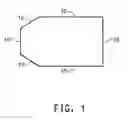
BRIEF DESCRIPTION OF THE DRAWINGFIG. 1 is a schematic drawing of a pouch made with films according to the present invention which pouch has been tested as for retortability as described in the Examples below.
DETAILED DESCRIPTION OF THE INVENTIONThe sealant composition of the invention comprises at least a copolymer of propylene and α-olefins. By copolymer of propylene and α-olefins is meant herein a copolymer of propylene and one monomer selected from α-olefins, or a terpolymer of propylene and two different monomers selected from α-olefins. Suitable α-olefins include ethylene and butene.
In order for the composition of the invention to have both the desired low sealing temperature and a sufficiently high melting temperature, the copolymer of propylene and α-olefins preferably shows a melting point less than 155° C., preferably between about 135° C. and about 155° C. measured by DSC (differential scanning calorimeter) according to ASTM D 3418. Preferred copolymers include random copolymers of propylene and ethylene and terpolymers of propylene, ethylene and butene.
Such copolymers are known to the man skilled in the art. Suitable random copolymers of propylene and ethylene for use in the present invention are the products commercially available under the trademark “Moplen RP 210 M” from Basell or “RE 239 CF” from Borealis. Suitable terpolymers of ethylene, propylene and butene are the products commercially available under the trademark “Adsyl 5C 39F” from Basell.
The copolymer of propylene and α-olefins is preferably present in the sealant composition in an amount from about 60% to about 99% by weight, relative to the weight of the sealant composition.
The sealant composition also comprises at least a copolymer of ethylene and alkyl acrylate.
The copolymer of ethylene and alkyl acrylate useful in the present invention preferably comprises from about 1 to about 40%, more preferably from about 10 to 30%, by weight of monomer of alkyl acrylate, relative to the weight of the copolymer. Alkyl acrylate suitable for the present invention include methyl acrylate, ethyl acrylate and butyl acrylate. Preferred alkyl acrylates are methyl acrylate and butyl acrylate.
Such products are well known to the man skilled in the art. Suitable copolymers of ethylene and alkyl acrylate for use in the present invention are the products commercially available under the trademark Elvaloy® AC from E.I. du Pont de Nemours and Company, Delaware.
The copolymer of ethylene and alkyl acrylate is present in the sealant composition in an amount so that the monomer alkyl acrylate is present in the sealant composition in an amount ranging from about 1 to less than 9% by weight, relative to the weight of the sealant composition; more preferably, the amount of monomer alkyl acrylate ranges from about 1 to about 6%. It has been observed that when the amount of monomer alkyl acrylate is 9% or above by weight, relative to the total weight of the sealant composition, then the seal strength of the composition dramatically drops to a value not suitable for a tight packaging.
The sealant composition may comprise additives including slip agents, antiblock agents and/or mixtures thereof. Such additives may be present in the sealant composition in an amount ranging from about 0.1% to about 1% by weight, relative to the total weight of the sealant layer.
The sealant composition can be prepared by any extrusion process, for instance in the following manner: a blend is prepared by simply mixing the components under the form of pellets, as a salt and pepper blend. This blend is then compounded in an extruder and granulated. Alternatively, the pellet blend can also be fed in a film converting extruder without compounding.
The sealant composition of the invention can be used as a sealant layer of a multilayer film. The sealant layer has usually a thickness ranging from about 1 to about 100 microns, preferably from about 2 to about 10 microns. Such a multilayer film comprises at least a substrate layer.
In a preferred embodiment of the invention, the substrate layer comprises at least one propylene based polymer. This polymer may be a homopolymer or a copolymer of propylene with one or more comonomers, as well as mixtures thereof.
In a preferred embodiment of the invention the propylene based polymer is a homopolymer of propylene.
Such polymers are known to the man skilled in the art. Suitable propylene based polymers for use in the present invention are the products commercially available under the trademark “Moplen X 30S” from Basell.
The substrate layer may comprise the usual additives including stabilizers, antioxidants, anti-static agents, dyes or pigments, fillers, processing aids, for example release agents, and/or mixtures thereof. These additives may be present in the substrate layer up to an amount less than about 20% by weight, relative to the weight of the substrate layer.
The substrate layer has generally a thickness of about 10 to about 1000 microns, preferably of about 15 to about 35 microns.
The multilayer film of the invention may also comprise additional layers such as tie layers or barrier layers. Suitable tie layers are layers comprising polypropylene based adhesives. Suitable barrier layers are polyamide or ethylene vinyl alcohol based layers.
The multilayer film of the invention may be prepared by cast-film co-extrusion, cast-sheet coextrusion, blown film coextrusion or by lamination. Cast films and blown films may be biaxially oriented.
The sealant composition of the invention may also be used as a sealant layer in a lid packaging. For instance, the sealant layer can be laminated on a biaxially oriented polyester or biaxially oriented polypropylene lid or on an aluminum lid.
The packaging of the invention may be prepared according to the classical methods of preparation of such packagings made from films.
The invention will be further described in the following Examples.
EXAMPLESDescription of Ingredients:
Materials used in the Examples set forth below are as follows, identified by the respective trademarks and trade designations:
- PP 1: random copolymer of propylene and ethylene having a melting point of 148° C. measured according to ASTM D 3418, commercially available from Basell under the tradename Moplen® RP 210 M
- PP 2: random copolymer of propylene and ethylene having a melting point of 140° C. measured according to ASTM D 3418, commercially available from Borealis under the tradename RE 239 CF
- PP 3: terpolymer of propylene, ethylene and butene having a melting point of 139° C. measured according to ASTM D 3418, commercially available from Basell under the tradename Adsyll® 5C 39 F
- EBA 1: copolymer of ethylene and 27% butyl acrylate commercially available from E.I. du Pont de Nemours and Company, under the tradename Elvaloy® AC 3427 and having a melt index of 4
- EBA 2: copolymer of ethylene and 17% butyl acrylate commercially available from E.I. du Pont de Nemours and Company, under the tradename Elvaloy® AC 3717 and having a melt index of 7
- EBA 3: copolymer of ethylene and 17% butyl acrylate commercially available from E.I. du Pont de Nemours and Company, under the tradename Elvaloy® AC 3217 and having a melt index of 2
- EMA 1: copolymer of ethylene and 20% methyl acrylate commercially available from E.I. du Pont de Nemours and Company, under the tradename Elvaloy® AC 1820 and having a melt index of 8
- EMA 2: copolymer of ethylene and 24% methyl acrylate commercially available from E.I. du Pont de Nemours and Company, under the tradename Elvaloy® AC 1224 and having a melt index of 2
The Melt Index (MI) of the above EBA and EMA compounds is measured according to ASTM D 1238@190° C./2.16 kg.
The following compositions (1 to 23 as listed in Tables I and II below) for the sealant layer were prepared. All amounts are given in parts by weight relative to the total weight of the sealant layer.
| TABLE I | |||||||
| % of | |||||||
| Comp. | PP 1 | PP 2 | PP 3 | EBA 1 | EBA 2 | EBA 3 | BA |
| 1 | 100 | — | |||||
| 2 | 100 | — | |||||
| 3 | 90 | 10 | 2.7 | ||||
| 4 | 80 | 20 | 5.4 | ||||
| 5 | 70 | 30 | 8.1 | ||||
| 6 | 90 | 10 | 2.7 | ||||
| 7 | 80 | 20 | 5.4 | ||||
| 8 | 70 | 30 | 8.1 | ||||
| 9 | 90 | 10 | 2.7 | ||||
| 10 | 80 | 20 | 5.4 | ||||
| 11 | 70 | 30 | 8.1 | ||||
| 12 | 90 | 10 | 1.7 | ||||
| 13 | 80 | 20 | 3.4 | ||||
| 14 | 70 | 30 | 5.1 | ||||
| 15 | 80 | 20 | 3.4 | ||||
| 16 | 90 | 10 | 1.7 | ||||
| 17 | 80 | 20 | 3.4 | ||||
| 17* | 80 | 20 | 3.4 | ||||
| 18 | 70 | 30 | 5.1 | ||||
| 18* | 70 | 30 | 5.1 | ||||
| 19 | 60 | 40 | 10.8 | ||||
| TABLE II | ||||||
| % of | ||||||
| Comp. | PP 1 | PP 2 | EMA 1 | EMA 2 | MA | |
| 20 | 80 | 20 | 4.0 | |||
| 21 | 90 | 10 | 2.4 | |||
| 22 | 80 | 20 | 4.8 | |||
| 23 | 70 | 30 | 7.2 | |||
Compositions 1 and 2, which do not comprise any copolymer of ethylene and alkyl acrylate, are comparative compositions. Composition 19, which comprises more than 9% of butyl acrylate, is also a comparative composition. Compositions 3-18 and 20-23 are compositions according to the invention.
For each composition above listed, a film of the following structure was prepared:
-
- sealant layer 10 microns/substrate layer 25 microns/sealant layer 10 microns.
in which the sealant layer is made of the composition and the substrate layer is made of 100% of a homopolymer of propylene commercially available from Basell under the tradename Moplen X30S.
- sealant layer 10 microns/substrate layer 25 microns/sealant layer 10 microns.
Each film was produced by co-extrusion on a cast film pilot line from Davis Standard. The substrate layer was prepared by introducing the homopolymer of propylene Moplen in extruder A (2.5″ diameter). The sealant layers were prepared by blending the pellets of the different components in a concrete mixer during about 5 minutes. The so prepared blends were introduced in the hopper of extruder B (4.5″ diameter) and extruder C (2.5″ extruder). The three extruders were connected to a feed bloc and a T-slot die 800 mm in width. The temperatures in all extruders from feed zone to metering zone were set at 180° C., 200° C., 220° C, 230° C. and 240° C. The connecting pipes, the feed bloc and the die were set at a temperature of 240° C. The melt curtain was cooled down and solidified on a casting roll cooled with water at 12° C. The film was produced at 10 m/min and winded up after slitting the edges.
Preparation of Samples:
The samples were prepared as follows: strips of 15 mm width were cut from the prepared cast films in machine direction. The samples were heat sealed on a Sentinel Heat Sealer Packaging Industry 1671, with an upper heated and a lower flexible bar. Each sample was sealed on itself at a pressure of 2.5 bar and a dwell time of 0.6 seconds (s). To avoid sticking of polymer to the heated bar, a 12μ polyester film (commercially available from E.I. du Pont de Nemours and Company under the tradename Mylar®) covered each sample.
Tests:
Heat Seal Strength Test:
Strength of the prepared seals were measured after conditioning at 23° C. and 50% relative humidity for 24 h. The seal strength was measured on a Zwick Z 2.5 Tensile Tester at a pulling speed set to 100 mm/min.
The values presented are given in N/15 mm and are an average of at least three measurements.
Seal Initiation Temperature (SIT):
The seal initiation temperature (SIT) is the temperature for which the measured seal strength is 1 N/15 mm. The SIT measured for the compositions are collected in following Table III:
| TABLE III | ||
| Film | SIT in ° C. | |
| 1 | 141 | |
| 2 | 130 | |
| 3 | 137 | |
| 4 | 130 | |
| 5 | 117 | |
| 6 | 132 | |
| 7 | 124 | |
| 8 | 122 | |
| 9 | 126 | |
| 10 | 120 | |
| 11 | 115 | |
| 12 | 131 | |
| 13 | 129 | |
| 14 | 122 | |
| 15 | 132 | |
| 16 | 123 | |
| 17 | 125 | |
| 18 | 122 | |
| 19 | 112 | |
| 20 | 138 | |
| 21 | 127 | |
| 22 | 121 | |
| 23 | 116 | |
Compositions 3-5, 15 and 20 are to be compared to composition 1. Compositions 9-11 are to be compared to composition 2. The seal initiation temperature is significantly reduced by adding a copolymer of ethylene and butyl acrylate or a copolymer of ethylene and methyl acrylate.
Heat Seal Strength (HSS) and Maximal Seal Strength (MSS):
The maximal seal strength (MSS) is the highest measured strength value for a given film in a sealing temperature range up to 160° C. The maximal seal strength (MSS in N/15 mm) measured for the compositions are collected in following Table IV:
| TABLE IV | ||
| Film | MSS | |
| 1 | 10 | |
| 2 | 12 | |
| 3 | 10 | |
| 4 | 6 | |
| 5 | 5 | |
| 6 | 6 | |
| 7 | 10 | |
| 8 | 7 | |
| 9 | 14 | |
| 10 | 14 | |
| 11 | 5 | |
| 12 | 12 | |
| 13 | 14 | |
| 14 | 6 | |
| 15 | 5 | |
| 16 | 12 | |
| 17 | 10 | |
| 18 | 7 | |
| 19 | 2 | |
| 20 | 8 | |
| 21 | 12 | |
| 22 | 10 | |
| 23 | 9 | |
As can be seen from Table IV, the maximal seal strength of the compositions according to the invention is very good. In any case it is above or equal to 5 N/15 mm. On the contrary, the composition 19, which comprises more than 9% by weight of butyl acrylate, shows a maximal seal strength value of only 2 N/15 mm. Such a maximal seal strength does not allow to realize a tight packaging. With a maximal seal strength of 2 N/15 mm, the seal may open during transportation.
The Heat Seal Strength (HSS) was determined for selected compositions over a temperature range from about 100° C. to about 160° C., or even to about 170° C. For peelable seal applications it is important that the seal strength values are equal or below about 10 N/15 mm at least up to 160° C.
The Heat Seal Strength of such selected compositions is given in following Table V.
| TABLE V | ||||
| Seal Temp. | HSS Film | HSS Film | HSS Film | |
| (° C.) | HSS Film 2 | 17* | 18* | 22 |
| 100 | 0.0 | 2.0 | 2.0 | 0.0 |
| 110 | 0.0 | 5.0 | 3.0 | 0.5 |
| 120 | 0.0 | 8.0 | 4.0 | 0.5 |
| 130 | 2.0 | 8.0 | 5.0 | 5.0 |
| 140 | 3.0 | 11.0 | 6.0 | 8.0 |
| 150 | 10.0 | 10.0 | 6.0 | 9.0 |
| 160 | 25.0 | 11.0 | 6.0 | 9.0 |
| 170 | 30.0 | N/A | N/A | 10.0 |
Table V shows that the films made with the selected compositions have a Peel Range which is sufficiently broad to obtain a desirable peelable seal behavior, thus providing an easy opening performance of the films and packaging.
Hot Tack:
The hot tack was measured for composition 12 and a composition comprising 100% of PP 2 (comparative composition 24), using a DTC Hot Tack Tester Mod. 52 B SN 012 from Packforsk, Sweden. Strips of 15 mm width were cut from the respective films and were introduced into the apparatus. They were sealed using two heated bars at a pressure of 3 bars and with a dwell time of 0.5 s. After 0.2 s from this sealing step, the seal strength of the warm seal was measured on a Zwick Z 2.5 Tensile Tester at a pull speed of 150 mm/min. The values of the maximum hot tack measured are collected in following Table VI:
| TABLE VI | |||
| Composition | 12 | 24 | |
| Hot tack in N/15 mm | 3.8 | 3 | |
As can be seen from these results, the introduction of a copolymer of ethylene and butyl acrylate in a composition of a copolymer of propylene and ethylene increased the maximum hot tack of about 26%.
Production of Pouches
Pouches were made of two pieces of films made of selected compositions of the present invention, which films were sealed with a Medseal 410 MSIV heat sealer. The sealing temperature was set at 155° C. and the dwell time was 2 s. Cooling was set at 40% of the sealing temperature (about 62° C.). The relative shape and dimensions of the pouches are depicted in FIG. 1. The specific lengths of the respective sides of the pouches being employed in the examples and as illustrated in FIG. 1 were 17.5 cm for edges 10, 7 cm for edges 12,4.5 cm for edge 14 and 13 cm for edge 16. The pouches were filled with about 500 ml of tap water.
Retort Test
The filled pouches described above were retorted during 20 min at 121° C., 125° C. and 138° C. by using a conventional retorting device. An external overpressure of 1 bar was applied during the heating process. The integrity of each tested pouch was assessed after retorting.
The results are shown in following Table VII.
| TABLE VII | ||||
| Film | 121° C. | 125° C. | 138° C. | |
| 22 | OK | N/A | N/A | |
| 17* | OK | OK | OK | |
| 18* | OK | OK | OK | |
OK in Table VII means that the pouches maintained their integrity and did not show any leak. |
Table VII shows that the tested compositions are resistant toward retort conditions commonly applied in the food packaging industry and, therefore, are suitable as sealant materials for perishable products.
Claims
1. A retortable sealant composition comprising
i) at least a copolymer of propylene and α-olefins, and
ii) at least a copolymer of ethylene and alkyl acrylate, wherein the alkyl acrylate is present in an amount ranging from about 1 to less than 9 weight percent, relative to the weight of the sealant composition.
2. The composition of claim 1, wherein the alkyl acrylate is present in an amount ranging from about 1 to about 6 weight percent, relative to the weight of the sealant composition.
3. The composition of claim 1, wherein the alkyl acrylate is selected from methyl acrylate and butyl acrylate.
4. The composition of claim 1, wherein the copolymer of propylene and α-olefins shows a melting point less than 155° C. measured according to ASTM D 3418.
5. The composition of claim 1, wherein the copolymer of propylene and α-olefins is selected from random copolymers of propylene and ethylene and terpolymers of propylene, ethylene and butene.
6. Retortable multilayer film comprising at least one substrate layer and at least one sealant layer comprising the sealant composition of claim 1.
7. Retortable packaging comprising the retortable sealant composition of claim 1.
Images & Drawings included:
Sources:
- United States Patent and Trademark Office - verify current appl. status at the USPTO↗
Recent applications in this class:
- » 20250230308 2025-07-17
POLYMER COMPOSITION - » 20250034378 2025-01-30
AN ARTICLE MADE FROM AN ELASTOMERIC POLYMER COMPOSITION - » 20240400809 2024-12-05
SEMI-CONDUCTIVE SHIELDING MATERIAL BASED ON COMPOUND RESIN, PREPARATION METHOD THEREFOR AND USE THEREOF - » 20240117168 2024-04-11
SEMICONDUCTIVE RESIN COMPOSITION FOR ULTRA-HIGH-VOLTAGE CABLE, HAVING EXCELLENT PROCESSABILITY, AND PREPARATION METHOD THEREFOR - » 20240117167 2024-04-11
Low Shrink Tension Film - » 20230407069 2023-12-21
LOW-SMOKE SELF-EXTINGUISHING ELECTRICAL CABLE AND FLAME-RETARDANT COMPOSITION USED THEREIN - » 20230257561 2023-08-17
RESIN DISPERSION COMPOSITION - » 20230212379 2023-07-06
LAYER ELEMENT SUITABLE AS INTEGRATED BACKSHEET ELEMENT OF A PHOTOVOLTAIC MODULE - » 20220403149 2022-12-22
Flame Retardant Polymer Composition - » 20220306847 2022-09-29
FLAME-RETARDANT MOISTURE-CROSSLINKABLE COMPOSITIONS
Recent applications for this Assignee:
- » 20240002842 2024-01-04
COMPOSITIONS AND METHODS TO CONTROL INSECT PESTS - » 20230323374 2023-10-12
PLANT GENOME MODIFICATION USING GUIDE RNA/CAS ENDONUCLEASE SYSTEMS AND METHODS OF USE - » 20230279413 2023-09-07
PLANT GENOME MODIFICATION USING GUIDE RNA/CAS ENDONUCLEASE SYSTEMS AND METHODS OF USE - » 20230235345 2023-07-27
PLANT GENOME MODIFICATION USING GUIDE RNA/CAS ENDONUCLEASE SYSTEMS AND METHODS OF USE - » 20230235342 2023-07-27
METHODS FOR PRODUCING A COMPLEX TRANSGENIC TRAIT LOCUS - » 20230220407 2023-07-13
MAIZE EVENT DP-004114-3 AND METHODS FOR DETECTION THEREOF - » 20230212595 2023-07-06
Generation of site specific integration sites for complex trait loci in corn and soybean, and methods of use - » 20230203525 2023-06-29
COMPOSITIONS AND METHODS FOR ENHANCING RESISTANCE TO NORTHERN LEAF BLIGHT IN MAIZE - » 20230193304 2023-06-22
U6 polymerase III promoter and methods of use - » 20230056043 2023-02-23
Insecticidal proteins and methods for their use