Method of preventing short circuiting in a lithium ion battery
US20050193551A1
2005-09-08
10/793,594
2004-03-04
Abstract:
The invention is a method for preventing short circuiting in a lithium ion battery. The battery has an anode made of intercalation compound, a cathode made of an intercalation compound, and a separator having a thickness of 25 microns or less sandwiched between the anode and the cathode. The method includes the steps of rounding or beveling the edge portion of the cathode, so that during charging when the anode and cathode expand and squeeze the separator, the rounded or beveled edge portion of the cathode cannot cut the separator.
Interested in similar patents?
Get notified when new applications in this technology area are published.
Classification:
H01M50/572 » CPC main
Constructional details or processes of manufacture of the non-active parts of electrochemical cells other than fuel cells, e.g. hybrid cells; Current conducting connections for cells or batteries Means for preventing undesired use or discharge
H01M4/131 » CPC further
Electrodes; Electrodes composed of, or comprising, active material; Electrodes for accumulators with non-aqueous electrolyte, e.g. for lithium-accumulators; Processes of manufacture thereof Electrodes based on mixed oxides or hydroxides, or on mixtures of oxides or hydroxides, e.g. LiCoOx
H01M10/0525 » CPC further
Secondary cells; Manufacture thereof; Accumulators with non-aqueous electrolyte; Li-accumulators Rocking-chair batteries, i.e. batteries with lithium insertion or intercalation in both electrodes; Lithium-ion batteries
H01M10/4235 » CPC further
Secondary cells; Manufacture thereof; Methods or arrangements for servicing or maintenance of secondary cells or secondary half-cells Safety or regulating additives or arrangements in electrodes, separators or electrolyte
H01M4/505 » CPC further
Electrodes; Electrodes composed of, or comprising, active material; Selection of substances as active materials, active masses, active liquids of inorganic oxides or hydroxides of manganese of mixed oxides or hydroxides containing manganese for inserting or intercalating light metals, e.g. LiMnO or LiMnOxFy
H01M4/525 » CPC further
Electrodes; Electrodes composed of, or comprising, active material; Selection of substances as active materials, active masses, active liquids of inorganic oxides or hydroxides of nickel, cobalt or iron of mixed oxides or hydroxides containing iron, cobalt or nickel for inserting or intercalating light metals, e.g. LiNiO, LiCoO or LiCoOxFy
Y02E60/10 » CPC further
Enabling technologies; Technologies with a potential or indirect contribution to GHG emissions mitigation Energy storage using batteries
Y02E60/10 » CPC further
Enabling technologies; Technologies with a potential or indirect contribution to GHG emissions mitigation Energy storage using batteries
Y02P70/50 » CPC further
Climate change mitigation technologies in the production process for final industrial or consumer products Manufacturing or production processes characterised by the final manufactured product
Y02P70/50 » CPC further
Climate change mitigation technologies in the production process for final industrial or consumer products Manufacturing or production processes characterised by the final manufactured product
Y10T29/49108 » CPC further
Metal working; Method of mechanical manufacture; Electrical device making Electric battery cell making
Description
FIELD OF THE INVENTIONThe invention is directed toward preventing short circuiting in a lithium ion battery by rounding or beveling the cathode of the battery.
BACKGROUND OF THE INVENTIONShort circuiting is a known problem in lithium ion batteries. Short circuiting occurs when the anode and the cathode come into physical contact. The separator interposed between the anode and the cathode keeps them from touching. The separator, however, can be breached. This can occur as a result of damage to the cell (e.g., crush or puncture), damage during manufacture (i.e., puncture of the separator), dendrite growth, or during charging. Preventing separator breach during charging is the focus of the present invention.
During charging, the anode, an intercalation compound (mostly carbon based compounds (e.g., coke and/or graphite), but also metal oxides (e.g., WO2, MoO2, TiS2)), receives Li ion liberated from the cathode, an intercalation compound (mostly metal oxides (e.g., MoO2, MnO2, TiS2, NbSe3, LiCoO2, LiNiO2, LiMnO4)). The lithium ions are held in the intersticial spaces formed by the molecules of the respective intercalation compounds. When the ions are accepted by the anode, the anode expands. The anode may expand 6-10% by volume. When the ions are released by the cathode, the cathode expands. The cathode expands because in the intersticial spaces are formed, in the case of metal oxides, by oxygen atoms (negatively charged) of the metal oxides that are stacked on the oxygen atoms of the metal oxides in the next plane. When the lithium ion (positively charged) is interposed between these planes, they tend to pull the planes together. So, when the lithium ions leave the cathode, the cathode expands. The cathode may expand by up to 3% by volume.
The expansion of the anode and cathode during charging causes the separator to be squeezed between the anode and the cathode.
In a typical lithium ion battery, cylindrical or prismatic, the anode, separator, and cathode are assembled by winding or folding an anode tape, separator tape, and cathode tape together. The separator is the widest tape, then the anode, and the cathode tape is the narrowest. For example, the separator tape may be 60 mm wide, anode 59 mm, and cathode 58 mm. Moreover, the separators are extremely thin, usually about 1 mil (25 microns). Referring to FIG. 1, a prior art cell 10 is illustrated as a stack of anodes 12, separators 14 and cathodes 16. During charging, when the anode and cathode expand, the cathode 12 can cut through the separator 14 at points 18. At point 18, the anode 12 and the cathode 16 can come into contact and cause a short circuit.
There is a need for preventing the foregoing short circuit scenario.
SUMMARY OF THE INVENTIONThe invention is a method for preventing short circuiting in a lithium ion battery. The battery has an anode made of intercalation compound, a cathode made of an intercalation compound, and a separator having a thickness of 25 microns or less sandwiched between the anode and the cathode. The method includes the steps of rounding or beveling the edge portion of the cathode, so that during charging when the anode and cathode expand and squeeze the separator, the rounded or beveled edge portion of the cathode cannot cut the separator.
DESCRIPTION OF THE DRAWINGSFor the purpose of illustrating the invention, there is shown in the drawings a form that is presently preferred; it being understood, however, that this invention is not limited to the precise arrangements and instrumentalities shown.
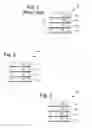
FIG. 1 is a schematic illustration of a prior art cell.
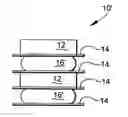
FIG. 2 is a schematic illustration of a cell made according to the present invention.
FIG. 3 is a schematic illustration of a cell made according to the present invention.
DETAILED DESCRIPTION OF THE INVENTIONReferring to drawings wherein like numerals indicate like elements, there is shown in FIG. 1 a prior art cell 10.
Cell 10 is a conventional lithium ion cell, either cylindrical or prismatic. The anode is a lithiated intercalation compound (mostly carbon based compounds (e.g., coke and/or graphite), but also metal oxides (e.g., WO2, MoO2, TiS2)). Preferably, the anode is a lithiated coke or graphite compound. The separator is a microporous polyolefin membrane preferably having a thickness of less than or equal to about 1 mil (25 microns). The separator may be a single layered membrane made of polyolefins (including polyethylene (LDPE, LLDPE, HDPE, UHMWPE, and combinations thereof) or a multi-layered membrane made of polyolefins (including polyethylene (low density polypropylene (LDPE), linear low density polypropylene (LLDPE), high density polypropylene (HDPE), ultra high molecular weight polypropylene (UHMWPE), and combinations thereof), polypropylene, polybutylene, polymethylpentene, and copolymers and mixtures thereof). The cathode is a lithiated intercalation compound (mostly metal oxides (e.g., MoO2, MnO2, TiS2, NbSe3, LiCoO2, LiNiO2, LiMnO4)). Preferably, the cathode is a lithiated LiCoO2, LiNiO2, or LiMnO4 compound. Each of the foregoing is conventional. See, for example, Linden, D., Editor, Handbook of Batteries, 2nd Edition, McGraw-Hill, Inc., New York, N.Y., 1995, and Besenhard, J. O., Editor, Handbook of Battery Materials, Wiley-VCH Verlag GmbH, Weinheim, Germany, (1999), both incorporated herein by reference.
Cell 10 is a stack of anodes, separators, and cathodes. Anode 12 sits on a separator 14. Separator 14 is wider than anode 12. Separator 14 sits on cathode 16. Cathode 16 is not as wide as either anode 12 or separator 16. The cathode 16 has square edges. During charging when the anode 12 and cathode 16 expand (in the figure, expansion occurs in the vertical direction), pressure at point 18 can cut separator 14.
In FIGS. 2 and 3, the invention is illustrated. In cell 10′, FIG. 2, the cathode 16′ has rounded edges. In cell 10″, FIG. 3, the cathode 16″ has beveled edges. During charging when the anode and cathode expand, cutting of the separator is minimized or eliminated because the square edge has been eliminated.
The present invention may be embodied in other forms without departing from the spirit and the essential attributes thereof, and, accordingly, reference should be made to the appended claims, rather than to the foregoing specification, as indicated the scope of the invention.
Claims
1. A method for preventing short circuiting in a lithium ion battery having an anode made of intercalation compound, a cathode made of a intercalation compound, and a separator having a thickness of 25 microns or less sandwiched between the anode and the cathode comprising the steps of:
rounding or beveling the edge portion of the cathode, so that during charging when the anode and cathode expand and squeeze the separator, the rounded or beveled edge portion of the cathode cannot cut the separator.
2. The method of claim 1 wherein the cathode intercalation compound being a metal oxide.
Images & Drawings included:
Sources:
- United States Patent and Trademark Office - verify current appl. status at the USPTO↗
Recent applications in this class:
- » 20240387961 2024-11-21
Battery Cell Design For Improved Safety - » 20240356182 2024-10-24
Battery Cell Design For Improved Safety - » 20240356181 2024-10-24
SECONDARY BATTERY - » 20240072398 2024-02-29
POWER SUPPLY DEVICE AND METHOD FOR PRODUCING SAME - » 20230307800 2023-09-28
SECONDARY BATTERY - » 20230238671 2023-07-27
CIRCUIT CONNECTION APPARATUS, BATTERY MODULE, AND ELECTRICAL DEVICE - » 20230207991 2023-06-29
BATTERY MODULE AND ENERGY STORAGE APPARATUS - » 20230178863 2023-06-08
SECONDARY BATTERY - » 20230122619 2023-04-20
BATTERY CELL, BATTERY, POWER CONSUMPTION DEVICE, AND MANUFATURING METHOD AND DEVICE OF BATTERY CELL - » 20230067646 2023-03-02
BATTERY MODULE