Insole for footwear
US20050193591A1
2005-09-08
11/065,302
2005-02-25
✅ Patent granted
US 7,178,269 B2
2007-02-20
-
-
Ted Kavanaugh
2025-02-25
Abstract:
An insole for footwear comprising silicone with a filler material, having a selected region of a silicone-cork mixture with a sufficiently high proportion of cork that the height thereof can be formed by grinding.
Assignee:
- Bauerfeind AG 16 🇩🇪 Zeulenroda, Germany
- Bauerfeind AG 1 🇩🇪 Zuelenroda, Germany
Interested in similar patents?
Get notified when new applications in this technology area are published.
Classification:
A43B7/142 » CPC main
Footwear with health or hygienic arrangements with foot-supporting parts with pads or holes on one or more locations, or having an anatomical or curved form characterised by the location under the foot situated under the medial arch, i.e. under the navicular or cuneiform bones
A43B7/144 » CPC further
Footwear with health or hygienic arrangements with foot-supporting parts with pads or holes on one or more locations, or having an anatomical or curved form characterised by the location under the foot situated under the heel, i.e. the calcaneus bone
A43B7/1445 » CPC further
Footwear with health or hygienic arrangements with foot-supporting parts with pads or holes on one or more locations, or having an anatomical or curved form characterised by the location under the foot situated under the midfoot, i.e. the second, third or fourth metatarsal
A43B13/16 » CPC further
Soles; Sole-and-heel integral units characterised by the constructive form Pieced soles
A43B17/003 » CPC further
Insoles for insertion, e.g. footbeds or inlays, for attachment to the shoe after the upper has been joined characterised by the material
A43B13/12 IPC
Soles; Sole-and-heel integral units characterised by the material Soles with several layers of different materials
A43B13/38 IPC
Soles; Sole-and-heel integral units Built-in insoles joined to uppers during the manufacturing process, e.g. structural insoles; Insoles glued to shoes during the manufacturing process
Description
The invention relates to an insole for footwear, which insole comprises silicone with a filler material.
BACKGROUND OF THE INVENTIONAn insole is described in European Patent Specification 0 140 984, formed fro a mixture of silicone rubber and organic filler. This material mixture extends throughout the entire insole, the insole thus being a homogeneous body.
Another insole is disclosed in DE 198 57 568 A1, that insole consisting of a carbon material for stiffening an elastic forefoot, which due to is thickness was also intended to facilitate rolling motion of the foot. That insole had a cork heel pad glued to the ball portion of the insole. That patent specification also made reference to other forms of connection between the ball portion and the heel portion, e.g. an interlocking of the two parts.
BRIEF SUMMARY OF THE INVENTIONAn object of the invention is a continuously elastic insole, comprising silicone, for example, and, certain portions of the insole having a particular support function, and comprising a material which, without foregoing elasticity, allows the insole to be adapted to the particular shape of a patient's foot. This object of the invention is achieved by an insole which partially comprises pure silicone and, in a selected region provided for height customization, comprises a silicone-cork mixture, with the proportion of cork being such that the height thereof, as a grindable region, can be customized by grinding.
The silicone-cork mixture in the selection region provides two particularly, desirable effects. First, the relatively high proportion of cork in the silicone-cork mixture allows that region to be ground down, to accommodate the shape of a patient's foot and/or therapeutic need, to the height considered appropriate by the treating physician. This is not possible using only silicone, because silicone alone cannot be ground. On the other hand, the silicone in the cork containing region ensures that this region, too, retains its elasticity, because the individual cork particles are joined together by thin silicone layers which are then readily able to absorb the stresses which occur during bending of the insole. The overall result, therefore, is an extremely customizable insole which is of sufficient elasticity throughout and which is capable of meeting a broad range of desirable insole characteristics.
The region of customizable height may be situated at various places on the insole. For example, it is possible to provide the grindable region at a raised outer edge. A further practical region is a pad disposed in the metatarsal region. Particular importance is also attached to the heel region, which, if formed by the silicone-cork mixture, can be customized within a relatively wide range of variations by grinding to certain heights.
BRIEF DESCRIPTION OF THE DRAWINGSIllustrative preferred embodiments of the invention are shown in the accompanying drawings, wherein:
FIG. 1a shows the insole with the silicone-cork mixture in the region of a raised outer edge in a top plan view;
FIG. 1b shows the insole in a side view with the silicone-cork mixture in the region of a raised outer edge in a top plan view;
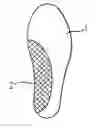
FIG. 2a shows the insole with a pad of silicone-cork mixture disposed in the metatarsal region in a top plan view;
FIG. 2b shows the insole in section with a pad of silicone-cork mixture disposed in the metatarsal region;
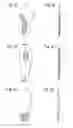
FIGS. 3a and 3b shows the insole with a silicone-cork mixture in the heel region.
DETAILED DESCRIPTIONFIG. 1a shows the insole 1 in a top plan view, the insole 1 having a raised outer edge 2 in the region which supports the inside of the metatarsal, said raised outer edge 2 comprising a silicone-cork mixture. FIG. 1b shows the insole 1 in a side view from the side of the raised outer edge 2, making it apparent that the raised outer edge 2 extends beyond the thickness of the forefoot region 7 and the insole 1. The silicone-cork mixture in the region of the raised outer edge 2 has been ground down to the height shown.
FIGS. 2a and 2b show the dimensional extent of a pad 3 of silicone-cork mixture in the metatarsal region, pad 3 having been ground to the thickness shown. FIG. 2b shows a section along line II-II of FIG. 2a, it being evident therefrom how the forefoot region 4 and the heel region 5 each directly adjoin the pad 3, which, therefore, as shown in FIG. 2a, is completely surrounded by the silicone of the insole.
FIGS. 3a and 3b show the insole 1 with the silicone-cork mixture in the heel region 6, FIG. 3a presenting a top plan view and FIG. 3b presenting a side view. The height of the cork mixture in the heel region 6, which is customizable by grinding, serves to exert a favourable influence on the rolling behaviour of the foot during walking.
The use of the silicone-cork mixture and forming the remainder of the insole from silicone, provides at the transition points direct homogeneous silicone connections which penetrate from the silicone in regions outside the silicone-cork mixture into the silicone-cork mixture, wherein the silicone encapsulates the cork particles and thus establishes not only a connection with the cork particles, but also a connection with silicone of the other region of the insole itself. Thus, in effect, results, with regard to the silicone, in formation of a homogeneous body from which the regions of silicone-cork mixture are unable to break out during use. The consequence is that there is a continuous elasticity which extends into regions of silicone-cork mixture, with virtually no perceptible step to the transition from silicone to silicone-cork mixture, which counteracts the otherwise possible occurrence of pressure points within an insole.
Claims
1. An insole for footwear, said insole comprising, silicone, and, in a selected region, a silicone-cork mixture of a sufficiently high proportion of cork so that the height thereof can be formed by grinding.
2. An insole according to claim 1, wherein the grindable region has a raised outer edge.
3. An insole according to claim 1, wherein the grindable region is a pad located in the metatarsal region of the insole.
4. An insole according to claim 1, wherein the grindable region is located in the heel region of the insole.
Images & Drawings included:
Sources:
- United States Patent and Trademark Office - verify current appl. status at the USPTO↗
Similar patent applications:
- » 20100043252
Composite footwear insole, and method of manufacturing same - » 20070214680
FOOTWEAR INSOLE COVER - » 20070033835
Insole arrangement; footwear with insole arrangement; and, method of preparation - » 20060277796
Multipiece footwear insole - » 14183031
Footwear insole system - » 20070180632
COMPOSITE FOOTWEAR INSOLE - » 14156706
Footwear insole system - » 17535275
Footwear insole - » 10053499
Footwear insoles - » 20100083534
MULTILAYER LAMINATE FOOTWEAR INSOLE
Recent applications in this class:
- » 20250280919 2025-09-11
CUSTOMIZABLE FOOTWEAR SYSTEM - » 20250221488 2025-07-10
Adjustable Footbed & System - » 20230346070 2023-11-02
Sole of shoe and shoe - » 20230255309 2023-08-17
SHOE ARTICLE WITH AN ARCH SPRING - » 20220256966 2022-08-18
PLANTAR ORTHOSIS - » 20220202131 2022-06-30
SHOE - » 20220175083 2022-06-09
ADJUSTABLE CLOSURE SYSTEM FOR AN ARTICLE - » 20220095739 2022-03-31
AN INSOLE FOR A FOOTWEAR - » 20220071341 2022-03-10
FOOTWEAR APPARATUS FOR IMPROVING GAIT BIOMECHANICS - » 20220061454 2022-03-03
SHOE
Recent applications for this Assignee:
- » 20100218398 2010-09-02
Insole comprising a curve support - » 20100113997 2010-05-06
Wrist orthosis - » 20100106066 2010-04-29
Ankle joint orthosis - » 20100036303 2010-02-11
Knee joint bandage - » 20090306570 2009-12-10
TUBULAR COMPRESSION BANDAGE - » 20090260257 2009-10-22
Inlay sole for shoes - » 20090216164 2009-08-27
Orthosis for correcting the position of a body joint - » 20080045872 2008-02-21
Elastic Bandage with Electrodes Spaced Apart From One Another - » 20070255426 2007-11-01
Prosthetic knee joint - » 20060041214 2006-02-23
Elastic knee-joint bandage