Modular containment unit
US20050193643A1
2005-09-08
10/493,533
2003-05-08
Abstract:
A prefabricated, self-contained, standardised working environment that combines transport-useful physical standards for overall dimensions (a shipping container/cargo container) together with functional standards (such as specified clean air or biological containment standards) related to specific types of work to be carried out, and takes advantage of volume production at an assembly site with appropriate materials and expertise. Optionally, users are provided with “no-touch” control of items like doors or taps, and with management of supplies, event logging, instrument control, communications and the like through a network of computer peripherals and a control unit.
Interested in similar patents?
Get notified when new applications in this technology area are published.
Classification:
E04H1/1205 » CPC main
Buildings or groups of buildings for dwelling or office purposes; General layout, e.g. modular co-ordination, staggered storeys small buildings; Small buildings or other erections for limited occupation, erected in the open air or arranged in buildings, e.g. kiosks, waiting shelters for bus stops or for filling stations, roofs for railway platforms, watchmens' huts, dressing cubicles Small buildings erected in the open air
B01L1/52 » CPC further
Enclosures; Chambers Transportable laboratories; Field kits
C12M37/00 » CPC further
Means for sterilizing, maintaining sterile conditions or avoiding chemical or biological contamination
E04B1/3483 » CPC further
Constructions in general; Structures which are not restricted either to walls, e.g. partitions, or floors or ceilings or roofs; Structures composed of units comprising at least considerable parts of two sides of a room, e.g. box-like or cell-like units closed or in skeleton form; Elements not integrated in a skeleton the supporting structure consisting of metal
E04H1/1277 » CPC further
Buildings or groups of buildings for dwelling or office purposes; General layout, e.g. modular co-ordination, staggered storeys small buildings; Small buildings or other erections for limited occupation, erected in the open air or arranged in buildings, e.g. kiosks, waiting shelters for bus stops or for filling stations, roofs for railway platforms, watchmens' huts, dressing cubicles Shelters for decontamination
F24F3/167 » CPC further
Air-conditioning systems in which conditioned primary air is supplied from one or more central stations to distributing units in the rooms or spaces where it may receive secondary treatment; Apparatus specially designed for such systems characterised by the treatment of the air otherwise than by heating and cooling by purification, e.g. by filtering; by sterilisation; by ozonisation Clean rooms, i.e. enclosed spaces in which a uniform flow of filtered air is distributed
B01L2200/028 » CPC further
Solutions for specific problems relating to chemical or physical laboratory apparatus; Adapting objects or devices to another Modular arrangements
E04H2001/1283 » CPC further
Buildings or groups of buildings for dwelling or office purposes; General layout, e.g. modular co-ordination, staggered storeys small buildings; Small buildings or other erections for limited occupation, erected in the open air or arranged in buildings, e.g. kiosks, waiting shelters for bus stops or for filling stations, roofs for railway platforms, watchmens' huts, dressing cubicles Small buildings of the ISO containers type
Description
FIELDThis invention relates to provision of an environmentally controlled, stand-alone, user-facilitated work space, and more particularly to providing an effective containment laboratory within a standardised shell with modular fitments capable of passing quality standards appropriate to the type of work carried out within.
BACKGROUNDSome types of work must be carried out within environments having unusual characteristics such as extreme freedom from particles carried in the air (“clean rooms” for silicon foundries and photolithography), or being effectively sealed from the outside world, such as for the handling of infectious organisms. One form of standard descriptor for a clean room is the US Federal Standard 209D including a specific class number representing the degree of freedom from particles of defined size ranges within a given sampled volume of air.
A bio-technical operation may require, or be required by law to use an enclosed laboratory space meeting certain requirements, such as to be able to guarantee containment of highly infectious organisms so that they are absolutely not released to the outside environment, or to maintain biological material held in a “bank” in a sterile and uncontaminated manner. The Australasian standards PC2, PC3, and PC4 refer to a capability for containing biohazards. For example, a PC3 laboratory (see “Definitions) includes a sealed room, an airlock for entry of personnel, an air inflow prefilter and baffles, a HEPA filter leading to an air exhaust fan piped to an exhaust on a rooftop, means to regulate and supervise the internal pressure at about −50 Pa with reference to the adjacent rooms in the building, and the usual laboratory furniture including Class II biosafety cabinets. Should the internal air pressure fall below a threshold alarms are raised. People using the facility have to be approved and trained, provide serum samples on a regular basis, and wear appropriate sealed clothing. (On occasion, containment laboratories are operated at a slightly raised pressure with respect to the outside air). Filters of the HEPA type are highly but not totally effective and therefore an air disinfection procedure, compatible with concurrent human exposure, may be useful on occasion such as when very infective or very dangerous organisms are present.
Example applications include quarantine facilities, operating theatres, anthrax spore (or other biological warfare) decontamination, decontamination of a person exposed to radioactive fallout, experimentation with viruses, vaccine production, and packing containers of live viruses or bacteria (such as live vaccines) on an industrial scale.
From time to time, forensic pathology requires forensic DNA procedures to be carried out in a clearly uncontaminated environment, so that any conclusions reached will stand up during legal argument. Further, such procedures may have to be carried out in a site that is remote from the usual scientific laboratory services.
It has been a common practice to install containment laboratories of the PC2 or PC3 type within multi-storey buildings. The cost of on-site construction of a highly secure bio-laboratory capable of meeting or exceeding the PC3 or PC4 rating is in year 2002 about one million New Zealand dollars. This can be prohibitive for smaller organisations, for short-term activities, and for universities on tight budgets. Furthermore, should the building suffer a structurally damaging catastrophe such as fire, earthquake, or explosion, the risk that the contents of the laboratory have been spread in an invisible manner about the general area adds an unknown degree of risk to firefighting, search and rescue, demolition, repair, or occupation of surrounding areas.
Other uses of a laboratory of the type under consideration include those where the biological material itself is not dangerous, but instead extremely valuable, and examples of such biological material include germ cells (sperm and eggs) of endangered animals, of people undergoing IVF procedures, and include a bank for storage of live cells such as stem cell lines. In these cases efforts are made to keep pathogens out, and to maintain the material in a viable state (eg by uninterrupted storage under boiling nitrogen at −196 deg C.).
Many fairly standard technical aids (such as laminar flow cabinets, liquid nitrogen storage facilities, or dark rooms) for use within such a laboratory are relatively expensive when a laboratory is built individually in a “target site” somewhere around the world, but which could be provided more cheaply and more easily if such laboratories could be built in one specialised factory and then shipped to a destination. It would be an advantage if the containment laboratory was as far as possible a stand-alone unit dependent on outside energy (electricity or fuel) only.
From time to time, a self-contained laboratory should be able to undergo a rigorous disinfection procedure in order to guarantee a known status prior to carrying out certain work.
Accordingly the problem to be solved could be stated as “provision of a cheap, portable working space within an integral prefabricated building, capable of meeting specified appropriate standards”.
Known prior art comprises the infrequent construction on an ad hoc basis of laboratories within containers such as wet labs for use in oceanography or the like; however no attempt has been made to provide such constructions that are specifically designed to meet stringent standards for cleanliness, for the containment of hazardous organisms, or the like. Most working spaces to meet such standards are constructed as “buildings within buildings”.
DEFINITIONS“Shipping container”, sometimes also known as “cargo container” refers to robust, stackable steel boxes with doors at one or both ends, have a constant width of 8 feet, are made in 20 foot, 30 foot or 40 foot lengths and 7.5 feet or 8.5 feet internal heights. They are capable of being lifted by a crane, carried by truck or train, or stacked on board a ship and normally used for the transport of cargo from place to place.
By “portable” we mean that the object in question is capable of being moved about from time to time, such as on the back of a truck or on a trailer.
“HEPA” (High Efficiency Particulate Arrestance) filters are a well-known group that belong to the ‘interception’ family of filters and typically have a deep bed of randomly positioned 0.5 to 1.0 micron diameter glass fibers.
There are standard descriptors for containment laboratories and for convenience we will refer to Australian Standard AS 2243.3-1991 (1995 draft revision) in which, for example, PC3 refers to a laboratory capable of containing HIV virus, recombinant DNA vectors, and pathogens of similar risk factor defined as Level 3 pathogens. PC2 is for less dangerous material, and PC4 is a very high containment standard.
OBJECTIt is an object of this invention to provide an improved portable laboratory, or at least to provide the public with a useful choice.
STATEMENT OF INVENTIONIn a first broad aspect this invention relates to the provision of a working area or room, wherein the external characteristics of the room meet an existing standard for containers, and the internal working environment of the room meets an existing standard appropriate to the use made of the working environment.
In a first related aspect, the outer shell capable of meeting at least one physical standard is that of a dedicated shipping container so that the working area can be moved about from time to time by means of existing transport facilities adapted for the movement of shipping containers.
In a preferred version, the laboratory is made within a structure compatible with steel cargo/shipping containers in that it can be stored, moved, and used in the same manner and using cranes, trucks, and other facilities already adapted for use with shipping containers.
Optionally the structure is built inside an existing steel cargo (shipping) container.
In a second related aspect, the working environment standards are preferably satisfied by means including use of constructional techniques, environmental conditioning, filtering, sterilistation, and air management means.
In a second broad aspect the invention provides a portable laboratory within an existing prefabricated and portable structure of the type known as a “shipping container”, characterised by being self-contained in relation to environmental support means including air conditioning, heating, water reticulation, and disposal.
In a related aspect the self-contained laboratory is provided with intake means capable of admitting air from the surrounding space, inlet filtering means capable of filtering out potentially harmful airborne material, circulating the air within the laboratory, and outlet filtering means capable of filtering out potentially harmful airborne material from used air before the used air is passed to the external environment.
Preferably the internal space is maintained at a lower ambient pressure than that of the outside air so that no air can escape from the laboratory except through the outlet filtering means.
Alternatively, the internal space is maintained at a higher ambient pressure than that of the outside air so that no air can enter the laboratory except through the inlet filtering means.
Preferably the modular containment unit is constructed within an outer shell capable of meeting at least one physical standard appropriate to outer shells, and includes an internal working space having a construction and having environmental support means together capable of meeting at least one functional standard appropriate to at least one task capable of being carried out within the working space.
Preferably, the construction of the internal working space is based on panels each comprised of a foam interior and at least one coated protective surface and one such product is known as “BONDOR”™.
In a third related aspect, the internal working space preferably includes means capable of trapping suspended particles within the air, so that the working space meets or exceeds a standard requirement for the amount of suspended particles in the air.
Preferably the internal working space provides walls, floors, ceilings and fitments constructed so as to minimise the release of particles into the air, so that the working space meets or exceeds a standard requirement for the amount of suspended particles in the air.
Preferably the structure preferably has a smooth interior lining capable of resisting contamination by dangerous biological materials.
Preferably the lining is at least partially resilient so that imposed strains, distortions, or impacts do not cause structural damage such as cracks or fractures.
Preferably any fixtures are molded with radius corners.
Preferably the space between the lining and the exterior is thermally insulated.
Preferably the entire ceiling includes a diffuse lighting system for general illumination.
Preferably all the interior lining, ceiling, floor, insulation and fixtures are made of hazard resistant materials.
Preferably the floor is a semi-elastic composition with a non-skid texture.
In a second broad aspect, the internal working space is preferably capable of providing a barrier between a bio-technical operation carried out within the working space and the external surrounding environment according to at least one recognised Standard for biological containment.
Preferably the construction provides for sterilisation of the working space from time to time, by chemical and/or physical means.
In a related aspect, the modular containment unit includes means for maintaining, within the working space, an internal atmosphere capable of meeting the at least one functional standard, the means also providing a barrier between the internal atmosphere and the external surrounding environment by means of air filtration and/or sterilisation.
Optionally, the means for maintaining an internal atmosphere and barrier is capable of being serviced and/or replaced from the exterior of the unit without breaching the barrier.
In a subsidiary aspect, the modular containment unit includes means for preventing exchange of organisms between the internal atmosphere and the external surrounding environment by carriage within liquids passing across the barrier.
In another related aspect, the modular containment unit includes means for preventing transfer of organisms across the barrier upon workers' clothing, by providing garment storage and changing areas.
In a related aspect, one version of the laboratory is rendered capable of at least meeting the Australian PC2 (C2) containment laboratory standard for holding dangerous biological materials, including infectious agents and genetically modified organisms within the laboratory.
In another related aspect, another version of the laboratory is rendered capable of at least meeting the Australian PC3 (C3) containment laboratory standard for holding dangerous biological materials within the laboratory.
In a further related aspect, another version of the laboratory is rendered capable of providing an environment capable of continuously maintaining biological material in a state of preservation free from exogenous infectious agents.
In a yet further aspect a further version of the laboratory is rendered capable of providing a substantially clean and preferably sterile environment so that it can be used for medical and surgical procedures within a contaiminated external environment.
In an even further aspect, a further version of the laboratory is rendered capable of retaining biological, chemical, or radioactive harmful materials within, when used for decontamination of persons or objects, so that the external environment is not contaiminated.
In a related aspect the further version includes means to render said harmful materials harmless before their removal from the laboratory.
In a third broad aspect, the working space includes at least one internal modular serviced space, each of which is capable of being occupied by a corresponding item of equipment.
In a related aspect, the modular containment unit includes service means (electric power and any gases) for supporting the internal working environment, and for supporting a bio-technical operation carried out within the unit.
In another related aspect, the modular containment unit includes a plurality of non-contact sensors each coupled to a corresponding actuator coupled in turn to an item to be operated; each sensor being capable of responding to a worker when requiring that the item be operated, so that the worker does not physically handle the item.
In a yet further related aspect, the modular containment unit includes unit-wide control means capable of regulating the internal environment using closed-loop control, according to a predetermined set of requirements.
Preferably this invention relates to provision of facilities within a prefabricated structure as previously described within this section, the facilities including at least some of:
(a) an ablutions area including some or all of: airlock, quarantine, scrub room with clothing locker, drench shower, hands-free basin and eyewash station (a common requirement for all levels of physical containment standards).
(b) a computer-based installation for the controlling and recording the status of the internal environment and atmosphere, and for raising an alarm if an abnormality is detected.
(c) a computer-based installation for the provision of an intelligent building system (including means to specifically monitor selected devices such as liquid nitrogen storage devices).
(d) the or another computer-based installation being interfaced with voice recognition technology in order to simplify and improve the sterile work process (such as by opening a door in response to a voice command).
In a fourth broad aspect, the invention provides a method for manufacture of a plurality of modular containment units as previously described in this section, wherein the method incorporates the steps of aggregating the steps of manufacture at a single site so that experience gained in meeting imposed standards may be used repeatedly, so that any one modular containment unit may be later provided with at least one modular item of laboratory equipment, and so that the cost of supply of said modular containment units is minimised.
Preferred EmbodimentThe description of the invention to be provided herein is given purely by way of example and is not to be taken in any way as limiting the scope or extent of the invention.
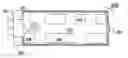
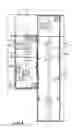
DRAWINGSFIG. 1: Plan view of modular laboratory at about floor level.
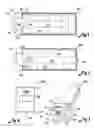
FIG. 2: Plan view of another modular laboratory at about head height.
FIG. 3: Perspective view showing environmental services module pulled out for service.
FIG. 4: End elevation view showing window and a filter.
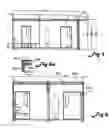
FIG. 5: Elevation side view of short (20 foot) container.
FIG. 6: End elevation view
FIG. 6a: Detail of roof/ceiling corner.
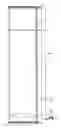
FIG. 7: Side elevation view of long (40 foot) container.
FIG. 8: Plan view of joined-together shipping containers, providing a complete facility.
(Illustrative dimensions included in FIGS. 5-8 are in millimetres and are not to be interpreted as limiting the scope of the invention.)
In principle this invention takes advantage of the existence of a first set of standards for external characteristics of convenient compartments (such as shipping containers) and the existence of a second set of standards related to specific types of work that may be carried out in defined spaces, and brings the two together preferably by assembly at a common site where materials and expertise are present relates to provision of a clean room, laboratory, or the like. For example the invention may provide a laboratory capable of meeting specifications for bio-hazard handling such as the Australian PC2/PC3 type ratings, or may provide another workplace (such as an ordinary temporary laboratory, an operating theatre, a biological material storage unit, or a decontamination unit) having a contained environment, within a prefabricated shell. Modularity is provided in several ways:
-
- (a) the prefabricated shell is a module,
- (b) different versions of laboratory can be supplied as “turnkey” modules, and
- (c) within any lab, equipment can be placed at any one of a series of locations each of a standard size and having a standard set of utilities provided close by. See FIGS. 1 and 2.
- (d) As shown in FIGS. 6 and 8, containers 800, 804 can be temporarily or permanently joined together at a site, in order to provide a larger working area.
We propose that using existing shipping containers (or newly built modules which fit the same handling means and strength requirements as do shipping containers) is a convenient way to provide portable, integrated laboratory units. Further, we propose to simplify the construction of the laboratory units by assembling them at a central site either to order or as available stock, and then selling or leasing them to clients. Considerable savings are possible through bulk purchases and economy of scale, and through application of accumulated on-site experience in meeting standard conditions.
EXAMPLE 1The construction of shipping containers has been more or less standardised over many years. Because their primary purpose is to hold and protect goods during shipment, even if exposed on a ship's deck and if underneath a stack of 5 or 6 other containers, they are weatherproof, strong, and are as cheap as their commodity nature allows. See FIGS. 1 to 8. The first aspect of the present invention is to use a shipping container 100 as the outer shell of a specialised working space capable of meeting or exceeding standard requirements relating to factors such as the ingress or egress of microorganisms. A business comprising the manufacture at a site of numbers of such laboratories to meet global standards and then transporting them like ordinary shipping containers, to various destinations would allow experience gained in meeting those standards to be replicated. Otherwise, each individual site has to learn how to meet the relevant standard(s) with greater difficulty. Then, if each laboratory is laid out internally in a “modular” manner, facilities or specific equipment can be installed off the shelf as required.
Accordingly the invention in a typical embodiment includes these features:
1. The invention is built inside a shell such as a shipping container 100 (FIG. 1) or 700 (FIG. 7) having structural integrity both during use and during transport, and having known dimensions. The outline of a worker 702 indicates dimensions approximately.
-
- a) At this time we prefer to fit an empty shell with internal panelling of a type used in refrigeration engineering for the walls and internal ceiling. One suitable type is knwown as “BONDOR™ (James Hardie Ltd, Penrose, Auckland). This consists of a foamed polystyrene (or the like) plastics panel about 30 mm thick, covered on one or both sides with an optionally coated steel skin. Alternative fillers may be selected according to fire resistance, solvent resistance, and/or vermin resistance according to the specific end-use intended. The preferred coating, normally used as a roof covering, is compatible with wiping, many chemicals, and the internal coating would normally comprise the formal boundary of the sealed area Internal corners may be made smooth by coving with a settable composition such as fibreglass/epoxy/other fillers, or by use of specialised metal extrusions adapted to accept the edges of the panels and provide a smooth interior surface at flush edges, over exposed edges, or within corners. Aluminium extrusions are available for edge-to-edge joints, for coving, for delineating windows, and for surrounding lighting fixtures. See FIGS. 7 and 8. Here, the Bondor panels are shown with hatched filling, corresponding to the foam and the external metal skin is shown as a sinusoidal line. FIG. 6a shows details of a top corner of a container, where 601 is the outer wall, and 604 is the outer roof of the pre-existing container, while 605 is a pre-existing attachment point. 602 indicates a foam-filled wall panel, and 603 indicates an internal coving between the wall panel and the ceiling panel. Apertures for electrical connectors or the like should be sealedat or near any penetration through the panel surface skin, such as by bringing wires in through conduits and by filling at least part of each receptacle box or part of each conduit with a silicone sealant.
- b) A previously preferred option for interior surfaces is a fibreglass and cured resin type of coating such as is used on luxury boats, moulded and/or coved into all recesses so that the interior surface presents an unbroken smooth coating with curved corners. Crevices which might harbour microorganisms are undesirable. It would be useful if the interior lining itself, or its mounting and support was tolerant of damage caused for example by shipping-related impacts. FIG. 1 also shows a layer of insulation (hatching 111) useful for thermal, sound, and impact insulation which should also enhance the integrity of the interior lining. The insulation is preferably fireproof (such as glass wool) or may be a plastics foam.
- c) The floor material would depend more particularly on the type of use to be made of the workspace and may comprise a resilient surface or a smooth wipable surface as required. A compromise between the risk of a person slipping while holding a fagile item, (overcome with a softer, more friction-inducing surface), and the ability to clean the floor to the required standard (and sometimes to disinfect the floor) with a hard, smooth wear-resistant surface, is required.
- d) For doors, one preferred type known as “RUDNEV”™ is compatible with the BONDOR™ panels. Doors of this type, including windows, are shown at 501, 607 in FIGS. 5 and 6.
2. Provides one or more modular services units (as required) for supplying, for example:
-
- a) air control and air conditioning; filtered as required by a user, or as set down by relevant Standards. (In FIG. 3, 304 is a combined HEPA filter (or equivalent) and exhaust fan for extracting air from within the laboratory through vent 201 (FIG. 2): 303 is an air conditioning module, and 301 is a controller to hold the internal air pressure at a set amount less than ambient pressure. (Sometimes the internal pressure is positive with respect to the outside, such as when internally held material must be protected). 303 is an air conditioner operating within the internal air space. It will be apparent from FIG. 7 that there is space within the ceiling of about 300 mm (approximately) for carrying utilities such as air distribution and return pipes, wiring, lighting fixtures, and the like.
- b) Internal air disinfection may be provided on a long-term continuous basis as an option (as long as the bio-technical operation is not jeopardised—such as if the material being handled is sensitive to disinfection) and one likely example is the use of low levels of the vapour of propane 1,2 diol(propylene glycol) supplied by an appropriate vaporizer as is known to kill or immobilise bacteria and viruses, within the relevant art. This material is GRAS-rated (a Food & Drugs Administration term: generally regarded as safe) and used in foods and medications. Alternatively, only the exhaust air and/or the airlock may be treated with the vapour in order to reduce external contamination from within.
- c) Clean water; preferably treated and sterilised on receipt such as by ultraviolet sterilisation, which includes passing the water close to a low-pressure mercury-vapour discharge tube having a quartz envelope transmitting sterilising wavelengths of ultra-violet light (as is known in the relevant art) so that internal sterility is not compromised. In FIG. 3, 109 represents water intake and removal piping leading to underground services. Not shown: internal water reticulation.
- d) Disposal of waste water including means to ensure that any water leaving the laboratory has been rendered sterile (also by ultraviolet irradiation and/or disinfectant treatment and/or filtering). In FIG. 1, the area 104 is designated for waste water treatment to filter and/or kill any pathogens that would otherwise present a risk to people or the environment.
- e) Electricity, probably using switchgear for connection to a utility, or when not available, a generator. A local dedicated generator is an alternative, in which case the input is either fuel or renewable energy (sun, wind). In FIG. 1, area 103 is set aside for electricity conditioning and metering services. Duct 108 leads to underground electricity reticulation. Valuable cell lines would particularly require continuous services. (They may also need a guaranteed supply of liquid nitrogen).
- f) Heating and lighting. In FIG. 4, window 402 is provided as one form of lighting although in some cases an absence of any windows may be preferred. Heating is preferably provided by a heat pump forming part of the air conditioning functions supplied by block 303. In FIG. 6, 606 represents a lighting fixture. 608 represents an air withdrawal grill in the ceiling. In FIG. 7, 701 represents a skylight.
3. Communications such as a telephone line for voice, fax, and digital data, or perhaps one or more data channels employing wired or wireless communications (see below)
-
- a) Gases such as a heating gas like propane, or oxygen for patients and workers, or other gases may be reticulated through the laboratory or supplied within stand-alone units. Note that it may be preferable, in the case of a long container such as that shown in FIG. 7, to provide the services including power generation, air conditioning and filtering, an supplies of gas at one end of the container, accessed through the container's original doors. The pipes, etc are distributed from this site through the working environment as required. There is a permanent physical and containment barrier between these services and the working area, reached from the side or the other end of the container through (preferably) adapted doors (FIG. 8-801) leading through decontamination type air-locks and/or changing rooms.
- b) Intermittently used disinfection modules may be provided for use after a given bio-technical operation has been completed in order to provde a fresh start for another bio-technical operation, such as for use with DNA isolation where either the original amounts are very small (ancient DNA) or for scrupulous avoidance of contamination (such as for forensic DNA isolation). It may be used if a potentially hazardous spill has occurred. One accepted method is to generate formaldehyde vapour plus humid air, then after a period of perhaps some hours to generate ammonia in order to destroy the formaldehyde. Residual formaldehyde is believed to be a hazardous substance for workers. This disinfection module might be placed in the corner adjacent to the arrow 110 and the sequence should be able to be started by remote control. Disinfection may also be a safety requirement before the working environment is entered by service people, such as those not part of a PC3 or the like health monitoring programme.
4. Modular benches, modular workstations and modular sites or bays are installed for required equipment such as operating tables, centrifuges 207, incubators, laminar flow hoods 206, refrigerators or store cupboards 208, etc. The modular approach permits manufacture of a standard laboratory shell, subsequently fitted out as a generic PC3 laboratory (for example) or for an individual customer's requirements. The square grid pattern shown in FIGS. 1 and 2 may be considered to be the floor plan for standardised laboratory equipment and each square may be provided with corresponding electricity outlets.
5. Use of suitably sealed doors, as wide as needed by the application in question. These may be made on an airlock principle so that an outer set 101 must be closed before an inner door or set 105 is opened (or vice versa). An airlock is shown at 102 in FIGS. 1 and 2. There may be a shower facility included within the airlock. Personal clothing lockers 202, and sterile chothing lockers 203 may be included within the airlock as is commonly required in the art. There may be a need for doors at each end of a decontamination unit, though this is not shown here. We allow for either the filter 204/401 or the window 402 to be breakable to allow egress in the event of a fire at the airlock end of this modular laboratory. FIG. 8 shows shower (802) and washing (803) facilities constructed within a short container, and machinery (805, 806) for carrying out a manufacturing process within the long container 804. For decontamination as a walk-through unit, double doors may be used at both ends. Patients on gumeys need more room within an internal airlock than ordinary walking persons and doors need to be wider and/or double. The laboratory should be secure against undesired or malicious entry.
Given that compliance with rigorous standards is particularly difficult if done only once, one advantage of this approach is that experience, skills, and knowledge of the appropriate materials and other resources on the part of the construction team allows units to be manufactured at a lower cost than otherwise. Economiy of scale can be exploited. The cost of shipping the finished modular laboratory to a destination is expected to be more than offset by the advantages of volume production. Also, the cost of shipping is alleviated because the finished modular laboratory includes its own packing—it is a standard shipping container that can be handled like any other shipping/cargo container.
Larger facilities can be provided for by joining individual container-sized modular units side-to-side, end-to-end, end-to-side, and so on, or they might share a common access way yet be individually separate. See FIG. 8. Preferably joining is carried out at a site, in order to retain the shipping advantages and so that the joining can be undone if the facility is to be moved.
It is possible to hire these portable facilities rather than to sell them outright. Providing that adequate decontamination at the end of a given use is possible, they can be moved about the world from user to user according to instant demand. A multinational user or a military force may also move them according to demand. A military force may find these useful as components of a portable hospital, or as a biological or nuclear warfare decontamination unit. The relative weight of containers (as opposed to tents) can help support and protect persons inside or in adjacent tents from adverse weather or enemy fire.
The invention could be shifted on a conventional (and ubiquitous) container freight truck with a lifting crane, placed in a car park or on some other site, supported on foundation blocks 403 if the ground is not level or is wet, optionally connected to water, waste water, power, and telephone lines, and could be in full use within a day. The invention could be moved and used when on top of a towable trailer—useful for forensic pathology applications.
The air conditioning system for a containment laboratory is generally required to operate at a negative pressure in relation to the outside so that no organisms can be blown out of the laboratory, and at the same time to filter the air so that organisms suspended in the air are trapped and may be disposed of. (Where the laboratory is intended to house precious preserved living material such as stem cells, it may be run under a positive pressure regime (in relation to ambient air pressure) so that incoming micro-organisms are excluded). It should also provide safe working conditions for personnel, such in relation to temperature, oxygen content, and humidity, and may include positive pressure supplies for persons wearing enclosed suits.
We propose to install the air conditioning system in the roof space—or in a specially created work space, in such a way that it can be removed for external maintenance without compromising the integrity of the internal space (or of the outside environment) as might happen if used filters are not securely sealed. There is 300 mm (1 foot) of spare roof space in an 9.5 foot high container available for use. FIG. 3 shows an embodiment of the principle. Here, a large “drawer” 302 is shown pulled out from the roof space above the entry doors 101 so that maintenance engineers can work on the equipment without having to enter the laboratory and with minimal exposure to risk of infection or release of organisms. In FIG. 3, 305 indicates some indicator lamps which might flash to alert a security guard if an accident has happened inside, if the internal pressure is outside the set limits, if formaldehyde has been released for a decontamination procedure, or if unauthorised entry has happened. 306 is an exit or supplementary filter module. The HEPA filter is installed below the fan 304—above the grille 201 in FIG. 2. Other equipment may be placed in the roof, such as communications equipment, computers, and the like. An air inflow prefilter and baffles (for setting the internal pressure) may be located at the far end of the laboratory such as at 204 in FIGS. 2 and 4.
In an exclusion laboratory (rather than a compliance laboratory, the fan 304 is reversed so that it blows into the laboratory space through the HEPA filter and air exits either through the airlock (when used) or through the vent 204.
One solution to maintenance is to separate the filtering units (which are most likely to need attention and which will have pressure differential indicators across them to indicate blockage) from the air processing section (compressors, fans, radiators, humidifiers, etc), and provide the filters with enclosures similar in principle to those used for toner cartridges (eg “Brother” TN 200HL), where each filter can be totally contained before installation or removal for disposal or external disinfection inside a sealable shell: the shell being opened out once the filter is in place. Another solution to maintenance is to duplicate the air processing section and ensure that either processor can manage the job while the other one is removed for maintenance. A drawer like 302 might be installed at both ends of the modular laboratory.
The required quality of filtration is for most purposes laid down in the relevant standards and may be very high. “HEPA” filters are one suitable exhaust filter used in high-level (PC2, PC3) containment labs. Clean rooms usually require an even higher level of filtration.
The air conditioning can optionally be linked up to the monitoring/auditing portion of the intelligent building system (see Example 3) in order to constantly ensure that variables such as pressure/temperature/contaminants are at acceptable levels, and warn when this is not the case.
EXAMPLE 2It is feasible and often advisable to construct a highly demanding environment such as a P3 or P4 laboratory with all the inherent intelligence that is possible. “Intelligent buildings” is a broad term, which can be interpreted as providing one or more of the following options, depending on the level of automation/auditing/monitoring required:
-
- 1. Lighting which can be adjusted according to the needs of a task at a position, and/or which can be configured to switch itself off when not required, so as to optimise resources.
- 2. Heating or cooling which is also configurable according to needs, leading to both optimised resources and reduced risk of temperature variance (i.e., to assist in production/lab environments where maintaining a constant temperature is vital to results).
- 3. Input systems enabling hands-free interaction with the building controls. For example, if a person has gloved hands, is dressed in an isolation suit, or is otherwise unable to easily grasp controls, then they have a choice of voice commands, eye movement commands, foot switches, and the like at their disposal to interact with the building, and/or to communicate either inside or outside the building, and/or to interact with compatible devices within the building (including specific taps, laboratory equipment, laminar flow hood devices, etc) in a manner which facilitates work without breaking sterility. Bar code readers may be used to monitor where labelled bottles or the like are being placed. For example each incubator, each storage cupboard, or each liquid nitrogen dewar would have a bar code reader beside it.
- 4. Supervision of intended containment conditions, such as by warning of likely breakdowns in air management (such as blocked filters, low fuel, etc) by controlling and logging ingress and egress by persons (perhaps through an airlock device), and by monitoring relative air pressure between the inside and outside environments.
- 5. Supervision of structural integrity of the container, perhaps using fibre optic bundles mounted within or on surfaces of the structure so that strains affect their optical properties as sense by a transducer. Polarised light is one way to detect strain, and ranging can locate the position where strain is applied. The technology is well known in relation to bridges and skyscrapers for example.
- 6. Logging of laboratory activity for audit or security reasons. I.e., entry/exit points to be fitted with biometric readers, and all other significant events (to be configured by end client) to be logged to a suitable RDBMS system.
A networked or standalone digital computer with appropriate peripherals could provide the necessary building intelligence. Wireless LAN connections from this PC could allow the laboratory to be linked into a larger corporate or university-wide LAN, or simply allow authorised access to laboratory systems via laptop or other portable computer without the need to enter the laboratory and compromise sterility. Again, particularly for stringent applications, the data processing device can be backed up with a redundant duplicate, and possess data storage (optionally offsite) so that breakdowns do not affect running. Access to bioinformatics systems and the Internet should be available through a data channel such as a wireless interface.
On a more mundane level, a wireless LAN system is useful for controlling access (security) for reporting on internal activities by workers, and for reporting on environmental parameters such as internal pressure differentials.
The modular air conditioner fitted in the roof and serviceable outside the container could include and devices related to the <<intelligent building>> operations, even dangling power outlets so that the modular laboratory can comprise an empty lined box, coupled with a removable (for maintenance or upgrading purposes) technically sophisticated control unit held within the drawer 302.
EXAMPLE 3The invention is applicable to packaging of pharmaceuticals, such as where live vaccines are involved or where bacteria or their spores are pressed into tablets. Of particular relevance is the ability to sterilise the entire working environment after completing manufacture or packing one product line, and before commencing work on the next product line. Otherwise, organisms from previous operations may still be present within the working environment and can be found within subsequently produced product lines.
EXAMPLE 4The invention is also applicable to the “Clean Room” concept as used in particular for the manufacture of integrated circuits, where in essence many physical or chemical treatments are applied in sequence to a silicon wafer surface; most of these are controlled by optically projected images acting on photolithographic coatings, and the presence of dust upon the surface at any stage will prevent the circuit being constructed on the wafer from eventually being used. Some surfaces should be totally defect-free over areas of 30×30 mm or more—such as for CCD camera detectors, or for processors for computers. Dust is one of the main obstacles to extremely large-scale integration. A fully self-contained facility such as may be provided within a single container, or possible several containers joined together, may allow better control over dust than is possible within a large building with many concurrent processes.
COMMERCIAL BENEFITS OR ADVANTAGES1. The invention provides a “turnkey” modular laboratory capable of being constructed to meet high standards of containment or exclusion.
2. The invention provides a low-cost “turnkey” modular laboratory which can be constructed in a factory then easily shipped to a remote site; the fabrication using specialities not available generally, such as in interior finishes, intelligent controls, and air control, conditioning, and filtration. These are particularly useful during final testing and verification that the specified standards are met.
3. The modular laboratory may be hired for the period during which it is required, so avoiding the cost of ownership. It may be required for only a short period—such as the period of a limited research grant or the duration of an outbreak of disease, a war, or radioactive fallout. For the latter three examples, storage at a base somewhere within a country and availability anywhere else at 6 hours notice is useful.
4. The laboratory may be used within another building (perhaps inside a garage, or on a higher storey in a building, or outside in the grounds. The stand-alone aspect is an advantage for control of a serious spill, when the entire laboratory can be fumigated, or in the worst kind of accident, can be lifted out, taken away, and incinerated.
5. An outside containment laboratory is a safer prospect in contrast to results of structural damage to a multi-storey building having a containment laboratory built conventionally inside. Invisible biohazards may be disseminated widely as a result of the damage posing a risk to the general population as well as to people involved with disaster control (fire, etc) at the site.
6. A mobile operation such as a military organisation can make use of these modulare laboratories for purposes such as operating theatres, measures to control biological warfare, decontamination of biologically or radiation-contaminated individuals, and the like.
7. Shipping containers are inherently relatively secure against theft by breaking and entering.
Finally, it will be understood that the scope of this invention as described and/or illustrated within this provisional specification is not limited to the preferred embodiments described herein for illustrative purposes. Those of skill will appreciate that various modifications, additions, and substitutions are possible without departing from the scope and spirit of the invention as set forth in the following claims.
Claims
1. A modular containment unit including a working space, for use within an external surrounding environment, characterised in that the modular containment unit is constructed within an outer shell capable of meeting at least one physical standard appropriate to outer shells, and includes an internal working space having a construction and having environmental support means together capable of meeting at least one functional standard appropriate to at least one task capable of being carried out within the working space.
2. A modular containment unit as claimed in claim 1, characterised in that the outer shell capable of meeting at least one physical standard is that of a dedicated shipping container.
3. A modular containment as claimed in claim 2, characterised in that the construction of the internal working space is based on panels each comprised of a foam interior and at least one coated protective surface.
4. A modular containment unit as claimed in claim 3, characterised in that the internal working space includes means capable of trapping suspended particles within the air, and the internal working space provides walls, floors, ceilings and fitments constructed so as to minimise the release of particles into the air, so that the working space meets or exceeds a standard requirement for the amount of suspended particles in the air.
5. A modular containment unit as claimed in claim 2, characterised in that the internal working space is capable of providing a barrier between a bio-technical operation carried out within the working space and the external surrounding environment according to at least one recognised Standard for biological containment, and the construction provides for sterilisation of the working space from time to time.
6. A modular containment unit as claimed in claim 2, characterised in that the modular containment unit includes means for maintaining, within the working space, an internal atmosphere capable of meeting the at least one functional standard, the means also providing a barrier between the internal atmosphere and the external surrounding environment by means of air filtration and/or sterilisation.
7. A modular containment unit as claimed in claim 5, characterised in that the means for maintaining an internal atmosphere and barrier is capable of being serviced and/or replaced from the exterior of the unit without breaching the barrier.
8. A modular containment unit as claimed in claim 5, characterised in that the modular containment unit includes means for preventing exchange of organisms between the internal atmosphere and the external surrounding environment by carriage within liquids passing across the barrier.
9. A modular containment unit as claimed in claim 5, characterised in that the modular containment unit includes means for preventing transfer of organisms across the barrier upon workers' clothing, by providing garment storage and changing areas.
10. A modular containment unit as claimed in claim 2, characterised in that the working space includes at least one internal modular serviced space, each of which is capable of being occupied by a corresponding item of equipment.
11. A modular containment unit as claimed in claim 3, characterised in that the modular containment unit includes service means (electric power and any gases) for supporting the internal working environment, and for supporting a bio-technical operation carried out within the unit.
12. A modular containment unit as claimed in claim 7, characterised in that the modular containment unit includes a plurality of non-contact sensors each coupled to a corresponding actuator coupled in turn to an item to be operated; each sensor being capable of responding to a worker when requiring that the item be operated, so that the worker does not physically handle the item.
13. A method for manufacture of a plurality of modular containment units each as claimed in any previous claim, characterised in that the method incorporates the steps of aggregating the steps of manufacture at a single site and then transporting each modular containment unit to a destination site as if it were a standard shipping container, so that experience gained in meeting imposed standards may be used repeatedly, so that any one modular containment unit may be later provided with at least one modular item of laboratory equipment, and so that the cost of supply of said modular containment units is minimised.
Images & Drawings included:
Sources:
- United States Patent and Trademark Office - verify current appl. status at the USPTO↗
Similar patent applications:
- » 20180280972
Integrated modular unit containing one or more analyte concentrator-microreactor devices to be coupled to a cartridge-cassette and methods of operation - » 20070023341
Treatment apparatus with modular chemical containing units having one-way valve assemblies - » 20230138182
Mobile perforating bank unit and modular storage container - » 20140231285
Hybrid modular furniture and storage container unit - » 20120074823
Hybrid modular furniture and storage container unit - » 20220379005
Modular unit for washing and drying containers for pharmaceutical use and production line of containers for pharmaceutical use description - » 20110278029
Self-contained self-actuated modular fire suppression unit
Recent applications in this class:
- » 20250092698 2025-03-20
STORAGE SHED - » 20250092697 2025-03-20
STORAGE SHED - » 20250034891 2025-01-30
PREFAB MODULAR SHED - » 20240376731 2024-11-14
Modular Mobile Temporary Structures and Method of Formation - » 20240318446 2024-09-26
MODULAR SHED DESIGN AND METHOD FOR CONSTRUCTING THE SHED - » 20240254789 2024-08-01
RAPID WALL BUILDING SYSTEM AND METHOD - » 20240247508 2024-07-25
EMERGENCY HOUSING UNIT - » 20240229487 2024-07-11
Modular Box Structure - » 20240133197 2024-04-25
Modular Box Structure - » 20240125134 2024-04-18
FOUR-DEVICE-IN-ONE MULTI-FUNCTION BUNGALOW