Carboxylic acid derivative
US20050222423A1
2005-10-06
10/500,135
2002-12-26
Abstract:
The following compounds useful as VEGF receptor antagonists and having excellent physical properties are provided.
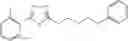
A carboxylic acid derivative represented by formula:
wherein ring A represents a benzene ring, a naphthalene ring, or the like; W represents a C1-5 alkylene group; Z represents a single bond or a phenylene group; R1 and R2 are the same or different and each represents a hydrogen atom, a halogen atom, a C1-5 alkyl group or a C1-10 alkoxy group; R3 represents a hydrogen atom, a halogen atom, a C1-12 alkyl group, a C2-5 alkynyl group, a trifluoromethyl group, an acetylenyl group, a cyano group, a nitro group, —CH2—R6, —Y—R11, or the like; R4 represents a group represented by formula:
and
R5 represents a hydrogen atom or a C1-5 alkyl group, or a pharmaceutical acceptable salt of the derivative.
Inventors:
- Masakazu SATO 33 🇯🇵 Tokyo, Japan
- Masabumi SHIBUYA 3 🇯🇵 Saitama, Japan
- Shuji Saito 1 🇯🇵 Tokyo, Japan
- Yoichiro Suga 2 🇯🇵 Tokyo, Japan
Assignee:
- TAISHO PHARMECEUTICAL CO., LTD. 1 🇯🇵 Tokyo, Japan
Interested in similar patents?
Get notified when new applications in this technology area are published.
Classification:
C07D271/10 » CPC main
Heterocyclic compounds containing five-membered rings having two nitrogen atoms and one oxygen atom as the only ring hetero atoms not condensed with other rings 1,3,4-Oxadiazoles; Hydrogenated 1,3,4-oxadiazoles
A61K31/198 » CPC further
Medicinal preparations containing organic active ingredients; Acids; Anhydrides, halides or salts thereof, e.g. sulfur acids, imidic, hydrazonic, hydroximic acids; Carboxylic acids, e.g. valproic acid having an amino group the amino and the carboxyl groups being attached to the same acyclic carbon chain, e.g. gamma-aminobutyric acid [GABA], beta-alanine, epsilon-aminocaproic acid, pantothenic acid Alpha-aminoacids, e.g. alanine, edetic acids [EDTA]
A61K31/343 » CPC further
Medicinal preparations containing organic active ingredients; Heterocyclic compounds having oxygen as the only ring hetero atom, e.g. fungichromin having five-membered rings with one oxygen as the only ring hetero atom, e.g. isosorbide condensed with a carbocyclic ring, e.g. coumaran, bufuralol, befunolol, clobenfurol, amiodarone
A61K31/352 » CPC further
Medicinal preparations containing organic active ingredients; Heterocyclic compounds having oxygen as the only ring hetero atom, e.g. fungichromin having six-membered rings with one oxygen as the only ring hetero atom condensed with carbocyclic rings, e.g. cannabinols, methantheline
A61K31/381 » CPC further
Medicinal preparations containing organic active ingredients; Heterocyclic compounds having sulfur as a ring hetero atom having five-membered rings
A61K31/40 » CPC further
Medicinal preparations containing organic active ingredients; Heterocyclic compounds having nitrogen as a ring hetero atom, e.g. guanethidine or rifamycins having five-membered rings with one nitrogen as the only ring hetero atom, e.g. sulpiride, succinimide, tolmetin, buflomedil
A61K31/403 » CPC further
Medicinal preparations containing organic active ingredients; Heterocyclic compounds having nitrogen as a ring hetero atom, e.g. guanethidine or rifamycins having five-membered rings with one nitrogen as the only ring hetero atom, e.g. sulpiride, succinimide, tolmetin, buflomedil condensed with carbocyclic rings, e.g. carbazole
A61K31/42 » CPC further
Medicinal preparations containing organic active ingredients; Heterocyclic compounds having nitrogen as a ring hetero atom, e.g. guanethidine or rifamycins having five-membered rings with two or more ring hetero atoms, at least one of which being nitrogen, e.g. tetrazole Oxazoles
A61K31/421 » CPC further
Medicinal preparations containing organic active ingredients; Heterocyclic compounds having nitrogen as a ring hetero atom, e.g. guanethidine or rifamycins having five-membered rings with two or more ring hetero atoms, at least one of which being nitrogen, e.g. tetrazole; Oxazoles 1,3-Oxazoles, e.g. pemoline, trimethadione
A61K31/4245 » CPC further
Medicinal preparations containing organic active ingredients; Heterocyclic compounds having nitrogen as a ring hetero atom, e.g. guanethidine or rifamycins having five-membered rings with two or more ring hetero atoms, at least one of which being nitrogen, e.g. tetrazole Oxadiazoles
A61K31/426 » CPC further
Medicinal preparations containing organic active ingredients; Heterocyclic compounds having nitrogen as a ring hetero atom, e.g. guanethidine or rifamycins having five-membered rings with two or more ring hetero atoms, at least one of which being nitrogen, e.g. tetrazole; Thiazoles 1,3-Thiazoles
A61K31/428 » CPC further
Medicinal preparations containing organic active ingredients; Heterocyclic compounds having nitrogen as a ring hetero atom, e.g. guanethidine or rifamycins having five-membered rings with two or more ring hetero atoms, at least one of which being nitrogen, e.g. tetrazole; Thiazoles condensed with carbocyclic rings
A61K31/4453 » CPC further
Medicinal preparations containing organic active ingredients; Heterocyclic compounds having nitrogen as a ring hetero atom, e.g. guanethidine or rifamycins having six-membered rings with one nitrogen as the only ring hetero atom; Non condensed pyridines; Hydrogenated derivatives thereof; Non condensed piperidines, e.g. piperocaine only substituted in position 1, e.g. propipocaine, diperodon
A61K31/5375 » CPC further
Medicinal preparations containing organic active ingredients; Heterocyclic compounds having nitrogen as a ring hetero atom, e.g. guanethidine or rifamycins having six-membered rings with at least one nitrogen and one oxygen as the ring hetero atoms, e.g. 1,2-oxazines 1,4-Oxazines, e.g. morpholine
A61P3/00 » CPC further
Drugs for disorders of the metabolism
A61P3/10 » CPC further
Drugs for disorders of the metabolism for glucose homeostasis for hyperglycaemia, e.g. antidiabetics
A61P5/04 » CPC further
Drugs for disorders of the endocrine system of the hypothalamic hormones, e.g. TRH, GnRH, CRH, GRH, somatostatin for decreasing, blocking or antagonising the activity of the hypothalamic hormones
A61P9/00 » CPC further
Drugs for disorders of the cardiovascular system
A61P19/02 » CPC further
Drugs for skeletal disorders for joint disorders, e.g. arthritis, arthrosis
A61P27/02 » CPC further
Drugs for disorders of the senses Ophthalmic agents
A61P35/00 » CPC further
Antineoplastic agents
A61P43/00 » CPC further
Drugs for specific purposes, not provided for in groups -
C07C235/38 » CPC further
Carboxylic acid amides, the carbon skeleton of the acid part being further substituted by oxygen atoms having carbon atoms of carboxamide groups bound to acyclic carbon atoms and singly-bound oxygen atoms bound to the same carbon skeleton the carbon skeleton containing six-membered aromatic rings having the nitrogen atom of at least one of the carboxamide groups bound to a carbon atom of a six-membered aromatic ring
C07C255/60 » CPC further
Carboxylic acid nitriles having cyano groups bound to carbon atoms of six-membered aromatic rings of a carbon skeleton containing cyano groups and singly-bound nitrogen atoms, not being further bound to other hetero atoms, bound to the carbon skeleton at least one of the singly-bound nitrogen atoms being acylated
C07C311/46 » CPC further
Amides of sulfonic acids, i.e. compounds having singly-bound oxygen atoms of sulfo groups replaced by nitrogen atoms, not being part of nitro or nitroso groups; Sulfonamides, the carbon skeleton of the acid part being further substituted by singly-bound nitrogen atoms, not being part of nitro or nitroso groups at least one of the singly-bound nitrogen atoms being part of any of the groups , X being a hetero atom, Y being any atom, e.g. N-acylaminosulfonamides Y being a hydrogen or a carbon atom
C07C317/40 » CPC further
Sulfones; Sulfoxides having sulfone or sulfoxide groups and nitrogen atoms, not being part of nitro or nitroso groups, bound to the same carbon skeleton with sulfone or sulfoxide groups bound to carbon atoms of six-membered aromatic rings of the carbon skeleton having sulfone or sulfoxide groups and amino groups bound to carbon atoms of six-membered aromatic rings being part of the same non-condensed ring or of a condensed ring system containing that ring with the nitrogen atom of at least one amino group being part of any of the groups , X being a hetero atom, Y being any atom, e.g. N-acylaminosulfones Y being a hydrogen or a carbon atom
C07C323/41 » CPC further
Thiols, sulfides, hydropolysulfides or polysulfides substituted by halogen, oxygen or nitrogen atoms, or by sulfur atoms not being part of thio groups containing thio groups and nitrogen atoms, not being part of nitro or nitroso groups, bound to the same carbon skeleton at least one of the nitrogen atoms being part of any of the groups , X being a hetero atom, Y being any atom; Y being a hydrogen or a carbon atom Y being a hydrogen or an acyclic carbon atom
C07D209/76 » CPC further
Heterocyclic compounds containing five-membered rings, condensed with other rings, with one nitrogen atom as the only ring hetero atom; Ring systems containing three or more rings [b]- or [c]-condensed 4,7-Endo-alkylene-iso-indoles with oxygen atoms in positions 1 and 3
C07D261/14 » CPC further
Heterocyclic compounds containing 1,2-oxazole or hydrogenated 1,2-oxazole rings not condensed with other rings having two or more double bonds between ring members or between ring members and non-ring members with hetero atoms or with carbon atoms having three bonds to hetero atoms with at the most one bond to halogen, e.g. ester or nitrile radicals, directly attached to ring carbon atoms Nitrogen atoms
C07D263/32 » CPC further
Heterocyclic compounds containing 1,3-oxazole or hydrogenated 1,3-oxazole rings not condensed with other rings having two or three double bonds between ring members or between ring members and non-ring members with only hydrogen atoms, hydrocarbon or substituted hydrocarbon radicals, directly attached to ring carbon atoms
C07D277/28 » CPC further
Heterocyclic compounds containing 1,3-thiazole or hydrogenated 1,3-thiazole rings not condensed with other rings having two or three double bonds between ring members or between ring members and non-ring members with only hydrogen atoms, hydrocarbon or substituted hydrocarbon radicals, directly attached to ring carbon atoms Radicals substituted by nitrogen atoms
C07D277/38 » CPC further
Heterocyclic compounds containing 1,3-thiazole or hydrogenated 1,3-thiazole rings not condensed with other rings having two or three double bonds between ring members or between ring members and non-ring members with hetero atoms or with carbon atoms having three bonds to hetero atoms with at the most one bond to halogen, e.g. ester or nitrile radicals, directly attached to ring carbon atoms Nitrogen atoms
C07D277/42 » CPC further
Heterocyclic compounds containing 1,3-thiazole or hydrogenated 1,3-thiazole rings not condensed with other rings having two or three double bonds between ring members or between ring members and non-ring members with hetero atoms or with carbon atoms having three bonds to hetero atoms with at the most one bond to halogen, e.g. ester or nitrile radicals, directly attached to ring carbon atoms; Nitrogen atoms Amino or imino radicals substituted by hydrocarbon or substituted hydrocarbon radicals
C07D277/62 » CPC further
Heterocyclic compounds containing 1,3-thiazole or hydrogenated 1,3-thiazole rings condensed with carbocyclic rings or ring systems Benzothiazoles
C07D295/26 » CPC further
Heterocyclic compounds containing polymethylene-imine rings with at least five ring members, 3-azabicyclo [3.2.2] nonane, piperazine, morpholine or thiomorpholine rings, having only hydrogen atoms directly attached to the ring carbon atoms with hetero atoms directly attached to ring nitrogen atoms Sulfur atoms
C07D307/91 » CPC further
Heterocyclic compounds containing five-membered rings having one oxygen atom as the only ring hetero atom ortho- or peri-condensed with carbocyclic rings or ring systems Dibenzofurans; Hydrogenated dibenzofurans
C07D311/14 » CPC further
Heterocyclic compounds containing six-membered rings having one oxygen atom as the only hetero atom, condensed with other rings ortho- or peri-condensed with carbocyclic rings or ring systems; Benzo[b]pyrans, not hydrogenated in the carbocyclic ring with oxygen or sulfur atoms directly attached in position 2 not hydrogenated in the hetero ring substituted in position 6 and unsubstituted in position 7
C07D333/34 » CPC further
Heterocyclic compounds containing five-membered rings having one sulfur atom as the only ring hetero atom not condensed with other rings not substituted on the ring sulphur atom with hetero atoms or with carbon atoms having three bonds to hetero atoms with at the most one bond to halogen, e.g. ester or nitrile radicals, directly attached to ring carbon atoms; Hetero atoms other than halogen Sulfur atoms
Description
TECHNICAL FIELDThe present invention relates to a novel carboxylic acid derivative having a vascular endothelial growth factor (hereinafter abbreviated as “VEGF”) receptor antagonistic action or a pharmaceutically acceptable salt of the derivative.
BACKGROUND ARTVEGF (vascular endothelial growth factor) is a growth factor exhibiting extremely high specificity to vascular endothelial cells. VEGF and the receptors thereof play main roles in physiologic arterialization such as development or placentation. As VEGF receptors, Flt-1 (fms-like tyrosine kinase) and KDR (Kinase inert domain containing receptor) have been reported (Advances in Cancer Research, vol. 67, pp. 281-316, 1995). It is suggested that VEGF and the receptors thereof play main roles not only in physiologic arterialization but also in pathologic arterialization observed in diseases such as diabetic retinopathy, chronic rheumatism, and solid tumors (Advances in Cancer Research, vol. 67, pp. 281-316, 1995), and are deeply involved in progress of these diseases. In addition, it is known that VEGF and the receptors thereof are involved not only in arterialization but also in vascular hyperpermeability. It is suggested that vascular hyperpermeability due to VEGF is involved in pathologic symptoms such as carcinomatous ascites retention or cerebral edema upon ischemia reperfusion injury (J. Clin. Invest., vol. 104, pp. 1613-1620, 1999). Therefore, it is believed that substances which inhibit binding between VEGF and the receptors thereof are considered to be useful in treatment of various diseases in which pathologic arterialization due to VEGF is involved, and amelioration of pathologic symptoms in which vascular hyperpermeabilitgy due to VEGF is involved. Examples of low-molecular compounds having the VEGF receptor antagonistic action include aminobenzoic acid derivatives described in JP-A-12-72653 (WO01/02344), such as 5-amino-2-(4-carboxyphenoxy)-N-[3-{4-(1-octadecyloxy)-phenyl}propionyl]benzoic acid.
However, the solubility in water of the above-described aminobenzoic acid derivatives is not entirely sufficient.
An object of the present invention is to provide compounds useful as a VEGF receptor antagonist for treating diseases, in which arterialization induced by VEGF is involved, and for ameliorating pathologic symptoms induced by VEGF, and having excellent physical properties.
DISCLOSURE OF THE INVENTIONAs a result of intensive investigations to solve the problems, the inventors have found that a carboxylic acid derivative represented by the following formula (1) and a pharmaceutically acceptable salt of the derivative have a VEGF receptor antagonistic action and an excellent solubility in water, thus having completed the invention based on the finding.
The present invention is a carboxylic acid derivative represented by formula (1):
wherein ring A represents a benzene ring, a naphthalene ring or a hetero ring containing 1 to 4 hetero atoms arbitrarily selected from among a nitrogen atom, an oxygen atom and a sulfur atom,
- W represents a C1-5 alkylene group,
- Z represents a single bond or a phenylene group,
- R1 and R2 are the same or different and each represents a hydrogen atom, a halogen atom, a C1-5 alkyl group or a C1-10 alkoxy group, R3 represents a hydrogen atom, a halogen atom, a c1-12 alkyl group, a C2-5 alkynyl group, a trifuloromethyl group, an acetylenyl group, a cyano group, a nitro group, a group represented by —CH2—R6 [wherein R6 represents a C1-5 alkylthio group, a group represented by formula:
(wherein m represents 0 or 1, and n represents an integer of from 0 to 3)], a group represented by formula:
[wherein ring B represents a monocyclic hetero ring containing 1 to 3 hetero atoms arbitrarily selected from among a nitrogen atom, an oxygen atom and a sulfur atom, or a benzene ring, R7 represents a hydrogen atom or a C1-5 alkyl group, R8 represents a hydrogen atom, a C1-5 alkyl group or a group represented by formula:
(wherein R9 and R10 are the same or different and each represents a hydrogen atom, a halogen atom, a C1-5 alkyl group or a C1-5 alkoxy group, and p represents an integer of from 0 to 8)], or a group represented by —Y—R11 (wherein Y represents a group represented by —CO—, —O—, —S— or —SO2—, and R11 represents a C1-10 alkyl group, a methyl group substituted by 1 to 3 fluorine atoms, a phenyl group, a phenyl group substituted by a C1-5 alkyl group, a phenyl group substituted by a C1-5 alkoxy group, a C2-8 dialkylamino group or a cyclic amino group)], - R4 represents a group represented by formula:
(wherein R12 represents a hydrogen atom or a phenyloxy group substituted by a C1-5 alkoxy group, q represents an integer of from 1 to 5, and r represents an integer of from 10 to 24), and - R5 represents a hydrogen atom or a C1-5 alkyl group, or a pharmaceutically acceptable salt of the derivative.
The terms used in the invention are defined below.
In the present invention, the term “Cx-y” means that a group following the term has x to y carbon atoms.
The hetero ring containing 1 to 4 hetero atoms arbitrarily selected from among a nitrogen atom, an oxygen atom and a sulfur atom as defined by A is a monocyclic or condensed-ring hetero ring containing 1 to 4 hetero atoms arbitrarily selected from among a nitrogen atom, an oxygen atom and a sulfur atom, and is exemplified by a furan ring, a thiophene ring, a pyrrole ring, an oxazole ring, an isoxazole ring, a thiazole ring, an isothiazole ring, an imidazole ring, a pyrazole ring, an oxadiazole ring, a thiadiazole ring, a tetrazole ring, a pyridine ring, a pyridazine ring, a pyrimidine ring, a pyrazine ring, a furanofuran ring, a thienofuran ring, an imidazothiazole ring, a benzofuran ring, a benzothiophene ring, an indole ring, an indolizine ring, a benzoxazole ring, a benzoisoxazole ring, a benzothiazole ring, a benzoisothiazole ring, a benzimidazole ring, a benzpyrazole ring, a benzotriazole ring, a purine ring, a phthalimide ring, a quinoline ring, an isoquinoline ring, a quinazoline ring, a quinoxaline ring, a coumarin ring, an isocoumarin ring, a dibenzofuran ring, a naphthofuran ring, a dibenzothiophene ring, a naphthothiophene ring, an acridine ring, a phenanthridine ring and a phenothiazine ring. Of these, a thiophene ring, a thiazole ring, an isoxazole ring, a benzothiazole ring, a phthalimide ring, a coumarin ring or a dibenzofuran ring is preferred.
Examples of the monocyclic hetero ring containing 1 to 3 hetero atoms arbitrarily selected from among a nitrogen atom, an oxygen atom and a sulfur atom as defined by B include a furan ring, a thiophene ring, a pyrrole ring, an oxazole ring, an isoxazole ring, a thiazole ring, an isothiazole ring, an imidazole ring, a pyrazole ring, an oxadiazole ring, a thiadiazole ring and a tetrazole ring, with an oxazole ring or an oxadiazole ring being preferred.
The term “C1-5 alkylene group” means a straight-chain or branched-chain alkylene group having 1 to 5 carbon atoms, and examples thereof include a methylene group, a methylmethylene group, an ethylene group, a trimethylene group, a methylethylene group, a tetramethylene group, an ethylethylene group, a dimethylethylene group and a pentamethylene group.
The terms “C1-5 alkyl group”, “C1-10 alkyl group” and “C1-12 alkyl group” mean, respectively, a straight-chain or branched-chain alkyl group having 1 to 5 carbon atoms, a straight-chain or branched-chain alkyl group having 1 to 10 carbon atoms, and a straight-chain or branched-chain alkyl group having 1 to 12 carbon atoms, and examples thereof include a methyl group, an ethyl group, a n-propyl group, an isopropyl group, a n-butyl group, an isobutyl group, a t-butyl group, a n-pentyl group, an isopentyl group, a n-hexyl group, an isohexyl group, a n-octyl group, and a n-decyl group.
The halogen atoms are a fluorine atom, a chlorine atom, a bromine atom and an iodine atom.
The term “C1-5 alkylthio group” means a straight-chain or branched-chain alkylthio group having 1 to 5 carbon atoms, and examples thereof include a methylthio group, an ethylthio group, a n-propylthio group, an isopropylthio group, a n-butylthio group, an isobutylthio group, a t-butylthio group, and a n-pentylthio group.
The term “C1-5 alkoxy group” means a straight-chain or branched-chain alkoxy group having 1 to 5 carbon atoms, and examples thereof include a methoxy group, an ethoxy group, a n-propoxy group, an isopropoxy group, a n-butoxy group, an isobutyloxy group, a t-butoxy group, and a n-pentyloxy group. The term “C1-10 alkoxy group” means a straight-chain or branched-chain alkoxy group having 1 to 10 carbon atoms, and examples thereof include the above-mentioned ones and, in addition, a n-hexyloxy group, a n-heptyloxy group and a n-decyloxy group.
The term “phenyl group substituted by a C1-5 alkyl group” means a phenyl group substituted by a straight-chain or branched-chain alkyl group having 1 to 5 carbon atoms, and examples thereof include a 2-methylphenyl group, a 3-ethylphenyl group, a 2-n-propylphenyl group, a 4-isopropylphenyl group, a 2-n-butylphenyl group, a 2-isobutylphenyl group, a 4-t-butylphenyl group, and a 3-n-pentylphenyl group.
The term “phenyl group substituted by a C1-5 alkoxy group” means a phenyl group substituted by a straight-chain or branched-chain alkoxy group having 1 to 5 carbon atoms, and examples thereof include a 2-methoxyphenyl group, a 4-ethoxyphenyl group, a 3-n-propoxyphenyl group, a 3-isopropoxyphenyl group, a 3-n-butoxyphenyl group, a 4-isobutyloxyphenyl group, a 4-t-butoxyphenyl group, and a 2-n-pentyloxyphenyl group.
The term “phenyloxy group substituted by a C1-5 alkoxy group” means a phenoxy group substituted by a straight-chain or branched-chain alkoxy group having 1 to 5 carbon atoms, and examples thereof include a 3-methoxyphenoxy group, a 4-ethoxyphenoxy group, a 4-n-propoxyphenoxy group, a 3-isopropoxyphenoxy group, a 2-n-butoxyphenoxy group, a 4-isobutyloxyphenoxy group, a 3-t-butoxyphenoxy group, and a 4-n-pentyloxyphenoxy group.
The methyl group substituted by 1 to 3 fluorine atoms is a fluoromethyl group, a difluoromethyl group or a trifluoromethyl group.
The C2-10 dialkylamino group is an amino group substituted by two straight-chain or branched-chain alkyl groups having 1 to 5 carbon atoms, which are the same or different, and examples thereof include a dimethylamino group, an N-ethyl-N-methylamino group, a diethylamino group, an N-ethyl-N-isopropylamino group, a dipropylamino group, a diisopropylamino group, a dibutylamino group, a diisobutylamino group and a dipentylamino group.
Examples of the cyclic amino group include an aziridino group, an azetidino group, a pyrrolidino group, a piperidino group, a quinuclidino group and a morpholino group.
Also, in the present invention, examples of the pharmacologically acceptable salt include salts with a mineral acid such as sulfuric acid, hydrochloric acid or phosphoric acid, salts with an organic acid such as acetic acid, oxalic acid, lactic acid, tartaric acid, fumaric acid, maleic acid, methanesulfonic acid or benzenesulfonic acid, salts with an amine such as trimethylamine or methylamine, and salts with a metal ion such as sodium ion, potassium ion or calcium ion.
Some of the compounds according to the present invention exhibit crystal polymorphism. The present invention includes any crystal forms thereof.
The compounds (1) of the present invention can be produced, for example, according to the process described below.
1) The compounds (1) of the present invention wherein R5 represents a C1-5 alkyl group, which are referred to as compounds (1a), can be produced according to the process shown by the following reaction formulae:
In the above formulae, A, W, Z, R1, R2, R3 and R4 are the same as defined hereinbefore, R13 represents a C1-5 alkyl group, and X represents an eliminating group such as a halogen atom, a methanesulfonyloxy group, a trifluoromethanesulfonyloxy group or a p-toluenesulfonyloxy group.
The compound (1a) of the present invention can be produced using an amino compound (8) as a starting material. That is, an amide compound (10) can be produced by condensing the amino compound (8) with a carboxylic acid compound (9).
In this condensation reaction, it is preferred to use a condensing agent. Examples of the condensing agent include a thionyl halide such as thionyl chloride or thionyl bromide, a phosphorus halide such as phosphorus trichloride, phosphorus tribromide or phosphorus pentachloride, a hydrogen halide such as hydrogen chloride, hydrogen bromide or hydrogen iodide, alkyl halocarbonate such as methyl chlorocarbonate, ethyl chlorocarbonate or ethyl bromocarbonate, a carbodiimide compound such as dicyclohexylcarbodiimide or 1-ethyl-3-(3-dimethylamino)propylcarbodiimide, a sulfonyl chloride compound such as methanesulfonyl chloride, a phosphorus compound such as diphenyl phosphate or diphenylphosphoryl chloride, triphenylphosphine-diethyl azadicarboxylate and N,N′-carbodiimidazole.
In the case of using a thionyl halide, a phosphorus halide, an alkyl halocarbonate or the like, it is preferred to conduct the reaction in the presence of a base, and examples of the base include an alkali metal hydroxide such as lithium hydroxide, sodium hydroxide or potassium hydroxide, an alkali metal carbonate such as lithium carbonate, sodium carbonate or potassium carbonate, an alkali metal hydrogen carbonate such as sodium hydrogen carbonate or potassium hydrogen carbonate, an alkali metal hydride such as sodium hydride or potassium hydride, an alkali metal such as metallic sodium or metallic potassium, an alkali metal amide such as sodium amide, ammonia, aqueous ammonia, an organic base such as triethylamine, diisopropylethylamine, tri-n-butylamine, 1,5-diazabicyclo-[4.3.0]-5-nonene, 1,8-diazabicyclo[5.4.0]-7-undecene, pyridine or N,N-dimethylaminopyridine, an alkali metal alkoxide such as sodium methoxide, sodium ethoxide or potassium t-butoxide, and an organometallic compound such as methyllithium, n-butyllithium, s-butyllithium, t-butyllithium, lithium N,N-diisopropylamide or sodium bis(trimethylsilyl)amide.
This reaction can be conducted in the absence of or in a solvent. Examples of the solvent to be used include an alcohol such as methanol, ethanol, n-propanol, isopropanol, n-butanol, t-butanol, 2-methoxyethanol or ethylene glycol, an ether such as dioxane, tetrahydrofuran, dimethoxyethane, isopropyl ether or diethyl ether, an nitrile such as acetonitrile, a ketone such as acetone or methyl ethyl ketone, an aliphatic hydrocarbon such as petroleum ether, n-hexane or cyclohexane, an aromatic hydrocarbon such as benzene, toluene, xylene or chlorobenzene, an ester such as ethyl acetate or ethyl propionate, an alkyl halide such as dichloromethane, chloroform, tetrachlorocarbon or 1,2-dichloroethane, pyridine, N,N-dimethylformamide, dimethylsulfoxide, and water.
In this reaction, kinds of the solvent and the reagent and amounts thereof are preferably properly selected depending upon the substrates and reaction conditions employed for the reaction.
The compound (1a) of the present invention can be produced by alkylating the nitrogen atom of the amido group of the amide compound (10) by using an ester compound (11).
This reaction is preferably conducted in the presence of a base, and examples of the base include an alkali metal hydroxide such as lithium hydroxide, sodium hydroxide or potassium hydroxide, an alkali metal carbonate such as lithium carbonate, sodium carbonate or potassium carbonate, an alkali metal hydrogencarbonate such as sodium hydrogencarbonate or potassium hydrogencarbonate, an alkali metal hydride such as sodium hydride or potassium hydride, an alkali metal such as metallic sodium or metallic potassium, an alkali metal amide such as sodium amide, ammonia, aqueous ammonia, an organic base such as triethylamine, diisopropylethylamine, tri-n-butylamine, 1,5-diazabicyclo[4.3.0]-5-nonene, 1,8-diazabicyclo[5.4.0]-7-undecene, pyridine or N,N-dimethylaminopyridine, an alkali metal alkoxide such as sodium methoxide, sodium ethoxide or potassium t-butoxide, and an organometallic compound such as methyllithium, n-butyllithium, s-butyllithium, t-butyllithium, lithium N,N-diisopropylamide or sodium bis(trimethylsilyl)amide.
This reaction can be conducted in the absence of or in a solvent. Examples of the solvent to be used include an alcohol such as methanol, ethanol, n-propanol, isopropanol, n-butanol, t-butanol, 2-methoxyethanol or ethylene glycol, an ether such as dioxane, tetrahydrofuran, dimethoxyethane, isopropyl ether or diethyl ether, a nitrile such as acetonitrile, a ketone such as acetone or methyl ethyl ketone, an aliphatic hydrocarbon such as petroleum ether, n-hexane or cyclohexane, an aromatic hydrocarbon such as benzene, toluene, xylene or chlorobenzene, an ester such as ethyl acetate or ethyl propionate, an alkyl halide such as dichloromethane, chloroform, tetrachlorocarbon or 1,2-dichloroethane, pyridine, N,N-dimethylformamide, dimethylsulfoxide, and water.
In this reaction, kinds of the solvent and the reagent and amounts thereof are preferably properly selected depending upon the substrates and reaction conditions employed for the reaction.
2) The compound of the present invention (1) wherein R5 represents a hydrogen atom, which is referred to as compound (1b) of the present invention, can be produced from the compound (1a) of the present invention.
That is, the compound (1b) of the present invention can be produced by hydrolysis of the ester moiety of the compound (1a) of the present invention.
This reaction is an ordinary ester hydrolysis reaction to be conducted under an acidic or alkaline condition. The acidic condition is a condition wherein, for example, hydrochloric acid, sulfuric acid, acetic acid, trifluoroacetic acid, methanesulfonic acid, trifluoromethanesulfonic acid, phosphroc acid, polyphosphoric acid and the like are used alone or in any combination thereof. The alkaline condition is a condition wherein, for example, an alkali metal hydroxide such as lithium hydroxide, sodium hydroxide or potassium hydroxide, an alkali metal carbonate such as lithium carbonate, sodium carbonate or potassium carbonate, an alkali metal hydrogencarbonate such as sodium hydrogencarbonate or potassium hydrogencarbonate, or ammonia is used.
Also, this reaction can be conducted in the absence of or in a solvent. Examples of the solvent to be used include an alcohol such as methanol, ethanol, n-propanol, isopropanol, n-butanol, t-butanol, 2-methoxyethanol or ethylene glycol, an ether such as dioxane, tetrahydrofuran, dimethoxyethane, isopropyl ether or diethyl ether, a nitrile such as acetonitrile, a ketone such as acetone or methyl ethyl ketone, an aliphatic hydrocarbon such as petroleum ether, n-hexane or cyclohexane, an aromatic hydrocarbon such as benzene, toluene, xylene or chlorobenzene, an ester such as ethyl acetate or ethyl propionate, an alkyl halide such as dichloromethane, chloroform, tetrachlorocarbon or 1,2-dichloroethane, pyridine, N,N-dimethylformamide, dimethylsulfoxide, and water.
In this reaction, kinds of the solvent and the reagent and amounts thereof are preferably properly selected depending upon the substrates and reaction conditions employed for the reaction.
In using the carboxylic acid compound of the invention represented by the formula (1) or the pharmaceutically acceptable salt thereof for treating diseases wherein VEGF is involved, the compound of the invention can be administered orally or parenterally. The dosage forms of the same are tablets, capsules, granules, abstracts, powders, troches, ointments, creams, emulsions, suspensions, suppositories, injections, or the like, each of which may be produced according to the conventional formulation techniques (for example, methods defined in the 12th revised edition of the Japanese Pharmacopeia). These dosage forms may be appropriately selected depending on the conditions and ages of the patients, as well as the purpose of the treatment. Upon manufacturing preparations in various dosage forms, conventional excipients (for example, crystalline cellulose, starch, lactose, mannitol, or the like), binders (for example, hydroxypropylcellulose, polyvinylpyrrolidone, or the like), lubricants (for example, magnesium stearate, talc, or the like), disintegrants (for example, carboxymethylcellulose calcium, or the like) and the like may be employed. The dosage of the compound according to the present invention is in the range of from 1 to 2000 mg per day in a single dosage or divided into several dosages, in the case of an adult human subject to be treated. This dosage may vary appropriately depending on the age, weight, and condition of each individual patient.
BEST MODE FOR CARRYING OUT THE INVENTIONExamples and Test Examples are given below to illustrate the invention in more detail.
EXAMPLE 1 Preparation of N-[3-{4-(1-octadecyloxy)phenyl}propionyl]-N-phenylglycineA suspension of 3-{4-(1-octadecyloxy)phenyl}propionic acid (2.00 g, 4.78 mmol) and thionyl chloride (3.26 g, 274.00 mmol) in benzene (40 ml) was refluxed under heating for 1.5 hours. To a residue obtained by evaporating the solvent under reduced pressure was added dichloromethane (80 ml) and, after adding thereto successively aniline (0.60 g, 6.44 mmol) and triethylamine (1.45 g, 14.3 mmol), the mixture was stirred at room temperature for 2 hours. The reaction solution was diluted with chloroform and washed with successive, 1M hydrochloric acid and saturated brine. The organic layer was dried over anhydrous magnesium sulfate, and the solvent was evaporated under reduced pressure. To the thus-obtained residue (1.0 g, 2.03 mmol) was added a mixed solution of tetrahydrofuran/N,N-dimethylformamide (5:1) (30 ml) to prepare a solution, then 60% sodium hydride (0.12 g, 3.05 mmol) was added thereto at room temperature, followed by stirring the resultant mixture for 30 minutes. Subsequently, bromo tert-butyl acetate (0.48 g, 2.44 mmol) was dropwise added to the reaction solution, followed by stirring at room temperature for 14 hours. To the reaction solution was added a saturated ammonium chloride aqueous solution, and the mixture was extracted with ethyl acetate. The organic layer was washed with successive, water and saturated brine and, after drying over anhydrous magnesium sulfate, the solvent was evaporated under reduced pressure. Trifluoroacetic acid (20 ml) was added to the resultant residue, followed by stirring for one hour. After evaporating trifluoroacetic acid under reduced pressure, the thus-obtained residue was recrustallized from methanol to obtain N-[3-{4-(1-octadecyloxy)phenyl}propionyl-N-phenylglycine (0.91 g) as a colorless powder.
1H-NMR (300 MHz, δ ppm in CDCl3)
0.88 (3H, t, J=7 Hz), 1.25-1.79 (32H, m), 2.40 (2H, t, J=8 Hz), 2.85 (2H, t, J=8 Hz), 3.89 (2H, t, J=7 Hz), 4.39 (2H, s), 6.75-7.41 (9H, m)
EXAMPLES 2 TO 113The compounds of the invention shown in Table 1 (compounds of Examples 2 to 113) were obtained from corresponding amino compounds and corresponding carboxylic acids in the same manner as in the compound of Example 1.
| Ex. No. | —R4 | ||
| 1 | —CH2COOH | ||
| 2 | —CH2COOH | ||
| 3 | —CH2COOH | ||
| 4 | —CH2COOH | ||
| 5 | —CH2COOH | ||
| 6 | —CH2COOH | ||
| 7 | —CH2COOH | ||
| 8 | —CH2COOH | ||
| 9 | —CH2COOH | ||
| 10 | —CH2COOH | ||
| 11 | —CH2COOH | ||
| 12 | —CH2COOH | ||
| 13 | —CH2COOH | ||
| 14 | —CH2COOH | ||
| 15 | —CH2COOH | ||
| 16 | —CH2COOH | ||
| 17 | —CH2COOH | ||
| 18 | —CH2COOH | ||
| 19 | —CH2COOH | ||
| 20 | —CH2COOH | ||
| 21 | —CH2COOH | ||
| 22 | —CH2COOH | ||
| 23 | —CH2COOH | ||
| 24 | —CH2COOH | ||
| 25 | —CH2COOH | ||
| 26 | —CH2COOH | ||
| 27 | —CH2COOH | ||
| 28 | —CH2COOH | ||
| 29 | —CH2COOH | ||
| 30 | —CH2COOH | ||
| 31 | —CH2COOH | ||
| 32 | —CH2COOH | ||
| 33 | —CH2COOH | ||
| 34 | —CH2COOH | ||
| 35 | —CH2COOH | ||
| 36 | —CH2COOH | ||
| 37 | —CH2COOH | ||
| 38 | —CH2COOH | ||
| 39 | —CH2COOH | ||
| 40 | —CH2COOH | ||
| 41 | —CH2COOH | ||
| 42 | —CH2COOH | ||
| 43 | —CH2COOH | ||
| 44 | —CH2COOH | ||
| 45 | —CH2COOH | ||
| 46 | —CH2COOH | ||
| 47 | —CH2COOH | ||
| 48 | —CH2COOH | ||
| 49 | —CH2COOH | ||
| 50 | —CH2COOH | ||
| 51 | —CH2COOH | ||
| 52 | —CH2COOH | ||
| 53 | —CH2COOH | ||
| 54 | —CH2COOH | ||
| 55 | —CH2COOH | ||
| 56 | —CH2COOH | ||
| 57 | —CH2COOH | ||
| 58 | —CH2COOH | ||
| 59 | —CH2COOH | ||
| 60 | —CH2COOH | ||
| 61 | —CH2COOH | ||
| 62 | —CH2COOH | ||
| 63 | —CH2COOH | ||
| 64 | —CH2COOH | ||
| 65 | —CH2COOH | ||
| 66 | —CH2COOH | ||
| 67 | —CH2COOH | ||
| 68 | —CH2COOH | ||
| 69 | —CH2COOH | ||
| 70 | —CH2COOH | ||
| 71 | —CH2COOH | ||
| 72 | —CH2COOH | ||
| 73 | —CH2COOH | ||
| 74 | —CH2COOH | ||
| 75 | —CH2COOH | ||
| 76 | —CH2COOH | ||
| 77 | —CH2COOH | ||
| 78 | —CH2COOH | ||
| 79 | —CH2COOH | ||
| 80 | —CH2COOH | ||
| 81 | —CH2COOH | ||
| 82 | —CH2COOH | ||
| 83 | —CH2COOH | ||
| 84 | —CH2COOH | ||
| 85 | |||
| 86 | —CH2CH2CH2COOH | ||
| 87 | —CH2COOH | ||
| 88 | —CH2COOH | ||
| 89 | —CH2COOH | ||
| 90 | —CH2COOH | ||
| 91 | —CH2COOH | ||
| 92 | —CH2COOH | ||
| 93 | —CH2COOH | ||
| 94 | —CH2COOH | ||
| 95 | |||
| 96 | —CH2COOH | ||
| 97 | —CH2COOH | ||
| 98 | —CH2COOH | ||
| 99 | —CH2COOH | ||
| 100 | —CH2COOH | ||
| 101 | —CH2COOH | ||
| 102 | —CH2COOH | ||
| 103 | —CH2COOH | ||
| 104 | —CH2COOH | ||
| 105 | —CH2COOH | ||
| 106 | —CH2COOH | ||
| 107 | —CH2COOH | ||
| 108 | —CH2COOH | ||
| 109 | —CH2COOH | ||
| 110 | —CH2COOH | ||
| 111 | —CH2COOH | ||
| 112 | —CH2COOH | ||
| 113 | —CH2COOH | ||
| Ex. | ||
| No. | 1H NMR(300 MHz, δ ppm in CDCl3). | |
| 1 | 0.88(3H, t, J=7 Hz), 1.25-1.79(32H, m), 2.40 | |
| (2H, m), 2.85(2H, m), 3.89(2H, t, J=7 Hz), | ||
| 4.39(2H, s), 6.75-7.41(9H, m). | ||
| 2 | 0.88(3H, t, J=7 Hz), 1.20-1.43(30H, m), 1.73 | |
| (2H, m), 2.40(2H, m), 2.86(2H, m), 3.88 | ||
| (2H, t, J=7 Hz), 4.38(2H, q, J=17 Hz), 6.74- | ||
| 7.39(8H, m). | ||
| 3 | 0.88 (3H, t, J=7 Hz), 1.20-1.43(30H, m), 1.74 | |
| (2H, m), 2.30(2H, m), 2.86(2H, m), 3.89 | ||
| (2H, t, J=7 Hz), 4.34(2H, q, J=17 Hz), 6.75- | ||
| 7.68(8H, m). | ||
| 4 | 0.88(3H, t, J=7 Hz), 1.20-1.43(30H, m), 1.74 | |
| (2H, m), 2.28(2H, m), 2.87(2H, m), 3.89 | ||
| (2H, t, J=7 Hz), 4.32(2H, q, J=17 Hz), 6.75- | ||
| 7.93(8H, m). | ||
| 5 | 0.88(3H, t, J=7 Hz), 1.20-1.43(30H, m), 1.74 | |
| (2H, m), 2.32(2H, t, J=8 Hz), 2.90(2H, t, | ||
| J=8 Hz), 3.89(2H, t, J=7 Hz), 4.26(2H, s), | ||
| 6.75-7.46(7H, m). | ||
| 6 | 0.88(3H, t, J=7 Hz), 1.20-1.53(30H, m), 1.75 | |
| (2H, m), 2.27(3H, s), 2.41(2H, t, J=8 Hz), | ||
| 2.86(2H, t, J=8 Hz), 3.90(2H, t, J=7 Hz), 4.35 | ||
| (2H, s), 6.76-7.19(7H, m). | ||
| 7 | 0.88(3H, t, J=7 Hz), 1.20-1.43(30H, m), 1.74 | |
| (2H, m), 2.36(3H, s), 2.39(2H, m), 2.85(2H, | ||
| m), 3.89(2H, t, J=7 Hz), 4.38(2H, q, | ||
| J=17 Hz), 6.74-7.22(7H, m). | ||
| 8 | 0.88(3H, t, J=7 Hz), 1.20-1.48(30H, m), 1.75 | |
| (2H, m), 2.33(3H, s), 2.39(2H, t, J=8 Hz), | ||
| 2.86(2H, t, J=8Kz), 3.90(2H, t, J=7 Hz), 4.34 | ||
| (2H, s), 6.76-7.33(7H, m). | ||
| 9 | 0.88(3H, t, J=7 Hz), 1.20-1.43(30H, m), 1.75 | |
| (2H, m), 2.09(3H, s), 2.16-2.42(2H, m), | ||
| 2.87(2H, t, J=8 Hz), 3.90(2H, t, J=7 Hz), 4.25 | ||
| (2H, q, J=17 Hz), 6.76-7.26(7H, m). | ||
| 10 | 0.88(3H, t, J=7 Hz), 1.20-1.48(30H, m), 1.75 | |
| (2H, m), 2.17(3H, s), 2.18-2.42(2H, m), | ||
| 2.86(2H, t, J=8 Hz), 3.90(2H, t, J=4Hz), 4.26 | ||
| (2H, q, J=17 Hz), 6.75-7.40(7H, m). | ||
| 11 | 0.88(3H, t, J=7 Hz), 1.20-1.43(30H, m), 1.75 | |
| (2H, m), 2.09(3H, s), 2.16-2.40(2H, m), | ||
| 2.85(2H, t, J=7 Hz), 3.90(2H, t, J=7 Hz), 4.24 | ||
| (2H, q, J=17 Hz), 6.75-7.25(7H, m). | ||
| 12 | 0.88(3H, t, J=7 Hz), 1.20-1.43(30H, m), 1.75 | |
| (2H, m), 2.39(3H, s), 2.40(2H, t, J=8 Hz), | ||
| 2.86(2H, t, J=8 Hz), 3.91(2H, t, J=7 Hz), 4.34 | ||
| (2H, s), 6.77-7.32(7H, m). | ||
| 13 | 0.88(3H, t, J=7 Hz), 1.13-1.52(33H, m), 1.75 | |
| (2H, m), 2.13-2.50(4H, m), 2.85(2H, t, | ||
| J=7 Hz), 3.90(2H, t, J=7 Hz), 4.24(2H, q, | ||
| J=17 Hz), 6.75-7.44(7H, m). | ||
| 14 | 0.88(3H, t, J=7 Hz), 1.20-1.43(30H, m), 1.74 | |
| (2H, m), 2.13(3H, s), 2.18-2.37(2H, m), | ||
| 2.31(3H, s), 2.84-2.92(2H, m), 3.89(2H, t, | ||
| J=7 Hz), 4.20(2H, q, J=16 Hz), 6.74-7.14(6H, | ||
| m). | ||
| 15 | 0.88(3H, t, J=7 Hz), 1.14-1.43(33H, m), 1.74 | |
| (2H, m), 2.16-2.54(4H, m), 2.86(2H, t, | ||
| J=7 Hz), 3.89(2H, t, J=7 Hz), 4.29(2H, q, | ||
| J=17 Hz), 6.72-7.33(8H, m). | ||
| 16 | 0.86-0.95(6H, m), 1.25-1.79(34H, m), 2.41 | |
| (2H, t, J=8 Hz), 2.56(2H, t, J=7 Hz), 2.85(2H, | ||
| t, J=7 Hz) 3.89(2H, t, J=7 Hz), 4.37(2H, s), | ||
| 6.74-7.29(8H, m). | ||
| 17 | 0.88(3H, t, J=7 Hz), 1.14-1.43(36H, m), 1.74 | |
| (2H, m), 2.16-2.43(2H, m), 2.80-3.01(3H, | ||
| m), 3.88(2H, t, J=7 Hz), 4.29(2H, q, | ||
| J=17 Hz), 6.73-7.36(8H, m). | ||
| 18 | 0.86-0.95(6H, m), 1.20-1.78(34H, m), 2.15- | |
| 2.45(4H, m), 2.85(2H, t, J=7 Hz), 3.88(2H, | ||
| t, J=7 Hz), 4.28(2H, q, J=17 Hz), 6.72-7.31 | ||
| (8H, m). | ||
| 19 | 0.88(3H, t, J=7 Hz), 1.20-1.43(39H, m), 1.75 | |
| (2H, m), 2.40(2H, t, J=8 Hz), 2.85(2H, t, | ||
| J=8 Hz), 3.89(2H, t, J=7 Hz), 4.39(2H, s), | ||
| 6.74-7.29(8H, m). | ||
| 20 | 0.86-0.96(6H, m), 1.17-1.56(30H, m), 1.74 | |
| (2H, m), 2.11-2.43(6H, m), 2.85(2H, t, | ||
| J=8 Hz), 3.89(2H, t, J=7 Hz), 4.28(2H, q, | ||
| J=17 Hz), 6.74-7.31(8H, m). | ||
| 21 | 0.78-0.90(6H, m), 1.10-1.85(34H, m), 2.12- | |
| 2.40(2H, m), 2.68-2.93(3H, m), 3.88(2H, 1, | ||
| J=7 Hz), 4.28(2H, q, J=17 Hz), 6.73-7.35(8H, | ||
| m). | ||
| 22 | 0.88(3H, t,J=7 Hz), 1.20-1.43.(39H, m), 1.75 | |
| (2H, m), 2.23-2.43(2H, m), 2.78-2.98(2H, | ||
| m), 3.88(2H, t, J=7 Hz), 4.28(2H, q, | ||
| J=17 Hz), 6.73-7.32(8H, m). | ||
| 23 | 0.88(6H, t, J=7 Hz), 1.20-1.77(48H, m), 2.40 | |
| (2H, t, J=8 Hz), 2.60(2H, t, J=7 Hz), 2.85(2H, | ||
| t, J=7 Hz), 3.89(2H, t, J=7 Hz), 4.37(2H, s), | ||
| 6.74-7.18(8H, m). | ||
| 24 | 0.88(3H, t, J=7 Hz), 1.14-1.43(36H, m), 1.74 | |
| (2H, m), 2.22(2H, t, J=8 Hz), 2.31-2.51(4H, | ||
| m), 2.85(2H, t, J=8 Hz), 3.89(2H, t, J=7 Hz), | ||
| 4.21(2H, s), 6.74-7.33(7H, m). | ||
| 25 | 0.88(3H, t, J=7 Hz), 1.20-1.43(30H, m), 1.74 | |
| (2H, m), 2.03(3H, s), 2.16-2.43(2H, m), | ||
| 2.28(3H, s), 2.85(2H, t, J=8 Hz), 3.89(2H, t, | ||
| J=7 Hz), 4.27(2H, q, J=16 Hz), 6.75-7.16(7H, | ||
| m). | ||
| 26 | 0.88(3H, t, J=7 Hz), 1.20-1.43(30H, m), 1.74 | |
| (2H, m), 2.08(3H, s), 2.18-2.43(2H, m), | ||
| 2.32(3H, s), 2.85(2H, t, J=8 Hz), 3.89(2H, t, | ||
| J=8 Hz), 4.26(2H, q, J=16 Hz), 6.74-7.09(7H, | ||
| m). | ||
| 27 | 0.88(3H, t, J=7 Hz), 1.20-1.43(30H, m), 1.74 | |
| (2H, m), 2.10(3H,s), 2.26(2H, t, J=8 Hz), | ||
| 2.87(2H, t, J=8 Hz), 3.89(2H, t, J=7 Hz), 4.19 | ||
| (2H, s), 6.74-7.20(7H, m). | ||
| 28 | 0.68(3H, t, J=7 Hz),1.13-1.43(39H, m), 1.74 | |
| (2H, m), 2.20-2.50(4H, m), 2.82-2.95(3H, | ||
| m), 3.88(2H, t, J=7 Hz),4.21(2H, s), 6.74- | ||
| 7.36(7H, m). | ||
| 29 | 0.88(3H, t, J=7 Hz), 1.20-1.43(36H, m), 1.75 | |
| (2H, m), 2.29(3H, s), 2.42(2H, t, J=8 Hz), | ||
| 2.86(2H, t, J=8 Hz), 3.11(IH, m), 3.90(2H, | ||
| t, J=7 Hz) 4.35(2H, s), 6.75-7.22(7H, m). | ||
| 30 | 0.88(3H, t, J=7 Hz), 1.08-1.50(30H, m), 1.74 | |
| (2H, m), 2.05(6H, s), 2.26(2H, t, J=7 Hz), | ||
| 2.28(3H, s, 2.87(2H, t, J=7 Hz), 3.89(2H, t, | ||
| J=7 Hz), 4.28(2H, s), 6.76(2H, m), 6.90(2H, | ||
| s), 6.98(2H, m). | ||
| 31 | 0.88(3H, t, J=7 Hz), 1.20-1.43(39H, m), 1.74 | |
| (2H, m), 2.08(6H, s), 2.27(2H, t, J=8 Hz), | ||
| 2.87(2H, t, J=8 Hz), 3.89(2H, t, J=7 Hz), 4.18 | ||
| (2H, s), 6.75-7.07(6H, m). | ||
| 32 | 0.86(3H, t, J=7 Hz), 1.20-1.43(30H, m), 1.74 | |
| (2H, m), 2.39(2H, t, J=8 Hz), 2.85(2H, t, | ||
| J=8 Hz), 3.13(1H, s), 3.90(2H, t, J=7 Hz), | ||
| 4.36(2H, s), 6.74-7.47(8H, m). | ||
| 33 | 0.88(3H, t, J=7 Hz), 1.20-1.43(30H, m), 1.75 | |
| (2H, m), 2.41(2H, m), 2.89(2H, t, J=8 Hz), | ||
| 3.90(2H, t, J=7 Hz), 4.36(2H, s), 6.72-7.49 | ||
| (8H, m). | ||
| 34 | 0.88(3H, t, J=7 Hz), 1.20-1.43(30H, m), 1.74 | |
| (2H, m), 2.25(2H, t, J=8 Hz), 2.76-2.95(2H, | ||
| m), 3.89(2H, t, J=7 Hz), 4.32(2H, q, | ||
| J=17 Hz),6.74-7.76(8H, m). | ||
| 35 | 0.88(3H, t, J=7 Hz), 1.20-1.44(30H, m), 1.73 | |
| (2H, m), 1.89(1H, m), 2.23(1H, m), 2.60- | ||
| 2.83(2H, m), 3.77(2H, s), 3.88(2H, t, | ||
| J=7 Hz), 4.03(2H, q, J=17 Hz), 6.73-7.36 | ||
| (13H, m). | ||
| 36 | 0.88(3H, t, J=7 Hz), 1.20-1.80(34H, m), 2.41 | |
| 2H, t, J=8 Hz), 2.84(2H, t, J=8 Hz), 3.42(2H, | ||
| d, J=2 Hz), 3.43(2H, d, J=1 Hz), 3.89(2H, t, | ||
| J=7 Hz), 3.97(2H, s), 4.36(2H, s), 6.25(2H, | ||
| s), 6.74-7.26(12H, m). | ||
| 37 | 0.88(3H, t, J=7 Hz), 1.20-1.43(30H, m), 1.73 | |
| (2H, m), 2.05(3H, s), 2.20(2H, m), 2.85(2H, | ||
| m), 3.75(2H, q, J=12 Hz), 3.88(2H, t, | ||
| J=7 Hz), 4.24(2H, q, J=17 Hz), 6.73-7.68(7H, | ||
| m). | ||
| 38 | 0.88(3H, t, J=7 Hz), 1.20-1.47(30H, m), 1.75 | |
| (2H, m), 2.39(2H, t, J=8 Hz), 2.86(2H, t, | ||
| J=8 Hz), 3.90(2H, t, J=7 Hz), 4.37(2H, s), | ||
| 6.75-7.69(8H, m). | ||
| 39 | 0.88(3H, t, J=7 Hz), 1.20-1.43(30H, m), 1.75 | |
| (2H, m), 2.34(2H, m), 2.62-2.93(2H, m), | ||
| 3.89(2H, m), 4.26(2H, q, J=17 Hz), 6.71- | ||
| 7.76(13H, m). | ||
| 40 | 0.88(3H, t, J=7 Hz), 1.20-1.43(30H, m), 1.74 | |
| (2H, m), 2.28(2H, m), 2.40(3H, s), 3.89(2H, | ||
| t, J=7 Hz), 4.34(2H, q, J=17 Hz), 6.72-7.93 | ||
| (7H, m). | ||
| 41 | 0.88(3H, t, J=7 Hz), 1.20-1.43(30H, m), 1.74 | |
| (2H, m), 2.31(2H, m), 2.25(3H, s), 2.31(2H, | ||
| m), 2.84(2H, m), 3.77(3H, s), 3.89(2H, t, | ||
| J=7 Hz), 4.28(2H, q, J=17 Hz), 6.75-7.03(6H, | ||
| m). | ||
| 42 | 0.88(3H, t, J=7 Hz), 1.20-1.43(30H, m), 1.74 | |
| (2H, m), 2.34(2H, m), 2.83(2H, m), 3.77 | ||
| (3H, s), 3.81(3H, s), 3.88(2H, t, J=7 Hz), | ||
| 4.26(2H, q, J=17 Hz), 6.41 -7.15(7H, m). | ||
| 43 | 0.88(3H, t, J=7 Hz), 1.20-1.43(30H, m), 1.74 | |
| (2H, m), 2.25-2.48(2H, m), 2.84(2H, m), | ||
| 3.81(3H, s), 3.89(2H, t, J=7 Hz), 4.31(2H, q, | ||
| J=17 Hz), 6.74-7.36(8H, m). | ||
| 44 | 0.88(3H, t, J=7 Hz), 1.20-1.43(33H, m), 1.74 | |
| (2H, m), 2.26-2.46(2H, m), 2.84(2H, m), | ||
| 3.89(2H, t, J=7 Hz), 4.05(2H, q, J=7 Hz), | ||
| 4.31(2H, q, J=17 Hz), 6.73-7.34(8H, m). | ||
| 45 | 0.88(3H, t, J=7 Hz), 1.04(3H, t, J=7 Hz), | |
| 1.20-1.48(30H, m), 1.70-1.87(4H, m), 2.39 | ||
| (2H, J=8 Hz), 2.85(2H, t, J=8 Hz), 3.87-3.93 | ||
| (4H, m), 4.35(2H, s), 6.75-7.10(8H, m). | ||
| 46 | 0.88(3H, t, J=7 Hz), 1.20-1.43(39H, m), 1.75 | |
| (2H, m), 2.31(2H, t, J=8 Hz), 2.83(2H, t, | ||
| J=8 Hz), 3.81(6H, s), 3.89(2H, t, J=7 Hz), | ||
| 3.81(6H, s), 4.20(2H, s), 6.59-7.31(7H, m). | ||
| 47 | 0.88(3H, t, J=7 Hz), 1.20-1.48(33H, m), 1.75 | |
| (2H, m), 2.39(2H, t, J=8 Hz), 2.84(2H, t, | ||
| J=7 Hz), 3.90(2H, t, J=7 Hz), 4.02(2H, q, | ||
| J=7 Hz), 4.35(2H, s), 6.74-7.10(8H, m). | ||
| 48 | 0.88(3H, t, J=7 Hz), 1.20-1.43(30H, m), 1.75 | |
| (2H, m), 2.41(2H, t, J=8 Hz), 2.87(2H, t, | ||
| J=8 Hz), 3.82(3H, s), 3.90(2H, t, J=7 Hz), | ||
| 4.36(2H, s), 6.76-7.10(7H, m). | ||
| 49 | 0.86-0.90(6H, m), 1.20-1.43(40H, m), 1.75 | |
| (4H, m), 2.39(2H, m), 2.85(2H, m), 3.91 | ||
| (4H, m), 4.35(2H, s), 6.75-7.08(8H, m). | ||
| 50 | 0.88(3H, t, J=7 Hz), 1.20-1.43(30H, m), 1.75 | |
| (2H, m), 2.38(2H, t, J=8 Hz), 2.86(2H, t, | ||
| J=8 Hz), 3.90(2H, t, J=7 Hz), 4.36(2H, s), | ||
| 6.40(1H, d, J=73 Hz), 6.75-7.20(8H, m). | ||
| 51 | 0.88(3H, t, J=7 Hz), 1.20-1.43(30H, m), 1.74 | |
| (2H, m), 2.36(2H, t, J=8 Hz), 2.86(2H, t, | ||
| J=8 Hz), 3.89(2H, t, J=7 Hz), 4.34(2H, q, | ||
| J=17 Hz), 6.36(1H, d, J=73 Hz), 6.72-7.40 | ||
| (8H, m). | ||
| 52 | 0.88(3H, t, J=7 Hz), 1.20-1.43(30H, m), 1.74 | |
| (2H, m), 2.11-2.38(2H, m), 2.81-2.93(2H, | ||
| m), 3.89(2H, t, J=7 Hz), 4.34(2H, q, | ||
| J=17 Hz), 6.75-7.42(8H, m). | ||
| 53 | 0.88(3H, t, J=7 Hz), 1.20-1.43(30H, m), 1.74 | |
| (2H, m), 2.23(2H, m), 2.89(2H, m), 3.90 | ||
| (2H, t, J=7 Hz), 4.31(2H, q, J=17 Hz), 6.76- | ||
| 7.36(7H, m). | ||
| 54 | 0.88(3H, t, J=7 Hz), 1.00-1.52(18H, m), 1.75 | |
| (2H, m), 2.47(2H, m), 2.84(2H, m), 3.90 | ||
| (2H, t, J=7 Hz), 3.92(1H, d, J=17 Hz), 4.72 | ||
| (1H, d, J=17 Hz), 6.76(2H, m), 6.89-7.37 | ||
| (11H, m). | ||
| 55 | 0.88(3H, t, J=7 Hz), 1.20-1.43(30H, m), 1.74 | |
| (2H, m), 2.42(2H, t, J=8 Hz), 2.86(2H, t, | ||
| J=8 Hz), 3.89(2H, t, J=7 Hz), 4.37(2H, s), | ||
| 6.75-7.41(13H, m). | ||
| 56 | 0.88(3H, t, J=7 Hz), 1.20-1.43(30H, m), 1.75 | |
| (2H, m), 2.45(2H, m), 2.84(2H, m), 3.89 | ||
| (2H, t, J=7 Hz), 4.32(2H, q, J=17 Hz), 6.75- | ||
| 7.37(13H, m). | ||
| 57 | 0.88(3H, t, J=7 Hz), 1.20-1.45(30H, m), 1.74 | |
| (2H, m), 2.18(3H, s), 2.50(2H, m), 2.88(2H, | ||
| m), 3.89(3H, t, J=7 Hz), 4.40(2H, q, | ||
| J=17 Hz), 6.69-7.34(12H, m). | ||
| 58 | 1.29-1.46(16H, m), 1.74(4H, m), 2.19(3H, | |
| s), 3.56(2H, d, J=2 Hz), 3.76(3H, s), 3.88- | ||
| 3.93(4H, m), 4.41(2H, q, J=17 Hz), 6.69- | ||
| 7.43(16H, m). | ||
| 59 | 0.88(3H, t, J=7 Hz), 1.20-1.43(30H, m), 1.75 | |
| (2H, m), 2.45(2H, m), 2.90(2H, t, J=8 Hz), | ||
| 3.82(3H, s), 3.89(2H, t, J=7 Hz), 4.41(2H, q, | ||
| J=18 Hz), 6.76-7.63(11H, m). | ||
| 60 | 0.89(3H, t, J=7 Hz), 1.20-1.44(30H, m), 1.75 | |
| (2H, m), 2.53(2H, t, J=7 Hz), 2.92(2H, t, | ||
| J=8 Hz), 3.64(3H, s), 3.90(2H, t, J=7 Hz), | ||
| 4.51(2H, q, J=17 Hz), 6.66-7.64(11H, m). | ||
| 61 | 0.88(3H, t, J=7 Hz), 1.20-1.48(30H, m), 1.76 | |
| (2H, m), 2.29-2.88(4H, m), 3.91(2H, t, | ||
| J=7 Hz), 3.94(2H, q, J=17 Hz), 6.76-7.45 | ||
| (13H, m). | ||
| 62 | 0.88(3H, t, J=7 Hz), 1.20-1.43(30H, m), 1.73 | |
| (2H, m), 2.41(2H, m), 2.86(2H, m), 3.84 | ||
| (3H, s), 3.85(2H, t, J=7 Hz), 4.36(2H, q, | ||
| J=17 Hz), 6.70-7.58(12H, m). | ||
| 63 | 0.88(3H, t, J=7 Hz), 1.20-1.43(30H, m), 1.74 | |
| (2H, m), 2.49(2H, t, J=8 Hz), 2.90(2H, t, | ||
| J=8 Hz), 3.90(2H, t, J=7 Hz), 4.43(2H, s), | ||
| 6.76-7.71(17H, m). | ||
| 64 | 0.88(3H, t, J=7 Hz), 1.20-1.43(30H, m), 1.74 | |
| (2H, m), 2.41(2H, t, J=7 Hz), 2.45(3H, s), | ||
| 2.86(2H, t, J=7 Hz), 3.90(2H, t, J=7 Hz), 4.36 | ||
| (2H, s), 6.75-7.30(8H, m). | ||
| 65 | 0.88(3H, t, J=7 Hz), 1.20-1.43(30H, m), 1.74 | |
| (2H, m), 2.29-2.37(2H, m), 2.43(3H, s), | ||
| 2.87(2H, m), 3.88(2H, t, J=7 Hz), 4.32(2H, | ||
| q, J=17 Hz), 6.95-7.88(8H, m). | ||
| 66 | 0.88(3H, t, J=7 Hz), 1.20-1.45(30H, m), 1.75 | |
| (2H, m), 2.38(2H, t, J=8 Hz)1 2.85(2H, t, | ||
| J=8 Hz), 3.90(2H, t, J=7 Hz), 4.38(2H, s), | ||
| 6.75-7.65(8H, m). | ||
| 67 | 0.88(3H, t, J=7 Hz), 1.20-1.43(30H, m), 1.74 | |
| (2H, m), 2.15-2.48(2H, m), 2.84(3H, s), | ||
| 2.90(2H, m), 3.88(2H, t, J=7 Hz), 4.46(2H, | ||
| q, J=18 Hz), 6.73-8.14(8H, m). | ||
| 68 | 0.88(3H, t, J=7 Hz), 1.20-1.43(30H, m), 1.75 | |
| (2H, m), 2.38(2H, t, J=8 Hz), 2.87(2H, t, | ||
| J=8 Hz), 3.07(3H, s), 3.90(2H, t, J=7 Hz), | ||
| 4.41(2H, s), 6.76-7.94(8H, m). | ||
| 69 | 0.88(3H, t J=7 Hz), 1.20-1.43(30H, m), 1.75 | |
| (2H, m), 2.41(2H, t, J=7 Hz), 2.87(2H, t, | ||
| J=8 Hz), 3.08(3H, s), 3.90(2H, t, J=7 Hz), | ||
| 4.39(2H, s), 6.76-7.93(8H, m). | ||
| 70 | 0.88(3H, t, J=7 Hz), 1.20-1.43(30H, m), 1.74 | |
| (2H, m), 2.19-2.43(2H, m), 2.83(2H, t, | ||
| J=8 Hz), 3.18(4H, q, J=7 Hz), 3.87(3H, s), | ||
| 3.88(2H, t, J=7 Hz), 4.34(2H, q, J=17 Hz), | ||
| 6.73-7.82(7H, m). | ||
| 71 | 0.88(3H, t, J=7 Hz), 1.20-1.43(30H, m), | |
| 1.70-1.85(6H, m), 2.40(2H, t, J=8 Hz), 2.86 | ||
| (2H, t, J=8 Hz), 3.27(4H, t, J=7 Hz), 3.90(2H, | ||
| t, J=7 Hz), 4.39(2H, s), 6.75-7.86(8H, m). | ||
| 72 | 0.88(3H, t, J=7 Hz), 1.20-1.80(38H, m), 2.40 | |
| (2H, t, J=8 Hz), 2.86(2H, t, J=7 Hz), 3.03(4H, | ||
| t, J=5 Hz), 3.90(2H, t, J=7 Hz), 4.39(2H, s), | ||
| 6.74-7.78(8H, m). | ||
| 73 | 0.88(3H, t, J=7 Hz), 1.20-1.43(30H, m), 1.75 | |
| (2H, m), 3.91(2H, t, J=7 Hz), 4.40(2H, s), | ||
| 6.77-7.77(8H, m). | ||
| 74 | 0.88(3H, t, J=7 Hz), 1.02-1.43(31H, m), | |
| 1.68-1.86(3H, m), 2.26(1H, m), 2.68(1H, | ||
| m), 3.87(2H, t, J=7 Hz), 4.24(2H, q, | ||
| J=18 Hz), 6.69-8.37(13H, m). | ||
| 75 | 0.88(3H, t, J=7 Hz), 1.20-1.43(30H, m), 1.74 | |
| (2H, m), 2.23(2H, m), 2.59(3H, s), 2.80(2H, | ||
| m), 3.88(2H, t, J=7 Hz), 4.32(2H, q, | ||
| J=17 Hz), 6.69-8.08(8H, m). | ||
| 76 | 0.88(3H, t, J=7 Hz), 1.20-1.43(30H, m), 1.73 | |
| (2H, m), 2.18(2H, m), 2.85(2H, m), 3.87 | ||
| (2H, t, J=7 Hz), 4.25(2H, q, J=17 Hz 9, 6.67- | ||
| 8.02(13H, m). | ||
| 77 | 0.88(3H, t, J=7 Hz). 1.20-1.43(30H, m), 1.73 | |
| (2H, m), 2.11-2.34(4H, m), 2.69-2.93(6H, | ||
| m), 3.86(2H, t, J=7 Hz), 4.31(2H, q, | ||
| J=17 Hz), 6.68-8.05(13H, m). | ||
| 78 | 0.88(3H, t, J=7 Hz), 1.20-1.91(38H, m), 2.23 | |
| (2H, m), 2.61-2.91(6H, m), 3.87(2H, t, | ||
| J=7 Hz), 4.31(2H, q, J=17 Hz), 6.67-8.07 | ||
| (13H, m). | ||
| 79 | 0.88(3H, t, J=7 Hz), 1.20-1.43(30H, m), 1.71 | |
| (2H, m), 2.14-2.29(2H, m), 2.75(2H, m), | ||
| 3.82(2H, t, J=7 Hz), 4.34(2H, q, J=16 Hz), | ||
| 6.63-8.22(14H, m). | ||
| 80 | 0.88(3H, t, J=7 Hz), 1.20-1.43(30H, m), 1.70 | |
| (2H, m)1 2.24-2.52(2H, m), 2.85(2H, m), | ||
| 3.82(2H, t, J=7 Hz), 4.36(2H, q, J=17 Hz), | ||
| 6.66-8.09(14H, m). | ||
| 81 | 0.88(3H, t, J=7 Hz), 1.20-1.43(30H, m), 1.71 | |
| (2H, m), 2.19(2H, m), 2.44(3H, s), 2.74(2H, | ||
| m), 3.79(2H, m), 4.31(2H, q, J=16 Hz), 6.62- | ||
| 8.18(13H, m). | ||
| 82 | 0.88(3H, t, J=7 Hz), 1.20-1.43(30H, m), 1.70 | |
| (2H, m), 2.30(2H, m), 2.81(2H, m), 3.80 | ||
| (2H, t, J=7 Hz), 4.39(2H, q, J=17 Hz), 6.63- | ||
| 8.26(13H, m). | ||
| 83 | 0.88(3H, t, J=7 Hz), 1.20-1.43(30H, m), 1.70 | |
| (2H, m)1 2.46(2H, t, J=8 Hz), 2.89(2H, t, | ||
| J=8 Hz), 3.85(2H, t, J=7 Hz), 4.48(3H, s), | ||
| 6.72-8.16(13H, m). | ||
| 84 | 0.88(3H, t, J=7 Hz), 1.20-1.47(30H, m), 1.73 | |
| (2H, m), 2.47(2H, t, J=8 Hz), 2.88(2H, t, | ||
| J=8 Hz), 3.88(2H, t, J=7 Hz), 4.45(2H, s), | ||
| 6.72-8.16(13H, m). | ||
| 85 | 0.88(3H, t, J=7 Hz), 1.30(3H, d, J=7 Hz), | |
| 1.00-1.50(30H, m), 1.69(2H, m), 2.25(2H, | ||
| m), 2.82(2H, m), 3.80(2H, t, J=7 Hz), 4.57 | ||
| (1H, q, J=7 Hz), 6.65-8.27(13H, m). | ||
| 86 | 0.88(3H, t, J=7 Hz), 1.00-1.50(30H, m), | |
| 1.60-1.94(4H, m), 2.20-2.52(4H, m), 2.68- | ||
| 3.00(2H, m), 3.13(1H, dt, J=8.6 Hz), | ||
| 3.81(2H, t, J=7 Hz), 4.32(1H, dt, J=8.6 Hz), | ||
| 6.66-8.33(13H, m). | ||
| 87 | 0.88(3H, t, J=7 Hz), 1.20-1.43(38H, m), 1.69 | |
| (2H, m), 2.30(2H, m), 2.81(2H, m), 3.80 | ||
| (2H, t, J=7 Hz), 4.39(2H, q, J=17 Hz), 6.63- | ||
| 8.26(13H, m). | ||
| 88 | 1.133-1.67(20H, m), 1.76(2H, m), 3.37(1H, | |
| d, J=10 Hz), 3.46(1H, d, J=10 Hz), 3.56(4H, | ||
| m), 3.78(3H,s), 3.90(H, t, J=7 Hz), 4.09(1 H, | ||
| d, J=17 Hz), 4.75(1H, d, J=17 Hz), 6.51-8.16 | ||
| (17H, m). | ||
| 89 | 0.88(3H, t, J=7 Hz), 1.20-1.43(30H, m), 1.69 | |
| (2H, m), 2.31(2H, m), 2.82(2H, t, J=8 Hz), | ||
| 3.78(2H, t, J=7 Hz), 4.38(2H, q, J=17 Hz), | ||
| 6.60-8.26(11H, m). | ||
| 90 | 0.88(3H, t, J=7 Hz), 1.20-1.43(30H, m), 1.73 | |
| (2H, m), 2.41(2H, t, J=8 Hz), 2.48(3H, s), | ||
| 2.83(2H, m), 3.86(2H, t, J=7 Hz), 4.25(2H, | ||
| q, J=17 Hz), 6.71-8.05(12H, m). | ||
| 91 | 0.88(3H, t, J=7 Hz), 1.20-1.43(30H, m), 1.69 | |
| (2H, m), 2.31(2H, m), 2.82(2H, m), 3.80 | ||
| (2H, t, J=7 Hz), 4.39(2H, q, J=17 Hz), 6.63- | ||
| 8.26(12H, m). | ||
| 92 | 0.88(3H, t, J=7 Hz), 1.20-1.43(30H, m), 1.73 | |
| (2H, m), 2.15-2.40(2H, m), 2.31(6H, s), | ||
| 2.70-2.95(2H, m), 3.86(2H, t, J=7 Hz), 4.40 | ||
| (2H, q, J=17 Hz), 6.70-8.10(11H, m). | ||
| 93 | 0.88(3H, t, J=7 Hz), 1.20-1.43(30H, m), 1.70 | |
| (2H, m), 2.31(2H, m), 2.82(2H, m), 3.80 | ||
| (2H, t, J=7 Hz), 3.90(3H, s), 4.38(2H, q, | ||
| J=17 Hz), 6.63-8.25(12H, m). | ||
| 94 | 0.88(3H, t, J=7 Hz), 1.20-1.43(30H, m), 1.70 | |
| (2H, m), 2.31(2H, m), 2.82(2H, m), 3.79 | ||
| (2H, t, J=7 Hz), 3.92(3H, s), 4.39(2H, q, | ||
| J=17 Hz), 6.62-8.28(12H, m). | ||
| 95 | 0.88(3H, t, J=7 Hz), 1.20-1.43(30H, m), 1.72 | |
| (2H, m), 2.37(2H, t, J=8 Hz), 2.90(2H, m), | ||
| 3.83(2H, t, J=7 Hz), 3.94(3H, s), 4.90(2H, q, | ||
| J=15 Hz), 6.65-8.27(16H, m). | ||
| 96 | 0.88(3H, t, J=7 Hz), 1.20-1.43(30H, m), 1.70 | |
| (2H, m), 2.31(2H, m)1 2.82(2H, m), 3.82 | ||
| (2H, t, J=7 Hz), 3.89(3H, s), 4.40(2H, q, | ||
| J=17 Hz), 6.66-8.24(11H, m). | ||
| 97 | 0.88(3H, t, J=7 Hz), 1.20-1.48(30H, m), 1.73 | |
| (2H, m), 2.16-2.45(2H, m), 2.84(2H, m), | ||
| 3.87(2H, t, J=7 Hz), 4.45(2H, q, J=17 Hz), | ||
| 6.68-7.93(11H, m). | ||
| 98 | 0.88(3H, t, J=7 Hz), 1.20-1.43(30H, m), 1.74 | |
| (2H, m), 2.13-2.43(2H, m), 2.84(2H, m), | ||
| 3.88(2H, t, J=7 Hz), 4.42(2H, q, J=17 Hz), | ||
| 6.69-8.35(10H, m). | ||
| 99 | 0.88(3H, t, J=7 Hz), 1.20-1.43(30H, m), 1.74 | |
| (2H, m), 2.13-2.40(2H, m), 2.83(2H, m), | ||
| 3.88(2H, t, J=7 Hz), 4.42(2H, q, J=17 Hz), | ||
| 6.69-8.33(10H, m). | ||
| 100 | 0.88(3H, t, J=7 Hz), 1.20-1.43(30H, m), 1.74 | |
| (2H, m), 2.16-2.40(2H, m), 2.85(2H, m), | ||
| 3.88(2H, t, J=7 Hz), 4.42(2H, q, J=17 Hz), | ||
| 6.69-8.56(10H, m). | ||
| 101 | 0.88(3H, t, J=7 Hz), 1.20-1.43(30H, m), 1.75 | |
| (2H, m), 2.41(2H, 1, J=8 Hz), 2.87(2H, t, | ||
| J=8 Hz), 3.90(2H, t, J=7 Hz), 4.44(2H, s), | ||
| 6.75-8.14(7H, m), 9.10(1H, s). | ||
| 102 | 0.88(3H, t, J=7 Hz), 1.20-1.43(30H, m), 1.72 | |
| (2H, m), 2.42(2H, m), 2.86(2H, t, J=8 Hz), | ||
| 2.89(3H, s), 3.86(2H, t, J=7 Hz), 4.45(2H, | ||
| broad s), 6.71-8.16(7H, m). | ||
| 103 | 0.88(3H, t, J=7 Hz), 1.20-1.43(30H, m), 1.75 | |
| (2H, m), 2.41(2H, t, J=4 Hz), 2.87(2H, t, | ||
| J=8 Hz), 3.19(3H, s), 3.90(2H, t, J=7 Hz), | ||
| 4.42(2H, s), 6.75-7.85(7H, m). | ||
| 104 | 0.88(3H, t, J=7 Hz), 1.20-1.43(30H, m), 1.76 | |
| (2H, m), 2.38(2H, m), 2.87(2H, m), 3.91 | ||
| (2H, t, J=7 Hz), 4.39(2H, d, J=10 Hz), 6.46 | ||
| 7.59(9H, m). | ||
| 105 | 0.88(3H, t, J=7 Hz), 1.20-1.43(30H, m), 1.74 | |
| (2H, m), 2.40(2H, m), 2.86(2H, m), 3.87 | ||
| (2H, t, J=7 Hz), 3.92(3H, s), 4.41(2H, q, | ||
| J=17 Hz), 6.71-7.93(10H, m). | ||
| 106 | 0.88(3H, t, J=7 Hz), 1.20-1.43(36H, m), 1.75 | |
| (2H, m), 2.30-2.52(2H, m), 2.58(3H, s), | ||
| 2.90(2H, t, J=8 Hz), 3.04(1H, m), 3.90(2H, | ||
| t, J=7 Hz), 4.37(2H, q, J=18 Hz), 6.76-7.10 | ||
| (5H, m). | ||
| 107 | 0.88(3H, t, J=7 Hz), 1.20-1.43(31H, m), 1.74 | |
| (2H, m), 1.95(1H, m), 2.35(1H, m), 2.72 | ||
| (1H, m), 3.88(2H, t, J=7 Hz), 4.20(2H, q, | ||
| J=18 Hz), 6.71-8.30(6H, m). | ||
| 108 | 0.88(3H, t, J=7 Hz), 1.20-1.43(30H, m), 1.74 | |
| (2H, m), 1.89-2.81(4H, m), 3.89(2H, t, | ||
| J=7 Hz), 4.28(2H, q, J=18 Hz), 6.73-8.29 | ||
| (10H, m). | ||
| 109 | 0.88(3H, t, J=7 Hz), 1.20-1.43(30H, m), 1.76 | |
| (2H, m), 2.34(3H, s), 2.82-3.04(4H, m), | ||
| 3.92(2H, t, J=7 Hz), 4.82(2H, broad s), 6.59- | ||
| 7.14(5H, m). | ||
| 110 | 0.88(3H, t, J=7 Hz), 1.20-1.43(30H, m), 1.75 | |
| (2H, m), 1.87(3H, s), 2.22(3H, s), 2.44(2H, | ||
| t, J=8 Hz), 2.88(2H, t, J=8 Hz), 3.90(2H, t, | ||
| J=7 Hz), 4.33(2H, s), 6.77-7.04(4H, m). | ||
| 111 | 0.88(3H, t, J=7 Hz), 1.20-1.43(30H, m), 1.76 | |
| (2H, m), 2.41(3H, s), 2.67-2.93(4H, m), | ||
| 3.91(2H, t, J=7 Hz), 4.50(2H, broad s), 6.79- | ||
| 7.12(5H, m). | ||
| 112 | 0.88(3H, t, J=7 Hz), 1.20-1.43(30H, m), 1.76 | |
| (2H, m), 2.39(3H, s), 2.83-3.01(4H, m), | ||
| 3.92(2H, t, J=7 Hz), 4.78(2H, broad s), 6.78- | ||
| 7.14(5H, m). | ||
| 113 | 0.88(3H, t, J=7 Hz), 1.20-1.43(30H, m), 1.76 | |
| (2H, m), 2.23(3H, s), 2.28(3H, s), 2.78-3.05 | ||
| (4H, m), 3.92(2H, t, J=7 Hz), 4.73(2H, broad | ||
| s), 6.81-7.14(4H, m). | ||
A suspension of 3-{4-(1-dodecyloxy)phenyl}propionic acid (0.60 g, 1.79 mmol) and thionyl chloride (0.64 g, 5.38 mmol) in benzene (7 ml) was refluxed under heating for 0.5 hours. To a residue obtained by evaporating the solvent under reduced pressure was added dichloromethane (14 ml) and, after adding thereto successively 2-phenoxyaniline (0.30 g, 1.63 mmol) and triethylamine (0.54 g, 5.38 mmol), the mixture was stirred at room temperature for 5 hours. The solvent was evaporated from the reaction solution, and the resultant residue was dissolved in ethyl acetate, washed with successive, water and a saturated sodium chloride aqueous solution, and dried over anhydrous magnesium sulfate, followed by evaporating the solvent under reduced pressure. Thus, there was obtained a crude crystal (0.65 g, 79%) of 3-[4-(1-dodecyloxy)phenyl]-N-(2-phenoxyphenyl)propionamide. A solution of 0.30 g (0.60 mmol) of the thus-obtained crude crystal in N,N-dimethylformamide (4 ml) was added to 60% sodium hydride (0.036 g, 0.70 mmol) having been washed1 with n-hexane and, after stirring at room temperature for 20 minutes, methyl bromoacetate (0.14 g, 0.90 mmol) was added thereto, followed by stirring at room temperature for 48 hours. The reaction solution was diluted with ethyl acetate, washed with successive, water and a saturated sodium chloride aqueous solution, and dried over anhydrous magnesium sulfate, followed by evaporating the solvent under reduced pressure. Purification of the thus-obtained residue through silica gel column chromatography (eluent: n-hexane/ethyl acetate=5:1) yielded N-[3-{4-(1-dodecyloxy)phenyl}-propionyl]-N-(2-phenoxyphenyl)glycine methyl ester (0.23 g) as a colorless oil.
1H-NMR (300 MHz, δ ppm in CDCl3)
0.88 (3H, t, J=7 Hz), 1.20-1.45 (20H, m), 1.74 (2H, m), 2.43 (2H, m), 2.83 (2H, m), 3.69 (1H, d, J=17 Hz), 3.73 (3H, s), 3.89 (2H, t, J=7 Hz), 4.87 (1H, d, J=17 Hz), 6.72-7.50 (13H, m)
EXAMPLES 115 TO 121The following compounds of the present invention were obtained according to the process for producing the compound of Example 114.
N-[2-(2-Methylphenoxy)phenyl]-N-[3-{4-(1-octadecyloxy)-phenyl}propionyl]glycine t-butyl ester (Example 115)1H-NMR (300 MHz, δ ppm in CDCl3):
0.88 (3H, t, J=7 Hz), 1.20-1.43 (30H, m), 1.74 (2H, m), 2.19 (3H, s), 2.47 (2H, m), 2.87 (2H, m), 3.88 (2H, t, J=7 Hz), 4.23 (2H, q, J=17 Hz), 6.70-7.52 (12H, m)
N-[2-(5-Phenyl-1,3,4-oxadiazol-2-yl)phenyl]-N-[3-{4-(1-octadecyloxy)phenyl}propionyl]glycine t-butyl ester (Example 116)1H-NMR (300 MHz, δ ppm in CDCl3):
0.88 (3H, t, J=7 Hz), 1.20-1.40 (30H, m), 1.45 (9H, s), 1.67 (2H, m), 2.35 (2H, m), 2.83 (2H, m), 3.50 (1H, d, J=17 Hz), 3.75 (2H, t, J=7 Hz), 5.01 (1H, d, J=17 Hz), 6.59(2H, m), 6.88 (2H, m), 7.48-7.62 (5H, m), 7.74 (1H, m), 8.00-8.08 (2H, m), 8.33 (1H, m)
N-[4-{12-(4-Methoxyphenoxy)dodecyloxy}phenylacetyl]-N-[2-(5-phenyl-1,3,4-oxadiazol-2-yl)phenyl]glycine t-butyl ester (Example 117)1H-NMR (300 MHz, δ ppm in CDCl3):
1.20-1.65 (20H, m), 1.45 (9H, s), 1.76 (2H, m), 3.24 (1H, m), 3.55 (1H, d, J=17 Hz), 3.62 (1H, m), 3.77 (3H, s), 3.90 (2H, t, J=7 Hz), 5.05 (1H, d, J=17 Hz), 6.50 (2H, m), 6.75 (2H, m), 6.83 (4H, m), 7.48-7.68 (3H, m), 7.80 (1H, m), 7.95-8.03 (2H, m), 8.25 (1H, m)
t-Butyl 2-amino-N-[2-(5-phenyl-1,3,4-oxadiazol-2-yl)-phenyl]-N-[3-{4-(1-octadecyloxy)phenyl}propionyl propionate (Example 118)1H-NMR (300 MHz, δ ppm in CDCl3):
0.88 (3H, t, J=7 Hz), 0.94 (3H, d, J=7 Hz), 1.20-1.40 (30H, m), 1.51 (9H, s), 1.68 (2H, m), 2.26 (2H, m), 2.80 (2H, m), 3.75 (2H, t, J=7 Hz), 5.00 (1H, q, J=7 Hz), 6.60 (2H, m), 6.85 (2H, m), 7.48-7.68 (5H, m), 7.83 (1H, m), 8.00-8.08 (2H, m), 8.33 (1H, m)
Ethyl 4-amino-N-[2-(5-phenyl-1,3,4-oxadiazol-2-yl)-phenyl]-N-[3-{4-(1-octadecyloxy)phenyl}propionyl]butanoate (Example 119)1H-NMR (300 MHz, δ ppm in CDCl3):
0.88 (3H, t, J=7 Hz), 1.19 (3H, t, J=7 Hz), 1.00-1.46 (30H, m), 1.63-1.96 (4H, m), 2.28 (4H, m), 2.80 (2H, m), 3.04 (1H, m), 3.80 (2H, t, J=7 Hz), 4.06 (2H, q, J=7 Hz), 4.30 (1H, m), 6.65 (2H, m), 6.90 (2H, m), 7.08 (1H, m), 7.56 (5H, m), 8.08 (2H, m), 8.34 (1H, m)
N-[3-{4-(1-Octadecyloxy)phenyl}propionyl]-N-(2,4,6-trimethylphenyl)glycine methyl ester (Example 120)1H-NMR (300 MHz, δ ppm in CDCl3):
0.88 (3H, t, J=7 Hz), 1.17-1.48 (30H, m), 1.74 (2H, m), 2.15 (3H, s), 2.23 (2H, m), 2.27 (3H, s), 2.85 (2H, m), 3.76 (3H, s), 3.89 (2H, t, J=7 Hz), 4.09 (2H, s), 6.76 (2H, m), 6.89 (2H, s), 6.99 (2H, m)
N-(2-Phenyl)-N-[3-{4-(1-octadecyloxy)phenyl}propionyl]-glycine t-butyl ester (Example 121)1H-NMR (300 MHz, δ ppm in CDCl3):
0.88 (3H, t, J=7 Hz), 1.20-1.46 (39H, m), 1.78-1.69 (2H, m), 2.38 (2H, t, J=8 Hz), 2.85 (2H, t, J=8 Hz), 3.89 (2H, t, J=7 Hz), 4.23 (2H, s), 6.75-7.22 (9H, m)
TEST EXAMPLE 1 VEGF Receptor-Binding TestAccording to the method described in a document (Cell Growth & Differentiation, vol. 7, pp. 213-221, 1996), the following tests were carried out.
NIH3T3 cells, in which Flt-1 was forced to be expressed, were seeded on a 24-well collagen-coated plate (7×10⁴ cells/well), and were cultured in Dulbecco's modified Eagle's medium (DMEM) containing 10% bovine serum and 200 μg/ml of Geneticin G418 for 24 hours at 37° C. under an atmosphere of 5% carbon dioxide gas. The cells were preincubated in Buffer A [containing 10 mM HEPES (N-2-hydroxyethylpiperazine-N′-2-ethanesulfonic acid) and 0.1% BSA (bovine serum albumin) in DMEM] for 30 minutes at 4° C. Subsequently, the medium was replaced with Buffer B (containing 10 mM HEPES and 0.5% BSA in DMEM). A test solution prepared by dissolving each of the test compounds shown in Table 2 in dimethylsulfoxide and subsequently diluting the solution into a prescribed concentration with Buffer B, and [125I]-VEGF (the final concentration was, set to 25 pM) were added thereto. Binding reaction was carried out for 90 minutes at 4° C. After completion of the reaction, the cells were washed three times with ice-cooled Buffer A. Subsequently, 0.5 ml of 0.5 M NaOH was added to each well, and the cells were lysed in 30 minutes at room temperature. The radioactivity of the lysed cells in each well was measured by means of a gamma counter, and a total binding quantity of [125I]-VEGF was calculated. Non-specific binding quantity of [125I]-VEGF was measured by competition assay in the presence of 10 nM non-labeled VEGF. The specific binding quantity of [125I]-VEGF was calculated from the difference between the total binding quantity of [125I]-VEGF and non-specific binding quantity of 125I]-VEGF. The binding inhibition index of the test compounds was calculated by the following equation.
| TABLE 1 |
| Binding inhibition index ( % ) = ( 1 - Specific binding quantity of [ 125 I ] - VEGF of the group with an addition of test compounds Specific binding quantity of [ 125 I ] - VEGF of the control group ) × 100 |
| Test Compound | Inhibition Index | Concentration |
| (Example No.) | (%) | (μg/ml) |
| 36 | 40 | 3 |
| 57 | 61 | 1 |
| 82 | 59 | 1 |
| 91 | 55 | 3 |
| 94 | 53 | 3 |
| 95 | 55 | 3 |
| 96 | 60 | 3 |
| a | 65 | 1 |
a: 5-Amino-2-(4-carboxyphenoxy)-N-[3-{4-(1-octadecyloxy)-phenyl}propionyl]benzoic acid; an aminobenzoic acid derivative described in JP-A-12-072653 (WO01/02344) |
1 mg of a test compound was weighed out in a threaded test tube, 1 ml of a phosphate buffer (pH: 6.8; 20 mM; ion intensity=0.15) was added thereto and, after shaking for 2 hours at room temperature under light-shielded condition, was incubated for 22 hours at 25° C. A supernatant obtained by centrifuging the test tube for 10 minutes at 3000 rpm at 25° C. was further centrifuged for 10 minutes at 11000 rpm at 25° C. The thus-obtained supernatant was diluted with a water/acetonitrile (1:1) mixture with a dilution ratio of 2 times to 21 times to prepare a sample solution (A). Also, 0.5 mg of the test compound was dissolved in 5 ml of acetonitrile, and diluted two times with acetonitrile to prepare a standard solution (B). 10 μl of the sample solution (A) and 10 μl of the standard solution (B) were subjected to measurement according to HPLC method to determine a peak area of the test compound in each of the solutions. The solubility (mg/ml) of the test compound was calculated according to the following equation using the measured values.
Solubility
(
mg
/
ml
)
of
the
test
compound
=
Concentration
of
test
compound
(
mg
/
ml
)
in
(
B
)
×
Peak
area
of
test
compound
in
(
A
)
Peak
area
of
test
compound
in
(
B
)
×
Dilution
ratio
<HPLC-Operating Conditions>
- Column: shiseido capcell pak UG120 (4.6×150 mm)
- Mobile phase: acetonitrile/10 mM ammonium acetate mixture (90:10)
- Detecting wavelength: 230 nm
- Flow rate: 1 ml/min
Column temperature: 40° C.
| TABLE 2 | ||
| Test Compound | Solubility | |
| (Example No.) | pH | (μg/ml) |
| 82 | 6.7 | 353.5 |
| 91 | 6.8 | 168.2 |
| 94 | 6.9 | 216.1 |
| 96 | 6.7 | 381.9 |
| a | 6.9 | 0.029 |
The carboxylic acid compounds of the invention represented by the formula (1) or the pharmaceutically acceptable salts thereof have a VEGF receptor antagonistic action and are useful for treating diseases involving VEGF. The compounds of the present invention inhibit VEGF-dependent proliferation of vascular endothelial cells and inhibit arterialization by inhibiting a ligand (VEGF) from binding to a VEGF receptor. The compounds also inhibit vascular hyperpermeability due to VEGF. Here, examples of diseases and pathologic symptoms, in which VEGF is involved, include diabatic retinopathy and other retinopathy, chronic rheumatism, solid tumors, cerebral edema and damages relating to ischemia reperfusion injury, psoriasis, atherosclerosis, retrolental fibroplasia, angiogenic glaucoma, macular degeneration due to aging, thyroid gland hyperplasia (including Graves' disease), chronic inflammation, pneumonia, nephritic syndrome, paraneoplastic hypofunction of immunity, ascites retention, endocardium exudation (relating to endocarditis, etc.) and hydrothorax retention.
Claims
1. A carboxylic acid derivative represented by formula:
wherein ring A represents a benzene ring, a naphthalene ring or a hetero ring containing 1 to 4 hetero atoms arbitrarily selected from among a nitrogen atom, an oxygen atom and a sulfur atom,
W represents a C1-5 alkylene group,
Z represents a single bond or a phenylene group,
R1 and R2 are the same or different and each represents a hydrogen atom, a halogen atom, a C1-5 alkyl group or a C1-10 alkoxy group,
R3 represents a hydrogen atom, a halogen atom, a C1-12 alkyl group, a C2-5 alkynyl group, a trifuloromethyl group, an acetylenyl group, a cyano group, a nitro group, a group represented by —CH2—R6 [wherein R6 represents a C1-5 alkylthio group, a group represented by formula:
(wherein m represents 0 or 1, and n represents an integer of from 0 to 3)], a group represented by formula:
[wherein ring B represents a monocyclic hetero ring containing 1 to 3 hetero atoms arbitrarily selected from among a nitrogen atom, an oxygen atom and a sulfur atom, or a benzene ring, R7 represents a hydrogen atom or a C1-5 alkyl group, R8 represents a hydrogen atom or a C1-5 alkyl group or a group represented by formula:
(wherein R9 and R10 are the same or different and each represents a hydrogen atom, a halogen atom, a C1-5 alkyl group or a C1-5 alkoxy group, and p represents an integer of from 0 to 8)], or a group represented by —Y—R11 (wherein Y represents a group represented by —CO—, —O—, —S— or —SO2—, and R11 represents a C1-10 alkyl group, a methyl group substituted by 1 to 3 fluorine atoms, a phenyl group, a phenyl group substituted by a C1-5 alkyl group, a phenyl group substituted by a C1-5 alkoxy group, a C2-8 dialkylamino group or a cyclic amino group)],
R4 represents a group represented by formula:
(wherein R12 represents a hydrogen atom or a phenyloxy group substituted by a C1-5 alkoxy group, q represents an integer of from 1 to 5, and r represents an integer of from 10 to 24), and
R5 represents a hydrogen atom or a C1-5 alkyl group, or a pharmaceutically acceptable salt of the derivative.
2. The carboxylic acid derivative or the pharmaceutically acceptable salt of the derivative according to claim 1, wherein the ring A is a benzene ring, a naphthalene ring, a thiophene ring, a thiazole ring, an isoxazole ring, a benzothiazole ring, a phthalimide ring, a coumarin ring or a dibenzofuran ring, and the ring B is a benzene ring, an oxazole ring or an oxadiazole ring.
3. The carboxylic acid derivative or the pharmaceutically acceptable salt of the derivative according to claim 2, wherein m is 1, n is an integer of from 1 to 3 and; when Y represents —CO—, —O— or —S—, R11 is a C1-10 alkyl group, a methyl group substituted by 1 to 3 fluorine atoms, a phenyl group, a phenyl group substituted by a C1-5 alkyl group, or a phenyl group substituted by a C1-5 alkoxy group and; when Y represents —SO2—, R represents a C2-8 dialkylamino group or a cyclic amino group.
4. The carboxylic acid derivative or the pharmaceutically acceptable salt of the derivative according to claim 3, wherein the ring A is abenzene ring, and R1 and R2 are the same or different and each represents a hydrogen atom or a C1-5 alkyl group, R3 is a group represented by formula:
or a group represented by —Y—R11, the ring B is an oxazole ring or an oxadiazole ring, Y is —CO— or O—, and R11 is a phenyl group, a phenyl group substituted by a C1-5 alkyl group or a phenyl group substituted by a C1-5 alkoxy group.
5. The carboxylic acid derivative or the pharmaceutically acceptable salt of the derivative according to claim 4, wherein R3 is a group represented by formula:
and the ring B is an oxazole ring or an oxadiazole ring.
Images & Drawings included:







Sources:
- United States Patent and Trademark Office - verify current appl. status at the USPTO↗
Similar patent applications:
- » 20240246925
MANUFACTURING METHOD OF 1,4-DIOXANE DERIVATIVE, 1,4-DIOXANE DERIVATIVE, COMPOSITION CONTAINING 1,4-DIOXANE DERIVATIVE, AND MANUFACTURING METHOD OF (1,3-DIOXOLANE)-2- CARBOXYLIC ACID DERIVATIVE, (1,3-DIOXOLANE)-2-CARBOXYLIC ACID DERIVATIVE, AND COMPOSITION CONTAINING (1,3-DIOXOLANE)-2-CARBOXYLIC ACID DERIVATIVE - » 20090062548
Pyridine oxide compound, and process for producing carboxylic acid derivative and optically active carboxylic acid derivative with the use of the same - » 20090270649
Process for alkaline hydrolysis of carboxylic acid derivatives to carboxylic acids - » 20060211692
Method for the production of pyrrolidine-1,2-dicarboxylic acid-1-(phenyl(-amide))-2(phenyl(-amide)) derivatives and 1-(phenylcarbamoyl)-pyrrolidine-2-carboxylic acid derivatives as intermediate products - » 20100010225
ISOQUINUCLIDINE DERIVATIVE AND METHOD FOR MANUFACTURING 1-CYCLOHEXENE-1-CARBOXYLIC ACID DERIVATIVE USING THE SAME - » 20050101521
Substituted carboxylic acid derivatives - » 20050032787
Pheny (alkyl)carboxylic acid derivatives and dionic phenylalkylheterocyclic derivatives and their use as medicines with serum glucose and/or serum lipid lowering activity - » 20050107371
Chroman carboxylic acid derivatives for the treatment of diabetes and lipid disorders - » 20050033064
Intermediates for the production of quinolone carboxylic acid derivatives - » 20050059737
Process of hydrocyanation of unsaturated carboxylic acid derivatives
Recent applications in this class:
- » 20250115563 2025-04-10
MODULATORS OF THE INTEGRATED STRESS PATHWAY - » 20250034101 2025-01-30
COMPOUND HAVING OXADIAZOLE AND PHARMACEUTICAL COMPOSITION CONTAINING THE SAME - » 20240059662 2024-02-22
SOLID FORMS OF A COMPOUND - » 20230150955 2023-05-18
Compound having oxadiazole and pharmaceutical composition containing the same - » 20230144871 2023-05-11
MODULATORS OF THE INTEGRATED STRESS PATHWAY - » 20220024886 2022-01-27
Compound having oxadiazole and pharmaceutical composition containing the same - » 20210198220 2021-07-01
SSAO inhibitor - » 20210115001 2021-04-22
Compound having oxadiazole and pharmaceutical composition containing the same - » 20200361881 2020-11-19
MODULATORS OF THE INTEGRATED STRESS PATHWAY - » 20200115352 2020-04-16
SSAO inhibitor