High performance XML storage retrieval system and method
US20060036631A1
2006-02-16
10/915,529
2004-08-10
✅ Patent granted
US 7,627,589 B2
2009-12-01
-
-
Apu M Mofiz | Jessica N Le
2025-10-16
Abstract:
A binary object XML repository for storage and retrieval of data in XML documents includes import manager capabilities for converting file formats to XML. Indexing capabilities encode XML document data in a binary data structure for storage within lexicon(s) in the form of tokens and token types, with a token including data elements corresponding to XML syntax. The lexicon(s) also assigns token identifier numbers, which sequence module(s) store in an original sequence. Postings module(s) map the token identifier numbers to the token identifier's position in the original sequence.
Assignee:
- PALO ALTO RESEARCH CENTER INCORPORATED 2,458 🇺🇸 Palo Alto, CA, United States
Interested in similar patents?
Get notified when new applications in this technology area are published.
Classification:
G06F16/84 » CPC main
Information retrieval; Database structures therefor; File system structures therefor of semi-structured data, e.g. markup language structured data such as SGML, XML or HTML Mapping; Conversion
G06F40/143 » CPC further
Handling natural language data; Text processing; Use of codes for handling textual entities; Tree-structured documents Markup, e.g. Standard Generalized Markup Language [SGML] or Document Type Definition [DTD]
Y10S707/99942 » CPC further
Data processing: database and file management or data structures; Database schema or data structure Manipulating data structure, e.g. compression, compaction, compilation
G06F7/00 IPC
Methods or arrangements for processing data by operating upon the order or content of the data handled
G06F17/00 IPC
Digital computing or data processing equipment or methods, specially adapted for specific functions
Description
CROSS REFERENCE TO RELATED APPLICATIONSThe following copending applications, Attorney Docket Number 20040885-US-NP, U.S. application Ser. No. ______, filed Aug. 10, 2004, titled “Extension of XQuery in a High Performance XML/XQuery Database”, Attorney Docket Number 20040886-US-NP, U.S. application Ser. No. ______, filed Aug. 10, 2004, titled “Full-Text Search Integration in XML Database”, and Attorney Docket Number 20040888-US-NP, U.S. application Ser. No. ______, filed Aug. 10, 2004, titled “Integrated Support in an XML/XQuery Database for Web-based Applications”, are assigned to the same assignee of the present application. The entire disclosures of these copending applications are totally incorporated herein by reference in their entirety.
INCORPORATION BY REFERENCEThe following U.S. patents are fully incorporated herein by reference: U.S. Pat. No. 6,654,734 (“System and Method for Query Processing and Optimization for XML Repositories”); U.S. Pat. No. 6,718,371 (“XML-Based Integrated Services Framework”); and U.S. patent application Pub. No. 2002/0169788 (“System and Method for Automatic Loading of an XML Document Defined by a Document-Type Definition into a Relational Database Including the Generation of a Relational Schema Therefor”).
BACKGROUNDThis disclosure relates generally to a computer software system and associated method for storage and retrieval of data in XML documents, and more particularly to a data structure for encoding XML data with tokens and identifier sequences.
Extensible Markup Language (XML) is a programming language operating as an extension to HTML and providing enhanced control of content. It may be used to define the content of a document (such as a Web page) rather than the presentation of it or to exchange information and documents between diverse systems. XML is text-based and formats data by using document tags to catalog information. Key elements in a document may be categorized according to meaning, enabling a search engine to scan an entire document for the XML tags that identify individual pieces of text and images rather than selecting a document by the metatags listed in its header.
There are various strategies for storing and managing XML documents. In XML repositories based on relational database technology, the XML is stored using a method known as “shredding”. In this approach, the markup is broken up and stored in fields of database tables, and XML queries are translated into a relational query language (e.g. SQL, Structured Query Language) that retrieves the values from the database using relational operations, and generates the markup output. Overhead for storage is high, and performance for regeneration of the XML (or “round-tripping” of entire XML documents) is typically low. Other database managers designed specifically for XML utilize indexing schemes to process the markup representation of XML more efficiently.
An example of one approach to querying XML documents is presented in U.S. Pat. No. 6,654,734 to Mani et al. (“System and Method for Query Processing and Optimization for XML Repositories”). The query system of Mani et al. views the data in XML documents as a graph that allows queries on content, structure, inter-document links, and intra-document links. The query language is based on tree pattern match semantics using XML semantics, with features that allow the query system to compute a document type definition for the query language and use it to validate the user query formulation. Query optimization is accomplished using schema-based optimization and index-based optimization. The structure pattern is then converted to a string for storage purposes.
Another approach is described in U.S. patent application Publication No. 2002/0169788 to Lee et al. (“System and Method for Automatic Loading of an XML Document Defined by a Document-Type Definition into a Relational Database Including the Generation of a Relational Schema Therefor”). Under the system of Lee et al., a relational schema is created out of a DTD, and SML data is loaded into the generated relational schema that adheres to the DTD. Starting with a DTD for an XML document containing data, all of the information in the DTD is captured into metadata tables, and then the metadata tables are queried to generate the relational schema. The data contained in the XML document can then be loaded into the generated relational schema.
However, utilizing relational database management technology for the storage and retrieval of data in large XML document can be inefficient both in time and space. These systems require both an RDBMS and a front-end for inserting and regenerating the XML. It would be desirable to have an XML database manager that can be deployed on user's machines, as well as centralized servers, that would have a small footprint for the executables and a space-efficient storage strategy, as well as a high-performance implementation of a general-purpose XML query language, such as XQuery.
BRIEF SUMMARYThe disclosed embodiments provide examples of improved solutions to the problems noted in the above Background discussion and the art cited therein. There is shown in these examples an improved binary object XML repository for storage and retrieval of data in XML documents. The binary object XML repository includes import manager capabilities for converting file formats to XML. Indexing capabilities encode XML document data in a binary data structure for storage within lexicon(s) in the form of tokens and token types, with a token including data elements corresponding to XML syntax. The lexicon(s) also assigns token identifier numbers, which sequence module(s) store in an original sequence. Postings module(s) map the token identifier numbers to the token identifier's position in the original sequence.
In another embodiment, a method is provided for storage and retrieval of information in a binary object XML repository having an import manager module, an indexer module, a lexicon module, a sequence module, and a postings module. An XML document is imported and the XML data is encoded in a binary data structure. Tokens, including data elements corresponding to XML syntax, and token types are stored and token identifier numbers are assigned. The token identifier numbers are stored in an original sequence. The token identifier numbers are then mapped to the token identifier's position in the original sequence.
In yet another embodiment, an article of manufacture in the form of a computer usable medium having computer readable program code embodied in the medium causes the computer to perform method steps for storage and retrieval of information in a binary object XML repository. The binary object XML repository includes an import manager module, an indexer module, a lexicon module, a sequence module, and a postings module. An XML document is imported and the XML data is encoded in a binary data structure. Tokens, including data elements corresponding to XML syntax, and token types are stored and token identifier numbers are assigned. The token identifier numbers are stored in an original sequence. The token identifier numbers are then mapped to the token identifier's position in the original sequence.
BRIEF DESCRIPTION OF THE DRAWINGSThe foregoing and other features of the embodiments described herein will be apparent and easily understood from a further reading of the specification, claims and by reference to the accompanying drawings in which:
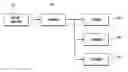
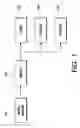
FIG. 1 is a schematic diagram of an example embodiment of the high performance XML storage system;
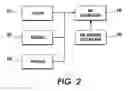
FIG. 2 is a schematic diagram of an example embodiment of the high performance XML retrieval system;
FIG. 3 is a flowchart demonstrating XML data storage according to one embodiment of the XML storage and retrieval technology; and
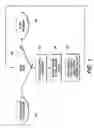
FIG. 4 is a flowchart demonstrating XML data retrieval according to one embodiment of the XML storage and retrieval technology.
DETAILED DESCRIPTIONThe system and method for the Binary Object XML Repository (BOXR) described herein are based on a novel approach to storing and processing XML that allows for very high performance and scalability. Rather than maintaining the text markup representation of the XML data, and adding index structures for navigating the textual data as practiced in the art, BOXR encodes the XML data completely in a binary data structure—the original XML markup need not be stored. This data structure can be navigated with greater efficiency, and any portion of the original XML (or the entire document) can be regenerated quickly.
In the following description numerous specific details are set forth in order to provide a thorough understanding of the system and method. It would be apparent, however, to one skilled in the art to practice the system and method without such specific details. In other instances, specific implementation details have not been shown in detail in order not to unnecessarily obscure the present invention.
Various computing environments may incorporate capabilities for the high performance XML storage and retrieval technology. The following discussion is intended to provide a brief, general description of suitable computing environments in which the method and system may be implemented. Although not required, the method and system will be described in the general context of computer-executable instructions, such as program modules, being executed by a single computer. Generally, program modules include routines, programs, objects, components, data structures, etc., that perform particular tasks or implement particular abstract data types. Moreover, those skilled in the art will appreciate that the method and system may be practiced with other computer system configurations, including hand-held devices, multi-processor systems, microprocessor-based or programmable consumer electronics, networked PCs, minicomputers, mainframe computers, and the like.
The method and system may also be practiced in distributed computing environments where tasks are performed by remote processing devices that are linked through a communications network. In a distributed computing environment, program modules may be located in both local and remote memory storage devices.
Turning now to FIG. 1, the storage portion of the storage/retrieval technology is illustrated. Import manager 110 converts various file formats to XML. The conversions are performed by “filters”, which are independent modules (shared dynamically linked libraries) that are written to an API specification for BOXR filters. Thus they are “plug-in” modules—they can be added to the system without changing the core engine. BOXR filters have been written for MS Word®, Excel®, PowerPoint®, PDF, HTML, Outlook® and Outlook express EMail, plain text files, and some specially delimited text files. The filters read these file formats, and convert the content to XML, which is returned to BOXR import routines. The filters determine the schema of the converted XML, which may contain structure (e.g. paragraphs for Word, slides/bullets for PowerPoint, etc.) and including metadata associated with each file (e.g. original file name, file size, author, “To” and “From” for mailnotes, etc.).
Indexer 120 streams through the XML documents and stores data. Indexer 120 operates as a tokenizer that breaks the data into pieces corresponding to the XML syntax. Each piece (or “token”) is stored in lexicon 130, which assigns a unique integer value to the token that also encodes the associated XML grammar element. For example, “<root id=‘3’>” would be stored in lexicon 130 as three tokens: “root” as an element name, “id” as an attribute name, and “3” as an attribute value. As the tokens are processed and stored in lexicon 130, the integer values assigned to each one are stored in sequence file 140. Postings module 150 maps the token identifier numbers to the positions of certain data elements in which they occur in the sequence. The original XML markup can then be regenerated by using this sequence of integer values and looking up the associated string and type information for each value from the lexicon.
Referring now to FIG. 2, the regeneration portion of the storage/retrieval technology is illustrated. Within lexicon 210 reside the data tokens with their assigned unique integer values and encoded associated XML grammar element. Sequence file 220 includes the integer values assigned to each token. The primary index structures used to accelerate query evaluation are “postings” at 230. Postings files take the list of tokens that occur in a given XML data element and invert the information to map a given token to all data elements in which it occurs. This technique allows an XQuery engine to quickly focus the query interpreter on sections of the XML data that can satisfy a particular query expression. (For the purposes herein, XQuery refers to the specification for a general-purpose XML query language created and endorsed by the W3C standards organization (refer to http://www.w3.org/TR/xquery/). It borrows from previous XML query languages such as XPath, XSL, and Quilt. Developers implement interpreters for the XQuery language using different methods and programming languages.) In addition, postings enable powerful full-text search queries to be integrated into XQuery.
XML regenerator 240 retrieves tokens and formats XML for a given scope in the sequence. Each element in XML begins with a “start tag” and ends with an “end tag” (or “closing tag”). The “scope” of an element is that which is contained between the start and end tags (start tags are enclosed in angle brackets, and end tags are in angle brackets with a forward slash preceding the element name). For example:
-
- <root><data>this is some data</data></root>
In this XML fragment, the scope of the “data” element is the text “this is some data”. The scope of the “root” element is <data> this is some data</data>. For each Token ID, the token string is retrieved from the lexicon. The lexicon is in the form of a ternary trie structure that enables efficient storage and retrieval of strings. XML grammar state machine 250 uses token type information to compute syntax for the regenerated XML. Token types include, for example, “Element name in start tag”, “Element name in end tag”, “Attribute Name”, “Attribute Value”, and CDATA (text), etc.
XML grammar state machine 250 formats the retrieved token strings into valid XML by keeping track of the token types, which include “Element name in start tag”, “Element name in end tag”, “Attribute Name”, “Attribute Value”, and CDATA (text), as examples. Referencing the previously mentioned example, “<root id=‘3’>, there are three token IDs in the sequence that represent this tag: One for “root” with a token type of “Element name in a start tag”, one for “id” with the type “Attribute name”, and one for ‘3” with the type “Attribute value”. The grammar state machine adds a left angle bracket before the element name, a space before the attribute name, an equals sign after the attribute name, quotes around the attribute value, and a right angle bracket before the start of the next element or text section, etc., to re-create the original markup. Grammar state machine 250 returns information about what syntax (punctuation) should be added to the regenerated XML. XML regenerator 240 may pass the type information to the state machine.
The advantages of this system include the fact that resolving queries by scanning and comparing encoded integer values is much faster than processing the XML in text. In addition, structures that index into this data to accelerate query evaluation can be represented efficiently by referring to these integer values rather than offsets into a text representation.
Turning now to FIG. 3, the method for storing XML data in BOXR is illustrated. At 310 the system has been instructed to import and open an XML document. The import process may be initiated in several ways, for example, XQuery functions are built into BOXR that import documents. A determination is made at 320 as to whether the end of the XML document has been reached. The text markup of the XML is parsed, thus identifying the tokens and their types. The end of the XML document is reached when all markup has been processed. If the end of the document has not been reached, at 340 the Token ID is read from the XML document and a type is assigned and stored as part of the Token ID. The type, only one of which is assigned per token, may be in the form of an element, end tag, attribute name, attribute value, CDATA section start, CDATA section end, CDATA token, CDATA whitespace, comment, or XML declaration, as defined by the XML standard (http://www.w3.org/TR/2004/REC-xml-20040204/).
At 350 a determination is made as to whether the token is in the Lexicon module. If the token is included in the Lexicon module, at 360 the software retrieves Token ID for the token from the Lexicon. Token ID is appended to the token sequence at 370 and stored in the list for the current element at 380. If the token is not included in the Lexicon module, the token and type are stored in the Lexicon module and a unique Token ID is assigned at 390. The Token ID is then appended to the token sequence at 370 and stored in the list for the current element at 380. This information is returned to 320 for continued review of the XML document. If the end of the XML document has been reached, the element/Token ID lists are inverted to create Token ID/element postings at 330. While “postings” files are traditionally associated with search engines, the terminology comes from information retrieval technology rather than database technology. “Postings” are also referred to as “inverted files”, because they “invert” information: In a search engine, to generate postings, a list of all of the tokens that occur in each document is inverted so that it is possible to look up all of the documents that contain a particular token. In BOXR, this approach is modified, instead of recording the tokens in each “document”, BOXR records the tokens in certain XML elements. The choice of which elements to record is either done automatically or can be specified by the database designer. The data files are saved at 335.
Referring to FIG. 4, the method for regenerating XML is illustrated. At 410 regeneration is begun for a specified scope, defined for the purposes herein as an XML fragment defined by a start and an end tag and all properly nested XML enclosed therein, with a “fragment” being a well-formed portion of an XML document. “Well-formed” means adhering to XML syntax and containing an end tag for each start tag, while an XML “document” is a fragment starting with a special XML declaration. At 420 a determination is made as to whether the end of the scope of the XML fragment has been reached. If this is not the case, at 430 the next Token ID is read from the token sequence. The token and type for the Token ID are retrieved from the Lexicon module at 440. The token type is assigned during storage and is stored as part of the Token ID. The token is inserted into the output stream with markup syntax appropriate for the Token ID type at 450 and another check is made at 420 as to completion of scope. If the end of the specified scope has been reached, at 460 the completed XML markup is returned.
While the present discussion has been illustrated and described with reference to specific embodiments, further modification and improvements will occur to those skilled in the art. Additionally, “code” as used herein, or “program” as used herein, is any plurality of binary values or any executable, interpreted or compiled code which can be used by a computer or execution device to perform a task. This code or program can be written in any one of several known computer languages. A “computer”, as used herein, can mean any device which stores, processes, routes, manipulates, or performs like operation on data. It is to be understood, therefore, that this disclosure is not limited to the particular forms illustrated and that it is intended in the appended claims to embrace all alternatives, modifications, and variations which do not depart from the spirit and scope of the embodiments described herein.
The claims, as originally presented and as they may be amended, encompass variations, alternatives, modifications, improvements, equivalents, and substantial equivalents of the embodiments and teachings disclosed herein, including those that are presently unforeseen or unappreciated, and that, for example, may arise from applicants/patentees and others.
Claims
What is claimed:1. A binary object XML repository for storage and retrieval of data in XML documents comprising:
at least one import manager module for converting at least one file format to XML;
at least one indexer module for encoding XML document data in a binary data structure;
at least one lexicon module for storing at least one token and at least one token type and assigning at least one token identifier number, wherein said token includes data elements corresponding to XML syntax;
at least one sequence module for storing said at least one token identifier number in an original sequence; and
at least one postings module for mapping said at least one token identifier number to said token identifier's position in said original sequence.
2. The binary object XML repository according to claim 1, wherein encoding XML data in a binary data structure comprises streaming through said XML document and breaking data into pieces corresponding to XML syntax.
3. The binary object XML repository according to claim 2, wherein said at least one token type comprises at least one member selected from the group consisting of element, end tag, attribute name, attribute value, CDATA section start, CDATA section end, CDATA token, CDATA whitespace, comment, and XML declaration.
4. The binary object XML repository according to claim 1, wherein converting at least one file format to XML is performed by at least one filter, wherein said at least one filter comprises at least one shared dynamically linked library written to an API specification.
5. The binary object XML repository according to claim 1, wherein assigning said at least one token identifier number comprises assigning at least one unique integer value to said at least one token.
6. The binary object XML repository according to claim 1, further comprising:
at least one regenerator module for retrieving said at least one token for a specified scope in said sequence, wherein said specified scope includes an XML fragment defined by a start and an end tag; and
at least one XML grammar state machine module for using said token type information to compute the syntax for regenerating XML.
7. The binary object XML repository according to claim 6, wherein said at least one postings module inverts the information from a list of tokens in an XML data element to map at least one selected token to at least one XML data element in which it appears.
8. The binary object XML repository according to claim 1, wherein storing at least one token and at least one token type and assigning at least one token identifier number comprises:
reading a token from said XML document and assigning a token type, wherein one type is assigned for each token; and
storing said token as part of the token identifier.
9. The binary object XML repository according to claim 6, wherein using said token type information to compute the syntax for regenerating XML comprises:
reading the next token identifier from the token sequence;
retrieving the token and token type for a token identifier from the lexicon; and
inserting said token into the output stream with the markup syntax appropriate for type.
10. A method for storage and retrieval of information in a binary object XML repository having an import manager module, an indexer module, a lexicon module, a sequence module, and a postings module comprises:
importing an XML document;
encoding XML data in a binary data structure;
storing at least one token and at least one token type and assigning at least one token identifier number, wherein said at least one token includes data elements corresponding to XML syntax;
storing said at least one token identifier number in an original sequence; and
mapping said at least one token identifier number to said token identifier's position in said original sequence.
11. The method for storage and retrieval of information in a binary object XML repository according to claim 10, wherein importing an XML document comprises converting at least one file format to XML.
12. The method for storage and retrieval of information in a binary object XML repository according to claim 10, wherein encoding XML data in a binary data structure comprises parsing the text markup of said XML document to identify at least one token and at least one token type.
13. The method for storage and retrieval of information in a binary object XML repository according to claim 10, wherein storing at least one token and at least one token type and assigning at least one token identifier number comprises:
reading a token from said XML document and assigning a token type, wherein one type is assigned for each token; and
storing said token as part of the token identifier.
14. The method for storage and retrieval of information in a binary object XML repository according to claim 13, wherein assigning said at least one token identifier number comprises assigning at least one unique integer value to said at least one token.
15. The method for storage and retrieval of information in a binary object XML repository according to claim 10, wherein said at least one token type comprises at least one member selected from the group consisting of element, end tag, attribute name, attribute value, CDATA section start, CDATA section end, CDATA token, CDATA whitespace, comment, and XML declaration.
16. The method for storage and retrieval of information in a binary object XML repository according to claim 11, wherein converting at least one file format to XML is performed by at least one filter, wherein said at least one filter comprises at least one shared dynamically linked library written to an API specification.
17. The method for storage and retrieval of information in a binary object XML repository according to claim 10, further comprising determining whether a complete XML document has been processed.
18. The method for storage and retrieval of information in a binary object XML repository according to claim 17, further comprising completing the document processing process when said complete XML document has been processed, comprising:
inverting data element and token identifier lists to create token identifier/data element postings; and
saving the data files.
19. The method for storage and retrieval of information in a binary object XML repository according to claim 17, further comprising continuing the document processing process when said complete XML document has not been processed, comprising:
determining if said token is included in the lexicon module;
retrieving said token identifier from said lexicon if said token is included in said lexicon, appending said token identifier to said token sequence, and storing said token identifier in the list for the current element; and
storing said token and said token type in the lexicon if said token is not included in said lexicon, assigning a unique token identifier to said token, appending said token identifier to the token sequence, and storing said token identifier in the list for the current data element.
20. The method for storage and retrieval of information in a binary object XML repository according to claim 10, further comprising:
initiating document regeneration for a specified scope, wherein said scope comprises an XML fragment defined by a start tag and an end tag; and
using said token type information to compute the syntax for regenerating XML.
21. The method for storage and retrieval of information in a binary object XML repository according to claim 20, wherein using said token type information to compute the syntax for regenerating XML comprises:
reading the next token identifier from the token sequence;
retrieving the token and token type for a token identifier from the lexicon; and
inserting said token into the output stream with the markup syntax appropriate for type.
22. The method for storage and retrieval of information in a binary object XML repository according to claim 20, further comprising inverting the information from a list of tokens in an XML data element to map at least one selected token to at least one XML data element in which it appears.
23. The method for storage and retrieval of information in a binary object XML repository according to claim 20, further comprising continuing regeneration processing if said end of scope has not been reached.
24. An article of manufacture comprising a computer usable medium having computer readable program code embodied in said medium which, when said program code is executed by said computer causes said computer to perform method steps for storage and retrieval of information in a binary object XML repository having an import manager module, an indexer module, a lexicon module, a sequence module, and a postings module comprises:
importing an XML document;
encoding XML data in a binary data structure;
storing at least one token and at least one token type and assigning at least one token identifier number, wherein said at least one token includes data elements corresponding to XML syntax;
storing said at least one token identifier number in an original sequence; and
mapping said at least one token identifier number to said token identifier's position in said original sequence.
Images & Drawings included:
Sources:
- United States Patent and Trademark Office - verify current appl. status at the USPTO↗
Recent applications in this class:
- » 20250094492 2025-03-20
SYSTEMS AND METHODS FOR EXTRACTING AND COMBINING XML FILES OF AN XFA DOCUMENT - » 20250086230 2025-03-13
REMOTE VIRTUALIZED ASSET DELIVERY AND LOCAL PROVISIONING - » 20240419733 2024-12-19
Automated Field Placement For Uploaded Documents - » 20240211513 2024-06-27
SYSTEMS AND METHODS FOR XBRL TAG OUTLIER DETECTION - » 20240028643 2024-01-25
Automated field placement for uploaded documents - » 20230376532 2023-11-23
Machine learning techniques for generating disease prediction utilizing cross-temporal semi-structured input data - » 20230195790 2023-06-22
KEYWORD DATA LINKING SYSTEM AND METHOD THEREOF - » 20230144263 2023-05-11
Remote virtualized asset delivery and local provisioning - » 20230130565 2023-04-27
Methods and systems for generating a unified metadata model - » 20230101746 2023-03-30
Converting from compressed language to natural language
Recent applications for this Assignee:
- » 20250013948 2025-01-09
COMPUTER-IMPLEMENTED SYSTEM AND METHOD FOR PROVIDING CONTEXTUALLY RELEVANT TASK RECOMMENDATIONS TO QUALIFIED USERS - » 20240265717 2024-08-08
SYSTEM AND METHOD FOR ROBUST ESTIMATION OF STATE PARAMETERS FROM INFERRED READINGS IN A SEQUENCE OF IMAGES - » 20240249476 2024-07-25
METHOD AND SYSTEM FOR FACILITATING GENERATION OF BACKGROUND REPLACEMENT MASKS FOR IMPROVED LABELED IMAGE DATASET COLLECTION - » 20240242524 2024-07-18
A SYSTEM AND METHOD FOR SINGLE STAGE DIGIT INFERENCE FROM UNSEGMENTED DISPLAYS IN IMAGES - » 20240242484 2024-07-18
SYSTEM AND METHOD FOR ROBUST TRACKING OF INDUSTRIAL OBJECTS ACROSS ENVIRONMENTS FROM SMALL SAMPLES IN SINGLE ENVIRONMENTS USING CHROMA-KEY AND OCCLUSION AUGMENTATIONS - » 20240211593 2024-06-27
SYSTEM AND METHOD FOR SECURITY CONTROL IN CYBER-PHYSICAL SYSTEMS WITH DELAY-INDUCED FEEDBACK WATERMARKING - » 20240202402 2024-06-20
METHOD AND SYSTEM FOR AUTOMATED DESIGN GENERATION WITH INERTIAL CONSTRAINTS - » 20240201665 2024-06-20
METHOD AND SYSTEM FOR AUTOMATICALLY CREATING A PLAN FOR HYBRID MANUFACTURING - » 20240195524 2024-06-13
SYSTEM AND METHOD FOR ESTIMATING ERRORS IN A SENSOR NETWORK IMPLEMENTING HIGH FREQUENCY (HF) COMMUNICATION CHANNELS - » 20240169375 2024-05-23
LINGUISTIC EXTRACTION OF TEMPORAL AND LOCATION INFORMATION FOR A RECOMMENDER SYSTEM