Sound-insulating material and method for the production thereof
US20060052474A1
2006-03-09
10/523,663
2003-08-11
Abstract:
The invention relates to a sound-insulating material, especially for automobiles, in the form of a mat, a molding or a coating which is manufactured from rubber and PUR plastic, as well as a method for the manufacture of such a material. In order to lower the weight of the sound-insulating material with essentially unchanged or even improved noise damping effect, in accordance with the invention, it is provided that the rubber (12) and the PUR plastic (13) are mixed with each other, wherein the rubber forms a matrix, in which a plurality of gas-filled, elastic hollow bodies (14) are embedded. The method for the manufacture of the sound-insulating material, in accordance with the invention, is essentially characterized in that thermoplastic rubber particles and PUR plastic particles are extruded together with a foaming agent into a foam-like mix material, wherein the foaming agent is added in the form of microhollow bodies containing foaming agent, which microhollow bodies have a shell of polymer mix that expands by the action of heat. As rubber particles and PUR plastic particles, preferably recycled EPDM rubber or PUR foam pellets are used.
Interested in similar patents?
Get notified when new applications in this technology area are published.
Classification:
B29B17/0042 » CPC main
Recovery of plastics or other constituents of waste material containing plastics by agglomeration or compacting for shaping parts, e.g. multilayered parts with at least one layer containing regenerated plastic
B29C44/027 » CPC further
Shaping by internal pressure generated in the material, e.g. swelling or foaming ; Producing porous or cellular expanded plastics articles for articles of definite length, i.e. discrete articles the foaming continuing or beginning when the mould is opened
C08J9/0061 » CPC further
Working-up of macromolecular substances to porous or cellular articles or materials; After-treatment thereof characterized by the use of several polymeric components
C08J9/32 » CPC further
Working-up of macromolecular substances to porous or cellular articles or materials; After-treatment thereof from compositions containing microballoons, e.g. syntactic foams
G10K11/165 » CPC further
Methods or devices for transmitting, conducting or directing sound in general; Methods or devices for protecting against, or for damping, noise or other acoustic waves in general; Methods or devices for protecting against, or for damping, noise or other acoustic waves in general; Selection of materials Particles in a matrix
B29C44/206 » CPC further
Shaping by internal pressure generated in the material, e.g. swelling or foaming ; Producing porous or cellular expanded plastics articles for articles of indefinite length Using expandable particles or beads as starting material
B29K2021/00 » CPC further
Use of unspecified rubbers as moulding material
B29K2995/0002 » CPC further
Properties of moulding materials, reinforcements, fillers, preformed parts or moulds having particular acoustical properties insulating
C08J2300/30 » CPC further
Characterised by the use of unspecified polymers Polymeric waste or recycled polymer
C08J2321/00 » CPC further
Characterised by the use of unspecified rubbers
C08J2375/04 » CPC further
Characterised by the use of polyureas or polyurethanes; Derivatives of such polymers Polyurethanes
C08J2475/00 » CPC further
Characterised by the use of polyureas or polyurethanes; Derivatives of such polymers
Y02W30/62 » CPC further
Technologies for solid waste management; Reuse, recycling or recovery technologies Plastics recycling; Rubber recycling
Y02W30/62 » CPC further
Technologies for solid waste management; Reuse, recycling or recovery technologies Plastics recycling; Rubber recycling
C08L2666/14 » CPC further
Composition of polymers characterized by a further compound in the blend, being organic macromolecular compounds, natural resins, waxes or and bituminous materials, non-macromolecular organic substances, inorganic substances or characterized by their function in the composition; Organic macromolecular compounds, natural resins, waxes or and bituminous materials Macromolecular compounds according to - ; Derivatives thereof
C08L23/16 » CPC further
Compositions of homopolymers or copolymers of unsaturated aliphatic hydrocarbons having only one carbon-to-carbon double bond; Compositions of derivatives of such polymers not modified by chemical after-treatment ethene-propene or ethene-propene-diene copolymers
C08L2666/20 » CPC further
Composition of polymers characterized by a further compound in the blend, being organic macromolecular compounds, natural resins, waxes or and bituminous materials, non-macromolecular organic substances, inorganic substances or characterized by their function in the composition; Organic macromolecular compounds, natural resins, waxes or and bituminous materials; Macromolecular compounds according to - ; Derivatives thereof Macromolecular compounds having nitrogen in the main chain according to - ; Derivatives thereof
C08L21/00 » CPC further
Compositions of unspecified rubbers
C08L19/003 » CPC further
Compositions of rubbers not provided for in groups - Precrosslinked rubber; Scrap rubber; Used vulcanised rubber
C08L75/04 » CPC further
Compositions of polyureas or polyurethanes; Compositions of derivatives of such polymers Polyurethanes
A61L2/08 IPC
Methods or apparatus for disinfecting or sterilising materials or objects other than foodstuffs or contact lenses; Accessories therefor using physical phenomena Radiation
Description
The invention relates to a sound insulating material, especially for automobiles, that is manufactured from thermoplastic rubber and PUR plastic, as well as a method for manufacturing such a material.
In automotive technology heavy layer moldings or heavy layer mats are employed especially for sound insulation in the passenger compartment against engine and driving noises. Moreover, heavy layer moldings and heavy layer mats are used for sound-deadening (body noise damping) of vibrating bodywork. In addition to heavy filler materials the heavy material layers usually contain ethylene propylene diene rubber (EPDM). Amongst others heavy spar barytes (BaSO4) has proved effective.
Conventional heavy layered material which is employed for sound damping in automobiles, especially for absorbing the sounds of bodywork parts, has a relatively high weight. This is a disadvantage with regard to the attempt of reducing the fuel usage of automobiles by lowering the vehicle weight.
It is the object of the present invention to create a sound-insulating material of the type mentioned in the beginning, especially for automobile construction, which has good soundproofing action and a relatively low weight. Moreover, a cost-effective method for manufacture of such material should be provided.
In regard to the material the solution to this task consists, in accordance with the invention, of mixing the rubber and the PUR plastic with each other, so that the rubber forms a matrix, with a plurality of gas-filled elastic hollow bodies embedded therein.
The method in accordance with the invention is essentially characterized in that thermoplastic rubber particles and PUR plastic particles are extruded accompanied by addition of a foaming agent to a foamed-plastic type mix material, wherein the foaming agent is added in the form of micro hollow bodies containing a foaming agent, said micro hollow bodies have a mixed polymer shell which expands under the influence of heat.
A foamed up heavy layer material is created by the invention, and in fact a heavy layer material with a rubber matrix, that contains expanded elastic hollow bodies. The material in accordance with the invention is characterized by having good sound-proofing as well as sound damping properties and also relatively low weight.
An advantageous development of the invention consists of using recycling material as the rubber particles obtained by comminution of old and/or waste material containing PUR plastic particles. Preferably recycling material can also be used for the PUR plastic particles while old and/or waste material having PUR foaming material is comminuted to pellets or flakes or the like. By doing so raw material resources are spared and raw material costs for the manufacture of heavy layer material are decreased.
Other preferred and advantageous developments of the invention are indicated in the dependent claims.
In the following the invention is further explained on the basis of an embodiment example with reference to the attached drawing. Therein:
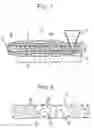
FIG. 1 shows a schematic longitudinal representation of an extrusion device, and
FIG. 2 shows a cross-sectional view of a section of a heavy layer mat manufactured from material in accordance with the invention.
The sound-insulating material in accordance with the invention can have different forms. It can for example be used in the form of a mat, a molding or a manufactured coating by spray casting, especially back injection.
For the manufacture of material in accordance with the invention, that is represented generally as 1 in FIG. 2, an extrusion device 2 is utilized. The extrusion device has essentially the construction shown in FIG. 1. As known per se, the extrusion device 2 has an entry or filling zone 3 with a filling funnel 4, a transition and compression zone 5, a discharge zone 6 and a nozzle 7 as an extrusion tool. The nozzle 7 can be especially arranged as a split nozzle. The split nozzle 7 and the different zones 3, 5, 6 are provided with heating devices 8, 9, 10, 11 which can be controlled independent of each other.
Thermoplastic rubber particles, polyurethane plastic particles and a foaming agent are fed via the filling funnel 4 to the extrusion device 2.
The thermoplastic rubber particles are recycling material in the form of pellets, which are obtained by comminution of EPDM rubber containing material. The EPDM rubber particles fed to the extrusion device 2 preferably have a mean particle size in the range from 2 to 8 mm. The EPDM rubber particles contain heavy spar (BaSO4) or another heavy filling material.
The PUR plastic particles are likewise preferably recycling material. It is obtained by comminution of PUR foaming material and is in the form of pellets or flakes, which preferably have a mean particle size in the range from 1 to 6 mm.
The thermoplastic rubber particles and the polyurethane plastic particles can for example be obtained by comminuting soundproofing composite structural elements of old automobiles, which are usually formed of a multilayered acoustic spring mass system and have a polyurethane foam layer as acoustic spring and a heavy layer of EPDM rubber as acoustic mass.
As foaming agent, microhollow bodies that contain foaming agent are added, which have a gastight highly elastic shell of mixed polymer and expand under the influence of heat. The microhollow bodies are essentially spherically shaped and in the unexpanded state have an average particle size in the range from 8 to 20 μm and a density in the range from 1000 to 1300 kg/m3.
The foaming agent is a liquid or gaseous hydrocarbon, for example with isobutane. The micro hollow bodies expand through the action of heat, wherein their actual volumes can for example achieve more than 40 times their original volume. The expansion of the microhollow bodies is initiated at a specific temperature. Typical expansion temperatures are in the range from for example 80 to 200° C. The expanded microhollow bodies can be easily compressed and are so elastic, that they are able to withstand several load or pressure changes without their shells bursting.
The heating devices 8, 9, 10, 11 in the extrusion device 2 are controlled so that during the extrusion, in the region of the entry zone 3 there is a temperature of 40 to 50° C., in the region of the transition and compression zone 5 a temperature of 110 to 130° C., in the region of the exit zone 6 a temperature of 120 to 150° C. and in the region of the nozzle 7 a temperature of 120 to 150° C.
The thermoplastic rubber particles, PUR plastic particles and microhollow bodies can be fed to the extrusion device 2 together as a mixture. To avoid de-mixing or as the case may be for the production of an as homogeneous extrusion mass as possible it is if necessary however advantageous, if the thermoplastic rubber particles, PUR plastic particles and the micro hollow bodies containing foaming agent are fed to the extrusion device one after the other in separate charges.
The mixture fed to the extrusion device 2, or as the case may be the extruded material, preferably has the following composition:
-
- 70 to 99 wt % thermoplastic rubber particles,
- 1 to 20 wt % PUR plastic particles, and
- 0.5 to 10 wt % micro hollow bodies containing foaming agent.
In FIG. 2 a cross-section of a section of extruded material 1 is shown schematically. The thermoplastic EPDM rubber 12 and the PUR plastic 13 are mixed therein with each other essentially homogeneously, wherein the rubber 12 forms a matrix, in which a plurality of expanded, elastic microhollow bodies 14 is embedded. In accordance with the invention, the material 1 therefore consists of foamed heavy layer material that has predominantly closed cells. The density is in the range of 0.2 to 1.5 kg/cm3. Preferably the density of material 1 is less than 1.0 kg/cm3, and especially preferred less than 0.5 kg/cm3. Conventional unfoamed heavy layer material on the other hand usually has a density of bout 1.8 kg/cm3.
Claims
1. A sound-insulating material (1), especially for automobiles, manufactured from rubber (12), that is mixed with PUR plastic (13) wherein the rubber forms a matrix, in which a plurality of gas-filled hollow bodies (14) are embedded, wherein the rubber (12) is formed from thermoplastic rubber particles.
2. The sound-insulating material according to claim 1, wherein the rubber (12) and/or the PUR plastic (13) is a recycling material.
3. The sound-insulating material according to claim 1, wherein it is composed of
70 to 99 wt % rubber (12),
1 to 20 wt % PUR plastic (13)
0.5 to 10 wt % gas-filled hollow bodies (14).
4. The sound-insulating material according to claim 1, wherein the rubber (12) is an EPDM rubber.
5. The sound-insulating material according to claim 1, wherein the gas-filled hollow bodies (14) have a shell of mixed polymer.
6. The sound-insulating material according to claim 1, wherein it has a density of less than 1.5 kg/dm3 or g/cm3, preferably less than 1.0 kg/dm3 or g/cm3.
7. A method of manufacturing a sound-insulating material (1), especially for automobiles, wherein the thermoplastic rubber particles and PUR plastic particles are extruded, while adding a foaming agent to a foam-like mix material, wherein the foaming agent is added in form of foaming agent containing micro-hollow bodies (14), which have a shell of polymer mix and expand during heat treatment.
8. The method according to claim 7, wherein as thermoplastic rubber particles recycling material is used which is obtained by comminution of material containing EPDM rubber.
9. The method according to claim 7, wherein as PUR plastic particles recycling material is used that is obtained by comminution of material containing PUR foamed material.
10. The method according to claim 7, wherein referred to the sound-insulating material (1) to be manufactured, 70 to 99% wt % thermoplastic rubber particles, 1 to 20 wt % PUR plastic particles, and 0.5 to 10 wt % microhollow bodies containing foaming agent are fed to an extrusion device (2).
11. The method according to claim 7, wherein microhollow bodies (14) containing the foaming agent are spherically shaped.
12. The method according to claim 7, wherein the thermoplastic rubber particles, the PUR plastic particles and the microhollow bodies containing the foaming material are fed to the extrusion device in separate charges.
13. The method according to claim 7, wherein extrusion device (2) has an entry zone (3), a transition and compression zone (5) and an exit zone (6) with a nozzle (7) following thereon and is heated such that during extrusion the following temperatures exist:
40 to 50° C. in the region of the entry zone,
110 to 130° C. in the region of the transition and compression zones,
120 to 150° C. in the region of the exit zone, and
120 to 150° C. in the region of the nozzle.
Images & Drawings included:
Sources:
- United States Patent and Trademark Office - verify current appl. status at the USPTO↗
Recent applications in this class:
- » 20250108539 2025-04-03
RESOURCE RECOVERY SYSTEM & METHOD - » 20250033249 2025-01-30
METHOD FOR PREPARING A COMPOSITE CONSTRUCTION MATERIAL - » 20240408797 2024-12-12
Process and Machine for Releasing Curve Memory in a Reclaimed Tire Strip - » 20240246262 2024-07-25
APPARATUS FOR RECYCLING POLYMERIC MATERIALS AND METHODS THEREOF - » 20240058993 2024-02-22
METHOD FOR RECYCLING WASTE IN THE FORM OF FLAKES - » 20220176594 2022-06-09
COMPOSITE BOARD FROM PLASTIC WASTE - » 20210394398 2021-12-23
Self-Contained Recycling and Fabrication Appliance - » 20200338789 2020-10-29
Converting recyclable materials into manufacturing products - » 20190366590 2019-12-05
Methods for forming footwear using recycled plastics - » 20190160709 2019-05-30
Converting plastic bags to a recyclable form