Double post gemstone setting
US20060081002A1
2006-04-20
11/295,973
2005-12-07
Abstract:
A gemstone setting that includes at least two gemstones arranged in a side-to-side configuration. The configuration forms a gemstone arrangement that has four corners. The setting also includes four posts which secure the four corners of the gemstone arrangement. The gemstone arrangement is also held in place by a support. The support supports the gemstone arrangement at a midpoint between the corners of the gemstone arrangement.
Interested in similar patents?
Get notified when new applications in this technology area are published.
Classification:
A44C17/04 » CPC main
Gems or the like Setting gems in jewellery; Setting-tools
A44C17/005 » CPC further
Gems or the like Gems provided with grooves or notches, e.g. for setting
A44C17/02 IPC
Gems or the like Settings for holding gems or the like, e.g. for ornaments or decorations
Description
CROSS REFERENCE TO RELATED APPLICATIONSThis application is a continuation-in-part of co-pending application Ser. No. 29/114,325 filed Nov. 23, 1999.
TECHNICAL FIELDThe present disclosure relates to settings and arrangements for gemstones. More particularly, the present disclosure relates to settings and arrangements of gemstones that enhance their visual characteristics.
BACKGROUND OF RELATED ARTGem arrangements seek to enhance the appearance of the gems by making them appear larger and/or enhance their visual characteristics. Different mounting systems enhance the simulated appearance of composite gems by their lack of visibility. Alternatively, gems can be arranged to reflect or refract light in a complementary manner such that light further enhances the natural beauty of the arrangement. Complementary arrangements position a plurality of complementary gems in relation to a central gem such that the refracted light from the complementary gems is at least partially introduced into and benefits the central gem.
Gemstones, especially precious gemstones such as diamonds, emeralds, sapphires and rubies, have various characteristics that distinguish them from other gemstones. One characteristic is brilliance, which can be further categorized into external and internal. External brilliance, also referred to as luster, generally refers to the amount of light that impinges on the top of the stone and reflects back, rather than refracted inward. Internal brilliance is determined by the light rays that enter the top or crown (and table if the gem has one), and reflected off the base or pavilion facets and back out through the top or crown as undispersed light.
Another characteristic of a gemstone is dispersion, also known as fire, which is a measure of how much the white light is broken up into the spectral colors. A ray of white light striking a prism will be split up into special component colors of red, orange, yellow, green, blue, indigo and violet. Dispersion is maximized when a ray of light is reflected totally from base facets and strikes the ground facets at the greatest possible angle. Dispersion is observed when a gemstone moves relative to an observer.
Another characteristic of a gemstone is scintillation, which is an indication of the different light patterns obtained when the stone is moved under light. Expressed in another way, scintillation is the quantity of flashes observed from the gemstone when at least one of the gemstone, light source or observer moves.
Gemstones may also be classified into different types of cuts. One cut is known as a step cut or emerald cut and is generally considered an elegant and classic cut. However, this cut does not generally achieve the most dispersion. Another cut is known as a brilliant cut, which in one form is a round brilliant. This cut has many facets and achieves a good balance of brilliance and dispersion. Yet another cut is a so-called hybrid or mixed-cut, which attempts to achieve the elegant and classic look of a step cut, while also attempting to achieve good dispersion as in a brilliant cut.
There are a variety of step, brilliant and mixed cut gemstone cuts, however, there are several problems that the prior art presents and furthermore the prior are does not address the particular need for the better gemstone arrangement that has superior combination of factors for scintillation, dispersion, and brilliancy. There is a long felt but unfulfilled need for a gemstone arrangement having visually enhancing characteristics that does not have complex requirements for the positioning, type, and dimensions of any complementary gemstones.
SUMMARY OF THE INVENTIONA gemstone setting comprising at least two gemstones arranged in a side-to-side configuration forming a gemstone arrangement having four corners. Four double posts secure the corners of the gemstone arrangement. A support means further supports the gemstone arrangement at a midpoint between the corners of the gemstone arrangement.
The double posts are two cylindrical posts that abut one another and are at an angle of approximately 45 degrees with respect to the corner of the gemstone arrangement.
Each double post has a proximal end and a distal end. The proximal end has a notch for holding the corner of a gem arrangement. While, the distal ends of the double posts are curved inwardly and converge into a single post directly below a center point of the gemstone arrangement.
The support means is anchored to the posts at a midway point between the notches and the convergence point. The support means includes a horizontal cross bar and a vertical stabilization bar. The vertical stabilization bar has a pointed tip at one end and is attached to the cross bar at the other end.
The vertical stabilization bar is connected on opposite sides by an invisible ridge that spans the width of the setting.
The gemstones can be either princess cut or emerald cut gemstones. Each gemstone includes a table and a four-sided girdle, the girdle of the gems being in juxtaposition to each other forming a large square surface, the large square surface being substantially flat. By abutting gems in such a manner, the gemstone arrangement provides means for increasing the surface area of the gems. This increase in surface area creates an appearance of a single large gem. It also allows more light to pass through the tables of the gemstones.
Another feature of the present invention is that the gemstone setting allows light to be received on both sides of the arrangement.
The invention, together with attendant advantages, will be best understood by reference to the following detailed description of the invention when used in conjunction with the figures below.
BRIEF DESCRIPTION OF THE DRAWINGSPreferred embodiments of the presently disclosed gemstone arrangement are described herein with reference to the drawings, wherein:
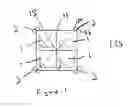
FIG. 1 is a top view of one preferred embodiment of a gemstone arrangement constructed in accordance with the present disclosure;
FIG. 2 is a side view of the gemstone arrangement of FIG. 1;
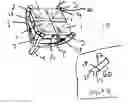
FIG. 3 is a prospective view of the gemstone arrangement of FIG. 1;
FIG. 4 is a gemstone used in the preferred embodiment; and
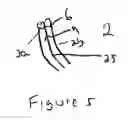
FIG. 5 is a close-up view of a double post used in the preferred embodiment.
DETAILED DESCRIPTION OF THE EMBODIMENTSReferring now in specific detail to the drawings in which like referenced numerals identify similar or identical elements throughout the several views, and initially to FIG. 1, a novel gemstone setting 10 is shown.
FIGS. 1-3 show a preferred embodiment of the present invention.
In FIG. 1, the gemstone arrangement 11 includes four princess-cut or square-cut gemstones 1 arranged in a side-to-side placement. As shown in FIG. 4, the gemstones 1 themselves include a table 20, a crown 21, pavilion 23 and a girdle 22. The girdle 22 of the gems being in juxtaposition to each other and forming a large square surface. (Please note, that any type of geometric gemstone may be used, including but not limited to, emerald-cut, rectangular-cut, triangular-cut, hexagonal-cut, ect.)
Another feature of the gemstone 1 as shown in FIG. 4 is side cut 24. This cut is made for allowing a section of the gemstone setting to be received by the gemstone (discussed below).
The large square surface of the arrangement 11 is substantially flat thereby providing the gemstone arrangement 11 with an increased surface area. This increased surface area creates an appearance that the gemstone arrangement 11 is a single large gem. The gemstone setting 10 also allows more light to pass through the tables 20 of the gemstones increasing the brilliance, dispersion and scintillation of the gems.
The gemstone arrangement 11 is also configured so that the arrangement 11 has a substantially flat top portion and a step-cut bottom portion. This feature allows light to be received on either side of the gemstone arrangement 11 which also increasing the brilliance, dispersion and scintillation of the gems 1.
The double posts 2 are constructed in the form of two cylindrical elongated posts 2a, 2b that abut one another at point 25. At this point of abutment 25 the materials of the cylindrical posts intertwine. In the preferred embodiment cylindrical posts are used but the posts may be any geometric shape such as a square, triangle, or trapezoid.
These double posts 2 have a proximal section 6 and a distal section 7. The proximal end 2 secures the gemstones 1 while the distal ends 7 meet to form a single post 4.
The double posts 2 of the gemstone setting 10 are cut so that a notch 9 appears at a proximal end 7 of the double post 2. When the notch 9 is made careful consideration is needed so that the notch 9 does not breach the far side of the setting 10. That is, the notch 9 should not fully go through the point of abutment 25. See FIG. 5.
The notch 9 is used to receive the corner of the gemstone arrangement 11 and secures the gemstones 1 to the gemstone setting 10. The double posts 2 are arranged at an angle of approximately 45 degrees with respect to the corners of the gemstone arrangement 11.
The double posts 2 are curved inward from the proximal end 6 to the distal end 7. The distal ends 7 of the double posts converging into a single post 4 directly below a center point 15 of the gemstone arrangement 11. The single post 4 allows the setting 10 to be attached to a ring, earring or any other type of jewelry where gemstones are displayed.
The setting 10 also includes a support means 3. The support means is needed because the gemstone arrangement 11 can not be secured by the double posts 2 alone. This is because the gemstones 1 are in a side-to-side configuration. In this configuration, the portions of the gemstones 1 that are not in contact with the double posts 2 are loosely abutted next to each other. If left without any support the gems would fall out of the setting very easily. Therefore to overcome this problem a securing means 4 is provided to give the arrangement extra support and keeps the arrangement securely in the setting 10.
The securing means 4 is arranged in three parts. The first part is a horizontal cross bar 16. This cross bar 16 is anchored to the posts 2 at a midpoint between the proximal end 6 and the distal end 7 of the posts 2. The anchoring can be formed by any method of attaching two alloys together, e.g., welding.
The second part is a vertical stabilization bar 17. The stabilization bar 17 is located along a top edge of horizontal cross bar 16 about midway between the anchoring points. The stabilization bar 17 extends from the cross bar 16 to the gemstone arrangement 11. The stabilization bar 17 has a pointed tip 18 that supports the gemstone arrangement 11 at the outside circumference of the gemstone arrangement 11 and where the diamonds are positioned next to each other.
The third part of the support means is an invisible ridge 60 that spans the cross-width of the setting (shown in Inset A, FIG. 3). The invisible ridge 60 extends from one stabilization bar tip 18 to another stabilization bar tip 18. The ridge 60 is shaped so that the bottom portion 61 of the ridge is flat and attached to stabilization tip 18. The top portion 62 of the ridge 60 is pointed.
The gemstones 1 are cut so that a portion 62 of the ridge can be received into the side cut 24 of the gemstone 1. This allows a portion of the weight of the gemstone to rest on the ridge with the remainder of the weight being supported by the posts.
Although the illustrative embodiments of the present disclosure have been described herein with reference to the accompanying drawings, it is to be understood that the disclosure is not limited to those precise embodiments, (e.g., two, four, nine and sixteen gemstones may be used for the gemstone arrangement), and that various other changes and modifications may be affected therein by one skilled in the art without departing from the scope or spirit of the disclosure. All such changes and modifications are intended to be included within the scope of the disclosure.
Claims
What is claimed is:1. A gemstone setting comprising:
at least two gemstones arranged in a side-to-side configuration forming a gemstone arrangement having four corners;
four double posts for securing the corners of the gemstone arrangement; and
support means for supporting the gemstone arrangement.
2. The gemstone arrangement as claimed in claim 1 whereby the double posts are two cylindrical posts that abut one another.
3. The gemstone arrangement as claimed in claim 1 whereby the double posts have a proximal end and a distal end.
4. The gemstone arrangement as claimed in claim 3 whereby each proximal end has a notch for holding the corner of a gem arrangement.
5. The gemstone arrangement as claimed in claim 4 whereby the double post is at an angle of approximately 45 degrees with respect to the corner of the gemstone arrangement.
6. The gemstone arrangement as claimed in claim 5 whereby the distal ends of the double posts are curved inwardly.
7. The gemstone arrangement as claimed in claim 6 whereby the distal ends of the double posts converge into a single post directly below a center point of the gemstone arrangement.
8. The gemstone arrangement as claimed in claim 7 whereby the support means is anchored to a single side of the double posts at a midway point between the notches and the convergence point.
9. The gemstone arrangement as claimed in claim 1 whereby the gemstones are princess cut gemstones.
10. The gemstone arrangement as claimed in claim 1 whereby the gemstones are emerald cut gemstones.
11. The gemstone arrangement as claimed in claim 1 whereby the gemstones include a table and a girdle, the girdle of the gemstones being in juxtaposition to each other forming a large square surface.
12. The gemstone arrangement as claimed in claim 11 whereby the large square surface is substantially flat.
13. The gemstone arrangement as claimed in claim 1 whereby the gemstone arrangement provides means for increasing the surface area of the gems.
14. The gemstone arrangement as claimed in claim 13 whereby the increased surface area creates an appearance of a single large gemstone.
15. The gemstone arrangement as claimed in claim 1 whereby the gemstone setting allows more light to pass through the tables of the gemstones.
16. The gemstone arrangement as claimed in claim 1 whereby the gemstone setting allows light to be received on both sides of the gemstone.
17. The gemstone arrangement as claimed in claim 1 whereby the support means includes a horizontal cross bar and a vertical stabilization bar.
Images & Drawings included:


Sources:
- United States Patent and Trademark Office - verify current appl. status at the USPTO↗
Recent applications in this class:
- » 20210274897 2021-09-09
COMBINATION SETTING FOR JEWELRY STONES - » 20210219677 2021-07-22
APPARATUS AND METHOD OF MANUFACTURE OF A JEWELRY SETTING - » 20210177109 2021-06-17
Gemstone settings and setting methods - » 20210137228 2021-05-13
Size enhancer precious stone setting - » 20210030124 2021-02-04
Stone setting method - » 20210022460 2021-01-28
Piece of jewellery, method for cutting a stone, in particular a diamond, and associated mounting pin - » 20190274400 2019-09-12
Apparatus and method of manufacture of a jewelry setting - » 20190133271 2019-05-09
Method for setting a stone - » 20190133270 2019-05-09
Method for crimping a stone - » 20190125043 2019-05-02
Elongate decorative element with reduced surface roughness