SYRINGE COVER
US20060089077A1
2006-04-27
11/163,488
2005-10-20
Abstract:
An article of manufacture and method for enhancing the chances that an infant/child being fed gastro-intestinally will accept the feeding process without resistance by concealing a gastrointestinal feeding syringe within a holder having a plush toy cover that is held facing the child during feeding so as to block the infant's view of the mechanical feeding syringe, thereby reducing psychological stress to the infant/child and parents caused by sight of the naked feeding syringe and by being unable to feed the infant/child orally. The toy cover is small, very lightweight, and may be constructed from a plush material for the child's entertainment.
Interested in similar patents?
Get notified when new applications in this technology area are published.
Classification:
A61J7/0053 » CPC main
Devices for administering medicines orally, e.g. spoons ; Pill counting devices; Arrangements for time indication or reminder for taking medicine; Devices specially adapted for taking medicines Syringes, pipettes or oral dispensers
A61J15/0026 » CPC further
Feeding-tubes for therapeutic purposes Parts, details or accessories for feeding-tubes
A61J15/00 » CPC further
Feeding-tubes for therapeutic purposes
A61M2205/59 » CPC further
General characteristics of the apparatus Aesthetic features, e.g. distraction means to prevent fears of child patients
B65D81/36 IPC
Containers, packaging elements, or packages, for contents presenting particular transport or storage problems, or adapted to be used for non-packaging purposes after removal of contents adapted to be used for non-packaging purposes after removal of contents
Description
FIELD OF THE INVENTIONThis invention relates generally to a cover for a medical syringe for feeding an infant and/or child gastro-intestinally with an intravenous member and, specifically, to a syringe cover for feeding a child that holds and covers the syringe with a toy to reduce the child and parent's apprehension during feeding.
DESCRIPTION OF RELATED ARTMany infants and children require gastrointestinal feeding for several months and even up to a year during their first months of life or longer. Feeding is accomplished with an adult caregiver using a feeding syringe (a gastrointestinal tube) that is attached to the child during feeding. The feeding process can sometimes take up to an hour. The physical appearance of the syringe and intravenous tube by their presence can be psychologically disturbing to the child and parents. The purpose of the present invention is to hide the syringe from the child's view during feeding with a toy, and to provide a pleasant emotional interaction between parent and child during the feeding process.
U.S. Pat. No. 6,165,035 shows a decorative cover for medical equipment. One of the drawbacks of the prior art is that the feeding cover is not sturdy enough to be held safely by the caregiver feeding the child.
U.S. Pat. No. 4,976,646 discloses a medical dispenser for dispensing medicine to a child using a puppet like dispenser activated by a finger.
SUMMARY OF THE INVENTIONThe toy is very lightweight, small and may be of a plush material for the child's entertainment. The toy is not sized much larger in proportion to the syringe cover so that it does not interfere with the caregiver feeding the child. The holder that connects to the exterior of the syringe is made of a plastic tube whose circumference is an arc of approximately 270 degrees that has some flexibility. Other materials may be selected including lightweight metal that is covered with a protective material such as the plush material used on the toy.
Shapes of other toys and other animals could be employed. The animals may be stuffed with a synthetic material that is non-toxic and safe for children and durable. The toy should be capable of sterilization for continued use by the child.
It is an object of this invention to provide an improved feeding syringe for infants and children who are relatively young and who require intravenous feeding through their stomach.
It is another object of this invention to provide an improved feeding syringe for gastrointestinal feeding of infants and children which includes a distraction for the child that can hide the syringe body during feeding to stimulate the child visually and cognitively so that the child is encouraged to accept the gastrointestinal feeding.
Still another object of this invention is to provide an improved feeding syringe that is completely covered and hidden by a toy that is acceptable to both parent and child to enhance the child's response to gastrointestinal feeding using a syringe.
In accordance with these and other objects which will become apparent hereinafter, the instant invention will now be described with particular reference to the accompanying drawings.
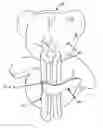
BRIEF DESCRIPTION OF THE DRAWINGSFIG. 1 shows a back perspective view of a toy and syringe holder in accordance with the present invention.
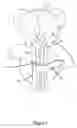
FIG. 2 shows a front elevational view of the present invention.
FIG. 3 shows a side elevational view of the present invention.
FIG. 4 shows a back elevational view of the present invention.
DETAILED DESCRIPTIONReferring now to the drawings and, in particular, to FIG. 1, the present invention is shown generally at 10 that includes a toy plush bear 12 that is conventional in shape and that has attached firmly thereto a syringe holder 14 that is covered by a plush layer of material 14a. In addition, the syringe holder 14 has a fastening strap 16 disposed and connectable on one side for firmly holding a syringe within the holder. The holding strap 16 includes hook and pile fasteners 16a and 16b.
A feeding syringe which is cylindrical in shape fits within the holder 14 coaxially. The holder 14 is attached to the backside of the toy bear 12 and is hidden from view from the front side. This will ensure that the child will not be able to observe the feeding syringe in place inside the holder 14. The inside diameter of holder 14 is sized to be approximately the size of the outside diameter of a feeding syringe. The holder includes a lightweight plastic or metal, tubular arc having approximately a 270-degree arc circumference that is somewhat flexible for expansion to admit the syringe coaxially while still holding it in place. Referring now to FIG. 2, it is noted that the toy bear 12 is quite small but yet sized to completely hide the feeding syringe that is mounted on the backside of the bear from a child's vision when looking at the front of the bear.
Referring to the remaining FIGS. 3 and 4, it can be seen that with the feeding tube in place even with the intravenous tube required for gastrointestinal feeding into the stomach area of the child, the vast bulk of the feeding unit, which is the syringe and the syringe actuated mechanism being deployed along the backside of the toy bear, completely hides the mechanism from the view of the child.
Typically, a caregiver will hold the baby or the baby will be positioned for receiving intravenously the food from the syringe while the syringe is mechanically activated by the caregiver that holds the toy bear and the syringe in such a position to hide the syringe from the infant being fed. This will encourage the child to allow intravenous feeding without resistance and the syringe itself will not be such a frightening distraction to the infant/child and the attending caregiver.
The plush material that constitutes the outer surface of the bear 12 such as fabric 12a is made from a non-toxic, non-allergic, sterilizable plush fabric that can be cleaned periodically for proper hygiene with the child. Many children who require gastrointestinal feeding can be in a regiment that lasts for months or years so it is imperative that the toy 12 selected for the syringe holder can be hygienically cleaned often enough to ensure the safety of the infant/child.
To operate the invention, the caregiver would manually insert the feeding syringe coaxially in holder 14 while extending the intravenous tube to the stomach area of the infant/child. The caregiver, while holding the toy bear and the syringe operating mechanism, will dispense mechanically the food intravenously to the child.
Using the present invention, the child will, hopefully, be entertained and visually stimulated by the toy bear 12 or, in the least desirable situation, will at least tolerate intravenous feeding using a syringe dispenser in that the syringe is hidden from view of the child during the feeding operation.
The instant invention has been shown and described herein in what is considered to be the most practical and preferred embodiment. It is recognized, however, that departures may be made therefrom within the scope of the invention and that obvious modifications will occur to a person skilled in the art.
Claims
What is claimed is:1. An article of manufacture for reducing an infant's and parents' apprehension during gastrointestinal feeding, and specifically a cover for a medical feeding syringe for feeding an infant gastro-intestinally comprising a toy sized in length and width to disguise a medical feeding syringe for gastrointestinal feeding of an infant, a holder connected to said toy, said holder sized to be attached to and encompass said medical feeding syringe, and a holding strap that includes hook and pile fasteners connected to said medical feeding syringe holder.
2. The article of manufacture according to claim 1, wherein the toy for disguising the medical feeding syringe is approximately the same size as the syringe so as to hide the syringe during feeding from the child's vision without interfering with the operator's ability to feed the child, and wherein the toy is in the form of a toy plush bear.
3. The article of manufacture according to claim 1, wherein the toy is constructed from a plush fabric material that is non-allergenic, non-toxic, and sterilizable so that said toy can be cleaned periodically to maintain proper hygiene for the child.
4. The article of manufacture according to claim 1, wherein the inside diameter of the syringe holder is approximately equal in size to the outside diameter of the feeding syringe, and said holder being constructed as a somewhat flexible plastic, tubular arc having approximately a 270-degree arc circumference for encompassing said syringe.
5. The article of manufacture according to claim 1, wherein the holder is constructed from a flexible, lightweight metal or plastic shaped in the form of a tubular arc having approximately a 270-degree arc circumference.
6. The article of manufacture according to claim 1, wherein the exterior of the holder is covered with a plush fabric material similar to or the same as that from which the toy is manufactured.
7. The article of manufacture according to claim 1, wherein the holder is fastened to the back of the toy cover using hook and pile fasteners once a feeding syringe is inserted into the holder to feed a child.
8. A method for enhancing the chances that an infant/child being fed gastro-intestinally will eat by means of concealing a gastrointestinal feeding syringe within a holder which has a plush toy cover that is held facing toward the child during feeding so as to block the infant's view of the mechanical feeding syringe and thereby reducing psychological stress to both the infant/child and parents caused by sight of the naked feeding syringe and by being unable to feed the infant/child orally.
Images & Drawings included:


Sources:
- United States Patent and Trademark Office - verify current appl. status at the USPTO↗
Similar patent applications:
- » 20090072169
Leak resistant syringe cover - » 20110082428
Safety structure for covering syringe needle - » 20170361026
Syringe cover for Obscuring a Patient's Observation of Needle Insertions - » 20230114611
SYRINGE COVER DEVICE - » 20080255524
Structure of the syringe cover including the barrel - » 20140378909
Cover for housing a syringe, assembly comprising such cover, pen-injector comprising such assembly and method for forming a pen-injector - » 20200390979
DEVICE FOR SECURING PROTECTIVE COVER OF SYRINGE - » 20120061286
Device For Covering a Syringe and Needle in Order to Alleviate the Fear and Anxiety Experienced During Pediatric Medical and Odontological Procedures, Such as the Administration of Anesthetics and the Like - » 20070219508
Plunger covers and plungers for use in syringes and methods of fabricating plunger covers and plungers for use in syringes - » 20170209648
Coverings for syringe plunger tips and methods related thereto
Recent applications in this class:
- » 20250099337 2025-03-27
ASSEMBLY COMPRISING A FLUID PRODUCT DISPENSER AND AN UNLOCKING DEVICE - » 20240299252 2024-09-12
APPARATUSES, METHODS, AND SYSTEMS FOR DELIVERING MEDICATION USING MEDICATION KITS - » 20240108549 2024-04-04
MEDICINE FEEDER - » 20230398037 2023-12-14
Patient-controlled liquid oral medicine dispenser and deactivation system - » 20230210723 2023-07-06
Prefilled Medicated Pacifier - » 20230181424 2023-06-15
DELIVERY DEVICE FOR UNITS OF AN ORAL DOSAGE FORM - » 20230165758 2023-06-01
DELIVERY DEVICE FOR ORAL DOSAGE FORMS - » 20230064339 2023-03-02
Neonatal Feeding Syringe with an Internal Mixing Disc - » 20220347056 2022-11-03
DOSING SYRINGE - » 20220313557 2022-10-06
DELIVERY DEVICE FOR DRUG PELLETS