X-ray fluorescent analysis apparatus
US20060093085A1
2006-05-04
11/264,403
2005-11-01
✅ Patent granted
US 7,289,598 B2
2007-10-30
-
-
Edward J. Glick | Anastasia S. Midkiff
2025-11-01
Abstract:
The change in the sample size and a change in background intensity due to the coexisting element are measured in real time to thereby automatically change a measurement time, the detection lower limit is kept constant, so that a fluorescent X-ray apparatus is provided that is capable of measuring every time in the same detection lower limit even in a case where there have existed a change in size of a sample, a change in sensitivity due to a difference in main ingredient, and a change of a magnitude in background due to an influence of a coexisting element.
Assignee:
- SII Nano Technology, Inc. 21 🇯🇵 Chiba, Japan
Interested in similar patents?
Get notified when new applications in this technology area are published.
Classification:
G01N2223/076 » CPC further
Investigating materials by wave or particle radiation secondary emission X-ray fluorescence
G01T1/36 IPC
Measuring X-radiation, gamma radiation, corpuscular radiation, or cosmic radiation Measuring spectral distribution of X-rays or of nuclear radiation spectrometry
G01N23/223 » CPC main
Investigating or analysing materials by the use of wave or particle radiation, e.g. X-rays or neutrons, not covered by groups – , or by measuring secondary emission from the material by irradiating the sample with X-rays or gamma-rays and by measuring X-ray fluorescence
H05G1/38 IPC
X-ray apparatus involving X-ray tubes; Circuits therefor; Electrical details; Measuring, controlling, protecting; Controlling Exposure time
H05G1/38 IPC
X-ray apparatus involving X-ray tubes; Circuits therefor; Electrical details; Measuring, controlling, protecting; Controlling Exposure time
Description
This application claims priority under 35 U.S.C. §119 to Japanese Patent Application No. 2004-318763 filed Nov. 2, 2004, the entire content of which is hereby incorporated by reference.
BACKGROUND OF THE INVENTIONThe present invention relates to a fluorescent X-ray analysis apparatus which performs an element analysis/composition analysis of a sample by inducing a fluorescent X-ray by irradiating an X-ray to the sample, and measuring an energy of the fluorescent X-ray and an X-ray intensity.
In a conventional fluorescent X-ray analysis apparatus, when analyzing an existence and a concentration of a trace amount heavy metal, such as Cd and Pd, in a resin constituted by C, 0, H and the like, a measurement has been performed with a measurement time being fixed (for example, Patent Document 1). [Patent Document 1] JP-A-2004-150990
As to the fluorescent X-ray analysis apparatus, when analyzing the existence and the concentration of the trace amount heavy metal, such as Cd and Pd, in the resin constituted by C, 0, H and the like, there has been an issue that a detection lower limit changes depending on the sample by a change in sample size, a change in sensitivity due to a difference in main component of the sample, and a change in magnitude of a background due to an influence of a coexisting element in the sample. In order to confirm the existence of the trace amount metal, it is an important point to measure every time in the detection lower limit of the same degree.
In the present invention, it is a problem to solve the above issue, thereby providing a system capable of measuring every time in the same detection lower limit even in a case where there have existed the change in the sample size, the change in sensitivity due to the difference in main component, and the change in magnitude of the background due to the influence of the coexisting element.
SUMMARY OF THE INVENTIONIn order to solve the above problem, in a fluorescent X-ray analysis apparatus of the present invention, it has been adapted such that the detection lower limit becomes constant in the measurement of every time by holding a calculation expression of the detection lower limit in an internal algorithm, and changing the measurement time in a case where there existed a factor changing the detection lower limit.
The above expression of the detection lower limit can be defined as follows as one example.
BG intensity in the expression means a background intensity in a position of a fluorescent X-ray energy of the heavy metal noted. This background intensity changes in its magnitude by the coexisting element existing in the sample. For example, in a case where an energy of the fluorescent X-ray of the heavy metal noted approximates to an energy of the fluorescent X-ray of the coexisting element, the background in a fluorescent X-ray energy position of the heavy metal noted is increased by the fact that a peak, having a spread, of the fluorescent X-ray of the coexisting element overlaps with an energy range of the metal noted.
Further, this background intensity changes also by an intensity of a primary X-ray irradiated to the sample in order to induce the fluorescent X-ray. A relation between this intensity of the primary X-ray and a sensitivity coefficient is linear.
A sensitivity in the expression means a relation between a concentration of the heavy metal noted and an intensity of the fluorescent X-ray of the heavy metal noted. This relation changes depending on the sample size. Basically, the sensitivity coefficient becomes large if the sample size becomes large, and the sensitivity coefficient becomes small if the size becomes small.
Further, this sensitivity coefficient changes also by the intensity of the primary X-ray irradiated to the sample in order to induce the fluorescent X-ray. A relation between this intensity of the primary X-ray and the sensitivity coefficient is linear.
In a fluorescent X-ray analysis apparatus of the present invention, even in case of measuring the sample of whatever form, an always constant detection lower limit is realized by the fact that the apparatus automatically recognizes a change in the above background intensity and a change in the sensitivity coefficient, and by automatically changing the measurement time.
The present invention brings about such advantages as described below.
By having a background intensity automatic-measurement function in the fluorescent X-ray energy position of the heavy metal noted, it becomes possible to keep the detection lower limit constant by recognizing the change in the background intensity due to the influences of the adjoining coexisting elements and the like, and reflecting its information to the above expression of the detection lower limit, thereby changing the measurement time.
Additionally, by having a function of automatically measuring the sample size even though roughly, it becomes possible to keep the detection lower limit constant by recognizing a change amount of the sensitivity coefficient due to the change in the sample size, and reflecting its information to the above expression of the detection lower limit, thereby changing the measurement time.
Further, generally in the fluorescent X-ray analysis apparatus, since there is a limit in an X-ray intensity that a detection system can obtain, in order to efficiently measure, it is necessary to change the above intensity of the primary X-ray entering into the sample. However, by this the sensitivity coefficient changes as well. Therefore, it becomes possible to keep the detection lower limit constant by reflecting an information, in which this primary X-ray intensity has been changed, to the above expression of the detection lower limit, thereby changing the measurement time.
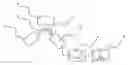
BRIEF DESCRIPTION OF THE DRAWINGSFIG. 1 is a schematic diagram of a fluorescent X-ray analysis apparatus.
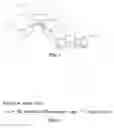
FIG. 2 is an expression for calculating a detection lower limit.
FIG. 3 is one example of a spectrum of a Cd fluorescent X-ray containing a coexisting element.
FIG. 4 is one example of the spectrum of the Cd fluorescent X-ray when a sample size has been changed.
DETAILED DESCRIPTION OF THE INVENTIONIt is explained about an embodiment of the present invention by referring to the drawings. FIG. 1 is a schematic diagram of a general fluorescent X-ray analysis apparatus. In FIG. 1, a primary X-ray 6 from an X-ray generation unit 1 is irradiated to a sample 2, and a fluorescent X-ray 7 deriving from an element in the sample is induced in the sample 2 and entered into an X-ray detector 3. In the detector 3, an electric signal by the X-ray occurs and, by the fact that this signal is converted in a waveform adjuster 4 into a waveform whose wave height is proportional to an energy, it becomes possible to measure an energy of the X-ray and its number (intensity). Information of that energy and intensity is displayed as a spectrum 5.
FIG. 2 is one explaining a calculation method of the detection lower limit in the present invention. In the present invention, a relation among the detection lower limit, the background intensity, the measurement time and the sensitivity is made one shown by an expression of FIG. 2. In other words, the detection lower limit is made one changing only by the measurement time, the background intensity and the sensitivity.
FIG. 3 is one in which one part of the spectrum 5 in FIG. 1 has been enlarged. A solid line 8 denotes the spectrum of the sample whose concentration of Cd is already known, and a peak 10 is a peak of Cd. This solid line 8 is made a basic spectrum. First, the background intensity of Cd is calculated. From a relation among that background intensity, a gross intensity and the concentration of Cd, the sensitivity is calculated by an undermentioned expression (1). As one example of method of calculating the background intensity, although there is such a method that the X-ray intensity outside a base of the peak is calculated and, from an intensity information in its both sides, there is made a function that Y=AX+B to thereby make its area integral into the background, there is no problem if it is other effective method.
Sensitivity=(Gross intensity−Background intensity)/Concentration (1)
By the expression of FIG. 2, if the measurement time is appointed, it becomes possible to find the detection lower limit in the basic spectrum. In other words, it becomes possible to calculate the measurement time for achieving the necessary detection lower limit.
A dotted line 9 in FIG. 3 is a spectrum in a case where a coexisting element 11 of Sb has been contained in a large amount. If a concentration of Cd is the same as the sample whose Cd concentration, the basic spectrum of which has been obtained, is already known, although an area intensity in which the background of a peak portion has been subtracted is equal in both, the area intensity of a background portion changes by an existence/nonexistence of Sb 11. If Sb is contained in the large amount, the background in a position of an energy of Cd increases. Even in this case, by calculating the background intensity in a position of Cd of the spectrum of the dotted line 9, renewing the background intensity substituted to the expression of FIG. 2 and, as to a value of the sensitivity, substituting that of the basic spectrum, it becomes possible to calculate the measurement time for achieving the necessary detection lower limit.
FIG. 4 is one in which a Cd periphery between the spectrums in FIG. 1 has been enlarged, and denotes the spectrum of the Cd periphery when the sample size has changed. The solid line 8 is the sample whose concentration of Cd is already known, and this is made the basic spectrum. It is constituted by the Cd peak 10 and a scattered ray intensity portion 13. An alternate long and short dash line 12 shows a Cd peak 10′ and its scattered ray intensity 13 when the sample size became large. If the sample size becomes large from a state of the basic spectrum, even as to the sample of the same Cd concentration, the intensity of the fluorescent X-ray of Cd becomes large. In other words, the sensitivity coefficient becomes large. Further, accompanying this, the intensity of the background in an energy position of Cd and the intensity of the scattered ray in the Cd periphery become large as well. If the concentration of Cd in the sample is constant, when the sample size has changed, a ratio in which the fluorescent X-ray intensity of Cd and the background intensity and the scattered ray intensity 13 in the position of Cd change is constant in some degree. Therefore, by measuring the ratio in which the scattered ray intensity 13 has changed, it becomes possible to calculate, similarly to the basic spectrum, the measurement time for achieving the necessary detection lower limit by multiplying that ratio by the sensitivity coefficient and the background intensity. In other words, even if the sample size has changed, it becomes possible to absorb a change in the detection lower limit due to that change by altering the measurement time. For example, if it is assumed that the scattered ray intensity of the periphery has become α times, since the background intensity becomes α times, and the sensitivity becomes α times, unless the measurement time is changed, the detection lower limit becomes reciprocal times of a square root of α with respect to the state of the basic spectrum. Whereupon in order to make the detection lower limit constant, it becomes possible by making the measurement time into reciprocal times of α.
Further, in a system for keeping the detection lower limit constant with respect to the above change of the sample size, the detector 3, which becomes possible to be caused to correspond also to a change of the intensity of the primary X-ray 6 in FIG. 1, in the fluorescent X-ray analysis apparatus in FIG. 1 has generally a limit in the X-ray intensity obtainable in a unit time. Therefore, in a case where, as the coexisting element in the sample, there exists high concentration one, in order to prevent its fluorescent X-ray from entering into the detector in a large quantity, there emerges a necessity for lowering an output of the X-ray tube 1. If it is supposed that a ratio by which the output of the X-ray tube has been changed in order to prevent a change in the detection lower limit due to the lowering is β, it becomes possible to make the detection lower limit constant by making the measurement time into reciprocal times of β.
Claims
What is claimed is:1. A fluorescent X-ray analysis apparatus which is constituted by an X-ray source for exciting a measurement sample, an X-ray detector for detecting an X-ray from the measurement sample, and a portion for performing a waveform forming/signal processing of that X-ray, and which analyzes an ingredient of the measurement sample by making an energy information of the X-ray into a spectrum and from its spectrum information, wherein there has been mounted a system which calculates and sets in real time a measurement time for achieving a necessary detection lower limit by, even if a background intensity of a peak periphery of a analysis object element appearing on the spectrum changes, measuring in real time that background intensity and substituting it to a detection lower limit calculation expression.
2. A fluorescent X-ray analysis apparatus, wherein there has been mounted a system which calculates and sets in real time a measurement time for achieving a necessary detection lower limit by, even if a size of an analysis object sample has changed, measuring in real time a change rate of a scattered ray intensity of the sample and, even if the sample size changes by substituting the change rate to a detection lower limit calculation expression, calculating in real time the scattered ray intensity of the sample to thereby substitute it to the detection lower limit calculation expression.
3. A fluorescent X-ray analysis apparatus, wherein there has been mounted a system which calculates and sets in real time a measurement time for achieving a necessary detection lower limit by, even if an intensity of an X-ray irradiated to a sample has changed, measuring in real time a change rate of a scattered ray intensity of the sample and, even if the intensity of the X-ray irradiated to the sample changes by substituting the change rate to a detection lower limit calculation expression, calculating in real time the change rate of the scattered ray intensity of the sample to thereby substitute it to the detection lower limit calculation expression.
Images & Drawings included:

Sources:
- United States Patent and Trademark Office - verify current appl. status at the USPTO↗
Similar patent applications:
- » 9531660
Fluorescent X-ray analysis apparatus - » 10419964
Fluorescent X-ray analysis apparatus - » 20060029182
Fluorescent X-ray analysis method and fluorescent X-ray analysis apparatus - » 20070280414
Fluorescent X-ray analysis apparatus - » 20080013681
Fluorescent X-ray analysis apparatus - » 20150177167
X-ray fluorescence analysis apparatus - » 20190086344
Sample collecting device, sample collecting method, and fluorescent x-ray analysis apparatus using the same - » 20210003520
X-Ray Fluorescence Analysis Apparatus and Calibration Method Thereof - » 20210116399
Fluorescent X-ray analysis apparatus comprising a plurality of X-ray detectors and an X-ray irradiation unit including a multi-wavelength mirror - » 20250264422
Fluorescent X-ray Analysis Method and Fluorescent X-ray Analysis Apparatus
Recent applications in this class:
- » 20250290877 2025-09-18
METHOD AND APPARATUS FOR CHEMICAL ANALYSIS - » 20250290876 2025-09-18
FLUORESCENT X-RAY ANALYSIS DEVICE - » 20250283842 2025-09-11
SYSTEMS AND METHODS FOR X-RAY FLUORESCENCE SPECTROMETRY OPTICS ALIGNMENT - » 20250271371 2025-08-28
Method and Apparatus for Capturing Iodine Vapor - » 20250271370 2025-08-28
X-RAY SOURCE AND OPERATING METHOD THEREFOR - » 20250271369 2025-08-28
SYSTEMS AND METHODS FOR IMPROVED MATERIAL SAMPLE ANALYSIS AND QUALITY CONTROL - » 20250264422 2025-08-21
Fluorescent X-ray Analysis Method and Fluorescent X-ray Analysis Apparatus - » 20250258116 2025-08-14
Method and System for Detecting a Material - » 20250244265 2025-07-31
SYSTEMS AND METHODS FOR ADJUSTMENT OF XRF ANALYSIS STRATEGY - » 20250237620 2025-07-24
DETECTION SYSTEM AND METHOD
Recent applications for this Assignee:
- » 20120230468 2012-09-13
X-ray analyzer - » 20100058499 2010-03-04
Cantilever, cantilever system, and probe microscope and adsorption mass sensor including the cantilever system - » 20080314131 2008-12-25
Sample manipulating apparatus - » 20080295570 2008-12-04
Positioning apparatus and scanning probe microscope employing the same - » 20080289954 2008-11-27
Method of manufacturing sample for atom probe analysis by FIB and focused ion beam apparatus implementing the same - » 20080224374 2008-09-18
Sample holding mechanism and sample working/observing apparatus - » 20080224198 2008-09-18
Apparatus for working and observing samples and method of working and observing cross sections - » 20080132151 2008-06-05
Micro-machining dust removing device, micro-machining apparatus, and micro-machining dust removing method - » 20080073586 2008-03-27
Focused ion beam apparatus and method of preparing/observing sample - » 20080061232 2008-03-13
Scanning probe microscope fine-movement mechanism and scanning probe microscope using same