Apparatus and method for treating food products
US20060123802A1
2006-06-15
11/301,251
2005-12-13
Abstract:
An apparatus (1) for treating food products, comprising a heat exchanger (2) with cylindrical geometry, having a stator (3) and a rotor (4) internal to the stator (3), defining a passage (5) between the stator and the rotor and comprising cooling means (7) active on the outer surface of the stator (3), pumping means (6), for thrusting the food products through said passage (5), means (10) for injecting a fluid inside said passage (5) and means for moving the food products, to cause the emulsion of the fluid with the products by means of a substantially turbulent motion of the products inside said passage (5), together with scraping elements (12) active on the surface of the passage (5).
Interested in similar patents?
Get notified when new applications in this technology area are published.
Classification:
A23P30/40 » CPC further
Shaping or working of foodstuffs characterised by the process or apparatus Foaming or whipping
A23V2002/00 » CPC further
Food compositions, function of food ingredients or processes for food or foodstuffs
A23V2300/04 » CPC further
Processes Aeration
F25D13/06 IPC
Stationary devices, e.g. cold-rooms with conveyors carrying articles to be cooled through the cooling space
F25D25/00 IPC
Charging, supporting, and discharging the articles to be cooled
F25D25/02 IPC
Charging, supporting, and discharging the articles to be cooled by shelves
Description
BACKGROUND OF THE INVENTIONThe present invention relates to an apparatus comprising a heat exchanger with cylindrical geometry, having a stator and a rotor within the stator, defining a passage between the stator and the rotor and comprising cooling means that are operatively active on the outer surface of the stator; and pumping means, to push the food products through said passage.
The present invention also relates to a method for cooling and aerating substantially fluid or viscous food products, which provides for the use of a heat exchanger with cylindrical geometry, having a stator and a rotor within the stator and defining a passage between the stator and the rotor.
Within the food industry and, in particular, in the sweets sector, there is the need to treat food products, constituted by substantially liquid or viscous mixtures, e.g. mixes for snacks or stuffed pastries, creams, juices or jams. In particular, within the field of snack production, the food products constituted by creams or other fillings for the snacks are subjected to a hydration process, to increase their mass and improve product preservation. Said hydration is followed by a pasteurisation process, which entails a rise in the temperature of said food products. Subsequently, the same food products are subjected to an aeration process, to increase their volume and make them softer. Said aeration process essentially consists of the emulsion of a certain quantity of air or other fluid within the food products. For said emulsion to take place correctly and effectively, two conditions must be met: the products must be at a relatively low temperature (no higher than about 20° C., but the optimal temperature depends on the product) and they must be characterised by a substantially turbulent motion. If the aforesaid conditions are not met, the emulsion takes place incorrectly, with consequent damage to the final product, both from the point of view of taste and from the point of view of appearance. Therefore, there is a need to rapidly lower the temperature of the treated food, at the end of the pasteurisation process, in order to perform the aeration process correctly.
In this light, technical solutions are known which allow to cool the food products at the end of the pasteurisation process. Moreover, technical solutions are known which allow to aerate said food products, after their cooling. With regard to cooling, the use is known of heat exchangers with scraping surface, as described for example in the patent documents U.S. Pat. No. 6,056,46 or EP0503274. Said exchanger comprise a stator and a rotor with cylindrical geometry. The rotor rotates inside the stator and between the outer surface of the rotor and the inner surface of the stator there is a passage, into which the food products are thrust. The surface of the stator, lapped externally by a cooling fluid, exchanges heat with the food product that flows within it, cooling it. Moreover, said exchangers comprise scraping elements, able to prevent the food products from adhering to the inner surface of the stator, because of the temperature gradient. With regard to the aeration process, the separate use is known of emulsifiers, comprising a stator and a rotor with cylindrical geometry. In this case, too, the product to be treated is pushed into a passage between the rotor and the stator, together with a flow of air (or of another fluid). The rotor and the stator define, on the surfaces that face each other, a plurality of teeth which, in the rotating motion, mutually intersect, without scraping the surfaces that delimit the passage. In this way, the products to be treated are imparted a turbulent motion (within said passage), which favours the emulsion of air with the products.
The known solutions described above have numerous drawbacks. First of all, the presence of two distinct apparatuses, one to cool the pasteurised products and one to emulsify a fluid with the products themselves, limits compactness and increases the bulk of the apparatus, as a whole. Moreover, known emulsifiers are inconvenient to clean, since they have teeth both on the outer surface of the rotor and on the inner surface of the stator. Lastly, known apparatuses do not allow a continuous productive cycle, in which the products are cooled and emulsified, without idle times between one process and the other. It should be noted that different food products are characterised by different values of temperature whereat emulsion occurs optimally. In this light, the executing the cooling and aerating processes separately and at different times prevents a feedback control on the process as a whole.
SUMMARY OF THE INVENTIONAn object of the present invention is to eliminate the aforesaid drawbacks and to make available an apparatus for treating food products, which enables to effect cooling and aerating processes simultaneously and continuously on said food products.
Said objects are fully achieved by the apparatus of the present invention, which is characterised by the content of the claims set out below and in particular in that it comprises:
means for injecting a fluid into a passage;
means for handling food products, to produce the emulsion of the fluid with the products by means of a substantially turbulent motion of said products within said passage.
A further object of the present invention is to make available a method for cooling and aerating substantially fluid or viscous food products, in which the cooling and aerating products take place simultaneously and continuously.
Said object is fully achieved by the method of the present invention, which is characterised by the content of the claims set out below and in particular in that it comprises the following steps:
pumping the food products through a passage;
injecting air into said passage;
moving the food products inside said passage, in such a way as to cause a turbulent motion and the emulsion of the air with the products.
BRIEF DESCRIPTION OF THE DRAWINGSThis and other characteristics shall become more readily apparent in the description that follows of a preferred embodiment, illustrated purely by way of non limiting example in the accompanying drawing tables, in which:
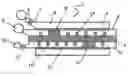
FIG. 1 schematically shows a lateral section view of an apparatus according to the present invention;
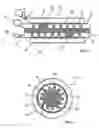
FIG. 2 schematically shows a frontal section view of the apparatus of FIG. 1;
FIG. 3 shows the rotor of the apparatus of FIG. 1.
DESCRIPTION OF THE PREFERRED EMBODIMENTSIn FIG. 1, the reference number 1 designates an apparatus according to the present invention. The reference number 2 indicates a heat exchanger with cylindrical geometry, comprising a stator 3 and a rotor 4. The rotor 4 is inside the stator 3 and coaxial thereto. Between the rotor 4 and the stator 3 the exchanger 2 defines a passage 5, into which are introduced the food products to be treated. In particular, the products are thrust through the passage 5 by pumping means 6, of a substantially known kind. The rotor is set in rotation by a rotor, preferably electric, e.g. an asynchronous motor with four poles driven by an inverter, not shown in the figure. Externally to the stator 3 act cooling means 7, comprising a conduit 8 adjacent to the stator in which a cooling fluid, preferably but not necessarily constituted by water with glycol, is made to circulate. Said cooling means are able to deliver a flow rate of cooling fluid of up to 3000 1/h and they comprise insulated connecting pipes, possibly provided with bypass means. The surfaces that define the passage 5 are preferably made of stainless steel and can operate at pressures of about 25 bar. Moreover, said cooling means comprise a modulating valve 9, which allows to vary the flow rate of cooling fluid. It should be noted that the conduit 8 is hermetically isolated from the passage 5, so that the cooling fluid can in no way come in contact with the food products present in the passage 5. The maximum pressure at which the cooling conduit 8 can operate is about 10 bar. The apparatus 1 also comprises means 10 for injecting a fluid into the passage 5, so it is emulsified with the food products. This fluid is preferably, but not necessarily, constituted by air. Said injection means 10 comprise, in a preferred embodiment, a stainless steel box (not show) which acts as a buffer and is fastened to a frame (not shown) which supports the whole apparatus. The number 11 designates an automatic flow meter, i.e. a device able automatically to measure the flow rate of fluid injected into the passage 5 to be emulsified. The apparatus 1 comprises control means, not shown, able to regulate the flow rate of the fluid injected into the passage 5; said control means being operatively connected to said flow meter. In the figures, the reference number 12 designates scraping elements, associated to the rotor 4 and having a surface that, during the operation of the apparatus 1, is in substantial sliding contact with the inner surface of the stato 3, which is smooth, to prevent the food products in contact with said surface from adhering thereon by effect of the temperature gradient. Said scraping elements 12 are constituted, in a preferred but not exclusive embodiment, by fins movably associated to the rotor 4 in such a way as to be able to rotate from a first position in which they are not in contact with the stator 4 (position shown in FIG. 3) to a second position in which they are in contact with the stator 3 (position shown schematically in FIGS. 1 and 2). The scraping elements 12 move from the first to the second position by effect of the centrifugal force due to the rotation of the rotor 3. Said scraping elements 12 are made of bacteriologically inert material, preferably constituted by an odourless, non toxic synthetic resin, not containing additional glass fibres or any other additive. Moreover, the scraping elements 12 are preferably removable manually and easily replaceable. The apparatus 1 also comprises means for moving the food products inside the passage 5. Said moving means comprise, in a preferred embodiment, a plurality of teeth 13, integral with the rotor 4. Said teeth 13 substantially consist of projections that occupy a portion of the passage 5, without interfering with the inner surface of the stator 3. Said moving means, actuated by the movement of the rotor 4, cause the food products inside the passage 5 to be subjected to a turbulent motion, with consequent benefit from the viewpoint of the emulsification of the injected fluid. The apparatus 1 also comprises a temperature probe, of a substantially known kind and not shown in the figures, able to detect a temperature of the products inside the passage 5. Said temperature probe is operatively connected to a control board (not shown), which actuates the modulating valve 9 to regulate the temperature of the food products inside the passage 5. Therefore, originally, a feedback control is obtained on the temperature at which the emulsification process takes place, acting on the cooling means 7. Moreover, the described apparatus is particularly easy to wash, also automatically, thanks to the fact that the stator 3 is internally smooth. Moreover, the apparatus 1 originally enables to treat food products by cooling them and simultaneously aerating them, minimising the bulk of the apparatus, because both an exchanger and an emulsifier, not distinct from each other, are obtained in a single section. The present invention also makes available a method for cooling and aerating food products. Said method provides for the use of a heat exchanger 2 with cylindrical geometry, preferably of the type of scraping surface, substantially known. Said exchanger comprises a stator and a rotor internal to the stator and it defines a passage 5 between the stator and the rotor. Said method comprises the following steps:
pumping the food products through the passage 5;
injecting air into the passage 5;
moving the food products inside the passage 5, in such a way as to cause a turbulent motion and the emulsion of the air with the products.
Said method further comprises a step of regulating the flow rate of the air injected into said passage 5. It also comprises a step of regulating the temperature of the food products inside the passage 5. Said regulating step in turn comprises a step of measuring the temperature of the food products in the passage and a processing step, by means of an appropriate software active on a control board. Moreover, said method comprises a step of washing step of the passage 5, which in turn comprises the following steps:
cold roughing with water to be disposed of, for about 10 minutes;
washing with detergent fluid to be recirculated, for about 20 minutes at the temperature of 70° C.;
rinsing with water to be disposed of.
Said method originally enables to effect a process of aeration and cooling of food products simultaneously and continuously. In this way, the aeration process can be optimised for each type of food product, originally operating a double regulation, with feedback, of the process temperature and of the injected flow rate of fluid to be emulsified.
Claims
What is claimed:1. An apparatus (1) for treating food products, having:
a heat exchanger (2) with cylindrical geometry, having a stator (3) and a rotor (4) internal to the stator (3), defining a passage (5) between the stator and the rotor and comprising cooling means (7) operatively active on the outer surface of the stator (3);
pumping means (6), for thrusting the food products through said passage (5); characterised in that the apparatus (1) comprises:
means (10) for injecting a fluid into said passage (5);
means for handling food products, to produce the emulsion of the fluid with the products by means of a substantially turbulent motion of said products within said passage (5).
2. Apparatus as claimed in claim 1, wherein there is at least one scraping element (12), movably associated to the rotor (4), having a portion in sliding contact with the inner surface of the stator (3), when the apparatus is in operation.
3. Apparatus as claimed in claim 2, wherein said at least one scraping element (12) is made of a bacteriologically inert material.
4. Apparatus as claimed in claim 2, wherein said at least one scraping element (12) is manually removable and replaceable.
5. Apparatus as claimed in claim 1, wherein said moving means comprise a plurality of teeth (13), integral to the rotor (4) and occupying a portion of said passage (5).
6. Apparatus as claimed in claim 1, wherein the cooling means (7) comprise a cooling fluid and means for making said cooling fluid circulate in a conduit (8) adjacent to the stator (3).
7. Apparatus as claimed in claim 6, wherein said cooling fluid comprises water with glycol.
8. Apparatus as claimed in claim 1, wherein there is an automatic flow meter (11), connected to the means (10) for injecting the fluid to be emulsified inside the passage (5) to measure its flow rate.
9. Apparatus as claimed in claim 8, having control means, operatively connected to said flow meter (11) to regulate the flow rate of the fluid injected inside the passage (5).
10. Apparatus as claimed in claim 6, having a temperature probe, able to measure a temperature of the products inside the passage (5).
11. Apparatus as claimed in claim 10, wherein the cooling means (7) comprise a modulating valve (9), actuated by a control board operatively connected to said temperature probe for regulating the temperature of the products inside the passage (5).
12. Apparatus as claimed in claim 1, wherein said passage (5) is inaccessible to the cooling fluid.
13. Method for cooling and aerating substantially fluid or viscous food products, which provides for the use of a heat exchanger (2) with cylindrical geometry, having a stator (3) and a rotor (4) within the stator and defining a passage (5) between the stator and the rotor, characterised in that it comprises the following steps:
pumping the food products through said passage;
injecting air into said passage;
moving the food products inside said passage, in such a way as to cause a turbulent motion and the emulsion of the air with the products.
14. Method as claimed in claim 13, comprising a step of regulating the flow rate of the air injected inside said passage.
15. Method as claimed in claim 13, comprising a step of regulating the temperature of the food products inside said passage.
16. Method as claimed in claim 13, comprising a step of washing said passage.
17. Method as claimed in claim 16, wherein said washing step comprises the following steps:
rough cleaning with water to be disposed of;
washing with detergent fluid to be recirculated;
rinsing with water to be disposed of.
18. Plant for treating food products, comprising a plurality of apparatus of the kind claimed in any one of the claims 1 through 12, mutually connected in series or in parallel.
Images & Drawings included:

Sources:
- United States Patent and Trademark Office - verify current appl. status at the USPTO↗
Similar patent applications:
- » 20120177796
Food product heat treatment apparatus and method for heat treating food products - » 20070160720
METHOD AND APPARATUS FOR TREATING FOOD PRODUCTS - » 20100203206
METHOD FOR TREATING FOOD PRODUCTS AND FOOD PRODUCT TREATMENT APPARATUS - » 20200248948
Apparatus for cooling high-heat-treated food products, method for performing this, and heat-treatment line for this - » 20160235109
Apparatus and Method for Drying and/or Treating Loose Food Products - » 20100035198
Apparatus and method for treating a product, for example a food product, and relative plant - » 20220322695
Method and apparatus for controlling the quality of food products and system for treating food products comprising the apparatus - » 20160015038
TREATED CROP PLANTS OR PLANT FOOD PRODUCTS WITH DECREASED BACTERIAL VIABILITY AND METHODS AND APPARATUSES FOR MAKING THE SAME
Recent applications in this class:
- » 20220016587 2022-01-20
Systems, Methods, and Apparatus for Utilizing a Resuspension Tank - » 20200330936 2020-10-22
Systems, Methods, and Apparatus for Utilizing a Resuspension Tank - » 20200282367 2020-09-10
System for continuous make-down of powder material - » 20190270055 2019-09-05
Mixing vessel with locking assembly for locking a mixing assembly in storage position and mixing impeller with central disc-like member - » 20180214830 2018-08-02
HEATING AGITATOR HAVING SCRAPER - » 20170216788 2017-08-03
Mixing vessel with locking assembly for locking a mixing assembly in storage position and mixing impeller with central disc-like member - » 20150151261 2015-06-04
Mechanical agitator with seal housing assembly - » 20130272088 2013-10-17
Dynamic mixer - » 20130148467 2013-06-13
Automatic pot stirrer - » 20120234184 2012-09-20
Food flipping and turning spatula