Substituted 1-dihydropyrazoles, their preparation and use
US20060128965A1
2006-06-15
11/352,805
2006-02-13
✅ Patent granted
US 7,622,595 B2
2009-11-24
-
-
Patricia L Morris
2026-04-10
Abstract:
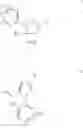
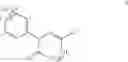
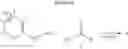
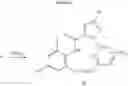
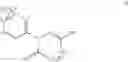
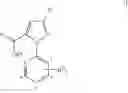
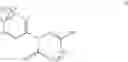
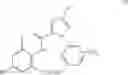
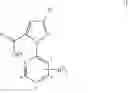
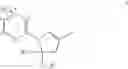
This invention provides compounds of Formula I, methods for their preparation and use for preparing compounds of Formula II
wherein R1, R2, R3, R5, R6, X and n are as defined in the disclosure. This invention also discloses preparation of compounds of Formula III
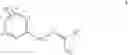
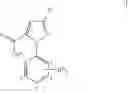
wherein R1, R2, R7, R8, R9 and n are as defined in the disclosure. This invention also pertains to certain compounds of Formula 4 and 6 used to prepare compounds of Formula I.
wherein R1, R2, R5, X and n are as defined in the disclosure.
Inventors:
- GEORGE PHILIP LAHM 85 🇺🇸 Wilmington, DE, United States
- THOMAS MARTIN STEVENSON 75 🇺🇸 Newark, DE, United States
- Gary David Annis 23 🇺🇸 Landenberg, PA, United States
- Thomas Paul Selby 13 🇺🇸 Wilmington, DE, United States
Assignee:
- E.I. DU PONT DE NEMOURS AND COMPANY 2,145 🇺🇸 Wilmington, DE, United States
Interested in similar patents?
Get notified when new applications in this technology area are published.
Classification:
C07D213/77 » CPC main
Heterocyclic compounds containing six-membered rings, not condensed with other rings, with one nitrogen atom as the only ring hetero atom and three or more double bonds between ring members or between ring members and non-ring members having three double bonds between ring members or between ring members and non-ring members having no bond between the ring nitrogen atom and a non-ring member or having only hydrogen or carbon atoms directly attached to the ring nitrogen atom with hetero atoms or with carbon atoms having three bonds to hetero atoms with at the most one bond to halogen, e.g. ester or nitrile radicals, directly attached to ring carbon atoms; Nitrogen atoms to which a second hetero atom is attached Hydrazine radicals
A01N43/56 » CPC further
Biocides, pest repellants or attractants, or plant growth regulators containing heterocyclic compounds having rings with two nitrogen atoms as the only ring hetero atoms 1,2-Diazoles; Hydrogenated 1,2-diazoles
C07C251/76 » CPC further
Compounds containing nitrogen atoms doubly-bound to a carbon skeleton; Hydrazones having doubly-bound carbon atoms of hydrazone groups bound to hydrogen atoms or to acyclic carbon atoms to carbon atoms of a saturated carbon skeleton
C07C255/66 » CPC further
Carboxylic acid nitriles containing cyano groups and nitrogen atoms further bound to other hetero atoms, other than oxygen atoms of nitro or nitroso groups, bound to the same carbon skeleton with the nitrogen atoms further bound to nitrogen atoms having cyano groups and nitrogen atoms being part of hydrazine or hydrazone groups bound to the same carbon skeleton
C07D231/14 » CPC further
Heterocyclic compounds containing 1,2-diazole or hydrogenated 1,2-diazole rings not condensed with other rings having two or three double bonds between ring members or between ring members and non-ring members with hetero atoms or with carbon atoms having three bonds to hetero atoms with at the most one bond to halogen, e.g. ester or nitrile radicals, directly attached to ring carbon atoms
C07D231/08 » CPC further
Heterocyclic compounds containing 1,2-diazole or hydrogenated 1,2-diazole rings not condensed with other rings having one double bond between ring members or between a ring member and a non-ring member with oxygen or sulfur atoms directly attached to ring carbon atoms
C07D231/16 » CPC further
Heterocyclic compounds containing 1,2-diazole or hydrogenated 1,2-diazole rings not condensed with other rings having two or three double bonds between ring members or between ring members and non-ring members with hetero atoms or with carbon atoms having three bonds to hetero atoms with at the most one bond to halogen, e.g. ester or nitrile radicals, directly attached to ring carbon atoms Halogen atoms or nitro radicals
C07D401/04 » CPC further
Heterocyclic compounds containing two or more hetero rings, having nitrogen atoms as the only ring hetero atoms, at least one ring being a six-membered ring with only one nitrogen atom containing two hetero rings directly linked by a ring-member-to-ring-member bond
C07D413/04 » CPC further
Heterocyclic compounds containing two or more hetero rings, at least one ring having nitrogen and oxygen atoms as the only ring hetero atoms containing two hetero rings directly linked by a ring-member-to-ring-member bond
C07D413/14 » CPC further
Heterocyclic compounds containing two or more hetero rings, at least one ring having nitrogen and oxygen atoms as the only ring hetero atoms containing three or more hetero rings
C07D403/04 » CPC further
Heterocyclic compounds containing two or more hetero rings, having nitrogen atoms as the only ring hetero atoms, not provided for by group containing two hetero rings directly linked by a ring-member-to-ring-member bond
C07F7/02 IPC
Compounds containing elements of Groups 4 or 14 of the Periodic System Silicon compounds
C07D231/32 IPC
Heterocyclic compounds containing 1,2-diazole or hydrogenated 1,2-diazole rings not condensed with other rings having two or three double bonds between ring members or between ring members and non-ring members with hetero atoms or with carbon atoms having three bonds to hetero atoms with at the most one bond to halogen, e.g. ester or nitrile radicals, directly attached to ring carbon atoms; Two oxygen or sulfur atoms attached in positions 3 and 5 Oxygen atoms
Description
BACKGROUND OF THE INVENTIONThis invention relates to novel carboxylic acid derivatives of 1-aryl-substituted dihydro-1H-pyrazoles and pyrazoles. These compounds are useful for preparation of certain anthranilic amide compounds that are of interest as insecticides (see e.g. PCT Publication WO 01/070671). J. Med. Chem. 2001, 44, 566-578 discloses a preparation of 1-(3-cyanophenyl)-3-methyl-1H-pyrazol-5-carboxylic acid and its use in preparing inhibitors of blood coagulation factor Xa. The present invention provides technology useful for the successful and convenient preparation of 1-aryl-substituted dihydro-1H-pyrazoles and pyrazoles.
SUMMARY OF THE INVENTION This invention provides compounds of Formula I
wherein
R1 is H, C1-C6 alkyl, C2-C6 alkenyl, C2-C6 alkynyl, C3-C6 cycloalkyl, C1-C6 haloalkyl, C2-C6 haloalkenyl, C2-C6 haloalkynyl or C3-C6 halocycloalkyl; each R2 is independently C1-C4 alkyl, C2-C4 alkenyl, C2-C4 alkynyl, C3-C6 cycloalkyl, C1-C4 haloalkyl, C2-C4 haloalkenyl, C2-C4 haloalkynyl, C3-C6 halocycloalkyl, halogen, CN, NO2, C1-C4 alkoxy, C1-C4 haloalkoxy, C1-C4 alkylthio, C1-C4 alkylsulfinyl, C1-C4 alkylsulfonyl, C1-C4 alkylamino, C2-C8 dialkylamino, C3-C6 cycloalkylamino, C3-C6 (alkyl)cycloalkylamino, C2-C4 alkylcarbonyl, C2-C6 alkoxycarbonyl, C2-C6 alkylaminocarbonyl, C3-C8 dialkylaminocarbonyl or C3-C6 trialkylsilyl;
R3 is H, C1-C4 alkyl, C2-C4 alkylcarbonyl or C2-C6 alkoxycarbonyl;
X is N or CR4;
R4 is H or R2;
R5 is C1-C4 alkyl; and
n is 0 to 3, provided when X is CH then n is at least 1.
This invention further provides a method of preparing a compound of Formula I. This method comprises (1) treating a compound of Formula 6
(wherein X, R1, R2, R5 and n are defined as above for Formula I) with a base; and when R3 is C1-C4 alkyl, C2-C4 alkylcarbonyl or C2-C6 alkoxycarbonyl, (2) reacting with an alkylating or acylating agent suitable for substituting an R3 for an alkoxide counterion to form a compound of Formula I.
This invention also provides a compound of Formula 6, as well as a method for preparing a compound of Formula 6. This method comprises treating the compound of Formula 4
(wherein X, R1, R2 and n are defined as above for Formula I) with a compound of Formula 5
wherein R5 is as defined above for Formula I, in the presence of base to form a compound of Formula 6.
This invention further provides a method of preparing a compound of Formula II
wherein X, R1, R2, and n are defined as above for Formula I, and R6 is R5 as defined above for Formula I or R5 is H. This method comprises (3) treating a compound of Formula I with acid; and when R6 is H (4) converting the product of (3) to form a compound of Formula II wherein R6 is H.
This invention also provides compounds of Formula 4 wherein R1 is CF3; each R2 is independently Cl or Br, and one R2 is at the 3-position; X is N or CR4; R4 is H, Cl or Br; and n is 0, 1, 2 or 3; provided that (i) when X is CH or CCl then n is at least 1 and (ii) when X is CCl, an R2 at the 3-position is Cl and an R2 is at the 5-position is Cl then n is at least 3.
This invention also provides compounds of Formula II wherein R1 is CF3; each R2 is independently Cl or Br, and one R2 is at the 3-position; X is N or CR4; R4 is H or R2; R6 is H or C1-C4 alkyl; and n is 0, 1, 2 or 3, provided when X is CH then n is at least 1.
This invention also involves a method of preparing a compound of Formula III,
wherein X, R1, R2, and n are defined as above for Formula I; R7 is CH3, Cl or Br; R8 is F, Cl, Br, I or CF3; and R9 is C1-C4 alkyl, using a compound of Formula II wherein R6 is H. This method is characterized by preparing the compound of Formula II by the method as indicated above.
In the above recitations, the term “alkyl”, used either alone or in compound words such as “alkylthio” or “haloalkyl” includes straight-chain or branched alkyl, such as methyl, ethyl, n-propyl, i-propyl, or the different butyl, pentyl or hexyl isomers. “Alkenyl” can include straight-chain or branched alkenes such as 1-propenyl, 2-propenyl, and the different butenyl, pentenyl and hexenyl isomers. “Alkenyl” also includes polyenes such as 1,2-propadienyl and 2,4-hexadienyl. “Alkynyl” includes straight-chain or branched alkynes such as 1-propynyl, 2-propynyl and the different butynyl, pentynyl and hexynyl isomers. “Alkynyl” can also include moieties comprised of multiple triple bonds such as 2,5-hexadiynyl. “Alkoxy” includes, for example, methoxy, ethoxy, n-propyloxy, isopropyloxy and the different butoxy, pentoxy and hexyloxy isomers. “Alkylthio” includes branched or straight-chain alkylthio moieties such as methylthio, ethylthio, and the different propylthio, butylthio, pentylthio and hexylthio isomers. “Cycloalkyl” includes, for example, cyclopropyl, cyclobutyl, cyclopentyl and cyclohexyl. “Cycloalkylamino” means the amino nitrogen atom is attached to a cycloalkyl radical and a hydrogen atom and includes groups such as cyclopropylamino, cyclobutylamino, cyclopentylamino and cyclohexylamino. “(Alkyl)cycloalkylamino” means a cycloalkylamino group where the hydrogen atom is replaced by an alkyl radical; examples include groups such as (alkyl)cyclopropylamino, (alkyl)cyclobutylamino, (alkyl)cyclopentylamino and (alkyl)cyclohexylamino. Preferably the alkyl in (alkyl)cycloalkylamino is C1-C4 alkyl, while the cycloalkyl in cycloalkylamino and (alkyl)cycloalkylamino is C3-C6 cycloalkyl.
The term “aryl” refers to an aromatic carbocyclic ring or ring system or a heteroaromatic ring or ring system, each ring or ring system optionally substituted. The term “aromatic ring system” denotes fully unsaturated carbocycles and heterocycles in which at least one ring of a polycyclic ring system is aromatic. Aromatic indicates that each of ring atoms is essentially in the same plane and has a p-orbital perpendicular-to the ring plane, and in which (4n+2) n electrons, when n is 0 or a positive integer, are associated with the ring to comply with Huickel's rule. The term “aromatic carbocyclic ring system” includes fully aromatic carbocycles and carbocycles in which at least one ring of a polycyclic ring system is aromatic (e. g. phenyl and naphthyl). The term “heteroaromatic ring or ring system” includes fully aromatic heterocycles and heterocycles in which at least one ring of a polycyclic ring system is aromatic and in which at least one ring atom is not carbon and can contain 1 to 4 heteroatoms independently selected from the group consisting of nitrogen, oxygen and sulfur, provided that each heteroaromatic ring contains no more than 4 nitrogens, no more than 2 oxygens and no more than 2 sulfurs (where aromatic indicates that the Hückel rule is satisfied). The heterocyclic ring systems can be attached through any available carbon or nitrogen by replacement of hydrogen on said carbon or nitrogen. More specifically, the term “aryl” refers to the moiety
wherein R2, X and n are defined as above and the numerals 3 through 6 indicate respectively the 3-position through the 6-position for substituents on the moiety.
The term “halogen”, either alone or in compound words such as “haloalkyl”, includes fluorine, chlorine, bromine or iodine. Further, when used in compound words such as “haloalkyl”, said alkyl may be partially or fully substituted with halogen atoms which may be the same or different. Examples of “haloalkyl” include F3C, ClCH2, CF3CH2 and CF3CCl2. The terms “haloalkenyl”, “haloalkynyl”, “haloalkoxy”, and the like, are defined analogously to the term “haloalkyl”. Examples of “haloalkenyl” include (Cl)2C═CHCH2 and CF3CH2CH═CHCH2. Examples of “haloalkynyl” include HC≡CCHCl, CF3≡C, CCl3C≡C and FCH2C≡CCH2. Examples of “haloalkoxy” include CF3O, CCl3CH2O, HCF2CH2CH2O and CF3CH2O.
Examples of “alkylcarbonyl” include C(O)CH3, C(O)CH2CH2CH3 and C(O)CH(CH3)2. Examples of “alkoxycarbonyl” include CH3OC(═O), CH3CH2OC(═O), CH3CH2CH2OC(═O), (CH3)2CHOC(═O) and the different butoxy- or pentoxycarbonyl isomers. The terms “alkylaminocarbonyl” and “dialkylaminocarbonyl” include, for example, CH3NHC(═O), CH3CH2NHC(═O) and (CH3)2NC(═O).
The total number of carbon atoms in a substituent group is indicated by the “Ci-Cj” prefix where i and j are numbers from 1 to 8. For example, C1-C3 alkylsulfonyl designates methylsulfonyl through propylsulfonyl. In the above recitations, when a compound of Formula I contains a heteroaromatic ring, all substituents are attached to this ring through any available carbon or nitrogen by replacement of a hydrogen on said carbon or nitrogen.
When a group contains a substituent which can be hydrogen, for example R1, then, when this substituent is taken as hydrogen, it is recognized that this is equivalent to said group being unsubstituted.
Compounds of this invention can exist as one or more stereoisomers. The various stereoisomers include enantiomers, diastereomers, atropisomers and geometric isomers. One skilled in the art will appreciate that one stereoisomer may be more active and/or may exhibit beneficial effects when enriched relative to the other stereoisomer(s) or when separated from the other stereoisomer(s). Additionally, the skilled artisan knows how to separate, enrich, and/or to selectively prepare said stereoisomers. Accordingly, the compounds of the invention may be present as a mixture of stereoisomers, individual stereoisomers, or as an optically active form.
Compounds of Formula I and compounds of Formula II can be prepared by the stepwise process comprising:
(a) treating, optionally in the presence of acid, a compound of Formula 2
(wherein X, R2 and n are defined as above) with a compound of Formula 3
(wherein R1 is defined as above) to form a compound of Formula 4
(wherein X, R1, R2 and n are defined as above);
(b) treating said compound of Formula 4 with a compound of Formula 5
wherein R5 is C1-C4 alkyl, in the presence of base to form a compound of Formula 6
(wherein X, R1, R2, R5 and n are defined as above);
(1) treating said compound of Formula 6 with a base to form a compound of Formula I wherein R3 is H; and (2) when R3 is C1-C4 alkyl C2-C4 alkylcarbonyl or C2-C6 alkoxycarbonyl, reacting with an alkylating or acylating agent to form a compound of Formula I
(wherein X, R1, R2, R5 and n are defined as above);
(3) treating a compound of Formula I with acid; and when R6 is H (4) converting the product of (3) to form a compound of Formula II wherein R6 is H.
wherein X, R1, R2, R5 and n are defined as above.
Preferred 1. Compounds of Formula I wherein R1 is H, C1-C4 alkyl or C1-C4 haloalkyl; and each R2 is independently C1-C4 alkyl, C1-C4 haloalkyl, halogen or CN.
Preferred 2. Compounds of Formula I wherein
-
- R1 is H, C1-C4 alkyl or C1-C4 haloalkyl;
- X is N; and
- n is 0.
Preferred 3. Compounds of Preferred 1 wherein
-
- R1 is CF3;
- each R2 is independently Cl or Br, and one R2 is at the 3-position;
- R3 is H; and
- R4 is H, Cl or Br.
Preferred 4. Compounds of Preferred 1 wherein
-
- R1 is CF3;
- one R2 is at the 4-position and is CN, and if an R2 is present at the 5-position, it is F;
- R3 is H; and
- X is CH.
Preferred 5. Compounds of Preferred 1 wherein X is N.
Of note are the compounds of Formula I (including, but not limited to the compounds of Preferred 1, Preferred 3, Preferred 4 and Preferred 5) wherein n is from 1 to 3.
Preferred 6. The method of preparing a compound of Formula I from a compound of Formula 6 wherein step (1) comprises treating the compound of Formula 6 with a quaternary ammonium fluoride salt.
Preferred 7. The method of preparing a compound of Formula I from a compound of Formula 6 wherein R1 is H, C1-C4 alkyl or C1-C4 haloalkyl; and each R2 is independently C1-C4 alkyl, C1-C4 haloalkyl, halogen or CN.
Preferred 8. The method of Preferred 7 wherein R1 is CF3; and each R2 is independently Cl or Br, and one R2 is at the 3-position.
Preferred 9. The method of Preferred 7 wherein
-
- R1 is CF3;
- one R2 is at the 4-position and is CN, and if an R2 is present at the 5-position, it is F;
- R3 is H; and
- X is CH.
Preferred 10. The method of preparing a compound of Formula I from a compound of Formula 6 wherein X is N.
Of note are methods of preparing a compound of Formula I from a compound of Formula 6 (including, but not limited to the methods of Preferred 6, Preferred 7, Preferred 8, Preferred 9 and Preferred 10) wherein n is from 1 to 3.
Preferred 11. Compounds of Formula 6 wherein R1 is H, C1-C4 alkyl or C1-C4 haloalkyl; and each R2 is independently C1-C4 alkyl, C1-C4 haloalkyl, halogen or CN.
Preferred 12. Compounds of Formula 6 wherein
-
- R1 is H, C1-C4 alkyl or C1-C4 haloalkyl;
- X is N; and
- n is 0.
Preferred 13. Compounds of Preferred 11 wherein
-
- R1 is CF3;
- each R2 is independently Cl or Br, and one R2 is at the 3-position;
- X is N or CR4; and
- R4 is H, Cl or Br.
Preferred 14. Compounds of Preferred 11 wherein R1 is CF3; one R2 is at the 4-position and is CN, and if an R2 is present at the 5-position, it is F; and X is CH.
Preferred 15. Compounds of Preferred 11 wherein X is N.
Preferred 16. Compounds of Formula II wherein X is N.
Of note are compounds of Formula 6 (including, but not limited to the compounds of Preferred 11, Preferred 13, Preferred 14, and Preferred 15) wherein n is from 1 to 3.
The 3-, 4- or 5-positions are identified by the corresponding numerals shown in the aryl moiety included in Formula I, Formula II, Formula 4 and Formula 6 above.
Of note are compounds of Formula 4 wherein R1 is CF3; each R2 is independently Cl or Br, and one R2 is at the 3-position; X is N or CR4; R4 is H, Cl or Br; and n is 1, 2 or 3.
Of note are compounds of Formula 4 wherein X is N.
Of note are compounds of Formula II wherein n is 1, 2 or 3.
Of note are compounds of Formula II wherein R1 is CF3; each R2 is independently Cl or Br, and one R2 is at the 3-position; X is N or CR4; R4 is H or R2; R6 is H or C1-C4 alkyl; and n is 1, 2 or 3.
Of note are compounds of Formula II wherein when R1 is CF3, n is 1, and R2 selected from Cl or Br is at the 3-position; then X is N. Examples include those where n is from 1 to 3.
Of note are compounds of Formula II wherein when R1 is CF3, n is 1, and R2 selected from Cl or Br is at the 3-position; then X is CR4. Examples include those where n is from 1 to 3.
Preferred methods of preparing compounds I, II and 6 comprise the preferred compounds above.
As shown in Scheme 1, compounds of Formula II can be prepared from compounds of Formula I by treatment with a catalytic amount of a suitable acid. The catalytic acid can be, for example, sulfuric acid. The reaction is generally conducted using an organic solvent. As one skilled in the art will realize, dehydration reactions can be conducted in a wide variety of solvents in a temperature range generally between about 0 and 200° C., more preferably between about 0 and 100° C. For the dehydration in the method of Scheme 1, a solvent comprising acetic acid and temperatures of about 65° C. are preferred. Compounds of Formula I wherein R3 is H are preferred for this transformation. Compounds of Formula II (R6 is C1-C4 alkyl) can be converted to compounds of Formula II (R6 is H) by numerous methods including nucleophilic cleavage under anhydrous conditions or hydrolytic methods involving the use of either acids or bases (see T. W. Greene and P. G. M. Wuts, Protective Groups in Organic Synthesis, 2nd ed., John Wiley & Sons, Inc., New York, 1991, pp. 224-269 for a review of methods). Base-catalyzed hydrolytic methods are preferred. Suitable bases include alkali metal (such as lithium, sodium or potassium) hydroxides. For example, the ester can be dissolved in a mixture of water and alcohol such as ethanol. Upon treatment with sodium hydroxide or potassium hydroxide, the ester is saponified to provide the sodium salt of the carboxylic acid. Acidification with a strong acid, such as hydrochloric acid or sulfuric acid, yields the carboxylic acid. The carboxylic acid can be isolated by methods known to those skilled in the art, including crystallization, extraction and distillation.
As illustrated in Scheme 2, compounds of Formula I can be prepared from compounds of Formula 6 by treatment with a suitable base in a suitable organic solvent. Examples of suitable bases include (but are not limited to) sodium hydride, potassium t-butoxide, dimsyl sodium (CH3S(O)CH2−Na+), alkali metal (such as lithium, sodium or potassium) carbonates or hydroxides, tetraalkyl (such as methyl, ethyl or butyl)ammonium fluorides or hydroxides, or 2-tert-butylimino-2-diethylamino-1,3-dimethyl-perhydro-1,3,2-diazaphosphonine. Examples of suitable organic solvents include (but are not limited to) acetone, acetonitrile, tetrahydrofuran, dichloromethane, dimethylsulfoxide, and N,N-dimethylformamide. The cyclization reaction is usually conducted in a temperature range from about 0 to 120° C. The effects of solvent, base, temperature and addition time are all interdependent, and choice of reaction conditions is important to minimize the formation of byproducts. A preferred base is tetrabutylammonium fluoride. The intermediate formed in the reaction, Formula Ia wherein M+ is a suitable counterion derived from the base, is then protonated by a suitable acid (for example, acetic acid) to give compounds of Formula Ib wherein R3 is H. As one skilled in the art will know, intermediates such as Ia may be alkylated or acylated by the addition of a suitable alkylating or acylating agent to give compounds of Formula Ic wherein R3 is C1-C4 alkyl, C2-C4 alkylcarbonyl or C2-C6 alkoxycarbonyl. Alternatively, compounds of Formula Ic can be prepared from compounds of Formula Ib in a separate chemical step using a suitable base and alkylating or acylating agent. Suitable alkylating agents include C1-C4 alkyl halides, sulfates and sulfonates; suitable acylating agents include acid chlorides or anhydrides and chloroformates. In any case, when using Ia or Ib, an alkylating or acylating agent suitable for substituting an R3 for an alkoxide counterion is used.
Compounds of Formula 6 can be prepared by treatment of compounds of Formula 4 with compounds of Formula 5 in a suitable organic solvent in the presence of an acid scavenger such as triethylamine. Examples of suitable organic solvents include (but are not limited to) dichloromethane and tetrahydrofuran. The reaction is usually conducted at a temperature between about 0 and 100° C. Scheme 3 illustrates this transformation.
As illustrated by Scheme 4, the hydrazone compound of Formula 4 can be prepared from hydrazine compound of Formula 2 by treatment with a compound of Formula 3 in a solvent such as water, methanol or acetic acid. One skilled in the art will recognize that this reaction may require catalysis by an optional acid and may also require elevated temperatures depending on the molecular substitution pattern of the hydrazone of Formula 4.
Without further elaboration, it is believed that one skilled in the art using the preceding description can utilize the present invention to its fullest extent. The following Examples are, therefore, to be construed as merely illustrative, and not limiting of the disclosure in any way whatsoever. The starting material for the following Examples may not have necessarily been prepared by a particular preparative run whose procedure is described in other Examples. Percentages are by weight except for chromatographic solvent mixtures or where otherwise indicated. Parts and percentages for chromatographic solvent mixtures are by volume unless otherwise indicated. 1H NMR spectra are reported in ppm downfield from tetramethylsilane; “s” means singlet, “d” means doublet, “t” means triplet, “q” means quartet, “m” means multiplet, “dd” means doublet of doublets, “dt” means doublet of triplets, and “br s” means broad singlet.
EXAMPLE 1Preparation of 3-Chloro-2(1H)-pyridinone (2,2,2-trifluoro-1-methylethylidene)hydrazone
1,1,1-Trifluoroacetone (7.80 g, 69.6 mmol) was added to (3-chloro-pyridin-2-yl)-hydrazine (alternatively named (3-chloro-pyridin-2-yl)-hydrazine) (10 g, 69.7 mmol) at 20-25° C. After the addition was complete, the mixture was stirred for about 10 minutes. The solvent was removed under reduced pressure, and the mixture was partitioned between ethyl acetate (100 mL) and saturated sodium carbonate solution (100 mL). The organic layer was dried and evaporated. Chromatography on silica gel (eluted with ethyl acetate) gave the product as an off-white solid (11 g, 66% yield), m.p. 64-64.5° C. (after crystallization from ethyl acetate/hexanes).
IR (nujol) ν 1629, 1590, 1518, 1403, 1365, 1309, 1240, 1196, 1158, 1100, 1032, 992, 800 cm−1.
1H NMR (CDCl3) δ 2.12 (s, 3H), 6.91-6.86 (m, 1H), 7.6-47.61 (m, 1H), 8.33-8.32 (m, 2H). MS m/z 237 (M+).
EXAMPLE 2Preparation of Ethyl hydrogen ethanedioate (3-chloro-2-1-pyridinyl) (2,2.2-trifluoro-1-methylethylidene)hydrazide
Triethylamine (20.81 g, 0.206 mol) was added to 3-chloro-2(1H)-pyridinone (2,2,2-trifluoro-1-methylethylidene)hydrazone (i.e. the product of Example 1) (32.63 g, 0.137 mol) in dichloromethane-(68 mL) at 0° C. Ethyl chlorooxoacetate (18.75 g, 0.137 mol) in dichloromethane (69 mL) was added dropwise to the mixture at 0° C. The mixture was allowed to warm to 25° C. over about 2 hours. The mixture was cooled to 0° C. and a further portion of ethyl chlorooxoacetate (3.75 g, 27.47 mmol) in dichloromethane (14 mL) was added dropwise. After about an additional 1 hour, the mixture was diluted with dichloromethane (about 450 mL), and the mixture was washed with water (2×150 mL). The organic layer was dried and evaporated. Chromatography on silica gel (eluted with 1:1 ethyl acetate-hexanes) gave the product as a solid (42.06 g, 90% yield), m.p. 73.0-73.5° C. (after crystallization from ethyl acetate/hexanes).
IR(nujol) ν 1751, 1720, 1664, 1572, 1417, 1361, 1330, 1202, 1214, 1184, 1137, 1110, 1004, 1043, 1013, 942, 807, 836 cm−1.
1H NMR (DMSO-d6, 115° C.) δ 1.19 (t, 3H), 1.72 (br s, 3H), 4.25 (q, 2H), 7.65 (dd, J=8.3, 4.7 Hz, 1H), 8.20 (dd, J=7.6, 1.5 Hz, 1H), 8.55 (d, J=3.6 Hz, 1H).
MS m/z 337 (M+).
EXAMPLE 3Preparation of Ethyl 1-(3-chloro-2-pyridinyl)-4,5-dihydro-5-hydroxy-3-(trifluoromethyl)-1H-pyrazole-5-carboxylate
Ethyl hydrogen ethanedioate (3-chloro-2-pyridinyl) (2,2,2-trifluoro-1-methyl-ethylidene)hydrazide (i.e. the product of Example 2) (5 g, 14.8 mmol) in dimethyl sulfoxide (25 mL) was added to tetrabutylammonium fluoride hydrate (10 g) in dimethyl sulfoxide (25 mL) over 8 hours. When the addition was complete, the mixture was poured into a mixture of acetic acid (3.25 g) and water (25 mL). After stirring at 25° C. overnight, the mixture was then extracted with toluene (4×25 mL), and the combined toluene extracts were washed with water (50 mL), dried and evaporated to give a solid. Chromatography on silica gel (eluted with 1:2 ethyl acetate-hexanes) gave the product as a solid (2.91 g, 50% yield, containing about 5% of 3-chloro-2(1H)-pyridinone (2,2,2-trifluoro-1-methylethylidene)hydrazone), m.p. 78-78.5° C. (after recrystallization from ethyl acetate/hexanes).
IR (nujol) ν 3403, 1726, 1618, 1582, 1407, 1320, 1293, 1260, 1217, 1187, 1150, 1122, 1100, 1067, 1013, 873, 829 cm−1.
1H NMR (CDCl3) δ 1.19 (s, 3H), 3.20 (1/2 of ABZ pattern, J=18 Hz, 1H), 3.42 (½ of ABZ pattern, J=18 Hz, 1H), 4.24 (q, 2H), 6.94 (dd, J=7.9, 4.9 Hz, 1H), 7.74 (dd, J=7.7, 1.5 Hz, 1H), 8.03 (dd, J=4.7, 1.5 Hz, 1H).
MS m/z 319 (M+).
EXAMPLE 4Preparation of Ethyl 1-(3-chloro-2-pyridinyl)-3-(triflouromethyl)-1H-pyrazole-5-carboxylate
Sulfuric acid (concentrated, 2 drops) was added to ethyl 1-(3-chloro-2-pyridinyl)-4,5-dihydro-5-hydroxy-3-(trifluoromethyl)-1H-pyrazole-5-carboxylate (i.e. the product of Example 3) (1 g, 2.96 mmol) in acetic acid (10 mL) and the mixture was warmed to 65° C. for about 1 hour. The mixture was allowed to cool to 25° C. and most of the acetic acid was removed under reduced pressure. The mixture was partitioned between saturated aqueous sodium carbonate solution (100 mL) and ethyl acetate (100 mL). The aqueous layer was further extracted with ethyl acetate (100 mL). The combined organic extracts were dried and evaporated to give the product as an oil (0.66 g, 77% yield).
IR (neat) ν 3147, 2986, 1734, 1577, 1547, 1466, 1420, 1367, 1277, 1236, 1135, 1082, 1031, 973, 842, 802 cm−1.
1H NMR (CDCl3) δ 1.23 (t, 3H), 4.25-(q, 2H), 7.21 (s, 1H), 7.48 (dd, J=8.1, 4.7 Hz, 1H), 7.94 (dd, J=6.6, 2 Hz, 1H), 8.53 (dd, J=4.7, 1.5 Hz, 1H).
MS m/z 319 (M+).
EXAMPLE 5Preparation of 1-(3-chloro-2-pyridinyl)-3-(trifluoromethyl)-1H-pyrazole-5-carboxylic acid
Potassium hydroxide (0.5 g, 85%, 2.28 mmol) in water (1 mL) was added to ethyl 1-(3-chloro-2-pyridinyl)-3-(trifluoromethyl)-1H-pyrazole-5-carboxylate (i.e. the product of Example 4) (0.66 g, 2.07 mmol) in ethanol (3 mL). After about 30 minutes, the-solvent was removed under reduced pressure, and the mixture was dissolved in water (40 mL). The solution was washed with ethyl acetate (20 mL). The aqueous layer was acidified with. concentrated hydrochloric acid and was extracted with ethyl acetate (3×20 mL). The combined extracts were dried and evaporated to give the product as a solid (0.53 g, 93% yield), m.p. 178-179° C. (after crystallization from hexanes-ethyl acetate).
IR (nujol) ν 1711, 1586, 1565, 1550, 1440, 1425, 1292, 1247, 1219, 1170, 1135, 1087, 1059, 1031, 972, 843, 816 cm−1.
1H NMR (DMSO-d6) δ 7.61 (s, 1H), 7.77 (m, 1H), 8.30 (d, 1H), 8.60 (s, 1H).
By the procedures described herein together with methods known in the art, the following compounds of Tables 1 to 5 can be prepared. The following abbreviations are used in the Tables: t is tertiary, s is secondary, n is normal, i is iso, Me is methyl, Et is ethyl, Pr is propyl, i-Pr is isopropyl and t-Bu is tertiary butyl.
| TABLE 1 |
| X is N | X is CH |
| R2 | R6 | R2 | R6 | R2 | R6 | R2 | R6 | |
| Cl | H | Br | H | Cl | H | Br | H | |
| Cl | Me | Br | Me | Cl | Me | Br | Me | |
| Cl | Et | Br | Et | Cl | Et | Br | Et | |
| Cl | n-Pr | Br | n-Pr | Cl | n-Pr | Br | n-Pr | |
| Cl | i-Pr | Br | i-Pr | Cl | i-Pr | Br | i-Pr | |
| Cl | n-Bu | Br | n-Bu | Cl | n-Bu | Br | n-Bu | |
| Cl | i-Bu | Br | i-Bu | Cl | i-Bu | Br | i-Bu | |
| Cl | s-Bu | Br | s-Bu | Cl | s-Bu | Br | s-Bu | |
| Cl | t-Bu | Br | t-Bu | Cl | t-Bu | Br | t-Bu | |
| X is CCl | X is CBr |
| R2 | R6 | R2 | R6 | R2 | R6 | R2 | R6 | |
| Cl | H | Br | H | Cl | H | Br | H | |
| Cl | Me | Br | Me | Cl | Me | Br | Me | |
| Cl | Et | Br | Et | Cl | Et | Br | Et | |
| Cl | n-Pr | Br | n-Pr | Cl | n-Pr | Br | n-Pr | |
| Cl | i-Pr | Br | i-Pr | Cl | i-Pr | Br | i-Pr | |
| Cl | n-Bu | Br | n-Bu | Cl | n-Bu | Br | n-Bu | |
| Cl | i-Bu | Br | i-Bu | Cl | i-Bu | Br | i-Bu | |
| Cl | s-Bu | Br | s-Bu | Cl | s-Bu | Br | s-Bu | |
| Cl | t-Bu | Br | t-Bu | Cl | t-Bu | Br | t-Bu | |
| TABLE 2 |
| X is N | X is CH |
| R2 | R5 | R2 | R5 | R2 | R5 | R2 | R5 | |
| Cl | Me | Br | Me | Cl | Me | Br | Me | |
| Cl | Et | Br | Et | Cl | Et | Br | Et | |
| Cl | n-Pr | Br | n-Pr | Cl | n-Pr | Br | n-Pr | |
| Cl | i-Pr | Br | i-Pr | Cl | i-Pr | Br | i-Pr | |
| Cl | n-Bu | Br | n-Bu | Cl | n-Bu | Br | n-Bu | |
| Cl | i-Bu | Br | i-Bu | Cl | i-Bu | Br | i-Bu | |
| Cl | s-Bu | Br | s-Bu | Cl | s-Bu | Br | s-Bu | |
| Cl | t-Bu | Br | t-Bu | Cl | t-Bu | Br | t-Bu | |
| X is CCl | X is CBr |
| R2 | R5 | R2 | R5 | R2 | R5 | R2 | R5 | |
| Cl | Me | Br | Me | Cl | Me | Br | Me | |
| Cl | Et | Br | Et | Cl | Et | Br | Et | |
| Cl | n-Pr | Br | n-Pr | Cl | n-Pr | Br | n-Pr | |
| Cl | i-Pr | Br | i-Pr | Cl | i-Pr | Br | i-Pr | |
| Cl | n-Bu | Br | n-Bu | Cl | n-Bu | Br | n-Bu | |
| Cl | i-Bu | Br | i-Bu | Cl | i-Bu | Br | i-Bu | |
| Cl | s-Bu | Br | s-Bu | Cl | s-Bu | Br | s-Bu | |
| Cl | t-Bu | Br | t-Bu | Cl | t-Bu | Br | t-Bu | |
| TABLE 3 |
| X is N | X is CH | X is CCl | X is CBr |
| R2 | R2 | R2 | R2 | R2 | R2 | R2 | R2 |
| Cl | Br | Cl | Br | Cl | Br | Cl | Br |
| TABLE 4 |
| X is N | X is CH |
| R2 | R5 | R2 | R5 | R2 | R5 | R2 | R5 | |
| Cl | Me | Br | Me | Cl | Me | Br | Me | |
| Cl | Et | Br | Et | Cl | Et | Br | Et | |
| Cl | n-Pr | Br | n-Pr | Cl | n-Pr | Br | n-Pr | |
| Cl | i-Pr | Br | i-Pr | Cl | i-Pr | Br | i-Pr | |
| Cl | n-Bu | Br | n-Bu | Cl | n-Bu | Br | n-Bu | |
| Cl | i-Bu | Br | i-Bu | Cl | i-Bu | Br | i-Bu | |
| Cl | s-Bu | Br | s-Bu | Cl | s-Bu | Br | s-Bu | |
| Cl | t-Bu | Br | t-Bu | Cl | t-Bu | Br | t-Bu | |
| X is CCl | X is CBr |
| R2 | R5 | R2 | R5 | R2 | R5 | R2 | R5 | |
| Cl | Me | Br | Me | Cl | Me | Br | Me | |
| Cl | Et | Br | Et | Cl | Et | Br | Et | |
| Cl | n-Pr | Br | n-Pr | Cl | n-Pr | Br | n-Pr | |
| Cl | i-Pr | Br | i-Pr | Cl | i-Pr | Br | i-Pr | |
| Cl | n-Bu | Br | n-Bu | Cl | n-Bu | Br | n-Bu | |
| Cl | i-Bu | Br | i-Bu | Cl | i-Bu | Br | i-Bu | |
| Cl | s-Bu | Br | s-Bu | Cl | s-Bu | Br | s-Bu | |
| Cl | t-Bu | Br | t-Bu | Cl | t-Bu | Br | t-Bu | |
| TABLE 5 |
| R2b | R5 | R2b | R5 | |
| F | Me | H | Me | |
| F | Et | H | Et | |
| F | n-Pr | H | n-Pr | |
| F | i-Pr | H | i-Pr | |
| F | n-Bu | H | n-Bu | |
| F | i-Bu | H | i-Bu | |
| F | s-Bu | H | s-Bu | |
| F | t-Bu | H | t-Bu | |
| R2b | R5 | R2b | R5 | |
| F | Me | H | Me | |
| F | Et | H | Et | |
| F | n-Pr | H | n-Pr | |
| F | i-Pr | H | i-Pr | |
| F | n-Bu | H | n-Bu | |
| F | i-Bu | H | i-Bu | |
| F | s-Bu | H | s-Bu | |
| F | t-Bu | H | t-Bu | |
| R2b | R6 | R2b | R6 | |
| F | H | H | H | |
| F | Me | H | Me | |
| F | Et | H | Et | |
| F | n-Pr | H | n-Pr | |
| F | i-Pr | H | i-Pr | |
| F | n-Bu | H | n-Bu | |
| F | i-Bu | H | i-Bu | |
| F | s-Bu | H | s-Bu | |
| F | i-Bu | H | t-Bu | |
Utility
The compounds of Formulae I, II, 4 and 6 are useful as synthetic intermediates for preparing a compound of Formula III
wherein X, R1, R2 and n are defined as above; R7 is CH3, Cl or Br; R8 is F, Cl, Br, I or CF3; and R9 is C1-C4 alkyl.
Compounds of Formula III are useful as insecticides.
Compounds of Formula III can be prepared from compounds of Formula II (and in turn from compounds of Formula 4, 6 and I) by the processes outlined in Schemes 5-7.
Coupling of a pyrazolecarboxylic acid of Formula IIa (a compound of Formula II wherein R6 is H) with an anthranilic acid of Formula 7 provides a benzoxazinone of-Formula 8. In Scheme 5, a benzoxazinone of Formula 8 is prepared directly via sequential addition of methanesulfonyl chloride in the presence of a tertiary amine such as triethylamine or pyridine to a pyrazolecarboxylic acid of Formula IIa, followed by the addition of an anthranilic acid of Formula 7, followed by a second addition of tertiary amine and methanesulfonyl chloride. This procedure generally affords good yields of the benzoxazinone.
Scheme 6 depicts an alternate preparation of benzoxazinones of Formula 8 involving coupling of a pyrazole acid chloride of Formula 10 with an isatoic anhydride of Formula 9 to provide the Formula 8 benzoxazinone directly.
Solvents such as pyridine or pyridine/acetonitrile are suitable for this reaction. The acid chlorides of Formula 10 are available from the corresponding acids of Formula IIa by known procedures such as chlorination with thionyl chloride or oxalyl chloride.
Compounds of Formula III can be prepared by the reaction of benzoxazinones of Formula 8 with C1-C4 alkyl amines as outlined in Scheme 7. The reaction can be run neat or in a variety of suitable solvents including tetrahydrofuran, diethyl ether, dichloromethane or chloroform with optimum temperatures ranging from room temperature to the reflux temperature of the solvent. The general reaction of benzoxazinones with amines to produce anthranilamides is well documented in the chemical literature. For a review of benzoxazinone chemistry see Jakobsen et al., Biorganic and Medicinal Chemistry 2000, 8, 2095-2103 and references cited within. See also Coppola, J. Heterocyclic Chemistry 1999, 36, 563-588.
Of note are methods of preparing compounds of Formula III wherein n is 0.
Also of note are methods of preparing compounds of Formula III wherein n is from 1 to 3.
Claims
1. A compound of Formula I
wherein
R1 is H, C1-C6 alkyl, C2-C6 alkenyl, C2-C6 alkynyl, C3-C6 cycloalkyl, C1-C6 haloalkyl, C2-C6 haloalkenyl, C2-C6 haloalkynyl or C3-C6 halocycloalkyl;
each R2 is independently C1-C4 alkyl, C2-C4 alkenyl, C2-C4 alkynyl, C3-C6 cycloalkyl, C1-C4 haloalkyl, C2-C4 haloalkenyl, C2-C4 haloalkynyl, C3-C6 halocycloalkyl, halogen, CN, NO2, C1-C4 alkoxy, C1-C4 haloalkoxy, C1-C4 alkylthio, C1-C4 alkylsulfinyl, C1-C4 alkylsulfonyl, C1-C4 alkylamino, C2-C8 dialkylamino, C3-C6 cycloalkylamino, C3-C6 (alkyl)cycloalkylamino, C2-C4 alkylcarbonyl, C2-C6 alkoxycarbonyl, C2-C6 alkylaminocarbonyl, C3-C8 dialkylaminocarbonyl or C3-C6 trialkylsilyl;
R3 is H, C1-C4 alkyl, C2-C4 alkylcarbonyl or C2-C6 alkoxycarbonyl;
X is CR4;
R4 is H or R2;
R5 is C1-C4 alkyl; and
n is 0 to 3, provided when X is CH then n is at least 1.
2. A compound of claim 1 wherein R1 is H, C1-C4 alkyl or C1-C4 haloalkyl; and each R2 is independently C1-C4 alkyl, C1-C4 haloalkyl, halogen or CN.
3. A compound of claim 1 wherein n is 1 to 3.
4. A compound of claim 2 wherein R1 is CF3; each R2 is independently Cl or Br, and one R2 is at the 3-position; R3 is H; and R4 is H, Cl or Br.
5. A compound of claim 2 wherein R1 is CF3; one R2 is at the 4-position and is CN, and if an R2 is present at the 5-position, it is F; R3 is H; and X is CH.
6. (canceled)
7. A method of preparing a compound of Formula I according to claim 1 comprising
(1) treating a compound of Formula 6
wherein R5 is C1-C4 alkyl;
with a base; and when R3 is C1-C4 alkyl, C2-C4 alkylcarbonyl or C2-C6 alkoxycarbonyl, (2) reacting with an alkylating or acylating agent suitable for substituting an R3 for an alkoxide counterion to form a compound of Formula I.
8. The method of claim 7 wherein step (1) comprises treating the compound of Formula 6 with a quaternary ammonium fluoride salt.
9. The method of claim 7 wherein R1 is H, C1-C4 alkyl or C1-C4 haloalkyl; and each R2 is independently C1-C4 alkyl, C1-C4 haloalkyl, halogen or CN.
10. The method of claim 9 wherein R1 is CF3; each R2 is independently Cl or Br, and one R2 is at the 3-position; and R3 is H.
11. The method of claim 9 wherein R1 is CF3; one R2 is at the 4-position and is CN, and if an R2 is present at the 5-position, it is F; R3 is H; and X is CH.
12. (canceled)
13. A compound of Formula 6
wherein
R1 is H, C1-C6 alkyl, C2-C6 alkenyl, C2-C6 alkynyl, C3-C6 cycloalkyl, C1-C6 haloalkyl, C2-C6 haloalkenyl, C2-C6 haloalkynyl or C3-C6 halocycloalkyl;
each R2 is independently C1-C4 alkyl, C2-C4 alkenyl, C2-C4 alkynyl, C3-C6 cycloalkyl, C1-C4 haloalkyl, C2-C4 haloalkenyl, C2-C4 haloalkynyl, C3-C6 halocycloalkyl, halogen, CN, NO2, C1-C4 alkoxy, C1-C4 haloalkoxy, C1-C4 alkylthio, C1-C4 alkylsulfinyl, C1-C4 alkylsulfonyl, C1-C4 alkylamino, C2-C8 dialkylamino, C3-C6 cycloalkylamino, C3-C6 (alkyl)cycloalkylamino, C2-C4 alkylcarbonyl, C2-C6 alkoxycarbonyl, C2-C6 alkylaminocarbonyl, C3-C8 dialkylaminocarbonyl or C3-C6 trialkylsilyl;
X is N or CR4;
R4 is H or R2;
R5 is C1-C4 alkyl; and
n is 0 to 3, provided when X is CH then n is at least 1.
14. A compound of claim 13 wherein R1 is H, C1-C4 alkyl or C1-C4 haloalkyl; and each R2 is independently C1-C4 alkyl, C1-C4 haloalkyl, halogen or CN.
15. A compound of claim 13 wherein n is 1 to 3.
16. A compound of claim 14 wherein R1 is CF3; each R2 is independently Cl or Br, and one R2 is at the 3-position; X is N or CR4; and R4 is H, Cl or Br.
17. A compound of claim 14 wherein R1 is CF3; one R2 is at the 4-position and is CN, and if an R2 is present at the 5-position, it is F; and X is CH.
18. A compound of claim 14 wherein X is N.
19. A method of preparing a compound of Formula 6 according to claim 13 comprising treating in the presence of base a compound of Formula 4
with a compound of Formula 5
wherein R5 is C1-C4 alkyl.
20. The method of claim 19 wherein R1 is H, C1-C4 alkyl or C1-C4 haloalkyl; and each R2 is independently C1-C4 alkyl, C1-C4 haloalkyl, halogen or CN.
21. The method of claim 20 wherein R1 is CF3; and each R2 is independently Cl or Br, and one R2 is at the 3-position.
22. The method of claim 20 wherein R1 is CF3; one R2 is at the 4-position and is CN, and if an R2 is present at the 5-position, it is F; and X is CH.
23. The method of claim 19 wherein X is N.
24. A compound of Formula 4
wherein R1 is CF3; each R2 is independently Cl or Br, and one R2 is at the 3-position; X is N or CR4; R4 is H or R2; and n is 0 to 3; provided that (i) when X is CH or CCl then n is at least 1 and (ii) when X is CCl, an R2 at the 3-position is Cl and an R2 is at the 5-position is Cl then n is at least 3.
25. A compound of claim 24 wherein n is 1 to 3.
26. A method of preparing a compound of Formula II
wherein R6 is H or C1-C4 alkyl; comprising
(3) treating a compound of Formula I of claim 1 with acid; and when R6 is H, (4) converting the product of (3) to form a compound of Formula II wherein R6 is H.
27. The method of claim 26 wherein the compound of Formula I is prepared using a method comprising
(1) treating a compound of Formula 6
with a base; and when R3 is C1-C4 alkyl, C2-C4 alkylcarbonyl or C2-C6 alkoxycarbonyl, (2) reacting with an alkylating or acylating agent suitable for substituting an R3 for an alkoxide counterion.
28. The method of claim 26 wherein R1 is H, C1-C4 alkyl or C1-C4 haloalkyl; and each R2 is independently C1-C4 alkyl, C1-C4 haloalkyl, halogen or CN.
29. The method of claim 28 wherein R1 is CF3; each R2 is independently Cl or Br, and one R2 is at the 3-position.
30. The method of claim 28 wherein R1 is CF3; one R2 is at the 4-position and is CN, and if an R2 is present at the 5-position, it is F; and X is CH.
31. (canceled)
32. A compound of Formula II
wherein R1 is CF3; each R2 is independently Cl or Br, and one R2 is at the 3-position; X is Nor CR4; R4 is H, Cl or Br; R6 is H or C, to C4 alkyl; and n is 0 to 3, provided when X is CH then n is at least 1.
33. A compound of claim 32 wherein n is 1 to 3.
34. (canceled)
35. (canceled)
36 A method of preparing a compound of Formula III
wherin R1 is H, C1-C6 alkyl, C2-C6 alkenyl, C2-C6 alkynyl, C3-C6 cycloalkyl, C1-C6 haloalkyl, C2-C6 haloalkenyl, C2-C6 haloalkynyl or C3-C6 halocycloalkyl;
each R2 is independently C1-C4 alkyl, C2-C4 alkenyl, C2-C4 alkynyl, C3-C6 cycloalkyl, C1-C4 haloalkyl, C2-C4 haloalkenyl, C2-C4 haloalkynyl, C3-C6 halocycloalkyl, halogen, CN, NO2, C1-C4 alkoxy, C1-C4 haloalkoxy, C1-C4 alkylthio, C1-C4 alkylsulfinyl, C1-C4 alkylsulfonyl, C1-C4 alkylamino, C2-C8 dialkylamino, C3-C6 cycloalkylamino, C3-C6 (alkyl)cycloalkylamino, C2-C4 alkylcarbonyl, C2-C6 alkoxycarbonyl, C2-C6 alkylaminocarbonyl, C3-C8 dialkylaminocarbonyl or C3-C6 trialkylsilyl;
X is N or CR4;
R4 is H, C1 or Br;
R7 is CH3, Cl or Br;
R8 is F, Cl, Br, I or CF3;
R9 is C1-C4 alkyl and n is 0 to 3, provided when X is CH then n is at least 1;
using a compound of Formula II
wherein R6 is H; characterized by:
preparing said compound of Formula II by a method comprising
(3) treating a compound of Formula I
wherein R3 is H, C1-C4 alkyl, C2-C4 alkylcarbonyl or C2-C6 alkoxycarbonyl, and R5 is C1-C4 alkyl, with acid; and
(4) converting the product of (3) to form a compound of Formula II wherein R6 is H.
Images & Drawings included:











Sources:
- United States Patent and Trademark Office - verify current appl. status at the USPTO↗
Similar patent applications:
Recent applications in this class:
- » 20110319367 2011-12-29
Phenazopyridine compounds - » 20100204185 2010-08-12
Phenazopyridine compounds - » 20100029950 2010-02-04
Substituted 1-dihydropyrazoles, their preparation and use - » 20090093637 2009-04-09
Synthesis of 1,3,4-trisubstituted and 1,3,4,5-tetrasubstituted pyrazoles - » 20090062507 2009-03-05
Hydrazone compound, hydrazone compound for forming complex, ligand for forming metal complex, and monomer for manufacturing polymer compound - » 20090005594 2009-01-01
Synthesis of taxol enhancers - » 20080092307 2008-04-24
Use of tetra-azapentamethine compounds as direct dyeing agents and novel tetra-azapentamethine compounds - » 20070129410 2007-06-07
Octahydrophenanthrene hydrazinde derivatives useful as glucocorticoid receptor modulators - » 20070124872 2007-06-07
Method of coloring with capped diazotized compound and coupling component - » 20060281811 2006-12-14
Synthesis of taxol enhancers
Recent applications for this Assignee:
- » 20240084319 2024-03-14
COMPOSITIONS AND METHODS TO CONTROL INSECT PESTS - » 20230323374 2023-10-12
PLANT GENOME MODIFICATION USING GUIDE RNA/CAS ENDONUCLEASE SYSTEMS AND METHODS OF USE - » 20220119831 2022-04-21
NOVEL PLANT TERMINATOR SEQUENCES - » 20210355687 2021-11-18
Extruded mat - » 20190211565 2019-07-11
Extruded mat - » 20190136331 2019-05-09
Maize event DP-004114-3 and methods for detection thereof - » 20190136259 2019-05-09
METHODS OF USING CYT1A MUTANTS AGAINST COLEOPTERAN PESTS - » 20190118392 2019-04-25
Systems and methods for maize embryo plating and replating - » 20190098858 2019-04-04
Methods and compositions for producing clonal, non-reduced, non-recombined gametes - » 20180222873 2018-08-09
Method for preparing 3-trifluoromethyl chalcones