Plasma display panel and the manufacturing method thereof
US20060141893A1
2006-06-29
11/363,686
2006-02-27
✅ Patent granted
US 7,361,072 B2
2008-04-22
-
-
Sikha Roy
2026-02-27
Abstract:
A plasma display panel and the manufacturing method thereof. Forming partition wall structures on the back substrate of the paste display panel and forming the column-shaped protrusions at the positions corresponding to the cuts on the rib on the front substrate of the plasma display panel. The manufacturing process is simple and the alignment of the front and back substrate is easy. In addition, the size of the opening of the rib and the size of the cut can be easily adjusted according to the needs of the application during the manufacturing process.
Inventors:
- Tzu-Pang Chiang 5 🇹🇼 Taoyuan, Taiwan
- Bing-Ming Ho 5 🇹🇼 Chiai Hsien, Taiwan
- Chu-Shan Lin 4 🇹🇼 Hsinchu, Taiwan
Assignee:
- AU OPTRONICS CORPORATION 1,889 🇹🇼 Hsinchu, Taiwan
Interested in similar patents?
Get notified when new applications in this technology area are published.
Classification:
H01J9/242 » CPC main
Apparatus or processes specially adapted for the manufacture, installation, removal, maintenance of electric discharge tubes, discharge lamps, or parts thereof; Recovery of material from discharge tubes or lamps; Manufacture or joining of vessels, leading-in conductors or bases the vessel being for a flat panel display Spacers between faceplate and backplate
H01J11/10 » CPC further
Gas-filled discharge tubes with alternating current induction of the discharge, e.g. AC-PDPs [Alternating Current Plasma Display Panels] ; Gas-filled discharge tubes without any main electrode inside the vessel; Gas-filled discharge tubes with at least one main electrode outside the vessel AC-PDPs with at least one main electrode being out of contact with the plasma
H01J11/12 » CPC further
Gas-filled discharge tubes with alternating current induction of the discharge, e.g. AC-PDPs [Alternating Current Plasma Display Panels] ; Gas-filled discharge tubes without any main electrode inside the vessel; Gas-filled discharge tubes with at least one main electrode outside the vessel; AC-PDPs with at least one main electrode being out of contact with the plasma with main electrodes provided on both sides of the discharge space
H01J11/36 » CPC further
Gas-filled discharge tubes with alternating current induction of the discharge, e.g. AC-PDPs [Alternating Current Plasma Display Panels] ; Gas-filled discharge tubes without any main electrode inside the vessel; Gas-filled discharge tubes with at least one main electrode outside the vessel; Constructional details; Vessels, containers or parts thereof, e.g. substrates Spacers, barriers, ribs, partitions or the like
H01J11/54 » CPC further
Gas-filled discharge tubes with alternating current induction of the discharge, e.g. AC-PDPs [Alternating Current Plasma Display Panels] ; Gas-filled discharge tubes without any main electrode inside the vessel; Gas-filled discharge tubes with at least one main electrode outside the vessel; Constructional details Means for exhausting the gas
H01J2211/36 » CPC further
Plasma display panels with alternate current induction of the discharge, e.g. AC-PDPs; Constructional details; Vessels, containers or parts thereof, e.g. substrates Spacers, barriers, ribs, partitions or the like
H01J2211/363 » CPC further
Plasma display panels with alternate current induction of the discharge, e.g. AC-PDPs; Constructional details; Vessels, containers or parts thereof, e.g. substrates; Spacers, barriers, ribs, partitions or the like characterized by the shape Cross section of the spacers
H01J9/24 IPC
Apparatus or processes specially adapted for the manufacture, installation, removal, maintenance of electric discharge tubes, discharge lamps, or parts thereof; Recovery of material from discharge tubes or lamps Manufacture or joining of vessels, leading-in conductors or bases
H01J9/00 IPC
Apparatus or processes specially adapted for the manufacture, installation, removal, maintenance of electric discharge tubes, discharge lamps, or parts thereof; Recovery of material from discharge tubes or lamps
Description
BACKGROUND OF THE INVENTION1. Field of the Invention
The present invention relates to a plasma display panel and the manufacturing method thereof, more particularly to the partition wall structure of the panel and the manufacturing method thereof.
2. Description of the Prior Art
The rib of the plasma display panel (referred to PDP in the following) commonly has a stripe-shaped structure. However, the grid-mesh rib structure is also used at present, for example, the one disclosed in the U.S. Pat. No. 5,701,056 by NEC. The structure disclosed by NEC forms stripe-shaped ribs on the back substrate of the PDP and forms grid-mesh-shaped ribs on the front substrate of the PDP, then assembles the front and back substrates, as shown in FIG. 1. The structure disclosed by NEC has the following four disadvantages:
Since the front substrate has an additional rib manufacturing process in the NEC structure, the cost is relatively high.
When assembling the front and the back substrates, the high aligning precision of the two substrates is strictly required; this deepens the difficulty of the manufacturing process.
To ensure that the front and the back substrate are precisely aligned, increasing the width of the rib of the front and the back substrates is often required. Hence the opening rate of the PDP is compromised.
Due to the width of the rib, the effective area of the coating fluorescent body becomes smaller.
SUMMARY OF THE INVENTIONOne object of the present invention is to provide the structure of a plasma display panel and the manufacturing method thereof; the manufacturing method of the partition wall structure of the present invention is easy and can overcome the problems encountered by NEC.
Another object of the present invention is to provide the manufacturing method of the partition wall structure of the PDP, and defines the size of cut of the partition wall structure required by using simple procedures.
The plasma display panel disclosed in the present invention includes: a first substrate (back substrate); a second substrate (front substrate), disposed parallel to the first substrate, so as to form a discharging space between the first substrate and the second substrate. There forms a gird-mesh-shaped rib on the first substrate; there are a plurality of column-shaped protrusions and an air-pump hole for exhaust formed on the second substrate.
The partition wall structure on the first substrate includes:
A plurality of first stripe ribs, the plurality of the first stripe ribs defines the discharging space to become the plurality of the row discharging space;
A plurality of second stripe ribs, each of the second stripe ribs crosses each of the first stripe ribs with cuts in every row of discharging space so that gas can flow through the row of discharging space through the cut.
The plurality of the column-shaped protrusions formed on the second substrate, wherein the protrusions dispose above the cuts of the first ribs on the first substrate, the height of the column-shaped protrusions is H2, which is less than the height of the cut 306, H1.
The manufacturing method of the plasma display panel includes:
-
- (1) Providing the first substrate, the first substrate has an air-pump hole.
- (2) Forming a plurality of the stripe-shaped electrodes on the first substrate, each stripe-shaped electrode is substantially parallel to a first direction.
- (3) Forming an overcoat layer on the stripe-shaped electrodes and the first substrate.
- (4) Forming a second substrate, the second substrate and the first substrate are parallel; a discharging space is formed between the first substrate and the second substrate, wherein the discharging space connects with the air-pump hole.
- (5) Forming a partition wall structure on the first substrate, the partition wall structure includes a plurality of first stripe ribs and a plurality of second stripe ribs, the plurality of the first stripe ribs defines the discharging space to form a plurality of row discharging space, each of the second stripe ribs crosses each of the first stripe ribs; and in every row discharging space, each second stripe rib has a cut, the depth of the cut of the second stripe rib is H1, so that gas can flow through the row discharging space through the cuts.
- (6) Forming a plurality of column-shaped protrusions on the second substrate, the column-shaped protrusions form at positions corresponding to the cuts of the second stripe ribs on the first substrate, the column-shaped protrusions have a protrusion height H2, which is less than the depth of the cuts of the second stripe ribs on the first substrate, H1.
- (7) Combining the edge of the first substrate and the edge of the second substrate to seal the discharging space, so that the column-shaped protrusions of the second substrate embed into the cuts of the second stripe ribs on the first substrate, and leaves a channel of gas through the cut so that gas can flow through the row discharging space through the channel.
- (8) Pumping the air within the plasma display panel through the air-pump hole for the discharging space, so that the gas in the row discharging space can be pumped out of the discharging space through the channel.
According to the present invention, there are four following manufacturing methods for forming the partition wall structures of the first substrate (back substrate).
The first method of manufacturing ribs according to the present invention includes the following steps.
-
- (a) Firstly, providing a substrate, on which forms a plurality of stripe-shaped electrodes. Each of the stripe-shaped electrodes is parallel to a first direction.
- (b) Forming an overcoat layer on the stripe-shaped electrodes and the substrate.
- (c) Forming a shaping layer on the overcoat layer, the shaping layer including a plurality of stripe-shaped protrusions formed above the overcoat layer, each of the protrusions is disposed between two stripe-shaped electrodes, and is parallel to the first direction.
- (d) Next, forming a photoresist layer, such dry photoresist film, on the shaping layer.
- (e) Exposing the dry photoresist layer to form a shading mask on the shaping layer; the shading mask includes a plurality of first stripe regions and a plurality of second stripe regions; each first stripe region is formed on each of the stripe-shaped protrusions; each of the second stripe regions is parallel to a second direction and substantially perpendicular to the first direction.
- (f) Finally, perform a sand-spreading process to remove the shaping layer not covered by the shading mask to expose certain portion of the overcoat layer and form the partition wall structure.
The second method of manufacturing the rib according to the present invention includes the following steps.
-
- (a) First, providing a substrate; a plurality of stripe-shaped electrodes are formed on the substrate; each of the stripe-shaped electrodes is parallel to a first direction.
- (b) Forming an overcoat layer on the stripe-shaped electrodes and substrate.
- (c) Using pattern print process to form the shaping layer of the mesh-grids rib on the overcoat layer. The shaping layer include a plurality of first stripe ribs, and a plurality of second stripe ribs; each of the first stripe rib is disposed between every two stripe-shaped electrodes, and is parallel to the first direction; each of the second stripe ribs is parallel to a second direction and is substantially perpendicular to the first direction.
- (d) Finally, using pattern print process to form a plurality of third stripe ribs on the shaping layer. Each of the third stripe layers is formed on each of the first stripe layers thereby forming a partition wall structure.
The third method of manufacturing ribs according to the present invention includes the following steps.
-
- (a) First, providing a substrate. A plurality of stripe-shaped electrodes are formed on the substrate, each of the stripe-shaped electrodes is parallel to the first direction.
- (b) Forming an overcoat layer on a plurality of stripe-shaped electrodes and substrates.
- (c) Forming a shaping layer on the overcoat layer.
- (d) Forming a photoresist layer on the shaping layer.
- (e) Exposing the dry photoresist layer to form a shading mask on the shaping layer. The shading mask includes a plurality of first stripe-shaped ribs and a plurality of second stripe-shaped ribs; each of the first stripe-shaped ribs is parallel to the first direction and is disposed between every two stripe-shaped electrodes; each of the second stripe-shaped ribs is parallel to a second direction and is substantially perpendicular to the first stripe-shaped ribs; there are cuts regions at the crossed regions of the second stripe-shaped ribs and the stripe-shaped electrodes to expose the shaping rib.
- (f) Finally, performing the sand-spreading process to remove the shaping layer not covered by the shading mask to expose certain portion of the overcoat layer to form the partition wall structure. There still remains a shaping layer on the cuts regions.
The fourth method of manufacturing the rib according to the present invention includes the following steps.
-
- (a) First, providing a substrate. A plurality of stripe-shaped electrodes are formed on the substrate, each of the stripe-shaped electrodes is parallel to a first direction.
- (b) Forming an overcoat layer on the stripe-shaped electrodes and the substrate.
- (c) Forming a shaping layer on the overcoat layer.
- (d) Forming a photo-sensing shading layer in grid-mesh shape on the shaping layer. The photo-sensing shading layer includes a plurality of first stripe ribs and a plurality of second stripe ribs; each of the first stripe ribs is disposed between every two stripe-shaped electrodes, and is parallel to the first direction; each of the second stripe ribs is parallel to a second direction and is substantially perpendicular to the first direction; wherein the height of the first stripe rib is larger than the height of the second stripe rib.
- (e) Exposing and developing the photo-sensing shading layer to form a shading mask on the shaping layer.
- (f) Finally, performing the sand-spreading process to remove the shaping layer not covered by the shading mask to expose certain portion of the overcoat layer to form the partition wall structure.
The following detailed description, given by way of example and not intended to limit the invention solely to the embodiments described herein, will best be understood in conjunction with the accompanying drawings, in which:
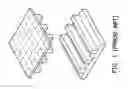
FIG. 1 shows the structure diagram of the PDP rib disclosed by NEC;
FIGS. 2A to 2E show the 3-D cross-sectional flow charts of the first method of forming a partition wall structure;
FIG. 3A shows the schematic diagram of the assembly of partial structure of the front and back substrates of PDP of the present invention;
FIG. 3B shows the cross-section along A-A′ after FIG. 3A is assembled;
FIGS. 4A to 4B show 3-D cross-sectional flow charts of the second method of forming a partition wall structure;
FIGS. 5A to 5C show 3-D cross-sectional flow charts of the third method of forming a partition wall structure;
FIGS. 6A to 6D show 3-D cross-sectional flow charts of the fourth method of forming a partition wall structure.
EMBODIMENTSFIG. 3A shows the schematic diagram of the assembly of partial structure of the front and back substrates of PDP. FIG. 3B shows the cross-sectional view along A-A′ after FIG. 3A is assembled.
Refer to FIGS. 3A and 3B, the plasma display panel disclosed by the present invention includes a first substrate 300 and a second substrate 304 parallel to the first substrate 300, thereby forming a discharging space between the first substrate 300 and the second substrate 304. A partition wall structure is formed on the first substrate and a plurality of column-shaped protrusions 312 on the second substrate 304, and an air-pump hole 316 formed on the second substrate.
The partition wall structure 302 on the first substrate includes a plurality of first stripe ribs 3021 and a plurality of second stripe ribs 3022, the plurality of first stripe ribs 3021 define the discharging space to become a plurality of row discharging space 308; each of the second stripe ribs 3022 crosses each of the first stripe ribs 3021, in every row discharging space 308, each of the second stripe ribs 3022 has a cut 306 so that gas can flow through the row discharging space through the cut 306.
The plurality of column-shaped protrusions 312 on the second substrate is formed at the positions corresponding to the cuts on the first substrate; and the height of the column-shaped protrusions, H2 is smaller than the depth of the cuts, H1.
Therefore (refer to FIG. 3B), when the first substrate 300 and the second substrate 304 combine, the column-shaped protrusions 312 on the second substrate 304 embeds into the cuts 306 of the first substrate 300 and there will be a channel 314 in the cut 306 so that gas can flow through the row discharging space through channel 314.
The manufacturing method of the plasma display panel provided by the present invention includes the following steps:
-
- (1) Providing a first substrate 300, which has an air-pump hole 316 on the first substrate 300.
- (2) Forming a plurality of stripe-shaped electrodes (not shown in FIG. 3A to 3B) on the first substrate, each of the stripe-shaped electrodes is parallel to a first direction.
- (3) Forming an overcoat layer (not shown in FIG. 3A to 3B) on the stripe-shaped electrodes and the first substrate 300.
- (4) Providing a second substrate 304, the second substrate is parallel to the first substrate; there forms a discharging space between the first substrate and the second substrate, wherein the discharging space connects the air-pump hole.
- (5) Forming a partition wall structure 302 on the first substrate 300, the partition wall structure 302 includes a plurality of first stripe ribs 3021 and a plurality of second stripe ribs 3022, the plurality of the first stripe ribs. 3021 defines the discharging space to become a plurality of row discharging spaces 308, each of the second stripe ribs 3022 crosses each of the first stripe ribs 3021; and in every row discharging space 308, each of the second stripe ribs 3022 has a cut 306, the cut 306 of the second stripe ribs 3022 has a cut depth of H1 so that gas flows through the row discharging space 308 through the cuts 306.
- (6) Forming a plurality of column-shaped protrusions 312 on the second substrate 304, the column-shaped protrusions 312 are formed at positions corresponding to the cuts 306 of the first substrate 300, the column-shaped protrusions 312 have heights of H2, the height H2 is smaller than the cut height H1.
- (7) Combining the edge of the first substrate 300 and the edge of the second substrate 304 to conceal the discharging space so that the column-shaped protrusions 312 on the second substrate 304 embed into the cuts 306 of the first substrate, leaving a channel 314 in the cut 306 so that gas can flow through the row discharging space through the channel 314.
- (8) Pumping air out of the discharging space through the air-pump hole 316, so that the gas in the row discharging space 308 is pumped out from the air-pump hole 316 through the channel 314 out of the discharging space.
The manufacturing process of the column-shaped protrusions 312 can be: before coating the surface protective layer (MgO) on the second substrate 304, using mesh-printing process or photolithography to form column-shaped protruding objects on the second substrate 304 semi-product surface; after coating the MgO, the column-shaped protrusions 312 is formed at the positions of the protruding objects corresponding to the cuts 306.
In this embodiment, the individual pixel discharging space is isolated by first stripe ribs 3021 and second stripe ribs 3022. Only channel 314 connects to the individual pixel discharging space belonging to the same row discharging space 308. Due to the limitations of height H2 of the column-shaped protrusions, the distance between channel 314 and the front substrate 304 is at least H2. Since the place closed to the surface of the front substrate 304 by the individual discharging space is isolated by column-shaped protrusion 312, the cross-talk between different pixels when front substrate X-Y electrode drives gas back and forth during the driving signal sustain period is reduced. However, the protrusions can be eliminated, and individual pixels can also be isolated by the first stripe rib 302, or the second stripe 3022, the cross-talk between different pixels can also be reduced. There are four following manufacturing methods in forming grid-mesh shaped ribs on the first substrate (back substrate).
[First Method]
FIGS. 2A to 2E show the 3-D cross-sectional flow charts of the manufacturing method of the partition wall structure according to the present invention.
First, a substrate is provided. A plurality of stripe electrodes 202 is formed on the substrate. Each of the stripe electrodes is parallel to a first direction (shown by arrow D). To simplify the description in this embodiment, only two-stripe electrodes are shown.
Next, an overcoat layer 204 is formed on the stripe electrodes 202 and the substrate 200 as shown in FIG. 2A.
Next, a shaping layer 206 is formed on the overcoat 204. The surface of the shaping layer includes a plurality of stripe protrusions 206a; each of the protrusions 206a is at the center of every two stripe electrodes 202 and is substantially parallel to the first direction.
In this embodiment, the shaping layer 206 of FIG. 2B has the two following manufacturing methods.
-
- (1) First method: print multi-layers (for example 7-8 layers) of paste on the overcoat layer 204 using full print, forming flat-top 206b after baking. Next, print 1-3 layers of paste using pattern print, forming the stripe protrusions 206a after baking.
- (2) Second method: print 1-3 layers of paste with pattern print; forming a plurality of stripe protrusion regions along the first direction after baking as the bottom of the stripe protrusion 206a. Perform full print, print multi-layers (for example 7-8 layers) of paste on overcoat layer 204 and stripe protrusion regions, forming a shaping layer as shown in FIG. 2B after baking.
After forming the shaping layer 206, form a dry photoresist layer on the shaping layer.
Next, expose and developing the dry photoresist layer to form the shading mask 208 on the shaping layer 206. The shading mask 208 as shown in FIG. 2C has the grid-mesh structure, the shading mask 208 includes a plurality of first stripe ribs 2081 and a plurality of second stripe ribs 2082; each of the first stripe ribs 2081 is parallel to the first direction and forms on a stripe protrusion 206a; each of the second stripe ribs 2082 is subtantially perpendicular to the first direction and forms on the plurality of stripe protrusions 206a and flat-top 206b.
Perform the sand blast process; remove the shaping layer 206 which is not covered by the shading mask 208 until the overcoat layer 204 is exposed to form grid-mesh shaped rib 212 (includes: a plurality of first stripe ribs 2121 and a plurality of second stripe ribs 2122) as shown in FIG. 2D.
After forming the rib, the shading mask 208 (i.e., the dry photoresist layer after exposure) is removed, then fluorescent body 210 is printed to form back substrate of PDP as shown in FIG. 2E. It should be noted that there are cuts 209 on each of the second stripe ribs 2122 of the rib 212.
Finally, assemble the back substrate and the front substrate, and then perform the subsequent process.
According to the method of the present invention, and refering to FIGS. 2C and 2E, varying the width L1 of the first stripe ribs 2081 and the width L2 of the second stripe ribs 2082 can adjust the thickness of the rib so to influence the effective size of the pixel to obtain an adequate opening ratio.
Further, refer to FIGS. 2C and 2E, varying the width L3 and height L4 of the flat-top 206b of the shaping layer 206 can control the width and depth of the cuts 209.
[Second Method]
FIGS. 4A to 4B show the 3-D cross-sectional flow chart of the second manufacturing method of the grid-mesh shaped rib.
First, a substrate 400 is provided. There forms a plurality of stripe electrodes 402 on the substrate 400. Each of the stripe electrodes 402 is parallel to a first direction (shown by arrow D). To simplify the description of this embodiment, only two stripe electrodes are shown.
Form an overcoat layer 404 on the stripe electrodes 402 and the substrate 400.
Next, form a grid-mesh-shaped shaping layer 406 on the overcoat layer 404 with pattern print to form the partition wall structure of PDP. As shown in FIG. 4A, the shaping layer 406 includes a plurality of first stripe ribs 406a and a plurality of second stripe ribs 406b. Each of the stripe ribs 406a is disposed between every two stripe electrodes 402, and is parallel to the first direction. Each of the second stripe ribs 406b is parallel to a second direction and substantially perpendicular to the first direction and crosses with the plurality of the stripe electrodes 402.
Furthermore, print multi-layers (for example 7-8 layers) of paste on the overcoat layer 404 with pattern print to form the shaping layer after baking. Since the height of the plurality of the stripe electrodes is lower, after pattern print multi-layers, the top of the second stripe ribs 406b of the shaping layer is an even surface.
Finally, a plurality of the third stripe ribs 407 is formed on the first stripe ribs 406a with pattern print. After baking, the third stripe ribs 407 become the top wall of the first stripe ribs 406a. Every two third stripe ribs 407 and any second stripe rib 406b constitute a cut so that when the front and back substrates assemble, gas can flow through row discharging space through the cuts.
The third stripe ribs 407 are formed by printing multi-layers of paste with pattern print and then baked.
[Third method]
FIGS. 5A to 5C show 3-D cross-sectional flow charts of the third manufacturing method of forming partition wall structures according to the present invention.
First, a substrate 500 is provided. There forms a plurality of stripe electrodes 502 on the substrate 500. Each of the stripe electrodes 502 is parallel to a first direction (shown by arrow D). To simplify the description in this embodiment, only two stripe electrodes are shown.
An overcoat layer 504 is formed on the plurality of stripe electrodes 502 and substrate. Then shaping layer 506 is formed on the overcoat layer 504, as shown in FIG. 5A. In this embodiment, full print is used to print multi-layers (for example 7-8 layers) of paste on the overcoat to form shaping layer 506 after baking.
A dry photoresist layer is formed on the shaping layer 506.
The dry photoresist layer is exposed to form a shading mask 508 on the shaping layer 506. As shown in FIG. 5B, the shading mask 508 includes a plurality of first stripe ribs 508, and a plurality of second stripe ribs 5082. Each of the first stripe ribs 5081 is parallel to the first direction and is on the shaping layer 506 between every two stripe electrodes 502. Each of the second stripe ribs 5082 is parallel to the second direction and is perpendicular to the first stripe ribs 5081. Each of the second stripe ribs 5082 forms a breaking rib CR between every two first stripe ribs 5081.
Finally, sand blast process is performed to remove the shaping layer 506 which is not covered by the shading mask 508, exposing the overcoat layer 504 to form a partition wall structure 512 (includes a plurality of the first stripe wall 5121 and a plurality of second stripe wall 5122) as shown in FIG. 5C. Since the width L7 of the breaking rib CR is smaller than the size of the grid-mesh-opening, the depth removed by the sand blast process is smaller than the depth removed in the grid-mesh-openings. Therefore, there is remaining shaping layer 506 in breaking rib CR. By the definition of the breaking rib CR, a cut 51.0 is formed on the rib.
According the method of the present invention, refer to FIGS. 5B and 5C, varying the width L5 of the first stripe rib 5081 and width L6 of the second stripe rib 5082, the size of grids of the rib 512 can be adjusted to obtain an adequate opening rate.
Furthermore, by varying the width L7 of the breaking rib, the size of the width of the cut 510 may be adjusted.
[Fourth Method]
FIGS. 6A to 6D show the 3-D cross-sectional flow charts of the fourth manufacturing method of forming a partition wall structure according to the present invention.
First, a substrate 600 is provided. A plurality of stripe electrodes 602 form there on substrate 600. Each of the stripe electrodes is parallel to a first direction (shown by arrow D). To simplify the description in this embodiment, only two stripe electrodes are shown.
An overcoat layer 604 is formed on the stripe electrodes 602 and the substrate 600.
A shaping layer 606 is formed on the overcoat layer 604, as shown in FIG. 6A. In this embodiment, a full print is used to print multi-layers (for example 7-8 layers) of paste on the overcoat layer 604 to form the shaping layer 606 after baking.
Next, grid-mesh-shaped photo-sensing shading layer 608 is formed on the shaping layer 606. As shown in FIG. 6B, the photo-sensing shading layer 608 includes a plurality of first stripe ribs 6081 and a plurality of second stripe ribs 6082. Each of the first stripe ribs 6081 is on the shaping layer 606 between every two stripe electrodes 602 and is parallel to the first direction. Each of the second stripe ribs 6082 is parallel to a second direction and is substantially perpendicular to the first direction. The height of the first stripe ribs is larger than the height of the second stripe ribs.
The material of the photo-sensing layer 608 is constituted by the photo-sensing substance and paste. Furthermore, in this embodiment, the photo-sensing shading layer 608 may be made by the two following methods.
-
- (1) First method: Pattern print is used to print multi-layers of grid-mesh-shaped photo-sensing shading layer on the shaping layer 606 to form the bottoms of the first stripe ribs 6081 and the second stripe ribs 6082. Pattern print is then used again to print a stripe-shaped second photo-sensing layer on the first photo-sensing shading layer along the first direction to form the top of the first stripe ribs 6081 so as to form the photo-sensing shading layer as shown in FIG. 6B.
- (2) Second method: Pattern print is used to print multi-layers of stripe-shaped photo-sensing shading layers on the shaping layer along the first direction to form the bottom of the first stripe rib 6081. The pattern print is then used to print multi-layers of grid-mesh-shaped first photo-sensing shading layers on the second photo-sensing shading layer to form the photo-sensing shading layer 608 as shown in FIG. 6B.
Next, the photo-sensing shading layer 608 is exposed to UV light to form the shading mask layer 610 on the shaping layer 606 as shown in FIG. 6C.
Finally, the sand blast process is performed to remove the shaping layer 606 which is not covered by the shading mask 610 to expose the overcoat 604 to form a partition wall structure as shown in FIG. 6D.
From the above four manufacturing methods for the rib, the present invention has the following advantages:
-
- (1) The manufacturing process of the invention only produces ribs on the back substrate, so during the assembly, the alignment of the front and back substrate is easier than that disclosed by NEC.
- (2) The opening rib of the rib can be easily adjusted to obtain a better opening rate and increases the coating rib of the fluorescent body, thereby obtaining better luminance.
- (3) There are cuts on the ribs, so it is easy to perform the vacuum process and fill with gas during packing.
While the invention has been described by way of example and in terms of the preferred embodiment, it is to be understood that the invention is not limited to the disclosed embodiments. On the contrary, it is intended to cover various modifications and similar arrangements as would be apparent to those skilled in the art. Therefore, the scope of the appended claims should be accorded the broadest interpretation so as to encompass all such modifications and similar arrangements.
Claims
1-7. (canceled)
8. A method of manufacturing a partition wall structure on a plasma display panel having a first substrate, a plurality of stripe electrodes parallel to a first direction formed on the first substrate, and an overcoat layer on the stripe electrodes and the first substrate, comprising:
using pattern print to form grid-mesh-shaped shaping layer on the overcoat layer, the shaping layer includes a plurality of first stripe ribs and a plurality of second stripe ribs, each of the first stripe ribs is on the overcoat layer between every two stripe electrodes and is parallel to the first direction, each of the second stripe ribs is parallel to a second direction, and is perpendicular to the first direction; and
using pattern print to form a plurality of third stripe ribs on the shaping layer, each of the third stripe ribs is formed on every first stripe layer, thereby forming partition wall structure.
9. The method as claimed in claim 8, wherein the shaping layer is formed by using pattern print to print multi-layers of paste on the overcoat layer and after baking.
10. The method as claimed in claim 8, wherein the third stripe rib is formed by using pattern print to print multi-layers of stripe-shaped paste layers after baking.
11. A method of manufacturing a partition wall structure on a plasma display panel having a first substrate, a plurality of stripe electrodes parallel to a first direction formed on the first substrate, and an overcoat layer on the stripe electrodes and the first substrate, comprising:
forming a shaping layer on the overcoat layer;
forming a dry photoresist layer on the shaping layer;
exposing the dry photoresist layer to form a shading mask on the shaping layer, the shading mask includes a plurality of first stripe ribs and a plurality of second stripe ribs, each of the first stripe ribs is parallel to the first direction and is on the shaping layer between every two stripe electrodes, each of the second stripe ribs is parallel to the second direction and is perpendicular to every first stripe rib, each of the second stripe ribs crossing the stripe electrodes, forming breaking ribs to expose the shaping layer;
performing a sand blast process to remove the shaping layer exposed to the shading mask to expose the overcoat layer and form the partition wall structure; and
leaving remaining shaping layer in each of the breaking ribs.
12. The method as claimed in claim 11, wherein the shaping layer is formed by using solid print to print multi-layers of paste on the overcoat layer after baking.
13-16. (canceled)
Images & Drawings included:



Sources:
- United States Patent and Trademark Office - verify current appl. status at the USPTO↗
Similar patent applications:
- » 20060051708
Plasma display panel and manufacturing method thereof - » 20060061277
Plasma display panel and manufacturing method thereof - » 20050231114
Plasma display panel and manufacturing method thereof - » 20050234167
Dielectric/barrier rib composition for plasma display panel and manufacturing method thereof - » 10751644
Plasma display panel and manufacturing method thereof - » 10239107
Plasma display panel and manufacturing method thereof - » 10286918
Plasma display panel and manufacturing method thereof - » 20050148151
Plasma display panel and manufacturing method thereof - » 10629793
Plasma display panel and manufacturing method thereof where address electrodes are formed by depositing a liquid in concave grooves arranged in a substrate - » 20060071596
Plasma display panel and manufacturing method thereof
Recent applications in this class:
- » 20120180951 2012-07-19
Automatic spacers mounting system for field emission display and method of automatically mounting spacers - » 20110228203 2011-09-22
DISPLAY DEVICE PROVIDED WITH SPACER PARTICLES AND METHOD OF MANUFACTURING THE SAME - » 20110181499 2011-07-28
LIGHT EMISSION DISPLAY DEVICE PARTITION, PLASMA DISPLAY DEVICE, LIGHT EMISSION DISPLAY DEVICE, AND METHOD FOR MANUFACTURING LIGHT EMISSION DISPLAY DEVICE PARTITION - » 20110009025 2011-01-13
Method for manufacturing image display apparatus - » 20100146767 2010-06-17
MANUFACTURING METHOD FOR IMAGE DISPLAY APPARATUS - » 20100019653 2010-01-28
Electron emission display and method of fabricating the same - » 20100008026 2010-01-14
Flat panel display apparatus and method of manufacturing the same - » 20090298375 2009-12-03
Method of forming spacer - » 20090270006 2009-10-29
Method of manufacturing image displaying apparatus - » 20090233512 2009-09-17
Method For Producing Barrier Rib Substrate For Plasma Display Panel
Recent applications for this Assignee:
- » 20230262206 2023-08-17
Naked-eye stereoscopic display system and display method thereof - » 20230253379 2023-08-10
Display apparatus - » 20230234055 2023-07-27
OPTOELECTRONIC TWEEZER DEVICE AND FABRICATION METHOD THEREOF - » 20230223674 2023-07-13
Antenna module and display apparatus - » 20230197917 2023-06-22
DISPLAY APPARATUS - » 20230187457 2023-06-15
Display panel - » 20230187417 2023-06-15
Display panel including opaque encapsulation and doped planarization layers and manufacturing method thereof - » 20230143881 2023-05-11
Display panel - » 20230140381 2023-05-04
Stretchable display panel - » 20230137029 2023-05-04
PHOTOSENSITIVE DEVICE