Calibration pixels for image sensor
US20060152610A1
2006-07-13
11/332,700
2006-01-12
✅ Patent granted
US 7,612,802 B2
2009-11-03
-
-
James M Hannett
2027-08-26
Abstract:
An imaging apparatus for capturing a still or moving picture is disclosed. The imaging apparatus includes a substrate and an aperture. The substrate includes an imaging array and a pixel. The aperture exposes the imaging array to radiation. The pixel is isolated from radiation passing though the aperture. In some embodiments, the radiation gathered by the pixel can be used to improve the still or moving picture captured by the imaging apparatus.
Assignee:
- SAMSUNG ELECTRONICS CO., LTD. 16,784 🇰🇷 Gyeonggi-Do, South Korea
- TransChip, Inc. 21 🇮🇱 Ramat-Gan, Israel
Interested in similar patents?
Get notified when new applications in this technology area are published.
Classification:
H04N5/2351 » CPC main
Details of television systems; Studio circuitry; Studio devices; Studio equipment ; Cameras comprising an electronic image sensor, e.g. digital cameras, video cameras, TV cameras, video cameras, camcorders, webcams, camera modules for embedding in other devices, e.g. mobile phones, computers or vehicles; Television cameras ; Cameras comprising an electronic image sensor, e.g. digital cameras, video cameras, camcorders, webcams, camera modules specially adapted for being embedded in other devices, e.g. mobile phones, computers or vehicles; Circuitry for compensating for variation in the brightness of the object Circuitry for evaluating the brightness variations of the object
H04N5/232 » CPC further
Details of television systems; Studio circuitry; Studio devices; Studio equipment ; Cameras comprising an electronic image sensor, e.g. digital cameras, video cameras, TV cameras, video cameras, camcorders, webcams, camera modules for embedding in other devices, e.g. mobile phones, computers or vehicles; Television cameras ; Cameras comprising an electronic image sensor, e.g. digital cameras, video cameras, camcorders, webcams, camera modules specially adapted for being embedded in other devices, e.g. mobile phones, computers or vehicles Devices for controlling television cameras, e.g. remote control ; Control of cameras comprising an electronic image sensor
H04N5/335 IPC
Details of television systems; Transforming light or analogous information into electric information using solid-state image sensors [SSIS]
H04N5/225 IPC
Details of television systems; Studio circuitry; Studio devices; Studio equipment ; Cameras comprising an electronic image sensor, e.g. digital cameras, video cameras, TV cameras, video cameras, camcorders, webcams, camera modules for embedding in other devices, e.g. mobile phones, computers or vehicles Television cameras ; Cameras comprising an electronic image sensor, e.g. digital cameras, video cameras, camcorders, webcams, camera modules specially adapted for being embedded in other devices, e.g. mobile phones, computers or vehicles
H04N5/247 IPC
Details of television systems; Studio circuitry; Studio devices; Studio equipment ; Cameras comprising an electronic image sensor, e.g. digital cameras, video cameras, TV cameras, video cameras, camcorders, webcams, camera modules for embedding in other devices, e.g. mobile phones, computers or vehicles; Television cameras ; Cameras comprising an electronic image sensor, e.g. digital cameras, video cameras, camcorders, webcams, camera modules specially adapted for being embedded in other devices, e.g. mobile phones, computers or vehicles Arrangements of television cameras
Description
This application claims the benefit of and is a non-provisional of U.S. (Provisional) Application Serial No. 60/644,118 filed on Jan. 13, 2005, which is assigned to the assigner hereof and hereby expressly incorporated by reference in its entirety for all purposes.
This application incorporates by reference U.S. Application Ser. No. 60/609,195, filed on Sep. 9, 2004, entitled “Imager Flicker Compensation;” and U.S. application Ser. No. 10/474,798, filed on Oct. 8, 2003, entitled “CMOS Imager for Cellular Applications and Methods of Using Such;” each in their entirety for all purposes.
BACKGROUNDThis disclosure relates in general to image capture systems and, but not by way of limitation, to digital image capture using an imaging array.
Conventional CMOS Image sensors accumulate statistics from light incident on the image array pixels. The light incident on the image array pixels typically passes through a lens. These pixels are used to gather statistical information that is used for a variety of conventional image control algorithms, most notably:
-
- White Balance correction—adjusting the image color response to the spectrum of the light source.
- Automatic Exposure/Gain Setting—increasing the exposure time and/or the gain so as to get higher contrast when there is not enough light, and to avoid saturation when there is too much light.
- Backlight Compensation—increasing the contrast of a dark object of interest, when it is posed against a bright background.
- Automatic Flicker Control—detection and correction of flicker phenomena, occurring when the frequency light source fluctuations is different from the scanning frequency of the camera.
- Automatic Focus—moving the lens toward or away from the image sensor, so that the object of interest would be in focus.
- Automatic Flash Control—controls the need to fire flash or other illumination means (auxiliary light source) in low light conditions, as well as the strength and/or duration of the auxiliary light source.
The common denominator to all the algorithms described above is that the source of the information is the captured image (i.e., the field of view visible through the lens); and, out of that, the objects which are in focus on the image sensor array. This captured image is the input that these algorithms use to perform the above algorithms.
Camera or imaging modules are being embedded into all kinds of devices, for example, phones and computer displays. The quality of these camera modules continues to advance. The camera module includes an image sensor and digital processing of the information gathered from that image sensor. A processed digital signal is produced by the camera module to convey the digital pictures, video and/or control information with the device embedding the camera module.
BRIEF DESCRIPTION OF THE DRAWINGSThe present disclosure is described in conjunction with the appended figures:
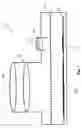
FIG. 1 depicts a block diagram of an embodiment of an imaging system;
FIG. 2 depicts a block diagram of an embodiment of the imaging system that extends the optical path of special pixels;
FIG. 3 depicts a block diagram of an embodiment of a substrate;
FIG. 4 depicts a block diagram of another embodiment of the substrate that includes two calibration pixels that may or may not be optically isolated from each other;
FIG. 5 depicts a block diagram of yet another embodiment of the substrate that has three calibration pixels in different locations; and
FIG. 6 depicts a block diagram of still another embodiment of the substrate that uses an array or line of calibration pixels.
In the appended figures, similar components and/or features may have the same reference label. Where the reference label is used in the specification, the description is applicable to any one of the similar components having the same reference label.
DETAILED DESCRIPTIONThe ensuing description provides preferred exemplary embodiment(s) only, and is not intended to limit the scope, applicability or configuration of the disclosure. Rather, the ensuing description of the preferred exemplary embodiment(s) will provide those skilled in the art with an enabling description for implementing a preferred exemplary embodiment. It being understood that various changes may be made in the function and arrangement of elements without departing from the spirit and scope as set forth in the appended claims.
Specific details are given in the following description to provide a thorough understanding of the embodiments. However, it will be understood by one of ordinary skill in the art that the embodiments may be practiced without these specific details. For example, circuits may be shown in block diagrams in order not to obscure the embodiments in unnecessary detail. In other instances, well-known circuits, processes, algorithms, structures, and techniques may be shown without unnecessary detail in order to avoid obscuring the embodiments.
Furthermore, portions of embodiments may be implemented by hardware, software, firmware, middleware, microcode, hardware description languages, or any combination thereof. When implemented in software, firmware, middleware or microcode, the program code or code segments to perform the necessary tasks may be stored in a machine readable medium such as storage medium. A processor(s) may perform the necessary tasks.
Many algorithms performed in a camera or imaging module could use global scene information, on top of or instead of the information conveyed through the lens. In particular:
-
- White balance could be done using global scene information if the source of the information would consist of ambient light, rather than information available in the conventional method (as is generally the case in through-the-lens white balance).
- Automatic exposure could be done using global scene information if the algorithm “knows” what the total illumination in the scene is. For example, on a cloudy day we want the objects in the scene to look darker. Conventional through-the-lens algorithms increase their brightness on a cloudy day so the image would look bright and shiny.
- Backlight compensation may be avoided in one embodiment if the exposure is adjusted according to the scene average rather than the limited field of view image average available with through-the-lens algorithms. By comparing the content of the active pixels (through-the-lens field of view) to the scene average, we can determine backlight compensation more accurately by modeling the human eye.
- Flicker is much easier detected if temporal variation of the light source is determined in one embodiment rather than using only the reflected image as is done with through-the-lens algorithms.
- Automatic Flash control may benefit from one or more calibration pixels in a number of ways, such as:
- Measuring illumination level to decide to apply auxiliary light source or not.
- During frame capture when auxiliary light source is active, calibration pixels may collect the light coming from illuminated scene and report when the enough light was collected to turn the auxiliary light source off. This can be implemented by using a programmable controller that reads the value of special pixels; or the output of special pixels can be connected to the auxiliary light source switch through a decision circuit.
In one embodiment, special or calibration pixels 128 are implemented in order to provide additional metering of scene properties. Calibration pixels 128 are optically-isolated pixels located on the same chip or substrate 124 as the active pixels of the image array 132. The light radiation that is incident on these calibration pixel(s) 128 travels through different optical channel 112 than the light radiation incident on the active pixel array 132, as shown in FIG. 1. The radiation incident on the active pixel array 132 travels through an optical channel 104 that uses a lens 108. These calibration pixels 128 may have different design, optical and electrical properties. In one embodiment, the optical channel 112 for the calibration pixel 128 does not use a lens, but does use a diffuser 116.
In this embodiment, the active pixel array 132 and the calibration pixels 128 are monolithically integrated into the same substrate 124. This substrate 124 may also include analog processing circuits 304 and/or digital signal processing circuits 308 in other embodiments, as shown in FIG. 3 through FIG. 6. An alternative embodiment adds either the active pixel array 132 or the calibration pixels 128 to a substrate 124 containing the other. For example, a hybrid chip could be formed by bonding the calibration pixels 128 to a substrate 124 containing the active pixel array 132, or vice versa. An IR cut filter 120 may be part of the camera module 100 to filter one or both optical paths 104, 112.
The individual optical path 112 for the calibration pixel(s) 128 may be extended to approximately a height of the sensor lens height, as depicted on FIG. 2. An optical fiber(s) or optical waveguide 204 can be employed to guide the light to the calibration pixel(s) 128. This alternative embodiment can be used when designing an imaging module 200 to be integrated in an application where the lens 108 and diffuser surface are largely flat, such as a mobile phone. The diffuser 116, in one embodiment, is formed by scuffing or scratching one end of the optical fiber 204.
There could be a number of calibration pixels 612 arranged in a line or array in various embodiments. For example, FIG. 6 shows use of an array of calibration pixels 612. Another embodiment could have calibration pixels 612 arranged in a line. There could be multiple lines or arrays of calibration pixels 612 placed together or scattered on the substrate 124. Some embodiments could have some single calibration pixels 128 and arrays 612 variously placed on the substrate 124, with or without isolation of radiation from each other.
Special pixels 128 may or may not be designed to include color filters, so there will be different color types of special pixels 128. Differently colored special pixels 128 may provide spectral information of the illumination present in the scene. The color filters used on special pixels 128 may be equivalent to normal pixels, or be extended to include additional color ranges (not just 3 or 4 different colors—but more, say 8 to 10).
The special or calibration pixels 128 can be used for a variety of functions. Various embodiments could use the calibration pixels 128 for one or more of the following, for example:
-
- 1. Measuring of the ambient illumination strength.
- 2. Measuring of spectral components of the illumination.
- 3. Measuring of the illumination signal, e.g. fluorescent light periodic response.
- 4. Measuring of the collected light amount, for mechanical shutter control, flash duration etc.
There can be different calibration pixels 128 to measure different parameters. Some could be optimized one function, while others are optimized for another. Some embodiments could have multiple groups of calibration pixels 612 that are optically isolated from each other or not. The groups 612 could measure different parameters using different lenses, diffusers, optical waveguides, and/or filters. Some embodiments could have groups of pixels 128 assigned to different parts of the image by use of lenses. For example, FIG. 4 and FIG. 5 respectively show use of two or three different groups of calibration pixels 128 that may or may not be optically isolated from each other and could use different lenses to focus on different parts of the image.
Various embodiments could exhibit one or more of the following:
-
- 1. Actual metering of the ambient illumination strength, not the reflected light. This may be employed by automatic exposure algorithms to distinguish between a dark object under strong illumination of a bright object under weak lighting.
- 2. Metering of the actual illumination spectrum. This can be used by automatic white balance to cancel out the effect of illumination type. Wider (and finer) spectral coverage (by using more than 3 or 4 different color-filters) can be used to identify the illuminant type more accurately—thus possibly better White Balance algorithm performance.
- 3. If these pixels are read out every row (or several rows), it will enable passive flicker estimation and cancellation, such as that described in U.S. application Ser. No. 10/474,798, filed on Oct. 8, 2003, entitled “CMOS Imager for Cellular Applications and Methods of Using Such.”
- 4. If these calibration pixels are read out every row (or several rows) it will enable active flicker estimation and even compensation, such as that described in U.S. Application Serial No. 60/609,195, filed on Sep. 9, 2004, entitled “Imager Flicker Compensation.”
- 5. Flash/mechanical shutter duration may be also controlled by the values of these pixels.
- 6. Automatic algorithms may be simplified, reduce software code size and improve robustness in one embodiment. The parameter tuning is also simplified, contributing to time-to-market and uniformity between software for different chips.
A number of variations and modifications of the disclosed embodiments can also be used. For example, some embodiments separate the diffuser from the substrate, but others could bond or form the diffuser directly onto the substrate. The special pixels could be separated some distance from the active pixels or could be immediately adjacent.
The techniques described herein may be implemented by various means. For example, these techniques may be implemented in hardware, software, or a combination thereof. For a hardware implementation, the processing units may be implemented within one or more application specific integrated circuits (ASICs), digital signal processors (DSPs), digital signal processing devices (DSPDs), programmable logic devices (PLDs), field programmable gate arrays (FPGAs), processors, controllers, micro-controllers, microprocessors, other electronic units designed to perform the functions described herein, or a combination thereof.
For a software implementation, the techniques, processes and functions described herein may be implemented with modules (e.g., procedures, functions, and so on) that perform the functions described herein. The software codes may be stored in memory units and executed by processors. The memory unit may be implemented within the processor or external to the processor, in which case it can be communicatively coupled to the processor via various means as is known in the art.
While the principles of the disclosure have been described above in connection with specific apparatuses and methods, it is to be clearly understood that this description is made only by way of example and not as limitation on the scope of the disclosure.
Claims
What is claimed is:1. An imaging apparatus for capturing a still or moving picture, the imaging apparatus comprising:
a substrate comprising:
an imaging array, and
a pixel;
an aperture exposing the imaging array to radiation, wherein:
the pixel is isolated from radiation passing though the aperture, and
the imaging array and the pixel are part of the substrate.
2. The imaging apparatus for capturing the still or moving picture as recited in claim 1, wherein the substrate is substantially comprised of semiconductor material.
3. The imaging apparatus for capturing the still or moving picture as recited in claim 1, wherein the pixel is used indirectly in improve the still or moving picture sensed by the imaging array.
4. The imaging apparatus for capturing the still or moving picture as recited in claim 1, wherein the imaging array and the pixel are a monolithic part of the substrate.
5. The imaging apparatus for capturing the still or moving picture as recited in claim 1, further comprising a second aperture coupling radiation to the pixel.
6. The imaging apparatus for capturing the still or moving picture as recited in claim 1, further comprising a second aperture that is isolated from the imaging array.
7. The imaging apparatus for capturing the still or moving picture as recited in claim 1, further comprising a lens that is optically coupled with the aperture.
8. The imaging apparatus for capturing the still or moving picture as recited in claim 1, wherein the substrate further comprises digital signal processing circuitry that processes information produced by at least one of the imaging array or the pixel.
9. The imaging apparatus for capturing the still or moving picture as recited in claim 1, further comprising a diffuser, wherein the diffuser optically couples the pixel with the radiation.
10. The imaging apparatus for capturing the still or moving picture as recited in claim 1, further comprising an optical fiber guide, wherein the optical fiber guide optically couples the pixel with the radiation.
11. The imaging apparatus for capturing the still or moving picture as recited in claim 1, further comprising a plurality of pixels isolated from the radiation passing through the aperture, wherein the pixel is part of the plurality of pixels.
12. The imaging apparatus for capturing the still or moving picture as recited in claim 1, wherein the pixel affects information gathered by the imaging array.
13. The imaging apparatus for capturing the still or moving picture as recited in claim 1, wherein the pixel does not form an image pixel in an image produced by the imaging sensor.
14. An imaging module for capturing still or moving pictures, the imaging module comprising:
an imaging array;
a pixel;
a first aperture exposing at least the imaging array to radiation, wherein:
the pixel is isolated from radiation passing though the first aperture, and
the imaging array and the pixel are coupled together by a substrate; and
a second aperture exposing at least the pixel to radiation.
15. The imaging module for capturing still or moving pictures as recited in claim 14, wherein the pixel is used indirectly in improve the still or moving picture sensed by the imaging array.
16. The imaging module for capturing still or moving pictures as recited in claim 14, wherein the substrate further comprises digital signal processing circuitry that processes information produced by at least one of the imaging array or the pixel.
17. The imaging module for capturing still or moving pictures as recited in claim 14, wherein the pixel is part of a plurality of pixels grouped together.
18. The imaging module for capturing still or moving pictures as recited in claim 14, wherein the pixel affects information gathered by the imaging array.
19. A method for capturing still or moving pictures, the method comprising steps of:
receiving first radiation from a first aperture with an imaging array;
receiving second radiation from a second aperture with a pixel, wherein:
the second radiation is isolated from the imaging array, and
the imaging array and the pixel are coupled together by a substrate; and
capturing a still or moving picture with the imaging array,
processing information from the imaging array to produce a final still or moving picture affected by the second radiation.
20. The method for capturing still or moving pictures as recited in claim 19, further comprising a step of capturing radiation from a broader part of a visible scene with the pixel than is captured by any imaging array pixel.
Images & Drawings included:



Sources:
- United States Patent and Trademark Office - verify current appl. status at the USPTO↗
Similar patent applications:
- » 20220191423
Digitally-calibrated CTIA image sensor pixel - » 20190206086
Image sensors with calibrated phase detection pixels - » 20130222608
Imaging sensor anomalous pixel column detection and calibration - » 20230282673
IMAGE SENSOR, METHOD OF FORMING PIXEL, PIXEL READOUT CIRCUIT AND CALIBRATION METHOD - » 15850936
Global shutter image sensor with anti-blooming pixel and knee point self-calibration
Recent applications in this class:
- » 20230308765 2023-09-28
Image glare reduction - » 20230164445 2023-05-25
Auto adjusted light source - » 20230110707 2023-04-13
Color night vision through the spatial filtering of TOLED technology - » 20230100077 2023-03-30
Method and apparatus for automatic exposure - » 20230099807 2023-03-30
Ambient light sensing - » 20230077645 2023-03-16
INTERCHANGEABLE LENS AND IMAGE PICKUP APPARATUS - » 20230067669 2023-03-02
IMAGING DEVICE - » 20230067332 2023-03-02
IMAGE CAPTURING APPARATUS, CONTROL METHOD OF IMAGE CAPTURING APPARATUS, AND STORAGE MEDIUM - » 20230058934 2023-02-23
Method for camera control, image signal processor and device - » 20230049522 2023-02-16
Vehicle lighting control using image processing of changes in ambient light intensity
Recent applications for this Assignee:
- » 20250291489 2025-09-18
MEMORY DEVICE, MEMORY CONTROL DEVICE AND OPERATING METHOD OF MEMORY DEVICE FOR CHECKING COMMAND AND ADDRESS (CA) SIGNAL WITH PREDETERMINED PATTERN OF COMMAND - » 20250273015 2025-08-28
ELECTRONIC DEVICE GUIDING USER TOUCH INPUT AND METHOD FOR CONTROLLING THE SAME - » 20250265676 2025-08-21
ELECTRONIC APPARATUS AND CONTROLLING METHOD THEREOF - » 20250239461 2025-07-24
ETCHING GAS MIXTURE AND METHOD OF MANUFACTURING INTEGRATED CIRCUIT DEVICE USING THE SAME - » 20250199742 2025-06-19
ELECTRONIC DEVICE AND METHOD FOR CONTROLLING DISPLAY OF AT LEAST ONE EXTERNAL OBJECT AMONG ONE OR MORE EXTERNAL OBJECTS - » 20250199359 2025-06-19
CONNECTOR, PRINTED CIRCUIT BOARD MOUNTING THE CONNECTOR, AND DISPLAY APPARATUS INCLUDING THE SAME - » 20250174585 2025-05-29
SEMICONDUCTOR DIE AND SEMICONDUCTOR PACKAGE INCLUDING THE SAME - » 20250125179 2025-04-17
MICRO-SEMICONDUCTOR CHIP WETTING ALIGNMENT APPARATUS - » 20250103556 2025-03-27
FILE PROCESSING METHOD, ELECTRONIC APPARATUS AND STORAGE MEDIUM - » 20250069239 2025-02-27
ELECTRONIC DEVICE, METHOD, AND STORAGE MEDIUM FOR OBTAINING IMAGE FOR TRACKING