MBMS PtP and PtM channel change
US20060154627A1
2006-07-13
10/525,144
2003-08-14
✅ Patent granted
US 7,509,127 B2
2009-03-24
WO; PCT/KR03/01649; 20030814
WO; WO2004/017580; 20040226
Duc Nguyen | Dominic E Rego
2023-10-06
Abstract:
A channel type switching method for MBMS P-t-P channel and P-t-M channel comprises following steps when UE moves to a cell in DRNC and Iur interface exists: DRNC decides to perform switching between common channel and dedicated channel; DRNC notifies SRNC of MBMS channel type and common channel parameters. This invention solves the problem of MBMS channel switching process when UTE moves to a cell in DRNC and UE is receiving MBMS service under the situation that SRNC doesn't re-position while and MBMS channel type or parameter changes; it also solves the problem of MBMS channel type switching process caused by other users' movements or new services' joining in while UE doesn't move, connects with SRNC via DRNC and has on-going MBMS service.
Inventors:
- Hong WANG 572 🇨🇳 Beijing, China
- Xiaoqiang Li 83 🇨🇳 Beijing, China
- Chunying SUN 24 🇨🇳 Beijing, China
- Detao Li 5 🇨🇳 Beijing, China
Assignee:
- Samsung Electronics Co., Ltd 16,186 🇰🇷 , South Korea
- Beljing Samsung Telecom R&D Center 1 🇨🇳 , China
Interested in similar patents?
Get notified when new applications in this technology area are published.
Classification:
H04L12/189 » CPC main
Data switching networks; Details; Arrangements for providing special services to substations for broadcast or conference, e.g. multicast in combination with wireless systems
H04W36/0007 » CPC further
Hand-off or reselection arrangements; Control or signalling for completing the hand-off for multicast or broadcast services, e.g. MBMS
H04W36/10 » CPC further
Hand-off or reselection arrangements Reselecting an access point controller
H04W36/125 » CPC further
Hand-off or reselection arrangements; Reselecting a serving backbone network switching or routing node involving different types of service backbone
H04W4/06 » CPC further
Services specially adapted for wireless communication networks; Facilities therefor Selective distribution of broadcast services, e.g. multimedia broadcast multicast service [MBMS]; Services to user groups; One-way selective calling services
G06F3/033 IPC
Input arrangements for transferring data to be processed into a form capable of being handled by the computer; Output arrangements for transferring data from processing unit to output unit, e.g. interface arrangements; Input arrangements or combined input and output arrangements for interaction between user and computer; Arrangements for converting the position or the displacement of a member into a coded form Pointing devices displaced or positioned by the user, e.g. mice, trackballs, pens or joysticks ; Accessories therefor
Description
BACKGROUND OF THE INVENTION1. Field of the Invention
The present invention relates to a multimedia broadcast and multicast services, more particularly to a channel switching methods of Multimedia Broadcast and Multicast P-t-P and P-t-M channel.
2. Description of the Prior Art
Multimedia Broadcast and Multicast Service (hereinafter referred to as MBMS) is new P-t-M service in 3rd generation mobile communication. The type of the channel used by MBMS can be P-t-P channel or P-t-M channel according to the number of service users. In current P-t-P service mechanism, when a user moves to a new cell, the channel used by him/her handovers from the source cell to the destination cell. Existing channel handovers are all based on P-t-P channel and the channel characteristics don't change. In MBMS service, the changing cell may result in-changes of channel characteristics.
To better explain this patent, MBMS system structure is illustrated in FIG. 9.
MBMS network structure adds new network elements based on the core network of General Packet Radio Service (hereinafter referred to as GPRS). 01 Broadcast and multicast service centre (hereinafter referred to as BM-SC) is the service control centre of MBMS system. 02 Gateway GPRS Supporting Node (hereinafter referred to as GGSN) and 03 Service GPRS Supporting Node (hereinafter referred to as SGSN) consist of the transmission network of MBMS service and provide route for data transfer. 06 Home Location Register (hereinafter referred to as HLR) stores the user-related data and can provide services like user authentication. 04UMTS Terrestrial Radio Access Network (hereinafter referred to as UTRAN) provides radio resources for MBMS service in air interface. 07Uu denotes the radio interface between terminal and radio access network. 05 User Equipment (hereinafter referred to as UE) is the terminal device receiving data. Radio resources used by MBMS service are not dedicated for one user, but are shared by all users using this service.
In conventional system, it is due to Serving RNC (hereinafter referred to as SRNC) to decide whether to do the SRNC relocation when the user in the system handover between cells in different RNCs but in the same SGSN. If SRNC relocation is not performed, data and signalling stream are transferred to Drift RNC (hereinafter referred to as DRNC) via Iur interface, and then transferred to UE from DRNC. In handover procedure, different processes are taken according to different radio connection status that the user stays in.
In Idle, CELL_FACH, CELL_PCH and URA_PCH statuses, when UE moves from one cell in SRNC to a cell in another RNC, the destination RNC is called as DRNC. UE will send “cell update” message to DRNC, and DRNC transfers it to SRNC via Iur interface, then SRNC will communicate with DRNC to obtain common resource information of the cell in DRNC to notify UE of this information. FIG. 7 illustrates the cell update process, which is as follows:
- 601 After UE re-selects a cell, it sends a cell update message to DRNC.
- 602 DRNC allocates a D-RNTI to UE and then sends a uplink signalling transfer indication message to SRNC.
- 603 SRNC decides not to do SRNC relocation and sends a common transport channel resource request message to DRNC.
- 604 DRNC informs SRNC the information on common channel through the message of common transport channel resource response.
- 605 SRNC sets up data bearer on Iur interface.
- 606 SRNC sends a cell update confirmation message to UE to inform UE common information of the new cell and new UE identifier.
- 607 UE responds to SRNC to complete the cell update process.
- 608 SRNC deletes the user's resources on the original cell.
In CELL_DCH status, UE moves to a cell in another RNC. SRNC decides to handover to another cell according to the measurement reported by UE and notifies DRNC of dedicated radio link configurations. After DRNC completes configuring, SRNC is informed to notify UE of the radio link situation after UE handover. FIG. 8 illustrates the cell handover process under this status.
- 701 SRNC decides to set up a new dedicated radio link for the UE in the new cell of DRNC. SRNC sends a radio link setup request message to DRNC and informs DRNC of dedicated channel information.
- 702-703 DRNC set up a new radio dedicated link.
- 704 DRNC sends a radio link setup response message to SRNC.
- 705 set up Iur interface and Iub interface data bearer.
- 706-707 Synchronize data frame.
- 706-708 SRNC notifies UE to add a new dedicated link.
In conventional system, RRC signalling between UTE and RNC and user data are all sent to DRNC via SRNC, then DRNC sends them to user.
In conventional system, the user's signaling and data are all sent to DRNC via SRNC, and then DRNC sends them to user: The type of channels used by user before and after handover won't be changed. For example, switch from dedicated channel to dedicated channel. MBMS is a new P-t-M service. MBMS service can, use P-t-P channel or P-t-M channel for data transfer. RNC determines the channel type according to the number of users applying for the same kind of MBMS service in a cell. When the number of users using the same kind of MBMS service is small, MBMS channel type is P-t-P channel; when the user number for this service exceeds certain threshold, MBMS channel type is P-t-M channel.
Therefore, when user moves from a cell in SRNC to a cell in DRNC during the process of cell reselection, SRNC doesn't relocate. DRNC determines the type of MBMS channel according to the number of users applying for the same kind of MBMS service in the cell, which may result in the difference between MBMS channel types used by user before and after handover. So it is necessary to re-configure MBMS channel used by the user from P-t-P channel to P-t-M channel. Conventional handover technology hasn't relates to the situation.
After UE completes the above cell handover process, if the number of MBMS service 's users changes due to the cell users' moving in and moving out of the cell, or other users' joining in and leaving the same MBMS service, and the threshold of user number is exceeded, MBMS channel type will be changed. How to notify SRNC of MBMS channel's changes in the cell of SRNC and to let SRNC notify all users in the cell to re-configure MBMS channel hasn't been concerned in current technology.
RNC is responsible for counting the number users applying for MBMS service. If a handover is made from a cell in SRNC to the cell in DRNC During user's cell handover, SRNC re-positioning isn't performed, another problem to be solved is that SRNC needs to notify DRNC of the MBMS service type applied for by the user to make DRNC re-count the number of MBMS service users in the cell. As MBMS is a new service, the conventional handover mechanism is not completely applicable to MBMS service.
SUMMARY OF THE INVENTIONAccordingly, an object of the present invention is to provide a handover method of channel switching for MBMS service that the user is receiving when UE handovers to another RNC and SRNC doesn't re-position.
Another object of the invention is to provide a handover method for MBMS channel type switching when MBMS channel type changes due to other users' leaving or joining the same MBMS service, or moving in or out of the cell while UE doesn't move.
According to one aspect of the invention, a channel type switching method for MBMS point to point (P-t-P) and point to multi point (P-t-M) channel, when a UE having MBMS service moves to a cell in driving radio network controller (DRNC) which have a Iur interface between a serving radio network controller (SRNC), comprising the steps of:
DRNC deciding to perform switching channel type between common channel and dedicated channel based on the number of user having MBMS service in the cell;
DRNC notifying SRNC of MBMS channel type and channel parameters.
According to another aspect of the invention, a channel type switching method for multi media broadcast and multicast service (MBMS) point to point (P-t-P) and point to multi point (P-t-M) channel, in a radio network controller, comprising steps of:
checking the number of MBMS users in a cell when a user leaves from the on-going MBMS service;
determining the MBMS channel type according to the number of user having MBMS and a threshold; and
reporting the changes of MBMS channel type to a serving radio network controller (SRNC).
According to the other aspect of the invention, a channel type switching method for multi media broadcast and multicast service (MBMS) point to point (P-t-P) and point to multi point (P-t-M) channel, in a radio network controller, comprising the steps of:
transmitting, SRNC, MBMS channel information inquiry message to a driving radio network controller (DRNC);
transmitting, upon receiving the channel information inquiry message in DRNC, MBMS channel type and channel parameters of MBMS channel to the SRNC; and
notifying, in SRNC, UE to re-configure MBMS channel via RRC message to complete channel switching, wherein the channel type is determined based on the number of user having MBMS service in the cell.
According to the other aspect of the invention, a data communication channel establishment methods for setting up multimedia broadcast/multicast service (MBMS) with core network (CN) via driving radio network controller (DRNC), when a UE moves to a cell controlled by the DRNC, comprising the steps of:
serving radio network controller (SRNC) sending messages to the DRNC;
the DRNC sending MBMS service request message to the CN;
the CN requesting to set up data connection with the DRNC; and
the DRNC sending response message to the CN.
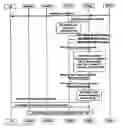
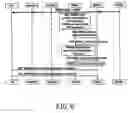
BRIEF DECSRIPTION OF THE DRAWINGSFIG. 1 illustrates a flow chart of Method One, when MBMS channel type switches from dedicated channel (UE exists in CELL_DCH status) to common channel or dedicated channel;
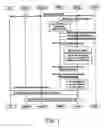
FIG. 2 illustrates the flow chart of Method One, when MBMS channel type switches from common channel (UE exists in CELL_FACH status) to dedicated channel or common channel;
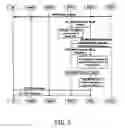
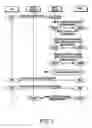
FIG. 3 illustrates a flow chart of Method Two, when MBMS channel type switches between common channel and dedicated channel;
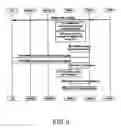
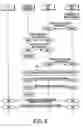
FIG. 4 illustrates a flow chart of Method Three, when MBMS channel type switches from common channel to dedicated channel or common channel;
FIG. 5 illustrates a flow chart of Method Four, when MBMS channel type switches from dedicated channel to common channel;
FIG. 6 illustrates the flow chart of Method Four; when MBMS channel type switches from common channel to dedicated channel;
FIG. 7 illustrates a cell update process on conventional Iur interface (No SRNC re-positioning);
FIG. 8 shows a soft handover process on conventional Iur interface (No SRNC re-positioning).
FIG. 9 is the illustration for MBMS system structure.
DETAILED DECSRIPTION OF THE PREFERRED EMBODIMENTSPresent invention proposes three methods to solve the problem of MBMS channel type switching when WE moves to a cell in DRNC and SRNC doesn't reposition.
Method one makes use of the process of existing cell handover to realize MBMS channel switching through modifying existing messages. Four messages can complete this process. In addition, through making modification to existing messages, RNC is enabled to correctly count the number of MBMS service users during users' movement.
Method two doesn't change existing messages for cell handover but realizes MBMS channel switching through adding two new messages. This method does not affect existing handover process, and the switching from dedicated channel to common channel and from common channel to dedicated channel can be realized in the same process.
Method three also doesn't change existing messages for cell handover and completes MBMS channel switching through new-added messages as well as by combining with existing messages on Iur interface.
When Iur interface exists, MBMS channel type may be changed due to other users' moving in/out of the cell or joining/leaving MBMS service. This situation belongs to the situation of how to complete MBMS channel switching when UE is static (There is no handover cell). This invention proposes Method Four to solve this problem.
Method Four adds one new message on Iur interface, through which, DRNC notifies SRNC of changes of MBMS channel type. If MBMS channel type changes into dedicated channel, SRNC sets up radio dedicated link for UE and Iur MBMS dedicated data bearer. In addition, SRNC is also responsible for notifying UE of MBMS channel information. If MBMS channel type changes from dedicated channel to common channel, DRNC informs MBMS common channel information to SRNC in the new-added message and then SRNC notifies UE to re-configure MBMS channel.
(1) Channel Type Switching in Moving Situation
Method 1:
(1.1) From Dedicated Channel to Common Channel or Dedicated Channel
Channel setup process of switching from dedicated channel to dedicated channel is basically the same as those described in existing specification.
Channel setup process of switching from dedicated channel to common channel combines the setup process for dedicated channel and that for common channel. Firstly, the SRNC requests DRNC to set up dedicated channel and informs DRNC to set up dedicated channel-related information and MBMS service identifier received by the user. DRNC re-counts the number of MBMS users according to the MBMS service identifier. If the number is higher than the threshold, DRNC informs SRNC in the response message that it cannot set up dedicated channel for the MBMS service but will set up common channel. After SRNC knows the change of channel type, it sends the message to DRNC again to request DRNC to set up common channel; and then DRNC reports common channel information to SRNC. After SRNC obtains common channel information, it notifies UE of the feature of new common channel.
(1.2) Common Channel to Dedicated Channel or Common Channel
Channel setup process of switching from common channel to common channel is basically same as those described in existing specification.
Channel setup process of switching from common channel to dedicated channel combines the setup process for dedicated channel and that for common channel.
The setup process is as follows. Firstly, SRNC requests DRNC to set up common channel and informs the MBMS service identifier received by the user to DRNC. DRNC re-counts the number of MBMS users according to the MBMS service identifier. If the number is lower than the threshold, DRNC informs SRNC in the response message that it cannot set up common channel for the MBMS service but a dedicated channel will be set up. After SRNC receives the change of channel type, it sends the message to DRNC again to request DRNC to set up dedicated channel; and then DRNC reports dedicated channel information to SRNC. After SRNC obtains dedicated channel information, it notifies UE of the feature of new dedicated channel.
Method 2:
SRNC decides to handover to a new cell after it receives the cell update message or measurement report. SRNC informs MBMS service identifier, MBMS dedicated channel information and common information to DRNC in a combined message. DRNC re-counts the number of MBMS users according to MBMS service identifier. DRNC decides to set up dedicated channel or common channel according to the number of users, and sets up corresponding channel according to channel information'transmitted from SRNC. After successful setup of the channel, DRNC reports the corresponding common channel or dedicated channel parameters to SRNC hand 'then SRNC informs UE to re-configure MBMS channel via RRC message.
Method 3:
SRNC decides to handover to a new cell after it receives the cell update message or measurement report. SRNC inquires for MBMS channel type from DRNC. This message comprises MBMS service identifier that UE is receiving. DRNC re-counts the number of MBMS users according to MBMS service identifier. DRNC determines the type of MBMS channel for setup according to the number of MBMS service users, and reports to SRNC that the MBMS channel type is dedicated channel or common channel. If dedicated channel is used, SRNC sets up corresponding dedicated channel and Iur dedicated data bearer; If common channel is used, SRNC sends a message to DRNC to ask for MBMS common channel information, and notifies this information to UE via RRC.
(2) Channel Type Switching in Non-Moving Situation
Method 4:
Switching from Dedicated Channel to Common Channel
DRNC counts the number of MBMS users. If the number exceeds certain threshold, DRNC decides to set up common channel.
DRNC notifies SRNC of common channel information and SRNC notifies UE to re-configure channel.
Switching from Common Channel to Dedicated Channel
DRNC counts the number of MBMS users. If the number is lower than certain threshold, DRNC decides to set up dedicated channel.
DRNC reports to SRNC and SRNC will set up MBMS dedicated channel and notify UE of dedicated channel information.
(3) Count User Number While Moving
During cell handover procedure, add an information element, i.e. MBMS service identifier, to the first message sent from. SRNC to DRNC-based on existing message, which is used by DRNC to count the number of MBMS service users.
(4) Channel Setup Message
(4.1) Modification to Existing Message
Iur Interface Message
Common Transfer Channel Resource Request Message
Add a new information element, i.e. MBMS service identifier, to this message based on existing specification. MBMS service identifier includes two parts, i.e. APN and IP multicast address.
Common Transfer Channel Resource Response Message
Add a new information element, i.e. MBMS channel type, to this message based on existing specification. This is a Boolean value. “1” means dedicated channel type and “0” means common channel type.
The message of radio link setup request adds a new information element, i.e. MBMS service identifier, to this message based on existing specification. MBMS service identifier includes two parts, i.e. APN and IP multicast address.
Radio Link Setup Response Message
Add a new information element, i.e. MBMS channel type, to this message based on existing specification. This is a Boolean value. “1” means dedicated channel type and “0” means common channel type.
RRC message
Cell Update Confirmation Message
Add a new information element, i.e. MBMS channel type, to this message based on existing specification. This is a Boolean value. “1” means dedicated channel type and “0” means common channel type. And MBMS channel information is also added. This is an optional type. If MBMS channel type is dedicated channel, this message includes MBMS dedicated channel information, whose detailed information elements are the same as those in existing specification; If MBMS channel type is common channel, this message also includes MBMS common channel information.
(4.2) New Messages Defined for MBMS Channel Switching
(4.2.1) MBMS Channel Setup Request Message
Present invention defines a new message for Method Two, i.e. MBMS channel setup request. This is a message on Iur interface, through which SRNC notifies DRNC of the type of MBMS service UE is receiving and information of MBMS dedicated channel and common channel set up for the user. SRNC informs DRNC all information needed to set up MBMS dedicated channel and common channel in the message and DRNC re-counts the number of MBMS users to determine the type of MBMS channel to be set up. Set up corresponding MBMS channel according to parameters provided by this message.
This message includes following information elements:
-
- MBMS service identifier
Include two parts, i.e. APN and IP multicast address. - MBMS dedicated channel information,
- MBMS service identifier
Main contents include:
-
- Downlink transport combination format set
- Downlink dedicated physical channel time slot format
- Downlink frequency spreading code number
- Start point of downlink data receiving window
- End point of downlink data receiving window
- Dedicated transfer channel identifier
- Statistical description of transfer source
- A Transfer channel format set
- Code error rate of transmission block
- Common channel information
- Drift radio network temporary identifier
- Transfer bearer requirements indication
- Transfer bearer logo.
(4.2.2) MBMS Channel Setup Response Message
A new message defined by this invention for MBMS, i.e. MBMS channel setup response, is the response to the above message and is transferred from DRNC to SRNC. After setting up corresponding MBMS channel, DRNC uses the type of MBMS channel and sends back corresponding information on dedicated channel or common channel to SRNC to configure UE MBMS channel through RRC. The message notifies SRNC to set up following.
This message includes following information elements:
-
- MBMS service identifier
- MBMS dedicated channel information
This is an optional type. If DRNC decides to set up dedicated channel for MBMS service, this option is included in the message; if common channel is set up, this option isn't included. The main contents are as follows:
-
- Dedicated transfer channel identifier
- Binding identifier, i.e. the unique identifier allocated by DRNC for data transfer bearer.
- Transport layer address
- MBMS common channel information
This is an optional type. If DRNC decides to set up common channel for MBMS service, this option is included in the message; if a dedicated channel is set up, this option is excluded. Main contents are as follows:
-
- SCCPCH offset
- Download scrambling code
- Download frequency spreading code number
- Transport format combination set
- SCCPCH time-slot format
- FACH/PCH transport format set
(4.2.3) MBMS Channel Information Query Message
A new message defined by this invention for Method Three, i.e. MBMS channel information query, is used for Iur interface. It is sent by SRNC to DRNC to inquire possible types of channel that DRNC may set up for this MBMS. This message includes following information elements:
-
- MBMS service identifier
(4.2.4) MBMS Channel Information Report Message
- MBMS service identifier
A new message defined by this invention for Method Three, i.e. MBMS channel information report, is used by DRNC to report all MBMS service type used to SRNC.
-
- This message includes following information elements:
- MBMS service identifier
- MBMS channel type. “1” means dedicated channel and “0” means common channel.
(4.2.5) MBMS Channel Information Indication Message
A new message defined by this invention for Method Four, i.e. MBMS channel information indication, is used by DRNC to report MBMS service type used to SRNC.
The message includes following information elements:
-
- MBMS service identifier
- MBMS channel Type
- MBMS common channel information
The message includes this element if DRNC uses common channel to transfer MBMS data; otherwise, it doesn't include it.
(4.2.5) MBMS Service Request Message
A new message defined by this invention for MBMS, i.e. MBMS service request, is used by DRNC to apply for core network for MBMS service.
This message includes following information elements:
-
- MBMS service identifier
- Network field identifier
- Route field identifier
- Service filed identifier
- Iu signalling identifier
- Global RNC number
(4.2.6) MBMS channel re-configuration request message
A new message defined by this invention for MBMS, i.e. MBMS channel re-configuration request, is used by SRNC to notify MBMS channel information to UE.
This message includes following information elements:
-
- MBMS service identifier
- Channel Type
- MBMS common channel information
The message includes this element if DRNC uses common channel to transfer MBMS data; otherwise, it doesn't include it.
-
- MBMS dedicated channel information
The message includes this element if DRNC uses dedicated channel to transfer MBMS data; otherwise, the message doesn't include the element.
(4.2.7) MBMS Channel Re-Configuration Response Message
A new message defined by this invention for MBMS, i.e. MBMS channel re-configuration response, is used by UE to notify SRNC that MBMS channel re-configuration has been completed.
This message includes following information elements:
-
- MBMS service identifier
In the following, we describe the flows of all kinds of methods of this invention by combining with appended figures.
Method 1:
FIG. 1 and FIG. 2 illustrate the process for MBMS channel type'switching when an user moves to a cell in DRNC and SRNC doesn't re-position. Detailed description for this process is given in the following.
(1) Switching from Dedicated Channel to Dedicated Channel or Common Channel
- 902 UE exists in CELL_DCH status and enters a cell in DRNC. According to existing specification, SRNC decides not to re-position SRNC and conducts cell handover process in accordance with the measurement report from UE. SRNC sends radio link setup request message to DRNC by adding a new information element “MBMS service identifier” based on existing message format to notify DRNC of MBMS service identifier that UE is receiving.
- 903 DRNC can know which kind of MBMS service the user has applied for according to MBMS service identifier and adds the number of corresponding service users by 1.
- 904 If the user is the first user to apply for the service in the local RNC, DRNC sets up its data channel with core network (hereinafter referred to as CN). DRNC sends MBMS service request message to CN to inform it MBMS identifier. And CN takes responsibility of setting up data channel.
- 905 CN sends MBMS RAB setup request or RAB allocation request message to DRNC.
- 906 After successful setup of data channel, DRNC sends MBMS RAB setup response or RAB allocation response message to CN.
- 907 DRNC sends radio link setup response message to SRNC. This message adds a new information element based on existing format, i.e. MBMS channel type, through which DRNC notifies SRNC of channel type of MBMS service used by the cell where UE locates.
- 908 SRNC analyses MBMS channel type. If the cell in DRNC where UE locates uses dedicated channel, turn to Step 913.
- 909 SRNC knows through analysis of MBMS channel type that the cell in DRNC where UE locates uses common channel, it notifies DRNC to report common channel information through common transfer channel resource request information.
- 910 DRNC sends common transfer channel resource response message to SRNC, through which it reports MBMS common channel parameters to SRNC.
- 911 The cell in SRNC reduces the number of corresponding MBMS service users by 1 due to the leaving of UE.
- 912 SRNC notifies UE of MBMS channel information through RRC message, physical channel re-configuration request or MBMS channel re-configuration request message.
- 913 UE re-configures MBMS channel if the MBMS channel parameters are not the same as those used before handover. Upon success, a success message is returned. UE sends MBMS channel re-configuration end message to SRNC to report the completion of MBMS channel configuration. At this time, cell handover process is completed. If the new MBMS channel is dedicated channel, MBMS data is transferred by SRNC through DRNC to UE via Iur interface. If common channel is used, MBMS data is directly transferred to DRNC by SGSN and then transferred by DRNC to UE.
- 914 SRNC deletes the radio dedicated link of the source cell.
(2) Switching from Common Channel to Common Channel or Dedicated Channel - 101 UE enters a cell in DRNC under non-CELL_DCH status. According to existing specification, the UE needs to perform cell update process. UE turns into CELL_FACH status, and then sends cell update message to SRNC. This message format is the same as that in existing specification.
- 102 SRNC sends common transfer channel resource request to DRNC by adding a new “MBMS service identifier” to existing message format, which is used to notify DRNC of MBMS service identifier that UE is receiving.
- 103 DRNC can know which kind of MBMS service the user has applied for according to MBMS service identifier and adds 1 to the number of corresponding service users.
- 104 If the user is the first user to apply for the service in the local RNC, DRNC sets up its data channel with core network and informs MBMS identifier to CN. DRNC sends MBMS service request message to CN and CN takes responsibility of setting up data channel.
- 105 CN sends MBMS RAB setup request or RAB allocation request message to DRNC.
- 106 After successful setup of data channel, DRNC sends MBMS RAB setup response or RAB allocation response message to CN.
- 107 DRNC sends common transfer channel resource response to SRNC. This message adds a new information element based on the existing format, i.e. MBMS channel type, through which DRNC notifies SRNC of the channel type of MBMS service used by the cell where UE locates.
- 108 SRNC analyses MBMS channel type. If the cell in DRNC where UE locates uses common channel, Step 113 is performed directly.
- 109 SRNC knows from analysis of MBMS channel type that the cell in DRNC where UE locates uses dedicated channel and notifies DRNC to set up P-t-P MBMS channel by notifying DRNC of dedicated channel information in radio link setup request.
- 110 DRNC sets up dedicated radio link with Node B.
- 111 After the successful setup of the link, DRNC returns a success message to SRNC.
- 112 Set up data link bearer between SRNC and DRNC for MBMS data transfer.
- 113 The cell in SRNC reduces the number of corresponding MBMS service users by 1 due to leaving of an UE.
- 114 SRNC notifies UE of MBMS channel information through cell update confirmation message.
- 115 UE re-configures MBMS channel if the MBMS channel parameters are not the same as those used before handover. Upon success, a success message is returned, i.e. MBMS channel re-configuration response. At this time, cell handover process is completed. If the new MBMS channel is dedicated channel, MBMS data is transferred by SRNC through DRNC to UE via Iur interface. If common channel is used, MBMS data is directly transferred to DRNC by SGSN and then transferred by DRNC to UE.
Method 2:
FIG. 3 shows the process of causing MBMS channel type to be changed when user handovers to a cell in DRNC. Following is the description for this process in detail.
The process of switching between common channel and common channel
- 201 SRNC decides not to re-position SRNC according to cell update message or measurement report sent from UE and performs cell handover or cell update process. Messages and processes specially used for MBMS channel switching are added on the basis of not affecting existing handover process. SRNC sends MBMS channel setup request information to DRNC, which mainly includes contents in three aspects: The first is the identifier of MOMS service, which can make it easy for DRNC to count users; The second is MBMS dedicated channel information; the third is MBMS common channel information. It is up to DRNC to decide to use common channel or dedicated channel.
- 202 DRNC can know which kind of MBMS service the user has applied for according to MBMS service identifier and adds the number of corresponding service' users by 1.
- 203 If the user is the first user to apply for the service in the local RNC, DRNC sets up its data channel with core network. DRNC sends MBMS service request message to CN to inform it MBMS identifier. And CN takes responsibility of setting up data channel.
- 204 CN sends MBMS RAB setup request or RAB allocation request message to DRNC
- 205 After successful setup of data channel, DRNC sends MBMS RAB setup response or RAB allocation response message to CN.
- 206 DRNC decides to set up dedicated channel or common channel according to the number of MBMS service users in the cell. After successful setup, if MBMS uses dedicated channel, DRNC notifies SRNC of dedicated channel information; if common channel is used, DRNC notifies SRNC of common channel information.
- 207 SRNC analyses MBMS channel type. If the cell in DRNC where UE locates uses common channel, turn to Step 209.
- 208 SRNC knows that the cell in DRNC where UE locates uses dedicated channel through analysis of MBMS channel type and then sets up data link bearer between SRNC and DRNC to transfer MBMS data.
- 209 The cell in SRNC reduces the number of corresponding MBMS service users by 1 due to leaving of an UE.
- 210 SRNC notifies UE of MBMS channel information via RRC message, cell update confirmation message or other RRC message.
- 211 UE re-configures MBMS channel if the MBMS channel parameters are not the same as those used before handover. After its success, a success message is returned. If the new MBMS channel is dedicated channel, MBMS data is transferred by SRNC through DRNC to UE via Iur interface. If common channel is used, MBMS data is directly transferred to DRNC by SGSN and then transferred by DRNC to UE.
Method 3:
FIG. 4 shows the process of causing MBMS channel types to be changed when user handovers to a cell in DRNC. Following is the description for this process in detail.
The process of switching between common channel and dedicated channel
- 401 UE sends different message reports to SRNC according to different statuses when entering another cell.
- 402 SRNC knows that the user is receiving MBMS service and queries DRNC about the channel information of the MBMS service. This message includes MBMS service identifier, according to which DRNC re-counts the number of users and then decides to support dedicated channel or common channel.
- 403 DRNC reports the channel type it provides for MBMS service to SRNC.
- 404 SRNC sends different messages to set up common channel or dedicated channel according to different channel type DRNC supports. If dedicated channel is set up, a radio link setup request message needs to be sent; if common channel is set up, a common transfer channel resource request message needs to be sent.
- 405 DRNC adds 1 to the number of the service users.
- 406-408 If the user is the first one who asks for the MBMS service, DRNC requires it to join the MBMS multicast group and to set up corresponding RAB.
- 409 If SRNC indicates that DRNC shall sets up dedicated channel, DRNC needs to set up radio link in the cell where the UE locates.
- 410 DRNC informs SRNC information on radio link or common channel set up.
- 411 If MBMS uses dedicated channel, user plane of Iur interface shall be set up.
- 412 SRNC reduces the number of users in the cell where the UE locates by 1.
- 413 SRNC indicates UE to re-configure physical channel and sends different messages according to different statuses UE exists in.
- 414 UE reports the accomplishment of successful MBMS channel re-configuration to SRNC.
Method 4:
The process of causing MBMS channel type switching is due to the movement of other users or introduction of new services Following is the detailed description for this process.
(1) Switching from Dedicated Channel to Common Channel
- 501 DRNC decides to switch the channel type into common channel when it finds that the user number-exceeds a certain threshold when a new user joins the MBMS service group and moves into the cell.
- 502 DRNC sets up common channel for MBMS service in the cell where UE locates.
- 503 DRNC notifies SRNC of the channel type change by using MBMS channel information indication message and carries common channel information set up in the message.
- 504-505 SRNC re-configures the MBMS channel of UE and changes the channel type from dedicated channel to common channel.
- 506-508 SRNC notifies DRNC to delete original dedicated channel configured for the MBMS service. DRNC deletes dedicated channel resources in its Node B.
- 509 Release the transmission bearer of Iur interface on user plane.
(2) Switching from Common Channel to Dedicated Channel - 601 DRNC decides to switch the channel type into dedicated channel when it finds that the user number is lower than a certain threshold when a user leaves the MBMS service group and moves out of the cell.
- 602 DRNC notifies SRNC of the channel type change by using MBMS channel information indication message.
- 603-605 SRNC indicates DRNC to set up dedicated channel for MBMS service of the user. DRNC sets up corresponding dedicated radio link in its Node B.
- 606 Set up user plane transmission bearer of Iur interface between SRNC and DRNC.
- 607-608 SRNC indicates UE to re-configure MBMS service channel.
While the invention has been shown and described with reference to certain. preferred embodiments thereof, it will be understood by those skilled in the art that various changes in form and details may be made therein without departing from the spirit and scope of the invention as defined by the appended claims.
Claims
1. A channel type switching method for MBMS point to point (P-t-P) and point to multi point (P-t-M) channel, when a UE having MBMS service moves to a cell in driving radio network controller (DRNC) which have a Iur interface between a serving radio network controller (SRNC), comprising the steps of:
DRNC deciding to perform switching channel type between common channel and dedicated channel based on the number of user having MBMS service in the cell;
DRNC notifying SRNC of MBMS channel type and channel parameters.
2. The method as set forth in claim 1, wherein said channel switching is determined by the threshold value of user number.
3. The method as set forth in claim 1, wherein said channel switching further comprising the steps of:
SRNC requesting DRNC to set up dedicated channel, and informing DRNC to set up the relevant information of the dedicated channel and MBMS service identifier received by the user;
DRNC counting the number of MBMS users;
DRNC deciding to set up dedicated channel or common channel according to the number of users;
DRNC reporting channel type information to be set up to SRNC;
SRNC setting up dedicated channel or obtaining common channel information from DRNC;
SRNC notifying UE to re-configure MBMS channel via RRC message to complete channel switching.
4. The method as set forth in claim 1, wherein said channel switching further comprising the steps of:
SRNC sending message to DRNC to inform MBMS service type and used channel information;
DRNC determining the channel type to be set up and informing SRNC the parameters of MBMS channel set up;
SRNC notifying UE to re-configure MBMS channel via RRC message to complete channel switching.
5. The method as set forth in claim 1, wherein said channel switching further comprising the steps of:
SRNC sending message to inquire MBMS service type from DRNC;
DRNC determining the channel type to be set up and informing SRNC the parameters of MBMS channel set up;
SRNC taking responsibility of completing setting up dedicated channel or obtains common channel information from DRNC;
SRNC notifying UE to re-configure MBMS channel via RRC message to complete channel switching.
6. The method as set forth in claim 3, wherein said message transferred from SRNC to DRNC comprises MBMS service identifier the user is performing, which enables DRNC to count the number of MBMS users.
7. The method as set forth in claim 3, wherein, if the UE is the first person requesting for this service in DRNC, DRNC setting up RAB connection with core network.
8. A channel type switching method for multi media broadcast and multicast service (MBMS) point to point (P-t-P) and point to multi point (P-t-M) channel, in a radio network controller, comprising steps of:
checking the number of MBMS users in a cell when a user leaves from the on-going MBMS service;
determining the MBMS channel type according to the number of user having MBMS and a threshold; and
reporting the changes of MBMS channel type to a serving radio network controller (SRNC).
9. The method as set forth in claim 8, further comprising:
receiving, the SRNC, MBMS channel type from the DRNC; and
transmitting channel reconfiguration request message to the UE in the cell.
10. A channel type switching method for multi media broadcast and multicast service (MBMS) point to point (P-t-P) and point to multi point (P-t-M) channel, in a radio network controller, comprising the steps of:
transmitting, SRNC, MBMS channel information inquiry message to a driving radio network controller (DRNC);
transmitting, upon receiving the channel information inquiry message in DRNC, MBMS channel type and channel parameters of MBMS channel to the SRNC; and
notifying, SRNC, UE to re-configure MBMS channel via RRC message to complete channel switching, wherein the channel type is determined based on the number of user having MBMS service in the cell.
11. The method as set forth in claim 10, wherein said message transferred from SRNC to DRNC comprises MBMS service identifier.
12. A data communication channel establishment methods for setting up multimedia broadcast/multicast service (MBMS) with core network (CN) via driving radio network controller (DRNC), when a UE moves to a cell controlled by the DRNC, comprising the steps of:
serving radio network controller (SRNC) sending messages to the DRNC;
the DRNC sending MBMS service request message to the CN;
the CN requesting to set up data connection with the DRNC;
the DRNC sending response message to the CN.
13. The method as set forth in claim 12, wherein said SRNC sending messages to the DRNC comprises a MBMS service identifier.
Images & Drawings included:



Sources:
- United States Patent and Trademark Office - verify current appl. status at the USPTO↗
Recent applications in this class:
- » 20250286748 2025-09-11
DELIVERY MODE OF TRAFFIC FOR TERMINAL DEVICES IN DIFFERENT RRC STATES - » 20250070996 2025-02-27
MRB Deactivation and Activation - » 20250070995 2025-02-27
SYSTEMS AND METHODS FOR EFFICIENT DUPLICATION AND TRANSMISSION OF LIVE AUDIO DATA - » 20240430120 2024-12-26
MULTICAST PAYLOAD DELIVERY TO IDLE MODE USER EQUIPMENT - » 20240414020 2024-12-12
MULTICAST-BROADCAST TRAFFIC DELIVERY FOR DISTRIBUTED TERMINALS - » 20240380631 2024-11-14
METHOD AND APPARATUS FOR PROVIDING MBS IN WIRELESS COMMUNICATION SYSTEM - » 20240333548 2024-10-03
SPATIAL INTERACTION FOR VIRTUAL IN-CAR MEETINGS - » 20240235877 2024-07-11
INFORMATION CONTROL METHOD AND APPARATUS, NETWORK FUNCTION, AND READABLE STORAGE MEDIUM - » 20240187273 2024-06-06
BROADCAST SIGNAL TRANSMISSION DEVICE AND BROADCAST SIGNAL TRANSMISSION METHOD WHICH USE BROADCAST SIGNAL FRAME FOR SIGNALING REDUCED CARRIER COEFFICIENT - » 20240154834 2024-05-09
MRB deactivation and activation
Recent applications for this Assignee:
- » 20250175180 2025-05-29
INPUT BUFFER CIRCUIT AND POWER MANAGEMENT INTEGRATED CIRCUIT INCLUDING THE SAME - » 20250125998 2025-04-17
HYBRID SOURCE-SERIES TERMINATION DRIVER WITH CONSTANT OUTPUT SWING - » 20250117337 2025-04-10
PRE-FETCHING ADDRESS TRANSLATION FOR COMPUTATION OFFLOADING - » 20250069538 2025-02-27
DISPLAY DEVICE AND DRIVING METHOD THEREOF - » 20240430140 2024-12-26
RECEIVERS AND SEMICONDUCTOR MEMORY DEVICES INCLUDING THE SAME - » 20240414035 2024-12-12
RECEIVER, OPERATION METHOD THEREOF, AND MEMORY DEVICE - » 20240380824 2024-11-14
METHODS AND SYSTEMS TO PUSH NOTIFICATION MESSAGES IN SEAL NOTIFICATION MANAGEMENT SERVICE - » 20240377988 2024-11-14
MEMORY DEVICE AND OPERATION METHOD THEREOF - » 20240371417 2024-11-07
Semiconductor memory devices - » 20240348366 2024-10-17
METHOD AND APPARATUS FOR DECODING POLARIZATION-ADJUSTED CONVOLUTIONAL CODE BY USING LIST VITERBI ALGORITHM ADJUSTING LIST SIZE DYNAMICALLY