Fluidising composition
US20060155019A1
2006-07-13
10/524,466
2002-09-09
Abstract:
A fluidising admixture for use with sprayable cementitious compostions, the admixture consists of 2-phosphonobutane-1,2,4-tricarboxylic acid and at least one selected polymer derived from ethylenically-unsaturated mono- or dicarboxylic acids. Citric acid may optionally be present. The admixture has good fluidising properties and outstanding shelf-life.
Inventors:
- Gerhard Albrecht 19 🇩🇪 Tacherting, Germany
- Qiwei Yang 3 🇨🇭 Erlenbach, Switzerland
- Hubertus Matthias Zink 3 🇩🇪 Trostberg, Germany
- Max Oppiger 1 🇨🇭 Allschwil, Switzerland
- Hubertus M. ZINK 1 🇩🇪 Trostberg, Germany
Interested in similar patents?
Get notified when new applications in this technology area are published.
Classification:
C04B2111/00155 » CPC further
Mortars, concrete or artificial stone or mixtures to prepare them, characterised by specific function, property or use; Physico-chemical characteristics of the mixtures; Sprayable or pumpable mixtures Sprayable, i.e. concrete-like, materials able to be shaped by spraying instead of by casting, e.g. gunite
C04B2111/00172 » CPC further
Mortars, concrete or artificial stone or mixtures to prepare them, characterised by specific function, property or use; Physico-chemical characteristics of the mixtures; Sprayable or pumpable mixtures; Sprayable, i.e. concrete-like, materials able to be shaped by spraying instead of by casting, e.g. gunite by the wet process
C04B24/2688 » CPC further
Use of organic materials as active ingredients for mortars, concrete or artificial stone, e.g. plasticisers; Macromolecular compounds obtained by reactions only involving carbon-to-carbon unsaturated bonds Copolymers containing at least three different monomers
C04B40/0028 » CPC further
Processes, in general, for influencing or modifying the properties of mortars, concrete or artificial stone compositions, e.g. their setting or hardening ability Aspects relating to the mixing step of the mortar preparation
C04B2103/32 » CPC further
Function or property of ingredients for mortars, concrete or artificial stone; Water reducers, plasticisers, air-entrainers, flow improvers Superplasticisers
C04B24/2694 » CPC further
Use of organic materials as active ingredients for mortars, concrete or artificial stone, e.g. plasticisers; Macromolecular compounds obtained by reactions only involving carbon-to-carbon unsaturated bonds; Copolymers containing at least three different monomers containing polyether side chains
C04B40/0039 » CPC further
Processes, in general, for influencing or modifying the properties of mortars, concrete or artificial stone compositions, e.g. their setting or hardening ability; Aspects relating to the mixing step of the mortar preparation Premixtures of ingredients
C04B24/003 » CPC main
Use of organic materials as active ingredients for mortars, concrete or artificial stone, e.g. plasticisers Phosphorus-containing compounds
C04B24/06 » CPC further
Use of organic materials as active ingredients for mortars, concrete or artificial stone, e.g. plasticisers; Carboxylic acids; Salts, anhydrides or esters thereof containing hydroxy groups
C04B24/42 » CPC further
Use of organic materials as active ingredients for mortars, concrete or artificial stone, e.g. plasticisers; Compounds containing silicon, titanium or zirconium or other organo-metallic compounds; Organo-clays; Organo-inorganic complexes Organo-silicon compounds
C04B28/02 » CPC further
Compositions of mortars, concrete or artificial stone, containing inorganic binders or the reaction product of an inorganic and an organic binder, e.g. polycarboxylate cements containing hydraulic cements other than calcium sulfates
C08K5/5317 » CPC further
Use of organic ingredients; Phosphorus-containing compounds; Phosphorus bound to oxygen bound to oxygen and to carbon only Phosphonic compounds, e.g. R—P(:O)(OR')
C08L35/08 » CPC further
Compositions of homopolymers or copolymers of compounds having one or more unsaturated aliphatic radicals, each having only one carbon-to-carbon double bond, and at least one being terminated by a carboxyl radical, and containing at least one other carboxyl radical in the molecule, or of salts, anhydrides, esters, amides, imides or nitriles thereof; Compositions of derivatives of such polymers Copolymers with vinyl ethers
C04B24/00 IPC
Use of organic materials as active ingredients for mortars, concrete or artificial stone, e.g. plasticisers
C04B7/00 IPC
Cements
C04B7/00 IPC
Hydraulic cements
C04B40/00 IPC
Processes, in general, for influencing or modifying the properties of mortars, concrete or artificial stone compositions, e.g. their setting or hardening ability
C08K5/51 IPC
Use of organic ingredients; Phosphorus-containing compounds Phosphorus bound to oxygen
Description
This invention relates to the spraying of cementitious compositions and to admixtures for use in such spraying.
The spraying of cementitious compositions such as concrete is regularly used in a number of applications, most notably in tunnelling. It is a requirement that such compositions be able to be easily conveyed (usually by pumping) to a spray nozzle. This can be achieved by the addition to the cementitious composition that is to be pumped and sprayed, at the mix stage, of an admixture which confers improved fluidity of the mix. There is a considerable variety of such admixtures known to and used by the art.
It has now been found that an especially effective admixture may be prepared by the combination of particular selected components. The invention therefore provides a fluidising admixture for use with sprayable cementitious compostions, the admixture consisting of
-
- (1) 2-phosphonobutane-1,2,4-tricarboxylic acid;
- (2) optionally, citric acid; and
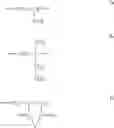
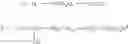
- (3) at least one polymer derived from ethylenically-unsaturated mono- or dicarboxylic acids, and characterised in that the polymer consists of
- a) 51-95 mole % of moieties of formula 1a and/or 1b and/or 1c
- wherein R1=hydrogen or a C1-20 aliphatic hydrocarbon residue;
- X═OaM, —O—(CmH2mO)n—R2, —NH—(CmH2mO)n—R2,
- M=hydrogen, a mono- or divalent metal cation, an ammonium ion or an organic amine residue;
- a=0.5 or 1;
- R2=hydrogen, C1-20 aliphatic hydrocarbon, C5-8 cycloaliphatic hydrocarbon or optionally substituted C6-14 aryl residue;
- Y═O, NR2;
- m=2-4; and
- n=0-200
- b) 1-48.9 mole % of moieties of the general formula II
- wherein R3=hydrogen or C1-5 aliphatic hydrocarbon;
- p 32 0-3; and
- R2 has the meaning given previously;
- c) 0.1-5 mole % of moieties of Formulae IIIa or IIIb
- wherein S═H, —COOaM, —COOR5
-
- —W—R7
- —CO—[NH—(CH2)3]s—W—R7
- —CO—O—(CH2)z—W—R7
- —(CH2)z—V—(CH2)z—CH═CH—R2
- —COOR5 when S is —COOR5 or COOaM
- U1═—CO—NH—, —O—, —CH2O—
- U2═—NH—CO—, —O—, —OCH2—
- V=—O—CO—C6H4—CO—O— or —W—
- R4═H, CH3
- R5═H, C3-20 alphatic hydrocarbon residue, C5-C8 cycloaliphatic hydrocarbon residue or C6-14 aryl residue;
-
- wherein r=2-100
-
- s=1,2
- x=1-150
- y=0-15
- z=0-4
-
- d) 0-47.9 mole % of moieties of the general formula IVa and/or IVb:
- wherein a, M, X and Y have the significances hereinabove defined.
In a preferred embodiment of the invention, the polymer is characterised as follows—any moiety or group present in the polymer description hereinabove and not specifically mentioned in the following embodiment is absent from the embodiment, and any numerical value not specifically mentioned remains unaltered from that of the polymer description hereinabove;
a) the moiety is according to formula Ia;
-
-
- R1, R2 are independently H or CH3;
- X═OaM, —O—(CmH2mO)n—R2
- M=H or a mono- or divalent metal cation;
- a=1;
- Y═O, NR2;
- m=2-3; and
- n=20-150;
- b) R2, R3 are independently H or CH3; and
- p=0-1;
- c) the moiety is according to formula IIIa;
-
- —CO—[NH—(CH2)3]s—W—R7
- —CO—O—(CH2)z—W—R7
- R4, R5 are independently H, CH3;
-
- wherein
-
-
- x=20-50;
- y=1-10; and
- z=0-2.
-
-
-
In a further preferred embodiment, the polymer is characterised as follows—any moiety or group present in the description of the preferred embodiment hereinabove and not specifically mentioned in the following further preferred embodiment is absent from the further preferred embodiment, and any numerical value not specifically mentioned remains unaltered from that of the preferred embodiment description hereinabove;
-
- a) the moiety is according to formula Ia;
- R1═H;
- R2═CH3;
- X═OaM;
- M=a mono- or divalent metal cation;
- Y═O, NR2;
- m=2; and
- n=25-50;
- b) R2, R3═H; and
- p=0;
- c) the moiety is according to formula IIIa;
- wherein
- U1═—CO—NH—;
- U1═—NH—CO—, —O—, —OCH2—
- x=20-50;
- y=5-10; and
- z=1-2.
- a) the moiety is according to formula Ia;
The polymers for use in this invention preferably have a weight-average molecular weight of from 5000-50000, preferably from 10000-40000.
Typical examples of preferred polymers may be prepared by the reaction of methoxypolyethyleneglycol-monovinyl ether, maleic anhydride, amine-terminated ethylene oxide-propylene oxide block copolymer and acrylic acid. Examples of these materials and their preparation may be found in International Application WO 00/77058 the contents of which are incorporated herein by reference.
The invention also provides a method of imparting flow to a cementitious composition, comprising the addition thereto of an admixture as hereinabove described.
The invention also provides a method of spraying a cementitious composition by preparing a cementitious mix and conveying the mix to a spray nozzle, there being added to the mix at preparation an admixture as hereinabove described.
The proportions of the solids of the three components in the admixture are as follows:
| limits | more preferred | most preferred | |
| Component 1 | 1-40 | 2-20 | 4-12 | |
| Component 2 | 0-40 | 2-20 | 4-12 | |
| Component 3 | 5-60 | 10-40 | 20-30 | |
The admixture will always contain a proportion of water, and the admixture will never be 100% solids, as the “limits” and “more preferred” columns would seem to suggest is possible. However, the skilled person will be able to determine appropriate compositions in each case, by simple experimentation.
The admixture is added to a cementitious mixture at a rate of from 0.2-2.0%, preferably from 0.5-0.8% by weight solids on cement.
The admixture according to this invention may be used in conjunction with all the conventional admixtures used in the spraying of cementitious compositions, for example, the various accelerators commonly added at the spray nozzle. The admixture according to the invention works well with both the classic alkali types (such as aluminates, caustic alkalis and “water glass”) and the newer alkali-free, generally aluminium compound-based types.
The admixture according to the invention performs at least as well as known fluidity-improving admixtures. It has the additional major practical advantage of having a very long shelf life.This means that it can be prepared well in advance of use and stored for several months without any segregation of ingredients. Moreover, it maintains this stability in the adverse conditions often found in tunnels, such as high temperatures, on exposure to which many conventional admixtures are no longer stable.
The invention is further described with reference to the following examples.
EXAMPLE 1 Preparation and Testing of an Admixture According to the InventionAn admixture is prepared by mixing the following components
| polymer (44% aqueous solution)1 | 50 | parts by weight |
| water | 36 | parts |
| 2-phosphonobutane-1,2,4-tricarboxylic acid | 7.8 | parts |
| (50% aqueous solution) | ||
| citric acid monohydrate | 7.1 | parts |
1The material used is “MVA 2453 L/44%” ex. Degussa. |
This is added to a concrete mix of the following composition at a rate of 0.7% solids on cement:
| Portland cement CEM I 42.5 | 450 | kg/m3 |
| Aggregate | 0-4 mm | 1165 | kg/m3 | |
| 4-8 mm | 500 | kg/m3 | ||
having a water/cement ratio of 0.435.
As a comparison, there is added to samples of the same concrete mix the same proportion of a high performance, commercially-available fluidising agent GLENIUM® T 803 ex MBT (Schweiz) AG. These mixes are tested by means of (a) a flow table, and (b) spraying.
The flow table tests are as follows:
| Composition | GLENIUM | |
| of invention | T 803 | |
| Water/cement ratio | 0.435 | 0.441 | |
| Flow table spread [cm] | |||
| 1 h | 52 | 54 | |
| 2 h | 50 | 52 | |
| 3 h | 47 | 49 | |
| 4 h | 45 | 47 | |
| Air content [%] | 3.0 | 2.6 | |
For the spray testing, there is added at the nozzle in both cases 7% by weight on cement of a commercially-available shotcrete accelerator, MEYCO® SA160 (ex MBT (Schweiz) AG. The compressive strength is measured in a variety of ways and over different times and the results are shown in the following table:
| Composition | GLENIUM | ||
| Compressive. Strength [MPa] | of invention | T 803 | |
| 3 min. (penetroneedle)2 | 0.12 | 0.06 | |
| 6 min. (penetroneedle)2 | 0.18 | 0.09 | |
| 15 min. (penetroneedle)2 | 0.19 | 0.20 | |
| 30 min. (penetroneedle)2 | 0.36 | 0.27 | |
| 1 h (penetroneedle)2 | 0.56 | 0.46 | |
| 2 h (penetroneedle)2 | 0.90 | 0.68 | |
| 4 h (penetroneedle)2 | 2.70* | 0.90 | |
| 1 d (nail gun)3 | 17.5 | 17.1 | |
| 28 d (core)4 | 41.7 | 45.8 | |
2A method for testing compressive strength, in which a metal needle is pushed into concrete and the resistance to its entry is measured. Suitable for relatively soft materials. |
|||
3A method for testing compressive strength, in which a metal nail is fired into a concrete and its penetration measured. Suitable for concretes at a later stage after setting. |
|||
4A method for testing compressive strength, in which a cylindrical core is drilled from a hardened concrete and tested on a testing apparatus. |
|||
*This result had to be obtained by means of a nail gun, because the concrete is already too hard to use the penetroneedle method. On the other hand, the comparative example is too soft to allow use of the nail gun. This is an indication of the superior |
The admixture according to the invention has performance characteristics comparable with those of the high performance commercial material.
EXAMPLE 2 Stability Testing of the Admixture of Example 1.Samples of the admixture are tested in a mortar by flow table and for setting time. The mortar is a 1:3 blend of CEM I42.5 Portland cement and CEM standard sand (according to DIN EN 196-1), and the admixture samples are added at a rate of 1% solids by weight on cement. Samples are also stored at 20° C., 30° C. and 40° C. for six months. At the end of the six months, the admixtures remained visually unaffected. The actual test results are shown in the following table:
| Sample No. |
| 1 | 2 | 3 | 4 | |
| Storage time | [days] | 1 | 180 | 180 | 180 |
| Storage temperature | [° C.] | 20 | 20 | 30 | 40 |
| W/C | 0.42 | 0.42 | 0.42 | 0.42 | |
| Flow table | [cm] | 16.5 | 18.0 | 17.0 | 18.0 |
| Initial setting | [min.] | 500 | 450 | 400 | 330 |
| Final setting | [min.] | 920 | 850 | 740 | 740 |
It can be seen that the properties are only slightly changed.
Claims
1. A fluidising admixture for use with sprayable cementitious compositions, the admixture consisting of:
(1) 2-phosphonobutane-1,2,4-tricarboxylic acid;
(2) optionally, citric acid; and
(3) at least one polymer derived from ethylenically-unsaturated mono- or dicarboxylic acids, and characterised in that the polymer consists of:
a) 51-95 mole % of moieties of formula 1a and/or 1b and/or 1c
wherein R1=hydrogen or a C1-20 aliphatic hydrocarbon residue;
X═OaM, —O—(CmH2mO)n—R2, —NH—(CmH2mO)n—R2,
M=hydrogen, a mono- or divalent metal cation, an ammonium ion or an organic amine residue;
a=0.5 or 1;
R2=hydrogen, C1-20 aliphatic hydrocarbon, C5-8 cycloaliphatic hydrocarbon or optionally substituted C6-14 aryl residue;
Y═O, NR2;
m=2-4; and
n=0-200;
b) 1-48.9 mole % of moieties of the general formula II
wherein R3=hydrogen or C1-5 aliphatic hydrocarbon;
p=0-3; and
R2 has the meaning given previously;
c) 0.1-5 mole % of moieties of Formulae IIIa or IIIb
wherein
—W—R7
—CO—[NH—(CH2)3]s—W—R7
—CO—O—(CH2)z—W—R7
—(CH2)z—V—(CH2)z—CH═CH—R2
═—COOR5 when S is —COOR5 or COOaM
U1═—CO—NH—, —O—, —CH2O—
U2═—NH—CO—, —O—, —OCH2—
V═—O—CO—C6H4—CO—O— or —W—
R4═H, CH3
R5═a C3-20 alphatic hydrocarbon residue, a C5-C8 cycloaliphatic hydrocarbon residue or a C6-14 aryl residue;
wherein r=2-100
s=1,2
z=0-4
x=1-150
y=0-15; and
d) 0-47.9 mole % of moieties of the general formula IVa and/or IVb:
wherein a, M, X and Y have the meanings defined above.
2. A fluidising admixture according to claim 1, in which:
a) the moiety is according to formula Ia;
R1, R2 are independently H or CH3;
X═OaM, —O—(CmH2mO)n—R2
M=H or a mono- or divalent metal cation;
a=1;
Y═O, NR2;
m=2-3; and
n=20-150;
b) R2, R3 are independently H or CH3; and
p=0-1; and
c) the moiety is according to formula IIIa;
—CO—[NH—(CH2)3]s—W—R7
—CO—O—(CH2)z—W—R7
R4, R5 are independently H, CH3;
wherein
x=20-50;
y=1-10; and
z=0-2.
3. A fluidising admixture according to claim 2, in which:
a) the moiety is according to formula Ia;
R1═H;
R2═CH3;
X═OaM;
M=a mono- or divalent metal cation;
Y═O, NR2;
m=2; and
n=25-50;
b) R2, R3═H; and
p=0; and
c) the moiety is according to formula IIIa;
wherein
U1═—CO—NH—;
U2═—NH—CO—, —O—, —OCH2—
x=20-50;
y=5-10; and
z=1-2.
4. A method of imparting flow to a cementitious composition, comprising the addition thereto of the admixture of claim 1.
5. A method of spraying a cementitious composition comprising preparing a cementitious mix and conveying the mix to a spray nozzle, there being added to the mix at preparation the admixture of claim 1.
6. The admixture of claim 1 wherein the polymer has a weight-average molecular weight of from about 5,000 to about 50,000.
7. The admixture of claim 1 wherein the polymer has a weight-average molecular weight of from about 10,000 to about 40,000.
8. The admixture of claim 1 wherein the proportions of the solids of the three components are:
Component 1—about 1% to about 40%;
Component 2—0 to about 40%; and
Component 3—about 5% to about 60%.
9. The method of claim 4 wherein the admixture is added at a rate of from about 0.2% to about 2% by weight solids of cement.
10. A fluidising admixture for use with sprayable cementitious compositions, the admixture comprising:
(1) 2-phosphonobutane-1,2,4-tricarboxylic acid;
(2) optionally, citric acid monohydrate; and
(3) at least one polymer derived from ethylenically-unsaturated mono- or dicarboxylic acids, and characterised in that the polymer comprises:
a) 51-95 mole % of moieties of formula 1a and/or 1b and/or 1c
wherein R1=hydrogen or a C1-20 aliphatic hydrocarbon residue;
X═OaM, —O—(CmH2mO)n—R2, —NH—(CmH2mO)n—R2,
M=hydrogen, a mono- or divalent metal cation, an ammonium ion or an organic amine residue;
a=0.5 or 1;
R2=hydrogen, C1-20 aliphatic hydrocarbon, C5-8 cycloaliphatic hydrocarbon or optionally substituted C6-14 aryl residue;
Y═O, NR2;
m=2-4; and
n=0-200;
b) 1-48.9 mole % of moieties of the general formula II
wherein R3=hydrogen or C1-5 aliphatic hydrocarbon;
p=0-3; and
R2 has the meaning given previously;
c) 0.1-5 mole % of moieties of Fonnulae IIIa or IIIb
wherein
—W—R7
—CO—[NH—(CH2)3]s—W—R7
—CO—O—(CH2)z—W—R7
—(CH2)z—V—(CH2)z—CH═CH—R2
═—COOR5 when S is —COOR5 or COOaM
U1═—CO—NH—, —O—, —CH2O—
U2═—NH—CO—, —O—, —OCH2—
V=—O—CO—C6H4—CO—O— or —W—
R4═H, CH3
R5=a C3-20 alphatic hydrocarbon residue, a C5-C8 cycloaliphatic hydrocarbon residue or a C6-14 aryl residue;
wherein r=2-100
s=1, 2
z=0-4
x=1-150
y=0-15; and
d) 0-47.9 mole % of moieties of the general formula IVa and/or IVb:
wherein a, M, X and Y have the meanings defined above.
11. A fluidising admixture according to claim 10, in which:
a) the moiety is according to formula Ia;
R1, R2 are independently H or CH3;
X═OaM, —O—(CmH2mO)n—R2
M=H or a mono- or divalent metal cation;
a=1;
Y═O, NR2;
m=2-3; and
n=20-150;
b) R2, R3 are independently H or CH3; and
p=0-1; and
c) the moiety is according to formula IIIa;
—CO—[NH—(CH2)3]s—W—R7
—CO—O—(CH2)z—W—R7
R4, R5 are independently H, CH3;
wherein
U1═—CO—NH—, —O—, —CH2O—
U2═—NH—CO—, —O—, —OCH2—
x=20-50;
y=1-10; and
z=0-2.
12. A fluidising admixture according to claim 11, in which:
a) the moiety is according to formula Ia;
R1═H;
R2═CH3;
X═OaM;
M=a mono- or divalent metal cation;
Y═O, NR2;
m=2; and
n=25-50;
b) R2, R3═H; and
p=0; and
c) the moiety is according to formula IIIa;
—CO—O—(CH2)z—W—R7
R4, R5═H;
wherein
U1═—CO—NH—;
U2═—NH—CO—, —O—, —OCH2—
x=20-50;
y=5-10; and
z=1-2.
13. A method of imparting flow to a cementitious composition, comprising the addition thereto of the admixture of claim 10.
14. A method of spraying a cementitious composition comprising preparing a cementitious mix and conveying the mix to a spray nozzle, there being added to the mix at preparation the admixture of claim 10.
15. The admixture of claim 10 wherein the polymer has a weight-average molecular weight of from about 5,000 to about 50,000.
16. The admixture of claim 10 wherein the polymer has a weight-average molecular weight of from about 10,000 to about 40,000.
17. The admixture of claim 10 wherein the proportions of the solids of the three components are:
Component 1—about 1% to about 40%;
Component 2—0 to about 40%; and
Component 3—about 5% to about 60%.
18. The method of claim 13 wherein the admixture is added at a rate of from about 0.2% to about 2% by weight solids of cement.
Images & Drawings included:




Sources:
- United States Patent and Trademark Office - verify current appl. status at the USPTO↗
Similar patent applications:
- » 20080221243
FLUIDISING COMPOSITION - » 20100130647
Fluidising composition - » 20060172916
Use of a polymer dispersant as a fluidising agent for hydraulic binder compositions and preparation thereof - » 20060057390
Apparatus and process for forming a powder coating on a substrate using a fluidised bed and tribostatic charging of the powder coating composition
Recent applications in this class:
- » 20190016635 2019-01-17
FLUIDIZING MIX FOR A COMPOSITION WITH A BASE OF HYDRAULIC BINDER - » 20170036959 2017-02-09
Lost circulation compositions comprising pumice and associated methods - » 20130180434 2013-07-18
Dilution-stable cement grinding additive composition - » 20130112116 2013-05-09
Accelerator for hydraulic binders - » 20120129981 2012-05-24
FLUIDIZING MIX FOR A COMPOSITION WITH A BASE OF HYDRAULIC BINDER - » 20100130647 2010-05-27
Fluidising composition - » 20080221243 2008-09-11
FLUIDISING COMPOSITION - » 20050124737 2005-06-09
Multi-functional admixtures for concrete