System and method for reliable packet data transport in a computer network
US20060168262A1
2006-07-27
10/520,949
2003-07-15
✅ Patent granted
US 8,713,189 B2
2014-04-29
WO; PCT/CA03/01000; 20030715
WO; WO2004/008709; 20040122
Tae Kim
Procopio, Cory, Hargreaves & Savitch LLP
2028-01-11
Abstract:
A system and method for reliably transmitting a request from a client application (50) running on a client system (13)to a server application (52) running on a server system (15) and receiving a reply to the request, in which functions that provide parameters governing the reliable transport mechanism and message forming and parsing services are provided by the application processes to and called from application-layer protocol stacks (58, 60).
Assignee:
- WI-LAN, INC. 225 🇨🇦 Ottawa, Canada
- SOMA Networks Inc. 31 🇺🇸 San Francisco, CA, United States
Applicant:
Interested in similar patents?
Get notified when new applications in this technology area are published.
Classification:
H04L69/16 » CPC further
Network arrangements, protocols or services independent of the application payload and not provided for in the other groups of this subclass Implementation or adaptation of Internet protocol [IP], of transmission control protocol [TCP] or of user datagram protocol [UDP]
H04L69/161 » CPC further
Network arrangements, protocols or services independent of the application payload and not provided for in the other groups of this subclass; Implementation or adaptation of Internet protocol [IP], of transmission control protocol [TCP] or of user datagram protocol [UDP] Implementation details of TCP/IP or UDP/IP stack architecture; Specification of modified or new header fields
H04L69/162 » CPC further
Network arrangements, protocols or services independent of the application payload and not provided for in the other groups of this subclass; Implementation or adaptation of Internet protocol [IP], of transmission control protocol [TCP] or of user datagram protocol [UDP]; Implementation details of TCP/IP or UDP/IP stack architecture; Specification of modified or new header fields involving adaptations of sockets based mechanisms
H04L69/165 » CPC further
Network arrangements, protocols or services independent of the application payload and not provided for in the other groups of this subclass; Implementation or adaptation of Internet protocol [IP], of transmission control protocol [TCP] or of user datagram protocol [UDP] Combined use of TCP and UDP protocols; selection criteria therefor
H04L69/32 » CPC further
Network arrangements, protocols or services independent of the application payload and not provided for in the other groups of this subclass; Definitions, standards or architectural aspects of layered protocol stacks Architecture of open systems interconnection [OSI] 7-layer type protocol stacks, e.g. the interfaces between the data link level and the physical level
H04L67/00 » CPC further
Network arrangements or protocols for supporting network services or applications
H04L69/326 » CPC further
Network arrangements, protocols or services independent of the application payload and not provided for in the other groups of this subclass; Definitions, standards or architectural aspects of layered protocol stacks; Architecture of open systems interconnection [OSI] 7-layer type protocol stacks, e.g. the interfaces between the data link level and the physical level; Intralayer communication protocols among peer entities or protocol data unit [PDU] definitions in the transport layer [OSI layer 4]
G06F15/16 IPC
Digital computers in general ; Data processing equipment in general Combinations of two or more digital computers each having at least an arithmetic unit, a program unit and a register, e.g. for a simultaneous processing of several programs
Description
FIELD OF THE INVENTIONThe present invention relates to systems and methods for providing for reliable transport of messages over computer networks. More specifically, the present invention relates to a system and method for providing reliable transport of messages over a computer network that includes an unreliable data link such as a wireless link in a wireless network.
BACKGROUND OF THE INVENTIONTo understand the context of the present invention it may be helpful to the reader to have a concrete, but very simple exemplary computer network, such as that shown in FIG. 1 and indicated generally by reference numeral 10, to which the reader can refer. The computer network 10 is shown as including two host computers that are referred to here as client host computer 12 and server host computer 14. Those skilled in the art will understand that the designation of a host computer as a client or as a server in this context depends upon which host computer sent a request to begin an exchange of messages between the host computers 12, 14. For the purposes of this discussion it is assumed that the client host computer 12 is running a client-side network application that needs to have some processing done by a server-side network application running on the server host computer 14. Generally, the client host computer 12 will include a central processing unit (“CPU”) 16 and memory 18. The CPU 16 runs the operating system 20 of the client host computer 12. In addition, the CPU 16 may run client-side network applications. The client host computer 12 interfaces with a communications network 22 through a communications interface 24. The communications network 22 may be a wired network or a wireless network or a partially wireless network and transports data between the host computers 12, 14. The communications interface 24 may be a modem or other means for interfacing between a computer and communications network 22.
Likewise, the server host computer 14 includes a CPU 26, memory 28 and an operating system 30. CPU 26 runs the operating system 30 of the server host computer 14 as well as server-side network applications. In addition, the server host computer 14 interfaces with the communications network 22 through a communications interface 32.
The elements of a simple computer network described above are known to those of ordinary skill in the art and will not be described further herein.
A client-side network application must rely on the computer network's transport system to communicate requests (sometimes referred to as “remote procedure calls”or “RPCs”) to a server-side network application. Typically, a software interface, usually referred to as a “socket”, is provided by an operating system 20, 30 for a network application to gain access to the transport system. On the client side, a socket is provided into which a client application can send requests to be transported to the server application. Similarly, on the server side, a socket is provided from which the server application can receive requests sent by the client application and into which the server application can send replies that need to be transported to the client application. Typically, if the computer network's transportation system is based upon the Internet Protocol (“IP”), network applications that need reliable transport use either the Transmission Control Protocol (“TCP”) or include their own procedures to provide reliable transport using the User Datagram Protocol (“UDP”). In the latter case, this means that each time a network application is written for or ported to a new network configuration, significant effort is generally required to provide optimal reliable transport.
For example, a client application may need to send requests to a server application through a transport system that includes a wireless link. The transport system may have a high degree of error correction built in and may include a dedicated channel for some requests that the client applications may wish to send to some server applications. In such a situation, the reliable transport mechanisms built into TCP are not optimal for requests transmitted to all server applications over the wireless link. Because lost requests are very likely to be due to data loss in the wireless link rather than collisions or buffer overflow due to congestion, for urgent requests (e.g., for signaling that a user has picked up a telephone handset in an voice over Internet application) that will pass through the wireless link it may be preferable to retransmit an apparently lost request with a relatively long (in computer terms), but constant, delay between retransmissions and with a small hard limit on the number of retransmissions before an error is reported. However, for requests that do not pass through the wireless link or are less urgent, but which must be delivered, it may be preferable to have an initially shorter delay between retransmissions, a retransmission delay that increases linearly, and a very large number of retransmissions before an error is reported. In other cases, a protocol that handles retransmission in the manner in which TCP handles retransmissions may be desirable. Moreover, conditions in the network may change with interference in the wireless link or loading of the wire-line portion of the network, even if the network is dedicated to the network application (i.e., is not a public network like the Internet) and the radio spectrum used for the wireless is dedicated to the network.
Implementing a network application that can reliably handle remote procedure calls has in the past been done by either living with the limitations of TCP or building reliable transport into the network application and using UDP. For example, application-layer protocols such as Media Gateway Control Protocol (“MGCP”) or Session Initiation Protocol (“SIP”) include specifications for reliable transport that can be implemented in network applications that use remote procedure calls for signaling so that the network application itself provides reliable data transport. However, doing this adds additional complexity to the network application and means that the network application must be modified or at least tuned whenever changes occur in the network such that remote procedure calls are transported over paths having new characteristics or whenever remote procedure calls are to be made that have different requirements for timing and reliability. It would be preferable if characteristics of reliable transport mechanism provided for a specific client application that must make remote procedure calls to a specific server application could be changed without modifying the application.
For example, in Voice-Over-Internet-Protocol (“VOIP”) applications, TCP and UDP are not optimal if a wireless link is involved. Such applications, if they are to provide carrier-grade voice communication, need to reliably establish a communication channel as soon as possible after a subscriber picks up a telephone handset. While such applications can tolerate some degree of media data loss in the digitized voice signal once a connection is established, signaling messages must be highly reliable if subscriber expectations raised by past experience with the Public Switched Telephone Network (“PSTN”) are to be satisfied. Network applications such as VOIP applications are typically implemented in accordance with application-layer protocols such as MGCP and SIP in which reliable transport aspects are intermingled with the application-specific aspects of the protocol. Such applications directly use the services of a transport layer that implements the UDP or possibly the TCP over an IP network.
There is a need for a method and system that provides an application layer that can be adapted or adapt itself to network applications and transport conditions without revising the underlying code in either the network application or the transport layer.
SUMMARY OF THE INVENTIONThe inventor, in considering how the task that a network applications programmer faces in writing or porting applications to a new network operating system could be simplified without sacrificing flexibility, concluded it would be preferable to separate as much as possible of the reliable transport mechanism from the network application while retaining UDP as an underlying transport layer. One way to accomplish simplification for the programmer is that typified by TCP; in TCP the reliable transport mechanism is built into the transport layer with little that the application programmer can do to change its characteristics to suit network conditions.
Although a new transport layer protocol to replace TCP might be an answer, the inventor realized that to make the reliable transport mechanism flexible (in way that TCP is not), it would be preferable to provide the programmer with a plurality of reliable transport “personalities”. While such personalities could be built into a transport layer protocol supplanting TCP, the inventor considered that it would be preferable to split the reliable transport mechanism into (1) a new application-layer protocol stack that would provide sockets to the application and use the services provided by UDP and (2) a set of personality functions that would be compiled and linked with the application, but called by the new protocol stack to perform reliable transport-related tasks. Each set of functions would constitute one discrete personality of the reliable transport mechanism.
An application programmer in writing a network application would make calls to the new protocol stack when opening a socket and sending and receiving data. The calls that the application would make would be the same regardless of the personality selected, so that the application programmer could change the desired personality by simply re-linking the application with a different set of personality functions. The application, when opening a socket, would simply provide the new protocol stack with a set of pointers to the functions for the desired personality. Alternatively, more than one set of compiled personality functions might be linked to the application and an application might then open sockets with sets of pointers to different sets of functions for communication with different server applications.
The new protocol stack, in providing reliable transport, calls the personality functions where necessary to determine parameters needed for providing reliable transport. The personality functions provide the reliable transport protocol with flexibility. For example, if no reply is received to a request, a personality function might be called and return the timeout interval that the new protocol stack should wait before retransmitting a message. The function could calculate a time based by various back-off strategies, it could return a predetermined timeout interval, or it could adaptively calculate a timeout interval based upon current conditions.
An application programmer would be provided with the new protocol stack, the specifications for making calls to the protocol stack, and a library of sets of personality functions. The application programmer could select one or more sets of personality functions to use or could, if necessary, write a custom set of personality functions for use with the network application.
As currently implemented, the personality functions are generally used by the new protocol stack to (1) parse messages received from the transport layer, (2) add headers or trailers to requests or replies to form messages for the protocol stack to send to the transport layer, and (3) provide retransmit and reply cache timer intervals for use by the new protocol stack. For example, the following are done by the personality functions in one embodiment of the invention:
-
- setting up a connection;
- wrapping a payload (the request or reply provided to the stack by the application process) in a header to form a message to be sent to the transport layer;
- determining a time-out interval for the i-th retransmission of a message;
- determining a total timeout interval allowed for all retransmissions of a message; and
- parsing the messages received from the transport layer to determine the type of message (request, reply, provisional reply, or acknowledgement) for the stack.
Generally, personality functions could be used to determine any parameter of a reliable transport mechanism, handle creation and parsing of headers, and modify the data being transported. For transmissions sent between network applications that expect data to be encoded differently, personality functions could modify the payload or add additional data to the message.
Three examples of personalities are:
-
- a personality for over-the-air requests that provides frequent retransmissions with a hard limit on how many retransmissions are made before an error is reported;
- a personality for over-the-backhaul requests that provides exponential back-off assuming that losses could be due to congestion; and
- a personality for billing requests that provides retransmissions for a very long time before giving up.
Preferred embodiments of the present invention will now be described, by way of example only, with reference to the attached Figures, wherein:
FIG. 1 is a schematic diagram of the structure of a conventional, but minimal exemplary computer network.
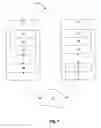
FIG. 2 is a schematic diagram of the protocol layer structure of a computer network implementing the inventive method.
FIG. 3 is a schematic diagram of the structure of a datagram used in the network of FIG. 2.
FIG. 4 is a schematic diagram of a header of a message constructed by an embodiment of the inventive method.
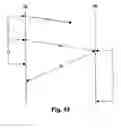
FIGS. 5-15 are schematic diagrams showing the timing of messages passing between the client side of a protocol stack that is an embodiment of the invention and the server side of a protocol stack that is an embodiment of the invention.
DETAILED DESCRIPTION OF THE INVENTIONFIG. 2 illustrates at a method for providing reliable transport in a computer network that is an embodiment of the invention. A request 40 is transported from a client application 50 running on a client host computer such as the client host computer 12 shown in FIG. 1 to a server application 52 running on a server host computer such as the server host computer 14. A reply by the server application 52 would be transported along the same path in the opposite direction. The boxes labeled 13 and 15 indicate client-side and server-side processes that take place in the client host computer 12 and the server host computer 14, respectively. The client application 50 is shown as a process block enclosed within the client-side processes 13 and the server application 52 is shown as a process block enclosed within server-side processes 14.
Below the blocks in FIG. 2 representing the client application 50 and the server application 52 are two rectangular boxes each overlapping both boxes 13 and 15, but not each other, labeled with reference numerals 54 and 56. These boxes indicate two of the protocol layers into which the client-side processes 13 and server-side processes 14 may be conceptually divided. Each protocol layer may be considered to provide a service to the protocol layer (or application) above it such that data submitted by an upper protocol layer (or application) to a lower protocol layer in the client host computer 12, barring losses and data corruption, will be delivered by the same lower protocol layer in the server host computer 14 to the same upper protocol layer (or application) in the server host computer 14. Rectangular box 54 represents an application protocol layer and is shown above rectangular box 56, which represents a transport protocol layer. The protocol layers below the transport protocol layer 56 are shown in FIG. 2 as a third rectangular box 61. Those lower layers receive data in protocol units generally referred to as “segments” from the client-side transport protocol layer 56 and deliver those segments to the server-side transport protocol layer 56. Those readers skilled in the art will understand the nature and function of the protocol layers shown in FIG. 2.
In a preferred embodiment of the invention a new protocol referred to here as the “ART Protocol” is implemented in the application layer 54. On the client side the ART protocol is represented by a client-side ART protocol stack 58 and on the server side the ART protocol is represented by a server-side ART protocol stack 60, both within the application layer 54. As is common is this art, software implementing a protocol is referred to as a “stack” and processes temporarily created by such software to handle communication with a particular remote host are referred to as “sockets”. Typically stacks 58, 60 would be identical; each would create sockets for handling transmission of requests or replies to requests when called by an application, such as client application 50 and server application 52, that wishes to send requests or replies to requests to an application elsewhere in the computer network 10.
The transport layer 56 and lower protocol layers 61 are conventional in the embodiment shown in FIG. 2. For the purposes of the following discussion, the transport layer 56 is assumed to provide unreliable transport of messages sent to it by the application layer 54. However, it is further assumed that the transport layer 56 (or the lower layers 61; it does not matter to applications that are sending requests and replies over the computer network 10) provides error correction such that a message delivered to the transport layer 56 by the application layer 54 on the client side 13 will either be delivered uncorrupted by the transport layer 56 to the application layer 54 on the server side 15 or not delivered at all. Further, it is assumed that between at least some client/server pairs, messages may be lost due to the nature of the physical transmission method (e.g., wireless transmission), rather than due to collisions or buffer overflow due to congestion. Preferably, the transport layer 56 implements the User Datagram Protocol (“UDP”). In FIG. 2, the transport layer 56 is represented by a client-side protocol stack 57 and a server-side protocol stack 59, which are indicated by blocks in FIG. 2 in the area where block 13 overlaps block 56 and where block 15 overlaps block 56, respectively. While not preferred, Transmission Control Protocol (“TCP”) may be used instead of UDP as the transport layer protocol 56. The client-side and server-side protocol stacks for the lower protocol layers 61 are indicated by blocks 63 and 64 in FIG. 2.
Generally, as illustrated schematically in FIGS. 2 and 3, the client-side ART protocol stack 58 handles a request 40 received from the client-side application 50 by wrapping the request 40 into a request message 42 by adding an ART header 43 to the request 40 and sending the resulting request message 42 to the client-side transport layer protocol stack 57. Similarly, the server-side ART protocol stack 60 receives the request message 42 from the server-side transport layer protocol stack 59, strips away the ART header 43 and delivers the request 40 to the server-side application 52.
As shown in FIG. 4, the ART header 43 comprises a type code 46 and a segment number 48. In one implementation, the type code 46 comprises (1) a two bit binary number providing a message type and (2) a sequence number 48 that is a 14-bit number that distinguishes the message from other recent messages sent to the server application 52. In that implementation, messages may also be sent that do not have a payload (e.g., a provisional reply) as well as messages that do have a payload, whose type is either “request” or “reply”.
The reliable transport provided by the ART protocol is illustrated generally by examples in FIGS. 5-15 showing the exchange of messages in eleven cases. In each case time proceeds downward and messages between the client-side ART protocol stack 58 and the server-side ART protocol stack 60 are shown as downward slanting arrows indicating that each message takes a finite time to reach its destination. Each drawing also shows timer intervals: on the client side, for a retransmission timer interval 70; and on the server side for a reply cache timer interval 74. In each diagram, the retransmission timer interval 70 is shown as running at most twice. If the client-side ART protocol stack 58 does not obtain a reply before the second expiry, an error message will be reported to the client application 50 and the socket will be closed. It should be noted that reporting an error after two expiries of the retransmission timer interval 70 would be unusual in practice, but is used here to eliminate unnecessary complexity in the drawings. The handling of error messages is outside the scope of the invention.
FIG. 5 schematically illustrates the timing and ordering of messages that occurs in the transmission of a request 40 from the client-side ART protocol stack 58 to the server-side ART protocol stack 60 in the ideal case in which there are neither losses of messages nor transmission or processing delays. Considering FIGS. 2, 3, and 4 together with FIG. 5, a request 40 received from the client application 50 by an ART socket created by the client-side ART protocol stack 58 is handled as follows:
- (1) a request message 42 is formed having the request 40 as a payload and a header 43 that includes a type code 46 that indicates that the request message 42 contains the request 40 and a sequence number 48;
- (2) a retransmission timer interval 70 is started; and
- (3) the request message 42 handed over to the transport layer protocol stack 57 for transmission to the server-side ART protocol stack 60.
The request message 42 then proceeds through the communications network 22 and is received from the server-side transport layer protocol stack 59 by the server-side ART protocol stack 60. An ART socket created by the server-side ART protocol stack 60 handles the request message 42 as follows:
- (4) the payload (the request 40 itself) in the request message 42 is delivered to the server application 52;
- (5) when a reply is received from the server application process 52, a reply cache timer interval 74 is started;
- (6) a reply message 76 is formed having the reply from the server application process 52 as a payload and a header 43 including a type code 46 that indicates that it contains a reply and a sequence number 48 that is the same as sequence number of the request message 42;
- (7) a copy of the reply message 76 is stored in a reply cache by the server-side ART protocol stack 60; and
- (8) the reply message 76 is handed over to the server-side transport layer protocol stack 59 for transmission to the client-side ART protocol stack 58.
When the reply message 76 is received by the client-side ART protocol stack 58, then:
- (9) the payload (the reply from the server application process 52) is delivered to the client application 50;
- (10) an acknowledgement message 80 is formed with a header including a type code 46 indicating that it is an acknowledgement message and the sequence number of the request message 42; and
- (11) the acknowledgement message 80 is handed over to the transport layer protocol stack 57 for transmission to the server-side ART protocol stack 60.
When the acknowledgement message 80 is received by the server-side ART protocol stack 60, then the cached reply message 76 in the reply cache is deleted and a record of the sequence number 48 is stored. When the reply cache timer interval 74 expires, the stored record of the sequence number 48 of the request message 42 is also deleted.
FIG. 6 schematically illustrates the timing and ordering of messages that occur in the transmission of a request 40 from the client-side ART protocol stack 58 to the server-side ART protocol stack 60 in the case in which there are no losses of messages, but either the request 40 is long so that it will not be provided in full to the server application 52 for some extended time or the server application 52 will require a long time to process the request 40 before providing a reply. Rather than waiting to send a reply message 76, the server-side ART protocol stack 60 sends a provisional reply 84, which as in the case of an acknowledgement message 80 may not contain a payload (unless in a particular implementation the payload is a delay interval) and a header 43 including a type code 46 indicating that it is an provisional reply message and the sequence number 48 of the request 40. The client-side ART protocol stack 58 upon receiving the provisional reply message 84, extends the retransmission timer interval 70 to delay its expiry by a delay interval 86 that could be either the payload of the provisional reply message 84 or a delay interval determined by the client-side ART protocol stack 58. Back at the server-side ART protocol stack 60, a reply is eventually provided by the server application 52 to the server-side ART protocol stack 60. The remainder of the sequence of events is the same is that discussed in relation to FIG. 5. Because the retransmission timer 70 was reset, the retransmission timer 70 did not expire before the reply message 76 was received. As a result, there was no needless retransmission of the request message 42.
In the exchanges of messages illustrated in FIGS. 5 and 6, no messages were lost or delayed beyond their expected arrival times. FIGS. 7-15 illustrate how the ART protocol handles situations in which messages are lost or delayed. FIGS. 7-10 illustrate the exchange of messages when the request message 42 is lost the first time it is sent (FIG. 7), the reply message 76 is lost the first time it is sent (FIG. 8), the acknowledgement message 80 is lost (FIG. 9), and the reply message 76 is delayed and received after the retransmission timer expires for the first time (FIG. 10). FIGS. 11-13 illustrate situations in which reliable transport protocol ultimately fails and an error is reported upon the second expiry of the retransmission timer 70. FIGS. 14 and 15 illustrate two situations in which provisional replies 84 are lost and a second request 42 is sent. In both cases, the request 42 and reply 76 are reliably transported. It should be noted that in no case illustrated in FIGS. 5-15 has a request 42 been processed more than once by the server application 52. However, if an error is reported as in the cases illustrated in FIGS. 11-13, an error recovery procedure might result in a retransmission of the same request 42 with a new sequence number, which may be processed again. However, the flexibility provided by the use of personalities as discussed below can be used to minimize the use of an error recovery procedure unless the wireless link is totally closed down.
As will be apparent from the above discussion of FIGS. 5-15, the success and efficiency of a reliable transport mechanism depends upon an intelligent selection of the retransmission time-out intervals 70, the total number of retransmissions before an error is reported if no reply has been received, the delay interval 86 applied to the retransmission timer interval 70 if a provisional reply is received, and the reply cache timer interval 74. While each of these parameters could be fixed when an ART socket is created for a particular application using data passed to the ART protocol by the application, it is preferable for these parameters to be adjusted while an ART socket exists. For example, it may be best for some network applications to recalculate the retransmission timer interval 70 each time the retransmission timer interval 70 expires without a reply message 76 having been received. The recalculation may involve consideration of recent round-trip times between the client and the server. For other applications (or other processes of the same application), it may be best to keep the retransmission timer interval 70 constant. The inventor realized that the reliable transport mechanism could be made more flexible if the determination of these parameters were made by a set of functions called by the ART protocol stack, but which are supplied with the network application. An application programmer in writing or porting a network application could be provided with sets of functions suitable for a number of types of network application processes. The application programmer would not have to deal with the nuts and bolts of providing reliable transport, but would simply (1) link a network application with a selected set of functions when creating an executable of the application, (2) include code in the application to pass a structure containing pointers to the functions of the selected set to the ART protocol stack, and (3) include in the application calls to the ART protocol stack. Since each set of functions provides different behavior on the part of the reliable transport mechanism, a particular set of such functions is referred here as a “personality” and the functions of a personality as “personality functions”.
In addition to providing flexible and easy selection of timer parameters, the use of personalities can allow the structure of messages sent and received by an ART protocol stack to be changed by changing the personality. In particular, if a personality provides message creating and parsing functions for use by the ART protocol stack, then the structure of the ART header could be different for different personalities, without changing the application or the ART protocol stack. For example, a personality could provide a header that includes space for 32-bit sequence number. Further, by providing appropriate message creating and parsing personality functions a personality could re-encode or supplement data contained in request or reply so that the client-side of one network application could communicate with the server-side of a different network application even though the two network applications use incompatible data encoding and message structures.
More specifically, the following are the calls that a client application 50 can make to the client-side ART stack 58 in a present embodiment of the invention:
-
- ART_open, to open a client ART socket;
- ART_set_tos, to set the Type of Service (ToS) for the underlying IP protocol;
- ART_connect, to connect the client ART socket to a server ART socket;
- ART_request_reply, in synchronous operation, to form and send a request message 42 including the request 40 provided by the client application 50, wait for a reply message 76, and return the reply to the client application 50;
- ART_send_request, in asynchronous operation, to form and send a request message 42 using the request 40 provided by the client application 50 and return the sequence number 48 of the request message 42 to the client application 50 without waiting for a corresponding reply message;
- ART_recv_reply, in asynchronous operation, to wait for a reply message 42 to the request message 40 having a specific sequence number 48 or any request message and return the reply to the client application 50; and
- ART_close, to close the client ART socket.
The following are the calls that a server application 52 can make to the server-side ART stack 60 in the present embodiment of the invention:
-
- ART_open, to open an server ART socket;
- ART_set_tos, to set the Type of Service (ToS) for the underlying IP protocol;
- ART_recv_request, to wait for a request message and return the request to the calling server application 52;
- ART_send_provisional, to send a provisional reply message;
- ART_send_reply, to send a reply message and cache the reply message; and
- ART_close, to close a server ART socket.
A call to open an ART socket (ART_open) must include a structure that contains the pointers to the personality functions. The following are the personality functions that are called by the client-side ART protocol stack 58:
-
- open( ), a function that creates data structures needed for a new socket, returns a starting sequence number, a minimum and maximum sequence number, header and trailer sizes, and the number of retransmissions of a request before an error is reported;
- connect( ), a function that sets up the connection to the server ART socket created by the server-side ART protocol stack 60, including, if necessary, handshaking;
- wrap_request( ), a function to form a request message 42 by adding a header 43 to a request 40 provided by the client application 50;
- retransmit_timer( ), a function that returns a retransmission timer interval 70 for the i-th retransmission when called by the client-side ART stack 58 upon sending a request message 42 to the transport layer 56 and when the retransmission timer interval 70 before a reply message is received;
- parse( ), a function to parse a message received by the client-side ART stack 58 to extract the sequence number 48 and type code 46 of message from an ART header 43, extract any payload in the message, and if the type indicates that the message is a provisional reply, then change the retransmission timer interval 70 to delay its expiration;
- rtd_update( ), a function that is called when a reply message is received by client-side ART stack 58 to update with the round trip time any data kept by the personality functions for use in determining timer settings;
- ack_reply( ), a function to send an acknowledgement when a reply message has been received and returned to the client process; and
- close( ), a function that destroys any data structures created for a specified ART socket.
The following are the personality functions that are called by the server-side ART protocol stack 60:
-
- open( ), to create data structures needed for a new socket;
- parse( ), to parse a message received by the server-side ART protocol stack 60 to extract the sequence number and type of message from the header, and extract any payload in the message;
- wrap_reply( ), to form a reply message by adding a header to a reply provided by the server application or to form a provisional reply message;
- reply_cache _timer( ), that returns a cache timer interval 74 when called by the server-side ART stack upon receipt of a request message from the transport layer; and
- close( ), to destroy any data structures created for a specified socket.
ART protocol stacks also include the following utility functions (“personality utility functions”) that may be called by the personality functions:
-
- ART_get_priv( ), to get a private personality state data maintained for a particular socket;
- ART_timer_request( ), to maintain a private timer for a personality;
- ART_timer_cancel( ), to cancel a private timer kept by a personality;
- ART_csend( ), to send a message to a client-side ART stack in situations in which a message needs to be sent without receiving a call to do so from the server application;
- ART_ssend( ), to send a message to a server-side ART stack in situations in which a message needs to be sent without receiving a call to do so from the client application;
- ART_defer_retransmission( ), to modify the retransmission interval 70 when the parse function has determined that a provisional reply has been received; and
- ART_reply_cache_clear( ), to clear the payload of a cached reply message when the parse function has determined that an acknowledgement has been received.
As well as being embodied in a method for providing reliable transport, the invention may be embodied in the host computers in a computer network such as computer network 10 illustrated in FIG. 1. In such an embodiment, the operating system 20 of the client host computer 12 includes a client-side ART protocol stack 58 for use by client applications and the operating system 30 of the server host computer 14 includes a server-side ART protocol stack 60 for use by server applications.
The following describes in more detail the actions taken by the client-side ART protocol stack 58 and the server-side ART protocol stack 60 in a current embodiment in reliably transporting a request from a client application to a server application.
Client-Side ART Protocol Stack
When a command is received from a client application to open a client socket:
-
- call the open personality function to have the personality allocate any per-connection storage it may need to keep data.
When a command is received from the client application to connect the client socket to a server application:
-
- call the connect personality function to obtain an initial sequence number, a range of allowable sequence numbers, a maximum number of retransmissions, and header and trailer sizes, and to allocate resources to needed to support the client socket.
When a command is received from the client application to transmit a request to the server application:
-
- determine the next sequence number;
- call the wrap request personality function to wrap the request in a request message having a header containing the sequence number and a message type code indicating that the request message contains a request;
- call the retransmit timer personality function to obtain a retransmit timer duration for setting the retransmit timer for the request;
- start the retransmit timer;
- send the request message to the transport layer for transmission to the server application; and
- if the command to transmit the request did not block inside the ART stack until a reply was received or all retransmit times expired, then return the sequence number to the client application.
When a message is received from the transport layer:
-
- call the parse personality function to obtain the message type, sequence number of the message, and the payload, if any, and if the message type and sequence number indicates that the message is a provisional reply to the request, to modify the retransmit timer to delay its expiration;
- if the message type returned by the parse personality function indicates that the message contained a reply as a payload, then
- if the sequence number returned matches an outstanding request, then
- if the command to transmit the request specified that the reply be returned to the client application upon its receipt from the transport layer, or the client application, since sending the command to transmit the request, has sent a command to return the reply upon its receipt from the transport layer, then return the reply to the client application, but otherwise store the reply.
- if the sequence number returned matches an outstanding request, then
When a command is received from the client application to return a reply that is received to the request and the reply has been received and stored:
-
- return the reply to the client application.
After the reply is returned to the client application:
-
- call the acknowledgement reply personality function, which may send a message to the transport layer for transmission to the server application acknowledging the return of the reply to the client application, the message containing the sequence number and an indication that the message is an acknowledgement to the reply message.
If no message having a header containing the sequence number and a type code indicating that the message contains a reply has been received before the retransmit timer has expired, then repeatedly:
-
- call the retransmit timer personality function to obtain a new retransmit timer setting for setting the retransmit timer;
- set and start the retransmit timer; and
- send the request message to the transport layer for transmission to the server application,
- until the retransmit timer has expired the maximum number of times or until a message having a header containing the sequence number and a type code indicating that the message contains a reply is received from the transport layer,
but if the retransmit timer has expired the maximum number of times and no such message has been received, then:
-
- report a transmission error to the client application and destroying any subsequent messages having a header containing the sequence number until the sequence number is assigned to a new request message.
When a command is received from the client application to close the client socket,
-
- call the close personality function to free up any resources allocated to support the client socket.
Server-Side ART Protocol Stack
- call the close personality function to free up any resources allocated to support the client socket.
When a command is received from the server application to open a server socket:
-
- call the open personality function to allocate resources needed to support the server socket.
When a message is received from the client application:
-
- call the parse personality function to obtain the message type, the sequence number of the message, and the request, if the message type indicates that the message contained a request, and then
- if a request is returned by the parse personality function, return the request to the server application if a command was previously received from the server application to receive a request from the client application, but otherwise store the request for future retrieval by the server application.
If, after delivery of the request to the server application, a command is received from the server application to send a provisional reply, then:
-
- call the wrap personality function to form a provisional reply message having a sequence number and a message type code indicating that the message is a provisional reply to the request message, and then
- send the provisional reply message to the transport layer for transmission to the client application.
When a command is received from the server application to transmit a reply to the client application:
-
- call the wrap reply personality function to wrap the reply in a header containing the sequence number and a message type code indicating that the request message contains a reply,
- call the reply cache timer personality function to obtain a reply cache timer interval for setting a reply cache timer that counts down from the setting, start the reply cache timer,
- send the resulting message to the transport layer for transmission to the client application, and
- cache a copy of the reply message.
When a message is received from the client application subsequent to the first message containing the request:
-
- call the parse personality function to
- obtain the message type and sequence number of the message, and
- to delete the payload from the cached reply message if the message contains an indication that the message is an acknowledgement to a cached reply message; and
- if the message type indicates that the message contains a request and a cached reply message has the same sequence number, then
- resend the cached reply message to the transport layer for transmission to the client application.
- call the parse personality function to
When the reply cache timer interval expires:
-
- delete the cached reply message.
When a command is received from the server application to close the server socket:
-
- call the close personality function to free up any resources allocated by the personality functions.
The above-described embodiments of the invention is intended to be examples of the present invention, and alterations and modifications may be effected thereto by those of skill in the art, without departing from the scope of the invention which is defined solely by the claims appended hereto.
Claims
1-11. (canceled)
12. A client host computer for use in reliably transmitting a request wrapped in a request message over a computer network to a server protocol stack in a server host computer, the client host computer having a client protocol stack for receiving the request from a client application, wrapping the request into a request message, and transmitting the request message to the server host computer, the client protocol stack when so doing calling a set of functions external to the client protocol stack and that are provided by the client application, the set of functions providing reliable transport-related services to the client protocol stack that may pre-selected to meet the requirements of the client application.
13. The client host computer of claim 12, wherein the set of functions provided to the client protocol stack includes a function for determining a retransmission timer interval for an i-th retransmission of the request message and a total allowed number of transmissions of the request message to be made before an error is reported.
14. The client host computer of claim 13, wherein the set of functions provided to the client protocol stack includes a function that the client protocol stack may call to wrap the request in the request message.
15. The client host computer of claim 14, wherein the function that the client protocol stack may call to wrap the request in the request message adds a header to the request message including an identifying sequence number assigned by the client protocol stack and a type code identifying the type of the request message as a request.
16. The client host computer of claim 15, wherein the set of functions provided to the client protocol stack includes a function that the client protocol stack may call to obtain a starting sequence number and range of allowable sequence numbers for request messages.
17. The client host computer of claim 16, wherein the set of functions provided to the client protocol stack includes a function that the client protocol stack may call to parse a message received from the server protocol stack and obtain the type and sequence number of that message.
18. The client host computer of claim 17, wherein the client protocol stack retransmits the request message if a reply message is received from the server protocol stack that contains the sequence number of the request message is not received before the retransmission timer interval for i-th transmission has elapsed since the request message was transmitted for the i-th time, and the number of times that the request message has been transmitted is less than the total allowed number of transmissions, but if a provisional reply message is received from the server protocol stack that contains the sequence number of the request message, then expiration of the current retransmission timer interval is delayed.
19. The client host computer of claim 18, wherein the server host computer has a server protocol stack for receiving a request message transmitted from the client host computer, extracting a request wrapped in the request message, providing the request to a server application running on the server host computer, wrapping a reply received from the server application into a reply message, and transmitting the reply message back to the client host computer, the server protocol stack when so doing calling a set of functions external to the server protocol stack and provided by the server application, the set of functions providing reliable transport-related services to the server protocol stack than may pre-selected to meet the requirements of the server application.
20. The client host computer of claim 19, wherein the set of functions provided to the server protocol stack includes a function for determining a reply cache interval for a reply cache timer.
21. The client host computer of claim 20, wherein the set of functions provided to the server protocol stack includes a function that the server protocol stack may call to wrap the reply into the reply message.
22. The client host computer of claim 21, wherein the function that the server protocol stack may call to wrap the reply in the reply message adds a header to the reply message including the identifying sequence number assigned by the client protocol stack to the corresponding request and a type code identifying the type of the reply message as a reply.
23. The client host computer of claim 22, wherein, if the message type of a message received from the client protocol stack indicates that the message contains a request, then the request is delivered to the server application.
24. The client host computer of claim 23, wherein, if after delivery of the request to the server application the server application wishes to send a provisional reply, then a message is sent to the client protocol stack containing the sequence number and a message type code indicating that the message is a provisional reply to the request message.
25. The client host computer of claim 24, wherein, when a reply message is sent to the client protocol stack, then the reply cache timer interval is started, the reply message is cached in a reply cache, and the cached reply message destroyed upon the expiration of the reply cache timer interval.
26. The client host computer of claim 25, wherein, if the message type of a message received from the client protocol stack indicates that the message contains a request and a cached reply message has the same sequence number, then the cached reply message is resent to the client protocol stack;
27. The client host computer of claim 26, wherein, if the message type of a message received from the client protocol stack indicates that the message is an acknowledgement to a cached reply message, then only the sequence number in the cached reply message is retained in the reply cache; and
28. The client host computer of claim 27, wherein when the reply cache timer interval expires, then the cached reply message is deleted.
29. A server host computer for use in providing reliable transport over a computer network, the server host computer having a server protocol stack for receiving a request message transmitted from a client host computer, providing a request wrapped in the request message to a server application running on the server host computer, wrapping a reply received from the server application in a reply message, and transmitting the reply message back to the client host computer, the server protocol stack when so doing calling a set of functions external to the server protocol stack and provided by the server application, the set of functions providing reliable transport-related services to the server protocol stack than may pre-selected to meet the requirements of the server application.
30. The server host computer of claim 29, wherein the set of functions includes a function for determining a reply cache interval for a reply cache timer.
31. The server host computer of claim 30, wherein the set of functions includes a function that the server protocol stack may call to wrap the reply into the reply message.
32. The server host computer of claim 31, wherein the function that the server protocol stack may call to wrap the reply in the reply message adds a header to the reply message including the identifying sequence number assigned by the client protocol stack to the corresponding request and a type code identifying the type of the reply message as a reply.
33. The server host computer of claim 32, wherein, if the message type of a message received from the client protocol stack indicates that the message contains a request, then the request is delivered to the server application.
34. The server host computer of claim 33, wherein, if after delivery of the request to the server application the server application wishes to send a provisional reply, then a message is sent to the client protocol stack containing the sequence number and a message type code indicating that the message is a provisional reply to the request message.
35. The server host computer of claim 34, wherein, when a reply message is sent to the client protocol stack, then the reply cache interval is started, the reply message is cached in a reply cache, and the cached reply message destroyed upon the expiration of the reply cache interval.
36. The server host computer of claim 35, wherein, if the message type of a message received from the client protocol stack indicates that the message contains a request and a cached reply message has the same sequence number, then the cached reply message is resent to the client protocol stack;
37. The server host computer of claim 36 that the message is an acknowledgement to a cached reply message, then only the sequence number in the cached reply message is retained in the reply cache; and
38. The server host computer of claim 37, wherein when the reply cache timer expires, then the cached reply message is deleted.
39-69. (canceled)
70. A method for reliably transmitting over a network a request from a client application running on a client system to a server application running on a server system, the method comprising, in the client system:
(a) when a command is received from the client application to open a client socket, receiving from the client application a set of pointers to a set of personality functions provided by the client application, which include
an open function,
a connect function,
a wrap request function,
a retransmit timer function,
a parse function,
a retransmit date update function,
an acknowledgement reply function, and
a close function, and
calling the open function to obtain an initial sequence number, a range of allowable sequence numbers, a maximum number of retransmissions, and header and trailer sizes, and to allocate resources to needed to support the client socket;
(b) when a command is received from the client application to connect the client socket to the server application, calling the connect function to open a connection to the server application;
(c) when a command is received from the client application to transmit a request to the server application,
determining the next sequence number,
calling the wrap request function to wrap the request in a request message having a header containing the sequence number and a message type code indicating that the request message contains a request,
calling the retransmit timer function to obtain a retransmit timer setting for setting a retransmit timer that counts down from the retransmit timer setting,
starting the retransmit timer at the retransmit timer setting,
sending the request message to the transport layer for transmission to the server application, and
if the command to transmit the request asked that sequence number assigned to the message to be returned, then returning the sequence number to the client application;
(d) when a message is received from the transport layer,
calling the parse function to obtain the message type and sequence number of the message, and if the message type and sequence number indicate that the message is a provisional reply to the request, then modifying the retransmit timer to delay its expiration, and
if the message type and sequence number indicate that the message contains a reply to the request,
returning the reply to the client application if
the command to transmit the request specified that the reply be returned to the client application upon its receipt from the transport layer, or
the client application, since sending the command to transmit the request, has sent a command to return the reply upon its receipt from the transport layer,
but otherwise storing the reply;
(e) when a command is received from the client application to return the reply to the request and the reply has been received and stored,
returning the reply to the client application;
(f) when the reply is returned to the client application,
calling the acknowledgement reply function to send a message to the transport layer for transmission to the server application acknowledging the return of the reply to the client application, the message containing the sequence number and an indication that the message is an acknowledgement to the reply message;
(g) if no message having a header containing the sequence number and a type code indicating that the message contains a reply has been received before the retransmit timer has expired, then repeatedly
calling the retransmit timer function to obtain a new retransmit timer setting for setting the retransmit timer,
setting and starting the retransmit timer, and
sending the request message to the transport layer for transmission to the server application,
until the retransmit timer has expired the maximum number of times or until a message having a header containing the sequence number and a type code indicating that the message contains a reply is received from the transport layer,
but if the retransmit timer has expired the maximum number of times and no such message has been received, then
reporting a transmission error to the client application and destroying any subsequent messages having a header containing the sequence number until the sequence number is assigned to a new request message;
(h) when a command is received from the client application to close the client socket,
calling the close function to free up any resources allocated to support the client socket;
and in the server system:
(i) when a command is received from the server application to open a server socket,
receiving from the server application a set of pointers to a set of personality functions, which include
the open function,
the parse function,
a wrap reply function,
a reply cache timer function, and
the close function, and
calling the open function to allocate resources needed to support the server socket;
(j) when a command is received from the server application to receive a request from the client application and then a message is received from the client application,
calling the parse function to obtain the message type and sequence number of the message and, if the message type indicates that the message contains a request, the request, and then returning the request to the server application process;
(k) if, after delivery of the request to the server application, a command is received from the server application to send a provisional reply, then
sending a message to the transport layer for transmission to the client application containing the sequence number and a message type code indicating that the message is a provisional reply to the request message;
(l) when a command is received from the server application to transmit a reply to the client application,
calling the wrap reply function to wrap the reply in a header containing the sequence number and a message type code indicating that the request message contains a reply,
calling the reply cache timer function to obtain a reply cache timer setting for setting a reply cache timer that counts down from the setting,
starting the reply cache timer,
sending the resulting message to the transport layer for transmission to the client application, and
caching the reply message;
(m) when a further message is received from the client application,
calling the parse function to obtain the message type and sequence number of the message and
if the message type indicates that the message contains a request and a cached reply message has the same sequence number, then
resending the cached reply message to the transport layer for transmission to the client application, and
if a message contains an indication that the message is an acknowledgement to a cached reply message, then
deleting everything except the sequence number from the cached reply message;
(n) when the reply cache timer expires, then
deleting the cached reply message; and
(o) when a command is received from the server application to close the server socket,
calling the close function to free up any resources allocated by the personality functions.
Images & Drawings included:







Sources:
- United States Patent and Trademark Office - verify current appl. status at the USPTO↗
Similar patent applications:
Recent applications in this class:
- » 20230224353 2023-07-13
Selective validation of a portion of a server response to a client request - » 20230188591 2023-06-15
RECORDER FOR WEBGUI APPLICATION - » 20230128808 2023-04-27
Connected cloud applications - » 20230108726 2023-04-06
Determining appropriate application of pull or push communication request types for client server calls - » 20230075236 2023-03-09
Handling connection pool sizing with heterogeneous concurrency - » 20230031140 2023-02-02
Methods and systems for persistent communications between client applications and application servers - » 20230011484 2023-01-12
COMMUNICATION PROTOCOLS OVER INTERNET PROTOCOL (IP) NETWORKS - » 20220417338 2022-12-29
GENERATING AND UTILIZING LOGICAL PROVISIONING MODELS TO DEPLOY NETWORK EQUIPMENT - » 20220337672 2022-10-20
INFORMATION PROCESSING SYSTEM, CLIENT DEVICE, AND INFORMATION PROCESSING METHOD - » 20220329664 2022-10-13
SECURE DATA CACHING FOR EDGE NETWORKS
Recent applications for this Assignee:
- » 20240187044 2024-06-06
MITIGATION OF TRANSMISSION ERRORS OF QUANTIZED CHANNEL STATE INFORMATION FEEDBACK IN MULTI ANTENNA SYSTEMS - » 20240089040 2024-03-14
INTERCELL INTERFERENCE MITIGATION - » 20240057104 2024-02-15
EFFICIENT AND CONSISTENT WIRELESS DOWNLINK CHANNEL CONFIGURATION - » 20240048193 2024-02-08
Quantization of channel state information in multiple antenna systems - » 20230403621 2023-12-14
Multiple link access system and method - » 20230239849 2023-07-27
USER TERMINAL CONFIGURED FOR OPERATION BASED ON PERSISTENT RESOURCE ALLOCATION INFORMATION - » 20230217465 2023-07-06
METHOD AND APPARATUS FOR PROCESSING A MULTICAST BROADCAST DATA STREAM - » 20230155637 2023-05-18
Mitigation of transmission errors of quantized channel state information feedback in multi antenna systems - » 20220330214 2022-10-13
Multi-band channel aggregation - » 20220124715 2022-04-21
Base station configured for operation based on persistent resource allocation information