Composites and composite membranes
US20060172084A1
2006-08-03
11/348,870
2006-02-06
✅ Patent granted
US 7,674,505 B2
2010-03-09
-
-
D. Lawrence Tarazano | Camie S Thompson
2026-02-06
Abstract:
The invention relates to a composite or a composite membrane consisting of an ionomer and of an inorganic optionally functionalized phyllosilicate. The isomer can be: (a) a cation exchange polymer; (b) an anion exchange polymer; (c) a polymer containing both anion exchanger groupings as well as cation exchanger groupings on the polymer chain; or (d) a blend consisting of (a) and (b), whereby the mixture ratio can range from 100% (a) to 100% (b). The blend can be ionically and even covalently cross-linked. The inorganic constituents can be selected from the group consisting of phyllosilicates or tectosilicates.
Inventors:
- Thomas Häring 37 🇩🇪 Stuttgart, Germany
- Rima HARING 7 🇩🇪 Stuttgart, Germany
- Jochen KERRES 20 🇩🇪 Ostfildern, Germany
Assignee:
- Thomas Haring and Rima Haring 2 🇩🇪 Stuttgart, Germany
Interested in similar patents?
Get notified when new applications in this technology area are published.
Classification:
B01D67/0041 » CPC main
Processes specially adapted for manufacturing semi-permeable membranes for separation processes or apparatus; Inorganic membrane manufacture by agglomeration of particles in the dry state
B60T1/065 » CPC further
Arrangements of braking elements, i.e. of those parts where braking effect occurs specially for vehicles acting by retarding wheels acting otherwise than on tread, e.g. employing rim, drum, disc, or transmission or on double wheels employing disc
B01D69/141 » CPC further
Semi-permeable membranes for separation processes or apparatus characterised by their form, structure or properties; Manufacturing processes specially adapted therefor; Dynamic membranes Heterogeneous membranes, e.g. containing dispersed material; Mixed matrix membranes
B01D71/00 » CPC further
Semi-permeable membranes for separation processes or apparatus characterised by the material; Manufacturing processes specially adapted therefor
B01D71/024 » CPC further
Semi-permeable membranes for separation processes or apparatus characterised by the material; Manufacturing processes specially adapted therefor; Inorganic material Oxides
B01D71/62 » CPC further
Semi-permeable membranes for separation processes or apparatus characterised by the material; Manufacturing processes specially adapted therefor; Organic material; Other polymers having nitrogen in the main chain, with or without oxygen or carbon only Polycondensates having nitrogen-containing heterocyclic rings in the main chain
B01D71/68 » CPC further
Semi-permeable membranes for separation processes or apparatus characterised by the material; Manufacturing processes specially adapted therefor; Organic material; Polymers having sulfur in the main chain, with or without nitrogen, oxygen or carbon only Polysulfones; Polyethersulfones
B01J21/16 » CPC further
Catalysts comprising the elements, oxides, or hydroxides of magnesium, boron, aluminium, carbon, silicon, titanium, zirconium, or hafnium Clays or other mineral silicates
B01J31/10 » CPC further
Catalysts comprising hydrides, coordination complexes or organic compounds containing organic compounds or metal hydrides containing polymers; Ion-exchange resins sulfonated
B01J31/1633 » CPC further
Catalysts comprising hydrides, coordination complexes or organic compounds containing coordination complexes; Coordination complexes, e.g. organometallic complexes, immobilised on an inorganic support, e.g. ship-in-a-bottle type catalysts immobilised by covalent linkages, i.e. pendant complexes with optional linking groups covalent linkages via silicon containing groups
B01J35/065 » CPC further
Catalysts, in general, characterised by their form or physical properties; Solids; Fabrics or filaments Membranes
C08J5/2275 » CPC further
Manufacture of articles or shaped materials containing macromolecular substances; Manufacture of shaped structures of ion-exchange resins; Films, membranes or diaphragms based on organic and/or inorganic macromolecular compounds Heterogeneous membranes
F16D55/36 » CPC further
Brakes with substantially-radial braking surfaces pressed together in axial direction, e.g. disc brakes with a plurality of axially-movable discs, lamellae, or pads, pressed from one side towards an axially-located member without self-tightening action Brakes with a plurality of rotating discs all lying side by side
F16D55/40 » CPC further
Brakes with substantially-radial braking surfaces pressed together in axial direction, e.g. disc brakes with a plurality of axially-movable discs, lamellae, or pads, pressed from one side towards an axially-located member without self-tightening action; Brakes with a plurality of rotating discs all lying side by side actuated by a fluid-pressure device arranged in or one the brake
F16D65/12 » CPC further
Parts or details; Braking members; Mounting thereof Discs; Drums for disc brakes
H01M8/0289 » CPC further
Fuel cells; Manufacture thereof; Details Means for holding the electrolyte
H01M8/1023 » CPC further
Fuel cells; Manufacture thereof; Fuel cells with solid electrolytes characterised by the electrolyte material; Polymeric electrolyte materials characterised by the chemical structure of the main chain of the ion-conducting polymer having only carbon, e.g. polyarylenes, polystyrenes or polybutadiene-styrenes
H01M8/103 » CPC further
Fuel cells; Manufacture thereof; Fuel cells with solid electrolytes characterised by the electrolyte material; Polymeric electrolyte materials characterised by the chemical structure of the main chain of the ion-conducting polymer having nitrogen, e.g. sulfonated polybenzimidazoles [S-PBI], polybenzimidazoles with phosphoric acid, sulfonated polyamides [S-PA] or sulfonated polyphosphazenes [S-PPh]
H01M8/1032 » CPC further
Fuel cells; Manufacture thereof; Fuel cells with solid electrolytes characterised by the electrolyte material; Polymeric electrolyte materials characterised by the chemical structure of the main chain of the ion-conducting polymer having sulfur, e.g. sulfonated-polyethersulfones [S-PES]
H01M8/1051 » CPC further
Fuel cells; Manufacture thereof; Fuel cells with solid electrolytes characterised by the electrolyte material; Polymeric electrolyte materials; Polymer electrolyte composites, mixtures or blends; Mixtures of at least one polymer and at least one additive Non-ion-conducting additives, e.g. stabilisers, SiO or ZrO
H01M8/1081 » CPC further
Fuel cells; Manufacture thereof; Fuel cells with solid electrolytes characterised by the electrolyte material; Polymeric electrolyte materials characterised by the manufacturing processes starting from solutions, dispersions or slurries exclusively of polymers
B01D2325/18 » CPC further
Details relating to properties of membranes Membrane materials having mixed charged functional groups
B01D2325/26 » CPC further
Details relating to properties of membranes Electrical properties
C08J2383/02 » CPC further
Characterised by the use of macromolecular compounds obtained by reactions forming in the main chain of the macromolecule a linkage containing silicon with or without sulfur, nitrogen, oxygen, or carbon only; Derivatives of such polymers Polysilicates
F16D2055/0008 » CPC further
Brakes with substantially-radial braking surfaces pressed together in axial direction, e.g. disc brakes; Parts or details of disc brakes Brake supports
F16D2055/0062 » CPC further
Brakes with substantially-radial braking surfaces pressed together in axial direction, e.g. disc brakes; Parts or details of disc brakes Partly lined, i.e. braking surface extending over only a part of the disc circumference
F16D2055/0091 » CPC further
Brakes with substantially-radial braking surfaces pressed together in axial direction, e.g. disc brakes; Constructional features of axially engaged brakes Plural actuators arranged side by side on the same side of the rotor
F16D2065/1316 » CPC further
Parts or details; Braking members; Mounting thereof; Parts or details of discs or drums; Structure radially segmented
F16D2065/1348 » CPC further
Parts or details; Braking members; Mounting thereof; Parts or details of discs or drums; Connection resilient
F16D2065/1368 » CPC further
Parts or details; Braking members; Mounting thereof; Parts or details of discs or drums; Connection interlocking with relative movement both radially and axially
F16D2065/1396 » CPC further
Parts or details; Braking members; Mounting thereof; Parts or details of discs or drums; Connection; Connection elements Ancillary resilient elements, e.g. anti-rattle or retraction springs
F16D2121/20 » CPC further
Type of actuator operation force; Electric or magnetic using electromagnets
Y02E60/50 » CPC further
Enabling technologies; Technologies with a potential or indirect contribution to GHG emissions mitigation; Hydrogen technology Fuel cells
Y02E60/50 » CPC further
Enabling technologies; Technologies with a potential or indirect contribution to GHG emissions mitigation; Hydrogen technology Fuel cells
Y02P70/50 » CPC further
Climate change mitigation technologies in the production process for final industrial or consumer products Manufacturing or production processes characterised by the final manufactured product
Y02P70/50 » CPC further
Climate change mitigation technologies in the production process for final industrial or consumer products Manufacturing or production processes characterised by the final manufactured product
Y10T428/249953 » CPC further
Stock material or miscellaneous articles; Web or sheet containing structurally defined element or component Composite having voids in a component [e.g., porous, cellular, etc.]
Y10T428/249969 » CPC further
Stock material or miscellaneous articles; Web or sheet containing structurally defined element or component; Composite having voids in a component [e.g., porous, cellular, etc.]; Inorganic matrix in void-containing component Of silicon-containing material [e.g., glass, etc.]
B05D3/00 IPC
Pretreatment of surfaces to which liquids or other fluent materials are to be applied; After-treatment of applied coatings, e.g. intermediate treating of an applied coating preparatory to subsequent applications of liquids or other fluent materials
H01B1/14 IPC
Conductors or conductive bodies characterised by the conductive materials; Selection of materials as conductors Conductive material dispersed in non-conductive inorganic material
B32B3/26 IPC
Layered products comprising a layer with external or internal discontinuities or unevennesses, or a layer of non-planar form ; Layered products having particular features of form characterised by a particular shape of the outline of the cross-section of a continuous layer; characterised by a layer with cavities or internal voids ; characterised by an apertured layer
Description
CROSS-REFERENCE TO RELATED APPLICATIONSThis application is a continuation of the U.S. National Phase of International Application No. PCT/EP00/03910, filed May 2, 2000, now published as WO 00/74827, which claims priority to German Patent Application No. DE 199 19 881.0, filed Apr. 30, 1999, the entire disclosure of each of which is hereby incorporated by express reference hereto.
FIELD OF THE INVENTIONThe present invention involves providing composites which possess a high ion conductivity (especially proton conductivity) and simultaneously limited swelling ability and permit an operating temperature in electrochemical cells of above 100° C. The invention relates thus to an ion conducting composite containing an acid and/or an organic base and a phyllosilicate, wherein the composition of the acid-base part is present in an amount from 1 to 99 weight % and the phyllosilicate is present in an amount from 99 to 1 weight %.
BACKGROUND OF THE INVENTIONIonomer membranes are used in many processes, for example, in membrane fuel cells, in electrodialysis, in diffusion dialysis, in electrolysis (PEM electrolysis, chlorine alkali electrolysis), or in electrochemical processes.
A disadvantage of the actual membranes is, however, that their proton conductivity at temperatures above 100° C. in most cases decreases rapidly due to drying up of membranes. Temperatures above 100° C. are, however, very interesting for fuel cell applications of ionomer membranes, because above 100° C. the temperature regulation of fuel cells is greatly simplified and the catalysis of the fuel cell reaction is substantially improved (excess voltage decreased, no CO-loading any more, which poisons the catalyst).
Only a few examples of membranes which still exhibit good proton conductivity even above 100° C. are known from the literature, for example poly(phenylene)s having carbonyl-1,4-phenylene-oxyphenyl-4-sulfonic acid side groups. However the proton conductivity of these membranes decreases rapidly above 130° C., and the reason for the good proton conductivity between 100° C. and 130° C. is also not clear.
Proton conductivity is based on the Grotthus mechanism with protons in acidic media and hydroxyl ions in alkaline media acting as charge carriers. There exists a structure crosslinked via hydrogen bonds enabling the actual charge transport. That means the water contained in the membrane plays an important part in the charge transport: without this additional water, there is no mentionable charge transport across the membrane in these commercially available membranes; they lose their function. Other new developments, which use phosphate backbones instead of a fluorohydrocarbon backbone, also need water as an additional network builder. (Alberti et al., SSPC9, Bled, Slowenia, 17.-21.8.1998, Extended Abstracts, p. 235). While the addition of small SiO2 particles to the above mentioned membranes (Antonucci et al., SSPC9, Bled, Slowenia, 17.-21.8.1998, Extended Abstracts, p. 187) leads to a stabilization of proton conductivity up to 140° C., this only applies under operating conditions of a pressure of 4,5 bar. Without increased operating pressure, these membranes also lose their water network above 100° C. and dry up. A substantial disadvantage of all the above mentioned membrane types is therefore that, even under best operating conditions, they are usable at application temperatures of up to 100° C.
In the same manner as mentioned above, Denton et al. (U.S. Pat. No. 6,042,958) prepared composites from ion conducting polymers and porous substrates. As silica containing components, they used glass, ceramics, or silica. In the examples described therein, the operating temperature was not increased above 80° C.
While in the direct methanol fuel cell (DMFC) sufficient water is present, methanol crossover through the membrane, however, results in a substantial decrease of power.
If composites of sulfonated polyaryletheretherketone membranes (European Patent No. EP 0574791 B1) or sulfonated polyethersulfone and silica are prepared, the membrane swells at an cation-exchange capacity of 1.5 meq/g to an extent that it is ultimately destroyed.
Phyllosilicates (clay minerals) have some interesting properties:
-
- They can bind hydrate water up to 250° C.
- In these materials, metal cations and metal oxides can be additionally incorporated, inducing hereby an intrinsic proton conductivity according to the general scheme:
Mn+(H2O)→(M—OH)(n−1)++H+ - [Zeolite, Clay and Heteropoly Acid in Organic Reactions, Y. Izumi, K. Urabe, M. Onaka; 1992; Weinheim, VCH-Verlag, p. 26].
- Phyllosilicates having Lewis acid cavities may intercalate by acid-base interaction with the basic groups of basic polymers [Kunststoffnanokomposite, symposium: Von der Invention zur Innovation, Publication at the Symposium of the Fonds of the Chemical Industry, 6th of May, 1998, in Cologne].
Due to these properties, some types of phyllosilicate/polymer composites have been synthesized. Muhlhaupt et al. made composites from montmorillonite and polypropylene, montmorillonite and polyamide, and montmorillonite and PERSPEX™. In these composites, for example, the PERSPEX becomes hardly flammable, due to the admixture with montmorillonite, because the incorporated phyllosilicates are barriers to the pyrolysis gases formed on combustion.
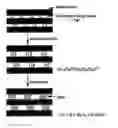
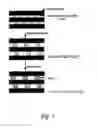
DESCRIPTION OF THE FIGUREFIG. 1 is a depiction of three (3) embodiments of the invention.
SUMMARY OF THE INVENTIONThe advantage of the composites according to the invention, and the membranes prepared therewith, is the incorporation of an organic component, especially of protonated nitrogen bases, into the cavities of the phyllosilicates, which is a cross-linking component, when the base is provided on a polymer backbone. Furthermore, the selective incorporation of cations or metal hydroxides with subsequent reaction to the corresponding metal oxides permits varying the Lewis acid properties and size of the membrane cavities in a wide range. Moreover, the phyllosilicates can be functionalized to interact with ionomers in which they are embedded or to influence the surrounding medium according to their functional group.
The invention relates to an ion conducting composite comprising: (A) a polymer; (B) an acid-base component comprising an acid and/or a base; and (C) a phyllosilicate and/or tectosilicate, wherein components (A) and (B) can be combined into a polymer comprising an acidic and/or basic group. The sum of the amounts of the acid-base component and the polymer are from 1 to 99 weight % and the amount of phyllosilicate and/or tectosilicate is from 99 to 1 weight %. The acid and/or a base is present in the cavities of the phyllosilicate and/or tectosilicate.
In one embodiment, an ionomer is used as the combination of components A) and (B) and is selected from the group consisting of:
- a) a cation exchange polymer comprising a cation exchange group —SO3H, —COOH, and/or —PO3H2, wherein the polymer can be non-cross-linked or covalently crosslinked and the polymer backbone can be a vinyl polymer, an aryl main chain polymer, polythiazole, polypyrazole, polypyrrole, polyaniline, polythiophene or any blend of these;
- b) an anion exchange polymer comprising an anion exchange group —NR3+, PyrH+, ImR+, PyrazR+, TriR+, and/or other organic basic aromatic and/or non-aromatic groups, wherein R is a hydrogen, alkyl, or aryl group, wherein the polymer is non-cross-linked or covalently crosslinked, and wherein the polymer comprises a vinyl polymer, an aryl main chain polymer, polythiazole, polypyrazole, polypyrrole, polyaniline, polythiophene, or a blend thereof;
- c) a polymer containing on the polymer chain both anion exchange groups from (b) and cation exchange groups from (a), wherein the polymer comprises a vinyl polymer, an aryl main chain polymer, polythiazole, polypyrazole, polypyrrole, polyaniline, polythiophene, or a blend thereof; or
d) a blend of (a) and (b), wherein the mixing ratio can range from 100% of (a) to 100% of (b), wherein the blend is covalently and ionically cross-linked, and wherein the polymer comprises a vinyl polymer, an aryl main chain polymer, polythiazole, polypyrazole, polypyrrole, polyaniline, polythiophene, or a blend thereof.
Preferably, the ionomer is an ionomer blend (d), and the phyllosilicate is montmorillonite or clinoptilolite.
In another embodiment, a precursor of the ionomer is used as the combination of components (A) and (B) and is selected from the group consisting of:
- (a) the precursor of: a cation exchange polymer (a1) comprising COHal, CONR2, or COOR groups; a cation exchange polymer (a2) comprising SO2Hal, SO2NR2, or SO2OR groups; or a cation exchange polymer (a3) comprising PO3Hal2, PO3(NR2)2, or PO3(OR)2 groups, wherein R is a hydrogen, alkyl, or aryl group, and wherein Hal is a fluorine, chlorine, bromine, or iodine atom; or
- (b) the precursor of an anion exchange polymer comprising —NR2, pyridyl, imidazolyl, pyrazolyl, triazolyl, and/or other organic basic aromatic and/or non-aromatic groups, wherein R is a hydrogen, alkyl, or aryl group, and wherein Hal is a fluorine, chlorine, bromine, or iodine atom.
Advantageously, the phyllosilicate is a bentonite. More preferably, the bentonite is montmorillonite. Alternatively, the phyllosilicate may be a pillared phyllosilicate, and/or the tectosilicate may be a zeolite, such as clinoptilolite.
In one embodiment, the basic component contains imidazole, vinylimidazole, pyrrazole, oxazole, carbazole, indole, isoindole, dihydrooxazole, isooxazole, thiazole, benzothiazole, isothiazole, benzoimidazole, imidazolidine, indazole, 4,5-dihydropyrazole, 1,2,3-oxadiazole, furazane, 1,2,3-thiadiazole, 1,2,4-thiadiazole, 1,2,3-benzotriazole, 1,2,4-triazole, tetrazole, pyrrole, aniline, pyrrolidine, or pyrrazole groups.
In one embodiment, the polymer component (A) comprises an acid polymer, and wherein the backbone of the polymer comprises one or more of the following repeat units:
If the polymer component (A) is a basic polymer, the backbone of the polymer may comprise one or more of the repeat units above or one or more of the following repeat units:
Components (A) and (B) may be combined into 1) a polymer comprising an acidic group and 2) a polymer comprising a basic group.
The composite is useful as a component in a fuel cell which operates at temperatures from −40° C. to 200° C., or a reverse osmosis or (electro)membrane separator which separates two or more gases or liquids with a membrane comprising the composite. The composite is also useful as a component in a catalytic membrane or a membrane reactor. Advantageously, the composite exhibits thermal resistance up to 400° C.
The invention also contemplates a process for the preparation of the composite, wherein the polymer component, the acid-base component, and the phyllosilicate and/or tectosilicate component are brought into contact, optionally with a solvent, at a temperature from −40° C. to 300° C.
DETAILED DESCRIPTION OF THE PREFERRED EMBODIMENTS(a) The acid may be a cation exchange polymer (having cation exchange groups —SO3H, —COOH, —PO3H2, wherein the polymer can be modified with only one of the described cation exchange groups or with a blend of the described cation exchange groups); wherein the polymer can be not cross-linked or covalently cross-linked. The ion exchange capacity in general is comprised between 0.1 and 12 meq/g, more preferably between 0.3 and 8 meq/g, most preferably between 0.5 and 2 meq/g. Particularly preferred as backbone are thermoplastics.
(b) The acid can also be an organic or inorganic low molecular weight acid. In the inorganic acid case, sulfuric and phosphoric acid are particularly preferred. In the organic acid case, all low molecular weight acids that are sulfonic or carboxylic acids are taken into consideration, especially all amino sulfonic acids and the aminosulfochlorides as their precursors.
(c) The base may be an anion-exchange polymer (having anion exchange groups —NR3+(R═H, alkyl, aryl), pyridinium (PyrR+), imidazolium ImR+), pyrazolium (PyrazR+), triazolium (TriR+), and other organic basic aromatic and/or non-aromatic groups (R═H, alkyl, aryl), wherein the polymer can be modified with only one of the described anion exchange groups or with a blend of the described anion exchange groups); and wherein the polymer can be non-cross-linked or covalently cross-linked. The anion exchange capacity herein is preferably between 1 and 15 meq/g, more preferably between 3 and 12 meq/g, most preferably between 6 and 10 meq/g. Preferred as backbone are again all thermoplastics, particularly polysulfone, polyetheretherketone, polybenzimidazole, and polyvinylpyridine.
(d) The base can be an organic or inorganic low molecular weight base. As an organic low molecular weight base, all guanidine derivatives are particularly preferred.
(e) The functional group of the acid and the base may be in the same molecule. This molecule can be low or high molecular weight. If it is a polymer, then on the polymer chain there are anion exchange groups from (c) as well as cation exchange groups from (a).
(f) The above-mentioned acids and bases of (a) to (e) may be blended in the composite. Any mixing ratio can be chosen. The blend can be further covalently cross-linked, in addition to the ionic cross-linking.
(g) If both the acid and the base are low molecular weight, there is in addition an unmodified polymer contained in the composite.
(h) The inorganic active filler is a phyllosilicate based on montmorillonite, smectite, illite, sepiolite, palygorskite, muscovite, allevardite, amesite, hectorite, talc, fluorhectorite, saponite, beidelite, nontronite, stevensite, bentonite, mica, vermiculite, fluorvermiculite, halloysite, fluor containing synthetical talc types, or blends of two or more of the above-mentioned phyllosilicates. The phyllosilicate can be delaminated or pillared. Particularly preferred is montmorillonite.
The weight ratio of the phyllosilicate is preferably from 1 to 80%, more preferably from 2 to 30% by weight, most preferably from 5 to 20%.
The term “a phyllosilicate” in general means a silicate, in which the SiO4 tetraeders are connected in two-dimensional infinite networks. (The empirical formula for the anion is (Si2O52−)n). The single layers are linked to one another by the cations positioned between them, which are usually Na, K, Mg, Al, or/and Ca, in the naturally occurring phyllosilicates.
By the term “a delaminated functionalized phyllosilicate,” we understand phyllosilicates in which the layer distances are at first increased by reaction with so-called functionalisation agents. The layer thickness of such silicates before delamination is preferably 5 to 100 angstroms, more preferably 5 to 50, and most preferably 8 to 20 angstroms. To increase the layer distances (hydrophobization), the phyllosilicates are reacted (before production of the composites according to the invention) with so-called functionalizing hydrophobization agents, which are often also called onium ions or onium salts.
The cations of the phyllosilicates are replaced by organic functionalizing hydrophobization agents, whereby the desired layer distances which depend on the kind of the respective functionalizing molecule or polymer which is to be incorporated into the phyllosilicate can be adjusted by the kind of the organic residue.
The exchange of the metal ions can be complete or partial. Preferred is the complete exchange of metal ions. The quantity of exchangeable metal ions is usually expressed as milli equivalent (meq) per 1 g of phyllosilicate and is referred to as ion exchange capacity. Preferred are phyllosilicates having a cation exchange capacity of at least 0.5, preferably 0.8 to 1.3 meg/g.
Suitable organic functionalizing hydrophobization agents are derived from oxonium, ammonium, phosphonium, and sulfonium ions, which may carry one or more organic residues.
As suitable functionalizing hydrophobization agents, those of general formula I and/or II are mentioned:
where the substituents have the following meaning:
R1, R2, R3, and R4 are independently from each other: hydrogen, a straight chain, branched, saturated or unsaturated hydrocarbon radical with 1 to 40, preferably 1 to 20, C atoms, optionally carrying at least one functional group, or 2 of the radicals are linked with each other, preferably to a heterocyclic residue having 5 to 10 C atoms, more preferably having one or more N atoms,
X represents phosphorous or nitrogen,
Y represents oxygen or sulfur,
n is an integer from 1 to 5, preferably 1 to 3, and
Z is an anion.
Suitable functional groups are hydroxyl, nitro, or sulfo groups, whereas carboxyl or sulfonic acid groups are especially preferred. In the same way, sulfochloride and carboxylic acid chloride groups are especially preferred.
Suitable anions, Z, are derived from proton delivering acids, in particular mineral acids, wherein halogens, such as chlorine, bromine, fluorine, iodine, sulfate, sulfonate, phosphate, phosphonate, phosphite, and carboxylate, especially acetate, are preferred. The phyllosilicates used as starting materials are generally reacted as a suspension. The preferred suspending agent is water, optionally mixed with alcohols, especially lower alcohols having 1 to 3 carbon atoms. If the functionalizing hydrophobization agent is not water-soluble, then a solvent is preferred in which said agent is soluble. In such cases, this is especially an aprotic solvent. Further examples for suspending agents are ketones and hydrocarbons. Usually, a suspending agent miscible with water is preferred. On addition of the hydrophobizing agent to the phyllosilicate, ion exchange occurs, whereby the phyllosilicate usually precipitates from the solution. The metal salt resulting as a by-product of the ion exchange is preferably water-soluble, so that the hydrophobized phyllosilicate can be separated as a crystalline solid, for example, by filtration.
The ion exchange is mostly independent from the reaction temperature. The temperature is preferably above the crystallization point of the medium and below the boiling point thereof. For aqueous systems, the temperature is between 0 and 100° C., preferably between 40 and 80° C.
For a cation and anion exchange polymer, alkylammonium ions are preferred, in particular if, as a functional group, additionally a carboxylic acid chloride or sulfonic acid chloride is present in the same molecule. The alkylammonium ions can be obtained via usual methylation reagents, such as methyl iodide. Suitable ammonium ions are omega-aminocarboxylic acids; especially preferred are omega-aminosulfonic acids and omegaalkylaminosulfonic acids. Omega-aminosulfonic acids and omega-alkylaminosulfonic acids can be obtained with usual mineral acids, for example, hydrochloric acid, sulfuric acid, or phosphoric acid, or by methylation reagents, such as methyl iodide.
Additional preferred ammonium ions are pyridine and laurylammonium ions. After hydrophobizing, the layer distance of the phyllosilicates is in general between 10 and 50 angstroms, preferably between 13 and 40 angstroms.
The hydrophobized and functionalized phyllosilicate is freed of water by drying. In general, a thus treated phyllosilicate still contains a residual water content of 0-5 weight % of water. Subsequently, the hydrophobized phyllosilicate can be mixed in form of a suspension in a suspending agent, which is free as much as possible from water with the mentioned polymers and can be further processed. According to the invention, the polymers, especially preferably the thermoplastic functionalized polymers (ionomers), are added to the suspension of the hydrophobized phyllosilicates. This can be done using already dissolved polymers, or the polymers are dissolved in the suspension itself. Preferably, the ratio of the phyllosilicates is between 1 and 70 weight %, more preferably between 2 and 40 weight %, and most preferably between 5 and 15 weight %.
Process for Producing the Composite
The present invention concerns, furthermore, a process for producing composite membranes. In the following, process examples to produce proton conducting composites having high proton conductivity are described.
1) An aminoarylsulfochloride is dissolved in tetrahydrofuran. Then, a corresponding quantity of montmorillonite K10 is added. The montmorillonite is proton exchanged and dried. Then, stirring for several hours follows. The time of stirring depends on the molecular size of the aminoarylsulfochloride and the ratio of the amino group to the cation exchange capacity of the montmorillonite. During the stirring process, the amino group intercalates into the cavities of the montmorillonite. To the suspension, sulfochlorinated polysulfone dissolved in tetrahydrofuran is then added. The sulfochloride content of the thermoplastic is approximately 0.5 groups per repeating unit. The suspension is stirred, gently degassed and knife-coated into a film on a glass plate. The tetrahydrofuran is evaporated at room temperature. The content of montmorillonite is chosen to be between 5 and 10 weight % of the added sulfochlorinated polysulfone. Once the film is totally dried, the film is peeled off in deionised water and cured in 10% hydrochloric acid at 90° C. Hereby, the sulfochloride groups are hydrolyzed and reacted to sulfonic acid groups. The resulting membrane is additionally cured in water of 80-90° C., until hydrochloric acid is no longer detectable.
A sulfochlorinated polysulfone having 0.5 SO2Cl groups per repeating unit corresponds, after hydrolysis, to a cation exchange capacity of 1.0 milliequivalent per gram. Due to the additional sulfonic acid groups from the aminoarylsulfochloride, the cation exchange capacity increases remarkably, corresponding to the quantity thereof, and is not water-soluble. At the same cation exchange capacity, exclusively sulfonated polysulfone is water-soluble.
2) Sulfonated polyetheretherketone, having a cation exchange capacity (IEC) of 0.9 milliequivalent per gram, is dissolved in hot (T>80° C.) N-methylpyrrolidone (NMP). The sulfochlorinated form having such a content is not soluble in THF. Polymeric sulfonic acids and their salts are not, or only to a very small extent, soluble in THF. To this solution, a suspension of montmorillonite K10, loaded with an aminosulfonic acid, in NMP is then added. Herein, the sulfonic acid groups are present on the surface, whereas the amino groups are in the cavities of the montmorillonite. The composition of the suspension is again chosen for a solid content to be between 2 and 20 weight of the polymer content. It depends on the application for which the membrane is used. The suspension is processed to a membrane, as above. The solvent is evaporated in a drying board at a temperature between 80° C. and 150° C. The membrane is peeled off from the glass plate and cured in deionized water for 12 hours at 90° C.
3) Sulfochlorinated polysulfone and aminated polysulfone are dissolved in THF. Then, 10 weight % of montmorillonite K10 (dried and in protonated form) is added. The suspension is stirred, degassed and processed to a membrane, as above. The membrane is peeled off from the glass plate and then cured in diluted HCl at 80° C., whereby the sulfochloride group is rehydrolyzed to the sulfonic acid. Then, the membrane is again further treated with deionized water, until all the hydrochloric acid is removed from the membrane.
It has now been found that the composites relating to the invention have surprising properties:
-
- The composites have excellent ionic conductivities even at temperatures far beyond 100° C. Especially, the proton conductivities of the composites are still excellent in this temperature range, due to, on one hand, the water storing properties of the clay materials and, on the other hand, the self-proton conducting properties of the clay materials. The good proton conductivities permit the use of these composites in membrane fuel cells in the above mentioned temperature range.
- Due to the silicates forming cavities, the chemical, mechanical, and thermal stability of composite membranes is significantly increased, because the polymer molecules and the clay minerals and zeolites, respectively, can interact with each other in the cavities. Especially, ionomer blends containing basic polymers and base polymer components may intercalate into the Lewis acid cavities of the silicates, due to the interaction of the base groups, whereby an ionic cross-linking between the acidic silicate and the basic polymer chain is formed, which, depending on the system, may be pH independent, contributing to an increase in mechanical, chemical, and thermal stability, in particular if the composite membranes are used in a strongly acidic or alkaline medium.
- Used in DMFC, the composite membranes relating to the invention show a reduced methanol permeability and gas-through-diffusion across the membrane. Therein, the methanol permeability and the permselectivity of the membrane can be fine tuned at will by:
- The kind of phyllosilicate/tectosilicate
- The mass percentage of the silicate in the composite
- Targeted incorporation of spacer molecules and bifunctional molecules into the silicate cavities. The kind and strength of the interaction of the spacer molecules with the permeate molecules hereby depends on the kind of their functional groups facing outwards and the kind of the functional groups of the permeate molecules. For example, an aminosulfonic acid or an amino carboxylic acid is coupled with the amine functionality in exchange of alkali-bentonite on the bentonite surface. The second functional group is available for the reaction with polymers or for proton transport in electromembrane processes.
- The membranes according to the invention show a strongly decreased fouling (microbial attack of the ionomer membranes by fungi and bacteria), in comparison to conventional ionomer membranes, and this already at a content of 2-5% of silicate (montmorillonite) in the ionomer membrane. This property is due to the clay minerals blended with the composite. It has been known for long that clay minerals may act as soil improving agent by strongly slowing down the microbial degradation, especially by fungi. It is surprising that this property of clay minerals is also shown in membranes which contain clay minerals. Due to this property of the composites according to the invention, their use in membrane separation processes in water and waste water applications is possible and also in any other oxidizing environment, containing, e.g., hydroxy radicals and/or hydrogen peroxide.
- The catalytic properties of the silicate Lewis acids, from which the clay minerals according to the invention are made, can also be used in the composites according to the invention.
1. Sulfonated polyetheretherketone (sulfonation degree 70%) is dissolved with 5 weight % of montmorillonite in DMAc and knife-coated to a membrane of 50 μm thickness after evaporation of the solvent. This membrane is put into an aqueous medium contaminated with fungi. No attack by fungi is identified. The blank without montmorillonite is heavily colonized and attacked.
2. a) Sulfonated polysulfone in salt form and polyvinylpyridine is blended in such a ratio that the final capacity is 1 milli equivalent [H+] per gram of the total blend. Both polymers are dissolved in DMAc and processed to a membrane. The specific resistance of this membrane is 33 ohm·cm.
b) To an identical blend as in 2a, additionally 8 weight % of activated montmorillonite is added, and the blend obtained is processed to a membrane as in 2a. The specific resistance is 27.7 ohm·cm.
3. Polybenzimidazole dissolved in DMAc is mixed with 10 weight % of activated montmorillonite and as a blank without the phyllosilicate. Either blend is processed to a membrane, and the resistances are measured by impedance spectroscopy. Without the phyllosilicate, the resistance is 588 ohm·cm, with the phyllosilicate, 276 ohm·cm.
Claims
1-19. (canceled)
20. A process for the preparation of the composite, comprising:
preparing precursors for forming a polymer, including an acid-base component, such that the polymer is formed having an acidic group and a basic group; and
bringing together the precursors and a phyllosilicate or a tectosilicate component at a temperature from −40° C. to 300° C., such that the basic group is intercalated into the phyllosilicate or the tectosilicate.
21. A process as in claim 20, wherein the preparing comprises forming the polymer in the presence of an acid-base component and a solvent.
Images & Drawings included:


Sources:
- United States Patent and Trademark Office - verify current appl. status at the USPTO↗
Similar patent applications:
- » 20130022893
COMPOSITION, COMPOSITE MEMBRANE PREPARED FROM COMPOSITION, FUEL CELL INCLUDING THE COMPOSITE MEMBRANE, AND METHOD OF MANUFACTURING THE COMPOSITE MEMBRANE - » 20180166741
Composite membrane comprising solid electrolyte, method of making said composite membrane, and electrochemical cell comprising said composite membrane - » 20190214622
Composite membrane, anode structure including the composite membrane, lithium battery including the anode structure, and method of preparing the composite membrane - » 20200321633
Composite membrane including ion-conductive polymer layer and gas blocking inorganic particles, method of preparing the composite membrane, and lithium air battery including the composite membrane - » 20240186554
COMPOSITE MEMBRANE OF SPECIAL HIGHLY-ENHANCED FLUORINE-CONTAINING PROTON OR ION EXCHANGE MEMBRANE, COMPOSITE MEMBRANE ELECTRODE, SPECIAL HIGHLY- ENHANCED FLUORINE-CONTAINING CHLOR-ALKALI BATTERY MEMBRANE, SPECIAL RELEASE MEMBRANE, AND PREPARATION METHOD THEREFOR - » 20200023320
SEPARATION COMPOSITE MEMBRANE, SEPARATION MEMBRANE MODULE, SEPARATOR, COMPOSITION FOR FORMING SEPARATION MEMBRANE, AND METHOD OF PRODUCING SEPARATION COMPOSITE MEMBRANE - » 20140183127
COMPOSITE SEMIPERMEABLE MEMBRANE, COMPOSITE SEMIPERMEABLE MEMBRANE ELEMENT, AND METHOD FOR MANUFACTURING COMPOSITE SEMIPERMEABLE MEMBRANE - » 20190070569
COMPOSITE SEMIPERMEABLE MEMBRANE, COMPOSITE SEMIPERMEABLE MEMBRANE ELEMENT, AND METHOD OF MANUFACTURING COMPOSITE SEMIPERMEABLE MEMBRANE - » 20060216563
Electrolyte membrane, electrolyte membrane composite, method of manufacturing electrolyte membrane composite, electrolyte membrane-electrode assembly for fuel cell, method of manufacturing electrolyte membrane-electrode assembly for fuel cell, and fuel cell - » 20180147546
Method for producing gas separation composite membrane, liquid composition, gas separation composite membrane, gas separation module, gas separation apparatus, and gas separation method
Recent applications in this class:
- » 20240001307 2024-01-04
Composite nanoporous metal membrane - » 20200188858 2020-06-18
Composite Nanoporous Metal Membrane - » 20190099721 2019-04-04
Emulsification element and emulsification device - » 20190022596 2019-01-24
Catalyst-containing oxygen transport membrane - » 20180169588 2018-06-21
Ceramic membrane for water treatment using oxidation-treated SiC and method for manufacturing the same - » 20180154316 2018-06-07
WATER PURIFICATION - » 20180141006 2018-05-24
Carbon-containing membrane for water and gas separation - » 20180104654 2018-04-19
Production system for composite porous solid articles - » 20170266623 2017-09-21
METHOD FOR PREPARING TUBULAR GRAPHENE COMPOSITE MEMBRANE - » 20160199786 2016-07-14
Method for manufacturing electrically conductive separation membrane for water treatment, separation membrane manufactured thereby, and water treatment method using same separation membrane
Recent applications for this Assignee:
- » 20120245237 2012-09-27
Ionomers with ionic groups in the side chain