Brazing method utilizing metallic porous materials
US20060180640A1
2006-08-17
11/347,385
2006-02-06
✅ Patent granted
US 7,635,078 B2
2009-12-22
-
-
Karl E Group | Noah S Wiese
2026-02-06
Abstract:
This invention relates to a method of brazing while the thickness of the opening between materials being brazed can not be maintained constant or can not be adjusted in the appropriate range. In order to solve this issue the porous material of metals or metal alloys consisting of Ni, Cu, Ti, Al, Ag or W should be utilized. The metallic porous material is inserted into the brazing opening mentioned above by using the softness of it, and is made to hold the brazing solder and to reinforce the bonding part after brazing.
Inventors:
- Kiichi Kanda 8 🇯🇵 Hiratsuka-shi, Japan
- Kiichi Kanda 3 🇯🇵 Hiratsuka, Japan
- Tadashi Ariga 1 🇯🇵 Naka-gun, Japan
- Tadashi Ariga 1 🇯🇵 Oiso-machi, Japan
Assignee:
- Kanto Yakin Kogyo Kabushiki Kaisha 2 🇯🇵 Kanagawa-Ken, Japan
Interested in similar patents?
Get notified when new applications in this technology area are published.
Classification:
C22C1/04 IPC
Making alloys by powder metallurgy
B23K2103/10 » CPC further
Materials to be soldered, welded or cut; Non-ferrous metals or alloys Aluminium or alloys thereof
B23K2103/14 » CPC further
Materials to be soldered, welded or cut; Non-ferrous metals or alloys Titanium or alloys thereof
B23K1/19 » CPC main
Soldering, e.g. brazing, or unsoldering taking account of the properties of the materials to be soldered
B23K20/00 IPC
Non-electric welding by applying impact or other pressure, with or without the application of heat, e.g. cladding or plating
B23K28/00 IPC
Welding or cutting not covered by any of the preceding groups, e.g. electrolytic welding
B23K1/20 IPC
Soldering, e.g. brazing, or unsoldering Preliminary treatment of work or areas to be soldered, e.g. in respect of a galvanic coating
B23K5/213 IPC
Gas flame welding Preliminary treatment
B23K20/24 IPC
Non-electric welding by applying impact or other pressure, with or without the application of heat, e.g. cladding or plating Preliminary treatment
B22F1/00 IPC
Metallic powder; Treatment of metallic powder, e.g. to facilitate working or to improve properties
Description
CROSS-REFERENCE TO RELATED APPLICATIONThis application claims priority of Japanese Application No. 2005-40825, filed Feb. 17, 2005, which is incorporated herein by reference.
FIELD OF THE INVENTIONThis invention relates to a method of brazing while the thickness of the opening between materials being brazed can not be maintained constant or can not be adjusted in the appropriate range. In order to solve this issue the porous material of metals or metal alloys consisting of Ni, Cu, Ti, Al, Ag or W should be utilized. The metallic porous material is inserted into the brazing opening mentioned above consisting of Ni, Cu, Ti, Al, Ag or W should be utilized. The metallic porous material is inserted into the brazing opening mentioned above by using the softness of it, and is made to hold the brazing solder and to reinforce the bonding part after brazing.
BACKGROUND OF THE INVENTIONSoft porous materials of metals or metal alloys are well known, however, the area of utilization of these materials is limited and utilization in the area of brazing is not developed at all.
Manufacturing methods of porous materials of metals or metal alloys are mentioned in Japanese Patent Laying Open Publication Number Heisei 5-339605, Japanese Patent Laying Open Publication Number Heisei 6-158116, Japanese Patent Laying Open Publication Number 2003-328006, and Japanese Patent Laying Open Publication Number 2003-328007 etc. Most of these porous materials have softness. Softness here means that the material is fiber type like cotton and that the thickness of the material is freely adjusted by pressure.
However utilization of these porous materials is not known in the area of brazing.
In brazing sometimes the opening thickness between the materials being brazed, which might be metals, metal alloys, ceramics etc., can not be kept constant. In other words, the opening might be rather large, or the shape of the materials being brazed might not be ordinary, or the number of parts to be brazed is more than two or larger. In these cases it is very difficult to keep bonding opening constant even if using holding tools, and consequently it is impossible to have good brazing. Also it is impossible to have good brazing when the opening thickness between the materials being brazed is rather larger than the proper opening thickness 0-0.05 mm indicated in Brazing Handbook (AWS) 1991, for example, the opening thickness is more than 0.1 mm.
It is important to have the proper bonding opening because the liquid solder is inserted into the bonding opening and then bonding is done by curing the melted solder. This is the basis of brazing. When the bonding opening is bigger as mentioned above, liquid solder can not be inserted and held in between.
OBJECTS AND SUMMARY OF THE INVENTIONIt is an object of the invention to overcome the drawbacks of the prior art.
In this invention, the brazing opening is adjusted by using the softness of the porous materials of metals or metal alloys when the normal brazing has difficulty (Refer to FIG. 1 and FIG. 2), or putting the solder together with the porous material so that it can hold the solder. In other words the porous material is inserted into the opening between the materials being brazed, the solder is added to the upper and lower surfaces of the porous material and heated.
The solder is melted by heat and penetrates into the pores of the porous material, then porous material and solder are together and bonded to the main component of the material being brazed, which is metals or metal alloys consisting of Fe, Cu, Al, Ti, Ni etc. or ceramics. Solder can be added to the porous material beforehand.
This invention includes a method of utilizing the porous material of metals or metal alloys as inserting the porous material into the bonding opening which is not maintained constant or properly by utilizing the softness of the porous material. Inserted porous material holds solder.
Metals or metal alloys consisting of Ni, Cu, Ti, Al, Ag or W can be used as the porous material mentioned above.
This invention does not propose only the technology of adjusting the openings mentioned above. In the case, for example, using solder whose melting point is lower than nickel, such as silver solder, nickel solder, aluminum solder or copper solder, and if nickel is included in the porous material, nickel in the porous material remains in the bonding section after brazing. And it is effective to the strength of the bonding section and it eases the stress of various kinds. In this case the important point is that nickel fiber in the porous material and solder have metallic interface.
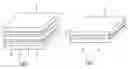
BRIEF DESCRIPTION OF DRAWINGFIG. 1 explains how to realize this invention in case the porous material is nickel, it is held by solder and materials to be brazed are flat plates (EXAMPLE 1); and
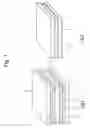
FIG. 2 explains how to realize this invention in case the porous material is nickel, it is held by solder and materials to be brazed are tube types (EXAMPLE 2).
DETAILED DESCRIPTION OF THE INVENTION EXPLANATION OF REFERENCE NUMBERS
- 1—Metallic porous material
- 2—Solder such as silver solder
- 3—Material to be brazed
Nickel powder was penetrated to urethane and sintered at 1,300° C., then the soft metallic porous material (Nickel mat) 1 was obtained. This porous material 1 can be sintered after silver solder 2 (700-950° C.) is penetrated. The thickness of this porous material was 1.5 mm. Material to be brazed 3, SUS 304 stainless plates were used in this example.
As shown in the figure before brazing ((a) in FIG. 1) in FIG. 1 porous material 1 was processed by pressure and thickness of this material became 0.4 mm from the original thickness 1.5 mm. This 0.4 mm is larger than normal appropriate thickness. The porous material 1 can be processed easily to the desired thickness.
The porous material 1 of 0.4 mm was placed between two stainless plates 3, the porous material 1 was sandwiched by silver solder 2 and heated in furnace at 1,000° C. for 10 minutes. After this processing sample was cut and neighborhood of brazing interfaces were studied by microscope. It was confirmed the solder was evenly distributed in the bonding opening of 0.4 mm and nickel of banded tissue was well spread in the solder and nickel and solder were bonded metallically. ((b) in FIG. 1)
Generally it is impossible to pack the opening thickness of 0.4 mm by solder. As mentioned before proper opening thickness is 0-0.05 mm as indicated in Brazing Handbook (AWS) 1991.
Example 2As shown in FIG. 2 two tube type stainless steels (SUS 304) 3 and 3 were brazed using the same materials in EXAMPLE 1. ((a) in FIG. 2)
As a result two tubes 3 and 3 were strongly brazed by metallic bonding between nickel and solder same as EXAMPLE 1. ((b) in FIG. 2)
Although the porous material 1 was manufactured by nickel in the examples above, it is obvious that other metals or metal alloys consisting of Cu, Ti, Al, Ag or W can be used as the porous material.
Although silver solder was used as the solder 2 in the examples above, other solders can be used. For example nickel solder (950-1,250° C.), aluminum solder (580-610° C.), Sn—Ag solder (300-500° C.), gold solder (1,000-1,300° C.) etc. can be used.
While this invention has been described as having a preferred design, it is understood that it is capable of further modifications, and uses and/or adaptations of the invention and following in general the principle of the invention and including such departures from the present disclosure as come within the known or customary practice in the art to which the invention pertains, and as may be applied to the central features hereinbefore set forth, and fall within the scope of the invention or limits of the claims appended hereto.
Claims
What is claimed is:1. A method of utilizing the porous material of metals or metal alloys in which it is inserted into the opening between the materials being brazed by using the softness of the metallic porous material when the thickness of the opening for brazing can not be maintained constant or can not be adjusted in the appropriate thickness range.
2. A method of utilizing metallic porous material in claimed method 1 mentioned above when inserted porous material holds solder.
3. A method of utilizing metallic porous material in claimed method 1 and 2 mentioned above when the porous material is made of metals or metal alloys containing Ni, Cu, Ti, Al, Ag or W.
Images & Drawings included:

Sources:
- United States Patent and Trademark Office - verify current appl. status at the USPTO↗
Recent applications in this class:
- » 20250214164 2025-07-03
Process for Joining Silver-Graphite to Copper Carriers - » 20250018489 2025-01-16
Brazing Method, Brazed Joint, and Braze - » 20240316667 2024-09-26
ALUMINUM ALLOY BRAZING SHEET AND METHOD FOR MANUFACTURING THE SAME - » 20240173787 2024-05-30
TOOL AND MANUFACTURING METHOD OF IT - » 20240165725 2024-05-23
FURNACE BRAZE CYCLE ENHANCEMENT - » 20230226630 2023-07-20
JOINED BODY AND ELECTROSTATIC CHUCK - » 20230182223 2023-06-15
BRAZING METHOD - » 20230150048 2023-05-18
BRAZED ALUMINUM MEMBER AND METHOD FOR PRODUCING BRAZED PRODUCT - » 20210370428 2021-12-02
System and method for compensating for thermal expansion caused by soldering process - » 20210078092 2021-03-18
CERAMIC-ALUMINUM ASSEMBLY WITH BONDING TRENCHES
Recent applications for this Assignee:
- » 20060292516 2006-12-28
Brazing furnace