Alkyl-aryl oligomeric phosphate ester and polymeric plasticizer blends for vinyl resins
US20060194904A1
2006-08-31
11/264,961
2005-11-02
✅ Patent granted
US 7,407,997 B2
2008-08-05
-
-
Peter Szekely
2026-11-17
Abstract:
A vinyl chloride polymer composition that contains a mixture of an alkylene-bridged bisphosphate composition, as a fire retardant, and a polyester plasticizer, which is the reaction product of an aliphatic diol and a dicarboxylic acid.
Inventors:
- Paul Y. Moy 5 🇺🇸 Fishkill, NY, United States
- Lambertus A. DeKleine 2 🇳🇱 Hengelo, Netherlands
Assignee:
- SUPRESTA LLC 12 🇺🇸 Ardsley, NY, United States
Interested in similar patents?
Get notified when new applications in this technology area are published.
Classification:
C08K5/521 IPC
Use of organic ingredients; Phosphorus-containing compounds; Phosphorus bound to oxygen; Phosphorus bound to oxygen only Esters of phosphoric acids, e.g. of HPO
C08L67/02 » CPC further
Compositions of polyesters obtained by reactions forming a carboxylic ester link in the main chain ; Compositions of derivatives of such polymers Polyesters derived from dicarboxylic acids and dihydroxy compounds
C08K5/523 » CPC main
Use of organic ingredients; Phosphorus-containing compounds; Phosphorus bound to oxygen; Phosphorus bound to oxygen only; Esters of phosphoric acids, e.g. of HPO with hydroxyaryl compounds
C08L27/06 » CPC further
Compositions of homopolymers or copolymers of compounds having one or more unsaturated aliphatic radicals, each having only one carbon-to-carbon double bond, and at least one being terminated by a halogen; Compositions of derivatives of such polymers not modified by chemical after-treatment containing chlorine atoms Homopolymers or copolymers of vinyl chloride
C08L2666/18 » CPC further
Composition of polymers characterized by a further compound in the blend, being organic macromolecular compounds, natural resins, waxes or and bituminous materials, non-macromolecular organic substances, inorganic substances or characterized by their function in the composition; Organic macromolecular compounds, natural resins, waxes or and bituminous materials; Macromolecular compounds according to - ; Derivatives thereof Polyesters or polycarbonates according to - ; Derivatives thereof
C08K5/52 IPC
Use of organic ingredients; Phosphorus-containing compounds; Phosphorus bound to oxygen Phosphorus bound to oxygen only
C08K5/10 IPC
Use of organic ingredients; Oxygen-containing compounds Esters; Ether-esters
Description
Blends of certain polymeric plasticizers with an alkylene-bridged aryl bis-phosphate compositions have shown low-levels of smoke generation and of heat release rate as measured in combustion studies.
Additives which act as flame retardants can contribute significantly to smoke generation because they decrease the efficiency of the fuel source and as a result, create a sooty combustion. It has been found that blends of an alkylene-bridged aryl bis-phosphate and a polymeric plasticizer contribute significantly to flame retardancy while maintaining a very low level of smoke evolution.
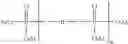
A series of plasticizers were blended together in a vinyl composite formulation and measured for flammability, smoke generation by the use of cone calorimetry, UL FR protocol (UL-94) and limited oxygen index. It was found that certain blends showed unique levels of flame and smoke reduction. Superior properties were seen using mixtures of a polymeric-based plasticizer and an alkylene-bridged bis-phosphate. The organic phosphate flame-retardant has the formula: (1):
wherein Ar is an aryl or an alkaryl group, R represents an alkylene bridging group (preferably neopentylene), and n can range from 1 to about 10. Generally speaking, this component can be present in the polymer at from about one to about 120 parts by weight of this component for 100 parts by weight of the vinyl resin, more typically from about 5 to about 70 parts by weight. The plasticizer is a polyester plasticizer of the type described in U.S. Pat. No. 5,576,367, which is incorporated herein in its entirety (especially the description at Col. 2, line 65 to Col. 3, line 10). This type of plasticizer is the reaction product of an aliphatic diol, such as 1,4-butanediol, and a dicarboxylic acid, such as glutaric and/or azelaic acid(s). A preferred, commercially available plasticizer of this type is available as EDENOL 9779 which is formed from a reaction mixture comprising about 41.4 mole % 1,4-butanediol and about 41.4 mole % of an equimolar mixture of glutaric and azelaic acids. Generally speaking, this component can be present in the polymer at from about 5 parts by weight to about 120 parts by weight for every 100 parts by weight of vinyl resin. The weight ratio of flame retardant component to the plasticizer can generally range from about 5:1 to about 1:5.
When evaluated at plasticizer levels of fifty parts per hundred vinyl resin (phr), simple mixtures of 1:1 and 2:1 phosphate ester to polymeric (azelate), respectively, performed exceptionally well when compared to combinations of other phosphate esters, other polymerics and trimellitate-plasticizers in similar FR vinyl composites.
EXPERIMENTALThe following formulations were prepared on the Haake bowl mixer, were processed at 165° C. for five minutes and were then compression molded to the test specifications (1.6 mm thickness). Flammability was measured using three different protocols: UL-94-V0; ASTM-2863—Limited Oxygen Index (LOI); and ASTM-1354-90, Cone Calorimetry. Physical properties were also measured by standard practices, ASTM-638, Tensile Properties of Plastics.
These formulations studied the effects of plasticizer blends. The vinyl composites varied in the mixing ratios of the neopentylene-bridged bis-phosphate (“NDP”) with a “blending plasticizer”. The composites contain one “plasticizer” (neat), a 1:1, or 2:1 weight ratio (NDP:secondary plasticizer). All composites processed easily in the Haake mixing bowl and also released easily from the molding platens (1.6 mm thickness—molded at 375° F.). Sample specimens were cut to test specifications, conditioned in a constant temperature and humidity room and evaluated per protocol designs.
| TABLE #1 |
| Formulations |
| Formulation # |
| 1 | 2 | 3 | 4 | 5 | 6 | 7 | 8 | 9 | 10 | 11 | 12 | 13 | 14 | |
| PVC | 100 | 100 | 100 | 100 | 100 | 100 | 100 | 100 | 100 | 100 | 100 | 100 | 100 | 100 |
| CaCO3 | 10 | 10 | 10 | 10 | 10 | 10 | 10 | 10 | 10 | 10 | 10 | 10 | 10 | 10 |
| ATH (Hydral 710) | 30 | 30 | 30 | 30 | 30 | 30 | 30 | 30 | 30 | 30 | 30 | 30 | 30 | 30 |
| Zinc Borate | 6 | 6 | 6 | 6 | 6 | 6 | 6 | 6 | 6 | 6 | 6 | 6 | ||
| AOM | 6 | 6 | 6 | 6 | 6 | 6 | 6 | 6 | 6 | 6 | 6 | 6 | ||
| NDP | 50 | 50 | 25 | 37.5 | 25 | 37.5 | 25 | 37.5 | 25 | 37.5 | 25 | 37.5 | ||
| TOTM | 25 | 12.5 | ||||||||||||
| XP-1891 | 25 | 12.5 | ||||||||||||
| Santicizer 2148 | 25 | 12.5 | ||||||||||||
| Santicizer 148 | 25 | 12.5 | ||||||||||||
| Edenol 9779 | 25 | 12.5 | 50 | 50 | ||||||||||
| ESO | 5 | 5 | 5 | 5 | 5 | 5 | 5 | 5 | 5 | 5 | 5 | 5 | 5 | 5 |
| Halthal | 5 | 5 | 5 | 5 | 5 | 5 | 5 | 5 | 5 | 5 | 5 | 5 | 5 | 5 |
| BZ-4975 | 5 | 5 | 5 | 5 | 5 | 5 | 5 | 5 | 5 | 5 | 5 | 5 | 5 | 5 |
| Totals: | 205 | 217 | 217 | 217 | 217 | 217 | 217 | 217 | 217 | 217 | 217 | 217 | 205 | 217 |
PVC - Geon 103EP (Geon) |
||||||||||||||
ATH—alumina trihydrate (ALCOA, Hydral 710) |
||||||||||||||
Zinc borate - (U.S. Borax, Firebrake 2335) |
||||||||||||||
AOM—ammonium octylmolybdate, (PAG) |
||||||||||||||
NDP—neopentylene bis-diphenylphosphate |
||||||||||||||
TOTM—trioctyl trimellitate (Velsicol) |
||||||||||||||
XP-1891 - polymeric plasticizer (Velsicol) |
||||||||||||||
Santicizer 148 - isodecyldiphenyl phosphate (Ferro) |
||||||||||||||
Santicizer 2148 - alkyl diphenylphosphate (Ferro) |
||||||||||||||
Edenol 9779 - polymeric plasticizer (Cognis) |
||||||||||||||
ESO—Epoxidized soya oil (AKCROS) |
||||||||||||||
Halthal - lead stabilizer, (Halstab) |
||||||||||||||
BZ-4975 - metal soap stabilizer (AKCROS) |
By simple flammability measurements, these vinyl composites were tested for LOI and UL-94 vertical flammability (V0). As one would expect, composites containing only the phosphate ester (“NDP”) as the plasticizing agent showed the best overall flammability performance (as exhibited by the higher LOI and excellent UL-94 results). Conversely, EDENOL 9779 polymeric plasticizer, which contains neither phosphorus nor halogen to effect flame resistance, showed the worst flammability characteristics in both test protocols with the lowest LOI value (minimum O2 percent necessary to sustain ignition) and also the highest UL-94 after flame time (AFT—time of sustained combustion after ignition source is remove). The UL-94 testing also showed a slight loss of FR rating when EDENOL 9779 plasticizer (Formulation # 14) was mixed with smoke suppressants and char formers (AOM & zinc borate). Because of the high flame times, this composite dropped to an UL-94 V1 rating (one or more ignition times greater than ten seconds).
| TABLE #2 |
| Formulations: UL-94 & LOI Evaluations |
| Formulation # |
| 1 | 2 | 3 | 4 | 5 | 6 | 7 | 8 | 9 | 10 | 11 | 12 | 13 | 14 | |
| PVC | 100 | 100 | 100 | 100 | 100 | 100 | 100 | 100 | 100 | 100 | 100 | 100 | 100 | 100 |
| CaCO3 | 10 | 10 | 10 | 10 | 10 | 10 | 10 | 10 | 10 | 10 | 10 | 10 | 10 | 10 |
| ATH (Hydral 710) | 30 | 30 | 30 | 30 | 30 | 30 | 30 | 30 | 30 | 30 | 30 | 30 | 30 | 30 |
| Zinc Borate | 6 | 6 | 6 | 6 | 6 | 6 | 6 | 6 | 6 | 6 | 6 | 6 | ||
| AOM | 6 | 6 | 6 | 6 | 6 | 6 | 6 | 6 | 6 | 6 | 6 | 6 | ||
| NDP | 50 | 50 | 25 | 37.5 | 25 | 37.5 | 25 | 37.5 | 25 | 37.5 | 25 | 37.5 | ||
| TOTM | 25 | 12.5 | ||||||||||||
| VCC XP-1891 | 25 | 12.5 | ||||||||||||
| Santicizer 2148 | 25 | 12.5 | ||||||||||||
| Santicizer 148 | 25 | 12.5 | ||||||||||||
| Edenol 9779 | 25 | 12.5 | 50 | 50 | ||||||||||
| ESO | 5 | 5 | 5 | 5 | 5 | 5 | 5 | 5 | 5 | 5 | 5 | 5 | 5 | 5 |
| Halthal | 5 | 5 | 5 | 5 | 5 | 5 | 5 | 5 | 5 | 5 | 5 | 5 | 5 | 5 |
| BZ-4975 | 5 | 5 | 5 | 5 | 5 | 5 | 5 | 5 | 5 | 5 | 5 | 5 | 5 | 5 |
| Totals: | 205 | 217 | 217 | 217 | 217 | 217 | 217 | 217 | 217 | 217 | 217 | 217 | 205 | 217 |
| LOI: (1.6 mm) | 33 | 34 | 30 | 30.5 | 30.5 | 30.5 | 30 | 30.5 | 30.5 | 31 | 31.5 | 32 | 27.5 | 30 |
| UL-94 (1.6 mm) | V-0 | V-0 | V-0 | V-0 | V-0 | V-0 | V-0 | V-0 | V-0 | V-0 | V-0 | V-0 | V-0 | V-1 |
| (AFT) | 0 | 0 | 0.1 | 0.1 | 0.1 | 0.1 | 0.1 | 0.1 | 0.1 | 0.1 | 0.1 | 0.1 | 0.1 | 3.9 |
Cone Calorimetry:
Cone calorimetry further describes the flammability of these composites. The ignition source differs from the other flammability tests in that the cone decomposes the specimen through radiant heat (cone shaped mantel), and the ignition of the evolved combustible gases is done by an electrical piezo-igniter (both the UL-94 and LOI protocols use an open flame rather than radiant heat). Testing of these mixtures reveals significant synergy between the EDENOL 9779 plasticizer and NDP. The cone tests were preformed on an Atlas cone calorimeter under a heat flux of 50 kW/m2.
At equivalent ratios of NDP with the blending plasticizer, mixtures containing both NDP and the EDENOL 9779 plasticizer showed significant decrease in smoke generation (superior to smoke values of the compounds with the individual components—reference table 3). These low smoke values were achieved while maintaining low combustion values (as seen in suppression of the peak heat release point). Similarly, NDP and the EDENOL 9779 plasticizer, neat and with smoke suppressants, did not reduce smoke values as efficiently.
| TABLE #3 |
| NDP/Polymeric Blends |
| Formulation Reference: |
| 1 | 2 | 11 | 12 | 13 | 14 | 5 | 6 |
| Plasticizer |
| NDP | NDP, FRs | NDP | NDP | 9779 | 9779, FR | NDP | NDP, FR |
| 2nd Plasticizer |
| Neat | neat | 9779 | 9779 | Neat | Neat | XP1891 | XP1891 |
| Ratio |
| — | — | 1/1 | 2/1 | — | — | 1/1 | 2/1 | |
| Peak HRR | kW/m2 | 172.7 | 130.3 | 194.1 | 158.1 | 224 | 208.9 | 189.4 | 199 |
| Avg. HRR | kW/m2 | 83.9 | 69.7 | 98.9 | 96.9 | 72 | 76.9 | 83.7 | 91.3 |
| Avg. HRR - T60 | kW/m2 | 114.3 | 94.5 | 136.6 | 111 | 138.2 | 138.9 | 127.7 | 132 |
| Avg. HRR - T180 | kW/m2 | 99.4 | 90.4 | — | — | 106.3 | 99.5 | 99 | 104 |
| Avg. HRR - T300 | kW/m2 | 0 | — | — | — | 76.3 | — | — | — |
| Total Heat: | kW/m2 | 20.5 | 21.23 | 14 | 10.7 | 23.5 | 21.3 | 20.4 | 21.3 |
| Avg. Effective | MJ/m2 | 17.23 | 19.5 | 14.4 | 11.6 | 19.5 | 19.7 | 19.1 | 19.8 |
| HOC: | |||||||||
| Smoke | m2/kg | 806.2 | 582 | 556 | 487 | 719 | 500 | 693 | 671 |
| Avg. % Loss Rate: | g/s * m2 | 9.89 | 7.76 | 12.8 | 14.4 | 8 | 8.73 | 9.85 | 10.2 |
| Avg. % Loss | % | 82.2 | 69.1 | 60.2 | 56 | 80 | 70.2 | 69 | 68.5 |
| Avg. CO Yield: | kg/kg | 0.112 | 0.058 | 0.0837 | 0.0648 | 0.09 | 0.0795 | 0.062 | 0.078 |
| Avg. CO2 Yield: | kg/kg | 0.833 | 1.056 | 0.6751 | 0.475 | 0.946 | 1.034 | 1.015 | 1.023 |
| Time to Ignition: | Seconds | 24.6 | 21.8 | 21 | 21.7 | 21.2 | 20.3 | 19.2 | 20.5 |
Cone Data: 50 kW/m2 heat flux |
|||||||||
HRR—Heat Release Rate |
|||||||||
Avg. HRR - T60—Avg. heat release rate after 60 seconds |
|||||||||
Avg. HRR - T180—Avg. heat release rate after 180 seconds |
|||||||||
Avg. HRR - T300—Avg. heat release rate after 300 seconds |
|||||||||
Total heat: cumulative heat energy evolved |
|||||||||
Smoke - Light obscuration per mass |
|||||||||
Time to ignition - time in seconds to initiate flaming characteristics |
NDP Blends with Other Phosphate Esters
Further cone testing of the plasticizer blends showed the effectiveness of NDP blended with the EDENOL 9779 product as compared to blends with other phosphate esters: including SANTICIZER 148 isodecyl diphenyl phosphate ester, which is commonly used for low smoke applications; and SANTICIZER 2148 alkyl diphenyl phosphate, another low smoke FR plasticizer, which is similar to SANTICIZER-148, but with a straight chain aliphatic alkyl group. Combinations of these phosphate esters with NDP demonstrated low smoke values, but not as low as the NDP/EDENOL 9779 plsasticizer mixtures. Both ratios of 1:1 and 2:1 NDP/EDENOL 9779 plasticizer were found to generation-significantly lower smoke values than similarly compounded vinyl samples containing the SANTICIZER brand plasticizers. Despite the lower smoke values of the NDP/EDENOL 9779 compounds, cone evaluations also demonstrated the superior low flammability properties of these combinations.
| TABLE #4 |
| NDP/Phosphate Ester blends |
| Formulation # |
| 11 | 12 | 9 | 10 | 7 |
| Plasticizer |
| NDP | NDP | NDP | NDP | NDP |
| 2nd Plasticizer |
| C-9779 | C-9779 | 148 | 148 | 2148 |
| Ratio |
| 1/1 | 2/1 | 1/1 | 2/1 | 1/1 | |
| Peak HRR | kW/m2 | 194.1 | 158.1 | 226.8 | 199.6 | 223.7 |
| Avg. HRR | kW/m2 | 98.9 | 96.9 | 105.6 | 104 | 105.1 |
| Avg. HRR - T60 | kW/m2 | 136.6 | 111 | 149.5 | 138.8 | 150.4 |
| Avg. HRR - T180 | kW/m2 | — | — | 114.6 | 109.5 | 113.2 |
| Avg. HRR - T300 | kW/m2 | — | — | — | — | — |
| Total Heat: | kW/m2 | 14 | 10.7 | 21.7 | 20.7 | 21.4 |
| Avg. Effective HOC: | MJ/m2 | 14.4 | 11.6 | 20.4 | 20.2 | 20.7 |
| Smoke | m2/kg | 556 | 487 | 839 | 754 | 760 |
| Avg. % Loss Rate: | g/s * m2 | 12.8 | 14.4 | 11.35 | 10.8 | 11.3 |
| Avg. % Loss | % | 60.2 | 56 | 69.5 | 66.6 | 68.8 |
| Avg. CO Yield: | kg/kg | 0.0837 | 0.0648 | 0.0808 | 0.0777 | 0.0834 |
| Avg. CO2 Yield: | kg/kg | 0.6751 | 0.475 | 0.987 | 1.069 | 6 |
| Time to Ignition: | Seconds | 21 | 21.7 | 17.8 | 20.5 | 18.1 |
Cone Data: 50 kW/m2 heat flux |
NDP Blends with Trimellitates
Further comparisons to plasticizers useful in wire and cable applications, such as the trimellitates, were also made. One common grade of this plasticizer type is trioctyl trimellitate (TOTM). Blends of NDP/TOTM were evaluated in the cone calorimeter and the results show the NDP/EDENOL 9779 plasticizer blend to be superior in both low smoke generation and also better flame resistance (see Table #5, below).
| TABLE #5 |
| NDP/TOTM Blends |
| Formulation # |
| 11 | 12 | 3 | 4 |
| Plasticizer |
| NDP | NDP | NDP | NDP |
| 2nd Plasticizer |
| C-9779 | C-9779 | TOTM | TOTM |
| Ratio |
| 1/1 | 2/1 | 1/1 | 2/1 | |
| Peak HRR | kW/m2 | 194.1 | 158.1 | 201 | 169 |
| Avg. HRR | kW/m2 | 98.9 | 96.9 | 96.3 | 78.6 |
| Avg. | kW/m2 | 136.6 | 111 | 134 | 121.6 |
| HRR - T60 | |||||
| Avg. | kW/m2 | — | — | 104.8 | 97.7 |
| HRR - T180 | |||||
| Avg. | kW/m2 | — | — | — | — |
| HRR - T300 | |||||
| Total Heat: | kW/m2 | 14 | 10.7 | 20.5 | 21.1 |
| Avg. Effective | MJ/m2 | 14.4 | 11.6 | 20.1 | 19.8 |
| HOC: | |||||
| Smoke | m2/kg | 556 | 487 | 748 | 734 |
| Avg. % Loss | g/s * m2 | 12.8 | 14.4 | 10.11 | 8.71 |
| Rate: | |||||
| Avg. % Loss | % | 60.2 | 56 | 68.4 | 68.5 |
| Avg. CO | kg/kg | 0.0837 | 0.0648 | 0.07 | 0.0725 |
| Yield: | |||||
| Avg. CO2 | kg/kg | 0.6751 | 0.475 | 0.99 | 1.0735 |
| Yield: | |||||
| Time to | seconds | 21 | 21.7 | 19.1 | 19.3 |
| Ignition: | |||||
Cone Data: 50 kW/m2 heat flux |
The previous Examples, since they merely illustrate certain embodiments of the present invention should not be construed in a limiting sense. The scope of protection sought is set forth in the Claims that follow.
Claims
1. A vinyl chloride polymer composition that comprises a mixture of an alkylene-bridged bisphosphate composition, as a fire retardant, and a polyester plasticizer, which is the reaction product of an aliphatic diol and a dicarboxylic acid.
2. A composition as claimed in claim 1 wherein the alkylene-bridged bisphosphate composition comprises neopentylene bis(diphenyl phosphate).
3. A composition as claimed in claim 1 wherein the polyester plasticizer is the reaction product of 1,4-butanediol and a mixture of glutaric and azelaic acid.
4. A composition as claimed in claim 1 wherein the alkylene-bridged bisphosphate composition comprises neopentylene bis(diphenyl phosphate) and the polyester plasticizer is the reaction product of 1,4-butanediol and a mixture of glutaric and azelaic acids.
5. A composition as claimed in claim 1 wherein the alkylene-bridged bisphosphate composition comprises neopentylene bis(diphenyl phosphate) and the polyester plasticizer is the reaction product of 1,4-butanediol and an equimolar mixture of glutaric and azelaic acids.
6. A vinyl chloride polymer composition that comprises a mixture of from about 5 to about 70 parts by weight of an alkylene-bridged bisphosphate composition, as a fire retardant, and from about 5 to about 120 of a polyester plasticizer, which is the reaction product of an aliphatic diol and a dicarboxylic acid, all weight amounts being based on 100 parts by weight or vinyl chloride polymer.
7. A composition as claimed in claim 6 wherein the alkylene-bridged bisphosphate composition comprises neopentylene bis(diphenyl phosphate).
8. A composition as claimed in claim 6 wherein the polyester plasticizer is the reaction product of 1,4-butanediol and a mixture of glutaric and azelaic acid.
9. A composition as claimed in claim 6 wherein the alkylene-bridged bisphosphate composition comprises neopentylene bis(diphenyl phosphate) and the polyester plasticizer is the reaction product of 1,4-butanediol and a mixture of glutaric and azelaic acids.
10. A composition as claimed in claim 6 wherein the alkylene-bridged bisphosphate composition comprises neopentylene bis(diphenyl phosphate) and the polyester plasticizer is the reaction product of 1,4-butanediol and an equimolar mixture of glutaric and azelaic acids.
Images & Drawings included:
Sources:
- United States Patent and Trademark Office - verify current appl. status at the USPTO↗
Recent applications in this class:
- » 20240279434 2024-08-22
RESIN COMPOSITION, PREPREG, RESIN-COATED FILM, RESIN-COATED METAL FOIL, METAL-CLAD LAMINATE, AND WIRING BOARD - » 20230295400 2023-09-21
COMPOSITE NON-COMBUSTIBLE MOLDED ARTICLE - » 20230009252 2023-01-12
RESIN COMPOSITION, MOLDED ARTICLE THEREOF, AND METHOD FOR PRODUCING SAID RESIN COMPOSITION - » 20210340356 2021-11-04
SELF-EXTINGUISHING RESIN MOLDED BODY - » 20210309830 2021-10-07
LONG-TERM FIRE RETARDANT WITH AN ORGANOPHOSPHATE AND METHODS FOR MAKING AND USING SAME - » 20210009787 2021-01-14
Long-term fire retardant with an organophosphate and methods for making and using same - » 20200109261 2020-04-09
Thermoplastic resin composition having excellent electrical properties, and molded article produced using same - » 20190085153 2019-03-21
FLAME-RESISTANT, TEMPERATURE-RESISTANT AND HYDROLYSIS-RESISTANT SUBSTRATES AND USE THEREOF IN ADHESIVE STRIPS FOR AUTOMOTIVE APPLICATIONS - » 20180237616 2018-08-23
3-phenyl-benzofuran-2-one derivatives containing phosphorus as stabilizers - » 20180057662 2018-03-01
Thermally-polymerizable composition and combined solution formed thereby
Recent applications for this Assignee:
- » 20090192237 2009-07-30
Low scorching flame retardants for polyurethane foams - » 20080132619 2008-06-05
Phosphorus-containing flame retardant for thermoplastic polymers - » 20080045673 2008-02-21
Process for preparing diaryl alkylphosphonates and oligomeric/polymeric derivatives thereof - » 20070272903 2007-11-29
Arylalkylsilyls used as flame retardant additives - » 20070270616 2007-11-22
Process to prepare alkyl phenyl phosphates - » 20060183932 2006-08-17
Neopentylglycol bis(diaryl phosphate) esters - » 20060145121 2006-07-06
Retardation of crystallization in oligomeric phosphate compositions - » 20060142427 2006-06-29
Composition of epoxy resin, OH-terminated phosphonate oligomer and inorganic filler - » 20060111486 2006-05-25
Vinyl chloride polymer/neopentyl glycol bis(diphenyl phosphate) compositions - » 20050272837 2005-12-08
Low acidity phosphate esters