Electrically stable copper filled electrically conductive adhesive
US20060197065A1
2006-09-07
11/072,193
2005-03-04
✅ Patent granted
US 7,763,188 B2
2010-07-27
-
-
Mark Kopec | Khanh Tuan Nguyen
2026-10-24
Abstract:
An electrically conductive adhesive (ECA) with low and stable contact resistance includes at least one melt-processable reactive resin, at least one reactive diluent, at least one rheological additive, copper particles, at least one curing agent and at least one organic acid catalyst. The ECA is useful for filling vias, and bonding together components of electronic circuit structures. It is emphasized that this abstract is provided to comply with the rules requiring an abstract which will allow a searcher or other reader quickly to ascertain the subject matter of the technical disclosure. It is submitted with the understanding that it will not be used to interpret or limit the scope or meaning of the appended issued claims. 37 CFR §1.72(b).
Inventors:
- Jeffrey D. Gelorme 44 🇺🇸 Burlington, CT, United States
- Luis J. Matienzo 17 🇺🇸 Endicott, NY, United States
- Michael Gaynes 10 🇺🇸 Vestal, NY, United States
- Rebecca S. Northey 3 🇺🇸 Portage, MI, United States
- Michael B. Vincent 3 🇺🇸 Endwell, NY, United States
- Rebecca S. Northey 1 🇺🇸 , United States
Assignee:
- INTERNATIONAL BUSINESS MACHINES CORPORATION 136,239 🇺🇸 ARMONK, NY, United States
Interested in similar patents?
Get notified when new applications in this technology area are published.
Classification:
C09J163/00 » CPC main
Adhesives based on epoxy resins; Adhesives based on derivatives of epoxy resins
C09J9/02 » CPC further
Adhesives characterised by their physical nature or the effects produced, e.g. glue sticks Electrically-conducting adhesives
H05K3/321 » CPC further
Apparatus or processes for manufacturing printed circuits; Assembling printed circuits with electric components, e.g. with resistor electrically connecting electric components or wires to printed circuits by conductive adhesives
H05K3/321 » CPC further
Apparatus or processes for manufacturing printed circuits; Assembling printed circuits with electric components, e.g. with resistor electrically connecting electric components or wires to printed circuits by conductive adhesives
C08L63/00 » CPC further
Compositions of epoxy resins; Compositions of derivatives of epoxy resins
H05K1/095 » CPC further
Printed circuits; Details; Use of materials for the conductive, e.g. metallic pattern; Dispersed materials, e.g. conductive pastes or inks for polymer thick films, i.e. having a permanent organic polymeric binder
H05K1/095 » CPC further
Printed circuits; Details; Use of materials for the conductive, e.g. metallic pattern; Dispersed materials, e.g. conductive pastes or inks for polymer thick films, i.e. having a permanent organic polymeric binder
H05K3/4069 » CPC further
Apparatus or processes for manufacturing printed circuits; Forming printed elements for providing electric connections to or between printed circuits; Through-connections; Vertical interconnect access [VIA] connections by thick-film techniques for via connections in organic insulating substrates
H05K3/4069 » CPC further
Apparatus or processes for manufacturing printed circuits; Forming printed elements for providing electric connections to or between printed circuits; Through-connections; Vertical interconnect access [VIA] connections by thick-film techniques for via connections in organic insulating substrates
H05K2203/122 » CPC further
Indexing scheme relating to apparatus or processes for manufacturing printed circuits covered by; Using specific substances Organic non-polymeric compounds, e.g. oil, wax, thiol
H05K2203/122 » CPC further
Indexing scheme relating to apparatus or processes for manufacturing printed circuits covered by; Using specific substances Organic non-polymeric compounds, e.g. oil, wax, thiol
Y10T156/10 » CPC further
Adhesive bonding and miscellaneous chemical manufacture Methods of surface bonding and/or assembly therefor
Y10T428/24917 » CPC further
Stock material or miscellaneous articles; Structurally defined web or sheet [e.g., overall dimension, etc.]; Discontinuous or differential coating, impregnation or bond [e.g., artwork, printing, retouched photograph, etc.] including metal layer
B32B3/00 IPC
Layered products comprising a layer with external or internal discontinuities or unevennesses, or a layer of non-planar form ; Layered products having particular features of form
H01B1/06 IPC
Conductors or conductive bodies characterised by the conductive materials; Selection of materials as conductors mainly consisting of other non-metallic substances
H01B1/02 IPC
Conductors or conductive bodies characterised by the conductive materials; Selection of materials as conductors mainly consisting of metals or alloys
Description
BACKGROUND OF THE INVENTION1. Field of the Invention
The present invention relates generally to an adhesive vehicle, to an electrically conductive adhesive prepared therefrom, to electronic circuit structures made with the electrically conductive adhesive, and to processes for the preparation thereof.
2. Description of Related Art
Isotropically electrically conductive adhesives (ECAs) have been used in electronic packaging for over 30 years, primarily as silver filled die attach adhesives. In the 1990's, considerable effort was made to evaluate the use of ECAs for surface mount technology (SMT). It was found that impact shock resistance of ECAs was poor. Card flexing or impact drops as little as two feet were sufficient to fracture ECA joints. Work was also completed in the area of flip chip ECA bumping and interconnection to organic substrates. In this case, the already commonly practiced underfilling provided mechanical reinforcement of ECA joints. Flip chip structures were found to withstand repeated six foot drop tests without measurable contact resistance change at the low milliohm level. Silver was the filler of choice in the industry as it provided excellent conduction and its oxide is semiconducting. Non-semiconducting oxides were found to be highly resistive and resulted in higher contact resistance that would also increase with time. ECAs containing nickel or tin or copper provide much higher contact resistances initially with typical increases of 2 to 10 times during environmental stressing. Silver filled ECAs are used in niche applications for electrical grounding or attachment of components in very temperature sensitive applications. An emerging niche application for ECAs is via fill. Organic carriers require high density wiring and stacked via interconnection for full area array flip chips. Cores are made with vertical vias electrically connecting circuit lines and voltage and ground planes. These cores are then stacked and vias are aligned from one core to another. Lamination joins the cores as well as electrically connects the vias. Electrically conductive adhesives that are B-stageable are easily joined during lamination similar to the typically fiber or particle reinforced B-staged resin of the laminate core. The resulting structure is monolithic and, thus, stresses and strains are averaged over large areas and not highly concentrated at interconnect points. ECA filled vias are reinforced and encapsulated by the surrounding laminate structure.
However, there are undesirable attributes of silver filled ECAs. The best electrically performing silver filled ECAs use flakes that result in platelette stacks having multiple contact points. Flakes are not desirable for filling fine via holes that have diameters less than 100 μm and more especially less than 75 μm. During the via hole screening process, the flakes tend to stack up at the entry to the hole and block further ingress of material. Silver has high ion mobility that results in silver migration and shorting between circuits that are biased. Further, silver is a precious metal and thus, expensive.
Accordingly, there remains a need in the art to discover ECAs that overcome the disadvantages of the prior art, and, in particular, are useful for filling fine hole vias, and are less expensive than silver filled ECAs.
SUMMARY OF THE INVENTIONThese and other objects were met with the present invention, which relates, in a first embodiment to an adhesive vehicle comprising:
-
- a) at least one melt-processable reactive resin;
- b) at least one reactive diluent;
- c) at least one Theological additive;
- d) at least one curing agent; and
- e) at least one organic acid catalyst;
wherein the adhesive vehicle has a solids content of 100%.
In a second embodiment, the present invention relates to an electrically conductive adhesive comprising:
-
- a) the adhesive vehicle according to the invention; and
- b) copper particles.
In a third embodiment, the present invention relates to a process for preparing an electrically conductive adhesive, wherein the process comprises mixing the following ingredients:
-
- a) at least one melt-processable reactive resin;
- b) at least one reactive diluent;
- c) at least one rheological additive;
- d) at least one curing agent;
- e) at least one organic acid catalyst; and
- f) copper particles;
to form a paste.
In a fourth embodiment, the present invention relates to a process for preparing an electronic circuit structure, wherein the process comprises connecting a plurality of electronic circuit structure components with the electrically conductive adhesive according to the present invention.
In a fifth embodiment, the present invention relates to an electronic circuit structure prepared by the foregoing process.
In a sixth embodiment, the present invention relates to an electronic device comprising the electronic circuit structure according to the present invention.
BRIEF DESCRIPTION OF THE DRAWINGSThe invention will now be described in greater detail with reference to the drawings, wherein:
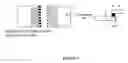
FIG. 1 is a schematic of copper contact resistance test samples;
FIG. 2 is a graph of the contact resistance exhibited by a copper filled electrically conductive adhesive according to the present invention;
FIG. 3 is a graph comparing the contact resistance exhibited by a copper filled electrically conductive adhesive according to the present invention with a commercially available silver filled electrically conductive adhesive, Ablebond 8175 (available from Ablestik Laboratories); and
FIG. 4 is a photograph (courtesy of L. Jimarez) demonstrating the complete fill of a via hole with an electrically conductive paste according to the present invention.
DETAILED DESCRIPTION OF THE INVENTIONIt has been discovered that the inventive adhesive vehicle advantageously supports copper particles, and that a mixture of the inventive adhesive vehicle and copper particles forms an electrically conductive adhesive that overcomes many of the disadvantages of the prior art. In particular, the inventive electrically conductive adhesives provide excellent filling of fine hole vias, and are much less expensive than the known silver-based counterparts, and, moreover, the inventive electrically conductive adhesives provide excellent bonding between components of electronic circuit structures.
The electrically conductive adhesive in an uncured state comprises at least one melt-processable reactive resin. This melt-processable reactive resin is, preferably, selected from the group consisting of thermosetting resins and thermoplastic resins. Thermosetting resins are well known in the prior art, and many should be useful in the present invention, but liquid cycloaliphatic epoxy resins are particularly preferred, especially ERL4221 from Union Carbide, and limonene oxide from Aldrich Chemical Co. Thermoplastic resins are likewise well known in the art, and many should also be useful in the present invention, especially those that can be converted into thermosetting resins if reacted, for example, solid phenoxy resins, which are particularly preferred. Among the phenoxy resins, PKHC from Interez is very particularly preferred. In general, the total amount of melt-processable reactive resin used to prepare the electrically conductive adhesive ranges from about 1 to about 20% by weight, preferably from about 2 to about 10% by weight, based on a total weight of the adhesive vehicle.
The electrically conductive adhesive in an uncured state also comprises a reactive diluent to help to dissolve the melt-processable reactive resin. In a particularly preferred embodiment, the melt-processable reactive resin is a combination of a liquid cycloaliphatic epoxy resin and a solid phenoxy resin. In this particularly preferred embodiment, the reactive diluent helps to dissolve the solid phenoxy resin in the liquid cycloaliphatic epoxy resin. Reactive diluents suitable for this purpose are especially cycloaliphatic epoxies, such as limonene oxide. The total amount of reactive diluents used to prepare the electrically conductive adhesive ranges from about 1 to about 20% by weight, preferably from about 5 to about 15% by weight, based on a total weight of the adhesive vehicle.
The electrically conductive adhesive in an uncured state also comprises at least one rheological additive. In one preferred embodiment, the Theological additive is an organic rheological additive, and especially an organic rheological thixotrope. Examples of suitable organic Theological thixotropes include castor oil derivatives, such as Thixcin R available from Rheox Company. The total amount of Theological additives used to prepare the electrically conductive adhesive ranges from about 0.5 to about 5% by weight, preferably from about 0.1 to about 2% by weight, based on a total weight of the adhesive vehicle.
The viscosity of the electrically conductive adhesive in an uncured state ranges, preferably, from about 30,000 centipoises (cps) to about 300,000 cps. In a particularly preferred embodiment, the viscosity ranges from about 30,000 cps to about 70,000 cps, especially from about 50,000 cps to about 60,000 cps.
The electrically conductive adhesive in an uncured state further comprises at least one curing agent. In a preferred embodiment, the curing agent is an organic acids. Examples of suitable organic include fluorinated or non-fluorinated sulfonic acids or salts thereof, especially trifluoromethane sulfonic acid salts such as FC520 from 3M. The total amount of curing agents used to prepare the electrically conductive adhesive ranges from about 0.5 to about 5% by weight, preferably from about 0.8 to about 3% by weight, based on a total weight of the adhesive vehicle.
The electrically conductive adhesive in an uncured state further comprises at least one organic acid catalyst. In general, the organic acid catalyst will be different than an organic acid selected as the curing agent. Suitable organic acid catalysts, in general, will be all those that are known to catalyze or are capable of catalyzing the self-ring opening reaction of an epoxide group. Examples of suitable organic acid catalysts include dicarboxylic acids, such as pimelic acid and the like. The total amount of organic acid catalysts used to prepare the electrically conductive adhesive ranges from about 0.0001 to about 2% by weight, preferably from about 0.001 to about 1% by weight, based on a total weight of the adhesive vehicle.
The electrically conductive adhesive additionally comprises copper particles. In a preferred embodiment, the copper particles are generally spherical in shape, and have an average particle diameter less than about 5 μm, and, preferably, a maximum particle size of less than 12 μm. In a particularly preferred embodiment, the copper is obtained in powder form, and added to the inventive adhesive vehicle to result in an electrically conductive adhesive, wherein the copper particles amount to about 60% to about 90% by weight, preferably 80% to about 90% by weight, relative to the total weight of the electrically conductive adhesive. In an especially preferred embodiment, the copper particles amount to about 80% by weight of the total weight of the electrically conductive adhesive.
In an especially preferred embodiment, electrically conductive adhesive formulations are produced to form a thixotropic paste suitable for extrusion printing to fill vias. A liquid cycloaliphatic epoxy resin is mixed with a solid phenoxy resin which imparts toughness to the cured adhesive. A reactive diluent is used to assist in dissolving the solid phenoxy resin in the cycloaliphatic epoxy resin. The reactive diluent may have either one or two or more reactive sites to provide control over cross-link density, Tg, temperature stability and mechanical properties such as modulus and elongation to break. Continuous mixing at temperatures as high as 70° C. for several hours is used to further facilitate dissolving the solid resin. Alternatively, all ingredients can be combined and placed on a jar roller for several days. The mixed resin system is degassed under 28 inches of Hg to remove any air introduced during blending. Next, spherical copper powder with an average particle size between 1 and 5 μm and a maximum particle size of less than 12 μm is added to the resin mixture to yield a mixture that is 10 to 20% wt. resin and 80 to 90% wt. copper powder.
Copper powder with a minimal oxide layer (<50 Å) is especially preferred. Commercially available copper powders when packaged under an inert environment such as nitrogen or argon have oxide thickness <50 Å. Copper powder is handled under an inert environment and can be added directly to the formulation or optionally, the copper powder may be pretreated before combining with the resin. Pretreatment in ENTEK CU56 (benzotriazole from Enthone Inc.) will provide a thin, <50 Å passivation layer on the copper that is not continuous as indicated by X-Ray Photoelectron Spectroscopy (XPS) analysis. Optionally, a second pretreatment in an organic acid and alcohol solution deposits the organic acid at the surface of the copper particles. In the case of copper powder pretreated with CU56, the ensuing organic acid pretreatment results in the release of the CU56 coating and the formation of an organic acid salt as well-as some reduction of CuO to Cu2O and Cu2O to Cu. In the case where no CU56 was used on the copper powder, the organic acid reacts directly with the copper powder surface to form an organic acid salt as well as some reduction of CuO to Cu2O and Cu2O to Cu.
CuO+2 RCOOH->(RCOOH)2Cu
Pretreating the copper powder with CU56 provides short term stability to air exposure. If handling is conducted under an inert atmosphere from the manufactured package directly to the organic acid pretreatment or directly into the resin formulation, the CU56 pretreatment is optional. A further option is to forego the organic acid pretreatment and introduce the copper powder under an inert atmosphere directly into the resin formulation. In this case the organic acid is added as a discrete ingredient later in the formulation.
After the copper powder is added and wetted out under the inert atmosphere, high speed dispersive mixing for at least 15 minutes with a Cowles blade deagglomerates the powder. Mixing effectiveness is checked by doing Hegman fineness-of-grind testing to ensure adequate deagglomeration. Mixing under vacuum is preferred so as not to entrain air that could have the potential of oxidizing copper powder surfaces exposed from high speed mixing. When proper dispersion is achieved, low speed distributive mixing (70 RPM) is performed for at least 30 minutes under vacuum. Finally, the curing agent and organic acid catalyst are added at 2 to 7% and 1 to 4% wt respectively. Mixing for 15 minutes under vacuum distributes the curative chemicals. Frozen storage at −40° C. prolongs storage life.
The inventive electrically conductive adhesives provide excellent filling of fine hole vias, and are much less expensive than the known silver-based counterparts, and, moreover, the inventive electrically conductive adhesives provide excellent bonding between components of electronic circuit structures. In a preferred embodiment, the inventive electrically conductive adhesive exhibits a bulk resistivity of less than 10−3 ohm-cm.
The inventive electrically conductive adhesive is useful to bond components of electronic circuit structures. In a preferred embodiment, the invention relates to a process whereby a plurality of electronic circuit components are bonded together with the inventive electrically conductive adhesive. In an especially preferred embodiment, the electrically conductive adhesive is cured, particularly in stages.
In one especially preferred embodiment, the electronic circuit structure comprises a multilayer printed circuit structure having a plurality of planes with a vertical interconnection between the planes. In this embodiment, the vertical interconnection can be filled with the electrically conductive adhesive according to the present invention.
The electronic circuit structures according to the present invention find use in a variety of electronic devices. Non-limiting examples of such electronic devices include computers and electronic devices including computers, such as automobiles, airplanes, and the like, as well as camera equipment, computer equipment, such as printers, fax machines, scanners and the like, and household appliances, and personal electronic devices, such as CD-players, DVD-players, cassette tape recorders and the like.
The invention will now be described in greater detail with reference to the following non-limiting example:
EXAMPLEIn a preferred embodiment, a copper filled electrically conductive adhesive formulation was made.
Resin Blend
A resin mix is made of cycloaliphatic epoxy, phenoxy resin and limonene oxide, according to the following recipe:
-
- 450 grams cycloaliphatic epoxy resin
- 100 grams solid phenoxy resin
- 290 grams limonene oxide
This resin blend was manipulated as follows:
-
- 1. Mix at 70° C. for eight hours
- 2. Cool to ambient temperature
- 3. Next an organic thixotrope, such as Thixcin R (hydrogenated castor oil derivative available from Rheox Company), is added. Add 8.4 grams Thixcin R
- 4. Heat to 72° C. while mixing at 30 RPM
- 5. Dispersive mix with Cowles blade at >2000 RPM for 20 minutes
- 6. Cool to 45° C. while mixing at 30 RPM
- 7. Cool to ambient temperature
Copper Addition
Next, copper powder is added and deagglomerated by high shear dispersive mixing with a Cowles blade, according to the following recipe:
-
- 32 grams of resin blend
- 168 grams of copper powder
The copper addition was performed as follows:
-
- 8. Add ½ copper powder under inert atmosphere
- 9. Wet out by hand
- 10. Dispersive mix for five minutes
- 11. Add second ½ copper powder under inert atmosphere
- 12. Wet out by hand
- 13. Dispersive mix for 30 minutes
- 14. Mix at 70 RPM for one hour under <28 in Hg vacuum
Further Additions
Low rpm distributive mixing follows where an amine curing agent is added along with the organic acid.
The distributive mixing was carried out as follows:
-
- 15. Add 1.6 grams 3M FC520 acid curing agent
- 16. Add 0.6 grams dicarboxylic acid
- 17. Mix at 70 RPM for 15 minutes under <28 in Hg vacuum
Miniature copper lap shear joints were made to characterize contact resistance and stability. See FIG. 1. The sample geometry was 0.050 inches wide by 0.010 inches thick and extended 0.375 inches from a copper communing bus bar. Fourteen copper leads projected from the bus bar. Electrically conductive copper adhesive paste was dispensed on the tips of the copper leads. Since the intended use required “B” stage setting of the material, the copper coupon with dispensed adhesive was exposed to 70° C. for 30 minutes. An identical copper coupon was mated to the first in lap manner and a pressure bar applied to deliver between 100 and 500 psi bonding pressure. The sample joints were cured under pressure.
Electrical joints were made with the material and compared to a commercially available high performance silver filled ECA, Ablebond 8175. The contact resistance by the electrically conductive and environmental stability of the copper system matched that of the silver filled system. See FIGS. 2 and 3.
The formulation was also used to fill 37, 50 and 75 μm diameter vias in a laminate core that was 125 μm thick. As shown in FIG. 4, the filling was complete to the center of the hole and uniform.
It should be understood that the preceding detailed description of the invention is merely a detailed description of one preferred embodiment or of a small number of preferred embodiments of the present invention and that numerous changes to the disclosed embodiment(s) can be made in accordance with the disclosure herein without departing from the spirit or scope of the invention. The preceding detailed description of the invention, therefore, is not meant to limit the scope of the invention in any respect. Rather, the scope of the invention is to be determined only by the appended issued claims and their equivalents.
Claims
What is claimed is:1. An adhesive vehicle comprising:
a) at least one melt-processable reactive resin;
b) at least one reactive diluent;
c) at least one rheological additive;
d) at least one curing agent; and
e) at least one organic acid catalyst;
said adhesive vehicle having a solids content of 100%.
2. The adhesive vehicle according to claim 1, which comprises at least one melt-processable reactive resin selected from the group consisting of thermosetting resins and thermoplastic resins.
3. The adhesive vehicle according to claim 2, which comprises at least one thermosetting resin selected from the group consisting of cycloaliphatic epoxy resins.
4. The adhesive vehicle according to claim 2, which comprises at least one thermoplastic resin selected from the group consisting of phenoxy resins.
5. The adhesive vehicle according to claim 1, which comprises at least one reactive diluent selected from the group consisting of cycloaliphatic epoxies.
6. The adhesive vehicle according to claim 1, which comprises at least one organic rheological additive selected from the group consisting of castor oil derivatives.
7. The adhesive vehicle according to claim 1, which comprises at least one curing agent selected from the group consisting of organic acids.
8. The adhesive vehicle according to claim 7, wherein the organic acids are selected from the group consisting of fluorinated or non-fluorinated sulfonic acids.
9. The adhesive vehicle according to claim 1, which comprises at least one organic acid catalyst selected from the group consisting of dicarboxylic acids.
10. An electrically conductive adhesive comprising:
a) an adhesive vehicle according to claim 1; and
b) copper particles.
11. The electrically conductive adhesive according to claim 10, which comprises copper particles that are spherical in shape and have an average particle diameter less than about 5 μm.
12. The electrically conductive adhesive according to claim 11, which comprises at least 80% by weight of copper particles based on a total weight of the electrically conductive adhesive.
13. The electrically conductive adhesive according to claim 12, which exhibits a bulk resistivity of less than 10−3 ohm-cm.
14. The electrically conductive adhesive according to claim 10, which in an uncured state has a viscosity between about 30,000 cps and about 300,000 cps.
15. The electrically conductive adhesive according to claim 14, which in an uncured state has a viscosity between about 30,000 cps and about 70,000 cps.
16. A process for preparing an electrically conductive adhesive, said process comprising mixing the following ingredients:
a) at least one melt-processable reactive resin;
b) at least one reactive diluent;
c) at least one rheological additive;
d) at least one curing agent;
e) at least one organic acid catalyst; and
f) copper particles;
to form a paste.
17. The process according to claim 16, wherein ingredients a) and b) are mixed together first, and, thereafter, remaining ingredients c)-f) are added alone or in combination in any order.
18. An electrically conductive adhesive prepared by the process according to claim 16.
19. A process for preparing an electronic circuit structure, said process comprising connecting a plurality of electronic circuit structure components with an electrically conductive adhesive according to claim 10.
20. The process according to claim 19, which further comprises curing the electrically conductive adhesive.
21. The process according to claim 20, wherein the curing takes place in stages.
22. An electronic circuit structure prepared by the process according to claim 19.
23. The electronic circuit structure according to claim 22, which is a multilayer printed circuit structure comprising a plurality of planes, and a vertical interconnection between the planes, wherein the vertical interconnection is filled with the electrically conductive adhesive.
24. An electronic device comprising an electronic circuit according to claim 22.
25. The electronic device according to claim 24, which is a computer.
Images & Drawings included:



Sources:
- United States Patent and Trademark Office - verify current appl. status at the USPTO↗
Similar patent applications:
Recent applications in this class:
- » 20250289985 2025-09-18
HIGH-STRENGTH ADHESIVES FROM SUSTAINABLE COMPONENTS - » 20250282984 2025-09-11
Radiation-Curable Adhesive Composition - » 20250250471 2025-08-07
EPOXY RESIN COMPOSITIONS AND USES THEREOF - » 20250243393 2025-07-31
HEAT-CURABLE ADHESIVE COMPOSITION, LAYERED FILM, CONNECTED STRUCTURE, AND PRODUCTION METHOD THEREFOR - » 20250243392 2025-07-31
EPOXY ADHESIVE COMPOSITION FOR EASY SEPARATION FOR RECYCLING - » 20250236771 2025-07-24
A COMPOSITION - » 20250207003 2025-06-26
TWO COMPONENT COMPOSITION BASED ON A BLEND OF EPOXIDE COMPOUNDS - » 20250197700 2025-06-19
ONE COMPONENT (1K) CURABLE ADHESIVE COMPOSITION - » 20250171666 2025-05-29
EPOXY ADHESIVE AND METHOD OF USE AND PREPARATION THEREOF - » 20250171665 2025-05-29
TWO-PART EPOXY ADHESIVE WITH WORKING LIFE COLOR CHANGE INDICATOR
Recent applications for this Assignee:
- » 20250294045 2025-09-18
THREAT POLICY FINE-TUNING BASED ON THE VULNERABILITY OF A SUBNET AS A SOURCE OF A MALICIOUS ATTACK - » 20250294041 2025-09-18
DEVICE POPULATION ANOMALY DETECTION - » 20250292574 2025-09-18
SCENE PARSING - » 20250292026 2025-09-18
A GENERATIVE ARTIFICIAL INTELLIGENCE COMMENTARY - » 20250291689 2025-09-18
MACHINE LEARNING MODEL TRAINING TO ASSIST IN SYSTEM DEBUG - » 20250287215 2025-09-11
PORTABLE MEDIA GEOFENCE AND DEVICE PAIRING SECURITY - » 20250285610 2025-09-11
RECIPIENT-SPECIFIC VOICE TONE ADJUSTMENT IN TELEPHONY - » 20250284728 2025-09-11
CONTEXT LARGE LANGUAGE MODEL OUTPUT EXPLANATION - » 20250278669 2025-09-04
COUNTERFACTUALS WITH FEATURE PREFERENCES FOR CONSISTENT AND DIVERSE EXPLANATIONS - » 20250274345 2025-08-28
MULTI-LAYER EDGE ARCHITECTURE SIMULATION