β-cyclodextrin derivatives as antibacterial agents
US20060199785A1
2006-09-07
11/342,339
2006-01-27
✅ Patent granted
US 7,737,132 B2
2010-06-15
-
-
Shaojia Anna Jiang | Ganapathy Krishnan
2027-08-22
Abstract:
The invention provides a new class of antibiotics to which pathogenic bacteria have not been exposed, and thus should not have developed resistance. This new class of antibiotics are derivatives of β-cyclodextrin (β-CD), which is a cyclic molecule comprising seven D-glucose units.
Inventors:
- Noureddine Fahmi 5 🇺🇸 Charlottesville, VA, United States
- Frank Werner Schmidtmann 2 🇺🇸 Charlottesville, VA, United States
- Sidney Hecht 7 🇺🇸 Charlottesville, VA, United States
Assignee:
- Pinnacle Pharmaceuticals 1 🇺🇸 Charlottesville, VA, United States
Interested in similar patents?
Get notified when new applications in this technology area are published.
Classification:
C08B37/0009 » CPC main
Preparation of polysaccharides not provided for in groups - ; Derivatives thereof; Homoglycans, i.e. polysaccharides having a main chain consisting of one single sugar, e.g. colominic acid alpha-D-Glucans, e.g. polydextrose, alternan, glycogen; (alpha-1,4)(alpha-1,6)-D-Glucans; (alpha-1,3)(alpha-1,4)-D-Glucans, e.g. isolichenan or nigeran; (alpha-1,4)-D-Glucans; (alpha-1,3)-D-Glucans, e.g. pseudonigeran; Derivatives thereof
A61P31/04 » CPC further
Antiinfectives, i.e. antibiotics, antiseptics, chemotherapeutics Antibacterial agents
A61P43/00 » CPC further
Drugs for specific purposes, not provided for in groups -
C08B37/0012 » CPC further
Preparation of polysaccharides not provided for in groups - ; Derivatives thereof; Homoglycans, i.e. polysaccharides having a main chain consisting of one single sugar, e.g. colominic acid alpha-D-Glucans, e.g. polydextrose, alternan, glycogen; (alpha-1,4)(alpha-1,6)-D-Glucans; (alpha-1,3)(alpha-1,4)-D-Glucans, e.g. isolichenan or nigeran; (alpha-1,4)-D-Glucans; (alpha-1,3)-D-Glucans, e.g. pseudonigeran; Derivatives thereof Cyclodextrin [CD], e.g. cycle with 6 units (alpha), with 7 units (beta) and with 8 units (gamma), large-ring cyclodextrin or cycloamylose with 9 units or more; Derivatives thereof
C08B30/18 IPC
Preparation of starch, degraded or non-chemically modified starch, amylose, or amylopectin; Degraded, or non-chemically modified starch Dextrin, e.g. yellow canari, white dextrin, amylodextrin or maltodextrin; Methods of depolymerisation, e.g. by irradiation or mechanically
A61K31/724 IPC
Medicinal preparations containing organic active ingredients; Carbohydrates; Sugars; Derivatives thereof; Polysaccharides, i.e. having more than five saccharide radicals attached to each other by glycosidic linkages; Derivatives thereof, e.g. ethers, esters; Glucans Cyclodextrins
C08B3/18 IPC
Preparation of cellulose esters of organic acids; Preparation of mixed organic cellulose esters, e.g. cellulose aceto-formate or cellulose aceto-propionate Aceto-butyrates
Description
RELATED APPLICATIONSThis application claims the benefit of U.S. Provisional Patent Application Ser. No. 60/647,841, filed on Jan. 28, 2005, the contents of which are incorporated herein by reference in its entirety.
BACKGROUND OF THE INVENTION1. Field of the Invention
The invention relates to development of new antibiotics against pathogenic bacteria.
2. Summary of the Related Art
Numerous bacteria are known to cause diseases in humans. Among these bacteria are Enterococcus faecium, Eschericia coli, Pseudomonas aeruginosa, Bacillus atrophaeus, Staphylococcus aureus, Salmonella choleraesuis, Bacillus anthrasis, and many others. A disturbing recent trend has been the development of resistance to existing antibiotics in numerous pathogenic bacteria. There is, therefore, a need for new antibiotics for which resistance has not yet emerged. Preferably, such antibiotics should be members of a new class of antibiotics, thus making evolutionary resistance to these antibiotics more difficult.
BRIEF SUMMARY OF THE INVENTIONThe invention provides a new class of antibiotics to which pathogenic bacteria have not been exposed, and thus should not have developed resistance. This new class of antibiotics are derivatives of β-cyclodextrin (β-CD), which is a cyclic molecule comprising seven D-glucose units.
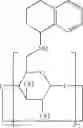
In a first aspect, the invention provides a compound having the formula
wherein R2 is H, OH, OAc, O-lower alkyl, OMe, or O(CH2CH2O)n; R3 is H, OH, OAc, O-lower alkyl, OMe, OSO3Na, or NH2; and R6 is N which is mono, di or tri-substituted with alkyl, aralkyl, aryl, heterocyclic ring or heterocyclic alkyl, and any of which substituents can be further substituted with N, O or S which can be further substituted with H, alkyl, aralkyl or aryl, wherein for each of R2, R3 and R6 any one or more of the carbon atoms may be optionally replaced by S, N or O, and wherein n is from about 1 to about 15, preferably from about 1 to about 10.
In a second aspect the invention provides pharmaceutical compositions. These compositions comprise one or more members of the compounds disclosed in the invention and a pharmaceutically acceptable carrier.
In a third aspect, the invention provides methods for using a compound or compounds having the formula:
wherein R2 is H, OH, OAc, OMe, O-lower alkyl, or O(CH2CH2O)n; R3 is H, OH, OAc, OMe, O-lower alkyl, OSO3Na, or NH2; and R6 is H, NH2, S(CH2)mNH2, I, N3, SH, lower alkyl, S-alkylguanidyl, O-alkylguanidyl, S-aminoalkyl, O-aminoalkyl, aminoalkyl, O-lower alkyl, aralkyl, aryl, heterocyclic ring(s), OSO3Na or N which is mono, di or tri-substituted with alkyl, aralkyl, aryl, heterocyclic ring or heterocyclic alkyl, and any of which substituents can be further substituted with N, O or S which can be further substituted with H, alkyl, aralkyl or aryl, wherein for each of R2, R3 and R6 any one or more of the carbon atoms may be optionally replaced by S, N or O, and wherein n is from about 1 to about 15, preferably from about 1 to about 10, and wherein m is from about 1 to about 15, preferable from about 1 to about 10, as antimicrobial agents. In one embodiment of this aspect, the invention provides a method for inhibiting the growth of a bacterium. In a further embodiment of this aspect, the invention provides methods for treating a bacterial infection. In a further embodiment of this aspect, the invention provides methods for preventing a bacterial infection.
In a fourth aspect, the invention provides methods for potentiating the activity of antibiotics to inhibit the growth of a bacterium which are resistant to clinically used antibiotics, to treat or prevent an infection by these bacteria.
DETAILED DESCRIPTION OF THE PREFERRED EMBODIMENTSThe invention relates to development of new antibiotics against pathogenic bacteria. The invention provides a new class of antibiotics to which pathogenic bacteria have not been exposed, and thus should not have developed resistance. This new class of antibiotics are derivatives of β-cyclodextrin (β-CD), which is a cyclic molecule comprising seven D-glucose units.
In a first aspect, the invention provides a compound having the formula
wherein R2 is H, OH, OAc, O-lower alkyl, OMe, or O(CH2CH2O)n; R3 is H, OH, OAc, O-lower alkyl, OMe, OSO3Na, or NH2; and R6 is N which is mono, di or tri-substituted with alkyl, aralkyl, aryl, heterocyclic ring or heterocyclic alkyl, and any of which substituents can be further substituted with N, O or S which can be further substituted with H, alkyl, aralkyl or aryl, wherein for each of R2, R3 and R6 any one or more of the carbon atoms may be optionally replaced by S, N or O, and wherein n is from about 1 to about 15, preferably from about 1 to about 10.
In a second aspect the invention provides pharmaceutical compositions. These compositions comprise one or more members of the compounds disclosed in the invention and a pharmaceutically acceptable carrier.
As used herein, the term “physiologically acceptable” refers to a material that does not interfere with the effectiveness of the compounds of the first or third aspects of the invention and is compatible with a biological system such as a cell, cell culture, tissue, or organism. In certain embodiments, the biological system is a living organism, such as a mammal. In certain embodiments, the mammal is a human.
As used herein, the term “carrier” encompasses any excipient, diluent, filler, salt, buffer, stabilizer, solubilizer, lipid, or other material well known in the art for use in pharmaceutical formulations. It will be understood that the characteristics of the carrier, excipient, or diluent will depend on the route of administration for a particular application. The preparation of pharmaceutically acceptable formulations containing these materials is described in, e.g., Remington's Pharmaceutical Sciences, 18th Edition, ed. A. Gennaro, Mack Publishing Co., Easton, Pa., 1990, ISBN: 0-912734-04-3.
In a third aspect, the invention provides methods for using a compound or compounds of the first and second aspects of the invention as antimicrobial agents. In one embodiment of this aspect, the invention provides a method for inhibiting the growth of a bacterium. The method according to this embodiment of the invention comprises contacting the bacteria with one or more members of a compound having the formula
wherein R2 is H, OH, OAc, OMe, O-lower alkyl, or O(CH2CH2O)n; R3 is H, OH, OAc, OMe, O-lower alkyl, OSO3Na, or NH2; and R6 is H, NH2, S(CH2)mNH2, I, N3, SH, lower alkyl, S-alkylguanidyl, O-alkylguanidyl, S-aminoalkyl, O-aminoalkyl, aminoalkyl, O-lower alkyl, aralkyl, aryl, heterocyclic ring(s), OSO3Na or N which is mono, di or tri-substituted with alkyl, aralkyl, aryl, heterocyclic ring or heterocyclic alkyl, and any of which substituents can be further substituted with N, O or S which can be further substituted with H, alkyl, aralkyl or aryl, wherein for each of R2, R3 and R6 any one or more of the carbon atoms may be optionally replaced by S, N or O, and wherein n is from about 1 to about 15, preferably from about 1 to about 10, and wherein m is from about 1 to about 15, preferable from about 1 to about 10.
For purposes of the invention, the term “lower alkyl” means an alkyl group from 1 to 7 carbon atoms. The terms “alkyl” and “aryl” include alkyl or aryl groups which may be substituted or unsubstituted. Preferred substitutions include, without limitation, substitution with nitrogen containing moieties, including amino groups, which may be mono or disubstituted, preferably with alkyl or aryl groups. Also, for purposes of the invention the term “alkyl” includes chains of 1-7 atoms with one or more nitrogen atoms and the remainder carbon atoms.
In a further embodiment of this aspect, the invention provides methods for treating a bacterial infection. The method according to this embodiment of the invention comprises administering to a mammal with a bacterial infection one or more members of a compound having the formula
wherein R2 is H, OH, OAc, OMe, O-lower alkyl, or O(CH2CH2O)n; R3 is H, OH, OAc, OMe, O-lower alkyl, OSO3Na, or NH2; and R6 is H, NH2, S(CH2)mNH2, I, N3, SH, lower alkyl, S-alkylguanidyl, O-alkylguanidyl, S-aminoalkyl, O-aminoalkyl, aminoalkyl, O-lower alkyl, aralkyl, aryl, heterocyclic ring(s), OSO3Na or N which is mono, di or tri-substituted with alkyl, aralkyl, aryl, heterocyclic ring or heterocyclic alkyl, and any of which substituents can be further substituted with N, O or S which can be further substituted with H, alkyl, aralkyl or aryl, wherein for each of R2, R3 and R6 any one or more of the carbon atoms may be optionally replaced by S, N or O, and wherein n is from about 1 to about 15, preferably from about 1 to about 10, and wherein m is from about 1 to about 15, preferable from about 1 to about 10.
For purposes of the invention, the term “lower alkyl” means an alkyl group from 1 to 7 carbon atoms. The terms “alkyl” and “aryl” include alkyl or aryl groups which may be substituted or unsubstituted. Preferred substitutions include, without limitation, substitution with nitrogen containing moieties, including amino groups, which may be mono or disubstituted, preferably with alkyl or aryl groups. Also, for purposes of the invention the term “alkyl” includes chains of 1-7 atoms with one or more nitrogen atoms and the remainder carbon atoms.
In a further embodiment of this aspect, the invention provides methods for preventing a bacterial infection. The method according to this embodiment of the invention comprises administering to a mammal susceptible to a bacterial infection one or more members of a compound having the formula
wherein R2 is H, OH, OAc, OMe, O-lower alkyl, or O(CH2CH2O)n; R3 is H, OH, OAc, OMe, O-lower alkyl, OSO3Na, or NH2; and R6 is H, NH2, S(CH2)mNH2, I, N3, SH, lower alkyl, S-alkylguanidyl, O-alkylguanidyl, S-aminoalkyl, O-aminoalkyl, aminoalkyl, O-lower alkyl, aralkyl, aryl, heterocyclic ring(s), OSO3Na or N which is mono, di or tri-substituted with alkyl, aralkyl, aryl, heterocyclic ring or heterocyclic alkyl, and any of which substituents can be further substituted with N, O or S which can be further substituted with H, alkyl, aralkyl or aryl, wherein for each of R2, R3 and R6 any one or more of the carbon atoms may be optionally replaced by S, N or O, and wherein n is from about 1 to about 15, preferably from about 1 to about 10, and wherein m is from about 1 to about 15, preferable from about 1 to about 10.
For purposes of the invention, the term “lower alkyl” means an alkyl group from 1 to 7 carbon atoms. The terms “alkyl” and “aryl” include alkyl or aryl groups which may be substituted or unsubstituted. Preferred substitutions include, without limitation, substitution with nitrogen containing moieties, including amino groups, which may be mono or disubstituted, preferably with alkyl or aryl groups. Also, for purposes of the invention the term “alkyl” includes chains of 1-7 atoms with one or more nitrogen atoms and the remainder carbon atoms.
In the methods according to this aspect of the invention the bacteria is in a mammal. Preferably, the mammal is a human.
In the methods according to this aspect of the invention, administration of the compound can be by any suitable route, including, without limitation, parenteral, oral, sublingual, transdermal, topical, intranasal, aerosol, intraocular, intratracheal, intrarectal or vaginal. Administration of the therapeutic compositions can be carried out using known procedures at dosages and for periods of time effective to reduce symptoms or surrogate markers of the infection. A doctor can determine the appropriate dose to administer or therapeutic protocol useful for preventing or preventing a bacterial infection. It may be desirable to administer simultaneously, or sequentially a therapeutically effective amount of one or more of the therapeutic compositions of the invention to an individual as a single treatment episode.
In a fourth aspect, the invention provides methods for potentiating the activity of antibiotics to inhibit the growth of a bacterium which are resistant to clinically used antibiotics, to treat or prevent an infection by these bacteria. The methods according to this aspect of the invention comprise contacting the bacterium with said antibiotic and one or more members of a compound having the formula
wherein R2 is H, OH, OAc, OMe, O-lower alkyl, or O(CH2CH2O)n; R3 is H, OH, OAc, OMe, O-lower alkyl, OSO3Na, or NH2; and R6 is H, NH2, S(CH2)mNH2, I, N3, SH, lower alkyl, S-alkylguanidyl, O-alkylguanidyl, S-aminoalkyl, O-aminoalkyl, aminoalkyl, O-lower alkyl, aralkyl, aryl, heterocyclic ring(s), OSO3Na or N which is mono, di or tri-substituted with alkyl, aralkyl, aryl, heterocyclic ring or heterocyclic alkyl, and any of which substituents can be further substituted with N, O or S which can be further substituted with H, alkyl, aralkyl or aryl, wherein for each of R2, R3 and R6 any one or more of the carbon atoms may be optionally replaced by S, N or O, and wherein n is from about 1 to about 15, preferably from about 1 to about 10, and wherein m is from about 1 to about 15, preferable from about 1 to about 10.
For purposes of the invention, the term “lower alkyl” means an alkyl group from 1 to 7 carbon atoms. The terms “alkyl” and “aryl” include alkyl or aryl groups which may be substituted or unsubstituted. Preferred substitutions include, without limitation, substitution with nitrogen containing moieties, including amino groups, which may be mono or disubstituted, preferably with alkyl or aryl groups. Also, for purposes of the invention the term “alkyl” includes chains of 1-7 atoms with one or more nitrogen atoms and the remainder carbon atoms.
For purposes of the invention, the term “resistant” or “resistance” to a bacterium or bacterial infection to an antibiotic includes a complete resistance to the antibiotic or a partial resistance which is defined herein as a circumstance in which the MIC of an antibiotic toward the organism in question has increased.
For purposes herein, potentiation may be defined as a circumstance in which a compound substantially lowers the MIC of an antibacterial agent toward one or more organisms. It includes the case in which it effectively restores the therapeutic utility of an antibacterial agent whose utility has been compromised by bacterial resistance.
In any of the methods according to the invention, one or more members of compounds of the invention can be administered in combination with any other antibiotic useful for treating the disease or condition that does not diminish the antimicrobial effect of the compound. For purposes of this aspect of the invention, the term “in combination with” means in the course of treating the same disease in the same patient, and includes administering the compound and an antibiotic in any order, including simultaneous administration, as well as any temporally spaced order, for example, from sequentially with one immediately following the other to up to several days apart. Such combination treatment may also include more than a single administration of the compound, and independently the antibiotic. The administration of the compound and antibiotic may be by the same or different routes.
In the methods according to this aspect of the invention the bacteria is in a mammal. Preferably, the mammal is a human.
In the methods according to this aspect of the invention, administration of the compound can be by any suitable route, including, without limitation, parenteral, oral, sublingual, transdermal, topical, intranasal, aerosol, intraocular, intratracheal, intrarectal or vaginal. Administration of the therapeutic compositions can be carried out using known procedures at dosages and for periods of time effective to reduce symptoms or surrogate markers of the infection. A doctor can determine the appropriate dose to administer or therapeutic protocol useful for preventing or preventing a bacterial infection. It may be desirable to administer simultaneously, or sequentially a therapeutically effective amount of one or more of the therapeutic compositions of the invention to an individual as a single treatment episode.
In certain aspects of the methods according to the invention, it is desirable to have antibiotics with a relatively broad spectrum, so that a variety of different bacterial infection can be treated. In other aspects, such as protection against bioterrorism, it may be desirable to have antibiotics with a narrow spectrum, specific for likely bioterrorism organisms, so that protection from the bacteria may be obtained while preserving the normal flora in the body. The invention provides methods for achieving each of these goals.
The following examples are intended to further illustrate certain particularly preferred embodiments of the invention and are not intended to limit the scope of the invention.
EXAMPLE 1 Bacterial Growth StandardizationOne to three colonies of bacteria were picked from an Mueller-Hinton or Brain Heart infusion agar plate (depending on the bacterial strain) and transferred to 3 ml Mueller-Hinton broth or Brain Heart infusion media (depending on the bacterial strain). Bacteria were allowed to grow for 2-4 hours in an incubator at 37° C. Bacteria-inoculated media were dispersed in 0.9% saline to match McFarland standard density. 100 μl standardized inoculation was added to 20 ml media (dilution 1). 10 μl of the new dilution was added to 990 μl media and mixed (dilution 2). 10 μl of dilution 2 was spread on an agar plate and allowed to grow overnight. Colonies were then plated.
EXAMPLE 2 Bacterial Panel TestingTest compound was diluted to 10 μg/ml in dimethylsulfoxide. Four μl of diluted test compound was loaded into column 2 of a 96 well NUNC microplate, as shown in Table 1 below. Four μl of Rifampicin antibiotic was loaded into row H, column 2.
| TABLE 1 |
| 96 well NUNC microplate set-up, Concentration in μg/ml |
| 1 | 2 | 3 | 4 | 5 | 6 | 7 | 8 | 9 | 10 | 11 | 12 | |
| A | 0 | 200 | 100 | 50 | 25 | 12.5 | 6.25 | 3.12 | 1.56 | 0.78 | 0.39 | 0.20 |
| B | 0 | 200 | 100 | 50 | 25 | 12.5 | 6.25 | 3.12 | 1.56 | 0.78 | 0.39 | 0.20 |
| C | 0 | 200 | 100 | 50 | 25 | 12.5 | 6.25 | 3.12 | 1.56 | 0.78 | 0.39 | 0.20 |
| D | 0 | 200 | 100 | 50 | 25 | 12.5 | 6.25 | 3.12 | 1.56 | 0.78 | 0.39 | 0.20 |
| E | 0 | 200 | 100 | 50 | 25 | 12.5 | 6.25 | 3.12 | 1.56 | 0.78 | 0.39 | 0.20 |
| F | 0 | 200 | 100 | 50 | 25 | 12.5 | 6.25 | 3.12 | 1.56 | 0.78 | 0.39 | 0.20 |
| G | 0 | 200 | 100 | 50 | 25 | 12.5 | 6.25 | 3.12 | 1.56 | 0.78 | 0.39 | 0.20 |
| H | 0 | 200 | 100 | 50 | 25 | 12.5 | 6.25 | 3.12 | 1.56 | 0.78 | 0.39 | 0.20 |
| rifampicin | ||||||||||||
All wells were then filled with 100 μl of inoculated media (dilution 1 from Example 1). A further 100 μl of the inoculated media was then added to column 2 and the contents are pipetted to thoroughly mix the contents. A full 100 μl was then transferred from column 2 and mixed into column 3. This process was continued from left to right until columns 2-12 were serially diluted, and the final draw from column 12 was discarded. The plates were covered with 3M sealing tape (plates containing Enterococcus faecium were sealed with Air Pore sealing tape) and allowed to grow for 20-24 hours. Cytotoxic wells (clear wells) are then scored and the potency of the compound was determined. The results are shown in Table 2 below. These results show that while some compounds were inactive, others demonstrated either broad spectrum or narrow spectrum activity.
| TABLE 2 |
| Activity of test compounds (MICs in μg/mL) |
| Mammalian | |||||||
| Cytotoxicity* | |||||||
| Compound | PA | SA | SC | EC | BA | EF | IC50 (μg/mL) |
| >200 | >200 | >200 | >200 | >200 | >200 | ||
| PP5000 | |||||||
| 6.25-3.12 | >200 | >200 | 200-100 | 100-50 | >200 | 720 | |
| PP5001 | |||||||
| >200 | >200 | >200 | >200 | 12.5-6.25 | >200 | 829 | |
| PP5002 | |||||||
| >200 | >200 | >200 | 100-50 | 3.12-1.56 | >200 | 191 | |
| PP5003 | |||||||
| >200 | >200 | >200 | >200 | 1.56-0.78 | >200 | 198 | |
| PP5004 | |||||||
| >200 | >200 | >200 | >200 | 200-100 | >200 | 690 | |
| PP5005 | |||||||
| >200 | >200 | >200 | >200 | 50-25 | >200 | 215 | |
| PP5006 | |||||||
| >200 | >200 | >200 | >200 | 25-12.5 | >200 | >2000 | |
| PP5007 | |||||||
| >200 | >200 | >200 | >200 | 25-12.5 | >200 | 510 | |
| PP5008 | |||||||
| >200 | >200 | >200 | >200 | 200-100 | >200 | 755 | |
| PP5009 | |||||||
| >200 | 100-50 | >200 | >200 | 200-100 | >200 | 780 | |
| PP5010 | |||||||
| >200 | 3.12-1.56 | 50-25 | 25-12.5 | 1.56-0.78 | 50-25 | 840 | |
| PP5011 | |||||||
| >200 | >200 | >200 | >200 | >200 | >200 | 193 | |
| PP5012 | |||||||
| >200 | >200 | >200 | >200 | >200 | >200 | 144 | |
| PP5013 | |||||||
| >200 | >200 | >200 | >200 | <0.2 | >200 | ||
| PP5014 | |||||||
| >200 | 50-25 | >200 | >200 | 100-50 | >200 | 2116 | |
| PP5015 | |||||||
| >200 | >200 | >200 | >200 | 200-100 | >200 | ||
| PP5016 | |||||||
| >200 | >200 | >200 | >200 | >200 | >200 | ||
| PP5017 | |||||||
| >200 | >200 | >200 | >200 | 100-50 | >200 | ||
| PP5018 | |||||||
| >200 | >200 | >200 | >200 | 25-12.5 | >200 | 524 | |
| PP5019 | |||||||
| >200 | >200 | >200 | >200 | 200-100 | >200 | ||
| PP5020 | |||||||
| >200 | >200 | >200 | >200 | >200 | >200 | ||
| PP5021 | |||||||
| >200 | >200 | >200 | >200 | 50-25 | >200 | ||
| PP5026 | |||||||
| >200 | >200 | 25-12.5 | 50-25 | 1.56-0.78 | >200 | 321 | |
| PP5027 | |||||||
| >200 | >200 | >200 | >200 | 25-12.5 | >200 | 2990 | |
| PP5028 | |||||||
| >200 | >200 | >200 | >200 | >200 | >200 | ||
| PP5029 | |||||||
| >200 | >200 | >200 | >200 | >200 | >200 | ||
| PP5030 | |||||||
| >200 | >200 | >200 | >200 | 12.5-6.25 | >200 | ||
| PP5031 | |||||||
| >200 | >200 | >200 | >200 | >200 | >200 | ||
| PP5032 | |||||||
| >200 | >200 | >200 | >200 | >200 | >200 | ||
| PP5033 | |||||||
| >200 | >200 | >200 | >200 | 25-12.5 | >200 | 480 | |
| PP5035 | |||||||
| >200 | >200 | >200 | >200 | >200 | >200 | ||
| PP5036 | |||||||
| >200 | >200 | >200 | >200 | >200 | >200 | ||
| PP5037 | |||||||
| >200 | >200 | >200 | >200 | 200-100 | >200 | ||
| PP5038 | |||||||
| >200 | >200 | >200 | >200 | >200 | >200 | ||
| PP5039 | |||||||
| >200 | >200 | 100-50 | 50-25 | 25-12.5 | >200 | ||
| PP5040 | |||||||
| 100-50 | >200 | >200 | >200 | 50-25 | >200 | 860 | |
| PP5041 | |||||||
| >200 | >200 | >200 | >200 | >200 | >200 | ||
| PP5042 | |||||||
| >200 | >200 | >200 | >200 | >200 | >200 | ||
| PP5043 | |||||||
| >200 | >200 | >200 | >200 | >200 | >200 | ||
| PP5044 | |||||||
| >200 | 200-100 | 100-50 | 200-100 | 12.5-6.25 | — | ||
| PP5046 | |||||||
| >200 | >200 | >200 | >200 | 50-25 | — | ||
| PP5047 | |||||||
| >200 | 50-25 | 100-50 | >200 | 6.25-3.12 | — | ||
| PP5048 | |||||||
| >200 | >200 | >200 | >200 | 100-50 | |||
| PP5049 | |||||||
| >200 | >200 | >200 | >200 | >200 | >200 | ||
| PP5050 | |||||||
| >200 | >200 | >200 | >200 | 12.5-6.25 | >200 | ||
| PP5051 | |||||||
| >200 | >200 | >200 | >200 | 25-12.5 | >200 | ||
| PP5052 | |||||||
| >200 | >200 | >200 | >200 | >200 | >200 | ||
| PP5053 | |||||||
| >200 | >200 | >200 | >200 | >200 | >200 | ||
| PP5054 | |||||||
| >200 | >200 | >200 | >200 | >200 | >200 | ||
| PP5055 | |||||||
| >200 | >200 | >200 | >200 | >200 | >200 | ||
| PP5056 | |||||||
| 200-100 | >200 | >200 | >200 | >200 | >200 | ||
| PP5057 | |||||||
| >200 | >200 | >200 | >200 | 200-100 | >200 | ||
| PP5058 | |||||||
| >200 | >200 | >200 | >200 | 100-50 | >200 | ||
| PP5059 | |||||||
| >200 | >200 | >200 | >200 | >200 | >200 | ||
| PP5060 | |||||||
| >200 | >200 | >200 | >200 | >200 | >200 | ||
| PP5061 | |||||||
| >200 | >200 | >200 | >200 | 200-100 | >200 | ||
| PP5062 | |||||||
| >200 | >200 | >200 | >200 | >200 | >200 | ||
| PP5063 | |||||||
| >200 | 200-100 | 100-50 | 200-100 | 100-50 | >200 | ||
| PP5064 | |||||||
| >200 | >200 | >200 | >200 | >200 | >200 | ||
| PP5065 | |||||||
| >200 | >200 | >200 | >200 | >200 | >200 | ||
| PP5066 | |||||||
| >200 | >200 | >200 | >200 | >200 | >200 | ||
| PP5067 | |||||||
| >200 | >200 | >200 | >200 | >200 | >200 | ||
| PP5068 | |||||||
| >200 | >200 | >200 | >200 | >200 | >200 | ||
| PP5069 | |||||||
| >200 | 3.12-1.56 | 25-12.5 | 12.5-6.25 | 1.56-0.78 | 6.25-3.12 | 43 | |
| PP5070 | |||||||
| >200 | >200 | >200 | >200 | >200 | >200 | ||
| PP5071 | |||||||
| >200 | 6.25-3.12 | 200-100 | 100-50 | 1.56-0.78 | 6.25-3.12 | 127 | |
| PP5072 | |||||||
| >200 | 3.12-1.56 | 50-25 | 50-25 | 1.56-0.78 | 6.35-3.12 | 129 | |
| PP5073 | |||||||
| >200 | 6.25-3.12 | 50-25 | 100-50 | 6.25-3.12 | 6.25-3.12 | 123 | |
| PP5074 | |||||||
| >200 | 100-50 | >200 | >200 | 50-25 | 200-100 | ||
| PP5075 | |||||||
| >200 | 12.5-6.25 | >200 | >200 | 6.25-3.12 | 12.5-6.25 | 398 | |
| PP5076 | |||||||
| >200 | >200 | >200 | >200 | >200 | >200 | ||
| PP5077 | |||||||
| >200 | >200 | >200 | >200 | 100-50 | >200 | ||
| PP5078 | |||||||
| >200 | 25-12.5 | >200 | >200 | 12.5-6.25 | 25-12.5 | 317 | |
| PP5079 | |||||||
| >200 | >200 | >200 | >200 | 12.5-6.25 | 50-25 | ||
| PP5080 | |||||||
| >200 | 200-100 | >200 | >200 | 50-25 | >200 | ||
| PP5084 | |||||||
| >200 | 12.5-6.25 | 200-100 | >200 | 6.25-3.12 | >200 | ||
| PP5085 | |||||||
| >200 | 50-25 | >200 | >200 | 50-25 | 100-50 | ||
| PP5086 | |||||||
| >200 | >200 | >200 | >200 | >200 | >200 | ||
| PP5087 | |||||||
| >200 | 200-100 | >200 | >200 | >200 | >200 | ||
| PP5088 | |||||||
| >200 | 200-100 | >200 | >200 | >200 | >200 | ||
| PP5089 | |||||||
| >200 | 6.25-3.12 | >200 | >200 | 3.12-1.56 | 12.5-6.25 | ||
| PP5093 | |||||||
| >200 | 3.12-1.56 | 100-50 | 100-50 | 3.12-1.56 | 1.56-0.78 | ||
| PP5094 | |||||||
| >200 | >200 | >200 | >200 | >200 | >200 | ||
| PP5096 | |||||||
| >200 | 12.5-6.25 | >200 | >200 | 6.25-3.12 | 100-50 | ||
| PP5097 | |||||||
| >200 | 3.12-1.56 | >200 | 100-50 | 1.56-0.78 | 25-12.5 | 378 | |
| PP5098 | |||||||
| >200 | 25-12.5 | >200 | >200 | 12.5-6.25 | 50-25 | ||
| PP5099 | |||||||
| 100-50 | 50-25 | 100-50 | 100-50 | 50-25 | >200 | ||
| PP5100 | |||||||
| >200 | >200 | >200 | >200 | >200 | >200 | ||
| PP5101 | |||||||
| >200 | 200-100 | >200 | >200 | 100-50 | >200 | ||
| PP5102 | |||||||
| >200 | 12.5-6.25 | >200 | >200 | 12.5-6.25 | 50-25 | ||
| PP5103 | |||||||
| >200 | 25-12.5 | >200 | >200 | 25-12.5 | >200 | ||
| PP5104 | |||||||
| >200 | 3.12-1.56 | >200 | 50-25 | 1.56-0.78 | 12.5-6.25 | 376 | |
| PP5105 | |||||||
| >200 | >200 | >200 | >200 | 200-100 | >200 | ||
| PP5106 | |||||||
| >200 | 12.5-6.25 | 25-12.5 | 25-12.5 | 6.25-3.12 | 25-12.5 | 105 | |
| PP5107 | |||||||
| >200 | 12.5-6.25 | >200 | 100-50 | 6.25-3.12 | 25-12.5 | ||
| PP5108 | |||||||
| >200 | 12.5-6.25 | >200 | >200 | 12.5-6.25 | 25-12.5 | ||
| PP5109 | |||||||
| >200 | 12.5-6.25 | >200 | >200 | 6.25-3.12 | 25-12.5 | ||
| PP5110 | |||||||
| >200 | >200 | >200 | >200 | >200 | >200 | ||
| PP5111 | |||||||
| >200 | >200 | >200 | >200 | 12.5-6.25 | >200 | ||
| PP5112 | |||||||
| 100-50 | >200 | >200 | >200 | >200 | >200 | 109.3 | |
| PP5113 | |||||||
| 100-50 | >200 | 200-100 | 50-25 | 6.25-3.12 | >200 | 56.2 | |
| PP5114 | |||||||
| 200-100 | 200-100 | >200 | 50-25 | 6.25-3.12 | >200 | 54.3 | |
| PP5115 | |||||||
| >200 | >200 | >200 | >200 | >200 | >200 | ||
| PP5116 | |||||||
| >200 | 6.25-3.12 | >200 | 200-100 | 3.12-1.56 | 100-50 | 373 | |
| PP5117 | |||||||
| >200 | 6.25-3.12 | 200-100 | 100-50 | 3.12-1.56 | 100-50 | 282 | |
| PP5118 | |||||||
| >200 | >200 | >200 | >200 | 200-100 | >200 | ||
| PP5119 | |||||||
| >200 | >200 | >200 | >200 | >200 | >200 | ||
| PP5120 | |||||||
| >200 | >200 | >200 | >200 | 50-25 | >200 | 589 | |
| PP5121 | |||||||
| >200 | 6.25-3.12 | 25-12.5 | 25-12.5 | 3.12-1.56 | 50-25 | 297 | |
| PP5122 | |||||||
| >200 | 6.25-3.12 | >200 | 200-100 | 3.12-1.56 | 200-100 | 297 | |
| PP5123 | |||||||
| 200-100 | >200 | >200 | >200 | 50-25 | >200 | ||
| PP5124 | |||||||
| >200 | 3.12-1.56 | 100-50 | 50-25 | 3.12-1.56 | 12.5-6.25 | ||
| PP5125 | |||||||
| >200 | 12.5-6.25 | 100-50 | 200-100 | 25-12.5 | 12.5-6.25 | ||
| PP5126 | |||||||
| >200 | 6.25-3.12 | 100-50 | 200-100 | 12.5-6.25 | 6.25-3.12 | ||
| PP5127 | |||||||
| >200 | >200 | >200 | 100-50 | 50-25 | >200 | ||
| PP5128 | |||||||
| >200 | 200-100 | >200 | >200 | 12.5-6.25 | >200 | ||
| PP5129 | |||||||
| >200 | 6.25-3.12 | >200 | 100-50 | 6.25-3.12 | 6.25-3.12 | ||
| PP5130 | |||||||
| >200 | 12.5-6.25 | >200 | >200 | 12.5-6.25 | 12.5-6.25 | ||
| PP5131 | |||||||
| >200 | 100-50 | >200 | >200 | 50-25 | >200 | ||
| PP5132 | |||||||
| 6.25-3.12 | 25-12.5 | 3.12-1.56 | 3.12-1.56 | 1.56-0.78 | 100-50 | ||
| PP5133 | |||||||
| 25-12.5 | 12.5-6.25 | 6.25-3.12 | 6.25-3.12 | 6.25-3.12 | 12.5-6.25 | ||
| PP5134 | |||||||
| 100-50 | 25-12.5 | 25-12.5 | 25-12.5 | 12.5-6.25 | 50-25 | 32.4 | |
| PP5135 | |||||||
| >200 | 12.5-6.25 | 200-100 | 200-100 | 3.12-1.56 | >200 | ||
| PP5136 | |||||||
| 12.5-6.25 | 12.5-6.25 | 200-100 | >200 | 12.5-6.25 | 12.5-6.25 | ||
| PP5137 | |||||||
| >100 | >100 | >100 | >100 | 100-50 | >100 | ||
| PP5138 | |||||||
| >200 | >200 | >200 | >200 | >200 | >200 | ||
| PP5139 | |||||||
| >100 | 25-12.5 | 50-25 | 50-25 | 3.12-1.56 | >100 | 193.5 | |
| PP5140 | |||||||
| >200 | >200 | >200 | 100-50 | 12.5-6.25 | >200 | ||
| PP5145 | |||||||
*Lung cancer cells A549 |
Numerous pathogenic bacteria have developed a resistance to many clinically used antibiotics. Following the protocols described herein, various compounds were mixed with clinically used antibiotics to treat Pseudomonas aeruginosa (P. aeruginosa). The results are shown in Tables 3 and 4 below. These results demonstrate that compounds of the invention are able to potentiate the activity of known antibiotics.
| TABLE 3 |
| Activity of known antibiotics alone or in combination with compounds |
| of the invention |
| P. aeruginosa | ||
| Test Compounds | (susceptible clinical isolate) | |
| Methicillin | >100 | |
| Methicillin + PP5027 | 25-12.5 | |
| Methicillin + PP5114 | 25-12.5 | |
| Methicillin + PP5135 | 6.25-3.12 | |
| Methicillin + PP5140 | 100-50 | |
| Penicillin V | >100 | |
| Penicillin V + PP5027 | 50-25 | |
| Penicillin V + PP5114 | 50-25 | |
| Penicillin V + PP5135 | 25-12.5 | |
| Penicillin V + PP5140 | 50-25 | |
| Vancomycin | >100 | |
| Vancomycin + PP5027 | 12.5-6.25 | |
| Vancomycin + PP5114 | 25-12.5 | |
| Vancomycin + PP5135 | 3.12-1.56 | |
| Vancomycin + PP5140 | 100-50 | |
| TABLE 4 |
| Activity of known antibiotics alone or in combination with compounds |
| of the invention (AG = Aminoglycoside) |
| Multi-drug | |||
| MIC μg/mL | Susceptible | AG Resistant | Resistant |
| Chloramphenicol | 50-25 | 50-25 | 100-50 |
| Chloramphenicol + PP5027 | 01.56-0.78 | 0.2-0.1 | 100-50 |
| Chloramphenicol + PP5113 | 3.12-1.56 | 12.5-6.25 | 12.5-6.25 |
| Chloramphenicol + PP5114 | 6.25-3.12 | 6.25-3.12 | 12.5-6.25 |
| Chloramphenicol + PP5115 | 50-25 | 3.12-1.56 | 12.5-6.25 |
| Chloramphenicol + PP5121 | 50-25 | 50-25 | 100-50 |
| Norfloxacin | 6.25-3.12 | 1.56-0.78 | >100 |
| Norfloxacin + PP5027 | 3.12-1.56 | <0.1 | >100 |
| Norfloxacin + PP5113 | 0.78-0.39 | 0.78-0.39 | >100 |
| Norfloxacin + PP5114 | 0.78-0.39 | 0.2-0.1 | >100 |
| Norfloxacin + PP5115 | 6.25-3.12 | 3.12-1.56 | >100 |
| Norfloxacin + PP5121 | 6.25-3.12 | 1.56-0.78 | >100 |
| Tobramycin | 0.39-0.2 | 12.5-6.25 | >100 |
| Tobramycin + PP5027 | 0.78-0.39 | 0.2-0.1 | >100 |
| Tobramycin + PP5113 | <0.1 | 25-12.5 | 100-50 |
| Tobramycin + PP5114 | <0.1 | 3.12-1.56 | >100 |
| Tobramycin + PP5115 | <0.1 | 3.12-1.56 | >100 |
| Tobramycin + PP5121 | 0.39-0.2 | 12.5-6.25 | >100 |
Methicillin-resistant staphylococcus aureus is a bacterial infection resistant to antibiotic methicillin and can no longer be killed by this antiobiotic. Following the protocols described herein, various compounds were used antibiotics to treat Staphylococcus aureus (Methicillin resistant). The results are shown in Table 5 below. These results below demonstrate that compounds of the invention are able to retain activity against Methicillin resistance.
| TABLE 5 |
| Activity of compounds against Methicillin Resistance |
| Staphylococcus aureus* | Staphylococcus aureus | |||
| (susceptible) | (Methicillin resistant) |
| Compound | MIC μg/mL | Compound | MIC μg/mL | |
| PP5073 | 3.12-1.56 | PP5073 | 3.12-1.56 | |
| PP5094 | 3.12-1.56 | PP5094 | 3.12-1.56 | |
| PP5098 | 3.12-1.56 | PP5098 | 6.25-3.12 | |
| PP5105 | 3.12-1.56 | PP5105 | 3.12-1.56 | |
| PP5125 | 3.12-1.56 | PP5125 | 6.25-3.12 | |
*ATCC 700698 |
Claims
What is claimed is:1. A compound having the formula
wherein R2 is H, OH, OAc, O-lower alkyl, OMe, or O(CH2CH2O)n; R3 is H, OH, OAc, O-lower alkyl, OMe, OSO3Na, or NH2; and R6 is N which is mono, di or tri-substituted with alkyl, aralkyl, aryl, heterocyclic ring or heterocyclic alkyl, and any of which substituents can be further substituted with N, O or S which can be further substituted with H, alkyl, aralkyl or aryl,
2. The compound according to claim 1, wherein n is from about 1 to about 10.
3. The compound according to claim 1, wherein for each of R2, R3 and R6 any one or more of the carbon atoms may be optionally replaced by S, N or O.
4. A pharmaceutical composition comprising a compound according to claim 1 and a pharmaceutically acceptable carrier.
5. A method for inhibiting the growth of a bacterium, comprising contacting the bacterium with a compound having the formula
wherein R2 is H, OH, OAc, OMe, O-lower alkyl, or O(CH2CH2O)n; R3 is H, OH, OAc, OMe, O-lower alkyl, OSO3Na, or NH2; and R6 is H, NH2, S(CH2)mNH2, I, N3, SH, lower alkyl, S-alkylguanidyl, O-alkylguanidyl, S-aminoalkyl, O-aminoalkyl, aminoalkyl, O-lower alkyl, aralkyl, aryl, heterocyclic ring(s), OSO3Na or N which is mono, di or tri-substituted with alkyl, aralkyl, aryl, heterocyclic ring or heterocyclic alkyl, and any of which substituents can be further substituted with N, O or S which can be further substituted with H, alkyl, aralkyl or aryl.
6. The method according to claim 5, wherein n is from about 1 to about 10, and wherein m is from about 1 to about 10.
7. The method according to claim 5, wherein for each of R2, R3 and R6 any one or more of the carbon atoms may be optionally replaced by S, N or O.
8. The method according to claim 5, wherein the bacterium is in a mammal.
9. The method according to claim 7, wherein the mammal is a human.
10. A method for treating a bacterial infection, comprising administering to a mammal with a bacterial infection a compound having the formula
wherein R2 is H, OH, OAc, OMe, O-lower alkyl, or O(CH2CH2O)n; R3 is H, OH, OAc, OMe, O-lower alkyl, OSO3Na, or NH2; and R6 is H, NH2, S(CH2)mNH2, I, N3, SH, lower alkyl, S-alkylguanidyl, O-alkylguanidyl, S-aminoalkyl, O-aminoalkyl, aminoalkyl, O-lower alkyl, aralkyl, aryl, heterocyclic ring(s), OSO3Na or N which is mono, di or tri-substituted with alkyl, aralkyl, aryl, heterocyclic ring or heterocyclic alkyl, and any of which substituents can be further substituted with N, O or S which can be further substituted with H, alkyl, aralkyl or aryl.
11. The method according to claim 10, wherein n is from about 1 to about 10, and wherein m is from about 1 to about 10.
12. The method according to claim 10, wherein for each of R2, R3 and R6 any one or more of the carbon atoms may be optionally replaced by S, N or O.
13. The method according to claim 10, wherein the mammal is a human.
14. A method for preventing a bacterial infection, comprising administering to a mammal susceptible to a bacterial infection a compound having the formula
wherein R2 is H, OH, OAc, OMe, O-lower alkyl, or O(CH2CH2O)n; R3 is H, OH, OAc, OMe, O-lower alkyl, OSO3Na, or NH2; and R6 is H, NH2, S(CH2)mNH2, I, N3, SH, lower alkyl, S-alkylguanidyl, O-alkylguanidyl, S-aminoalkyl, O-aminoalkyl, aminoalkyl, O-lower alkyl, aralkyl, aryl, heterocyclic ring(s), OSO3Na or N which is mono, di or tri-substituted with alkyl, aralkyl, aryl, heterocyclic ring or heterocyclic alkyl, and any of which substituents can be further substituted with N, O or S which can be further substituted with H, alkyl, aralkyl or aryl.
15. The method according to claim 14, wherein n is from about 1 to about 10, and wherein m is from about 1 to about 10.
16. The method according to claim 14, wherein for each of R2, R3 and R6 any one or more of the carbon atoms may be optionally replaced by S, N or O.
17. The method according to claim 14, wherein the mammal is a human.
18. A method for potentiating the activity of antibiotic to inhibit the growth of a bacterium which is resistant to said antibiotic, comprising contacting the bacterium with said antibiotic and a compound having the formula
wherein R2 is H, OH, OAc, OMe, O-lower alkyl, or O(CH2CH2O)n; R3 is H, OH, OAc, OMe, O-lower alkyl, OSO3Na, or NH2; and R6 is H, NH2, S(CH2)mNH2, I, N3, SH, lower alkyl, S-alkylguanidyl, O-alkylguanidyl, S-aminoalkyl, O-aminoalkyl, aminoalkyl, O-lower alkyl, aralkyl, aryl, heterocyclic ring(s), OSO3Na or N which is mono, di or tri-substituted with alkyl, aralkyl, aryl, heterocyclic ring or heterocyclic alkyl, and any of which substituents can be further substituted with N, O or S which can be further substituted with H, alkyl, aralkyl or aryl.
19. The method according to claim 18, wherein n is from about 1 to about 10, and wherein m is from about 1 to about 10.
20. The method according to claim 18, wherein for each of R2, R3 and R6 any one or more of the carbon atoms may be optionally replaced by S, N or O.
21. The method according to claim 18, wherein the bacterium is in a mammal.
22. The method according to claim 21, wherein the mammal is a human.
Images & Drawings included:




Sources:
- United States Patent and Trademark Office - verify current appl. status at the USPTO↗
Recent applications in this class:
- » 20250197532 2025-06-19
Polysaccharide Derivatives and Compositions Comprising Same - » 20250145738 2025-05-08
RESISTANT DEXTRINS AND METHODS OF MAKING RESISTANT DEXTRINS - » 20250145737 2025-05-08
RESISTANT DEXTRINS AND METHODS OF MAKING RESISTANT DEXTRINS - » 20250145736 2025-05-08
RESISTANT DEXTRINS AND METHODS OF MAKING RESISTANT DEXTRINS - » 20250136723 2025-05-01
RESISTANT DEXTRINS AND METHODS OF MAKING RESISTANT DEXTRINS - » 20250129185 2025-04-24
ENZYMATIC SYNTHESIS OF SOLUBLE GLUCAN FIBER - » 20240417489 2024-12-19
Highly crystalline alpha-1,3-glucan - » 20240309120 2024-09-19
ALPHA-1,3-GLUCAN GRAFT COPOLYMERS - » 20240239921 2024-07-18
COMPOSITIONS COMPRISING OXIDIZED INSOLUBLE ALPHA-GLUCAN - » 20240199766 2024-06-20
OXIDIZED POLYSACCHARIDE DERIVATIVES