Toy car kit
US20060205317A1
2006-09-14
11/077,459
2005-03-09
✅ Patent granted
US 7,244,163 B2
2007-07-17
-
-
Nini F. Legesse
2025-03-09
Abstract:
The present invention relates to a toy car kit comprised of a block or frame, wheels, a motor and electric circuitry to operate the toy vehicle.
Interested in similar patents?
Get notified when new applications in this technology area are published.
Classification:
A63H33/042 » CPC main
Other toys; Building blocks, strips, or similar building parts Mechanical, electrical, optical, pneumatic or hydraulic arrangements; Motors
A63H17/002 » CPC further
Toy vehicles, e.g. with self-drive; ; Cranes, winches or the like; Accessories therefor made of parts to be assembled
A63H17/00 IPC
Toy vehicles; Toy engines
A63H17/00 IPC
Toy vehicles, e.g. with self-drive; ; Cranes, winches or the like; Accessories therefor
A63H29/24 IPC
Drive mechanisms for toys in general Details or accessories for drive mechanisms, e.g. means for winding-up or starting toy engines
Description
FIELD OF INVENTIONThe present invention relates to a toy car kit which children can assemble from parts including a wooden block having axels, wheels, an electric motor, and a drive means to drive the rear wheels.
BACKGROUND OF THE INVENTIONThere are a number of science, technology, or engineering toys which are used to interest children, especially in the 8 to 14 year age range, learning the art and science of electric circuits, the mechanics of motors of pulleys and to get them generally interested in science and technology. The present invention allows children to obtain hands-on experience in building a motorized vehicle and hopefully create the beginnings of future automotive engineers and scientists.
SUMMARY OF THE INVENTIONIn accordance with one embodiment of the invention, there is provided a wooden block which can hold in place drive shafts and wheels. The wooden block also has means of holding in place an electric motor, a switch and a battery to power the wheels.
Accordingly, one object of the present invention is to allow children to assemble a toy car from parts provided in a kit. Accordingly, there is described herein a toy car kit which children can assemble from parts comprising a wooden block, having first and second axles which are attached to front and rear wheels, a motor having a drive shaft which is held in place by a bracket on the wooden block. The motor has a drive shaft which connects to the rear axel through pulleys and a belt. When the child wants to activate the motor he or she simply activates the switch. The subject invention including the above described embodiment acts as a wonderful learning tool for children along the same lines as soap box derbies and the like.
These and further options and advantages of the present invention will be apparent from the following description, when taken in connection with the accompanying drawings which show for purposes of illustration only several embodiments in accordance with the principles of the present invention.
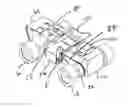
BRIEF DESCRIPTION OF THE DRAWINGSFIG. 1 shows a perspective view of the present invention in its final form.
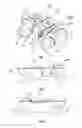
FIG. 2 shows a side view from the side of the motor.
FIG. 3 shows the other side view opposite the motor.
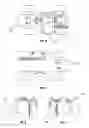
FIG. 4 shows a top view.
FIG. 5 shows a bottom view.
FIG. 6 shows a front view of the present invention.
FIG. 7 shows a back view.
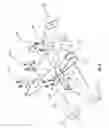
DETAILED DESCRIPTIONReferring to FIG. 1 and FIG. 8 which should be viewed in tandem, the car kit includes a block 10 or frame which, in the preferred embodiment, is typically a wooden block that is commonly sold at hobby stores for building soap box derby cars, the block has holes drilled in it to accommodate front axel 14, and rear axel 12 to which are attached to front wheels 16 and rear wheels 18. The rear axel also has attached to it a driven pulley which is connected through drive belt 32 to the motor 22.
The wooden block 10 also has predrilled holes to accommodate motor mounting bracket 36 which holds motor 22 in place. Motor 22 has a drive shaft 24 to which is attached a driving pulley 30. The combination of drive shaft 24 and driving pulley 30 is then inserted with the drive shaft in hole 54 on the block on one side, and the other side, the motor held in place by motor mounting bracket 36 and tabs 34. Accordingly, the motor is held in place when the drive shaft is inserted in hole 54 and mounting screws 38 are driven in fastening the motor mounting bracket to the wooden block. The motor drive shaft is free to move and is moveably connected to the driven pulley 20 driving the rear wheels. Hole 54 on the block is large enough to allow free spinning of drive shaft 24. Accordingly, the combination motor and drive shaft 24 is held in place by virtue of the drive shaft being inserted in hole 54 on one side and mounting bracket 36 on the other. Motor 22 has positive and negative terminals 26 and 28 to which are attached positive and negative leads 50 and 52 which are provided with the kit. These leads including 51 and 52 are connected in series to the battery 42 and to the switch 40 to allow the child to operate the switch and allow the toy car kit to go forward or backward. Holes 56, 55, 54 and 58 are preferably pre-drilled in the block although another aspect of the invention is to have the block not drilled at all and allow the children to drill their own holes. A separate drill or drill guide can even be provided with the kit.
Going to FIG. 2 a side view of the car which is ultimately built is shown. This embodiment also has a fairing 46 that can be attached and also serves as a bumper. Note that in FIG. 2 all of the screws have been driven in.
Likewise, FIG. 3 shows another view of the side not including the motor. Connecting line 52 is preferably is a standard lead or connection wire with alligator clips which make it much easier to assemble.
FIG. 4 which is the top view, better illustrates the alligator clip wires 50, 51 and 52. Note the positioning of the bracket which attaches the battery to the block or frame. The switch 40, of course can be a variety of configurations including one which is held in place by a separate bracket (not shown) similar to the bracket which holds the battery. As with the alligator clip leads, the battery is typically a 9 volt battery which can be purchased at any supermarket.
FIG. 5 shows a view from the bottom illustrating in detail how the motor is held in place by the motor mounting bracket and hole 54 and the pulley, and how the pulley run from the motor drive shaft to the rear wheels. FIGS. 5, 6 and 7 are bottom, front and rear views are shown as previously described.
As indicated previously, the preferred embodiment would have this invention sold as a kit which may include a combination of wheels, axels, pulleys, drive shaft, block, brackets, alligator clips, batteries, front fairing or bumper, and screws. Instructions with a description of how motors operate, how pulleys operate and how electric circuitry works would also be included.
While we have shown and described various embodiments in accordance with the present invention, it should be clear to those skilled in the art that further embodiments may be made without departing from the scope and spirit of this concept.
Claims
1. A toy car kit which children can assemble from parts comprising of:
a wooden block having a first and second means to moveably secure first and second axels having front and rear wheels fastened thereto,
a motor having a drive shaft and electrical connections and mounted to the wooden block,
a first driving pulley mounted on the drive shaft,
a driven pulley connected to said rear axle,
a belt drive connecting said first driving pulley to said second driven pulley,
a battery mounted on said block,
a switch,
connector cables
whereby when the switch is activated, the motor powers the rear wheel.
2. A toy car kit comprising of:
a wooden block having a first and second with wheels fastened thereto,
a motor mounted to the wooden block,
a drive shaft on said motor with a first driving pulley mounted thereon,
a driven pulley connected to said rear axle,
a belt drive connecting said first driving pulley to said second driven pulley,
a battery mounted on said block,
a switch,
connector cables
whereby when the switch is activated, the motor powers the rear wheel.
Images & Drawings included:
Sources:
- United States Patent and Trademark Office - verify current appl. status at the USPTO↗
Similar patent applications:
- » 10260475
Toy car kit - » 10720561
Toy car kit
Recent applications in this class:
- » 20250222370 2025-07-10
Luminous Building Block - » 20250177878 2025-06-05
POWER HUB FOR INTERLOCKING BRICKS - » 20250083063 2025-03-13
Method for Connecting/Disconnecting Hinged Ball and Socket Blocks - » 20250073609 2025-03-06
TRANSFORMABLE GAME TOY - » 20250058242 2025-02-20
Posable Building Block - » 20250058241 2025-02-20
INTERCONNECTING METHODS AND SYSTEMS FOR POSABLE BENDABLE BUILDING BLOCK TOYS - » 20250010218 2025-01-09
MODULAR TOY SYSTEM WITH ELECTRONIC TOY MODULES - » 20250001321 2025-01-02
UNILATERAL ELECTRIFIED INTERLOCKING BLOCK SYSTEM AND METHOD THEREOF - » 20250001320 2025-01-02
SENSOR MODULE FOR A MODULAR TOY CONSTRUCTION SET - » 20240408506 2024-12-12
WIRELESSLY POWERED MODULAR TOY