Method for producing a palladium-containing hydrogenation catalyst
US20060205589A1
2006-09-14
10/564,019
2004-07-06
✅ Patent granted
US 7,465,689 B2
2008-12-16
WO; PCT/RU2004/000263; 20040706
WO; WO2005/007288; 20050127
Jerry Lorengo | Patricia L Hailey
2025-04-19
Abstract:
The invention relates to physical chemistry and can be used for adjusting the rate of autocatalytic hydrogenation reactions.
The method for producing a palladium-containing hydrogenation catalyst consists in reducing divalent palladium from the initial compound thereof and precipitating the thus reduced palladium on a carbon material, wherein, according to said invention, the initial compound is embodied in the form of tetra aqua-palladium (II) perchlorate. The reduced palladium is precipitated on a nano-carbon material which can be embodied in the form of fullerene C60, carbon nanotubes, cathodic deposit and the mixture of C60 and C70 fullerenes at the following ratio thereof: 60-80 mass % fullerene C60 and 20-40 mass % fluorine C70. The invention makes it possible to develop the method for producing a palladium-containing hydrogenation catalyst which exhibits a higher catalytic activity and operates in softer conditions (at a room temperature and a normal (atmospheric) pressure).
Inventors:
- Valery Borisovich Ukainlsev 1 🇷🇺 SAINT PETERSBURG, Russian Federation
- Anatolievich Konstantin Khokhryakov 1 🇷🇺 St. Petersburg, Russian Federation
- Nikolai Zakharovich 1 🇷🇺 St. Petersburg, Russian Federation
- Georgy Andreevich 1 🇷🇺 St. Petersburg, Russian Federation
- Gregory Andreevich Dyuzhev 1 🇷🇺 St Petersburg, Russian Federation
- Vladimir Mikhailovich Kofiev 1 🇷🇺 St. Petersburg, Russian Federation
- Valery Borisovich Ukraintsev 1 🇷🇺 Sekri-petz burg, ul. Turku, Russian Federation
- Konstantin Anatolievich Khokhryakov 1 🇷🇺 Saint-Petersburg, ul. Chaikovskogen, Russian Federation
- Nikolai Zakharovich Sobolev 1 🇷🇺 Saint-Petersburg, Grazhdansky pr., Russian Federation
- Georgy Andreevich Dyuzhev 1 🇷🇺 Saint-Petersburg, pr. Engelsa, Russian Federation
- Vladimir Mikhailovich Prokofiev 1 🇷🇺 Saint-Petersburg, ul. S-ya Krasnoamoisakayo, Russian Federation
Interested in similar patents?
Get notified when new applications in this technology area are published.
Classification:
B01J19/08 IPC
Chemical, physical or physico-chemical processes in general; Their relevant apparatus Processes employing the direct application of electric or wave energy, or particle radiation; Apparatus therefor
B01J23/44 » CPC further
Catalysts comprising metals or metal oxides or hydroxides, not provided for in group of noble metals of the platinum group metals Palladium
B01J37/031 » CPC further
Processes, in general, for preparing catalysts; Processes, in general, for activation of catalysts; Impregnation, coating or precipitation; Precipitation; Co-precipitation Precipitation
B01J37/16 » CPC further
Processes, in general, for preparing catalysts; Processes, in general, for activation of catalysts Reducing
B82Y30/00 » CPC further
Nanotechnology for materials or surface science, e.g. nanocomposites
Y10S423/39 » CPC further
Chemistry of inorganic compounds Fullerene, e.g. c60, c70 derivative and related process
Y10S423/40 » CPC further
Chemistry of inorganic compounds Fullerene composition
Y10S977/734 » CPC further
Nanotechnology; Nanostructure Fullerenes, i.e. graphene-based structures, such as nanohorns, nanococoons, nanoscrolls or fullerene-like structures, e.g. WS or MoS chalcogenide nanotubes, planar CN, etc.
Y10S977/735 » CPC further
Nanotechnology; Nanostructure; Fullerenes, i.e. graphene-based structures, such as nanohorns, nanococoons, nanoscrolls or fullerene-like structures, e.g. WS or MoS chalcogenide nanotubes, planar CN, etc. Carbon buckyball
Y10S977/74 » CPC further
Nanotechnology; Nanostructure; Fullerenes, i.e. graphene-based structures, such as nanohorns, nanococoons, nanoscrolls or fullerene-like structures, e.g. WS or MoS chalcogenide nanotubes, planar CN, etc.; Carbon buckyball having a modified surface Modified with atoms or molecules bonded to the surface
Y10S977/742 » CPC further
Nanotechnology; Nanostructure; Fullerenes, i.e. graphene-based structures, such as nanohorns, nanococoons, nanoscrolls or fullerene-like structures, e.g. WS or MoS chalcogenide nanotubes, planar CN, etc. Carbon nanotubes, CNTs
Y10S977/748 » CPC further
Nanotechnology; Nanostructure; Fullerenes, i.e. graphene-based structures, such as nanohorns, nanococoons, nanoscrolls or fullerene-like structures, e.g. WS or MoS chalcogenide nanotubes, planar CN, etc.; Carbon nanotubes, CNTs having a modified surface Modified with atoms or molecules bonded to the surface
B01J21/18 » CPC main
Catalysts comprising the elements, oxides, or hydroxides of magnesium, boron, aluminium, carbon, silicon, titanium, zirconium, or hafnium Carbon
B01J23/40 IPC
Catalysts comprising metals or metal oxides or hydroxides, not provided for in group of noble metals of the platinum group metals
D01F9/12 IPC
Artificial filaments or the like of other substances; Manufacture thereof; Apparatus specially adapted for the manufacture of carbon filaments of inorganic material Carbon filaments; Apparatus specially adapted for the manufacture thereof
D01F9/127 IPC
Artificial filaments or the like of other substances; Manufacture thereof; Apparatus specially adapted for the manufacture of carbon filaments of inorganic material; Carbon filaments; Apparatus specially adapted for the manufacture thereof by thermal decomposition of hydrocarbon gases or vapours or other carbon-containing compounds in the form of gas or vapour, e.g. carbon monoxide, alcohols
Description
TECHNICAL FIELDThe invention relates to physical chemistry and can be used for adjusting the rate of autocatalytic hydrogenation reactions.
BACKGROUND ARTThe hydrogenation reactions relate to basic industrial processes that are usually realized over a catalyst, in particular, for the synthesis of alicyclic and cyclic saturated organic compounds, high-quality benzine, etc.
According to the written publications known in the art (see Grove D. E. Plat. Met., 2002, 46, (2) 92), about 75% of the industrial hydrogenation processes are realized over the Pd/C catalyst, which contains 5% of metal palladium. The rich variety of palladium's catalytic properties allows using it in almost all reactions necessary for the organic synthesis. Therefore, at present, Pd/C is the most suitable system for realizing the processes of the catalytic organic synthesis.
A known method for producing a palladium-containing hydrogenation catalyst consists in reducing divalent palladium from the initial compound thereof and precipitating the thus reduced palladium on a carbon material, wherein the initial compounds are embodied in the form of Pd (II) complexes, see Tsuji J. Palladium reagents and catalysts-innovations in organic syntheses. John Wiley & sons, Chichester. 1995. 595 p.; Grove D. E. Plat. Met., 2002, 46, (1) 48.
Another known method for producing a palladium-containing hydrogenation catalyst consists in reducing divalent palladium from the initial compound thereof and precipitating the thus reduced palladium on a carbon material, wherein the initial compound in embodied in the form of palladium chloride (II), see H. M. Colquhoun, Y. Holton, et alii, “New Pathways for Organic Synthesis” ( ), translated from English by M. S. Ermolenko and V. G. Kiseleva, Moscow, (“Chemistry”), 1989, 361 p., 2nd paragraph counting from the top of the page.
The palladium chloride (8.2 g) solution in hydrochloric acid (20 ml of concentrated acid in 50 ml of water) is heated during 2 hours, then added, while constantly stirring, to a hot (80° C.) coal suspension in water (93 g of coal in 1.2 l of water), wherein the coal has previously been washed with nitric acid.
Coal of almost any type can be used, provided that said coal has a sufficiently large specific surface area, has been washed with nitric acid (10%) during 2-3 hours, subsequently washed with water in order to eliminate the acid, and dried at 100° C. Then the formaldehyde is added (8 ml of 37% solution) and subsequently the sodium hydroxide solution is added until a strong alkaline reaction is achieved. After 10 minutes the thus obtained catalyst is filtered out, washed with water (10×250 ml) and vacuum dried over calcium chloride. The palladium outlet equals 5% for 93-98% coal.
This method is taken as a prototype of the present invention.
The disadvantage of said method is in that the catalyst produced according to this method exhibits a low catalytic activity and operates only at high temperatures (higher than 60° C.) and high pressure (higher than 5 gauge atmospheres). The reason for said disadvantage is the difficulty of activation of the reaction centers of the catalyst produced according to the prototype method.
SUMMARY OF THE INVENTIONIt is an object of this invention to develop a method for producing a palladium-containing hydrogenation catalyst, which exhibits a higher catalytic activity and operated in softer conditions (at a room temperature and a normal (atmospheric) pressure).
According to the present invention there is provided a method for producing a palladium-containing hydrogenation catalyst, which consists in reducing divalent palladium from the initial compound thereof and precipitating the thus reduced palladium on a carbon material, wherein the initial compound is embodied in the form of tetra aqua-palladium (II) perchlorate. The reduced palladium is precipitated on a nano-carbon material which can be embodied in the form of fullerene C60, carbon nanotubes, cathodic deposit and the mixture of C60 and C70 fullerenes at the following ratio thereof: 60-80 mass % fullerene C60 and 20-40 mass % fluorine C70.
The applicant hasn't found any sources of information containing data on engineering solutions identical to the present invention. In applicant's opinion, that enables to conclude that the invention conforms to the criterion “novelty” (N).
The distinguishing characteristics of the present invention enable to achieve an important engineering result, which consists in that the embodiment of the initial compound in the form of tetra aqua-palladium (II) perchlorate allows producing reduced palladium with high dispersion ability, and the precipitation of the reduced palladium on a nano-carbon material allows keeping the palladium in nano-clustered form.
Said conditions significantly increase the catalytic activity of the substance produced by the realization of said method and make it possible to conduct the catalysis process at a room temperature and normal atmospheric pressure.
The applicant hasn't found any sources of information containing data on the influence of said distinguishing characteristics on the engineering result achieved through the application thereof. In applicant's opinion, that enables to conclude that the invention conforms to the criterion “inventive step” (IS).
BRIEF DESCRIPTION OF THE DRAWINGSThe present invention is illustrated, by way of example, with reference to the accompanying drawings in which:
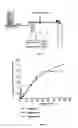
FIG. 1 is a scheme of the plant for the realization of the inventive method for producing a palladium-containing hydrogenation s catalyst;
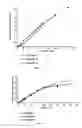
FIG. 2 is a time graph of the volume of the absorbed gas mixture for various hydrogenation reactions over a catalyst produced by means of the method according to claim 2:
(1) C2H4→H4>C2H6;
(2) CH2=CHCH2OH+H2→CH3CH2CH2OH;
(3) 2Feaq+3+H2→Feaq+2+2H+.
FIG. 3 is identical to FIG. 2, but the catalyst is produced by means of the method according to claim 3;
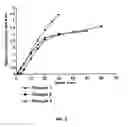
FIG. 4 is identical to FIG. 2, but the catalyst is produced by means of the method according to claim 4;
FIG. 5 is identical to FIG. 2, but the catalyst is produced by means of the method according to claim 5.
PREFERRED EMBODIMENTThe plant for realization of the inventive method comprises a reactor 1 provided with a mixer 2. Hydrogen is contained in the cylinder 3. The reactor 1 is connected to the manometric plant 4.
In the first specific embodiment the method is realized in the following way.
2.0 liters of distilled water are placed in the reactor 1. Then 600 mg of nano-carbon material are introduced, in particular, fullerene C60. Then 5.22 ml of 5.7·10−2 m [Pd(H2O)4(ClO4)2 solution are added, said solution containing 0.7 m of chloric acid, and the mixture is stirred during 0.5 hour. Then the divalent palladium is reduced by passing it through the prepared hydrogen solution during 2 hours.
The sediment is filtered out by means of the Shott filter, repeatedly washed with distilled water and dried in a vacuum desiccator over P2O5 during 2 days (48 hours). The catalyst outlet equalled 98-99% (catalyst I).
The second specific embodiment (catalyst II) differs from the first one only in that the nano-carbon material is embodied in the form of carbon nanotubes; in the third specific embodiment (catalyst III) the nano-carbon material is embodied in the form of cathodic deposit; in the fourth specific embodiment (catalyst IV) the nano-carbon material is embodied in the form of the mixture of C60 and C70 fullerenes at the following ratio thereof:
fullerene C60-60-80 mass %
fullerene C70-20-40 mass %
Each catalyst produced was tested in all three hydrogenation reactions mentioned above. For this, 10 mg of catalyst were placed in the solution and then corresponding substance was added: 10 ml of distilled water for reaction (1), 10 ml of 0.01 aqueous solution of ferric sulphate for reaction (2), 10 ml of 0.002 aqueous solution of allyl alcohol for reaction (3). For reaction (1), the reactor was filled with the mixture of ethylene and hydrogen at the volume ratio of 1:1; for reactions (2) and (3), the reactor was filled with hydrogen. The reactions were conducted at a temperature of 18-25° C. and a normal atmospheric pressure. The rates of the reaction (1), (2) and (3) were measured by the time variation of the absorbed gases' volume over the catalysts I, II, III, IV (see FIGS. 2, 3, 4, 5 respectively).
For comparison purposes, the rates of the hydrogenation reactions, conducted in similar conditions, but over industrial catalyst Pd/C, were measured. In reaction (1) the rate did not exceed 10-12% of the hydrogenation rate over catalysts I, II, III, IV, in reaction (2) almost no hydrogenation was observed, in reaction (3) no difference in the hydrogenation rate was observed.
INDUSTRIAL APPLICABILITYKnown simple industrial equipment and materials common in the art are used for the realization of the method, which enables to conclude that the invention conforms to the criterion “industrial applicability” (IA).
Claims
1. A method for producing a palladium-containing hydrogenation catalyst, consisting in reducing divalent palladium from the initial compound thereof and precipitating the thus reduced palladium on a carbon material, characterized in that the initial compound is embodied in the form of tetra aqua-palladium (II) perchlorate, and the reduced palladium is precipitated on a nano-carbon material.
2. A method according to claim 1, characterized in that the nano-carbon material is embodied in the form of fullerene C60.
3. A method according to claim 1, characterized in that the nano-carbon material is embodied in the form of carbon nanotubes.
4. A method according to claim 1, characterized in that the nano-carbon material is embodied in the form of cathodic deposit.
5. A method according to claim 1, characterized in that the nano-carbon material is embodied in the form of the mixture of C60 and C70 fullerenes at the following ratio thereof:
fullerene C60-60-80 mass %
fullerene C70-20-40 mass %
Images & Drawings included:



Sources:
- United States Patent and Trademark Office - verify current appl. status at the USPTO↗
Recent applications in this class:
- » 20250281907 2025-09-11
METHOD AND SYSTEM FOR CONSTRUCTING CFs/TiO2 NANOTEXTURE FROM RECYCLED CARBON FIBER-REINFORCED POLYMERS (CFRPs) FOR PHOTOCATALYTIC HYDROGEN PRODUCTION - » 20250186975 2025-06-12
CATALYST FOR PREPARING CARBON NANOTUBES AND METHOD FOR PREPARING CATALYST FOR PREPARING CARBON NANOTUBES - » 20250010273 2025-01-09
HYDROGEN PRODUCTION CATALYST AND HYDROGEN PRODUCTION METHOD - » 20250010272 2025-01-09
METHOD OF PRODUCTION OF METAL-CONTAINING SPHERICALLY POROUS CARBON PARTICLES - » 20240123428 2024-04-18
CARBON-SUPPORTED BORON CATALYSTS FOR OXIDATIVE DEHYDROGENATION OF ALKANES - » 20230390740 2023-12-07
CATALYST FOR CATALYTIC CRACKING OF ETHYLENEDICHLORIDE TO VINYL CHLORIDE - » 20230381745 2023-11-30
Synthesis of bimetallic structures for use as catalysts - » 20230364587 2023-11-16
CARBON-SUPPORTED PLATINUM GROUP METAL CATALYST, PREPARATION METHOD THEREFOR AND USE THEREOF - » 20230294076 2023-09-21
Synthesis of bimetallic structures for use as catalysts - » 20230173461 2023-06-08
Mixtures of Binder Particles Used in Production of Immobilized Particulate Products