Method of treating tundish
US20060207695A1
2006-09-21
11/367,705
2006-03-03
Abstract:
A method of treating steel tundish. A first step involves subjecting the tundish to rapid cryogenic refrigeration until the tundish is micro-cracked and cryogenically imbrittled. A second step involves impacting the steel tundish with a force sufficient enough to facture and break apart the cryogenically micro-cracked and imbrittled steel tundish.
Assignee:
- Quadra Indusrial Services Ontario Inc. 1 🇨🇦 Hamilton, Canada
Interested in similar patents?
Get notified when new applications in this technology area are published.
Classification:
B02C19/186 » CPC main
Other disintegrating devices or methods; Use of auxiliary physical effects, e.g. ultrasonics, irradiation, for disintegrating Use of cold or heat for disintegrating
B02C1/00 » CPC further
Crushing or disintegrating by reciprocating members
B22D41/026 » CPC further
Casting melt-holding vessels, e.g. ladles, tundishes, cups or the like; Linings Apparatus used for fracturing and removing of linings
C21D6/04 IPC
Heat treatment of ferrous alloys Hardening by cooling below 0 degrees Celsius
Description
FIELD OF THE INVENTIONThe present invention relates to a method of treating tundish, so it can be reused in making steel.
BACKGROUND OF THE INVENTIONIn the steel making industry, steel tundish are a byproduct of the steel making operation. These rectangular byproducts of the steel making operation vary in sizes and weight. They can weigh as much as 60 tons. In order to reclaim these steel tundish, size and weight reduction are necessary to effectively handle and melt down, steel tundish for reclamation purposes. Currently, an oxygen lancing process is used to cut steel tundish into appropriate sizes. This lancing operation is time consuming, has a negative environmental impact and, poses negative heath and safety impact.
SUMMARY OF THE INVENTIONAccording to the present invention there is provided a method of treating steel tundish. A first step involves subjecting the tundish to rapid cryogenic refrigeration until the tundish is micro-cracked and cryogenically imbrittled. A second step involves impacting the steel tundish with a force sufficient enough to facture and break apart the cryogenically micro-cracked and imbrittled steel tundish.
BRIEF DESCRIPTION OF THE DRAWINGSThese and other features of the invention will become more apparent from the following description in which reference is made to the appended drawings, the drawings are for the purpose of illustration only and are not intended to in any way limit the scope of the invention to the particular embodiment or embodiments shown, wherein:
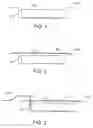
FIG. 1 is a side elevation view, in section, depicting a tundish being placed in a pit in the ground in preparation for treatment in accordance with the teachings of the present invention.
FIG. 2 is a side elevation view, in section, depicting the pit and tundish illustrated in FIG. 1, with the pit being covered in preparation for cryogenic refrigeration of the tundish in accordance with the teachings of the present invention.
FIG. 3 is a side elevation view, in section, depicting rapid cryogenic refrigeration of the tundish in accordance with the teachings of the present invention.
FIG. 4 is a side elevation view, in section, depicting removal of the tundish from the pit after cryogenic refrigeration in accordance with the teachings of the present invention.
FIG. 5 is a side elevation view, in section, depicting impacting the tundish with a steel ball to fracture and break apart the cryogenically micro-cracked and imbrittled tundish in accordance with the teachings of the present invention.
FIG. 6 is a side elevation view, in section, depicting impacting the tundish to fracture and break apart the cryogenically micro-cracked and imbrittled tundish in accordance with the teachings of the present invention.
FIG. 7 is a flow diagram representation of the method of treating a tundish in accordance with the teachings of the present invention.
DETAILED DESCRIPTION OF THE PREFERRED EMBODIMENTThe preferred method of treating steel tundish, will now be described with references to FIG. 1 through FIG. 7
The method involves a first step of subjecting the tundish to rapid cryogenic refrigeration until the tundish is micro-cracked and cryogenically imbrittled. The Figures sequentially show how this is done. Referring to FIG. 1, tundish 12 is placed into a pit 14 formed in ground 16. Pit 14 is preferred to other types of containers due to the fact that it is relatively inexpensive to excavate a pit and pit 14 can be made to whatever dimensions may be required to accommodate tundish 12. Referring to FIG. 2, pit 14 is covered by a styrofoam cover 18. Referring to FIG. 3, a hose 20 from a liquid nitrogen source (not shown) is inserted through cover 18 into pit 14. Liquid nitrogen is introduced into pit 14 through hose 20. As the objective is to micro-crack and imbrittle tundish 12, liquid nitrogen is introduced rapidly to provide a thermal shock to tundish 12. Referring to FIG. 4, the cryogenically micro-cracked and imbrittled tundish 12 is then removed from pit 14. Referring to FIG. 5, steel tundish 12 is then impacted with a force sufficient enough to facture and break apart the cryogenically micro-cracked and imbrittled steel tundish. There are, of course, numerous ways in which this can be done. The preferred way and the way which has been selected for illustration in FIG. 5 is by dropping a heavy steel ball 21 onto the cryogenically micro cracked and imbrittled tundish 12 using a crane 22. Alternatively, it could be imbrittled tundish 12 that is dropped from crane 22, as shown in FIG. 6, so that tundish 12 breaks into a number of pieces 24
The preferred method involves subjecting a steel tundish to rapid cryogenic temperatures, to micro crack and imbrittle steel tundish for size reduction purposes. The cryogenic temperature range starts at approximately -50 degrees Celsius. It will be understood that the method works with a combination of temperature and time. As the temperature is made colder within the Cryogenic temperature range, the lower the charpys impact resistance becomes, the more rapid the cryogenic temperature differential between inner and outer surface of steel tundish, the greater the number of micro cracking.
Once steel tundish has been micro cracked and imbrittled, through cryogenic refrigeration, size reduction and reclamation becomes a very simple matter. The present invention relates to a method of cryogenically micro cracking and, imbrittling steel tundish, in order to effectively fracture and break apart steel tundish for reclamation purposes. When steel tundish is exposed to rapid cryogenic temperatures from ambient temperatures, outer surface of steel tundish contracts while inner area remains unchanged, this thermally induced contraction differential causes internal stresses high enough to over comes the steel tundishes, ultimate yield strength, resulting in internally micro cracking steel tundish. As the steel tundish is exposed to cryogenic refrigeration in the cryogenic refrigeration unit, low temperature imbrittlement occurs and, impact resistances becomes progressively lower as the temperature of the steel tundish becomes lower. Once steel tundish is micro cracked and imbrittled, an impact force is used to fracture and, break apart steel tundish.
The described method of cryogenically micro cracking and imbrittling steel tundishs, simplify steel tundish size reduction and, enhance health and safety, reduce negative environmental impact and, lower the cost of steel tundish size reduction.
Operation:
Cryogenic Process for Tundish
The details of the method will now be described, in accordance with the detailed instructions given to on-site personnel, which are embodied in the flow chart labelled as FIG. 7.
1. Ensure sufficient amount of Ln2.
-
- Starting values are obtained by recording the pressures and level on the storage tanks.
2. Inspection of tundish.
-
- Cryogenic operator measures the size of the tundish to be treated.
- From the measurement of the tundish, an estimated weight must be obtained and recorded.
3. Referring to FIG. 1, Tundish 12 is placed in pit 14.
-
- One signal person must be used to direct the forklift operator.
- The signal person will direct the forklift operator to raise the tundish into the engineered lifting cradle.
- Once the tundish is resting in the cradle the operator will then raise the spreader to allow the shackles to be applied.
- Once the shackles have been applied the operator will raise the tundish and place it into the Cryogenic chamber.
4. Referring to FIG. 2, Apply cover 18 to Cryogenic chamber.
-
- Covers are applied evenly, leaving only small openings for venting.
5. Referring to FIG. 3, liquid nitrogen (Ln2) introduction into pit 14 through hose 20.
-
- The inlet hose is secure to ensure flash back does not occur.
- Ln2 is then introduced into the chamber at a slow rate to start then opened to facilitate a substantial flow.
- Once a two (2) to three (3) foot bath is obtain inside the tank, the Ln2 is reduce to maintain a sufficient bath level as the Ln2 flashes off.
6. Monitor & Document.
-
- Operator must record all times and events on each tundish treatment.
- Operator must record Ln2 usage.
7. Referring to FIG. 4, tundish 12 is removed from pit 14.
-
- Tunish is then removed and transported to the reclamation area.
8. Referring to FIG. 5, steel ball 21 is-dropped from a height onto tundish 12, with the impact resulting in tundish 12 splitting into smaller pieces 24.
-
- Operator must document time of demolition and number of drops required to demolish tundish 12.
In this patent document, the word “comprising” is used in its non-limiting sense to mean that items following the word are included, but items not specifically mentioned are not excluded. A reference to an element by the indefinite article “a” does not exclude the possibility that more than one of the element is present, unless the context clearly requires that there be one and only one of the elements.
It will be apparent to one skilled in the art that modifications may be made to the illustrated embodiment without departing from the spirit and scope of the invention as hereinafter defined in the Claims.
Claims
What is claimed is:1. A method of treating steel tundish, comprising the steps of:
subjecting the tundish to rapid cryogenic refrigeration until the tundish is micro-cracked and cryogenically imbrittled; and
impacting the steel tundish with a force sufficient enough to facture and break apart the cryogenically micro-cracked and imbrittled steel tundish.
2. A method of treating steel tundish, comprising the steps of:
placing the tundish in a container;
covering the container; introducing cryogenic freezing into the container and subjecting the tundish to rapid cryogenic refrigeration until the tundish is micro-cracked and cryogenically imbrittled; and
impacting the steel tundish with a force sufficient enough to facture and break apart the cryogenically micro-cracked and imbrittled steel tundish.
3. The method as defined in claim 2, the container being a pit.
4. The method as defined in claim 2, the tundish being impacted by a steel ball being dropped from a height.
5. The method as defined in claim 2, the tundish being impacted by being dropped from a height.
Images & Drawings included:



Sources:
- United States Patent and Trademark Office - verify current appl. status at the USPTO↗
Recent applications in this class:
- » 20230149941 2023-05-18
COOLING FRAGMENTED MATERIAL BEFORE MILLING - » 20230083396 2023-03-16
Use method of gravity double-tube microwave-assisted grinding device capable of controlling ore thickness - » 20230077044 2023-03-09
JET-MILLING APPARATUS AND METHOD FOR JET-MILLING - » 20220184629 2022-06-16
Electromagnetic energy system for the breakdown and destruction of medical waste - » 20220080428 2022-03-17
Method and installation for cryogenic crushing of products - » 20200078793 2020-03-12
Method of sorting trash for recycling of paper and apparatus for sorting trash for paper recycling - » 20190134643 2019-05-09
COOLING AND PROCESSING MATERIALS - » 20180243752 2018-08-30
Device for Thermal Ablation of Pigging Devices - » 20180243751 2018-08-30
Method of sorting trash for recycling of paper and apparatus for sorting trash for paper recycling - » 20180056305 2018-03-01
Method for thermal ablation of pigging devices