Methods and circuits for power management in a transceiver
US20060209938A1
2006-09-21
11/440,151
2006-05-25
✅ Patent granted
US 8,116,357 B2
2012-02-14
-
-
Eva Puente
2027-06-30
Abstract:
A transceiver circuit having 10 mb and 100 mb transmit and receive circuitries using the power saving methods of the present invention is disclosed. The power consumption of the transceiver circuit can be significantly reduced by providing each defined subcircuit with its own power supply and means of activation and deactivation. However, the method for activating and deactivating digital subcircuits and analog subcircuits are different and therefore different types of control signals and methods are provided. Furthermore, there are two general types of power-saving situations. The first type is near total circuit power-down and the second type is partial circuit power-down. The present invention in yet another embodiment discloses a method for minimizing energy usage during idle period.
Assignee:
- Broadcom Corporation 11,816 🇺🇸 Irvine, CA, United States
Interested in similar patents?
Get notified when new applications in this technology area are published.
Classification:
H04L1/243 » CPC main
Arrangements for detecting or preventing errors in the information received; Testing correct operation by comparing a transmitted test signal with a locally generated replica at the transmitter, using a loop-back
H04B1/38 IPC
Details of transmission systems, not covered by a single one of groups - ; Details of transmission systems not characterised by the medium used for transmission Transceivers, i.e. devices in which transmitter and receiver form a structural unit and in which at least one part is used for functions of transmitting and receiving
Description
This application claims priority to a provisional application entitled “Reset and Power Management” filed on Oct. 8, 1998, having an application number______.
BACKGROUND OF THE INVENTION1. Field of the Invention
The present invention generally relates to methods and circuits for power management, and in particular, to methods and circuits for power management in network transceivers.
2. Description of the Prior Art
In a network, there are generally one or more servers connected to a number of client machines via one or more hubs (or repeaters) and or switches. In each one of these devices, there may be one or more transceivers. Each transceiver, if connected to another transceiver, communicates with that transceiver. For example, generally speaking, a server machine has a network card, and there is a transceiver on the network card. If the server is connected to a repeater, it would be connected to the repeater at one of its ports and there would be a transceiver at this port (and each port of the repeater) communicating with the server in accordance with established protocols.
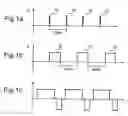
The manner in which the transceivers communicate with each other in an Ethernet environment is dictated by IEEE 802.3u. In the specification, it is specifically provided that for a 10 mb (mega bit per second) transceiver, during idle period (when the transceiver is not connected to another transceiver), the transceiver is required to transmit an idle signal to signal the existence of a live transceiver. In this manner, if another transceiver is connected to this transceiver, the two transceivers will detect the existence of each other and initiate communication protocol and transmit and receive data. FIG. 1a illustrates the industry standard specified normal link pulse (“nlp”) for transmission in the 10 mb mode. Note that there is a single pulse 10 every 16 ms. For 10 mb auto negotiation mode, referring to FIG. 1b, the industry specification requires that there be pulses separated by 16 ms intervals and each pulse 12 having a duration greater than a predefined duration. For 100 mb transceivers, referring to FIG. 1c, the signal type MLT3 having 3 levels of signaling is used.
While the industry specifications provide the idle signal type for each mode of operation, for 10/100mb transceivers, the MLT3 type idle signal is specified. The disadvantage with this specification is that the MLT3 signal consumers a high amount of energy even when there is no activity. It increases power consumption and requires higher cooling requirement—all results in higher system cost.
There is much advantage that can be had if the power consumption level of the transceiver can be minimized. For example, if a repeater uses transceivers with low power consumption, the repeater may be designed without the use of a mechanical cooling fan. The lack of a cooling fan translates to lower overall system cost and higher system reliability (there is not a fan to fail). For the 10/100mb transceivers, there are many opportunities for power savings if the circuits is designed to minimize power use.
Therefore, it is desirable to have a transceiver device with low power consumption.
SUMMARY OF THE INVENTIONIt is therefore an object of the present invention to provide methods and circuits for low-power transceiver devices.
It is another object of the present invention to provide methods and circuits for minimizing power consumption during idle period.
It is yet another object of the present invention to provide methods for dividing a 10/100mb transceiver into subcircuits in order to minimize power consumption.
Briefly, in a presently preferred embodiments of the present invention, a transceiver circuit having 10 mb and 100 mb transmit and receive circuitries using the power saving methods of the present invention is disclosed. The power consumption of the transceiver circuit can be significantly reduced by providing each defined subcircuit with its own power supply and means of activation and deactivation. However, the method for activating and deactivating digital subcircuits and analog subcircuits are different and therefore different types of control signals and methods are provided. Furthermore, there are two general types of power-saving situations. The first type is near total circuit power-down and the second type is partial circuit power-down. The present invention in yet another embodiment discloses a method for minimizing energy usage during idle period.
An advantage of the present invention is that it provides methods and circuits for low-power transceiver devices.
Another advantage of the present invention is that it provides methods and circuits for minimizing power consumption during idle period.
Yet another advantage of the present invention is that it provides methods for dividing a 10/100mb transceiver into subcircuits in order to minimize power consumption.
These and other features and advantages of the present invention will become well understood upon examining the figures and reading the following detailed description of the invention.
IN THE DRAWINGSFIG. 1a illustrates the waveform of normal link pulse.
FIG. 1b illustrates the waveform of fast link pulse.
FIG. 1c illustrates the waveform of a MLT3 signal.
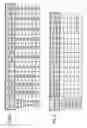
FIG. 2 illustrates a clock management summary table of the preferred embodiment.
FIG. 3 illustrates a power management logic control table of the preferred embodiment.
DETAILED DESCRIPTION OF THE PREFERRED EMBODIMENTSIn a presently preferred embodiments of the present invention, a transceiver circuit having 10 mb and 100 mb transmit and receive circuitries using the power saving methods of the present invention is disclosed. The power consumption of the transceiver circuit can be significantly reduced by providing each defined subcircuit with its own power supply and means of activation and deactivation. However, the method for activating and deactivating digital subcircuits and analog subcircuits are different and therefore different types of control signals and methods are provided. Furthermore, there are two general types of power-saving situations. The first type is near total circuit power-down and the second type is partial circuit power-down.
In the first type of power-saving situation, two power-saving modes are provided. In the first power-saving mode, the transceiver circuit is powered-down. This may be achieved by providing a register and setting the proper register value to activate the power-down mode, or providing a signal to a signal line to the transceiver circuit. In this mode, except for allowing management transactions (by writing to a management register) to the transceiver circuit, all power to other areas of the transceiver circuit is powered off, thus achieving maximum power saving.
In the second power-saving mode (for near total circuit power-down), by asserting the proper signal or register value, the present invention provides for nearly total power-down when either (1) there is no valid signal on the media or (2) when there is no valid data at the data interface (also known as media independent interface or MII). For the case where there is no valid data on the MII, most of the subcircuits of the transceiver can be powered-down.
For the case where there is no valid signal on the media (e.g. the transceiver is not connected to another transceiver), an analog energy-detect circuit is turned on to monitor for the existence of a signal on the media, and the serial management interface (or SMI) is turned on to allow for any management transaction (for managing the transceiver device). The rest of the receive circuits, which include all of the analog and digital circuits in the receive path, are turned off.
Furthermore, the transmit circuit of the transceiver of the present invention sends out an idle signal in accordance with the present invention. The link pulses of the preferred embodiment for the 10/100 transceiver is a short duration pulse recurring every predefined period (preferably every 16 ms) like the industry specified normal link pulse (nlp) for 10 baseT transceiver circuits. Although, the industry specification requires the MLT3 signal type to indicate a live connection on the media for 10/100 transceiver circuits. However, the MLT3 signal type consumes more power than otherwise. In the 10/100 transceiver of the present invention, a normal link pulse is used rather than the MLT3 pulse.
Upon receiving activity on the media, the transceiver circuit of the present invention immediately changes to a MLT3 type signal and enters into auto-negotiation mode (if activated). In this manner, although contravening industry specification, only minimal energy is used to indicate that the transceiver is alive and available. If the energy-detect circuit detects signal energy on the media, the receive circuit is turned on immediately. If the energy-detect circuit does not detect signal energy on the media after a predefined period, the transceiver circuit is powered down as described above.
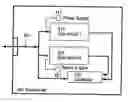
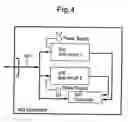
For partial circuit power-down type of power saving methods, the transceiver of the present invention uses two clock management and power management to manage power consumption. Note that for digital circuits, stopping the clock to a particular circuit block effectively powers the block down, and for analog circuits, power down is achieved by asserting the power-down pin for the corresponding block.
Several clock signals are provided with the transceiver of the present invention. A clk_free clock signal provides a free running 25 MHz clock buffered from a crystal circuit; a clk_tx clock signal provides a free running 20/25 MHz transmit clock synthesized by a transmit PLL circuit where the clock frequency is controlled by another signal; and a clk_rx clock signal provides a 20/25 MHz Recovery clock where the frequency of this clock is controlled by another signal and this clock signal locks to clk_tx when no data is presented on the media and it is locked to the data when it is detected.
Additionally, several other clock signals are provided to the digital portion of the transceiver of the present invention. A bt_txc13 20 signal provides a 20 MHz transmit clock for 10 BaseT circuit; a bt_rxc—20 signal provides a 20 Mhz recovery clock for 10 BaseT circuit; a tx_txc signal provides 25 MHz transmit clock for 100 BaseT 100 Base FX circuit; a tx_rxc signal provides 25 MHz recovery clock for 100 BaseT 100 Base Fx circuit; a mii_txc signal providing a 25/2.5/10/25/20 MHz transmit clock for MII-100/MII-10/MII-10-Serial/SYM-100/SYM-10 interface; a mii_rxc 25/2.5/10/25 MHz recovery clock for MII-100/MII-10/MII-10-Serial/SYM100 interface; a cp_arb clock for auto-negotiation/arbitration circuit. The timers, mii-management, and led circuit of the transceiver of the present invention use the clk_free clock signal directly, which is always on. The mii-management and timers circuits need to have the clock signal even in power down mode in order to control the transceiver.
Referring to FIG. 2, a clock management summary table of the preferred embodiment is illustrated. Here, the operation modes are listed in the column titles. It can be seen that during the power-down mode, all of the clock signals are off to save power. In the energy-detect mode, only the mii_txc and cp_arb clock signals are activated to run the corresponding circuits. In the auto-negotiation mode, the mii_txc and cp_arb signals are activated to conduct the auto-negotiate task. During 10 BaseT operation, the clock signals for the 100 BaseT circuits are turned off. Likewise, during 100 BaseTx operation, the clock signals for the 10 BaseT circuits are turned off. For serial 10 BT operation, the clock signals for the 100 BaseT circuits are turned off. For the FX mode, the clock signals for 10 BaseT operation and cp_arb signal are turned off. For test loop back operation, this operation is conducted using 100 BaseT clock signals. For PCS (Physical Coding Sublayer) bypass 10 operation, the clock signals for the 100 BaseT circuits are turned off as well as the mii_rxc and cp_arb signals. For PCS bypass 100 operation, the clock signals for the 10 BaseT circuits are turned off as well as the mii_txc and cp_arb signals. As can be seen here, each clock signals corresponds to certain digital circuit blocks in the transceiver of the present invention. By turning off a clock signal, the corresponding circuit block of the transceiver is turned off.
For the analog portion of the transceiver of the present invention, a number of clock signals are provided as well. A mr_pd_pll signal controls the power to the transmit-PLL and clock recovery circuit. A mr_pd_equal signal controls the power to the equalizer and slicer. A mr_pd_bt_rcvr signal control the power to the analog portion of the 10 BaseT receiver. A mr_pd_pd_lp signal controls the power to the link pulse circuit (inside the energy detect block). A mr_pd_en_det signal for control the energy detect circuit. A mr_pd_fx signal for controlling the fx circuit and a mr_pwr_dwn signal for controlling the test, reference bias, and transmit blocks.
Referring to FIG. 3, a power management logic control table of the present invention is illustrated. Here, the operation modes are listed in the column titles and the various control signals are listed in the row titles. Note that a signal of “1” powers down the corresponding circuit. It can be seen that during the power down mode, all of the control signals power down their corresponding circuit. During the energy detect mode, only the mr_pd—en_det signal is activated. During the auto-negotiation mode, only the mr_pd_fx signal powers down its corresponding circuit. During 10 BaseT operation, the circuits corresponding to the mr_pd_pll, mr_bt_rcvr and mr_pd_en_det signals are active. During 100 BaseTx operation, the circuits corresponding to the mr_pd_pll, mr_pd_equal, and mr_pd_en_det are active. For the FX mode, the circuits corresponding to mr_pd_pdd and mr_pd_fx are active. In conducting test loopback, the circuits corresponding to mr_pd_pll, mr_pd_equal, and mr_pd_fx signals are active. For PC bypass 10 operation, the circuits corresponding mr_pd_pll, mr_bt_rcvr, and mr_pd_en_det signals are active. For PCS bypass 100 operation, the circuits corresponding to mr_pd_pll, mr_pd_equal, and mr_pd_en_det signals are active.
While the present invention has been described with reference to certain preferred embodiments, it is to be understood that the present invention is not to be limited to such specific embodiments. Rather, it is the inventor's intention that the invention be understood and construed in its broadest meaning as reflected by the following claims. Thus, these claims are to be understood as incorporating and not only the preferred embodiment described herein but all those other and further alterations and modifications as would be apparent to those of ordinary skill in the art.
Claims
What we claim are:1. (canceled)
2. A transceiver circuit for transmitting and receiving data signals, said transceiver circuit comprising:
a digital portion, wherein the digital portion is provided with a plurality of clock signals;
an analog portion, wherein the analog portion is provided with a plurality of clock signals; and
a mode detection module,
wherein the transceiver is operable in one of a plurality of operation modes, and
wherein the plurality of operation modes is detected by the mode detection module.
3. A transceiver circuit as recited in claim 2, wherein the detection module detects a first operation mode of the plurality of operation modes and deactivates each of the plurality of clock signals in the transceiver circuit.
4. A transceiver circuit as recited in claim 2, wherein detection module detects another operation mode of the plurality of operation modes and only activates at least one clock signal of the plurality of clock signals to at least one corresponding circuit.
5. A transceiver circuit as recited in claim 4 wherein the clock signals of the digital portion and the analog portion are operable separately.
6. A transceiver circuit for transmitting and receiving data signals, said transceiver circuit comprising:
a digital means, wherein the digital means is provided with a plurality of clock signals;
an analog means, wherein the analog means is provided with a plurality of clock signals; and
a mode detection means,
wherein the transceiver is operable in one of a plurality of operation modes, wherein the plurality of operation modes is detected by the mode detection means.
7. A transceiver circuit as recited in claim 6, wherein the detection means detects a first operation mode of the plurality of operation modes and deactivates each of the plurality of clock signals to the transceiver circuit.
8. A transceiver circuit as recited in claim 6, wherein detection means detects another operation mode of the plurality of modes and only activates at least one clock signal to for at least one corresponding circuit.
9. A transceiver circuit as recited in claim 8, wherein the clock signals of the digital means and the analog means are operable separately.
10. A method for power management in a transceiver circuit, the method comprising:
transmitting, from a transmitter subcircuit of the transceiver circuit, a pulse during a powered-down mode to indicate a status and using a first clock management mode, wherein said pulse differs from another pulse for indicating a power-on status;
receiving data signals by a receiver subcircuit having a media independent interface for receiving the data signals, said media independent interface remains power-on during the powered-down mode;
providing the transmitter subcircuit and the receiver subcircuit with each with its own power supply and means for activation and deactivation on the transceiver circuit.
11. The method of claim 10, wherein in the transmitting step, the pulse is a link pulse.
12. The method as recited in claim 10, wherein in the transmitting step, said pulse is a minimally powered pulse.
13. The method as recited in claim 10, wherein in the transmitting step, said pulse conforms to the another pulse for indicating the power-on status once a signal is received on said receiver subcircuit.
14. The method as recited in claim 13, further comprising:
detecting an entry by the transceiver, into an auto-negotiation mode to identify the received signal on the receiver subcircuit.
15. A method as recited in claim 10, wherein said receiver subcircuit upon receiving an activity activates said transceiver into the power-on mode.
16. A method as recited in claim 10, further comprising:
detecting a power down mode and the transceiver powers-down all subcircuits except for said transmitter subcircuit and said media independent interface.
17. A method for power management in a transceiver circuit, the method comprising:
providing a plurality of clock signals to a digital portion of the transceiver circuit;
providing a plurality of clock signals to an analog portion of the transceiver circuit;
detecting an operational mode from a plurality of operational modes of the transceiver circuit; and
deactivating the plurality of clock signals of the digital portion and the analog portion of the transceiver circuit if the detected operational mode is a power down mode.
18. A transceiver circuit as recited in claim 17, further comprising:
detecting another operational mode of the plurality of operational modes; and
activating only at least one clock signal of the plurality of clock signals to a corresponding at least one circuit.
19. A computer program embodied on a computer readable medium comprising computer code for performing the following steps when run on a computer:
transmitting, from a transmitter subcircuit of the transceiver circuit, a pulse during a powered-down mode to indicate a status and using a first clock management mode, wherein said pulse differs from another pulse for indicating a power-on status;
receiving data signals by a receiver subcircuit having a media independent interface for receiving the data signals, said media independent interface remains power-on during the powered-down mode;
providing the transmitter subcircuit and the receiver subcircuit with each with its own power supply and means for activation and deactivation on the transceiver circuit.
20. The computer program of claim 19, wherein in the transmitting step, the pulse is a link pulse.
21. The computer program as recited in claim 19, wherein in the transmitting step, said pulse is a minimally powered pulse.
22. The computer program as recited in claim 19, wherein in the transmitting step, said pulse conforms to the another pulse for indicating the power-on status once a signal is received on said receiver subcircuit.
23. The computer program as recited in claim 19, further comprising:
detecting an entry by the transceiver, into an auto-negotiation mode to identify the received signal on the receiver subcircuit.
24. The computer program as recited in claim 19, wherein said receiver subcircuit upon receiving an activity activates said transceiver into the power-on mode.
25. The computer program as recited in claim 19, further comprising:
detecting a power down mode and the transceiver powers-down all subcircuits except for said transmitter subcircuit and said media independent interface.
Images & Drawings included:
Sources:
- United States Patent and Trademark Office - verify current appl. status at the USPTO↗
Similar patent applications:
Recent applications in this class:
- » 20240129074 2024-04-18
Systems, methods, and storage media for detecting a security intrusion of a network device - » 20230163901 2023-05-25
Systems, methods, and storage media for detecting a security intrusion of a network device - » 20220116160 2022-04-14
Systems, methods, and storage media for detecting a security intrusion of a network device - » 20220109533 2022-04-07
Test system, electronic device and loopback testing method - » 20200106572 2020-04-02
Systems, methods, and storage media for detecting a security intrusion of a network device - » 20190327036 2019-10-24
Method and system for an optoelectronic built-in self-test system for silicon photonics optical transceivers - » 20190253208 2019-08-15
Systems and methods for hardware-implemented anomaly detection in VLAN network using loopback port - » 20180241517 2018-08-23
Method and system for an optoelectronic built-in self-test system for silicon photonics optical transceivers - » 20160182194 2016-06-23
System and method of using undirectional links for tap aggregation - » 20160080120 2016-03-17
Ethernet loopback detection and service traffic blocking
Recent applications for this Assignee:
- » 20180123622 2018-05-03
System for and method of reducing transmit signal distortion - » 20180122942 2018-05-03
FDSOI LDMOS semiconductor device - » 20180097400 2018-04-05
System, device, and method for controlling a power inverter - » 20180048339 2018-02-15
Harmonic selective full-band capture receiver with digital harmonic rejection calibration - » 20180041305 2018-02-08
Backchannel protocol for link training and adaptation - » 20170374629 2017-12-28
Device and method for controlling a bluetooth low energy (BLE) advertiser - » 20170373074 2017-12-28
Method of making a fully depleted semiconductor-on-insulator programmable cell and structure thereof - » 20170365565 2017-12-21
High density redistribution layer (RDL) interconnect bridge using a reconstituted wafer - » 20170346578 2017-11-30
Inter-radio communications for scheduling or allocating time-varying frequency resources - » 20170318039 2017-11-02
Detection of sleep deprivation attack and mitigation