Method of fabricating foamed rubber member
US20060220270A1
2006-10-05
11/092,925
2005-03-30
✅ Patent granted
US 7,250,125 B2
2007-07-31
-
-
Allan R. Kuhns
2025-09-25
Abstract:
A method of making a foamed rubber member includes the steps of: a) Stirring and pressing the foaming raw material repeatedly, wherein the foaming raw material has rubber, an accelerator, and foaming agent mixed in a predetermined ratio. b) Molding the foaming raw material into a meshed rubber sheet. c) Softening a surface of the meshed rubber sheet. d) Resting an attachment on the surface of the meshed rubber sheet and pressing the attachment. e) Vulcanizing and foaming the meshed rubber sheet to have a foaming member.
Assignee:
- Shiun Jiug Industrial Co., Ltd. 2 🇹🇼 Chang Hua, Taiwan
Interested in similar patents?
Get notified when new applications in this technology area are published.
Classification:
B29C43/003 » CPC main
Compression moulding, i.e. applying external pressure to flow the moulding material; Apparatus therefor characterised by the choice of material
B29C43/206 » CPC further
Compression moulding, i.e. applying external pressure to flow the moulding material; Apparatus therefor of articles of definite length, i.e. discrete articles; Making multilayered or multicoloured articles; Making multilayered articles by pressing the material between two preformed layers, e.g. deformable layers
B29C44/1271 » CPC further
Shaping by internal pressure generated in the material, e.g. swelling or foaming ; Producing porous or cellular expanded plastics articles for articles of definite length, i.e. discrete articles; Incorporating or moulding on preformed parts, e.g. inserts or reinforcements the preformed parts being partially covered
B29C44/44 » CPC further
Shaping by internal pressure generated in the material, e.g. swelling or foaming ; Producing porous or cellular expanded plastics articles; Auxiliary operations; Feeding the material to be shaped into a closed space, i.e. to make articles of definite length in solid form
B29C43/183 » CPC further
Compression moulding, i.e. applying external pressure to flow the moulding material; Apparatus therefor of articles of definite length, i.e. discrete articles incorporating preformed parts or layers, e.g. compression moulding around inserts or for coating articles the preformed layer being a lining, e.g. shaped in the mould before compression moulding, or a preformed shell adapted to the shape of the mould
B29K2105/04 » CPC further
Condition, form or state of moulded material or of the material to be shaped cellular or porous
B29L2031/3041 » CPC further
Other particular articles; Vehicles, e.g. ships or aircraft, or body parts thereof; Body finishings Trim panels
B29C43/00 IPC
Compression moulding, i.e. applying external pressure to flow the moulding material; Apparatus therefor
B29C44/02 IPC
Shaping by internal pressure generated in the material, e.g. swelling or foaming ; Producing porous or cellular expanded plastics articles for articles of definite length, i.e. discrete articles
B29C44/12 IPC
Shaping by internal pressure generated in the material, e.g. swelling or foaming ; Producing porous or cellular expanded plastics articles for articles of definite length, i.e. discrete articles Incorporating or moulding on preformed parts, e.g. inserts or reinforcements
B29C44/20 IPC
Shaping by internal pressure generated in the material, e.g. swelling or foaming ; Producing porous or cellular expanded plastics articles for articles of indefinite length
Description
BACKGROUND OF THE INVENTION1. Field of the Invention
The present invention relates generally to a foamed-rubber member, and more particularly to a method of fabricating foamed rubber members.
2. Description of the Related Art
For the objectives of increasing ventilation, reducing weight, and lowering the cost of fabrication, some foamed rubber cushions are made into meshed members, such as the skidproof cushion used at home or in car. Conventional methods of making the meshed foamed rubber cushion include: 1) A meshed member woven by yarns is soaked with a rubber foaming raw material. The material is cohered on the meshed member for foaming. 2) Use mold or cutter to make the rubber cushion into a meshed member.
The conventional methods still have drawbacks. First, the conventional methods cannot make the meshed cushion in a single process. Second, the first conventional has a poor flexibility because of the yarns. Third, the pure meshed foamed rubber products cannot reach the requirement of product variety in the present market. A new product is presented by attaching a fabric on the meshed foamed rubber member.
A conventional method of attaching a fabric on a meshed foamed rubber member is to coat glue on a rubber sheet before the foaming process. The chemical reactions of the foaming process press the fabric on the foamed rubber member. But the glue produces air or water pollutions.
SUMMARY OF THE INVENTIONThe primary objective of the present invention is to provide a method of fabricating a foamed rubber member, which has a meshed rubber member attached with a member with a different material property and no glue is involved in the attachment.
According to the objective of the present invention, a method of making a foamed rubber member comprises the steps of:
a) Stirring and pressing the foaming raw material repeatedly, wherein the foaming raw material has rubber, an accelerator, and foaming agent mixed in a predetermined ratio.
b) Molding the foaming raw material into a meshed rubber sheet.
c) Softening a surface of the meshed rubber sheet.
d) Resting an attachment on the surface of the meshed rubber sheet and pressing the attachment.
e) Vulcanizing and foaming the meshed rubber sheet to have a foaming member.
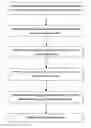
BRIEF DESCRIPTION OF THE DRAWINGSFIG. 1 is a flow chart of a preferred embodiment of the present invention; and
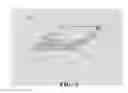
FIG. 2 is a perspective view of the foamed member made by the method of the preferred embodiment of the present invention.
DETAILED DESCRIPTION OF THE INVENTIONAs shown in FIG. 1 and FIG. 2, a method of the first preferred embodiment of the present invention to fabricate a foamed rubber member comprises the steps of:
The first step of the embodiment is to prepare a foaming raw material that has a predetermined ratio of rubber, and an accelerator etc. The foaming raw material is put in a machine to stir and press it repeatedly, and then send the foaming raw material to a conventional mixing machine for modification of well mixing.
The foaming raw material has natural rubber and synthesis elastic material (e.g. Styrene Butadiene Rubber (SBR), Polybutadiene Rubber (BR) and Ethylene Propylene Terpolymer Rubber (EPDM)) in a ratio of 4:1 and a curing agent (sulfur), a foaming agent (Azodicarbonamide (ADCA), an accelerator (tetramethyl thiuram disulfide (TMTD) and 2-Mercaptobenzothiazole (MBT)) and a filler (or a reinforced agent) and an additive (rubber grade carbon black, fumed silica, CaCO3 and CaSiO3) to lower the cost and to improve the material properties of the rubber product.
The second step of the embodiment is to put the foaming raw material in a molding machine (not shown) to mold the foaming raw material to a meshed rubber sheet 12. The molding machine is a conventional flat net extrusion machine well known in the plastic industry.
The third step is to perform a softening treatment on surfaces of the meshed rubber sheet 12. The softening treatment is to coat a surface softening agent on the surface of the meshed rubber sheet 12, and then heat it between 150° C. and 250° C. to soften the surface of the meshed rubber sheet 12. The surface softening agent can utilize the conventional rubber softening agents in the process of rubber products.
The fourth step is to rest two attachments 14 on opposite sides of the meshed rubber sheet 12, and press them to bond them on the meshed rubber sheet 12. The attachments 14 may be elastic fabrics.
The fifth step is to put the meshed rubber sheet 12 with the attachments 14 in a die for vulcanization and foaming. The meshed rubber sheet 12 is foamed therein, and the pressure generated from the chemical reactions of the foaming makes a foamed rubber member 10.
The last step of the embodiment is to cool the foamed rubber member 10 in room temperature.
The attachment 14 may be a plastic film also that makes the foamed rubber member 10 of the present invention has various properties to be broadly incorporated in the relative products.
The present invention uses the force in the period of the rubber raw material foaming and the gas pressure generated from the chemical reactions of the foaming agent to attach the attachments 14 with different physical property on the meshed rubber sheet 12. No glue is involved in the method of the present invention. There is no cutting mesh pores step in the present invention also that lowers the cost. The foamed rubber member 10 of the present invention has a well elasticity.
In conclusion, the method of the present invention can make the foamed rubber member consisted of the meshed rubber member and the attachments with different physical properties. No glue is involved to bond the attachments that produce no air or water pollution.
Claims
What is claimed is:1. A method of making a foamed rubber member, comprising the steps of:
a) stirring and pressing the foaming raw material repeatedly, wherein the foaming raw material has rubber, an accelerator, and foaming agent mixed in a predetermined ratio;
b) molding the foaming raw material into a meshed rubber sheet;
c) softening a surface of the meshed rubber sheet;
d) resting an attachment on the surface of the meshed rubber sheet and pressing the attachment; and
e) vulcanizing and foaming the meshed rubber sheet to have a foaming member.
2. The method as defined in claim 1, wherein the foaming agent is an organic foaming agent.
3. The method as defined in claim 1, wherein comprises the step of coating a surface softening agent on the surface of the meshed rubber sheet in the step c).
4. The method as defined in claim 1, wherein comprises the step of heating the surface of the meshed rubber sheet between 150° C. and 250° C.
5. The method as defined in claim 1, wherein the attachment is an elastic fabric.
6. The method as defined in claim 1, wherein the foaming raw material is put in a conventional flat sheet net extrusion machine to mold the foaming raw material to the meshed rubber sheet.
Images & Drawings included:
Sources:
- United States Patent and Trademark Office - verify current appl. status at the USPTO↗
Similar patent applications:
- » 20060208380
Method of fabricating hollow foamed-rubber member
Recent applications in this class:
- » 20250187236 2025-06-12
SHEET MOLDING COMPOUND AND FIBER-REINFORCED COMPOSITE - » 20250178247 2025-06-05
CELLULOSE-BASED PACKAGING COMPONENT AND METHOD FOR MANUFACTURING THE COMPONENT - » 20250178246 2025-06-05
POLYETHER NITRILE MOLDING MATERIAL, METHOD FOR PRODUCING THE SAME, AND METHOD FOR PRODUCING POLYETHER NITRILE RESIN COMPOSITION MOLDING MATERIAL - » 20250178245 2025-06-05
LIQUID COMPRESSION MOLDING MATERIAL, ELECTRONIC COMPONENT, SEMICONDUCTOR DEVICE AND METHOD FOR PRODUCING SEMICONDUCTOR DEVICE - » 20250162209 2025-05-22
MANUFACTURING OF MOLDED ARTICLE USING A COMPOSITION FOR MOLDING CONTAINING A PYROLYTIC WATER DISCHARGE SUBSTANCE AND A FIBROIN - » 20250162208 2025-05-22
METHOD FOR MANUFACTURING A MOLDED ARTICLE OF FIBROIN - » 20250121536 2025-04-17
THERMALLY CONDUCTIVE INTERFACE DEVICE - » 20250100191 2025-03-27
Ultra-high molecular weight polyethylene anti-wear composite material modified by manganese phosphate nanosheet and preparation method thereof - » 20240375325 2024-11-14
PROCESS FOR THE PRODUCTION OF SHAPED OBJECTS OF ULTRA-HIGH MOLECULAR WEIGHT POLYETHYLENES - » 20240326300 2024-10-03
Method for obtaining an article formed of a thermoplastic matrix with two melting temperatures
Recent applications for this Assignee:
- » 20060208380 2006-09-21
Method of fabricating hollow foamed-rubber member