Method of providing voicemails to a wireless information device
US20060223502A1
2006-10-05
10/553,926
2004-04-22
Abstract:
Voicemail is received at a voicemail server and converted to an audio file format; it is then sent or streamed over a wide area network to a voice to text transcription system comprising a network of computers. One of the networked computers plays back the voice message to an operator and the operator intelligently transcribes the actual message from the original voice message by entering the corresponding text message (actually a succinct version of the original voice message, not a verbose word-for-word conversion) into the computer to generate a transcribed text message. The transcribed text message is then sent to the wireless information device from the computer. Because human operators are used instead of machine transcription, voicemails are converted accurately, intelligently, appropriately and succinctly into text messages (SMS/MMS).
Assignee:
- Spinvox Limited 3 🇬🇧 London, United Kingdom
Interested in similar patents?
Get notified when new applications in this technology area are published.
Classification:
H04M3/53333 » CPC main
Automatic or semi-automatic exchanges; Systems providing special services or facilities to subscribers; Centralised arrangements for answering calls; Centralised arrangements for recording messages for absent or busy subscribers Centralised arrangements for recording messages; Centralised arrangements for recording incoming messages, i.e. mailbox systems; Voice mail systems Message receiving aspects
G10L15/26 » CPC further
Speech recognition Speech to text systems
H04L51/066 » CPC further
User-to-user messaging in packet-switching networks, transmitted according to store-and-forward or real-time protocols, e.g. e-mail; Message adaptation to terminal or network requirements Format adaptation, e.g. format conversion or compression
H04M1/7243 » CPC further
Substation equipment, e.g. for use by subscribers; Mobile telephones; Cordless telephones, i.e. devices for establishing wireless links to base stations without route selection; User interfaces specially adapted for cordless or mobile telephones with means for local support of applications that increase the functionality with interactive means for internal management of messages
H04M3/42204 » CPC further
Automatic or semi-automatic exchanges; Systems providing special services or facilities to subscribers Arrangements at the exchange for service or number selection by voice
H04M3/4228 » CPC further
Automatic or semi-automatic exchanges; Systems providing special services or facilities to subscribers in networks
H04M3/53 » CPC further
Automatic or semi-automatic exchanges; Systems providing special services or facilities to subscribers; Centralised arrangements for answering calls; Centralised arrangements for recording messages for absent or busy subscribers Centralised arrangements for recording messages Centralised arrangements for recording incoming messages, i.e. mailbox systems
H04M3/537 » CPC further
Automatic or semi-automatic exchanges; Systems providing special services or facilities to subscribers; Centralised arrangements for answering calls; Centralised arrangements for recording messages for absent or busy subscribers Centralised arrangements for recording messages; Centralised arrangements for recording incoming messages, i.e. mailbox systems Arrangements for indicating the presence of a recorded message, whereby the presence information might include a preview or summary of the message
H04W4/12 » CPC further
Services specially adapted for wireless communication networks; Facilities therefor Messaging; Mailboxes; Announcements
H04W4/16 » CPC further
Services specially adapted for wireless communication networks; Facilities therefor Communication-related supplementary services, e.g. call-transfer or call-hold
H04M1/72436 » CPC further
Substation equipment, e.g. for use by subscribers; Mobile telephones; Cordless telephones, i.e. devices for establishing wireless links to base stations without route selection; User interfaces specially adapted for cordless or mobile telephones with means for local support of applications that increase the functionality with interactive means for internal management of messages for text messaging, e.g. SMS or e-mail
H04M2201/60 » CPC further
Electronic components, circuits, software, systems or apparatus used in telephone systems Medium conversion
H04M2203/253 » CPC further
Aspects of automatic or semi-automatic exchanges related to user interface aspects of the telephonic communication service where a voice mode or a visual mode can be used interchangeably where a visual mode is used instead of a voice mode
H04M2203/4536 » CPC further
Aspects of automatic or semi-automatic exchanges related to voicemail messaging Voicemail combined with text-based messaging
H04M2250/74 » CPC further
Details of telephonic subscriber devices with voice recognition means
H04W4/14 » CPC further
Services specially adapted for wireless communication networks; Facilities therefor; Messaging; Mailboxes; Announcements Short messaging services, e.g. short message services [SMS] or unstructured supplementary service data [USSD]
H04W4/18 » CPC further
Services specially adapted for wireless communication networks; Facilities therefor Information format or content conversion, e.g. adaptation by the network of the transmitted or received information for the purpose of wireless delivery to users or terminals
H04W76/10 » CPC further
Connection management Connection setup
Description
BACKGROUND OF THE INVENTION1. Field of the Invention
This invention relates to a method of providing voicemails to a wireless information device. The term ‘wireless information device’ used in this patent specification should be expansively construed to cover any kind of device with two way wireless information capabilities and includes without limitation radio telephones, smart phones, communicators, wireless messaging terminals, personal computers, computers and application specific devices. It includes devices able to communicate in any manner over any kind of network, such as GSM or UMTS, CDMA and WCDMA mobile radio, Bluetooth, IrDA etc.
2. Description of the Prior Art
Voicemail has the sole purpose of storing voice messages from someone trying to call a user's telephone when that user is otherwise unavailable and then relaying those messages to the user when convenient. But today's voicemail systems, particularly for wireless information devices such as mobile telephones, fail to do this intelligently. The primary reason is the nature of the interface from the user's wireless information device to the remote voice mail server: typically, a mobile telephone user will call (or be called by) a voicemail server controlled by the network operator. The voicemail server will generate a synthetic voice announcing the number of messages to the user and then replaying the messages; various options are then spoken by the synthetic voice, such as “press 1 to reply”, “press 2 to delete”, “press 3 to repeat” etc. This presents several challenges to the user: first, he may not have a pen and paper to hand to take down any important information; secondly, he may forget or not be able to hear the options and hence will be unable to operate the voicemail system effectively.
Because of this inadequate and opaque interface, voicemail is not used by at least 45% of mobile telephone users. Of those that do use voicemail, it typically accounts for 30% of a user's call time and spend. One of the reasons for this perhaps surprisingly high level is that, because of the difficult interface, users frequently dial in again just to listen to key messages they did not get the details of the first time round.
Some efforts have been made to make retrieving voicemails easier: reference may be made for example to U.S. Pat. No. 6,507,643 to Breveon Inc: in this patent, voicemail is automatically converted, using a voice recognition computer, to a text message suitable for sending as an e-mail message and for viewing on a text display device such as a PC or laptop computer. Reading a written message can be quicker than having to listen to a spoken voicemail; there is also no need to write down important information from the message since it has already been transcribed. However, automated voicemail systems have quite limited performance and accuracy; they also slavishly transcribe the normal hesitations in human speech (‘er’, ‘um’, ‘ah’ etc.). When one is listening to human speech, one can readily filter out these sounds and concentrate on the substantive communication. Seeing these hesitations slavishly transcribed to an e-mail can make the sender appear less then lucid.
Automated voice to text conversion can in theory also be deployed within a mobile telephone itself: reference may be made to the Nokia Short Voice Messaging system (see EP 1248486) in which a user can speak a message to his mobile telephone, which locally converts it to text using an automated voice recognition engine and then packages and sends it as a SMS message.
The overwhelming bias in the field of voice to text conversion systems is in improving the accuracy of automated voice recognition software; current generation software nevertheless still either needs to be trained to recognise words spoken by a specific person or is limited to recognising a very limited vocabulary and has huge difficulties with context. Training requires the user to read out quite extensive test passages and to then correct the transcription errors introduced by the machine transcription. This is a slow and arduous task. Whilst this avoids the need to input a text message using the small keys of a mobile telephone, it does not address the inherent inaccuracy and inappropriate transcription of conventional automated voice recognition software.
The task of constructing voice recognition software that can reliably and accurately recognise natural speech relating to any subject, from anyone and spoken at normal speed, remains a daunting one. Nevertheless, it remains the over-riding goal in the area of voice to text systems. The present invention challenges this orthodoxy.
SUMMARY OF THE INVENTIONIn a first aspect, there is a method of providing voicemail to a wireless information device, comprising the steps of:
-
- (a) receiving a voice message at a voicemail server;
- (b) converting the voice message to an audio file format;
- (c) sending or streaming the audio file over a wide area network to a voice to text transcription system comprising a network of computers;
wherein the method is characterised by the steps of: - (i) one of the networked computers playing back the voice message to an operator;
- (ii) the operator intelligently transcribing the original voice message into the computer to generate a transcribed text message;
- (iii) the operator causing the transcribed text message to be sent to the wireless information device from the computer.
Because human operators are used instead of machine transcription, voicemails are converted accurately, intelligently, appropriately and succinctly into text messages (e.g. SMS/MMS).
There are many advantages to providing voicemails using this approach:
- A. It's written down for you
- No dialling in to retrieve messages; instead they are already accurately and intelligently (e.g. omitting hesitations, repetitions etc.) transcribed into a message format
- See who the message is actually from before opening and reading it, giving the user an ‘inbox’ view of received voicemails and control over which ones they read, when, store, forward, delete, reply to, etc . . . . A converted voicemail will have a different icon from standard text messages. Where available, the Caller ID is used to populate the text message header with that number so it appears as if it came directly from that person. Otherwise, if the number is withheld, the recipient will see it is from ‘SpinVox Voicemail’.
- Key information is to hand—no fumbling for pen and paper when you are supposedly ‘mobile’
- Most new phones, particularly smartphones, they are able to parse the text and then provide useful parts of it for automatic use inside the phone and its applications saving the user copying across—e.g. a phone number is available for immediate storage or use, an address can be hyperlinked and added to a contact, or used to automatically locate the address on mapping software, etc . . . .
- B. It's discreet and convenient
- No annoying calls from voicemail when busy. Instead, a user sees voice messages arrive whilst in a meeting and reads them at his discretion.
- C. Message always gets to you
- SMS store & forward capacity guarantees fast delivery as soon as the user's phone is turned back on or back in coverage
- Choose convenient delivery method: SMS, email, fax
- D. Divert any other phone that supports call divert, for instance your office-phone (desk-phone) to the text conversion service
- Desk-phone & mobile voicemail can now both be delivered to a user's mobile as text—all in one place, conveniently to-hand
- Access voicemail from any phone—mobile or landline—since the original voice files for voicemails are stored in servers accessible by password from any phone
- E. Cheap voice-message delivery when roaming abroad
- Users keep receiving voice-messages in text wherever they are
- Users can receive them as email instead so that the user can pick it up world-wide and out of mobile coverage
- No roaming charges or expensive dial-backs to retrieve messages
Billing
There are two choices—Pre-pay or post pay either via micro-billing on the user's phone bill or credit/debit card and direct debit monthly payments. In fact any payment method available at the time via 3rd party Merchant Service providers, so even PayPal which is largely a US phenomenon is becoming available in Europe as a valid payment method.
Credit/Debit Card
Users will be able to sign-up with credit/debit cards for automatic monthly payments, including Direct Debit (UK) and PayPal for the US.
Micro-Billing
Users will be able to buy SpinVox credit (e.g. £b 10's worth) via a single reverse billed SMS which will confirm their new credit. Typically this will appeal to the pre-paid market. This neatly avoids the relatively expensive cost (60%+) of many individual micro-transactions each time they use the Services which otherwise make this too expensive and encourages some commitment from the user to the service.
BRIEF DESCRIPTION OF THE DRAWINGSThe present invention will be described with reference to the accompanying drawings, in which:
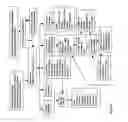
FIGS. 1-3 are schematics of an entire voicemail process, starting from voicemail origination, voicemail processing and voicemail delivery; in accordance with the present invention;
FIG. 4 depicts the format of a message notification (displayed in a messages in-box on a mobile telephone) for a voicemail transcribed using the method of the present invention;
FIG. 5 depicts a conventional text message notification;
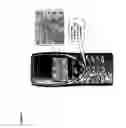
FIG. 6 depicts how a voicemail transcribed using the method of the present invention appears as a text message displayed on a mobile telephone;
FIG. 7 depicts a mobile telephone displaying a list of text messages in a messages in-box. A transcribed voice mail is present in the list; the callout shows how it would be displayed if selected;
FIG. 8 depicts a menu list of three new functions available as options relevant to a transcribed voicemail;
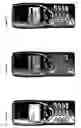
FIGS. 9A to 9D depict a GUI based voicemail management application for managing conventional audio voicemails;
FIG. 10 depicts the operation of an application that enables a user to speak a message into his mobile telephone and have that remotely converted to a text message;
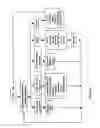
FIG. 11 shows the overall flow of actions at a voicemail server, indicating the actions initiated by user inputs;
FIG. 12 shows the overall flow of actions occurring at the voice message transcribers;
FIG. 13 shows a screen shot of the web-based interface used by voice message transcribers.
DETAILED DESCRIPTIONThe present invention is implemented by SpinVox Limited, London, United Kingdom as part of a suite of mobile telephone products:
1. VoicemailView™: Voicemail to Text system—This gives subscribers the option to have voicemail delivered to their mobile telephone as text (SMS/MMS or equivalent messaging format) with the option to hear the original voicemail on the mobile telephone. The term ‘SMS’ means the short message service for sending plain text messages to mobile telephones; ‘MMS’ means the multimedia messaging service developed by 3GPP (Third Generation Partnership Project) for sending multimedia communications between mobile telephones and other forms of wireless information device. The terms also embrace any intermediary technology (such as EMS (Enhanced Message Service)) and variants, such as Premium SMS, and any future enhancements and developments of these services.
2. VoicemailManager™: A new Voicemail Management Application—This adds a GUI (graphical user interface) to the mobile telephone; it supplements (or replaces) the existing audio menu system (UI) provided by cellular phone voicemail systems and integrates the phone's call divert features, greetings controls and other related controls to provide a single environment (application) on the mobile telephone for voicemail management
3. VoiceMessenger™: Speech to Text system—This allows users to speak a text message into their mobile telephone, have it converted to text remotely and then sent without using the often tiring alphanumeric phone-pad entry system.
Key to the accurate transcription of voice messages to text format (as deployed in VoicemailView and VoiceMessenger) is the use of human operators to do the actual transcribing intelligently by extracting the message (not a verbose word-for-word transcription), and not automated voice recognition systems. Key to the efficient operation of this system is an IT architecture that rapidly sends voice files to the operators and allows them to rapidly hear these messages, efficiently generate a transcription and to them send the transcribed message as a text message.
A. VoicemailView™ Voicemail to Text System
There are three solutions described which deliver the Voicemail to Text system:
-
- 1. Inside the Network Operator—the system is integrated within an operator's Network Services (see FIG. 1).
- 2. Outside the Network Operator—a Service Company accesses the Network Operator's Voicemail system via fixed telephony and provides an external service direct to end users; see FIG. 2, or houses its own voicemail system and delivers its service completely outside the Network Operator's service and is therefore network operator and handset independent, see FIG. 3.
A.1 VoicemailView: Inside the Operator Variant
Referring now to FIG. 1, the process deployed is as follows:
- 1 Caller, from either PSTN or Mobile phone network, leaves a voicemail.
- 2 Voicemail is converted into a SMS or MMS file by the voice transcription service: this is done not by automatic voice recognition systems, but instead by human operators. These operators are far more accurate and flexible than automated voice recognition systems and can intelligently interpret the message, eliminating unnecessary hesitations and repetitions to generate a short, simple and lucid message. Appendix II defines the requirements for effective and succinct transcription. The operators will often be able to significantly shorten messages to fit them within the current SMS text message ceiling of 160 characters (or else fit longer messages into multiple SMS messages via standard concatenation); with MMS however, there is no such ceiling.
- A link (unique i/d) to the original voicemail file is generated—this i/d can just be a Hash of the time/date & caller number
- The time & date of voicemail is added to a header of the SMS/MMS file
- The caller number is added to the header of the SMS/MMS file
- 3 Message file is sent to SMS or MMS servers for storage.
- 4 Message is sent via SMS or MMS gateway to wireless terminal.
- 5 User views and manages ‘text’ voice mails within SMS or MMS application, or even inside a Messaging Application depending on platform.
- 6 User can request to hear the original voice mail through the new VoicemailManager application (which provides a GUI interface for all voicemail functions; see B.2) running on the terminal: Play, FFW, REW, Next, Erase, Store, Forward, Time/date of message, Call back (and any other existing voicemail controls available through audio prompts/menus).
- 7 Positive delivery of SMS/MMS synchronises the SMS/MMS store with Voicemail store as message ‘read’.
A.2 Outside the Operator Variant; Service Company Provides Voice to Text Infrastructure for an Operator
Referring now to FIG. 2, the process deployed is as follows:
- 1 New subscriber provides the Service Company with their phone number, voicemail box PIN No. and other details. This now enables the Voicemail Retrieval and Storage Server to call into their voicemail box to retrieve messages by polling it regularly, or the Voicemail system inside the Operator sending it notifications of new voicemails. There are 2 options (either pre-paid or post-pay) for user billing:
- 1. Reverse Text billing (micro-billing)
- 2. Monthly Credit/Debit Card billing
- 2 Caller, from either PSTN or Mobile phone network, leaves a voicemail.
- 3 Service Co. Voicemail Retrieval & Storage Server calls into Subscriber's Voicemail Box & ‘listens’ to messages:
- Uses standard DTM-F tones to play messages, retrieve time of call, caller number and other data to build up necessary data for text delivery
- Creates unique i/d—can just be a Hash of the time/date & caller number
- Stores voicemail for future playback
- 4 Voicemail audio file sent to the human operator based Voice Transcription system and converted into SMS or MMS file and sent to a 3rd party SMS/MMS gateway for delivery
- Link (unique i/d) to original voicemail file is generated and embedded as information hidden from the user in the SMS/MMS file
- Time & date of voicemail added to a header of the SMS/MMS file
- Caller number is added to the header of the SMS/MMS file
- MMS file can contain original audio file embedded for local playback
- 5 SMS or MMS message delivered via subscriber's Network Operator
- Message sent via SMS or MMS gateway to wireless terminal.
- User views and manages ‘text’ voice mails within SMS or MMS application, or even inside Messaging Application depending on platform.
- 6 User can dial into their voicemail on the Network using the new Voicemail Management Application (this provides the GUI; see B.2) on terminal: Play, FFW, REW, Next, Erase, Store, Forward, Time/date of message, Call back and any other existing voicemail controls available through audio prompts/menus.
- 7 To hear the original voicemail, the user is connected back to the Service Company's Voicemail Storage server. The unique i/d (hidden from the user in the SMS/MMS message) retrieves the correct file to play back.
A.3 Outside the Operator: Voicemail Provided Entirely by Service Company
Referring now to FIG. 3, the process deployed is as follows:
- 1 New subscriber provides Service Co. with their phone number and billing details. They are now using the Service Co. as their voicemail provider.
- 2 options:
- 1. They manually divert calls on their phone to Service Co. Voicemail gateway number
- 2. Service Co. provides over-the-air upgrade to change this behaviour
- There are 2 options (either pre-paid or post-pay) for billing:
- 3, Reverse Text billing (micro-billing)
- 4. Monthly Credit/Debit Card billing
- 2 options:
- 2 Caller, from any phone, typically PSTN or Mobile phone network, leaves a voicemail.
- 3 Service Co. Voicemail provides all voicemail functions
- 1. Stores voicemail for future playback
- 2. Creates a unique i/d—can just be a Hash of the time/date & caller number
- 4 Voicemail audio file sent to human based Voice Transcription system and converted by human operators into a SMS or MMS file and sent to a 3rd party SMS/MMS gateway for delivery
- Link (unique i/d) to original voicemail file generated and embedded as information in SMS/MMS file hidden from the user
- Time & date of voicemail is added to the header of the SMS/MMS file
- Caller number is added to the header of the SMS/MMS file
- MMS file can contain original audio file embedded for local playback
- 5 SMS or MMS message delivered via subscriber's Network Operator
- Message sent via SMS or MMS gateway to wireless terminal.
- User view and manages ‘text’ voice mails within SMS or MMS application, or even inside Messaging Application depending on platform.
- 6 User can dial into their voicemail on the Network using either the standard IVR controls, or the new Voicemail Management Application (provides GUI; see B.2) on terminal: Play, FFW, REW, Next, Erase, Store, Forward, Time/date of message, Call back and any other existing voicemail controls available through audio prompts/menus.
- 7 To Hear the original voicemail, the user is connected back to the Service Company's Voicemail Storage server. The unique i/d (hidden from the user in the SMS/MMS message) retrieves the correct file to play back.
B. Mobile Telephone Software
In any of the above variants, the mobile phone (or other wireless information device of some nature) will need to be upgraded OTA (Over the Air) or otherwise, in the following manner:
B.1 Viewing Voicemail-Text Messages
There are two options:
-
- 1. Do not modify the existing telephone GUI—just treat the SMS which is the transcribed voicemail as another message
- 2. Modify the GUI to incorporate the new features shown below:
FIG. 4 shows a telephone handset icon that could be used next to a SMS message to indicate that it is a voicemail message in the messages inbox. A voicemail transcribed to text is present in the device's messages in-box; it has been sent from Homer Simpson. FIG. 5 shows what the current SMS text icon looks like. Another solution would be to precede each header with something logical such as “V:” for voicemail—hence “V: Homer Simpson” would indicate a SMS transcribed voice mail from Homer Simpson. In addition, inside the text file for the voicemail message, the time and date of the voicemail should be added (as not all gateways correctly timestamp sent messages), as shown in FIG. 6. FIG. 7 shows this in the context of a mobile telephone. The user has selected the ‘Read’ option for the highlighted transcribed voicemail (from Daniel Davies); the device displays the SMS in the normal manner, but with data and time added. It is also possible, just by pressing and holding a given key (in this illustration, key ‘1’) to activate the normal audio-based voicemail playback function.
When one opens a standard SMS message, one can generally readily access further functionality (via an Options menu in Nokia mobile telephones, for example), such as ‘Erase’, ‘Reply’, ‘Edit’ etc. Under this standard ‘Options’ menu, or equivalent, the present implementation adds three new functions, as shown in FIG. 8:
-
- Hear Original
- Call Back
- Add to Contacts
We expand on these new functions below:
Hear Original: This allows the user to now hear the original voicemail and uses the unique i/d encoded into the SMS/MMS message to correctly connect to the original voice file.
There are three options:
(i) The user goes into the standard voicemail system and follows the existing audio prompts for hearing the message.
(ii) The user goes into the new Voicemail Management Application shown below at B.2.
In either case, upon ending the call to voicemail, the user is returned to the same point in the messaging application to decide what to do with the text/audio version.
(iii) The user embeds the original sound file in an MMS message (or equivalent, such as e-mail) to be played back locally on the terminal.
Call Back
This uses the caller's number recorded with the message to call them back.
Add to Contacts
This takes the caller's number and automatically adds it to a new contact/address entry for the user to complete with name, etc.
This is a specific example of the mobile telephone software being able to parse the text that has been converted from voice and to use that intelligently. Other examples are:
(a) extracting the phone number spoken allowing it to be used (to make a call), saved, edited or added to a phone book;
(b) extracting an email address and allowing it to be used, saved, edited or added to an address book;
(c) extracting a physical address and allowing it to be used, saved, edited or added to an address book;
(d) extracting a web address (hyperlink) and allow it to be used, edited, saved or added to an address book or browser favourites.
(e) extracting a time for a meeting and allow it to be used, saved, edited and added to an agenda as an entry
(f) extracting a number and saving it to one of the device applications
(g) extracting a real noun and providing options to search for it or, look it up on the web (WAP or full browser).
The extent to which this can be done depends on the intelligence in your handset (in essence its parsing capacity and interoperability with other applications and common clipboard where this data is normally stored for use in other applications). Today, nearly all phones support extraction of phone numbers, email addresses and web addresses from a text message. This is normally made available when the user is reading the message by the content being underlined (as a hyperlink or equivalent); the user then simply selects ‘Options’ (as found on Nokia telephones, or its equivalent on a different make of handset) and ‘Use’ (as found on Nokia telephones, or its equivalent on a different handset) and then depending on the content type, further context sensitive options (e.g. with a street address it might offer—Look up, Navigate, Save in Address book, etc . . . ).
B.2 VoicemailManager™: Voicemail Management Application
This application can be used in either stand-alone or as integral part of the VoicemailView Voice to SMS/MMS system (or equivalent text delivery system) described above at B.1.
The Voicemail Management application gives a user a GUI (Graphical User Interface) in addition to the standard audio prompts they are used to receiving when accessing and managing normal audio voicemail. When a subscriber calls (FIG. 9a) into their audio voicemail using their mobile telephone, they are first taken into their ‘Voicemail Inbox’ and then presented with the controls shown in FIGS. 9B to D.
For programming purposes, these controls will nearly all relate to standard DTMF tones that the voicemail system uses as input to it when the user currently presses keys on their phone's keypad.
FIG. 9A shows the user calling Voicemail; FIG. 9B shows how a new management application has been invoked which first displays an Inbox's contents (here, 3 new audio calls and 2 stored audio calls) of all voicemails. The options menu operates as follows:
| Item listed in Options Menu | Action |
| Play All | Plays all messages in sequence |
| Delete All | Offers which to delete - all New or all |
| Stored - and deletes them all | |
| Mark all heard | Moves all New messages into Stored folder |
| Forward to | Forwards message to another subscribers |
| inbox | |
| Store | Store - only available in New messages or |
| during play back - moves message to Stored | |
| folder | |
Referring to FIG. 9C, if the user selects which category of audio voicemail he wishes to listen to (i.e. new or stored), he is then shown a menu list of the audio voicemails in that category, each identified with sender name if available, or failing that, the caller number. The transcribed text message ideally has added to it the caller name by the transcription service. This includes notifications when a user turns off the voice-to-text conversion in VoicemailView (i.e. they want plain voicemail) so that they will now be able to see the name of the person who has left them a voicemail before deciding whether to dial-in and listen to it/them. The user can readily navigate to and select the audio message he wishes to listen to. Once a message is selected, then, as shown in FIG. 9C, new Voicemail controls are displayed on screen. Their function is as follows:
| Voicemail | |
| control | Action |
| 1 Erase | Erases current message - returns to previous screen, New or |
| Stored folder view for user to select which message to now | |
| listen to, or goes straight to playing next message. | |
| 2 Next | Skips to next message. At end of messages, goes back to |
| previous screen, New or Stored folder view. | |
| 3 FFW | Fast forwards through message whilst button held. At end |
| of message, stops and shows next message to be heard (New | |
| or Stored folder view) or at end of all messages, goes back | |
| to top level view (New & Stored folder view) | |
| 4 REW | Rewinds back through message whilst button held. At end |
| of message, stops and shows previous message to be heard | |
| (New or Stored folder view) or at end of all messages, goes | |
| back to top level view (New & Stored folder view) | |
| 5 Previous | Skips to previous message. At beginning of messages, goes |
| back to previous screen, New or Stored folder view. | |
| 6 Call | Calls user back and ends Voicemail call. |
| back | |
| 7 Text | Opens up Text (SMS or MMS) application with callers |
| message | number selected as default recipient for user to send them a |
| text message. | |
| 8 Forward | Forwards message to another subscribers Voicemail inbox. |
| 9 Add to | Adds number to contacts through phone's standard |
| contacts | contacts/address book application. |
| 0 | Configures voicemail - standard options for Record New |
| Configure | Greeting, Turn Greeting on/off, etc . . . |
| Integrates into existing phone software for configuring | |
| Divert behaviour - e.g. divert on busy/no answer/phone | |
| off to voicemail or specified number. | |
During this process, the user is always offered the aural navigation options which are synchronised with what is shown on-screen, so that they have the best of both worlds. With the use of simple command based Speech Recognition, the user may just speak the command they want to execute, so if the user wants to play new messages, they would just say “Play” and the VoicemailManager engine would recognise this command and do just that—play the message.
Note: The exact numbers keypad numbers) and their related functions will be those of the existing voicemail system and so will vary by network operator/voicemail system.
B.3 VoiceMessenger™: Speech to Text (SMS/MMS) Service
It is often preferable for users to want to send a message in text format, rather than voice—e.g. if they do not want to disturb the receiver, but want to get the message to them. But it is often difficult for people to thumb-type text on a small alpha-numeric keypad. They may also be mobile, such as walking, or in a car or have only one hand available, or be unable to type, such as whilst driving. The VoiceMessenger™ speech to text service addresses this need.
The user goes into their Messaging/Text application running on their mobile telephone, simply selects the message recipient either from their phone's address book, or types their number in, then selects the new VoiceMessenger option, as shown in FIG. 10, by pressing and holding the ‘2’ key. The user might also be connected to the service to start with and will then simply speak the number or the name to a local (on the mobile telephone) or a remote voice recognition engine which will take the user through the process.
When connected to the remote VoiceMessenger Engine, the user simply speaks his message and the remote VoiceMessenger Engine records it, and then sends the audio file for conversion to text using the human operator based voice transcription system. The text format message is then packaged as a SMS/MMS (email or other appropriate messaging system) and sent through the SMS/MMS etc. gateway. The user will be given aural prompts for controlling the input, hearing the conversion and sending the message.
C. Extensions
C.1 MMS Voice-Notes to Text
A user with an MMS enabled phone will be able to send voice-notes via an MMS which the human operator based voice transcription service will then transcribe and send on to their desired destination. They can also have their Voicemail converted and sent to their phone in MMS format if preferred.
C.2 Automated Voice Recognition
This is to speed up the processing of inbound voice files and reduce operating costs. The prime function will be to auto-detect spoken phone numbers, and detect language to route audio files to the correct human operator staffed transcription bureau. It will also be used for detecting names and spoken numbers and addresses from the users online phone-book (see below) and commands for VoicemailManager controls.
C.3 Online Address Book
There will be two forms of online address book that a user will be able to use when connected to SpinVox services by simply saying the name of the person they want to say:
-
- SpinVox online phone book—via user web login, they will be able to add names and numbers of people they want in their SpinVox online address book.
- Synchronisation with their Microsoft Outlook (Express or full version) or other e-mail/PIM/Addressbook client—this allows them to have all their contacts online and not only be able to say the name of the recipient, but also determine the type of message they want sent: SMS, MMS, email, fax, etc.
- With a Network Operator, it is possible also to offer SIM backup function and then offer their SIM phonebook to them to call a name up from.
C.4 Presently Available Services (Presence)
Using Presently Available Servers, users can define what mode they want to be in for receiving communications, e.g. ‘Meeting’ lets a user know before the communicate that the person they want to contact is in a meeting and will accept say SMS/MMS or a VoiceView text message. Once out of the meeting, the user can then change their contact status to ‘Available’ and be contacted by a phone call.
Appendix 1
1. SpinVox Voicemail IVR Structure
A standard voicemail server system with IVR is the foundation; the IVR is programmed as shown in the FIG. 11 flowchart.
2. VoicemailView
The user's phone will (during technical provisioning shown below) have the ‘1’ key (standard voicemail access key) re-programmed to automatically call the SpinVox voicemail server and have them automatically logged-in (unique phone-number+PIN) which takes them to the top level of the IVR tree.
If at any point the user hangs up, then the session is terminated with the relevant outcome. If this happens during a recording, including a dropped line from another mobile caller, then it is assumed to be the end of a recording, and the system proceeds to the transcription stage.
Each transcribed voicemail will contain a unique number starting with say a ‘4’ (depends on final IVR tree configuration), so that when a user presses and holds ‘1’ to connect to SpinVox's voicemail server, they simply press the unique message i/d—e.g. 403 which takes them to the 3rd message they have in the queue.
2.1 Landline or Other Mobile Phone Access
As shown in FIG. 11, the IVR tree will allow a user to dial in using their unique Divert No. (Voicemail No.) and will then be prompted to enter their PIN.
2.2 Speed-Dials
The IVR system will accept a user programming in a speed-dial that allows them to dial their unique SpinVox number+PIN. They are then able to access all features shown above.
2.3 Leaving a VoiceMail
The user's phone is configured to divert to SpinVox voicemail under conditions they define shown below, where the caller will either hear:
-
- Default SpinVox greeting: “Welcome to SpinVox Voicemail. Please dictate your message clearly after the tone.” [tone]
- User's own greeting: [User's recorded greeting] [tone]
Then:
-
- 1. System records the caller's voicemail for either the default length (30 secs) or the user defined length (10 s-2 mins or any parameters SpinVox sets).
- 2. At the end of recording, the caller hears Standard IVR options via prompt: “Press:
- 1. To hear your message
- 2. To delete your message and re-record
- 3. Re-record your message
- # to end or simply hang-up”
- 3. If the user exceeds the recording length, then they are prompted: “I'm sorry you've exceeded the recording time available. Please try again after the tone”
- a. If the user hangs up without recording a new message, then the message is sent for Transcription.
- b. Another variant arises if the user has selected an ‘Advanced Transcribe Option’; this operates such that if the recording time of a message is less than a user set maximum time, then the message is transcribed, otherwise, it is not transcribed but instead a standard notification is sent to the user that they have a new voicemail to listen to in format shown below in 4c. This addresses the fact that users are occasionally sent long voicemails that are more conveniently listened to rather than read. However, for these long messages, a human transcriber may listen briefly to the voice message and write up a very short indication of the subject of the call which is sent to the message recipient. Also, for handsets that support less than a certain amount of text (typically legacy handsets), the system first looks up the user handset and limitations in a Phone database (supplied by SpinVox) and will then offer users relevant recording lengths. E.g. for an older Siemens phone that does not support concatenation and only up to 4 text messages, the system alerts the user that the recording length should be kept below say 30 seconds to ensure most messages fit in their phone and they are told why. Likewise, default recording lengths for these handsets may need to be set to a commensurate length by the system for them.
- 4. Message is sent to the relevant Transcription queue:
- a. If callers CLID (Caller Line Identification) captured, then autopopulate the ‘From’ field. If not, insert ‘SpinVox VoicemailView’ as the sender.
- b. If transcribable, then text version of message sent to user
- c. If untranscribable, then a template text message with certain fields auto-populated is sent to user:
- “You have a new voicemail [from CLI if available] to listen to. Press ‘1’ on your phone to connect to your voicemail, then 4xx to hear this specific message. Thank you. Spin Vox.” The ‘From’ field is from ‘SpinVox VoicemailView’
- d. Bill according to number of SMSs sent.
- 5. Text message sent to user and they can choose what to do next as per standard options available to them on their handset.
3. VoiceMessenger
The above IVR diagram shows how a user accesses VoiceMessenger, whether directly from their mobile phone, or via another phone.
3.1 Speed-Dials
The IVR system will accept a user programming in a speed-dial that allows them to dial their unique SpinVox number+PIN+‘3’.
If from their mobile phone, the technical provisioning below will have configured a speed-dial (by default key ‘2’) to dial and log them in (voicemail number+PIN+3) directly to the VoiceMessenger option.
They will then hear a standard prompt:
“Welcome to Spin Vox's VoiceMessenger. At the tone, please either speak the destination number or type it in, then dictate the message you wish to send. Hang-up to send, or press # to send a new message.” [tone]
Then:
-
- 1. If DTMF tone is undetectable, or confusing (as using * or +for international dialling), then prompt for new number entry:
- “I'm sorry, we couldn't detect the number you typed. Please try again and remember for an international number, prefix it with 00, not +” [tone to prompt re-entry]
- 2. System records for either the default length (30 secs) or the user defined length (10 s-2 mins).
- 3. At end of recording, user hears Standard IVR options via prompt: “Press:
- 4. To hear your message
- 5. To delete your message and re-record
- 6. Re-record your message
- # to send new message or simply hang-up”
- 4. If the user exceeds the recording length, then they are prompted: “I'm sorry, you've exceeded the recording time available. Please try again after the tone”
- a. If the user hangs up without recording a new message, then the message is sent for Transcription.
- 5. Message sent to transcription queue with the ‘From’ field auto-populated (as SpinVox knows who the client is):
- a. If transcribable, then text version of message sent to user
- b. If untranscribable, then a template text message with certain fields auto-populated is sent to user:
- “I'm sorry, but we weren't able to convert the message you dictated [time/date] [to number if detected]. Please try again in quiet surroundings and dictate clearly. Thank you. SpinVox.” The ‘From’ field is ‘SpinVox VoiceMessenger’.
- c. Bill according to number of SMS's sent or MMS size (KB).
- 6. Text message sent to recipient and they can choose what to do next as per standard options available to them on their handset.
4. Technical Provisioning
- 1. If DTMF tone is undetectable, or confusing (as using * or +for international dialling), then prompt for new number entry:
During Technical Provisioning, user data (handset, network, etc . . . ) will be re-used to confirm to the user what they have selected.
Key will be the system sending the user SMS messages to part automate the configuration of the user's handset (diverts & V.Card for VoiceMessenger) and confirmation of successful setup. These messages are all sent as High Priority to ensure user/salesperson is not left ‘hanging’ whilst waiting for configuration SMS to arrive.
The steps are:
Step 1: handset selection, from a drop down list shown on the provisioning screen (usually at the point of sale)
Step 2: Voicemail View setup:
-
- <CREATE STRING AS FOLLOWS: ‘+COUNTRY CODE_USERS UNIQUE VOICEMAIL NUMBER_p_PIN NUMBER_#’>>>> THIS IS CALLED SPINVOX VOICEMAIL NUMBER AND IS UNIQUE TO EACH USER!>
Step 3: Call diverts selection: this explains how the mobile phone is normally setup to divert to the user's voicemail (under all the following conditions). The user can change these if he specifically wants it to divert to another person or number, and not his own voicemail
-
- <USSD Strings . . . (line of digits) created based on above selections used to configure handset sent as a High Priority SMS with 4×USSD strings the user needs to reply to/action.>
Step 4: Call divert setup via SMS. Tells the customer that he has just been sent a SMS and should click on a specific button on the provisioning screen when received (or a different ‘not’ received’ button if not received within 3 minutes).
Step 5: Call divert setup: SMS. The provisioning screen informs the user that if he has received the configuration SMS, please do the following:
-
- 1. Open SMS message
- 2. Select ‘Options’ (database to have name of function for each handset)
- 3. Scroll & Select ‘Use Number’
- 4. You will now see 4 numbers, select the first number and press ‘Send’. You will now see the number being dialled and ‘Requesting’ displayed on your mobile's screen. If you receive a confirmation message, repeat this step for the remaining 3 numbers.
Step 5: Call divert setup: Mobile phone. The provisioning screen informs the user:
-
- On your mobile handset:
- 1. Select ‘Menu’2.
- <IMPORT VOICEMAILVIEW DATA FROM DATABASE FOR SPECIFIC HANDSET . . . TELLS YOU WHAT TO DO/WITH ‘+COUNTRY CODE_USERS UNIQUE VOICEMAIL NUMBER_p_PIN NUMBER_#’>
Step 6: Select delivery method. The provisioning screen allows the user to select how he would like to receive voicemails once they are converted to text (typical options are SMS, MMS, MMS with the audio file, e-mail, e-mail with the audio file). The system then sends an appropriate vCard to the user's mobile telephone.
Step 7: Voice Messenger setup. The provisioning screen informs the user:
-
- Please do as follows:
- We have just sent you an SMS-VCard. When you have received it, please do the following:
- 1. Accept and save the VCard on your mobile phone without modifying it—go to step 2.
- If you have not received this message within 5 minutes, or cannot save the VCard, please do the following:
- Create a new ‘Contact’ called ‘VoiceMessenger’ that has the following number: +COUNTRY CODE_USERS UNIQUE VOICEMAIL NUMBER_p_PIN NUMBER—#,1’
- If you don't know how to add new ‘Contact’, please click here—(go to ‘how to’ page, with info pulled from database to—tell you what to do)
- 2. <IMPORT VOICEMESSENGER SPEED DIAL CONFIG. DATA FROM DATABASE FOR SPECIFIC HANDSET . . . TELLS YOU WHAT TO DO/WITH>
Step 8: Congratulations screen:
-
- Thank you for choosing SpinVox Services.
- You will now receive your VoiceMails as Text, and don't forget that you can always hear the originals by simply pressing and holding the ‘1’ key on your phone—to connect to your SpinVox Voicemail account.
- To speak a Text Message—press and hold ‘2’ (or the key you designated as VoicemailView) and you will instantly be connected to VoiceMessenger. Clearly dictate your number and message—you say it . . . we text it!
- You can always access VoiceMessenger by pressing and holding the ‘1’ key and following the prompts.
- You can view your account settings, view statements and manage your SpinVox account at www.SpinVox.com—using your Mobile Phone number and PIN.
- If you have not already printed or recorded your PIN number, here it is again
- 1234
5. Transcribe Assistant
This is provided to a human operator transcriber when they log-on to their account. All they need is a web browser, sound card, media player capable of playing and controlling playback of the media files or streaming protocol, and high-speed internet access. FIG. 12 shows the process flowchart for transcription. Each Transcriber logs in and starts receiving VoicemailView (see FIG. 13 for the screen into which they type the transcribed message and from which they cause the message to be sent), or VoiceMessenger audio files to be transcribed (see FIG. 14), one at a time. While logged-in there are only 2 states: message currently in the process of being transcribed, and pause.
5.1 Transcriber Control Panel Buttons (see FIG. 13):
-
- Transcription completed
- Transcription undecipherable—as per 2 & 3 above:
- For VoicemailView, an automatic SMS is sent to them with fields auto-populated where available, with the following text: “You have a new voicemail [‘from CLI’ if available] to listen to. Press ‘1’ on your phone to connect to your voicemail, then 4xx to hear this specific message. Thank you. SpinVox.”
- The ‘From’ field is from ‘SpinVox VoicemailView’
- For VoiceMessenger, an automatic SMS is sent to them with fields auto-populated where data is available, with the following text: “I'm sorry, but we weren't able to convert the message you dictated [time/date “to tel no.” if available]. Please try again in quiet surroundings and dictate clearly. Thank you. SpinVox.”
- The ‘From’ field is ‘SpinVox VoiceMessenger’.
- Pause and re-queue current message
- Re-route current message to different language bureau, menu to select language or “unknown”. Transcriber taken back to queue to receive new message.
5.2 Phone Numbers: - In the case of VoicemailView, the ‘From’ field is auto-populated with either the CLID captured when the caller left the message (inserted into the message header), or “SpinVox VoicemailView”
- In the case of VoiceMessenger, the ‘From’ field is either auto-populated for the Transcriber if the user used DTMF, or if not, the Transcribe Assistant provides a field for the Transcriber to type it in.
Note: For User Data Protection reasons, the Transcriber will never see auto-populated telephone fields (or other user data fields), so the system will not show these unless it requires the Transcriber to type the destination number in.
5.3 Spell Checker
When the Transcriber hits ‘Send’, the system will automatically spell check the message and if any errors occur, correct them and display the corrections to the Transcriber with a prompt ‘Accept & Send”, or allow them to manually correct (as there might be a particular spelling they want).
To do this properly, the spell checking process will include a real-noun dictionary relevant to the geographic area and culture of the user. So for example, in the UK the real-noun dictionary will contain not only English names, but place names, landmarks, road-names, chain establishment names (e.g. pubs, bars, restaurants, etc . . . ), etc . . . .
Where there isn't a match, the Transcriber just double clicks on the underlined word and is offered the closest matches. If need be, they can rewind and re-listen to that part of the message to make the appropriate selection.
5.4 Transcription Bureau Manager
They can view the statistics for all the Transcriber accounts they own below them.
They will be able to view and analyse:
-
- No. of transcriptions by type (sign-up, support)—hourly, daily, weekly, monthly, yearly
- No. SMS's sent by type—hourly, daily, weekly, monthly, yearly
- Queue times—hourly, daily, weekly, monthly, yearly
- Average message length by type—hourly, daily, weekly, monthly, yearly
- Transcriptions times/rates—hourly, daily, weekly, monthly, yearly
- Variance in transcription times/rates by type—hourly, daily, weekly, monthly, yearly
- All of these by Transcriber account
- No. and % of messages untranscribable by type—daily, weekly, monthly, yearly
- No. and % of messages sent to different bureau for transcription—daily, weekly, monthly, yearly
- Transcription accuracy—done by taking a random sample daily and measuring accuracy against original (CCA Manager does this & inputs result into system) and feedback from CCA on trouble tickets. The worst of these two figures is the accuracy.
Appendix II: Transcription Services Requirements
These are the requirements for the Transcription Services to be used for both VoicemailView and VoiceMessenger services.
Requirements
The key requirement is to deliver the actual message, not all the redundant information which is often spoken and left in a message.
| Spoken | Abbreviation | |
| Apartment | Apt. | |
| Number | No. | |
| Telephone Number | Tel. | |
| Fax Number | Fax. | |
| Example | E.g. | |
| Okay | ok | |
| Electronic Mail | ||
| Internet Website (i.e. no http:// required) | website | |
| [laughing] | Laughing | |
| [crying] | Crying | |
| [whispering] | Whispering | |
| [shouting] | Shouting/Screaming (unless doing so to overcome | |
| background noise as when in a bar or station in | ||
| which case ignore) | ||
| [screaming] | Screaming as when someone is highly distressed, | |
| in trouble or frightened. | ||
| [frightened] | When the person is obviously frightened | |
| [angry] | Angry as shouting and/or banging fists (should | |
| be obvious from the content of the message) | ||
When the mood is unclear (e.g. may be just the way that person talks or the context that they're in), then don't add this in. |
| Symbol | Symbol Name | |
| :-) | Smiley | |
| :-D | Laugher | |
| ;-) | Twinkle | |
| :-* | Kiss | |
| :-( | Sad | |
| :'-( | Crying | |
| :-c | Unhappy | |
| :-|| | Angry | |
| :-(0) | Shouting | |
| :-< | Cheated | |
| >:-( | Very angry | |
| :-O | Wow | |
| :-| | Determined | |
| :-* | Bitter | |
| O :-) | An angel | |
| :-9 | Salivating | |
| :-<> | Surprised | |
| %-6 | Not very clever | |
| :-() | Shocked | |
| :-o zz | Bored | |
| :-\ | Sceptical | |
| : @ | Shouting | |
| :-o | Appalled | |
| :-X | Not saying a word | |
| |-I | Sleeping | |
| %-} | Intoxicated | |
| :-v | Talking | |
Claims
1. A method of providing voicemail to a mobile telephone, in which a caller initiates a voice call to the mobile telephone, but that call is diverted to a voicemail server, with the caller then leaving a voice message on the voicemail server; the method comprising the steps of:
(a) converting the voice message to an audio file format;
(b) sending or streaming the audio file over a wide area network to a voice to text transcription system comprising a network of computers;
(c) one of the networked computers playing back the voice message to an operator;
(d) the operator intelligently transcribing the original voice message into the computer to generate a transcribed SMS or MMS text message;
(e) the operator causing the transcribed SMS or MMS text message to be sent to the mobile telephone;
(f) sending the SMS or MMS text message to the mobile telephone.
2. The method of claim 1 in which the transcribed text message includes a unique identification that links the text message to the voice message held at the voicemail server to allow that voice message to be played back to the wireless information device by an end-user selecting an option displayed on the device that relates to the transcribed text message.
3. The method of claim 1 in which the transcribed text message has added to it the time and date that the voice message was originally received at the voice mail server.
4. The method of claim 1 in which the voice message is originated at a mobile telephone or at a landline telephone.
5. The method of claim 1 in which the transcribed text message has added to it caller identification data, such as a telephone number or caller name.
6. The method of claim 5 in which the transcribed text message is displayed on the device as though it was sent directly from an originator of the voice message.
7. The method of claim 3 in which the computer does not display to the operator the telephone number associated with the wireless information device.
8. The method of claim 1 in which the computer displays to the operator an option to re-route the audio file to a different computer with an operator that is more suited to transcribing the voice message because of linguistic, dialect, or cultural reasons.
9. The method of claim 1 in which the computer provides the operator with a searchable list of specialised terms that are relevant to cultural sayings, regular events, sporting events, media events, other kinds of newsworthy events to assist the operator in accurately transcribing those specialised terms.
10. The method of claim 1 in which the operator represents the mood of the caller leaving the voice message in the transcribed text message using either a written description or an emoticon.
11. The method of claim 1 in which the operator succinctly summarises the voice message.
12. The method of claim 10 in which the operator summarises the voice message to fit the 160 character SMS limit or concatenated text messages.
13. The method of claim 1 in which the operator omits from the transcribed text message any hesitations, artefacts, or repetitions present in the voice message.
14. The method of claim 1 in which the text message is sent to the wireless information device in a format previously specified as appropriate by the user of the device.
15. The method of claim 1 in which the text message is sent as an SMS, MMS, e-mail or fax.
16. The method of claim 1 comprising the further step of parsing the transcribed text message and using the parsed data in an application running on the wireless information device.
17. The method of claim 16 in which parsing and using the parsed data involves one or more of the following:
(a) extracting the phone number spoken allowing it to be used (to make a call), saved, edited or added to a phone book;
(b) extracting an email address and allowing it to be used, saved, edited or added to an address book;
(c) extracting a physical address and allowing it to be used, saved, edited or added to an address book;
(d) extracting a web address (hyperlink) and allow it to be used, edited, saved or added to an address book or browser favourites;
(e) extracting a time for a meeting and allow it to be used, saved, edited and added to an agenda as an entry;
(f) extracting a number and saving it to one of the device applications;
(g) extracting a real noun and providing options to search for it or, look it up on the web (WAP or full browser).
18. The method of claim 1 in which if the recording time of a voice message is less than a user set maximum time, then the message is transcribed, otherwise, it is not transcribed but instead a standard notification is sent to the user that they have a new voicemail to listen to.
19. The method of claim 18 in which a human transcriber listens to the voice message and writes up a very short indication of the subject of the call which is sent to the message recipient.
20. The method of claim 18 in which, for devices that support less than a certain amount of text, there is an initial Look up of the text limitations in a database and then an automatic suggestion of appropriate maximum recording time.
21. A text message which has been transcribed from a voicemail and is provided to a wireless information device using the method of claim 1.
Images & Drawings included:










Sources:
- United States Patent and Trademark Office - verify current appl. status at the USPTO↗
Similar patent applications:
- » 20070116204
Method of providing voicemails to a wireless information device - » 20070117543
METHOD OF PROVIDING VOICEMAILS TO A WIRELESS INFORMATION DEVICE - » 20070117544
Method of providing voicemails to a wireless information device - » 20070117545
METHOD OF PROVIDING VOICEMAILS TO A WIRELESS INFORMATION DEVICE - » 20070117546
METHOD OF PROVIDING VOICEMAILS TO A WIRELESS INFORMATION DEVICE - » 20070117547
METHOD OF PROVIDING VOICEMAILS TO A WIRELESS INFORMATION DEVICE - » 20070127638
METHOD OF PROVIDING VOICEMAILS TO A WIRELESS INFORMATION DEVICE - » 20090170478
Method of providing voicemails to a wireless information device - » 20150281456
METHOD OF PROVIDING VOICEMAILS TO A WIRELESS INFORMATION DEVICE
Recent applications in this class:
- » 20240406316 2024-12-05
DYNAMIC PRESENTATION OF AUDIO TRANSCRIPTION FOR ELECTRONIC VOICE MESSAGING - » 20240305718 2024-09-12
User-Specific Security Credential Bypass For Shared Device Voicemail - » 20240098182 2024-03-21
VOICE MESSAGE DISPLAY - » 20230035278 2023-02-02
Method to access or manage an operator's voicemail system from a digital assist or smart device - » 20230034386 2023-02-02
Shared device voicemail access bypassing user-specific security credential - » 20210306463 2021-09-30
System and method for omnichannel text-based routing, transfer, and communication system - » 20210067632 2021-03-04
Voice message display method and apparatus in application, computer device, and computer-readable storage medium - » 20210021711 2021-01-21
CALLMAIL - » 20200366792 2020-11-19
Proactively obtaining a voicemail pilot number for a user equipment on a telecommunications network - » 20180309875 2018-10-25
Voicemail manager for portable multifunction device
Recent applications for this Assignee:
- » 20070054678 2007-03-08
Method of generating a sms or mms text message for receipt by a wireless information device - » 20060234680 2006-10-19
Method of managing voicemails from a mobile telephone