Method for the production of an elastic laminate material web
US20060225835A1
2006-10-12
11/152,425
2005-06-14
✅ Patent granted
US 8,562,783 B2
2013-10-22
-
-
William Bell
Collard & Roe, P.C.
2027-01-24
Abstract:
A method for the production of an elastic laminate material web comprises laminating a cover material onto a carrier film consisting of a thermoplastic elastomer, using a hot-melt glue. The carrier film is rolled off a film roll and has a polymer powder on at least one side, to prevent interlocking of the layers of the carrier film in the film roll. The melt temperature of the powder is less than or equal to the gluing temperature of the hot-melt glue, so that the powder melts during lamination.
Assignee:
- Mondi Gronau GmbH 12 🇩🇪 Gronau, Germany
Applicant:
Interested in similar patents?
Get notified when new applications in this technology area are published.
Classification:
D04H1/593 » CPC main
Non-woven fabrics formed wholly or mainly of staple fibres or like relatively short fibres from fleeces or layers composed of fibres without existing or potential cohesive properties by applying, incorporating or activating chemical or thermoplastic bonding agents, e.g. adhesives to layered webs
B32B5/022 » CPC further
Layered products characterised by the non- homogeneity or physical structure, i.e. comprising a fibrous, filamentary, particulate or foam layer; Layered products characterised by having a layer differing constitutionally or physically in different parts characterised by structural features of a layer Non-woven fabric
B32B7/12 » CPC further
Layered products characterised by the relation between layers; Layered products characterised by the relative orientation of features between layers, or by the relative values of a measurable parameter between layers, i.e. products comprising layers having different physical, chemical or physicochemical properties; Layered products characterised by the interconnection of layers; Interconnection of layers using interposed adhesives or interposed materials with bonding properties
B32B25/042 » CPC further
Layered products comprising natural or synthetic rubber comprising rubber as the main or only constituent of a layer, next to another layer of a of natural rubber or synthetic rubber
B32B25/08 » CPC further
Layered products comprising natural or synthetic rubber comprising rubber as the main or only constituent of a layer, next to another layer of a of synthetic resin
B32B25/16 » CPC further
Layered products comprising natural or synthetic rubber comprising polydienes or poly-halodienes
B32B27/08 » CPC further
Layered products comprising synthetic resin as the main or only constituent of a layer, next to another layer of a of synthetic resin
B32B27/12 » CPC further
Layered products comprising synthetic resin next to a fibrous or filamentary layer
B32B27/302 » CPC further
Layered products comprising synthetic resin comprising vinyl (co)polymers; comprising acrylic (co)polymers comprising aromatic vinyl (co)polymers, e.g. styrenic (co)polymers
B32B27/32 » CPC further
Layered products comprising synthetic resin comprising polyolefins
B32B27/40 » CPC further
Layered products comprising synthetic resin comprising polyurethanes
B32B37/1207 » CPC further
Methods or apparatus for laminating, e.g. by curing or by ultrasonic bonding characterised by using adhesives Heat-activated adhesive
D04H1/559 » CPC further
Non-woven fabrics formed wholly or mainly of staple fibres or like relatively short fibres from fleeces or layers composed of fibres without existing or potential cohesive properties by welding together the fibres, e.g. by partially melting or dissolving the fibres being within layered webs
D04H13/00 » CPC further
Other non-woven fabrics
B32B37/1284 » CPC further
Methods or apparatus for laminating, e.g. by curing or by ultrasonic bonding characterised by using adhesives Application of adhesive
B32B37/206 » CPC further
Methods or apparatus for laminating, e.g. by curing or by ultrasonic bonding characterised by the properties of the layers with all layers existing as coherent layers before laminating involving the assembly of continuous webs only; One or more of the layers being plastic Laminating a continuous layer between two continuous plastic layers
B32B38/162 » CPC further
Ancillary operations in connection with laminating processes; Drying; Softening; Cleaning Cleaning
B32B2037/1215 » CPC further
Methods or apparatus for laminating, e.g. by curing or by ultrasonic bonding characterised by using adhesives; Heat-activated adhesive Hot-melt adhesive
B32B2250/40 » CPC further
Layers arrangement Symmetrical or sandwich layers, e.g. ABA, ABCBA, ABCCBA
B32B2264/0257 » CPC further
Composition or properties of particles which form a particulate layer or are present as additives; Synthetic macromolecular particles; Particles made of materials belonging to Polyolefin particles, e.g. polyethylene or polypropylene homopolymers or ethylene-propylene copolymers
B32B2270/00 » CPC further
Resin or rubber layer containing a blend of at least two different polymers
B32B2274/00 » CPC further
Thermoplastic elastomer material
B32B2305/20 » CPC further
Condition, form or state of the layers or laminate; Fibres of continuous length in the form of a non-woven mat
B32B2305/30 » CPC further
Condition, form or state of the layers or laminate Fillers, e.g. particles, powders, beads, flakes, spheres, chips
B32B2307/31 » CPC further
Properties of the layers or laminate having particular thermal properties Heat sealable
B32B2307/51 » CPC further
Properties of the layers or laminate having particular mechanical properties Elastic
B32B2307/546 » CPC further
Properties of the layers or laminate having particular mechanical properties Flexural strength; Flexion stiffness
B32B2307/5825 » CPC further
Properties of the layers or laminate having particular mechanical properties; Tearability Tear resistant
B32B2405/00 » CPC further
Particular articles
B32B2405/00 » CPC further
Adhesive articles, e.g. adhesive tapes
B32B2555/02 » CPC further
Personal care Diapers or napkins
B32B37/12 IPC
Methods or apparatus for laminating, e.g. by curing or by ultrasonic bonding characterised by using adhesives
B32B37/00 IPC
Methods or apparatus for making layered products; Treatment of the layers or of the layered products
B32B37/00 IPC
Methods or apparatus for laminating, e.g. by curing or by ultrasonic bonding
B32B38/00 IPC
Ancillary operations in connection with laminating processes
B32B37/24 IPC
Methods or apparatus for laminating, e.g. by curing or by ultrasonic bonding characterised by the properties of the layers with at least one layer not being coherent before laminating, e.g. made up from granular material sprinkled onto a substrate
Description
CROSS REFERENCE TO RELATED APPLICATIONSApplicant claims priority under 35 U.S.C. §119 of European Application No. 05 007 885.6 filed Apr. 11, 2005.
BACKGROUND OF THE INVENTION1. Field of the Invention
The invention relates to a method for the production of an elastic laminate material web, in which a cover material is laminated onto a carrier film consisting of a thermoplastic elastomer, using a hot-melt glue.
2. The Prior Art
An elastic laminate material web can be used for the production of elastic segments on articles of clothing and hygiene articles, for example as an elastic closure strip for baby diapers.
U.S. Pat. No. 6,159,584 describes a stretchable, elastic strip, which is preferably used as a closure strip of a disposable diaper. The co-extruded carrier film, onto which a fiber non-woven fabric is laminated, has a core of a thermoplastic elastomer, by means of which the elastic properties of the strip are made possible. Preferred elastomers are styrene-isoprene-styrene block copolymers (SIS), styrene-butadiene-styrene block copolymers (SBS), or styrene-ethylene/butylene-styrene block copolymers (SEBS), which have tacky properties. In the case of the co-extruded film, the core is disposed between two outer layers of a non-adhesive thermoplastic polymer. Because of the non-adhesive properties of the outer layers of the co-extrusion film, interlocking of the carrier film while it is being rolled onto a film roll is prevented.
To prevent interlocking of film rolls, the application of powder made of silicon dioxide, chalk, starch, or talcum as a spacer material between the layers of a film roll is known. These powder materials result in a clear reduction of the adhesion forces when gluing takes place with a hot-melt glue, and for this reason, an attempt is made to apply only just enough powder as is necessary to prevent interlocking. In addition, an attempt is also made to compensate the reduction in the adhesion force with a large amount of hot-melt glue, which is only possible within limits, and results in an increase in the production costs. In addition, when the amount of powder applied is minimized, influences such as the storage duration and storage temperature of the film rolls and the possible effect of external forces on the film roll must also be precisely considered.
SUMMARY OF THE INVENTIONIt is therefore an object of the invention to provide a method in which high laminate strength is achieved when laminating a cover material onto a carrier film made of a thermoplastic elastomer, which has been rolled off a film roll, using a small amount of hot-melt glue.
It is another object of the invention to provide a method that is inexpensive and flexible in use.
This object is accomplished, according to the invention, with a method for producing a material web, wherein the carrier film processed from a film roll has a polymer powder on at least one side, which prevents interlocking of the layers of the carrier film in the film roll. The melt temperature of the powder is less than or equal to the adhesion temperature of the hot-melt glue, so that the powder melts during lamination. The term “powder” refers to a fine-particle powder. The melted powder mixes into the hot-melt glue, and as a result, because of the small amount of the powder and the formation between molecular forces, the negative influence of the powder material on the laminate strength is slight.
The cover material can be laminated onto the carrier film on one or both sides. A textile material, preferably a fiber non-woven fabric or non-woven fiber material (nonwoven), may be used as the cover material. The nonwoven can have, for example, a weight per area unit between 20 and 35 g/m2. Preferably, a mono-film produced by extrusion, from a polymer from the group of styrene-isoprene-styrene block copolymers (SIS), styrene-butadiene-styrene block copolymers (SBS), styrene-ethylene/butylene-styrene block copolymers (SEBS), polyurethanes, or ethylene copolymers is used as the carrier film. Carrier films having a thickness between 40 and 70 μm, which are produced using a flat film extrusion method, are suitable, to a particular degree.
A polymer powder that consists of a polyolefin, for example polyethylene or ethylene vinyl acetate (EVA), is suitable as a polymer powder that is preferably present on the carrier film at a weight per area unit of less than or equal to 1 g/m2, to a particular degree. The polymer powder is applied to at least one side of the carrier film before it is rolled up and after it is produced. The amount of the powder applied can be reduced to the minimally required degree by vacuuming or brushing the carrier film off before it is rolled up. By vacuuming or brushing the carrier film off, powder is particularly removed that does not adhere directly to the tacky carrier film, for example if the powder is present in several layers. Vacuuming or brushing the carrier film off to reduce the amount of powder is also possible after it is unrolled and before lamination.
The cover material is laminated onto the carrier film using a hot-melt glue. In the case of typical gluing temperatures of 140 to 170° C., the powder melts and is distributed in the hot-melt glue. The gluing temperature should be selected as a function of the hot-melt glue and the melting temperature of the powder, and is not limited to the stated range, in general. Hot-melt glues from the group of SIS-based and SBS-based polymers are particularly suitable. The weight per area unit at which the hot-melt glue is applied to each side of the carrier film to which the cover material is laminated is selected as a function of the cover material being used, and preferably lies in a range between 7 and 20 g/m2.
BRIEF DESCRIPTION OF THE DRAWINGSOther objects and features of the present invention will become apparent from the following detailed description considered in connection with the accompanying drawings. It is to be understood, however, that the drawings are designed as an illustration only and not as a definition of the limits of the invention.
In the drawings, wherein similar reference characters denote similar elements throughout the several views:
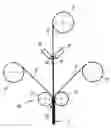
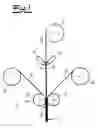
FIG. 1 shows a method for the production of an elastic laminate material web, in which a cover material is laminated onto a carrier film, using a hot-melt glue;
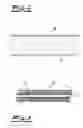
FIG. 2 shows a carrier film that has a polymer powder on one side; and
FIG. 3 shows a representation of the layers of an elastic laminate film.
DETAILED DESCRIPTION OF THE PREFERRED EMBODIMENTReferring now in detail to the drawings, FIG. 1 shows a method for the production of an elastic laminate material web 1. The carrier film 2, which has a polymer powder 3 on one side, is rolled off a film roll 4 and provided with a hot-melt glue 6 on both sides. Carrier film 2, in which melted powder 3 is mixed into the hot-melt glue 6, which preferably comes from a group of the SIS-based or SBS-based polymers, is passed to a laminating unit 8 together with two layers of a cover material 7. The cover material 7 consists of nonwoven, i.e. a fiber non-woven fabric. The webs of the fiber non-woven fabric are rolled off from rolls 9 and laminated onto carrier film 2 in a roller nip 10 between laminating rollers 11 of laminating unit 8.
In FIG. 2, carrier film 2 is shown before the lamination process. This is a mono-film produced by means of extrusion, from a polymer of the group of styrene-isoprene-styrene block copolymers (SIS), styrene-butadiene-styrene block copolymers (SBS), styrene-ethylene/butylene-styrene block copolymers (SEBS), polyurethanes, or ethylene copolymers. Carrier film 2, which typically has a thickness between 50 and 70 μm, is provided with polymer powder 3 on one side. Polymer powder 3, which preferably consists of a polyolefin on a polyethylene basis or, for example, also of ethylene vinyl acetate (EVA), has a low weight per area unit of less than or equal to 1 gm/m2. This amount of powder is just sufficient to reliably prevent interlocking of the layers of carrier film 2 in film roll 4.
FIG. 3 shows a section through a laminate material web 1 produced according to the method according to the invention. Fiber non-woven fabric as cover material 7, which typically has a weight per area unit between 20 and 35 g/m2, is laminated onto the carrier film 2 on both sides, using a hot-melt glue 6 that was applied to both sides of carrier film 2 at a weight per area unit between 7 and 20 g/m2, in each instance. Polymer powder 3, which acts as a spacer in the storage of film roll 4, has completely melted and has distributed itself in hot-melt glue 6. Because of the small amount of powder, the negative effect on the laminate strength is minimal.
An incremental stretching of laminate material web 1 and/or the fiber non-woven fabric before lamination, or lamination of carrier film 2 in the form of strips of film that are spaced apart, can easily be carried out within the scope of the method according to the invention.
EXAMPLE 1A carrier film 2 of SEBS is produced at a thickness of 50 μm, using a flat-film extrusion method. After extrusion, a polymer powder 3 of low-density polyethylene (LDPE) is applied to the carrier film 2 at an average weight per area unit of 1.5 g/m2. Afterwards, that part of the powder 3 that does not adhere to the carrier film 2 is blown or brushed off from the latter, thereby reducing the weight per area unit of powder 3 on carrier film 2 to approximately 0.7 g/m2. Carrier film 2 is wound up and can easily be stored and transported before further processing. During further processing, carrier film 2 is rolled off film roll 4 and provided with an SBS hot-melt glue on both sides. The SBS hot-melt glue is applied to both sides of carrier film 2 at a weight per unit area of 10 g/m2, in each instance, at a temperature of 140° C. The powder 3 of LDPE melts at the gluing temperature and distributes itself in the SBS hot-melt glue. Subsequently, a fiber non-woven fabric having a weight per unit area of 20 g/m2 is laminated onto carrier film 2 as a cover material 7.
EXAMPLE 2A mono-film of SEBS is produced at a thickness of 70 μm, using a flat-film extrusion method. A powder 3 of EVA is sprinkled onto the extruded carrier film 2 at a weight per unit area of 0.8 g/m2, and the latter is rolled up. The film roll 4 can be transported and stored before further processing. For further processing, carrier film 2 is rolled off film roll 4. After carrier film 2 has been rolled off, part of the powder is removed from carrier film 2 by means of a brushing process, before an SIS hot-melt glue having a melt temperature of 170° C. is applied to the carrier film on both sides, as a melted, viscous fluid. At the gluing temperature, the EVA powder melts and distributes itself in hot-melt glue 6, which is applied to both sides of the carrier film 2 at a weight per unit area of 15 g/m2, in each instance. Subsequently, a fiber non-woven fabric having a weight per unit area of 35 g/m2 is laminated onto both sides of carrier film 2 as cover material 7.
Accordingly, while only a few embodiments of the present invention have been shown and described, it is obvious that many changes and modifications may be made thereunto without departing from the spirit and scope of the invention.
Claims
What is claimed is:1. A method for the production of an elastic laminate material web, comprising the following steps:
processing a carrier film made of a thermoplastic elastomer from a film roll by adding to the carrier film a polymer powder on at least one side of the carrier film, said polymer powder preventing interlocking of layers of the carrier film in the film roll; and
laminating a cover material onto the carrier film using a hot-melt glue,
wherein a melt temperature of the powder is less than or equal to a gluing temperature of the hot-melt glue, so that the powder melts during said step of laminating.
2. A method according to claim 1, wherein the cover material is laminated onto the carrier film on both sides of the carrier film.
3. A method according to claim 1, wherein the cover material is a textile material.
4. A method according to claim 1, wherein the carrier film is a mono-film produced by extrusion, from a polymer selected from the group consisting of styrene-isoprene-styrene block copolymers, styrene-butadiene-styrene block copolymers, styrene-ethylene/butylene-styrene block copolymers, polyurethanes, and ethylene copolymers.
5. A method according to claim 1, wherein the polymer powder consists of a polyolefin.
6. A method according to claim 1, wherein the polymer powder is present on the carrier film at a weight per area unit of less than or equal to 1 g/m2.
7. A method according to claim 1, wherein part of the powder is blown or brushed off a surface of the carrier film before the cover material is laminated onto the carrier film.
8. A method according to claim 1, wherein the hot-melt glue is selected from the group of SIS-based and SBS-based polymers.
9. A method according to claim 1, wherein the hot-melt glue is applied to each side of the carrier film to which the cover material is laminated at a weight per area unit between 7 and 20 g/m2.
Images & Drawings included:
Sources:
- United States Patent and Trademark Office - verify current appl. status at the USPTO↗
Recent applications in this class:
- » 20200024779 2020-01-23
Apparatus and method for applying a first web to a base web in a nonlinear pattern - » 20180216268 2018-08-02
Flexible translucent to transparent fireproof composite material - » 20170268143 2017-09-21
Coated glass reinforced facer - » 20150225881 2015-08-13
Coated glass reinforced facer - » 20130137325 2013-05-30
Method of making a reinforcing mat for a pultruded part - » 20120108135 2012-05-03
Method of making a reinforcing mat for a pultruded part - » 20080131647 2008-06-05
Carpet for vehicles - » 20080053596 2008-03-06
Method of making a reinforcing mat for a pultruded part - » 20060052024 2006-03-09
Liquid absorbent sheet and method for manufacturing the same - » 20050228108 2005-10-13
Glass mat laminate comprised of polymerizable cyclic polyester oligomers suitable for composites with a class-A surface
Recent applications for this Assignee:
- » 20160251487 2016-09-01
Elastic monofilm and method of making a disposable hygiene article - » 20150259487 2015-09-17
Multilayer blown film for producing labels - » 20150107063 2015-04-23
Loop-forming closure element for hook-and-loop fasteners and method for the production of a closure element - » 20140170359 2014-06-19
COVER LAYER WITH OUTSIDE FILM LAYER OF AN ELASTIC PLASTIC - » 20120263873 2012-10-18
Self-cleaning nozzle for applying adhesive to a moving web - » 20120189830 2012-07-26
Label film - » 20110262741 2011-10-27
Coextrusion film and method of making a laminated web - » 20110178223 2011-07-21
Method of making an elastic film, in particular for a hygienic article - » 20110160690 2011-06-30
Incontinence brief - » 20100132412 2010-06-03
Loop tape for hook-and-loop fastener