C0G multi-layered ceramic capacitor
US20060229188A1
2006-10-12
11/273,548
2005-11-14
Abstract:
A dielectric ceramic composition in a multilayer ceramic capacitor having a composition of formula:
((CaO)t(SrO)1-t(ZrO2)v(TiO2)1-s-x-y-zAsExGyHz
wherein: A is a transition metal oxide; E is an oxide of a group III or IV element; G is an oxide of a group II element; H is an oxide of a lanthanide; t is 0.50 to 0.90; v is 0.8 to 1.0; s is 0.0001 to 0.08; x is 0 to 0.08; y is 0 to 0.20; and z is 0 to 0.20.
Inventors:
- Ian Burn 15 🇺🇸 Hockessin, DE, United States
- Michael S. Randall 26 🇺🇸 Simpsonville, SC, United States
- Azizuddin Tajuddin 22 🇺🇸 Laurens, SC, United States
- Daniel E. Barber 12 🇺🇸 Fuquay-Varina, NC, United States
- Corey Antoniades 7 🇺🇸 Seneca, SC, United States
- James Beeson 7 🇺🇸 Simpsonville, SC, United States
- Pascal Pinceloup 8 🇺🇸 Simpsonville, SC, United States
- Abhijit Gurav 10 🇺🇸 Greenville, SC, United States
Interested in similar patents?
Get notified when new applications in this technology area are published.
Classification:
C01G25/006 » CPC further
Compounds of zirconium Compounds containing, besides zirconium, two or more other elements, with the exception of oxygen or hydrogen
C01G45/006 » CPC further
Compounds of manganese Compounds containing, besides manganese, two or more other elements, with the exception of oxygen or hydrogen
C04B35/486 » CPC further
Shaped ceramic products characterised by their composition ; Ceramics compositions ; Processing powders of inorganic compounds preparatory to the manufacturing of ceramic products based on oxide ceramics based on zirconium or hafnium oxides, zirconates, zircon or hafnates Fine ceramics
C04B35/49 » CPC further
Shaped ceramic products characterised by their composition ; Ceramics compositions ; Processing powders of inorganic compounds preparatory to the manufacturing of ceramic products based on oxide ceramics based on zirconium or hafnium oxides, zirconates, zircon or hafnates containing also titanium oxides or titanates
C04B35/6261 » CPC further
Shaped ceramic products characterised by their composition ; Ceramics compositions ; Processing powders of inorganic compounds preparatory to the manufacturing of ceramic products; Forming processes; Processing powders of inorganic compounds preparatory to the manufacturing of ceramic products; Preparing or treating the powders individually or as batches ; preparing or treating macroscopic reinforcing agents for ceramic products, e.g. fibres; mechanical aspects section; Treating the starting powders individually or as mixtures Milling
C04B35/62635 » CPC further
Shaped ceramic products characterised by their composition ; Ceramics compositions ; Processing powders of inorganic compounds preparatory to the manufacturing of ceramic products; Forming processes; Processing powders of inorganic compounds preparatory to the manufacturing of ceramic products; Preparing or treating the powders individually or as batches ; preparing or treating macroscopic reinforcing agents for ceramic products, e.g. fibres; mechanical aspects section; Treating the starting powders individually or as mixtures; Wet mixtures Mixing details
C04B35/62805 » CPC further
Shaped ceramic products characterised by their composition ; Ceramics compositions ; Processing powders of inorganic compounds preparatory to the manufacturing of ceramic products; Forming processes; Processing powders of inorganic compounds preparatory to the manufacturing of ceramic products; Preparing or treating the powders individually or as batches ; preparing or treating macroscopic reinforcing agents for ceramic products, e.g. fibres; mechanical aspects section; Coating the powders or the macroscopic reinforcing agents; Powder coating materials Oxide ceramics
C04B35/62807 » CPC further
Shaped ceramic products characterised by their composition ; Ceramics compositions ; Processing powders of inorganic compounds preparatory to the manufacturing of ceramic products; Forming processes; Processing powders of inorganic compounds preparatory to the manufacturing of ceramic products; Preparing or treating the powders individually or as batches ; preparing or treating macroscopic reinforcing agents for ceramic products, e.g. fibres; mechanical aspects section; Coating the powders or the macroscopic reinforcing agents; Powder coating materials; Oxide ceramics Silica or silicates
C04B35/62886 » CPC further
Shaped ceramic products characterised by their composition ; Ceramics compositions ; Processing powders of inorganic compounds preparatory to the manufacturing of ceramic products; Forming processes; Processing powders of inorganic compounds preparatory to the manufacturing of ceramic products; Preparing or treating the powders individually or as batches ; preparing or treating macroscopic reinforcing agents for ceramic products, e.g. fibres; mechanical aspects section; Coating the powders or the macroscopic reinforcing agents by wet chemical techniques
C04B35/64 » CPC further
Shaped ceramic products characterised by their composition ; Ceramics compositions ; Processing powders of inorganic compounds preparatory to the manufacturing of ceramic products; Forming processes; Processing powders of inorganic compounds preparatory to the manufacturing of ceramic products Burning or sintering processes
H01G4/30 » CPC further
Fixed capacitors; Processes of their manufacture Stacked capacitors
C01P2002/50 » CPC further
Crystal-structural characteristics Solid solutions
C01P2002/52 » CPC further
Crystal-structural characteristics; Solid solutions containing elements as dopants
C01P2004/62 » CPC further
Particle morphology; Particles characterised by their size Submicrometer sized, i.e. from 0.1-1 micrometer
C04B2235/3206 » CPC further
Aspects relating to ceramic starting mixtures or sintered ceramic products; Composition of constituents of the starting material or of secondary phases of the final product; Constituents and secondary phases not being of a fibrous nature; Metal oxides, mixed metal oxides, or oxide-forming salts thereof, e.g. carbonates, nitrates, (oxy)hydroxides, chlorides; Alkaline earth oxides or oxide forming salts thereof, e.g. beryllium oxide Magnesium oxides or oxide-forming salts thereof
C04B2235/3208 » CPC further
Aspects relating to ceramic starting mixtures or sintered ceramic products; Composition of constituents of the starting material or of secondary phases of the final product; Constituents and secondary phases not being of a fibrous nature; Metal oxides, mixed metal oxides, or oxide-forming salts thereof, e.g. carbonates, nitrates, (oxy)hydroxides, chlorides; Alkaline earth oxides or oxide forming salts thereof, e.g. beryllium oxide Calcium oxide or oxide-forming salts thereof, e.g. lime
C04B2235/3213 » CPC further
Aspects relating to ceramic starting mixtures or sintered ceramic products; Composition of constituents of the starting material or of secondary phases of the final product; Constituents and secondary phases not being of a fibrous nature; Metal oxides, mixed metal oxides, or oxide-forming salts thereof, e.g. carbonates, nitrates, (oxy)hydroxides, chlorides; Alkaline earth oxides or oxide forming salts thereof, e.g. beryllium oxide Strontium oxides or oxide-forming salts thereof
C04B2235/3215 » CPC further
Aspects relating to ceramic starting mixtures or sintered ceramic products; Composition of constituents of the starting material or of secondary phases of the final product; Constituents and secondary phases not being of a fibrous nature; Metal oxides, mixed metal oxides, or oxide-forming salts thereof, e.g. carbonates, nitrates, (oxy)hydroxides, chlorides; Alkaline earth oxides or oxide forming salts thereof, e.g. beryllium oxide Barium oxides or oxide-forming salts thereof
C04B2235/3217 » CPC further
Aspects relating to ceramic starting mixtures or sintered ceramic products; Composition of constituents of the starting material or of secondary phases of the final product; Constituents and secondary phases not being of a fibrous nature; Metal oxides, mixed metal oxides, or oxide-forming salts thereof, e.g. carbonates, nitrates, (oxy)hydroxides, chlorides Aluminum oxide or oxide forming salts thereof, e.g. bauxite, alpha-alumina
C04B2235/3224 » CPC further
Aspects relating to ceramic starting mixtures or sintered ceramic products; Composition of constituents of the starting material or of secondary phases of the final product; Constituents and secondary phases not being of a fibrous nature; Metal oxides, mixed metal oxides, or oxide-forming salts thereof, e.g. carbonates, nitrates, (oxy)hydroxides, chlorides Rare earth oxide or oxide forming salts thereof, e.g. scandium oxide
C04B2235/3225 » CPC further
Aspects relating to ceramic starting mixtures or sintered ceramic products; Composition of constituents of the starting material or of secondary phases of the final product; Constituents and secondary phases not being of a fibrous nature; Metal oxides, mixed metal oxides, or oxide-forming salts thereof, e.g. carbonates, nitrates, (oxy)hydroxides, chlorides; Rare earth oxide or oxide forming salts thereof, e.g. scandium oxide Yttrium oxide or oxide-forming salts thereof
C04B2235/3227 » CPC further
Aspects relating to ceramic starting mixtures or sintered ceramic products; Composition of constituents of the starting material or of secondary phases of the final product; Constituents and secondary phases not being of a fibrous nature; Metal oxides, mixed metal oxides, or oxide-forming salts thereof, e.g. carbonates, nitrates, (oxy)hydroxides, chlorides; Rare earth oxide or oxide forming salts thereof, e.g. scandium oxide Lanthanum oxide or oxide-forming salts thereof
C04B2235/3229 » CPC further
Aspects relating to ceramic starting mixtures or sintered ceramic products; Composition of constituents of the starting material or of secondary phases of the final product; Constituents and secondary phases not being of a fibrous nature; Metal oxides, mixed metal oxides, or oxide-forming salts thereof, e.g. carbonates, nitrates, (oxy)hydroxides, chlorides; Rare earth oxide or oxide forming salts thereof, e.g. scandium oxide Cerium oxides or oxide-forming salts thereof
C04B2235/3239 » CPC further
Aspects relating to ceramic starting mixtures or sintered ceramic products; Composition of constituents of the starting material or of secondary phases of the final product; Constituents and secondary phases not being of a fibrous nature; Metal oxides, mixed metal oxides, or oxide-forming salts thereof, e.g. carbonates, nitrates, (oxy)hydroxides, chlorides; Refractory metal oxides, their mixed metal oxides, or oxide-forming salts thereof Vanadium oxides, vanadates or oxide forming salts thereof, e.g. magnesium vanadate
C04B2235/3241 » CPC further
Aspects relating to ceramic starting mixtures or sintered ceramic products; Composition of constituents of the starting material or of secondary phases of the final product; Constituents and secondary phases not being of a fibrous nature; Metal oxides, mixed metal oxides, or oxide-forming salts thereof, e.g. carbonates, nitrates, (oxy)hydroxides, chlorides; Refractory metal oxides, their mixed metal oxides, or oxide-forming salts thereof Chromium oxides, chromates, or oxide-forming salts thereof
C04B2235/3244 » CPC further
Aspects relating to ceramic starting mixtures or sintered ceramic products; Composition of constituents of the starting material or of secondary phases of the final product; Constituents and secondary phases not being of a fibrous nature; Metal oxides, mixed metal oxides, or oxide-forming salts thereof, e.g. carbonates, nitrates, (oxy)hydroxides, chlorides; Refractory metal oxides, their mixed metal oxides, or oxide-forming salts thereof Zirconium oxides, zirconates, hafnium oxides, hafnates, or oxide-forming salts thereof
C04B2235/3251 » CPC further
Aspects relating to ceramic starting mixtures or sintered ceramic products; Composition of constituents of the starting material or of secondary phases of the final product; Constituents and secondary phases not being of a fibrous nature; Metal oxides, mixed metal oxides, or oxide-forming salts thereof, e.g. carbonates, nitrates, (oxy)hydroxides, chlorides; Refractory metal oxides, their mixed metal oxides, or oxide-forming salts thereof Niobium oxides, niobates, tantalum oxides, tantalates, or oxide-forming salts thereof
C04B2235/3256 » CPC further
Aspects relating to ceramic starting mixtures or sintered ceramic products; Composition of constituents of the starting material or of secondary phases of the final product; Constituents and secondary phases not being of a fibrous nature; Metal oxides, mixed metal oxides, or oxide-forming salts thereof, e.g. carbonates, nitrates, (oxy)hydroxides, chlorides; Refractory metal oxides, their mixed metal oxides, or oxide-forming salts thereof Molybdenum oxides, molybdates or oxide forming salts thereof, e.g. cadmium molybdate
C04B2235/3258 » CPC further
Aspects relating to ceramic starting mixtures or sintered ceramic products; Composition of constituents of the starting material or of secondary phases of the final product; Constituents and secondary phases not being of a fibrous nature; Metal oxides, mixed metal oxides, or oxide-forming salts thereof, e.g. carbonates, nitrates, (oxy)hydroxides, chlorides; Refractory metal oxides, their mixed metal oxides, or oxide-forming salts thereof Tungsten oxides, tungstates, or oxide-forming salts thereof
C04B2235/3262 » CPC further
Aspects relating to ceramic starting mixtures or sintered ceramic products; Composition of constituents of the starting material or of secondary phases of the final product; Constituents and secondary phases not being of a fibrous nature; Metal oxides, mixed metal oxides, or oxide-forming salts thereof, e.g. carbonates, nitrates, (oxy)hydroxides, chlorides Manganese oxides, manganates, rhenium oxides or oxide-forming salts thereof, e.g. MnO
C04B2235/3267 » CPC further
Aspects relating to ceramic starting mixtures or sintered ceramic products; Composition of constituents of the starting material or of secondary phases of the final product; Constituents and secondary phases not being of a fibrous nature; Metal oxides, mixed metal oxides, or oxide-forming salts thereof, e.g. carbonates, nitrates, (oxy)hydroxides, chlorides; Manganese oxides, manganates, rhenium oxides or oxide-forming salts thereof, e.g. MnO MnO
C04B2235/3275 » CPC further
Aspects relating to ceramic starting mixtures or sintered ceramic products; Composition of constituents of the starting material or of secondary phases of the final product; Constituents and secondary phases not being of a fibrous nature; Metal oxides, mixed metal oxides, or oxide-forming salts thereof, e.g. carbonates, nitrates, (oxy)hydroxides, chlorides; Iron group oxides, their mixed metal oxides, or oxide-forming salts thereof Cobalt oxides, cobaltates or cobaltites or oxide forming salts thereof, e.g. bismuth cobaltate, zinc cobaltite
C04B2235/3281 » CPC further
Aspects relating to ceramic starting mixtures or sintered ceramic products; Composition of constituents of the starting material or of secondary phases of the final product; Constituents and secondary phases not being of a fibrous nature; Metal oxides, mixed metal oxides, or oxide-forming salts thereof, e.g. carbonates, nitrates, (oxy)hydroxides, chlorides Copper oxides, cuprates or oxide-forming salts thereof, e.g. CuO or CuO
C04B2235/3286 » CPC further
Aspects relating to ceramic starting mixtures or sintered ceramic products; Composition of constituents of the starting material or of secondary phases of the final product; Constituents and secondary phases not being of a fibrous nature; Metal oxides, mixed metal oxides, or oxide-forming salts thereof, e.g. carbonates, nitrates, (oxy)hydroxides, chlorides Gallium oxides, gallates, indium oxides, indates, thallium oxides, thallates or oxide forming salts thereof, e.g. zinc gallate
C04B2235/3287 » CPC further
Aspects relating to ceramic starting mixtures or sintered ceramic products; Composition of constituents of the starting material or of secondary phases of the final product; Constituents and secondary phases not being of a fibrous nature; Metal oxides, mixed metal oxides, or oxide-forming salts thereof, e.g. carbonates, nitrates, (oxy)hydroxides, chlorides Germanium oxides, germanates or oxide forming salts thereof, e.g. copper germanate
C04B2235/3409 » CPC further
Aspects relating to ceramic starting mixtures or sintered ceramic products; Composition of constituents of the starting material or of secondary phases of the final product; Constituents and secondary phases not being of a fibrous nature; Non-metal oxides, non-metal mixed oxides, or salts thereof that form the non-metal oxides upon heating, e.g. carbonates, nitrates, (oxy)hydroxides, chlorides Boron oxide, borates, boric acids, or oxide forming salts thereof, e.g. borax
C04B2235/3418 » CPC further
Aspects relating to ceramic starting mixtures or sintered ceramic products; Composition of constituents of the starting material or of secondary phases of the final product; Constituents and secondary phases not being of a fibrous nature; Non-metal oxides, non-metal mixed oxides, or salts thereof that form the non-metal oxides upon heating, e.g. carbonates, nitrates, (oxy)hydroxides, chlorides Silicon oxide, silicic acids, or oxide forming salts thereof, e.g. silica sol, fused silica, silica fume, cristobalite, quartz or flint
C04B2235/5445 » CPC further
Aspects relating to ceramic starting mixtures or sintered ceramic products; Composition of constituents of the starting material or of secondary phases of the final product; Constituents or additives of the starting mixture chosen for their shape or used because of their shape or their physical appearance; Particle size related information expressed by the size of the particles or aggregates thereof submicron sized, i.e. from 0,1 to 1 micron
C04B2235/6025 » CPC further
Aspects relating to ceramic starting mixtures or sintered ceramic products; Aspects relating to the preparation, properties or mechanical treatment of green bodies or pre-forms; Making the green bodies or pre-forms by moulding Tape casting, e.g. with a doctor blade
C04B2235/6584 » CPC further
Aspects relating to ceramic starting mixtures or sintered ceramic products; Aspects relating to heat treatments of ceramic bodies such as green ceramics or pre-sintered ceramics, e.g. burning, sintering or melting processes; Atmosphere during thermal treatment; Oxygen containing atmosphere, e.g. with changing oxygen pressures at an oxygen percentage below that of air
C04B2235/663 » CPC further
Aspects relating to ceramic starting mixtures or sintered ceramic products; Aspects relating to heat treatments of ceramic bodies such as green ceramics or pre-sintered ceramics, e.g. burning, sintering or melting processes; Specific sintering techniques, e.g. centrifugal sintering; Multi-step sintering; Annealing after sintering Oxidative annealing
C04B35/465 IPC
Shaped ceramic products characterised by their composition ; Ceramics compositions ; Processing powders of inorganic compounds preparatory to the manufacturing of ceramic products based on oxide ceramics based on titanium oxides or titanates based on titanates based on alkaline earth metal titanates
Description
This application relates to ceramic capacitors having either a noble metal or base metal electrode which conforms to the Electronics Industry Alliance (EIA) Standard No. 198-1-F-2002 for temperature coefficient standard COG. This application is related to U.S. Provisional Patent Ser. No. 60/669,110, filed Apr. 5, 2005 (attorney docket number 31433/78); and U.S. patent Ser. No. 11/146,847 filed Jun. 7, 2005 (attorney docket number 31433/77).
BACKGROUND AND PRIOR ART Field of the InventionC0G capacitors have very low temperature drift Temperature Coefficient of Capacitance (TCC) (≦±30 ppm/° C.). Typically, the primary components of the ceramic include magnesium titanates or barium neodymium titatanate based materials.
The use of base metal electrodes such as Ni, Cu, and 80 Ni:20 Cu for capacitors offer significant material cost advantages over noble metals or precious metal electrodes such as Pt, Pd, Au, Ag and combinations thereof. Ni and Cu are conductive, comparatively inexpensive metals which, in pure form, are not facilely oxidized. Both can be deposited as electrodes using screen printing processes on the same equipment conventionally used for depositing noble metals. Ni has a higher melting point (Ni mp 1450° C.; Cu mp 1083° C. —Weast Handbook of Chemistry & Physics, 46th edition) and is preferred for multi-layered ceramic capacitors (MLCC) fired at higher temperatures.
While the ceramic dielectrics of this invention may be used with precious metals to obtain C0G MLCC capacitors (which may be fired in oxidative environments), BME capacitors are preferred.
Numerous compositions have been disclosed for non-reducing type dielectric ceramic compositions including U.S. Pat. Nos. 5,204,301; 6,118,648; 6,295,196; 6,396,681; 6,327,311; 6,525,628; 6,572,793; 6,645,897; and, 6,656,863, as well as published patent application numbers US 2005 0111163; US 200 30186802 and US 2004/0220043. These disclosures are directed to various combinations of Ca, Sr, Zr, Ti and Ba oxides with or without limited amounts of dopant oxides or alkaline, alkaline earth and rare earth metals wherein individual precursors are fired to form a ceramic matrix. These ceramics, though beneficial, are still inferior with regards to C0G performance. There has been an ongoing effort in the art to provide a capacitor with improved properties and, specifically, to ceramics which can provide an improved capacitor.
BRIEF DESCRIPTION OF THE INVENTIONIt is a first objective of this invention to provide a base metal electrode multilayer ceramic capacitor (BME MLCC) device having a high CV (capacitance per unit volume).
It is a second objective of this invention to produce a MLCC device which meets the COG specification for Temperature Coefficient of Capacitance (≦±30 ppm/° C.).
It is a further objective of this invention to provide a MLCC capacitor meeting C0G specifications which can be produced at a price competitive with lower performing devices such as those meeting C0H, C0J, C0K, SL, R2J, X7R, etc., and lower specifications, and which meet industry standards for reliability.
These and other objectives may be met using ceramic compositions according to formula (1).
((CaO)t(SrO)1-t(ZrO2)v(TiO2)1-v)1-s-x-y-zAsExGyHz (1)
In Formula 1 A is a transition metal oxide preferably selected from Cu, Mn, Mo, W, Co, Ta, Sc, Y, Yb, Hf, V, Nb, Cr and combinations thereof. Most preferably A is manganese oxide. E is an oxide of a group III or IV element preferably selected from Ge, Si, Al, Ga, B and combinations thereof. G is an oxide of a group II element preferably selected from Sr, Mg, Ba and combinations thereof. H is an oxide of a lanthanide preferably selected from La, Lu, Ce, Eu, Ho, Er, Yb and combinations thereof. Subscripts have the following values: t is 0.50 to 0.90; s is 0.0001 to 0.08; v is 0.8 to 1.0; x is 0 to 0.08; y is 0 to 0.20; and z is 0 to 0.20.
Yet another embodiment is provided in a method for forming a capacitor comprising:
-
- milling to a D50 of between 0.30 μm and 0.50 μm a material with a composition of:
(CaO)t(SrO)1-t(ZrO2)v(TiO2)1-v- wherein t is 0.50 to 0.90; and
- v is 0.8 to 1.0;
- thereby forming a first component (C1);
- milling MnO2 or MnCO3 or other oxidized form of Mn to a D50 of less than 0.50 μm thereby forming a second component (C2);
- milling SiO2 to a D50 of less than 0.50 μm thereby forming a third component (C3);
- combining the first component, the second component and the third component with a
- solvent in a ratio C11-α-βC2αC3β wherein:
- α is 0.001 to 0.08; and
- β is 0.001 to 0.08;
- thereby forming a coating solution;
- applying the coating solution to a tape at a coating weight of 10-40 g/m2;
- drying the coating solution to form a green coating;
- depositing an ink comprising electrode material and a filler over the green coating to form a capacitor blank;
- dicing the capacitor blank to form singular green multilayer chips;
- firing the singular green multilayer chips in an atmosphere with a PO2 of 10−6 to 10−16; and
- forming terminals in electrical contact with said electrode material.
- milling to a D50 of between 0.30 μm and 0.50 μm a material with a composition of:
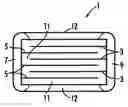
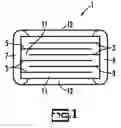
FIG. 1 is a side view of a multilayer ceramic capacitor according to this invention.
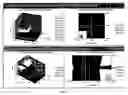
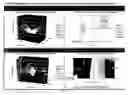
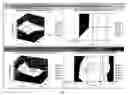
FIGS. 2-4 are three-dimensional plots showing the effects of dopant content on capacitance of a representative ceramic composition.
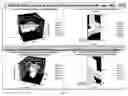
FIGS. 5-7 are three-dimensional plots showing the effects of firing temperature on the capacitance of a representative ceramic composition.
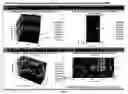
FIGS. 8-10 are three-dimensional plots showing the effects of composition on the ultimate break-down voltage (UVBD) of a representative ceramic composition.
DETAILED DESCRIPTION OF THE INVENTIONThe use of base metals as the conductive metal in a capacitor electrode allow the performance in the capacitor to be maintained while decreasing materials costs. FIG. 1 is a side view of a conventional multi-layer or stacked ceramic capacitor 1. Conductive plates 3, 5 serve as electrodes and are connected to terminations 7, 9 in alternating order. The electrodes are separated or isolated by dielectric ceramic 11. A resin, 12, encases a portion of the capacitor as known in the art.
The electrodes 3, 5 may be made from any conductive material but are typically noble metals such as Pt, Pd, Au or Ag. Since noble metals are difficultly oxidized, when the green stacked plates are fired, high temperatures and an oxidizing atmosphere may be used, and a ceramic having a high dielectric constant is obtained. Good temperature coefficients of capacitance may be obtained.
The use of base metals requires modifications in the composition of the ceramic and in the conditions of firing. Formulations are desired which have a low Temperature Coefficient of Capacitance (TCC), preferably meeting the EIA COG standard (≦±30 ppM/° C.).
Preferred ceramics are defined according to formula (1).
((CaO)t(SrO)1-t(ZrO2)v(TiO2)1-v)1-s-x-y-zAsExGyHz (1)
In formula (1) A is a transition metal oxide preferably selected from Cu, Mn, Mo, W, Co, Ta, Sc, Y, Yb, Hf, V, Nb, Cr and combinations thereof; Most preferably A is manganese oxide. E is an oxide of a group III or IV element preferably selected from Ge, Si, Al, Ga, B and combinations thereof. G is an oxide of a group II element preferably selected from Sr, Mg, Ba and combinations thereof. H is an oxide of a lanthanide preferably selected from La, Lu, Ce, Eu, Ho, Er, Yb and combinations thereof. Subscripts in formula (1) have the following values: t is 0.50 to 0.90; s is 0.0001 to 0.08; v is 0.8 to 1.0; x is 0 to 0.08; y is 0 to 0.20; and z is 0 to 0.20.
The compound of formula (1) is unique in that a precursor material defined as (CaO)t(SrO)1-t(ZrO2)v(TiO2)1-v is mixed with an appropriate amount of a precursor of a dopant oxide. The method typically employed in the art includes the firing of a mixture of oxide precursors, such as carbonates, thereby forming a single phase of a primary material and secondary phases dependant on ratios of reactants and the phase compositions. Oxide precursors are materials which are an oxide after heating as described herein. Particularly preferred oxide precursors include oxides, carbonates, oxalates, peroxides, acetates, nitrates and the like. In the present application the primary phase is predetermined as the CaSrZrTi material and dopants are added thereto which, presumably, form phases differing from that formed by firing precursors of the oxides of calcium, strontium, zirconium, titanium and dopants. As well known to those of skill in the art minor variations in composition, either globally or locally, can result in phases which are neither predictable nor controllable. Therefore, with the prior art techniques there may be unintentional secondary phases formed and these vary from batch to batch and therefore from capacitor to capacitor. The material prepared herein provides greatly improves the consistency of the ceramic and provides unpredictable advantages with regards to COG relative to ceramic materials formed in accordance with the prior art.
A particularly preferred formulation is provided with a base material of CaO0.7SrO0.3(ZrO2)0.97(TiO2)0.03 which is preferably doped with one or more of MnO, MnO2, MnCO3, SiO2, SrO, SrCO3. All formulations are milled at the slurry or slip stage in a suitable milling solution such as water, alcohol, toluene or a combination thereof, or dihydroterpinol (DHT) or other suitable milling solutions using suitable media to a size of D50 ca.<0.5 μm or less. The slip is spread on a carrier film material using a doctor blade. The electrodes are preferably deposited via screen printing using a conductive ink filled with the base formulation or other as suitable. The chips are diced, burned out and fired in a reducing atmosphere of PO2 equal to about 10−8 or less. Soak temperatures from 1245° C. to 1350° C. may be selected.
COG ceramic capacitors can be made using the mole % of MnO2, SiO2 and SrCO3 or SrO present in amounts between 0 and ˜8 mole %.
The preparation of laminated ceramic capacitors are well documented and the present invention does not alter the manufacturing process to any significant degree relative to standard procedures known in the art.
As an example of a manufacturing process, ceramic slurry is prepared by blending and milling the ceramic compounds described herein with a dispersant in either water or an organic solvent such as, for example, ethanol, isopropanol, toluene, ethyl acetate, propyl acetate, butyl acetate, mineral spirits or other suitable hydrocarbon liquid, or a blend thereof After milling a ceramic slip is prepared for tape-casting by adding a binder and a plasticizer to control rheology and to give strength to the tape. The obtained slip is then processed into a thin sheet by tape-casting by coating at a ceramic coating weight of about 10-40 g/m2 exclusive of binders and solvents. After drying the sheet, a multiplicity of electrodes are patterned on the sheet by using, for example, a screen-printing method to form printed ceramic sheet.
A laminate green body is prepared by stacking onto a substance such as polycarbonate, polyester or a similar method: 1) a certain number of unprinted ceramic sheets representing the bottom covers, then 2) a certain number of printed ceramic sheets in alternate directions so as to create alternating electrodes that terminate at opposing ends, and 3) a certain number of unprinted ceramic sheets representing the top covers. Variations in the stacking order of the printed and unprinted sheets can be used with the dielectric material of this invention. The stack is then pressed at between 20° C. and 120° C. to promote adhesion of all laminated layers.
The laminated green body is then cut into individual green chips.
The green chip is heated to remove the binder. The binder can be removed by heating at about 200-400° C. in atmospheric air or neutral or slightly reducing atmosphere for about 0.5 to 48 hours.
The dielectric is then sintered in a reductive atmosphere with an oxygen partial pressure of 10−6 to 10−16 atm at a temperature not to exceed 1350° C. The preferred temperature is about 1,200 to 1,325° C. After sintering the dielectric is reoxidized by heating to a temperature of no more than about 1,100° C. at an oxygen partial pressure of about 10−5 to 10−10 atm. More preferably, the reoxidation is done at a temperature of about 800 to 1,100° C. The material resulting from this stage is typically referred to as a sintered chip.
The sintered chip is subjected to end surface grinding by barrel or sand blast, as known in the art, followed by transferring outer electrode paste to form the external electrodes. Further baking is then done to complete the formation of the outer electrodes. The further baking is typically done in nitrogen or slightly oxidizing atmosphere at a temperature of about 600-1000° C. for about 0.1 to 1 hour.
Layers of nickel and tin or other suitable solder composition can then be plated on the outer electrodes to enhance solderability and prevent oxidation of the outer electrodes.
EXAMPLE 1A base formulation of CaO0.7SrO0.3(ZrO2)0.97(TiO2)0.03 was mixed into the milling solution and milled in an horizontal bead mill with 1 mm spherical media to D50=0.35 μm. Separately MnO2 (J. T. Baker) and SiO2 (Degussa Aerosil OM50) were mixed with milling solution and milled to less than ca 0.4 μm using 1 mm media in ajar mill. The MnO2 (0.972%) and SiO2 (2.170%) were mixed with the base formulation (96.658%). Tapes were coated via a tape caster using a doctor blade for a target coating weight of 30 g/m2. The Ni electrodes were deposited via screen printing using suitable ink containing 15% of milled base formulation as filler. After dicing to achieve singular green multilayer chip devices, the singular MLCC have the organic materials removed via a thermal burnout process. The chips were fired at 1265° C., 1305° C. and 1325° C. respectively, in an oxygen depleted atmosphere of about PO2=10−6 to 10−6. The chips were corner rounded and terminated with a suitable copper thick film termination. The capacitance values were measured. Similar chips were made with 0.1925% and 3.7787% MnO2(same SiO2amount). Comparisons of the physical properties as a function of composition and firing temperature are shown in FIGS. 2-10.
Capacitors of the type disclosed herein may be substituted for polymer film capacitors, Al, Nb and Ta capacitors, or for existing noble metal or base metal electrode based MLCC capacitors. Both lower costs and superior TCC are possible in this family of formulations.
The invention has been disclosed in consideration of specific examples which do not limit the scope of the invention. Modifications apparent to one having skill in the art subsumed within the scope of the invention.
Claims
1. A dielectric ceramic composition in a multilayer ceramic capacitor comprising a composition of formula:
((CaO)t(SrO)1-t(ZrO2)v(TiO2)1-v)1-s-x-y-zAsExGyHz
wherein:
A is a transition metal oxide;
E is an oxide of a group III or IV element;
G is an oxide of a group II element;
H is an oxide of a lanthanide;
t is 0.50 to 0.90;
v is 0.8 to 1.0;
s is 0.0001 to 0.08;
x is 0 to 0.08;
y is 0 to 0.20; and
z is 0 to 0.20.
2. The dielectric ceramic composition in a multilayer ceramic capacitor of claim 1 wherein:
A is selected from the group consisting of Cu, Mn, Mo, W, Co, Ta, Sc, Y, Hf, V, Nb, Cr and combinations thereof.
3. The dielectric ceramic composition in a multilayer ceramic capacitor of claim 2 wherein A is manganese oxide.
4. The dielectric ceramic composition in a multilayer ceramic capacitor of claim 1 wherein E is selected from the group consisting of Ge, Si, Al, Ga, B and combinations thereof.
5. The dielectric ceramic composition in a multilayer ceramic capacitor of claim 1 wherein G is selected from the group consisting of Sr, Mg, Ba and combinations thereof.
6. The dielectric ceramic composition in a multilayer ceramic capacitor of claim 1 wherein H is selected from the group consisting of La, Lu, Ce, Eu, Ho, Er, Yb and combinations thereof.
7. The dielectric ceramic composition in a multilayer ceramic capacitor according to claim 1 wherein A is Mn and E is Si.
8. The dielectric ceramic composition in a multilayer ceramic capacitor according to claim 1 which is fired at a temperature between 1245° C. and 1325° C.
9. The dielectric ceramic composition in a multilayer ceramic capacitor wherein said capacitor uses a base metal as the internal electrode material and a ceramic dielectric composition according to claim 1.
10. The dielectric ceramic composition in a multilayer ceramic capacitor wherein said capacitor uses a base metal as the internal electrode material and a ceramic dielectric composition according to claim 2.
11. The dielectric ceramic composition in a multilayer ceramic capacitor wherein said capacitor uses a base metal as the internal electrode material and a ceramic dielectric composition according to claim 4.
12. The dielectric ceramic composition in a multilayer ceramic capacitor according to claim 11 wherein the base metal is selected from the group consisting of Ni and Cu, Al or a combination thereof.
13. The dielectric ceramic composition in a multilayer ceramic capacitor according to claim 12 which is fired in an oxygen reduced atmosphere.
14. The dielectric ceramic composition in a multilayer ceramic capacitor according to claim 1 which has a temperature coefficient of capacitance (TCC) of ≦±30 ppm/° C.
15. The dielectric ceramic composition in a multilayer ceramic capacitor according to claim 13 which has a metal electrode selected from the group consisting of Ni, Cu and 80 Ni:20Cu.
16. A method for forming a capacitor comprising:
milling to a D50 of between 0.30 μm and 0.50 μm a material comprising:
(CaO)t(SrO)1-t(ZrO2)v(TiO2)1-v
wherein t is 0.50 to 0.90; and
v is 0.8 to 1.0;
thereby forming a first component (C1);
milling MnO2, MnCO3 or another oxidized form of Mn to a D50 of less than 0.50 μm thereby forming a second component (C2);
milling SiO2 to a D50 of less than 0.50 μm thereby forming a third component (C3);
combining said first component, said second component and said third component with a solvent in a ratio C11-α-βC2αC3β wherein:
α is 0.001 to 0.08; and
β is 0.001 to 0.08;
thereby forming a coating solution;
applying said coating solution to a tape at a ceramic coating weight of 10-40 g/m2;
drying said coating solution to form a green coating;
depositing an ink comprising electrode material and a filler over said green coating to form a capacitor blank;
dicing said capacitor blank to form singular green multilayer chips;
firing said singular green multilayer chips in an atmosphere with a PO2 of 10−6 to 10−16; and
forming terminals in electrical contact with said electrode material.
17. The method of claim 16 further comprising:
combining MnO2 and said SiO2 and milling said combination prior to said combining.
18. The method of claim 16 further comprising:
milling at least one oxide precursor selected from group consisting of group A, group E, group G and group H and combining with said first component, said second component and said third component and said solvent prior to said applying wherein said group A consist of transition metal oxide precursors, said group E consist of group III or IV oxide precursors; said group G consist of group II oxide precursors and group H consist of lanthanide oxide precursors.
19. The method of claim 18 wherein said group A consist oxide precursors of Cu, Mn, Mo, W, Co, Ta, Sc, Y, Yb, Hf, V, Nb, Cr and combinations thereof.
20. The method of claim 18 wherein said group E consist of oxide precursors of Ge, Si, Al, Ga, B and combinations thereof.
21. The method of claim 18 wherein said group G consist of oxide precursors of Sr, Mg, Ba and combinations thereof.
22. The method of claim 18 wherein said group H consist of oxide precursors of La, Lu, Ce, Eu, Ho, Er, Yb and combinations thereof.
23. The method of claim 18 wherein said group A, said group E, said group G and said group H are present in an amount sufficient, after firing, to provide a ceramic of composition:
((CaO)t(SrO)1-t(ZrO2)v(TiO2)1-v)1-α-β-s-x-y-z(MnO2)α(SiO2)βAsExGyHz
s is 0 to 0.08;
x is 0 to 0.08;
y is 0 to 0.02; and
z is 0 to 0.20.
24. A capacitor formed by the method of claim 16.
25. The capacitor according to claim 24 which has a temperature coefficient of capacitance of ≦±30 ppm/° C.
Images & Drawings included:




Sources:
- United States Patent and Trademark Office - verify current appl. status at the USPTO↗
Similar patent applications:
- » 20070259104
C0G multi-layered ceramic capacitor - » 20070275158
C0G multi-layered ceramic capacitor - » 20080107800
C0G multi-layered ceramic capacitor - » 20090046411
C0G multi-layered ceramic capacitor - » 20090244804
C0G multi-layered ceramic capacitor
Recent applications in this class:
- » 20250174400 2025-05-29
MULTILAYER CERAMIC CAPACITOR AND METHOD OF MANUFACTURING THE SAME - » 20250166909 2025-05-22
MULTILAYER ELECTRONIC COMPONENT - » 20250166908 2025-05-22
MULTILAYER ELECTRONIC COMPONENT - » 20250166907 2025-05-22
MULTILAYER CERAMIC CAPACITOR AND METHOD OF MANUFACTURING THE SAME - » 20250166906 2025-05-22
MULTILAYER CERAMIC CAPACITOR - » 20250157733 2025-05-15
MULTILAYER ELECTRONIC COMPONENT - » 20250157732 2025-05-15
MULTILAYER CERAMIC CAPACITOR AND MANUFACTURING METHOD THEREOF - » 20250149244 2025-05-08
MULTILAYER CERAMIC CAPACITOR AND METHOD OF FABRICATING THE SAME - » 20250140478 2025-05-01
MULTILAYER ELECTRONIC COMPONENT - » 20250140477 2025-05-01
MULTILAYER ELECTRONIC COMPONENT