Carrier based on granules produced from pyrogenically prepared silicon dioxides
US20060229210A1
2006-10-12
10/568,012
2004-06-22
Abstract:
Carrier based on granules produced from pyrogenically prepared silicon dioxides. The use of granules produced from pyrogenically prepared silicon dioxides as carriers for substances including foodstuffs additives, such as dyestuffs, antioxidants, preservatives, emulsifiers, gelling agents, thickeners and binders, stabilizers, alkalis, acids, salts, antilumping agents, flavour intensifiers, sweeteners, aromas; feedstuff additives; chemical intermediates and plant protection agents.
Inventors:
- Jürgen MEYER 32 🇩🇪 Stockstadt, Germany
- Steffen Hasenzahl 13 🇩🇪 Hanau, Germany
- Peter Neugebauer 1 🇩🇪 Offenbach, Germany
- Claus-Peter Drexel 1 🇩🇪 Neuisenburg, Germany
Interested in similar patents?
Get notified when new applications in this technology area are published.
Classification:
B01J20/103 » CPC main
Solid sorbent compositions or filter aid compositions; Sorbents for chromatography; Processes for preparing, regenerating or reactivating thereof comprising inorganic material comprising silica or silicate comprising silica
C09C1/3081 » CPC further
Treatment of specific inorganic materials other than fibrous fillers ; Preparation of carbon black; Compounds of silicon; Silicic acid Treatment with organo-silicon compounds
C01P2004/61 » CPC further
Particle morphology; Particles characterised by their size Micrometer sized, i.e. from 1-100 micrometer
C01P2006/10 » CPC further
Physical properties of inorganic compounds Solid density
C01P2006/11 » CPC further
Physical properties of inorganic compounds Powder tap density
C01P2006/12 » CPC further
Physical properties of inorganic compounds Surface area
C01P2006/14 » CPC further
Physical properties of inorganic compounds Pore volume
A01N25/12 IPC
Biocides, pest repellants or attractants, or plant growth regulators, characterised by their forms, or by their non-active ingredients or by their methods of application, e.g. seed treatment or sequential application ; Substances for reducing the noxious effect of the active ingredients to organisms other than pests Powders or granules
A61K8/02 IPC
Cosmetics or similar toilet preparations characterised by special physical form
A01N25/00 IPC
Biocides; Pest repellants or attractants; Plant growth regulators
A01N25/00 IPC
Biocides, pest repellants or attractants, or plant growth regulators, characterised by their forms, or by their non-active ingredients or by their methods of application, e.g. seed treatment or sequential application ; Substances for reducing the noxious effect of the active ingredients to organisms other than pests
C04B14/04 IPC
Use of inorganic materials as fillers, e.g. pigments, for mortars, concrete or artificial stone; Treatment of inorganic materials specially adapted to enhance their filling properties in mortars, concrete or artificial stone; Granular materials, e.g. microballoons Silica-rich materials; Silicates
Description
The present invention relates to the use of granules of pyrogenic silica as carriers. In addition to various other actions, the granules can have the function of a carrier for foodstuffs additives, such as dyestuffs, antioxidants, preservatives, emulsifiers, gelling agents, thickeners and binders, stabilizers, alkalis, acids, salts, antilumping agents, flavour intensifiers, sweeteners, aromas, feedstuffs additives, chemical intermediates and plant protection agents, such as, for example, herbicides, insecticides, fungicides and others.
It is known to employ spherical silicon dioxide particles as carriers, for example for feedstuffs additives (Sipernat 22, Bulletin Pigments No. 31, “Synthetic Silica as a Flow Acid and Carrier Substance”, Degussa AG).
Disadvantages of the abovementioned silicon dioxide particles which are employed as carriers are their high water content, their too low purity and the poor flow properties of the loaded substance. Silicic acid esters, silica sols or silicates are employed as starting compounds, and then often lead to products of which the purity is not adequate for the desired intended uses because of considerable amounts of salts, so that an expensive washing is necessary.
The invention is therefore based on the object of providing spherical silicon dioxide particles for use as carriers which do not have the disadvantages mentioned and moreover meet the high demands of uses in respect of purity, product safety and flow properties.
The invention provides the use of granules based on pyrogenically prepared silicon dioxide as a carrier for substances chosen from the group consisting of foodstuffs additives, such as dyestuffs, antioxidants, preservatives, emulsifiers, gelling agents, thickeners and binders, stabilizers, alkalis, acids, salts, antilumping agents, flavour intensifiers, sweeteners, aromas, feedstuffs additives, chemical intermediates and plant protection agents, such as herbicides, insecticides, fungicides and others.
The invention also provides an adsorbate of granules based on pyrogenically prepared silicon dioxide and at least one substance chosen from the group consisting of foodstuffs additives, such as dyestuffs, antioxidants, preservatives, emulsifiers, gelling agents, thickeners and binders, stabilizers, alkalis, acids, salts, antilumping agents, flavour intensifiers, sweeteners, aromas, feedstuffs additives, chemical intermediates and plant protection agents, such as herbicides, insecticides and fungicides.
The granules based on pyrogenically prepared silicon dioxide preferably have an average particle diameter of 10 to 120 μm and a BET surface area of 40 to 400 m2/g (determination in accordance with DIN 66 131 with nitrogen).
The silicon dioxide granules furthermore preferably have the following physico-chemical characteristic data, which are determined as described in EP PS 0 725 037:
Pore volume: 0.5 to 2.5 ml/g
Pore size distribution: less than 5% of the total pore volume has a pore diameter of less than 5 nm, remainder meso- and macropores
pH: 3.6 to 8.5
Tamped density: 220 to 700 g/l.
Granules which are suitable for the use according to the invention and the preparation thereof are described, for example, in EP OS 0 727 037.
The granules can preferably have meso- and macropores, the volume of the mesopores making up 10 to 80% of the total volume. The particle size distribution of the granules is preferably 80 vol. % larger than 8 μm and 80 vol. % smaller than 96 μm. In a preferred embodiment of the invention, the content of pores smaller than 5 μm is not more than 5%, based on the total pore volume.
The granules employed according to the invention can be prepared, for example, by dispersing pyrogenically prepared silicon dioxide, preferably silicon dioxide prepared from silicon tetrachloride by means of flame hydrolysis, in water, spray drying the dispersion and optionally then heat-treating the resulting granules at a temperature of 150 to 1,100° C. for a period of 1 to 8 h.
The dispersion in water preferably has a concentration of silicon dioxide of 5 to 25 wt. %, more preferably 5 to about 19.9 wt. %. The spray drying can be carried out at a temperature of 200 to 600° C., and disc atomizers or nozzle atomizers can be employed in this context. The heat treatment of the granules can be carried out either in a static bed, such as, for example, in chamber ovens, or in an agitated bed, such as, for example, rotary tubular dryers.
The pyrogenic silicon dioxide serving as the starting compound is prepared by a process in which a volatile silicon compound is injected into an oxyhydrogen gas flame of hydrogen and air. Silicon tetrachloride is used in most cases. This substance hydrolyses to silicon dioxide and hydrochloric acid under the influence of the water formed during the oxyhydrogen gas reaction. After leaving the flame the silicon dioxide enters into a so-called coagulation zone, in which the silicon dioxide primary particles and primary aggregates agglomerate. The product present as a type of aerosol in this stage is separated from the gaseous concomitant substances in cyclones and then after-treated with damp hot air. The residual hydrochloric acid content can be lowered to below 0.025% by this process.
The granules based on pyrogenically prepared silicon dioxide can be silanized. The carbon content of the granules is then preferably 0.3 to 15.0 wt. %. Halogenosilanes, alkoxysilanes, silazanes and/or siloxanes can be employed for the silanization.
The following substances can be employed in particular as halogenosilanes:
Halogeno-organosilanes of the type X3Si(CnH2n+1)
-
- X=Cl, Br
- n=1-20
Halogeno-organosilanes of the type X2(R′)Si(CnH2n+1) - X=Cl, Br
- R′=alkyl
- n=1-20
Halogeno-organosilanes of the type X(R′)2Si(CnH2n+1) - X=Cl, Br
- R′=alkyl
- n=1-20
Halogeno-organosilanes of the type X3Si(CH2)m—R′ - x=Cl, Br
- m=0.1-20
- R′=alkyl, aryl (e.g. —C6H5)
- —C4F9, —OCF2—CHF—CF3, —C6F13, —O—CF2—CHF2
- —NH2, —N3, —SCN, —CH═CH2,
- —OOC(CH3)C═CH2
- —OCH2—CH(O)CH2
- —NH—COO—CH3, —NH—COO—CH2—CH3, —NH—(CH2)3Si(OR)3
- —Sx—(CH2)3Si(OR)3
Halogeno-organosilanes of the type (R)X2Si(CH2)m—R′ - X=Cl, Br
- R=alkyl
- m=0.1-20
- R′ alkyl, aryl (e.g. —C6H5)
- —C4F9, —OCF2—CHF—CF3, —C6F13, —O—CF2—CHF2
- —NH2, —N3, —SCN, —CH═CH2,
- —OOC(CH3)C═CH2
- —OCH2—CH(O)CH2
- —NH—COO—CH3, —NH—COO—CH2—CH3, —NH—(CH2)3Si(OR)3
- —Sx—(CH2)3Si(OR)3
Halogeno-organosilanes of the type (R)2XSi(CH2)m—R′ - X=Cl, Br
- R=alkyl
- m=0.1-20
- R′=alkyl, aryl (e.g. —C6H5)
- —C4F9, —OCF2—CHF—CF3, —C6F13, —O—CF2—CHF2
- —NH2, —N3, —SCN, —CH═CH2,
- —OOC(CH3)C═CH2
- —OCH2—CH(O)CH2
- —NH—COO—CH3, —NH—COO—CH2—CH3, —NH—(CH2)3Si(OR)3
- —Sx—(CH2)3Si(OR)3
The following substances can be employed in particular as alkoxysilanes:
-
- Organosilanes of the type (RO)3Si(CnH2n+1)
- R=alkyl
- n=1-20
Organosilanes of the type R′x(RO)ySi(CnH2n+1) - R=alkyl
- R′=alkyl
- n=1-20
- x+y=3
- x=1.2
- y=1.2
Organosilanes of the type (RO)3Si(CH2)m—R′ - R=alkyl
- m=0.1-20
- R′=alkyl, aryl (e.g. —C6H5)
- —C4F9, OCF2—CHF—CF3, —C6F13, —O—CF2—CHF2
- —NH2, —N3, —SCN, —CH═CH2,
- —OOC(CH3)C═CH2
- —OCH2—CH(O)CH2
- —NH—COO—CH3, —NH—COO—CH2—CH3, —NH—(CH2)3Si(OR)3
- —Sx—(CH2)3Si(OR)3
Organosilanes of the type (R″)x(RO)ySi(CH2)m—R′ - R=alkyl
- x+y=2
- x=1.2
- y=1.2
- R′=alkyl, aryl (e.g. —C6H5)
- —C4F9, —OCF2—CHF—CF3, —C6F13, —O—CF2—CHF2
- —NH2, —N3, —SCN, —CH═CH2,
- —OOC(CH3)C═CH2
- —OCH2—CH(O)CH2
- —NH—COO—CH3, —NH—COO—CH2—CH3, —NH—(CH2)3Si(OR)3
- —Sx—(CH2)3Si(OR)3
The silane Si 108 [(CH3O)3—Si—C8H17]trimethoxyoctylsilane can preferably be employed as the silanizing agent.
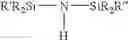
The following substances can be employed in particular as silazanes:
Silazanes of the type:
-
- R=alkyl
- R′=alkyl, vinyl
and, for example, hexamethyldisilazane.
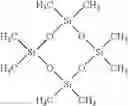
The following substances can be employed in particular as siloxanes:
Cyclic polysiloxanes of the type D 3, D 4, D 5, e.g. octamethylcyclotetrasiloxane=D 4
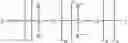
Polysiloxanes or silicone oils of the type:
-
- R=alkyl, aryl, (CH2)n—NH2, H
- R′=alkyl, aryl, (CH2)n—NH2, H
- R″=alkyl, aryl, (CH2)n—NH2, H
- R″′=alkyl, aryl, (CH2)n—NH2, H
- Y═CH3, H, CnH2n+1 where n=1-20
- Y=Si(CH3)3, Si(CH3)2H
- Si(CH3)2OH, Si(CH3)2(OCH3)
- Si(CH3)2(CnH2n+1) where n=1-20
- m=0, 1, 2, 3, . . . ∞
- n=0, 1, 2, 3, . . . ∞
- u=0, 1, 2, 3, . . . ∞
The silanization can be carried out by a procedure in which the granules are sprayed with the silanizing agent, which can optionally be dissolved in an organic solvent, such as, for example, ethanol, and the mixture is then heat-treated at a temperature of 105 to 400° C. over a period of 1 to 6 h.
An alternative method of the silanization of the granules can be carried out by a procedure in which the granules are treated with the silanizing agent in vapour form and the mixture is then heat-treated at a temperature of 200 to 800° C. over a period of 0.5 to 6 h. The heat treatment can be carried out under an inert gas, such as, for example, nitrogen.
The silanization can be carried out continuously or batchwise in heatable mixers and dryers with spray devices. Suitable devices can be, for example: plough share mixers or plate, fluidized bed or flow-bed dryers.
By varying the starting substances, the conditions during spraying, the heat treatment and the silanization, the physico-chemical parameters of the granules, such as the specific surface area, the particle size distribution, the pore volume, the tamped density and the silanol group concentration, pore distribution and pH, can be modified within the stated limits.
The invention also provides:
-
- Dyestuff comprising granules based on pyrogenically prepared silicon dioxide.
- Antioxidant comprising granules based on pyrogenically prepared silicon dioxide.
- Preservative comprising granules based on pyrogenically prepared silicon dioxide.
- Emulsifier comprising granules based on pyrogenically prepared silicon dioxide.
- Gelling agent comprising granules based on pyrogenically prepared silicon dioxide.
- Thickener comprising granules based on pyrogenically prepared silicon dioxide.
- Binder comprising granules based on pyrogenically prepared silicon dioxide.
- Stabilizer comprising granules based on pyrogenically prepared silicon dioxide.
- Alkali comprising granules based on pyrogenically prepared silicon dioxide.
- Acids comprising granules based on pyrogenically prepared silicon dioxide.
- Salts comprising granules based on pyrogenically prepared silicon dioxide.
- Antilumping agent comprising granules based on pyrogenically prepared silicon dioxide.
- Flavour intensifier comprising granules based on pyrogenically prepared silicon dioxide.
- Sweetener comprising granules based on pyrogenically prepared silicon dioxide.
- Aroma comprising granules based on pyrogenically prepared silicon dioxide.
- Feedstuffs additives comprising granules based on pyrogenically prepared silicon dioxide.
- Chemical intermediates comprising granules based on pyrogenically prepared silicon dioxide.
- Plant protection agents comprising granules based on pyrogenically prepared silicon dioxide.
- Herbicides comprising granules based on pyrogenically prepared silicon dioxide.
- Insecticides comprising granules based on pyrogenically prepared silicon dioxide.
- Fungicides comprising granules based on pyrogenically prepared silicon dioxide.
Foodstuffs additives can be:
Dyestuffs, such as, for example:
-
- E100 Curcumin
- E101 Riboflavin, Lactoflavin
- E102 Tartrazine
- E104 Quinoline Yellow
- E110 Sunset Yellow S (azo dyestuff)
- E120 Carminic acid, Cochineal
- E122 Azorubine (azo dyestuff)
- E123 Amaranth (azo dyestuff)
- E124 Ponceau 4R (azo dyestuff)
- E127 Erythrosine
- E131 Patent Blue V
- E132 Indigotine, Indigo Carmine
- E140 Chlorophylls a+b
- E141 Chlorophylls und Chlorophyllins, copper complexes
- E142 Acid Brilliant Green BS
- E150 Caramel, Sugar colour, Rum colour
- E151 Brilliant Black BN (azo dyestuff)
- E153 Charcoal, medicinal
- E160 Carotenoids
- E160a Beta-Carotene, Gamma-Carotene
- E160b Bixin, Norbixin, (Annatto), Orlean
- E160c Capsanthin, Capsorubin
- E160d Lycopene
- E160e Beta-Apo-8′-Carotenal (C30)
- E160f Beta-Apo-8′-Carotenoic Acid Ethyl Ester
- E161 Xanthophylls
- E161a Flavoxanthin
- E161b Lutein
- E161c Cryptoxanthin
- E161d Rubixanthin
- E161e Violaxanthin
- E161f Rhodoxanthin
- E161g Canthaxanthin
- E162 Betanin, Beetroot Red
- E163 Anthocyan
- E172 Iron oxide, iron hydroxide
- E173 Aluminium
- E174 Silver
- E175 Gold
- E180 Pigment Rubine BK, Lithol Rubine
Antioxidants can be:
-
- E220 Sulfurous acid, sulfur dioxide
- E221 Sodium sulfite
- E222 Sodium hydrogen sulfite
- E223 Sodium disulfite
- E224 Potassium disulfite
- E300 Ascorbic acid
- E301 Sodium ascorbate
- E302 Calcium ascorbate
- E304 Ascorbyl palmitate
- E306 Tocopherol-containing extracts of natural origin
- E307 alpha-Tocopherol
- E308 gamma-Tocopherol
- E309 delta-Tocopherol
- E310 Propyl gallate
- E311 Octyl gallate
- E312 Dodecyl gallate
- E320 Butylhydroxyanisole (BHA)
- E321 Butylhydroxytoluene (BHT)
- E330 Citric acid
- E331 Sodium citrate
- E332 Potassium citrate
- E333 Calcium citrate
- E472c Citric acid esters Ethoxiquin
Preservatives can be:
-
- E200 Sorbic acid
- E201 Sodium sorbate
- E202 Potassium sorbate
- E203 Calcium sorbate
- E210 Benzoic acid
- E211 Sodium benzoate
- E212 Potassium benzoate
- E213 Calcium benzoate
- E214 Ethyl 4-hydroxybenzoate
- E215 Ethyl 4-hydroxybenzoate, sodium salt
- E216 Propyl 4-hydroxybenzoate
- E217 Propyl 4-hydroxybenzoate, sodium salt
- E218 Methyl 4-hydroxybenzoate
- E219 Methyl 4-hydroxybenzoate, sodium salt
- E220 Sulfurous acid, sulfur dioxide
- E221 Sodium sulfite
- E222 Sodium hydrogen sulfite
- E223 Sodium disulfite
- E224 Potassium disulfite
- E236 Formic acid
- E280 Propionic acid
- E281 Sodium propionate
- E282 Calcium propionate
- E283 Potassium propionate
Emulsifiers can be:
-
- E322 Lecithin
- E442 Ammonium salts of phosphatidic acids
- E471 Edible fatty acids, mono- and diglycerides
- E472 Esters of E471
- E472a Acetic acid esters
- E472b Lactic acid esters
- E472c Citric acid esters
- E472d Tartaric acid esters
- E472e Diacetyltartaric acid esters
- E472f Tartaric-acetic acid esters
- E473 Sucrose esters of edible fatty acids
- E474 Sugar glycerides
- E475 Polyglycerol esters of edible fatty acids
- E476 Polyglycerol esters of polycondensed ricinoleic acid
- E477 Propylene glycol esters of edible fatty acids
- E481 Sodium stearoyllactylate
- E482 Calcium stearoyllactylate
- E487 Sdoium lauryl sulfate
Gelling agents, thickeners and binders and stabilizers can be:
-
- E400 Alginic acid
- E401 Sodium alginate
- E402 Potassium alginate
- E403 Ammonium alginate
- E404 Calcium alginate
- E405 Propylene glycol alginate
- E406 Agar-agar
- E407 Carrageenan
- E410 Carob bean flour
- E412 Guar flour
- E413 Tragacanth
- E414 Gum arabic
- E415 Xanthan
- E416 Karaya gum
- E417 Tara gum
- E440 Pectins
- E460a Cellulose, microcrystalline
- E460b Cellulose, powdered
- E461 Methylcellulose
- E463 Hydroxypropylcellulose
- E464 Hydroxypropylmethycellulose
- E465 Methylethylcellulose
- E466 Carboxymethylcellulose
- E551 Silicon dioxide
- E1411 Di-starch phosphate I
- E1412 Di-starch phosphate II
- E1413 Di-starch phosphate, phosphated
- E1414 Di-starch phosphate, acetylated
- E1420 Mono-starch acetate I
- E1421 Mono-starch acetate II
- E1422 Di-starch adipate, acetylated
- E1423 Di-starch glycerol, acetylated
- E1430 Di-starch glycerol
- E1440 Hydroxypropyl-starch
- E1441 Hydroxypropyl-di-starch glycerol
- E1442 Hydroxypropyl-di-starch phosphate.
Alkalis, acids and salts can be:
-
- E170 Calcium carbonate
- E260 Acetic-acid
- E261 Potassium acetate
- E262 Sodium diacetate
- E263 Calcium diacetate
- E270 Lactic acid
- E296 Malic acid
- E325 Sodium lactate
- E326 Potassium lactate
- E327 Calcium lactate
- E330 Citric acid
- E331 Sodium citrate
- E332 Potassium citrate
- E333 Calcium citrate
- E334 Tartaric acid
- E335 Sodium tartrate
- E336 Potassium tartrate
- E337 Potassium sodium tartrate
- E354 Calcium tartrate
- E338 Orthophosphoric acid
- E339 Sodium orthophosphate
- E340 Potassium orthophosphate
- E341 Calcium orthophosphate
- E343 Magnesium orthophosphate
- E350 Sodium malate
- E351 Potassium malate
- E352 Calcium malate
- E450 Salts of di-, tri- and polyphosphoric acid (di-, tri- and polyphosphates)
- E500 Sodium carbonate
- E501 Potassium carbonate
- E503 Ammonium carbonate
- E504 Magnesium carbonate
- E507 Hydrochloric acid
- E508 Potassium chloride
- E509 Calcium chloride
- E510 Ammonium chloride
- E514 Sodium sulfate
- E515 Potassium sulfate
- E516 Calcium sulfate
- E524 Sodium hydroxide
- E525 Potassium hydroxide
- E526 Calcium hydroxide
- E527 Ammonium hydroxide
- E528 Magnesium hydroxide
- E529 Calcium oxide
- E530 Magnesium oxide
- E541 Sodium aluminium phosphate
- E574 Gluconic acid
- E575 Glucono-delta-lactone
- E576 Sodium gluconate
- E577 Potassium gluconate
- E578 Calcium gluconate
Antilumping agents can be:
-
- E170 Calcium carbonate
- E341 Calcium orthophosphate
- E470 Edible fatty acids, sodium, potassium and calcium salts
- E504 Magnesium carbonate,
- E535 Sodium ferrocyanide
- E536 Potassium ferrocyanide
- E538 Calcium ferrocyanide
Flavour intensifiers can be:
-
- E621 Sodium glutamate
- E622 Potassium glutamate
- E623 Calcium glutamate
- E624 Magnesium glutamate
- E625 Ammonium glutamate
- E627 Sodium guanylate
- E628 Potassium guanylate
- E629 Calcium guanylate
- E630 5′-Inosinic acid
- E631 Sodium inosinate
- E632 Potassium inosinate
- E633 Calcium inosinate
Sweeteners can be:
-
- E950 Acesulfame-K
- E951 Aspartame
- E952 Cyclamate
- E954 Saccharin
- E957 Thaumatin
Aromas:
-
- Abriceine
- Acetanisole cryst.
- Acetophenone pure
- Agar wood D50092NS
- Agrumen aldehyde 6947L
- Agrumex HC
- Agrumex LC
- Agrumovert 10897 C/J
- Aldehyde C 6 nat.
- Aldehyde C11 MOA
- Aldehyde C12 MA
- Aldehyde C14 so-called
- Aldehyde C16 so-called
- Aldehyde C18 so-called/Abricolin
- Alcohol C 6 nat.
- Alcohol C 8
- Alcohol C 9
- Alcohol C10
- Alcohol C12
- Allinat/Allyl isothiocyanate
- Allinat/Allyl isothiocyanate (stab.)
- Allyl caproate
- Allyl caproate kosher
- Allyl cyclohexylpropionate
- Allyl heptylate
- Allyl phenoxyacetate
- Amarocit®
- Ambre 83LN DB10028
- Ambrebois D50407
- Ambrettia C
- Ambrettolide
- Ambrinol S
- Ambroxid cryst.
- Ananas Coeur D50214
- Anethol NPU 21/22° C.
- Anethol supra 21.5° C.
- Anisaldehyde pure
- Anisyl alcohol
- Anisole
- Anisyl acetate
- Apple 74180C PM
- Apriconia 28855P extra PM
- Baldrian Identoil B
- Basilicum Synthessence
- Bay Identoil
- Benzalacetone
- Benzaldehyde
- Benzaldehyde dd
- Benzophenone cryst.
- Benzyl acetate
- Benzyl acetone
- Benzyl alcohol dd
- Benzyl alcohol FR
- Benzyl benzoate H&R
- Benzyl benzoate M
- Benzyl cinnamate
- Benzyl formate
- Benzyl propionate
- Benzyl salicylate
- Bergamot Identoil colourless
- Bergamot Synthessence Afric.
- Blackberry D50260E
- Bois de Cachemire D50008
- Bois Doux 78008SP PM
- Boronal
- Butyric acid nat.
- Butyl butyrate
- Cacao et Chocolat D50546B
- Cajeput Identoil
- Calmus Synthessence asarone-free
- Cananga Identoil
- Capric acid nat.
- Caproic acid nat.
- Caramel acetate
- Cardamom R Identoil
- Cardamom Synthessence
- Cassia Identoil
- Cassia Identoil B dark
- Cassis D50060B
- Cedar Leaves Identoil
- Chloracetophenone para
- Chrysantheme
- Cinnamyl acetate.
- Citral FF
- Citron R
- Citrone Synthessence FF
- Citronella Identoil
- Citronell Identoil
- Citronellyl tiglinate
- Citronitrile
- Citrowanil® B
- Citrozone D50620B
- Citrylal
- Citrylal E
- Clarifruit D5 0757
- Clarion Base D50774
- Coriander Identoil
- Corps 98N DB10025
- Corps Racine VS
- Costus Synthessence
- Coumarone
- Cumin Synthessence
- Cypress Identoil
- Damascenone beta nat. 1% in EtOH
- Datilat
- Decalactone gamma nat.
- Decalyl acetate beta
- Diacetyl nat.
- Dibenzosuberenone
- Dibenzosuberone
- Dibenzyl ether
- Diethyl phthalate (DEP)
- Dihydrocoumarin
- Dimethyl anthranilate
- Dimethyl benzyl carbinyl butyrate
- Dimethyl sulfide nat.
- Diphenyl oxide
- Silver Fir Needle Identoil
- Silver Fir Needle Identoil B
- Oak Moss Resin D50342
- Strawberry D50026C
- Acetic acid nat.
- Estragon Identoil
- Ethoxyfuranone
- Ethyl 2-methylbutyrate nat.
- Ethyl 2-methylbutyrate
- Ethyl acetate nat.
- Ethyl acetoacetate
- Ethyl benzoate
- Ethyl butyrate
- Ethyl butyrate nat.
- Ethyl caproate kosher
- Ethyl caproate nat.
- Ethyl caprylate
- Ethyl caprylate nat.
- Ethyl cinnamate
- Ethyl formate
- Ethyl heptylate
- Ethyl isovalerate
- Ethyl phenylacetate
- Ethyl propionate
- Ethyl salicylat
- Eucalyptol
- Eucalyptus Oil Globulus BP
- Eugenol
- Eugenol methyl ether
- Farenal
- Fennel oil techn.
- Feuilles de Tomate 79569PM
- Spruce Green 8001S
- Spruce Needle Identoil B sib.
- Spruce Needle Identoil sib.
- Filbertone G
- Fir Balsam DM
- Fleur de Cassis SBU PM
- Floropal
- Florophyll 10183
- Fragolane
- Framboson 10583F
- Frutinat
- Galbanum Synthessence
- Galbanum Synthresin B
- Geranium Identoil Afric.
- Geranium Identoil Bourbon
- Geranyl tiglinate
- Globalide 100%
- Globanone 50% DEP
- Globanone 50% DPG
- Globanone 50% IPM
- Grapefruit D50075N
- Identoil D61286G Green Honey Melon D50315
- Guave 10875N
- Helichrysum Synthessence
- Herbaflorat
- Hexyl acetate
- Hexyl acetate nat.
- Hexyl salicylate
- Hydrocitronitrile
- Indian Spice 10898
- Indoflor H&R cryst.
- Indole FF
- Ginger oil spec. D40393S
- Ionone pure 100%
- Iris Synthresin H&R
- Irolene P
- Isoamyl acetate G
- Isoamyl acetate nat.
- Isoamyl butyrate
- Isoamyl butyrate nat.
- Isoamyl isobutyrate nat.
- Isoamyl isovalerate
- Isoananate
Isobornyl acetate
-
- Isobutyric acid nat.
- Isobutyl acetat nat.
- Isobutylquinoline
- Isobutylquinoline 54
- Isoeugenol methyl ether
- Isotabac naturelle LN DB10038
- Jasmaprunat
- Camomile Identoil blue
- Camomile rom. Synthessence
- Pine Needle Identoil
- Pine Needle Identoil B
- Pine Needle Identoil B P
- Kiwi D50195PM
- Cresol methyl ether para
- Lactojasmon
- Lavandin Identoil 30/32%
- Lavandin Identoil type French 30/32%
- Lavandin Provence D50817
- Lavender Identoil type Mt. Blanc 40/42%
- Lavender oil type Mt. Blanc 40/42%
- Leguminal
- Limonene d pure
- Loganberry D50398N PM
- Bay Leaf Oil D50286
- Mace Oil extra
- Macrolide®
- Macrolide® supra
- Madranol
- Magnolan
- Majantol
- Mandaril
- Manderine Synthessence
- Mango D50436PM
- Maracuja D50042E PM
- Marjoliane N DB10018
- Mayciane N DB10023
- Melissa Identoil German so-called
- Menthol D dist.
- Menthol liquid
- Menthol rac.
- Menthol rac. PH
- Menthol-1 dest.
- Menthol-1 H&R compacted
- Menthol oil
- Menthone-1/Isomenthone-d
- Menthyl acetate-1
- Metaxa D50247C
- Methyl ethylpyrazine-2,3
- Methyl 2-methylbutyrate
- Methylacetophenone para
- Methylacetophenone para supra
- Methyl anthranilate
- Methyl benzoate H&R
- Methyl benzoate techn. pure
- Methyl betanaphthyl ketone cryst.
- Methylbutyric acid-2 nat.
- Methyl cinnamate
- Methyl phenylacetate
- Methyl salicylate
- Methyl cinnamaldehyde alpha
- Miel Blanc N DB10024
- Musk Seed Synthessence
- Mugetanol
- Mugofleur D50444PM
- Clary Sage Identoil
- Clary Sage Identoil B
- Carnation Flower Identoil
- Clove Leaf Identoil dark
- Clove Leaf Oil deg.
- Neononyl acetate
- Neroli Identoil
- Nerolin Yara Yara cryst.
- Neroli oil 4663
- Olibanum Synthresin
- Orange Identoil TSA
- Orange oil spec. D40393P
- Origanum Identoil
- Oryclon extra
- Oryclon special
- Osmanthia 353
- Ozonil
- Palisandal
- Palisandin
- Palmarosa Synthessence
- Pastinak Synthessence
- Patchouli Synthessence N
- Patchouli oil deg. DM
- Pear D50313A PM
- Peru Balsam Identoil
- Peru balsam art. H&R
- Petitgrain Bigarade Synthessence
- Petitgrain Identoil R
- Peach D40110PM
- Plum D50424
- Phenirate
- Phenoxyethyl alcohol/arosol
- Phenylacetaldehyde 100%
- Phenylacetaldehyde dimethyl acetal
- Phenylethyl acetate
- Phenylethyl alcohol benzyl alcohol-free
- Phenylethyl alcohol pure
- Phenylethyl cinnamate cryst.
- Phenylethyl isobutyrate
- Phenylethyl phenylacetate
- Phenylpropyl alcohol
- Pimento Identoil
- Pineapple acetate
- Poivre Coeur H&R PM
- Poivron N DB10029
- Prenyl acetate
- Prenyl salicylate
- Profarnesal
- Projasmon P
- Propionic acid nat.
- Propyl acetate nat.
- Prunol N DB10027
- Pyroprunat
- Rain Forest D50339C PM
- Resedafol
- Rosaphen
- Rose Booster D50221A
- Rose F50048R PG
- Rosemary Identoil
- Rosemary Identoil Spanish
- Rosewood Braz. Identoil
- Sage Identoil Span.
- Sage Identoil Span.
- Sandalwood S.E.A. D50820
- Sandel 80
- Sandel extra
- Sandel Forte
- Sandel H&R
- Sandel H&R ECO
- Sandel H&R super
- Sandel SP
- Sandel type East Ind.
- Sandalwood type East Ind.
- Sandolene H&R
- Spike Identoil
- Styrax Identoil D50186
- Styrenyl acetate
- Sweet Amber D50807
- Tobacco aroma H&R D50799
- Teatree D50780A
- Thyme Identoil
- Thyme red Identoil
- Thyme Synthabsolue
- Thymol dist.
- Thymol cryst. H&R
- Thymol cryst. PH
- Tonca Synthresin
- Vanillin nat.
- Verbena Identoil type French
- Verdeflora D50375D
- Verdural F
- Vertocitral
- Vertocitral C
- Vertosine
- Vetiver Identoil J
- Juniper berry Identoil 10900
- Juniper berry Synthessence
- Willow fragrance 6103CB HG
- Wintergreen oil
- Ylang 10372 MT
- Ylang Ylang Identoil Bourbon I
- Ylang Ylang Identoil Bourbon II
- Ylang Ylang Identoil Bourbon III
- Cinnamaldehyde
- Cinnamaldehyde nat.
- Cinnamyl alcohol
- Cinnamon leaf Identoil
- Cinnamon bark Identoil
Feedstuffs additives can be:
-
- Choline chloride solution
- Vitamin E acetate
- Formic acid
- Acetic acid
- Propionic acid
- Phosphoric acid
- Fat concentrates
- Ethoxiguin
- Molasses
- Hop extract
- Tagetese extract
- Lecithin
- Whey
- Calcium formiate
- Urea
- Milk substitute
- Trace elements
- Vitamins
Chemical intermediates can be:
-
- 1,2-Propylene glycol
- Acrylic acid
- Adipic acid
- Adipic anhydride
- Formic acid
- Formic anhydride
- Benzoic acid
- Succinic acid
- Butanoic acid
- Butanoic anhydride
- Caproic acid
- Dimer fatty acid
- Dimer fatty acid anhydride
- Dipentaerythritol
- Erucic acid
- Acetic acid
- Acetic anhydride
- Ethylene glycol
- Fumaric acid
- Glutaric acid
- Glycerol
- Isophthalic acid
- Isophthalic anhydride
- Lauric acid
- Linolenic acid
- Linoleic acid
- Maleic acid
- Maleic anhydride
- Malonic acid
- Myristic acid
- Oleic acid
- Oxalic acid
- Palmitic acid
- Pentaerythritol
- Phthalic acid
- Phthalic anhydride
- Propionic acid
- Stearic acid
- Terephthalic acid
- Terephthalic anhydride
- Trimethylolpropane
- Valeric acid.
- Bisphenol A
- Epichlorohydrin
- o-Cresol
- Phenol novolaks
- Styrene
- α-Methylstyrene
- Vinyltoluene
- Methyl methacrylate
- Divinylbenzene
- Diallyl phthalate
- Diisocyanates
- Toluene-diisocyanates
- Cyclohexanone
- Methylcyclohexanone
- Acetone
- Butanone
- Acetophenone
- Indene
- Coumarone (benzofuran)
- 2-Methylindene
- 2-Methylcoumarone
- Methylstyrene
- Cyclopentadiene
- Dicyclopentadiene
- Heteropolysaccharides
- Arabinose
- Galactose
- Glucoronic acid
- Mannose
- Rhamnose
- Xylose
- Resinol acids.
- Resinols
- Resinotannols
- Resenes
- Terpenes
- Diterpenes.
- Triterpenes
- Sesquiterpenes
- Resin esters
- Resin soaps
- Alcohols
- Phenol derivatives
- Hydroquinone derivatives
- Quinoline derivatives
Naturally occurring resins:
-
- Acaroid resin
- Asa foetida
- Benzoin resin
- Amber
- Bitumen
- Canada balsam
- China lacquer
- Copaiva balsam
- Dammar resin
- Dragon's blood resin
- Elemi
- Galbanum
- Gutti
- Jalap resin
- Japan lacquer
- Kauri copal
- Colophony
- Copal
- Labdanum
- Manila copal
- Mastix
- Myrrh
- Olibanum
- Opoponax
- Pernambuco balsam
- Peru balsam
- Sandarac
- Shellac
- Styrax
- Tolu balsam
- Terpentine
Synthetic resins:
-
- Hydrocarbon resins
- Urea resins
- Alkyd resins
- Epoxy resins
- Melamine resins
- Melamine-formaldehyde resins
- Hexamethylolmelamine resins
- Melamine-phenol resins
- Melamine-urea resins
- Phenolic resins
- Polyester resins
- Unsaturated polyester resins
- Polyurethane resins
- Ketone resins
- Coumarone-indene resins
- Isocyanate resins
- Polyamide resins
- Terpene-phenol resins
- Epoxy resins
- Rubber
Additives:
-
- Wetting agents
- Desiccants
- Antifloating agents
- Antiskinning agents
- Hardening accelerators
- Hardening retardants
- Expanding agents
- Sealants
- Water softeners
- Deoxygenating agents
- Buffers
- Polishing agents
- Antiageing agents
- Antioxidants
- Antiozonants
- Plasticizers
- Deodorizers
- Inhibitors
- Passivating agents
- Pickling inhibitors
- Anticorrosion agents
- Antistatics
- Stabilizers
- Release agents
- Lubricants
- Flameproofing agents
- UV absorbers
- Antiknocking agents
- Corrosion inhibitors
- Metal deactivators
- Carburettor cleaning agents
- Residue converters
- Antiicing agents
- Pour point depressors
- Defoamers
- Lubricity improvers
- Optical brighteners
Antifoams:
-
- Anionic surfactants
- Polyethylene ethers
- Polypropylene glycol ethers
- Pluronic®
- Mixed ethers
Inorg. peroxides:
-
- Hydrogen peroxide
- Lithium peroxide
- Sodium peroxide
- Calcium peroxide
- Strontium peroxide
- Barium peroxide
Org. peroxides:
-
- Di-tert-butyl peroxide
- Dibenzoyl peroxide
- Per-acids
- Per-acid esters
- Ketone peroxides
- Epidioxides
- Ascaridol
- Ergosterol peroxide
Stabilizers:
-
- Ethylenediaminetetraacetic acid
- Magnesium silicate
Plasticizers:
-
- Camphor
- Trimellitic acid
- Phosphoric acid esters
- Azelaic acid esters
- Sebacic acid esters
- Chloroparaffins
- Dioctyl phthalate
- Bis-(2-ethylhexyl)phthalate
- Diisononyl phthalate
- Diisodocecyl phthalate
- Phthalic acid esters
- Dibutyl phthalate
- Diisobutyl phthalate
- Dicyclohexyl phthalate
- Dimethyl phthalate
- Diethyl phthalate
- Benzyl butyl phthalate
- Butyl octyl phthalate
- Butyl deyl phthalate
- Dipentyl phthalate
- Dimethylglycol phthalate
- Dicapryl phthalate
- Trimellitic acid esters
- Tris-(2-ethylhexyl)trimellitate
- Dioctyl adipate
- Bis-(2-ethylhexyl)adipate
- Diisodecyl adipate
- Dibutyl sebacate
- Dioctyl sebacate
- Bis-(2-ethylhexyl)sebacate
- Azelaic acid
- Sebacic acid
- 1,3-Butanediol
- 1,2-Propanediol
- 1,4-Butanediol
- 1,6-Hexanediol
- Tricresyl phosphate
- Triphenyl phosphate
- Diphenyl cresyl phosphate
- Diphenyl octyl phosphate
- Bis-(2-ethylhexyl)diphenyl phosphate
- Tris-(2-ethylhexyl)phosphate
- Tris-(2-butoxyethyl)phosphate
- Butyl oleate
- Butyl stearate
- Triethylene glycol bis-(2-ethylbutyrate)
- Citric acid esters
- Acetyltributyl citrate
- Acetyltriethyl citrate
- Tartaric acid esters
- Lactic acid esters
- Epoxystearic acid esters
- Epoxidized soya oils
- Linseed oils
- Benzenesulfonamides
- p-Toluenesulfonamides
Free radical interceptors:
-
- Nitrogen monoxide
- Bis(trifluoromethyl)nitroxide
- Nitroxyl radicals
- 2,2-Diphenyl-1-picrylhydrazyl
- Nitrosobenzene
- 2-Methyl-2-nitroso-propane
- Benzaldehyde tert-butyl nitrone
Wetting agents can be:
-
- Dimethyloctylphosphine oxide
- Dimethylnonylphosphine oxide
- Dimethyldecylphosphine oxide
- Dimethylundecylphosphine oxide
- Dimethyldodecylphoshine oxide
- N,N,-bis(3-D-gluconamidopropyl)cholamide
- N,N-Bis(3-D-gluconamidopropyl)deoxycholamide
- Dodecylpoly(oxyethylene glycol ether)s,
- PEG (23) dodecyl ether,
- PEG (10) cetyl alcohol
- PEG (20) cetyl alcohol
- PEG (10) stearyl alcohol
- PEG (10) oleyl alcohol
- PEG (29) oleyl alcohol
- Polyethylene glycol (10) lauryl ether
- Polyethylene glycol (8) dodecyl ether
- Polyethylene glycol (10) isotridecyl ether
- Polyethyleneglycol (15) isotridecylether
- Ethylphenol-poly(ethylene glycol ether)s
- Lubrol
- Thesit
- Thesit
- Cetylpyridinium chloride
- Cetyltrimethylammonium bromide
- 3-[(3-Cholamidopropyl)dimethylammonio]-1-propanesulfonic acid
- 3-[(3-Cholamidopropyl)dimethylammonio]-1-hydroxypropanesulfonic acid
- Chenodeoxycholic acid
- Cholate, Na+
- Deoxycholate, Na+
- Glycocholate, Na+
- Glycodeoxycholate, Na+
- Taurocholate, Na+
- Taurodehydrocholate, Na+
- Taurodeoxycholate, Na+
- Cyclohexyl-n-ethyl-β-D-maltoside
- Cyclohexyl-n-hexyl-β-D-maltoside
- Cyclohexyl-n-methyl-β-D-maltoside
- n-Decyl-β-D-maltopyranoside
- n-Dodecyl-beta-D-maltopyranoside
- n-octyl-β-D-maltopyranoside
- n-Undecyl-β-D-maltoside
- N,N-Dimethyldecylamine oxide
- Genaminox KC
- N,N-Dimethyldodecylamine oxide
- N-Dodecyl-N,N-(dimethylammonio)butyrate
- N-Dodecyl-N,N-(dimethylammonio)undecanoate
- n-Dodecyl-N,N-dimethylglycine
- N-Octyl-N,N-dimethylammonio-3-propanesulfonate
- N-Decyl-N,N-dimethylammonio-3-propanesulfonate
- N-Dodecyl-N,N-dimethylammonio-3-propanesulfonate
- N-Tetradecyl-N,N-dimethylammonio-3-propanesulfonate
- Decanoylsucrose
- n-Dodecanoylsucrose
- Octanoylsucrose
- n-Decyl-β-D-glucopyranoside
- Dodecyl-β-D-glucopyranoside
- n-Heptyl-β-D-glucopyranoside
- n-Hexyl-β-D-glucopyranoside
- n-Nonyl-β-D-glucopyranoside
- n-Octanoyl-β-D-glucosylamine
- n-Octyl-beta-D-glucopyranoside
- n-Decyl-β-D-thiomaltoside
- n-Nonyl-beta-D-thiomaltopyranoside
- N,N-Bis(3-D-gluconamidopropyl)deoxycholamide
- N,N,-bis(3-D-gluconamidopropyl)cholamide
- Digitonin
- Bis(2-ethylhexyl)sodium sulfosuccinate
- n-Dodecyl-N,N-dimethylglycine
- 6-O-(N-heptyl-carbamoyl)methyl-α-D-glucopyranoside
- N-Dodecanoyl-N-methylglycine
- Lauryl-sulfate Li+
- Lauryl-sulfate, Na+
- {3-([4-tert-Octyl]-1-propanesulfonic acid, Na+
- n-Octanoyl-N-methylglucamide
- n-Nonanoyl-N-methylglucamide
- n-Decanoyl-N-methylglucamide
- Ethylphenol-poly(ethylene glycol ether)s
- n-Octyl-2-hydroxyethylsulfoxide
- n-Octyl-2-hydroxyethyl sulfide
- n-Octyl-rac-2,3-dihydroxypropylsulfone
- n-octyl-rac-2,3-dihydroxypropylsulfoxide
- Polyethylene glycol-polypropylene glycol copolymer
- Pluronic F-127
- β-D-Fructopyranosyl-alpha-D-glucopyranoside monodecanoate
- β-D-Fructopyranosyl-alpha-D-glucopyranoside monododecanoate
- PEG (9-10) nonylphenol
- PEG (4.5) p-t-octylphenol
- PEG (9-10) p-t-octylphenol
- PEG (9-10) p-t-octylcyclohexyl
- PEG (7-8) p-t-octylphenol
- PEG (7-8) t-octylcyclohexyl
Plant protection agents can be:
| Herbicides | Insecticides | Fungicides |
| Other | |||
| 2,4-D | Abamectin | Acibenzolar | Chlormequat |
| 2,4-DB | Acephate | Azoxystrobin | Chloropicrin |
| Acetochlor | Acequinocyl | Benalaxyl | Choline Chloride |
| Acifluorfen | Acetamiprid | Benomyl | Cyclanilide |
| Aclonifen | Acrinathrin | Bitertanol | Dazomet |
| Alachlor | Alanycarb | Bromuconazole | Dichlopropene |
| Alloxidim | Aldicarb | Bupirimate | Dikegulac |
| Ametryn | Alpha- | Captan | Dimethipin |
| cypermethrin | |||
| Amidosulfuron | Amitraz | Carbendazim | Ethepon |
| Aminotriazole | Azinphos-methyl | Carboxin | Flumetralin |
| Anilofos | Azocyclotin | Carpropamid | Gibberellic acid |
| Asulam | Bacillus | Chlorothalonil | Inabenfide |
| thuringiensis | |||
| Atrazine | Bendiocarb | Chlozolinate | Maleic hydrazide |
| Azimsulfuron | Benfuracarb | Copper | Mepiquat |
| fungicides | |||
| Benazolin | Bensultap | Cymoxanil | Metam |
| Benfluralin | Benzoximate | Cyproconazole | Methyl bromide |
| Benfuresate | Bifenazate | Cyprodinil | Methyl |
| isothiocyanate | |||
| Bensulforon | Bifentrin | Dichlofluanid | Paclobutrazol |
| Bentazone | BPMC (Fenobucarb) | Diclomezine | Prohexadione |
| Benzofenap | Bromopropylate | Diethofencarb | Thidiazuron |
| Bifenox | Buprofezin | Difenoconazole | Triapenthenol |
| Bilanafos | Cadusafos | Dimethirimol | Tributyl |
| phosphorotri- | |||
| thioate | |||
| Bispyribac- | Carbaryl | Dimethomorp | Trinexapac-ethyl |
| sodium | |||
| Bromacil | Carbofuran | Diniconazole | Uniconazole |
| Bromobuthide | Carbosulfan | Dinocap | Fluthiacet - KIH |
| 9201/CGA | |||
| 248757 | |||
| Bromofenoxim | Cartap | Dithianon | |
| Bromoxynil | Chinomathionat | Dodemorph | |
| Butachlor | Chlorethoxyfos | Dodine | |
| Butamifos | Chlorfenapyr | Edifenphos | |
| Butralin | Chlorfenvinphos | Epoxiconazole | |
| Butroxydim | Chlorfluazuron | Ethaboxam | |
| Butylate | Chlormephos | Ethirimol | |
| Cafenstrole | Chloropirifos | Etridiazole | |
| Carbentamide | Clofentezine | Famoxadone | |
| Carfentrazone | Cycloprothirin | Fenarimol | |
| Chlorbromuron | Cyfluthrin | Fenbuconazole | |
| Chloridazon | Cyhexatin | Fenhexamid | |
| Chlorimuron | Cypermethrin | Fenitropan | |
| Chlorotoluron | Cyromazine | Fenpiclonil | |
| Chlorsulfuron | Deltamethrin | Fenpropidin | |
| Chlorthal | Demeton-s-methyl | Fenpropimorph | |
| Cinidon-ethyl | Diafenthiuron | Fentin | |
| Cinmethylin | Diazinon | Ferimzone | |
| Cinosulfuron | Dichlorvos | Fluazinam | |
| Clefoxydim | Dicofol | Fludioxonil | |
| Clethodim | Dicrotophos | Fluoroimide | |
| Clodinafop | Diflubenzuron | Fluquinconazole | |
| Clomazone | Dimethoate | Flusilazole | |
| PGR | |||
| Clomeprop | Disolfoton | Flusulfamide | Aminoethoxy- |
| vinylglycine | |||
| Clopyralid | Emamectin | Flutolanil | Prohydrojasmon - |
| benzoate | PDJ | ||
| Cloransulam- | Endosulfan | Flutriafol | |
| methyl | |||
| Cumyluron | Esfenvalerate | Folpet | |
| Cyanazine | Ethiofencarb | Fosetyl | |
| Cyclosulfamuron | Ethion | Fuberidazole | |
| Cycloxidim | Ethoprophos | Furalaxyl | |
| Cyhalofop-butyl | Etofenprox | Furametpyr | |
| Daimuron | Etoxazole | Guazatine | |
| Desmedipham | Etrimfos | Hexaconazole | |
| Desmetryn | Fenamiphos | Hymexazol | |
| Dicamba | Fenazaquin | Imazalil | |
| Dichlobenil | Fenbutatin oxide | Imibenconazole | |
| Dichlorprp | Fenitrothion | Iminoctadine | |
| Diclofop | Fenothiocarb | Ipconazole | |
| Diclosulam | Fenoxycarb | Iprobenfos | |
| Difenzoquat | Fenpropthrin | Iprodione | |
| Diflufenican | Fenpyroximate | Iprovalicarb | |
| Diflufenzopyr | Fenthion | Isoprothiolane | |
| Dimefuron | Fenvalerate | Kasugamycin | |
| Dimepiperate | Fipronil | Kresoxim-methyl | |
| Dimethachlor | Flubroythirinate | Mancozeb | |
| Dimethenamid | Flucycloxuron | Maneb | |
| Diphenamid | Flucythrinate | Mepanipyrim | |
| Diquat | Flufenoxuron | Mepronil | |
| Dithiopyr | Flutenzine | Metalaxyl | |
| Diuron | Fluvalinate | Metconazole | |
| Endothal | Formetanate | Methasulfocarb | |
| EPTC | Formothion | Metiram | |
| Esprocarb | Fosthiazate | Myclobutanil | |
| Ethalfluralin | Furathiocarb | Nitrothal- | |
| isopropyl | |||
| Ethametsulfuron | Halfenbrox | Nuarimol | |
| Ethofumesate | Halofenozide | Oxadixyl | |
| Ethoxyfen | Hexaflumuron | Oxine-copper | |
| Ethoxysulfuron | Hexythiazox | Oxolinic acid | |
| Etobenzanid | Imidacloprid | Oxycarboxin | |
| Fenoxaprop | Indoxacarb | Pefurazoate | |
| Flamprop-M | Isofenphos | Penconazole | |
| Flazasulfuron | Isoprocarb | Pencycuron | |
| Fluazifop | Isoxathion | Phthalide | |
| Flufenacet | Lambda- | Probenazole | |
| cyhalothrin | |||
| Flumetsulam | Lindane (Gamma- | Prochloraz | |
| HCH) | |||
| Flumiclorac- | Lufenuron | Procymidone | |
| pentyl | |||
| Flumioxazin | Malathion | Propamocarb | |
| Fluometuron | Metaldehyde | Propiconazole | |
| Fluoroglycofen | Methamidophos | Propineb | |
| Flupoxam | Methidathion | Pyrazophos | |
| Flupyrsulfuron | Methiocarb | Pyrifenox | |
| Nematicides | |||
| Flurenol | Methomyl | Pyrimethanil | ZA3274 |
| Fluridone | Methoprene | Pyroquilon | |
| Flurochloridone | Methoxyfenozide | Quinoxyfen | |
| Fluroxypyr | Mevinphos | Quintozene | |
| Flurtamone | Milbemectin | Spiroxamine | |
| Fomesafen | Monocrotophos | Streptomycin | |
| Glufosinate | Nitenpyram | Sulfur | |
| Glyphosate | Novaluron | Tebuconazole | |
| Halosulforon | Omethoate | Tecloftalam | |
| Haloxyfop | Oxamyl | Tetraconazole | |
| Imazamethabenz | Oxydemeton-methyl | Thiabendazole | |
| Imazamox | Parathion | Thilfluzamide | |
| Imazapic | Parathion-methyl | Thiophanate | |
| methyl | |||
| Imazapyr | Permethrin | Thiram | |
| Imazaquin | Phenthoate | Tolclofos- | |
| methyl | |||
| Imazethapyr | Phorate | Tolylfluanid | |
| Imazosulfuron | Phosalone | Triadimefon | |
| Isoprothuron | Phosmet | Triadimenol | |
| Isoxaben | Phosphamidon | Tricyclazole | |
| Isoxaflutole | Phoxim | Tridemorph | |
| Lactofen | Pirimicarb | Triflumizole | |
| Lenacil | Pirimiphos-ethyl | Triforine | |
| Linuron | Pirimiphos-methyl | Triticonazole | |
| MCPA | Profenofos | Validamycin | |
| MCPA-thioethyl | Propaphos | Vinclozolin | |
| MCPB | Propargite | Zineb | |
| Mecoprop | Propoxur | Ziram | |
| Mefenacet | Prothiofos | Cyamidazosulfamid - | |
| IKF-916 | |||
| Metamitron | Pymetrozine | ||
| Metazachlor | Pyraclofos | Cyamidazosulfamid- | |
| IKF-916 | |||
| Methabenzthiazuron | Pyridaben | ||
| Methyl-arsonic | Pyridafenthion | Diclocymet - | |
| acid | S2900 | ||
| Metobromuron | Pyrimidifen | Fenamidone - | |
| RPA 407213 | |||
| Metolachlor | Pyriproxyfen | ||
| Metosulam | Quinakphos | Fenoxanil - | |
| AC382042/ | |||
| NNF9425 | |||
| Metoxuron | Silafluofen | ||
| Metribuzin | Spinosad | Iprovalicarb- | |
| SZX722 | |||
| Metsulforon | Sulprofos | MA 565 | |
| Molinate | Tebufenozide | Metominostrobin - | |
| SSF-126 | |||
| Naproanilide | Tebufenpyrad | ||
| Napropamide | Tebupirimfos | MTF-753 | |
| Naptalam | Teflubenzuron | NF-149 | |
| Nicosulfuron | Tefluthrin | NNF-9850 | |
| Norflurazon | Terbufos | Oxpoconazole | |
| fumarate - UBF- | |||
| 910 | |||
| Orbencarb | Thiamethoxam | ||
| Oryzalin | Thiocyclam | Picoxystrobin - | |
| ZA1963 | |||
| Oxadiargyl | Thiodicarb | ||
| Oxadiazon | Thiometon | ||
| Oxasulfuron | Tralomethrin | Silthiopharm - | |
| MON-65500 | |||
| Oxyfluorfen | Triazamate | ||
| Paraquat | Triazophos | Simeconazole - | |
| F155 | |||
| Pendimethalin | Trichlorfon | Trifloxystrobin - | |
| OGA279202 | |||
| Pentoxazone | Triflumuron | ||
| Phenmedipham | Vamidothion | Zoxamide - | |
| RH7281 | |||
| Picloram | Xylyl | ||
| methylcarbamate | |||
| Pretilachlor | Zeta-Cypermethrin | ||
| Primisulfuron | Acetoprole- | ||
| RPA115782 | |||
| Prometryn | AKD 1022 | ||
| Propachlor | Chromafenozide- | ||
| ANS-118 | |||
| Propanil | |||
| Propaquizafop | Clothianidin - | ||
| TI-435 | |||
| Propazine | Dinitefuran - | ||
| MTI-446 | |||
| Propyzamide | Ethiprole-RPA | ||
| 107382 | |||
| Prosulfocarb | Fluacrypyrim - | ||
| NA-83 | |||
| Prosulfuron | Flupyrazofos | ||
| Pyraflufen- | Phosphocarb - | ||
| ethyl | BAS301 | ||
| Pyrazolinate | |||
| Pyrazosulfuron | Protrifenbute - | ||
| FMC 111869 | |||
| Pyrazoxyfen | |||
| Pyribenzoxim | Thiacloprid - | ||
| BAYYRC2894 | |||
| Pyributicarb | |||
| Pyridate | Tolfenpyrad - | ||
| OMI-88 | |||
| Pyriminobac- | |||
| methyl | |||
| Pyrithiobac | |||
| Quinclorac | |||
| Quinmerac | |||
| Quinoclamine | |||
| Quizalofop | |||
| Quizalofop-P- | |||
| tefuryl | |||
| Rimsulfuron | |||
| Sethoxydim | |||
| Simazine | |||
| Sulcotrione | |||
| Sulfentrazone | |||
| Sulfometuron | |||
| Sulfosate | |||
| Sulfosulfuron | |||
| Tebuthiuron | |||
| Terbacil | |||
| Terbumeton | |||
| Terbuthylazine | |||
| Terbutryn | |||
| Thenylchlor | |||
| Thiazopyr | |||
| Thifensulfuron | |||
| Thiobencarb | |||
| Herbicides | |||
| Tralkoxydim | |||
| Triallate | |||
| Triasulfuron | |||
| Tribenuron | |||
| Triclopyr | |||
| Trifluralin | |||
| Triflusulfuron | |||
| Amicarbazone-BAYMKH3586 | |||
| Azafenidin-DPX-R6447 | |||
| Beflubutamid-UBH-820 | |||
| Benzfendizone - FMC 143686 | |||
| Benzobicyclon - SB-500 | |||
| Butafenacil - CGA 276854 | |||
| Fentrazamide - BAYYRC2388 | |||
| Florasulam - DE570 | |||
| Fluazolate - JV485 | |||
| Flucarbazone - BAYMKH6562 | |||
| Flufebpyr-ethyl - S-3453 | |||
| Foramsulfuron - AEF 130360 | |||
| Indanofan - MK-243 | |||
| Iodosulfuron - AEF 115008 | |||
| Isoxadifen - AEF122006 | |||
| KPP421 | |||
| Mesosulfuron - AEF 130060 | |||
| Mesotrione - ZA1296 | |||
| MTB-951 | |||
| OK-9701 | |||
| Oxaziclomefone-MY-00 | |||
| Penoxsulam - DE638 | |||
| Pethoxamid - TKC-94 | |||
| Picolinofen - AC900001 | |||
| Propoxycarbazone (proposed) | |||
| BAYMKH6561 | |||
| Pyriftalid - CGA279233 | |||
| Tepraloxydim - BAS620H/NP61EC | |||
| Triaziflam - IDH 1105 | |||
| Trifloxysulfuron (Na salt) - | |||
| CGA362622 | |||
| Tritosulfuron | |||
Preferably, however, the silicon dioxide granules employed according to the invention function as a carrier. The present invention therefore also relates to an adsorbate of the silicon dioxide granules described above and at least one of these substances.
The term “adsorbate” as used herein includes the adsorption of a substance not only on to the surface of the silicon dioxide, but also into the pores, as well as the “intercalation” into the intergrain volumes. “Adsorbate” can also mean that silicon dioxide granules or fragments thereof envelop solid particles or liquid droplets of the substance. In the latter case the forces of attraction between the particles or droplets are reduced and, for example, the flow properties are improved or the merging of droplets is impeded.
The ratio of amounts of substance to silicon dioxide granules in the adsorbate can be chosen as desired as a function of the properties of the substance and the requirements for the end product. Preferably, however, 0.001 to 200 g of substance are employed per 100 g of silicon dioxide granules, particularly preferably 10 to 150 g.
In a preferred embodiment, granules based on pyrogenically prepared silicon dioxide of average particle diameter from 10 to 120 μm and BET surface area from 40 to 400 m2/g (determination in accordance with DIN 66 131 with nitrogen) can be used as the silicon dioxide granules.
The silicon dioxide granules furthermore preferably have the following physico-chemical characteristic data, which are determined as described in EP PS 0 725 037:
Pore volume: 0.5 to 2.5 ml/g
Pore size volume: less than 5% of the total pore volume has a pore diameter of less than 5 nm, remainder meso- and macropores
pH: 3.6 to 8.5
Tamped density: 220 to 700 g/l.
Granules which are suitable for the use according to the invention and the preparation thereof are described, for example, in EP OS 0 727 037.
An example of a process for the preparation of the adsorbate according to the invention comprises:
Melting of the substance(s) to be adsorbed, chosen from foodstuffs additives, such as dyestuffs, antioxidants, preservatives, emulsifiers, gelling agents, thickeners and binders, stabilizers, alkalis, acids, salts, antilumping agents, flavour intensifiers, sweeteners, aromas, feedstuffs additives, chemical intermediates and plant protection agents, such as, for example, herbicides, insecticides and fungicides, or distribution, i.e. dissolving, suspending or emulsifying, thereof in a solvent;
mixing of the granules based on pyrogenically prepared silicon dioxide with the mixture from step (a); and where appropriate removal of the solvent.
“Solvent” also includes mixtures of several different solvents. It goes without saying, furthermore, that substances which are already liquid at room temperature can be subjected to the mixing in step (b) without prior processing, since in this case the “melting operation” has already taken place. Mixing step (b) can be carried out either by adding the mixture from step (a) to the silicon dioxide granules, for example by spraying on, or vice versa. In both cases, the addition can be made in one amount or in portions. The duration of the mixing in step (b) depends here above all on the adsorption properties of the substance to be adsorbed on the silica surface. If a solvent is present, step (a) and (b) are carried out at a temperature which lies between the freezing and boiling point of the solvent. The solvent, where appropriate in excess, is preferably removed in step (c) at elevated temperature and/or under reduced pressure.
The removal of the solvent in step (c) can also be carried out by spray drying or fluidized bed drying, shaping taking place at the same time. In the case of a granule-containing melt, the shaping process can accordingly be an extrusion.
The adsorbates according to the invention can be used for the preparation of powders, liquids, foams, sprays, gels, creams, ointments, pastes, sticks and tablets.
The adsorbates according to the invention can additionally be shaped. They can be processed, for example, to pellets, larger granules, extrudates etc.
The advantage of the adsorbates according to the invention lies in their excellent flow properties, the low water content and the high purity of the starting granules. They offer a very good possibility for dispersing substances which are difficult to meter, and are easy to handle.
When handling the adsorbates, the hazard potential to the administering person during use on toxic substances, such as plant protection agents or aggressive skin-irritating substances, can be reduced significantly.
When the adsorbate according to the invention is used, a uniform distribution of the active compound can be achieved.
The invention is now to be explained in more detail with the aid of examples.
Preparation of Granules Based on Pyrogenically Prepared Silicon Dioxide
The pyrogenically prepared silicon dioxide AEROSIL 300, commercially obtainable from Degussa AG, is used as the starting compound.
The pyrogenically prepared silicon dioxide is dispersed in completely demineralized water. A dispersing unit which operates by the rotor/stator principle is used here. The suspension formed is spray dried. The finished product is separated off via a filter or cyclone. The heat treatment of the spray granules is carried out in a muffle oven.
The preparation parameters are shown in table 1.
| TABLE 1 | ||
| Starting SiO2 | AEROSIL 300 | |
| Spray drying data | ||
| Amount of H2O (kg) | 100 | |
| Amount of SiO2 (kg) | 10 | |
| Atomization with | disc atomizer | |
| Operating temperature (° C.) | 480° C. | |
| Waste air temperature (° C.) | 103° C. | |
| Separation | filter | |
| Physico-chemical data | ||
| BET surface area (m2/g) | 298 | |
| Particle size d50 (μm) | 30 | |
| Tamped volume (g/l) | 283 | |
| pH | 4.7 | |
1. Starting Materials
1.1 Model Liquids
Vitamin E acetate, silicone oil, paraffin oil and eucalyptus oil are used as model liquids for the fields of use according to the invention. Vitamin E acetate is used, for example, in the nutrition of animals and humans, and eucalyptus oil as an aromatic or aroma substance.
| Example | Product | Product name | Manufacturer |
| 1 | Vitamin E | BASF | |
| acetate | |||
| 2 | Silicone oil | Silicon Fluid 345 | Dow Corning |
| 3 | Paraffin oil | Paraffinöl | Merck |
| dünnflüssig | |||
| 4 | Eucalyptus | Oleum Eucalypti | Caelo |
| oil | 80-85% | ||
1.2 Carrier Silicas
| Loss on | Loss on | SiO2 | Bulk | ||
| drying | ignition | content | Slope | density | |
| Silica | (wt. %) | (wt. %) | (wt. %) | angle (°) | (g/l) |
| Example | 1.7 | 2.1 | 99.9 | 34.97 | 232.8 |
| 1-4 | |||||
| AEROPERL ® | |||||
| 300/30 | |||||
| (Degussa) | |||||
| Comparison | 4.8 | 4.4 | 98.0 | 38.99 | 211 |
| example 1 | |||||
| SIPERNAT ® | |||||
| 22 | |||||
| (Degussa) | |||||
| Comparison | 4.5 | 4.9 | 98.5 | 52.67 | 136.67 |
| example 2 | |||||
| SIPERNAT ® | |||||
| 50 | |||||
| (Degussa) | |||||
| Comparison | 5.9 | 3.9 | nd | 50 | 92 |
| example 3 | |||||
| Syloid 244 | |||||
| FP | |||||
| (Grace) | |||||
Granulated pyrogenic silica (AEROPERL® 300/30) has a significantly lower water content (loss on drying and ignition) and a higher silicon dioxide content than the silicas used in the comparison examples. Furthermore, it is free from sulfates, typical impurities of precipitated silica and silica gels, and has the best flowability (the lowest slope angle).
2. Procedure:
50 g of carrier silica are initially introduced into a 2 litre three-necked flask equipped with a blade stirrer 50 g of the model liquids from examples 1-4 are added dropwise from a dropping funnel in the course of 60 minutes, while stirring at a stirrer speed of 100 revolutions/minute. Comparison examples 1-3 are carried out with eucalyptus oil. The liquid-silica adsorbates are then sieved manually three times through a 0.8 mm sieve and left to stand overnight in a closed screw-cap glass bottle. The following day, the liquid-silica adsorbates are characterized by the following methods:
Flow rating by means of glass flow vessels in accordance with the publication series Pigmente No. 31 “AEROSIL zur Verbesserung des Flieβverhaltens pulverförmiger Substanzen”, Degussa AG, Dusseldorf.
Poured cone height (cm) or slope angle (°) in accordance with the publication series Pigmente No. 31. The slope angle is obtained from the poured cone height via the equation
tan(slope angle)=(poured cone height/0.5 cone diameter)
Bulk density (g/l) in accordance with DIN standard 6613.
3. Results
| Flow | Slope angle | Bulk density | |
| rating | (°) | (g/l) | |
| Example 1 | 2 | 30.1 | 501 | |
| AEROPERL/Vitam. E | ||||
| Example 2 | 2 | 37.2 | 475 | |
| AEROPERL/Silicone | ||||
| oil | ||||
| Example 3 | 2 | 38.7 | 497 | |
| AEROPERL/Paraffin | ||||
| oil | ||||
| Example 4 | 2 | 37.2 | 594 | |
| AEROPERL/ | ||||
| Eucalyptus oil | ||||
| Comparison example 1 | 3 | 46.0 | 450 | |
| SIPERNAT 22 | ||||
| Comparison example 2 | 4 | 63.9 | 353 | |
| SIPERNAT 50 | ||||
| Comparison example 3 | 6 | 56.7 | 201 | |
| Syloid FP 244 | ||||
The liquid-silica adsorbates prepared with granulated pyrogenic silica (AEROPERL® 300/30) are distinguished by a good flowability (flow rating 2, slope angle<40° C.). In contrast, the liquid-silica adsorbates from comparison examples 1 to 3 show a significantly lower flowability. The latter moreover have significantly lower bulk densities.
Liquid-silica adsorbates with a good flowability and high bulk volume are advantageous for carrier uses. Furthermore, carrier silicas should have the lowest possible water content and should be very pure, in order to avoid decomposition of the adsorbed liquids under the (catalytic) influence of water or impurities, such as, for example, sulfates. The experiments show that granulated pyrogenic silica meets all these requirements.
Claims
1. Use of granules based on pyrogenically prepared silicon dioxide as a carrier for substances chosen from the group consisting of foodstuffs additives, such as dyestuffs, antioxidants, preservatives, emulsifiers, gelling agents, thickeners and binders, stabilizers, alkalis, acids, salts, antilumping agents, flavour intensifiers, sweeteners, aromas, feedstuffs additives, chemical intermediates and plant protection agents, such as, for example, herbicides, insecticides and fungicides.
2. Use according to claim 1, characterized in that the silicon dioxide granules are silanized.
3. Adsorbate of granules based on pyrogenically prepared silicon dioxide and at least one substance chosen from the group consisting of foodstuffs additives, such as dyestuffs, antioxidants, preservatives, emulsifiers, gelling agents, thickeners and binders, stabilizers, alkalis, acids, salts, antilumping agents, flavour intensifiers, sweeteners, aromas, feedstuffs additives, chemical intermediates and plant protection agents, such as herbicides, insecticides and fungicides.
4. Adsorbate according to claim 3, characterized in that the silicon dioxide granules are silanized.
5. Dyestuff comprising granules based on pyrogenically prepared silicon dioxide.
6. Antioxidant comprising granules based on pyrogenically prepared silicon dioxide.
7. Preservative comprising granules based on pyrogenically prepared silicon dioxide.
8. Emulsifier comprising granules based on pyrogenically prepared silicon dioxide.
9. Gelling agent comprising granules based on pyrogenically prepared silicon dioxide.
10. Thickener comprising granules based on pyrogenically prepared silicon dioxide.
11. Binder comprising granules based on pyrogenically prepared silicon dioxide.
12. Stabilizer comprising granules based on pyrogenically prepared silicon dioxide.
13. Alkali comprising granules based on pyrogenically prepared silicon dioxide.
14. Acids comprising granules based on pyrogenically prepared silicon dioxide.
15. Salts comprising granules based on pyrogenically prepared silicon dioxide.
16. Antilumping agent comprising granules based on pyrogenically prepared silicon dioxide.
17. Flavour intensifier comprising granules based on pyrogenically prepared silicon dioxide.
18. Sweetener comprising granules based on pyrogenically prepared silicon dioxide.
19. Aroma comprising granules based on pyrogenically prepared silicon dioxide.
20. Feedstuffs additives comprising granules based on pyrogenically prepared silicon dioxide.
21. Chemical intermediates comprising granules based on pyrogenically prepared silicon dioxide.
22. Plant protection agents comprising granules based on pyrogenically prepared silicon dioxide.
23. Herbicides comprising granules based on pyrogenically prepared silicon dioxide.
24. Insecticides comprising granules based on pyrogenically prepared silicon dioxide.
25. Fungicides comprising granules based on pyrogenically prepared silicon dioxide.
Images & Drawings included:





Sources:
- United States Patent and Trademark Office - verify current appl. status at the USPTO↗
Recent applications in this class:
- » 20250170553 2025-05-29
PORE STRUCTURE FOR SEPARATION OF ADENO-ASSOCIATED VIRUSES (AAVS) FROM THEIR AGGREGATES - » 20250121351 2025-04-17
METHOD OF FORMING FLUORITE FROM A FLUORIDE-CONTAINING FLUID USING BIOACTIVE GLASS, AND FILTER MEDIA CONTAINING BIOACTIVE GLASS - » 20250073665 2025-03-06
OXYGEN SCAVENGER - » 20250065297 2025-02-27
METHODS FOR SELF-SEEDED HYDROTHERMAL GROWTH OF MFI ZEOLITE NANOSHEETS AND NANOSHEET ASSEMBLIES AND FOR TILING NANOSHEET ZEOLITE PLATES ON POLYMER SUPPORTS - » 20250065296 2025-02-27
METHOD FOR MANUFACTURING A POROUS MONOLITH BY A SOL-GEL PROCESS - » 20250058296 2025-02-20
Precipitated silica for improved adsorption of volatile organic compounds - » 20250001389 2025-01-02
DEOXYGENATION AGENT COMPOSITION AND METHOD FOR PRODUCING SAME, AND DEOXYGENATION AGENT PACKAGE COMPRISING SAID DEOXYGENATION AGENT COMPOSITION AND METHOD FOR PRODUCING SAME - » 20240351001 2024-10-24
CARBON MINERALIZATION AND SEQUESTRATION USING CARBONATABLE MINERALS, AND METHOD OF MAKING AND USING SAME - » 20240335814 2024-10-10
CO2 IMMOBILIZATION MATERIAL AND METHOD FOR PRODUCING CO2 IMMOBILIZATION PRODUCT - » 20240226846 2024-07-11
Method and system for solventless calibration of volatile or semi-volatile compounds