Non-planing boat hull
US20060231003A1
2006-10-19
11/109,572
2005-04-19
Abstract:
A non-planing boat hull includes a forward portion having a bow with the width tapering from a beam toward the bow and an aft portion having a stern with the aft portion having a width tapering smaller from the beam toward the stern. A keel is provided and disposed along the hull centerline for stability with the keel having a back supporting a propeller shaft and a forward height tapering smaller toward the bow. Fore topsides are provided and extend from the beam to the bow and include an arcuate convex transition to the hull forward portion. Aft topsides extend from the beam to the stern and include an arcuate concave transition to the hull aft portion with the aft topside further forming approximately a 90° angle with a transom and joining the hull aft portion with a convex surface near the waterline of the hull. The fore and aft portions form teardrop shaped waterline and displacement of volumes for the hull.
Interested in similar patents?
Get notified when new applications in this technology area are published.
Classification:
B63B1/04 » CPC main
Hydrodynamic or hydrostatic features of hulls or of hydrofoils deriving lift mainly from water displacement with single hull
B63B39/06 » CPC further
Equipment to decrease pitch, roll, or like unwanted vessel movements; Apparatus for indicating vessel attitude to decrease vessel movements by using foils acting on ambient water
B63B1/00 IPC
Hydrodynamic or hydrostatic features of hulls or of hydrofoils
Description
The present invention generally relates to hull construction for a small boat and is more particularly directed to an improved hull construction for an electric boat, which provides maneuverability and stability along with low wake generation.
Boat hulls may be classified generally as flat bottom, V-bottom, and round bottom.
Boats with flat bottom hulls generally have a shallow draft and while they may plane easily, unless the water surface is perfectly flat, they tend to give a rough ride because of the flat bottom pounding on each wave. They also tend to be less stable and require careful balancing of the load.
V-bottom hulls tend to have a sharper entry into the water, which provides for a smoother ride in rough water, however, they generally require more power to achieve the same speed.
Boats with round bottom hulls generally move easily through the water, especially at low speeds, however they tend to roll.
With regard to the wave generation when a hull is moved forward through the water, the bow generates a bow wave and the stern generates a stern wave and a transverse wave. In addition, pressure waves directed downward may also be produced, which are generally by both a sharp and blunt end sterns.
Generation of these waves does not improve the efficiency or the seaworthiness of the boat and in addition waste a great deal of energy.
Further, such waves may also present a hazard to other vessels and can be a source of damage to embankments or shoreline structures.
The present invention is directed to a non-planing boat hull, which produces little or no wake.
SUMMARY OF THE INVENTIONA non-planing boat hull in accordance with the present invention generally includes a forward portion having a bow with the forward portion having a width tapering smaller from a beam toward the bow.
An aft portion of the hull includes a stern and the aft portion includes a width tapering smaller from the beam toward the stern.
A keel is provided and disposed along a hull centerline with the keel having a back supporting a propeller and a forward height tapering smaller toward the bow.
Fore topsides extending from the beam to the bow include an arcuate convex transition to the hull forward portion.
The aft topsides extend from the beam to the stern and include an arcuate concave transition to the hull aft portion with the aft topside forming approximately a 90° angle with a transom. The aft topsides further join the hull aft portion with the convex surface near a waterline of the hull.
More particularly, the hull forward and aft portions form a teardrop shaped waterline, as well as providing a teardrop shaped displacement volume.
This waterline and displacement volume results in little or no wake with hull speeds of up to about 6 knots.
More particularly, the hull forward and aft portions form a relatively flat bottom and the waterline and displaced volume are generally unchanged at hull speeds up to about 6 knots.
Further, the hull is smooth and includes no chines or strakes.
BRIEF DESCRIPTION OF THE DRAWINGSThe advantages and features of the present invention will be better understood by the following description when considered in conjunction with the accompanying drawings in which:
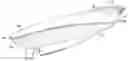
FIG. 1 is a perspective view of a non-planing boat hull in accordance with the present invention generally showing a forward portion having a bow and an aft portion having a stern along with a keel disposed along a hull centerline;
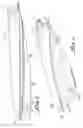
FIG. 2 is a side view of the hull shown in FIG. 1;
FIG. 3 is a side view similar to FIG. 2 detailed with index lines and dimensions;
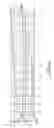
FIG. 4 is a plan view of the non-planing hull in accordance with the present invention clearly illustrating a teardrop shaped waterline and a teardrop shaped volume displacement along with index lines corresponding to those shown in FIG. 3;
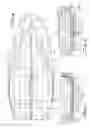
FIG. 5 is a rear plan view of the boat hull in accordance with the present invention detailed with index lines and dimensions corresponding to those shown in FIGS. 3 and 4; and
FIG. 6 is a front view of the hull in accordance with the present invention illustrated with index lines and dimensions corresponding to the index lines shown in FIGS. 3-5.
DETAILED DESCRIPTIONWith reference to FIGS. 1 and 2, there is shown a non-planing boat hull 10 in accordance with the present invention which generally includes a forward portion 12 having a bow 14 with the forward portion 12 having a width tapering smaller from a beam indicated as index number 7 on FIG. 3 toward the bow as is most clearly shown in FIG. 4.
An aft portion 18 includes a stern 20 and the aft portion includes a width tapering smaller from the beam toward the stern 20.
It should be appreciated that the hull 10 is preferably formed from conventional marine fiberglass materials and, as shown includes no chines or strakes.
A keel 24 is formed along a centerline (see FIG. 4) and includes a back 32 for supporting a propeller shaft 34 and includes a forward portion 38 tapering smaller towards a bow 14, as most clearly shown in FIGS. 1-3.
FIGS. 3-6 include index numbers as shown along with dimensions, particularly describing the shape of the non-planning boat hull 10 in accordance with the present invention, the dimensions enabling a hull 10 to have a teardrop shaped waterline, as well as a teardrop shaped displacement volume as represented by the line 50 in FIG. 4.
Importantly, these teardrop shaped waterline replacement volume remain constant independent of hull speed up to about 6 knots. Corresponding volume displacement shapes indicated by the line 52 illustrates that despite loading of the hull, the teardrop shaped displacement remains relatively constant.
Fore topsides 54 extend from the beam to the bow 14 and include an arcuate convex transition to the hull forward portion 12, as most clearly shown in FIG. 6.
Aft topsides 58 extend from the beam to the stern 20 and include an arcuate concave transition 62 to the aft hull portion 18, as most clearly shown in FIG. 5.
In addition, the aft topsides 58 form approximately a 90° angle with a transom 66 and, as further shown in FIG. 5, the aft topsides 58 join the hull aft portion with a convex surface 70 near the waterline 46.
As is also evident from FIGS. 5 and 6, the hull forward and aft portions 12, 18 form a relatively flat bottom 74 with stability provided by the keel 24.
Thus, wile the hull design provides for movement through water with little or no wake, the keel provides for stability and maneuverability, especially at low speeds.
Although there has been hereinabove described a specific non-planing boat hull in accordance with the present invention for the purpose of illustrating the manner in which the invention may be used to advantage, it should be appreciated that the invention is not limited thereto. That is, the present invention may suitably comprise, consist of, or consist essentially of the recited elements. Further, the invention illustratively disclosed herein suitably may be practiced in the absence of any element, which is not specifically disclosed herein. Accordingly, any and all modifications, variations or equivalent arrangements which may occur to those skilled in the art, should be considered to be within the scope of the present invention as defined in the appended claims.
Claims
What is claimed is:1. A non-planing boat hull comprising:
a forward portion having a bow, said forward portion having a width tapering smaller from a beam toward said bow;
an aft portion having a stern, said aft portion having a width tapering smaller from the beam toward said stern;
a keel disposed along a hull centerline, said keel having a back supporting a propeller shaft and a forward height tapering smaller toward said bow;
fore topsides extending from said beam to said bow and including an arcuate convex transition to the hull forward portion;
aft topsides extending from said beam to said stern and including an arcuate concave transition to the hull aft portion, said aft topside forming approximately a 90° angle with a transom, said aft topsides joining with the hull aft portion with a convex surface near a waterline of said hull.
2. The hull according to claim 1 wherein the hull forward and aft position from a teardrop shaped waterline.
3. The hull according to claim 2 wherein the hull forward and aft portion form a relatively flat bottom.
4. The hull according to claim 2 wherein the waterline is unchanged at hull speed up to about 6 knots.
5. The hull according to claim 1 wherein the hull forward and aft portion from a teardrop shaped displacement volume.
6. The hull according to claim 5 wherein the hull forward and aft portion form a relatively flat bottom.
7. The hull according to claim 6 wherein the displacement volume is unchanged at hull speeds up to about 6 knots.
8. A non-planing boat hull comprised:
a forward chineless and strakeless portion having a bow, said forward portion having a width tapering smaller from a beam toward said bow;
an aft chineless and strakeless portion having a stern, said aft portion having a width tapers smaller from the beam toward the stern;
a keel disposed along a hull centerline, said keel having a back supporting a propeller shaft and a forward height tapering smaller toward said bow;
fore topsides extending from said beam to said bow and including an arcuate convex transition to the hull forward portion;
aft topsides extending from said beam to said stern and including an arcuate concave transition to the hull aft portion, said aft topside forming approximately a 90° angle with a transom, said aft topsides joining with said aft portion with a convex surface near a waterline of said hull.
9. The hull according to claim 8 wherein the hull forward and aft position from a teardrop shaped waterline.
10. The hull according to claim 9 wherein the hull forward and aft portion form a relatively flat bottom.
11. The hull according to claim 9 wherein the waterline is unchanged at hull speed up to about 6 knots.
12. The hull according to claim 8 wherein the hull forward and aft portion from a teardrop shaped displacement volume.
13. The hull according to claim 12 wherein the hull forward and aft portion form a relatively flat bottom.
14. The hull according to claim 12 wherein the displacement volume is unchanged at hull speeds up to about 6 knots.
Images & Drawings included:
Sources:
- United States Patent and Trademark Office - verify current appl. status at the USPTO↗
Recent applications in this class:
- » 20250019037 2025-01-16
Floating Foundation For An Offshore Wind Turbine - » 20230192236 2023-06-22
WATER CRAFT AND METHOD FOR MANUFACTURING SUCH A WATER CRAFT - » 20230174195 2023-06-08
PLEASURE CRAFT HAVING AN IMPROVED DECK CONSTRUCTION - » 20220388605 2022-12-08
Hull auxiliary mechanism for reducing the draft of a hull - » 20210291933 2021-09-23
ENVIRONMENTALLY FRIENDLY BOAT HAVING A SAFETY-ENHANCING HULL STRUCTURE - » 20180339748 2018-11-29
Unmanned semi-submarine - » 20170210445 2017-07-27
Personal watercraft - » 20140083346 2014-03-27
Wakesurfing boat and hull for a wakesurfing boat - » 20130319309 2013-12-05
System for producing energy through the action of waves - » 20120227652 2012-09-13
Vessel