Weaved article or garment and method of making weaved article or garment
US20060231153A1
2006-10-19
11/244,199
2005-10-06
✅ Patent granted
US 7,264,023 B2
2007-09-04
-
-
Gary L. Welch | Robert H. Muromoto
2025-10-06
Abstract:
The invention is directed to a brand new and unexpected textured fabric or textile that can be used to provide articles of clothing (for humans and/or animals), wall hangings, home decorating articles, headwear, footwear, etc. The present invention transforms one dimensional fabric or textile into three dimensional fabric or textile tubes having height, breadth, width, length and depth, which can in turn be weaved into an unlimited array of garments, articles of clothing, fabrics for hanging up on walls, etc.
Interested in similar patents?
Get notified when new applications in this technology area are published.
Classification:
D03D41/00 IPC
Looms not otherwise provided for, e.g. for weaving chenille yarn; Details peculiar to these looms
D03D13/00 » CPC main
Woven fabrics characterised by the special disposition of the warp or weft threads, e.g. with curved weft threads, with discontinuous warp threads, with diagonal warp or weft
D03D13/002 » CPC further
Woven fabrics characterised by the special disposition of the warp or weft threads, e.g. with curved weft threads, with discontinuous warp threads, with diagonal warp or weft With diagonal warps or wefts
D03D15/46 » CPC further
Woven fabrics characterised by the material, structure or properties of the fibres, filaments, yarns, threads or other warp or weft elements used characterised by the structure of the yarns or threads with specific cross-section or surface shape Flat yarns, e.g. tapes or films
D03D15/49 » CPC further
Woven fabrics characterised by the material, structure or properties of the fibres, filaments, yarns, threads or other warp or weft elements used characterised by the structure of the yarns or threads textured ; curled; crimped
D03D25/005 » CPC further
Woven fabrics not otherwise provided for Three-dimensional woven fabrics
D10B2211/02 » CPC further
Protein-based fibres, e.g. animal fibres; Natural animal fibres, e.g. keratin fibres Wool
D10B2331/02 » CPC further
Fibres made from polymers obtained otherwise than by reactions only involving carbon-to-carbon unsaturated bonds, e.g. polycondensation products polyamides
D10B2501/00 » CPC further
Wearing apparel
D10B2501/042 » CPC further
Wearing apparel; Outerwear; Protective garments Headwear
D10B2501/043 » CPC further
Wearing apparel; Outerwear; Protective garments Footwear
Y10T442/3041 » CPC further
Fabric [woven, knitted, or nonwoven textile or cloth, etc.]; Woven fabric [i.e., woven strand or strip material]; Including a strip or ribbon Woven fabric comprises strips or ribbons only
D03D51/34 IPC
Driving, starting, or stopping arrangements; Automatic stop motions; Automatic stop motions Weft stop motions
D03D15/00 » CPC further
Woven fabrics characterised by the material, structure or properties of the fibres, filaments, yarns, threads or other warp or weft elements used
D03D25/00 IPC
Woven fabrics not otherwise provided for
D03D31/00 IPC
Lappet, swivel or other looms for forming embroidery-like decoration on fabrics
Description
CROSS-REFERENCE TO RELATED APPLICATIONSThis application claims the benefit of priority from U.S. Provisional Patent Application Ser. No. 60/616,124, filed Oct. 6, 2004, the entire contents of which are incorporated herein by reference.
FIELD OF THE INVENTIONThe present invention relates generally to weaved articles and garments. More specifically, the invention is methods of making a weaved article or garment, and a weaved article or garment that is made by the methods of the present invention.
BACKGROUND OF THE INVENTIONThe basic function of the clothing industry is to provide suitable exterior attire for humans and animals. Another function of the clothing industry, particularly with regard to the contemporary age, is to provide fashionable clothing, which makes a person feel good and/or look good. There is a need for new clothing styles and fashions to satisfy real or latent demand for such items. In addition, there is a need for new garments, fabrics and new methods of making garments and fabrics.
SUMMARY OF THE INVENTIONThe present invention is methods of making a weaved article or garment suitable for wearing by humans or animals, and a weaved article or garment that is made by the methods of the present invention.
A first method of making a weaved article or garment includes the steps of:
1) providing a plurality of sections of natural or synthetic fabric or textiles;
2) folding each section to provide a plurality of folded sections;
3) seaming each folded section to provide a plurality of seamed tubes;
4) turning each seamed tube inside out; and
5) weaving the inside out seamed tubes to provide a weaved article or garment.
A second method of making a weaved article or garment includes the steps of:
1) providing a plurality of sections of natural or synthetic fabric or textiles;
2) folding each section to provide a plurality of folded sections;
3) seaming each folded section to provide a plurality of seamed tubes; and
4) weaving the seamed tubes to provide a weaved article or garment.
A first embodiment of a weaved article or garment of the present invention is a weaved article or garment that is made by the first method described above.
A second embodiment of a weaved article or garment of the present invention is a weaved article or garment that is made by the second method described above.
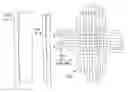
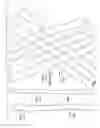
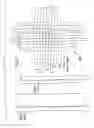
BRIEF DESCRIPTION OF DRAWINGSFIGS. 1 and 2 show methods of making a weaved article or garment according to the present invention.
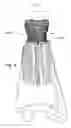
FIG. 3 shows a front view of a weaved garment that includes a plurality of waved seamed tubes according to the present invention.
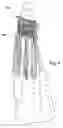
FIG. 4 shows a side view of the garment of FIG. 3.
It should be understood that the attached figures do not limit the scope of the present invention in any way.
DETAILED DESCRIPTION OF THE PRESENT INVENTIONThe present invention is methods of making a weaved article or garment, and a weaved article or garment that is made by the methods of the present invention.
Examples of methods of making a weaved article or garment according to the present invention is shown in FIGS. 1 and 2. An example of a weaved article or garment that is made by a method of the present invention is shown in FIGS. 3 and 4. It should be understood that the present invention is not limited to the weaved article or garment and methods of making a weaved article or garment shown in FIGS. 1 through 4. Humans or animals can wear the articles, garments and/or fabrics of the present invention.
Referring to the FIGURES in general and FIG. 1 in particular, a section of fabric 100 is folded to provide a folded section 120, which is then seamed, and optionally turned inside out, to provide a seamed tube. A plurality of inside out seamed tubes is weaved to provide a weaved article or cloth 140. Different patterns of weaved articles can be made such as a square weaved pattern 160 which comprises a plurality of inside out seamed tubes (see FIG. 2).
FIG. 3 shows a weaved garment 170 that includes a plurality of waved seamed tubes 180, and FIG. 4 shows a side view of the garment 170.
A first method of making a weaved article or garment includes the steps of:
1) providing a plurality of sections of natural or synthetic fabric or textiles, including but not limited to cloth, fur, faux fur, plastic, and wool;
2) folding each section to provide a plurality of folded sections;
3) seaming each folded section to provide a plurality of seamed tubes;
4) turning each seamed tube inside out; and
5) weaving the inside out seamed tubes to provide a weaved article or garment, including but not limited to inches or yards of fabric woven into a variety of styles, including but not limited to the “basket weave,” “diamond weave,” and “triangle weave.”
A second method of making a weaved article or garment includes the steps of:
1) providing a plurality of sections of natural or synthetic fabric or textiles, including but not limited to cloth, fur, faux fur, plastic, and wool;
2) folding each section to provide a plurality of folded sections;
3) seaming each folded section to provide a plurality of seamed tubes; and
4) weaving the seamed tubes to provide a weaved article or garment, including but not limited to inches or yards of fabric woven into a variety of style, including but not limited to the “basket weave,” “diamond weave,” and “triangle weave.”
A first embodiment of a weaved article or garment of the present invention is a weaved article or garment that is made by the first method described above.
A second embodiment of a weaved article or garment of the present invention is a weaved article or garment that is made by the second method described above.
In another embodiment of the present invention, a process of transforming one dimensional fabric or textiles into multidimensional tubes having height, breadth, depth and width is achieved by the process of:
-
- 1. starting with any existing natural or synthetic fabric or textiles, including but not limited to cloth, fur, faux fur, plastic (e.g., nylon), wool, cut or rip into vertical, horizontal or circular strips of any suitable length and/or width;
- 2. on the wrong (or right) side of the fabric or textile, seam lengthwise along edges seam ends as much as possible to create one or more tubes; and
- 3. using a fabric turner or other instrument, turn the seamed fabric tube9s) onto the right or opposite sides to provide one or more fabric tubes, which can be weaved into a variety of styles, including but not limited to, inches or yards of fabric woven into, for example, “basket weave”, “diamond weave”, “triangle weave”, etc.
The Applicant believes that she has created a brand new and unexpected textured fabric or textile that can be used to provide articles of clothing (for humans and/or animals), wall hangings, home decorating articles, headwear, footwear, etc. The present invention transforms one dimensional fabric or textile into three dimensional fabric or textile tubes having height, breadth, width, length and depth, which can in turn be weaved into an unlimited array of garments, articles of clothing, fabrics for hanging up on walls, etc.
The term “article” is intended to cover any kind of article that comprises a plurality of weaved tubes of the present invention. Non-limiting examples of such articles include: headwear, footwear, wall hangings, home decorations, a piece of cloth, and garments comprising a plurality of weaved tubes of the present invention.
A piece of cloth made by the method of the present invention can be used, for example, in making a dress, wherein the dress comprises different pieces of cloth, some of which may be prior art pieces of cloth. Thus, it should be understood, that the invention is intended to cover any article that is part made with a piece of cloth made by the method of the present invention.
The term “garment” is intended to cover clothing for human or animal use (e.g., a dog coat that wraps around the main part of a dog's body) that comprises a plurality of tubes according to the present invention. Thus, the term “article” is far broader than the term “garment”.
The unique feature of this invention is that it transforms any regular one dimensional fabric or textile into a three dimensional fabric or textile tube having height, breadth, width, length and depth; the invention creates an unexpected three dimensional look to the weaved article. After many fabric tubes are created, they are then woven together to create a completely new textured fabric or textile which gives articles, including but not limited to clothing, rugs, wall hangings, home decorating articles, footwear, and headwear, a distinctive look and feel.
In one aspect of the present invention a method of making a weaved article or garment, the method comprises the steps of: providing a plurality of generally elongated sections of natural or synthetic fabric or textiles; folding each section to provide a plurality of folded sections; seaming each folded section to provide a plurality of seamed tubes; and weaving the seamed tubes to provide said weaved article. This method can be used, for example, to produce a piece of cloth and/or a garment.
It is to be understood that the present invention is not limited to the embodiments described above, but encompasses any and all embodiments within the scope of the following claims.
Claims
1. A method of making a weaved article or garment, the method comprising the steps of:
providing a plurality of sections of natural or synthetic fabric or textiles;
folding each section to provide a plurality of folded sections;
seaming each folded section to provide a plurality of seamed tubes; and
weaving the seamed tubes to provide said weaved article.
2. A piece of cloth produced by the method of claim 1.
3. A garment produced by the method of claim 1.
4. A method of making a weaved article or garment, the method comprising the steps of:
providing a plurality of sections of natural or synthetic fabric or textiles;
folding each section to provide a plurality of folded sections;
seaming each folded section to provide a plurality of seamed tubes;
turning each seamed tube inside out; and
weaving the inside out seamed tubes to provide a weaved article or garment.
5. A piece of cloth produced by the method of claim 4.
6. A garment produced by the method of claim 4.
7. A method of making a weaved article or garment, the method comprising the steps of:
providing a plurality of generally elongated sections of natural or synthetic fabric or textiles;
folding each section to provide a plurality of folded sections;
seaming each folded section to provide a plurality of seamed tubes; and
weaving the seamed tubes to provide said weaved article.
8. A piece of cloth produced by the method of claim 7.
9. A garment produced by the method of claim 7.
Images & Drawings included:
Sources:
- United States Patent and Trademark Office - verify current appl. status at the USPTO↗
Recent applications in this class:
- » 20250179696 2025-06-05
FIBER STRUCTURE FOR FIBER-REINFORCED COMPOSITE MATERIAL - » 20240263364 2024-08-08
8-PLY FABRIC WARP MOVEMENT - » 20230228009 2023-07-20
FABRIC AND METHOD OF MAKING THE SAME - » 20230096264 2023-03-30
Method for pattern-directed formation of the connection point of an effect thread in the woven fabric - » 20210238776 2021-08-05
Partial float weave fabric - » 20200040490 2020-02-06
FIBERS, WOVEN FABRICS INCLUDING THE FIBERS, AND METHODS OF MANUFACTURING THE SAME - » 20190062960 2019-02-28
Hollow fabric and manufacturing method thereof - » 20190017198 2019-01-17
Transport or drive belt and weaving comb suitable for the production thereof - » 20170233904 2017-08-17
Unitary woven fabric construct of multiple zones - » 20170218541 2017-08-03
Multi-carrier, zonal weaving system, method, and material