Group IIIb metal complexes with “constrained geometry” fluorenyl based ligands
US20060264586A1
2006-11-23
10/548,506
2004-03-04
✅ Patent granted
US 7,388,062 B2
2008-06-17
WO; PCT/EP2004/002378; 20040304
WO; WO2004/078795; 20040916
Caixia Lu
2024-03-04
Abstract:
The present invention discloses a metallocene catalyst component based on a Group IIIb metal of the periodic Table and a bridged heteroatom-fluorenyl ligand. It also discloses its method of preparation and its use in polymerisation.
Inventors:
- Jean-François Carpentier 55 🇫🇷 Acigne, France
- Abbas Razavi 98 🇧🇪 Mons, Belgium
- Evgueni Kirillov 3 🇩🇪 Erlangen, Germany
Assignee:
- Fina Technology, Inc. 681 🇺🇸 Houston, TX, United States
Interested in similar patents?
Get notified when new applications in this technology area are published.
Classification:
C08F10/00 » CPC further
Homopolymers and copolymers
C08F10/00 » CPC further
Homopolymers and copolymers of unsaturated aliphatic hydrocarbons having only one carbon-to-carbon double bond
C08F4/52 » CPC main
Polymerisation catalysts; Metals; Metal hydrides; Metallo-organic compounds; Use thereof as catalyst precursors selected from light metals, zinc, cadmium, mercury, copper, silver, gold, boron, gallium, indium, thallium, rare earths or actinides selected from boron, aluminium, gallium, indium, thallium or rare earths
C08F20/12 » CPC further
Homopolymers and copolymers of compounds having one or more unsaturated aliphatic radicals, each having only one carbon-to-carbon double bond, and only one being terminated by only one carboxyl radical or a salt, anhydride, ester, amide, imide or nitrile thereof; Monocarboxylic acids having less than ten carbon atoms, Derivatives thereof; Esters of monohydric alcohols or phenols
C08F4/619 » CPC further
Polymerisation catalysts; Metals; Metal hydrides; Metallo-organic compounds; Use thereof as catalyst precursors selected from light metals, zinc, cadmium, mercury, copper, silver, gold, boron, gallium, indium, thallium, rare earths or actinides together with refractory metals, iron group metals, platinum group metals, manganese, rhenium technetium or compounds thereof Component covered by group containing a transition metal-carbon bond
C08F4/44 IPC
Polymerisation catalysts; Metals; Metal hydrides; Metallo-organic compounds; Use thereof as catalyst precursors selected from light metals, zinc, cadmium, mercury, copper, silver, gold, boron, gallium, indium, thallium, rare earths or actinides
B01J31/00 IPC
Catalysts comprising hydrides, coordination complexes or organic compounds
C08F4/6392 IPC
Polymerisation catalysts; Metals; Metal hydrides; Metallo-organic compounds; Use thereof as catalyst precursors selected from light metals, zinc, cadmium, mercury, copper, silver, gold, boron, gallium, indium, thallium, rare earths or actinides together with refractory metals, iron group metals, platinum group metals, manganese, rhenium technetium or compounds thereof; Refractory metals or compounds thereof; Component covered by group containing a transition metal-carbon bond containing at least one cyclopentadienyl ring, condensed or not, e.g. an indenyl or a fluorenyl ring
Description
The present invention relates to the field of “constrained geometry catalyst” systems based on Group IIIb metals of the Periodic Table. It also relates to their synthesis and their use in olefin polymerisation.
“Constrained geometry catalysts” (CGC) are half-sandwich complexes bearing hetero-bifunctional cyclopentadienyl-amido ligands. They have attracted much attention owing to several reasons:
-
- replacing of a cyclopentadienyl moiety in linked bis(cyclopentadienyl) ligands by a less electron-donating amido group results in the formation of ansa-metallocene-like complexes with higher Lewis acidity; and therefore potentially enhanced catalytic activity towards Lewis basic substrates.
- there are many more possibilities to design new catalytic geometries by selecting appropriate substituents on the cyclopentadienyl ring, on the bridging atom and on the heteroatom of the side chain.
The synthesis and polymerisation abilities of cyclopentadienyl-amido complexes of group III metals (Sc, Y, Yb, Lu) have been described for example in Shapiro et al. (P. J. Shapiro, W. D. Cotter, W. P. Schaefer, J. A. Labinger, J. E. Bercaw; in J. Am. Chem. Soc., 1994, 116, 4623.) or in Hultzsch et al. (K C. Hultzsch, P. Voth, K. Beckerle, T. P. Spaniol, J. Okuda; in Organometallics, 2000, 19, 228.), or in Tian et al. (S. Tian, V. M. Arredondo, C. L. Stern, T. J. Marks; in Organometallics, 1999, 18, 2568.), or in Mu et al. (Y. Mu, W. Piers, M.-A. MacDonald, M. J. Zaworotko; in Can. J. Chem., 1995, 73, 2233.) or in Arndt and Okuda (S. Arndt, J. Okuda, in Chem. Rev., 2002, 102, 1953.)
All these publications however were limited to lantanide compounds with combined cyclopentdienyl-amido ligands. None has addressed the field of fluorenyl-amido ligands.
It is an object of the present invention to prepare in good yield bridged half-sandwich metallocene components based on fluorenyl-heteroatom ligands and based on Group IIIb metals of the Periodic Table.
It is another aim of the present invention to prepare catalyst components efficient in the controlled polymerisation of styrene.
It is a further aim of the present invention to prepare catalyst components capable of preparing polymethylmethacrylate.
More generally, the present invention aims at preparing catalyst systems efficient in the controlled polymerisation of polar or non polar monomers.
Accordingly, the present invention discloses a metallocene catalyst component based on a Group IIIb metal of the Periodic Table and a bridged constrained geometry fluorenyl-based ligand.
In a first embodiment, the present invention discloses a metallocene catalyst component of the general formula
[(Flu-SiR2—N—R′)M(R″)(L)n]m (I)
wherein Flu is a fluorenyl, substituted or unsubstituted, M is a Group IIIb metal of the Periodic Table, SiR2 is a structural bridge between N and Flu (9-position) imparting stereorigidity to the component wherein each R is the same or different and is an alkyl having from 1 to 20 carbon atoms, R′ is hydrogen or is of the form ZR$13 wherein Z is C or Si and R$ is a hydrocarbyl having from 1 to 20 carbon, R″ is hydrogen, or a hydrocarbyl having from 1 to 20 carbon atoms, said hydrocarbyl possibly containing one or more Si atoms, or is a halogen, L is a co-ordinating solvent, n is 0, 1 or 2, and m is 1 or 2.
The substituents on the fluorenyl are not particularly limited, they can be the same or different and are of the form ZR$3 as defined here-above; they include particularly hydrocarbyls having from 1 to 20 carbon atoms. Preferably, they are located at positions 3 and 6, or at positions 4 and 5, or at positions 2 and 7 and more preferably, they are the same.
M is preferably yttrium, lanthanum or a member of the lanthanide series. Throughout this description, the term “lanthanide series” means the rare earth series of elements having atomic numbers of from 58 to 71. In the lanthanide series M is preferably neodymium, samarium. More preferably, M is yttrium.
Preferably, N is substituted and more preferably, the substituent is tert-butyl.
Preferably, R″ is hydrogen or an alkyl or an aryl or an allyl or a halogen, and m is 1 when R″ is an alkyl or an aryl or an allyl, m is 2 when R″ is hydrogen or a halogen. When R″ is a halogen, it is preferably Cl, I, or Br.
The co-ordinating solvent is typically an ether such as for example tetrahydrofuran (THF), dimethoxyether (DME) or diethyl oxide (Et2O).
In order to be active in polymerization, compounds of type (I), wherein R″ is a halogen must be alkylated first with an adequate reagent. Typical reagents can be selected from LiR*, R*MgX, MgR*2, AlR*3, AlR*nX3-n, [Li]+[AIR*nX3-n]− and methylalumoxane (MAO), wherein R* is an alkyl, aryl or allyl having from 1 to 20 carbon atoms and X is a halogen, preferably Cl. This list should not be considered as limitative.
In a second embodiment, the present invention discloses a metallocene catalyst component of the general formula
[(Flu-SiR2—N—R′)2M]−[Q(L)p]+ (II)
wherein all symbols are as defined in formula (I), Q is an alkali, an earth alkali or a Group IIIa metal of the Periodic Table and p is from 2 to 4.
Q is preferably Li, Na, Mg or Al.
When the ion-pair in complex II is fully dissociated, p is 4 and when the ion-pair is partially associated, p is 2 or 3.
The present invention discloses a first method, based on a salt metathesis reaction method for preparing the catalyst components (I) or (II) that comprises the steps of:
-
- a) suspending MX3(THF)n in an ether;
- b) suspending a deprotonated dilithium salt [Flu-SiR2—N—R′]Li2 in the same or another ether;
- c) carrying out the salt metathesis reaction of suspensions a) and b) at a temperature of from −80° C. to 60° C.
- d) recrystallising the crude product obtained in c) after evaporation of volatiles from an ether or a mixture of an ether and an hydrocarbon at a temperature of from −60 to −0° C.;
- e) retrieving a crystalline powder of formula (I) or (II)
In another embodiment of the present invention, complex (I) wherein R″ is a halogen, can comprise the additional step of alkylation with an alkylating agent to give complex (I) wherein R″ is a hydrocarbyl as defined above.
Suitable alkylating agent can be selected from LiR+, R+MgX, MgR+2, AIR+3, AIR+nX3-n and [Li]+[AIR+nX3-n]− wherein R+ is an alkyl, an aryl or an allyl having from 1 to 20 carbon atoms and X is a halogen, preferably Cl.
The present invention discloses a second method, based on an alkane elimination reaction, for preparing specifically the catalyst component
[(Flu-SiR2—N—R′)M(R″)(L)n]m (I)
wherein R″ is specifically a hydrocarbyl having from 1 to 20 carbon atoms, said hydrocarbyl possibly containing one or more Si atoms, that comprises the steps of reacting the triscarbyl complex M(R″)3(L)n, either presynthesised or generated in situ, with one equivalent of the diproteo ligand (FluH—SiR2—NH—R′).
The triscarbyl complex M(R″)3(L)n is preferably generated in situ as the reaction product of MCl3(THF)n and 3 equivalents of LiR″. The reaction temperature for the preparation of complex (I) is of from 0° C. up to 75° C. and preferably of from 40 to 50° C. For the second method of preparation described here-above, M is preferably Yttrium and the bridge SiR2, is preferably a dialkyl silyl.
These two methods can comprise the additional step of hydrogenolising carbyl complex (I) to prepare complex
[(Flu-SiR2—N—R′)M(H)(L)n]m (I′)
Suitable hydrogenolising agents can be selected from dihydrogen or an hydrosilane, e.g. phenylsilane. The reaction is preferably carried out at room temperature at about 25° C. and at atmospheric pressure in an hydrocarbon solvent, e.g. benzene or toluene. The reaction product is insoluble in both polar (ethers) and non-polar (hydrocarbons) solvents.
The present invention further discloses a catalyst system based upon any one or more of catalyst components of formulas (I) and/or (II) and a suitable activating agent and/or a transfer agent.
The present invention discloses a process for polymerisation comprising the steps of:
-
- a) introducing a catalyst system based on any one or more of catalyst components of formulas (I) and/or (II) in the reactor,
- b) optionally introducing an activating agent or a transfer agent in the reactor,
- c) feeding a monomer and an optional comonomer,
- d) maintaining the system under polymerisation conditions,
- e) retrieving the desired polymer.
The optional activating agent includes Lewis acids having an ionising action and having a low or no coordinating capability. Typically, all the activators used with the metals Group IV of the Periodic Table can be used in the present invention. Suitable aluminium-containing activating agents comprise an alumoxane an aluminium alkyl or an alkylaluminate [Li]+[AIR*nX3-n]−
The alumoxanes that can be used in the present invention are well known and preferably comprise oligomeric linear and/or cyclic alkyl alumoxanes represented by the formula (III):
for oligomeric linear alumoxanes; and formula (IV)
for oligomeric cyclic alumoxanes,
wherein n is 1-40, preferably 10-20; m is 3-40, preferably 3-20; and R is a C1-C8 alkyl group, preferably methyl. Generally, in the preparation of alumoxanes from, for example, aluminium trimethyl and water, a mixture of linear and cyclic compounds is obtained.
Suitable boron-containing activating agents may comprise a triphenylcarbenium boronate, such as tetrakis-pentafluorophenyl-borato-triphenylcarbenium as described in EP-A-0427696:
or those of the general formula below, as described in EP-A-0277004 (page 6, line 30 to page 7, line 7):
Other preferred activating agents include hydroxy isobutylaluminium and a metal aluminoxinate.
Alkylating agents of the type MgR=2 can also be used as activating agents, wherein each R= is the same or different and is a hydrocarbyl having from 1 to 20 carbon atoms, and optionally containing one or more Si atoms
The transfer agents comprise for example H2 and hydrosilanes of the formula HSiR′″3 wherein each R′″ is the same or different and is either an H atom or a hydrocarbyl having from 1 to 20 carbon atoms. They are selected in accordance with the monomer to be polymerised.
The monomers that can be used in the present invention include non polar monomers such as for example ethylene, alpha-olefins, styrene and polar monomers such as for example (meth)acrylates or dienes. Preferably, styrene and methyl methacrylate have been used.
The catalyst system of the present invention may be employed in any type of homo- or co-polymerisation method, provided that the required catalytic activity is not impaired. In a preferred embodiment of the present invention, the catalyst system is employed in a bulk polymerisation process or in a solution polymerisation process, which is homogeneous, or in a slurry process, which is heterogeneous. In a solution process, typical solvents include THF or hydrocarbons having from 4 to 7 carbon atoms such as heptane, toluene or cyclohexane. In a slurry process, it is necessary to immobilise the catalyst system on an inert support, particularly a porous solid support such as talc, inorganic oxides and resinous support materials such as polyolefin. Preferably, the support material is an inorganic oxide in its finely divided form.
Suitable inorganic oxide materials that are desirably employed in accordance with this invention include group IIA, IIIA, IVA, or IVB metal oxides such as silica, alumina and mixtures thereof. Other inorganic oxides that may be employed, either alone or in combination with the silica or alumina, are magnesia, titania, zirconia, and the like. Other suitable support materials, however, can be employed, for example, finely divided functionalised polyolefins such as finely divided polyethylene.
Preferably, the support is a silica support having a surface area of from 200-700 m2/g and a pore volume of from 0.5-3 ml/g.
The polymerisation temperatures range from −20° C. up to 100° C.
The present invention also covers the polymers obtainable by polymerisation in the presence of the catalysts components described hereabove.
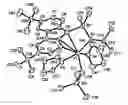
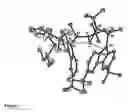
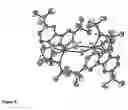
LIST OF FIGURESFIG. 1 represents the crystal structure of the molecule [3,6-di-tBu—C13H6—SiMe2—NtBu]Y(CH2SiMe3)(THF)2 (1).
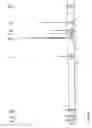
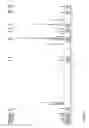
FIG. 2 represents the 1H NMR spectrum of complex[3,6-di-tBu—C13H6—SiMe2—NtBu]Y(CH2SiMe3)(THF)2 (1) in C6D6 at 25° C.
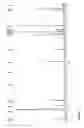
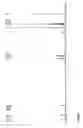
FIG. 3 represents the 13C NMR spectrum of complex ([3,6-di-tBu—C13H6—SiMe2—NtBu]Y(CH2SiMe3)(THF)2 (1) in C6D6 at 25° C.
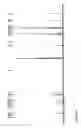
FIG. 4 represents the 1H NMR spectrum of complex [3,6-di-tBu—C13H6—SiMe2—NtBu]Y(CH2SiMe3)(THF)2 (1) in C6D6 at −70° C.
FIG. 5 represents the 1H NMR spectrum of complex [{(tBu2-C13H6)—SiMe2—NtBu}2Y]−[Li(THF)4]+ (2) in THF-d8 at 25° C.
FIG. 6 represents the 13C NMR spectrum of complex [{(tBu2—C13H6)—SiMe2—NtBu}2Y]−[Li(THF)4]+ (2) in THF-d8 at 25° C.
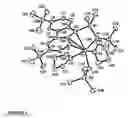
FIG. 7 represents the crystal structure of the molecule [{3,6-di-tBu—C13H6—SiMe2—NtBu}2La]−[Li(OEt2)2]+ (4)
FIG. 8 represents the crystal structure of the molecule [(3,6-di-tBu—C13H6—SiMe2—NtBu)Nd(μ-Cl)(THF)]2 (5).
EXAMPLES Synthesis of [3,6-di-tBu—C13H6—SiMe2—NtBu]Y(CH2SiMe3)(THF)2 (1)
-
- (a) NMR scale reaction: An NMR tube equipped with a teflon valve was charged with Y[CH2SiMe3)]3(THF)2 (32.4 mg, 0.065 mmol) and 3,6-di-tBu—C13H6H—SiMe2—NHtBu (26.7 mg, 0.065 mmol) and benzene-d6 (˜0.6 mL) was condensed in at −196° C. The tube was stopped with valve and heated to room temperature. Progress of the reaction was monitored periodically by 1H NMR spectroscopy.
- (b) Preparative scale reaction: Anhydrous YCl3 (338 mg, 1.73 mmol) was slurried in THF (15 mL) and stirred at 80° C. for 1 h. The solvent was removed in vacuo and the solid residue was suspended in pentane (20 mL). The suspension was cooled to −78° C., a solution of LiCH2SiMe3 (5.2 mL of a 1M solution in pentane, 5.2 mmol) was added, and the suspension was stirred at 0° C. for 2 h. The suspension was filtered and the white solid was extracted with pentane (2×10 mL). LiCl was filtered off and a solution of 3,6-di-tBu—C13H6H—SiMe2—NHtBu (578 mg, 1.42 mmol) in pentane (30 mL) was added at 0° C. The reaction mixture was warmed to room temperature and stirred for 30 h. The solution was filtered and concentrated in vacuo. The crude product was [C13H6—SiMe2-NtBu]Y(CH2SiMe3)(THF)2 (1) (0.63 g, 68%). The 1H NMR spectrum of complex (1) is represented in FIG. 2 and gave the following results: (benzene-d6, 200 MHz, 25° C.): δ 8.34 (d, 2H, 4JHH=2.0 Hz, 4,5−H), 7.97 (d, 2H, 3JHH=8.3 Hz, 1,8-H), 7.57 (dd, 2H, JHH=2.0, 8.3 Hz, 2,7-H), 3.0 (m, 8H, α-CH2, THF) 1.61 (s, 9H, NCCH3), 1.50 (s, 18H, CCH3(Flu)), 1.17 (m, 8H, β-CH2, THF), 0.78 (s, 6H, SiCH3), 0.00 (s, 9H, CH2SiCH3), −0.89 (d, JYH=3.3 Hz, 2H, YCH2). The 13C NMR of complex (1) is represented in FIG. 3 and gave the following results. (benzene-d6, 75 MHz, 25° C.): δ 140.7, 139.4, 130.3, 123.9, 117.8, 116.7, 115.5 (C-1,-2, -3, -4, -5, -6, -7, -8), 82.2 (C-9), 69.7 (α-THF), 54.3 (NCCH3), 36.4 (NCCH3), 34.7 (Flu-CCH3), 32.3 (Flu-CCH3), 30.2 (d, 1J(Y, C)=45.2 Hz, YCH2), 25.1 (β-THF), 6.2 (SiCH3), 4.6 (CH2SiCH3). The 1H NMR spectrum of complex (1) (benzene-d6, 200 MHz, −70° C.) is represented in FIG. 3. The NMR spectroscopy thus indicates that on the NMR time scale, complex (1) is symmetric in benzene at 25° C., but appears dissymmetric at a temperature lower than −30° C.
An X-ray diffraction study of monocrystals of complex (1) revealed that the fluorenyl moiety is bonded via an unusual exocyclic η3-fashion, which involves the bridgehead carbon atom of the central ring (C(9A)) and the two adjacent carbon atoms of one six-membered ring (C(9), C(1)), wherein the carbon atoms are numbered as displayed in FIG. 1, which represents the structure of molecule (1). There are two THF molecules coordinated per metal atom in molecule (1) as compared with 14-electron mono-solvated [η5: η1-C5Me4—SiMe2—NtBu]Y(CH2SiMe3)(THF) complex described by Hultzsch et al. (K. C. Hultzsch, P. Voth, K. Beckerle, T. P. Spaniol, J. Okuda; in Organometallics, 2000, 19, 228.). Also, molecule (1) can be considered formally as a 14-electron complex and coordination number of the yttrium atom is 6. Both coordinated THF ligands are not equivalent according to X-ray data; the difference between the two Y—O distances is 0.05 Å, suggesting that one THF molecule could be involved in dissociative processes.
Salt Metathesis Reaction between [3,6-di-tBu—C13H6—SiMe2—NtBu]Li2 and YCl3(THF)n. Preparation of [{(tBu2—C13H6)—SiMe2—NtBu}2Y]−[Li(THF)4]+ (2). To a solution of tBu2—C13H6H—SiMe2—NHtBu (108 mg, 0.265 mmol) in diethylether (20 mL) at −10° C. was added under vigorous stirring two equiv. of nBuLi (0.33 mL of a 1.6 M solution in hexane, 0.530 mmol). The reaction mixture was allowed to warm to ambient temperature and stirred for 8 h. To the resulting orange solution of the dilithium salt in ether cooled to −20° C. was added a suspension of YCl3 THF-adduct (prepared from 52.0 mg, 0.265 mmol of YCl3) in ether (30 mL). The mixture was vigorously stirred and warmed to room temperature; the color turned yellow after 30-40 min. The yellow solution was decanted from precipitate, volatiles were removed in vacuo and the resulting residue was washed with pentane (2×20 mL) to give a yellow powder (101.2 mg). The 1H NMR spectrum of crude complex (2) shows the existence of two species in solution and gave the following results. (THF-d8, 200 MHz, 25° C.): 1st product: δ 7.90 (d, 2H, 4JHH=2.1 Hz, 4,5-H), 7.69 (d, 2H, 3JHH=8.6 Hz, 1,8-H), 6.90 (dd, 2H, JHH=2.1, 8.6 Hz, 2,7-H), 1.36 (s, 18H, CCH3(Flu)), 1.20 (s, 9H, NCCH3), 0.38 (s, 6H, SiCH3); 2nd product: δ 7.83 (m, 2H, 4JHH=2.1 Hz, 4,5-H), 7.54 (d, 2H, 3JHH=8.6 Hz, 1,8-H), 6.84 (dd, 2H, JHH=2.1, 8.6 Hz, 2,7-H), 1.35 (s, 18H, CCH3(Flu)), 1.11 (s, 9H, NCCH3), 0.40 (s, 6H, SiCH3). The crude product was recrystallized from Et2O:THF:pentane (˜0.5:1:3) to give yellow crystals (88.2 mg, 55%). The 1H NMR of recrystallized complex (2) is represented in FIG. 5 and gave the following results that show the presence of a sole species. (THF-d8, 300 MHz, 25° C.): δ 7.94 (d, 2H, 4JHH=1.8 Hz, 4,5-H), 7.72 (d, 2H, 3JHH=8.3 Hz, 1,8-H), 7.13 (dd, 2H, JHH=1.8, 8.3 Hz, 2,7-H), 1.43 (s, 9H, NCCH3), 1.36 (s, 18H, CCH3(Flu)), 0.27 (s, 6H, SiCH3). The 13C NMR spectrum of complex (2) is represented in FIG. 6 and gave the following results. (THF-d8, 75 MHz, 25° C.): δ 144.6, 137.8, 133.7, 121.1 (C-1,-8), 120.0 (C-2, -7), 115.5 (C-4,-5), 79.0 (C-9), 54.7 (NCCH3), 36.9 (NCCH3), 35.4 (Flu-CCH3), 33.2 (Flu-CCH3), 6.2 (SiCH3).
Salt Metathesis Reaction between [3,6-di-tBu—C13H6—SiMe2-NtBu]Li2 and LaCl3(THF)n. Preparation of [{(tBu2—C13H6)—SiMe2—NtBu}2La]−[Li(THF)4]+ (3). The same procedure than that described above was carried out from the LaCl3 THF-adduct (prepared from 186 mg, 0.758 mmol of LaCl3) and tBu2—C13H6H—SiMe2—NHtBu (310 mg, 0.760 mmol) to yield a yellow microcrystalline solid (440 mg). NMR of the crude complex showed the presence of two species in solution and gave the following results. 1H NMR (THF-d8, 200 MHz, 25° C.): 1st product: 67.93 (d, 2H, 4JHH=2.0 Hz, 4,5-H), 7.73 (dd, 2H, JHH=0.5, 8.6 Hz, 1,8-H), 6.94 (dd, 2H, JHH=2.1, 8.6 Hz, 2,7-H), 1.41 (S, 18H, CCH3(Flu)), 1.25 (s, 9H, NCCH3), 0.43 (s, 6H, SiCH3); 2nd product: δ 7.83 (m, 2H, 4JHH=2.1 Hz, 4,5-H), 7.54 (d, 2H, JHH=8.6 Hz, 1,8-H), 6.84 (dd, 2H, JHH=2.1, 8.6 Hz, 2,7-H), 1.35 (s, 18H, CCH3(Flu)), 1.16 (s, 9H, NCCH3), 0.45 (s, 6H, SiCH3). Recrystallization of the crude product from THF-pentane (˜1:4) mixture gave pale-orange crystals (0.38 g, 77%). NMR of the recrystallized complex showed the presence of a sole species in solution and gave the following results. 1H NMR (FIG. 5.) (THF-d8, 300 MHz, 25° C.): δ 7.82 (d, 2H, 4JHH=1.8 Hz, 4,5-H), 7.53 (d, 2H, 3JHH=8.2 Hz, 1,8-H), 6.84 (dd, 2H, JHH=1.8, 8.2 Hz, 2,7-H), 1.35 (s, 18H, CCH3(Flu)), 1.19 (S, 18H, NCCH3), 0.39 (s, 6H, SiCH3). 13C NMR (THF-d8 75 MHz, 25° C.): δ 144.4, 131.4, 127.7, 119.5 (C-1,-8), 118.5 (C-2, -7), 114.9 (C-4,-5), 84.4 (C-9), 50.7 (NCCH3), 35.5 (Flu-CCH3), 35.4 (NCCH3), 34.1 (Flu-CCH3), 6.9 (SiCH3). Anal. Calcd for C70H110N2O4LiSi2La: C, 67.49; H, 8.90; N, 2.25. Found: C, 67.31; H, 8.37; N, 2.40.
Synthesis of [{tBu2—C13H6—SiMe2—NtBu}2La]−[Li(Et2O)2]+ (4). To a solution of tBu2—C13H6H—SiMe2—NHtBu (340 mg, 0.834 mmol) in diethylether (30 mL) at −10° C. was added under vigorous stirring two equiv. of nBuLi (1.0 mL of a 1.6 M solution in hexane, 1.66 mmol). The reaction mixture was allowed to warm to ambient temperature and stirred for 8 h. To the resulting orange solution of the dilithium salt in ether cooled to −35° C. in glovebox was added a powder of LaCl3(THF)1.5 (295 mg, 0.834 mmol). The mixture was vigorously stirred and warmed to room temperature; the color turned orange-yellow after 20 min. The yellow solution was decanted from precipitate and concentrated in vacuo. Hexane (ca. 2-3 mL) was added to the ether solution and orange-yellow crystals started to grow to get in the next 10 h microcrystals of molecule (4) (0.30 g, 33%). 1H NMR (THF-d8, 200 MHz, 60° C.): δ 7.79 (d, 4H, 4JHH=2.0 Hz, 4,5-H), 7.25 (d, 4H, JHH=8.4 Hz, 1,8-H), 7.00 (dd, 4H, JHH=2.0, 8.4 Hz, 2,7-H), 3.36 (q, 8H, CH2OCH3), 1.51 (s, 18H, NCCH3), 1.36 (s, 36H, CCH3(Flu)), 1.08 (t, 12H, CH2OCH3), 0.17 (s, 12H, SiCH3).
Synthesis of [{tBu2—Cl13H6—SiMe2—NtBu}Nd(μ-Cl)(THF)]2 (5). The same procedure as that described above was carried out from the NdCl3 THF-adduct (prepared from 156 mg, 0.623 mmol of NdCl3) and tBu2—C13H6H—SiMe2—NHtBu (255 mg, 0.623 mmol) to yield molecule (5) as a yellow microcrystalline solid (0.45 g, 77%). Crystallization of the reaction mixture from an Et2O-hexane mixture gave green crystals of molecule (5) suitable for X-ray diffraction (0.15 g, 26%).
Reaction of [3,6-di-tBu—C13H6—SiMe2—NtBu]Y(CH2SiMe3)(THF)2 (1) with PhSiH3 or H2 to produce Y-hydride (6). Method A. To a solution of [C13H8—SiMe2—NtBu]Y(CH2TMS)(THF)2 (0.100 g, 0.137 mmol) in benzene (5 mL) was added phenylsilane (85 μL, 0.688 mmol) at 25° C. The mixture was stirred for 1 h at this temperature. The yellow precipitate formed was filtrated, washed with benzene (2 mL) and dried in vacuo to give 0.070 g of a pale-yellow microcrystalline product insoluble in THF and hydrocarbons. Method B. A solution of [C13H8—SiMe2—NtBu]Y(CH2TMS)(THF)2 (0.125 g, 0.172 mmol) in benzene (5 mL) was exposed in hydrogene atmosphere (1 atm, 25° C.) for 12 hours to yield after similar workup 30 mg of a pale-yellow insoluble product.
Polymerization.
Polymerisation of methyl methacrylate (MMA) and styrene have been carried out with complexes (1), (2) and (6). Complexes (1) and (2) were prepared as disclosed here-above. Complex (6) is an Y-hydride complex. Complex (2) reacts smoothly with bulk MMA at room temperature and 50° C. to give atactic PMMA of narrow molecular weight distribution (MWD). The molecular weight distribution is defined by the polydispersion index D that is the ratio Mw/Mn of the weight average molecular weight Mw over the number average molecular weight Mn. Alkyl complex (1) initiates sluggishly polymerization of MMA and styrene. The polymerization results are displayed in Table I.
| TABLE I | |||||||
| Com- | Con- | Mono- | Temp. | Conv. | Mw | MW | Tacticity |
| plex | dit | mer | ° C. | % | 103 | D | rr | mr | mm |
| 2 | Bulk | MMA | 25 | 26 | 250 | 2.85 | 26 | 40 | 34 |
| 2 | ″ | ″ | 50 | 65 | 216 | 3.60 | 21 | 40 | 39 |
| 1 | ″ | ″ | 25 | Traces | — | — | — | — | — |
| 1 | ″ | ″ | 50 | Traces | — | — | — | — | — |
| 1 | Tolu- | ″ | 25 | 2 | not | — | 29 | 29 | 42 |
| ene | sol | ||||||||
| 1 | ″ | ″ | 50 | 2 | not | — | 32 | 29 | 40 |
| sol | |||||||||
| 6 | Tolu- | ″ | 25 | 13 | 19 | 2.8 | 33 | 26 | 41 |
| ene | |||||||||
| 1 | Bulk | Styrene | 25 | Traces | — | — | — | — | — |
| 1 | ″ | ″ | 50 | 3 | 455 | 1.81 | |||
Reaction conditions: MMA/[metal] = 200-500, |
|||||||||
t = 12 h. |
Claims
1-16. (canceled)
17. A metallocene catalyst component based on a Group IIIB metal of the Periodic Table and a bridged constrained geometry fluorenyl-based ligand.
18. The metallocene catalyst component of claim 17 characterized by the formula:
[(Flu-SiR2—N—R′)M(R″)(L)n]m (I)
wherein:
Flu is a substituted or unsubstituted fluorenyl group;
M is a metal in Group IIIB of the Periodic Table;
SiR2 is a structural bridge between N and the 9 carbon atom of the fluorenyl group imparting stereorigidity to the component, wherein each R is the same or different and is an alkyl group having from 1 to 20 carbon atoms;
R′ is hydrogen or is characterized by the formula ZR$3 wherein Z is C or Si and R$ is a hydrocarbyl group having from 1 to 20 carbon atoms;
R″ is hydrogen, a halogen or a hydrocarbyl group or a silicon substituted hydrocarbyl group having from 1 to 20 carbon atoms;
L is a coordinating solvent;
n is 0, 1 or 2; and
m is 1 or 2.
19. The metallocene catalyst of claim 18 wherein R″ is hydrogen, a halogen, or an alkyl, aryl or allyl group.
20. The metallocene catalyst component of claim 19 wherein R″ is a halogen.
21. The metallocene catalyst component of claim 20 wherein said halogen is chlorine, iodine or bromine.
22. The metallocene catalyst component of claim 18 wherein said coordinating solvent L is an ether.
23. The metallocene catalyst component of claim 22 wherein said coordinating solvent L is selected from a group consisting of tetrahydrofuran, dimethoxyether or diethyloxide.
24. The metallocene catalyst component of claim 23 wherein M is yttrium, lanthanum or a member of the lanthanide series.
25. The metallocene catalyst component of claim 24 wherein M is yttrium, lanthanum or neodymium.
26. The metallocene catalyst component of claim 17 characterized by the formula:
[(Flu-SiR2—N—R′)2M]−[Q(L)p]+ (II)
wherein:
Flu is a substituted or unsubstituted fluorenyl group;
M is a metal in Group IIIB of the Periodic Table;
SiR2 is a structural bridge between N and the 9 carbon atom of the fluorenyl group imparting stereorigidity to the component, wherein each R is the same or different and is an alkyl having from 1 to 20 carbon atoms;
R′ is hydrogen or is characterized by the formula ZR$3 wherein Z is C or Si and R$ is a hydrocarbyl group having from 1 to 20 carbon atoms;
L is a coordinating solvent;
Q is an alkali metal, an alkaline earth metal or a metal in Group IIIA of the Periodic Table; and
p is from 2 to 4.
27. The metallocene catalyst component of claim 26 wherein M is yttrium, lanthanum or a member of the lanthanide series.
28. The metallocene catalyst component of claim 27 wherein M is yttrium, lanthanum or neodymium.
29. The metallocene catalyst component of claim 26 wherein Flu is a substituent fluorenyl group with at least one hydrocarbyl group having from 1 to 20 carbon atoms.
30. The metallocene catalyst of claim 26 wherein R′ is characterized by the formula ZR$3.
31. The metallocene catalyst component of claim 30 wherein ZR$3 is a tert-butyl group.
32. The metallocene catalyst component of claim 26 wherein Q is selected from the group consisting of Li, Na, Mg and Al.
33. A process for preparing by a salt metathesis reaction comprising a metallocene catalyst component characterized the formula:
[(Flu-SiR2—N—R′)M(R″)(L)n]m (I)
wherein:
Flu is a substituted or unsubstituted fluorenyl group;
M is a metal in Group IIIB of the Periodic Table;
SiR2 is a structural bridge between N and the 9 carbon atom of the fluorenyl group imparting stereorigidity to the component, wherein each R is the same or different and is an alkyl group having from 1 to 20 carbon atoms;
R′ is hydrogen or is characterized by the formula ZR$3 wherein Z is C or Si and R$ is a hydrocarbyl group having from 1 to 20 carbon atoms;
R″ is hydrogen, a halogen or a hydrocarbyl group or a silicon substituted hydrocarbyl group having from 1 to 20 carbon atoms;
L is a coordinating solvent;
n is 0, 1 or 2; and
m is 1 or 2;
or by the formula:
[(Flu-SiR2—N—R′)2M]−[Q(L)p]+ (II)
wherein:
Flu is a substituted or unsubstituted fluorenyl group;
M is a metal in Group IIIB of the Periodic Table;
SiR2 is a structural bridge between N and the 9 carbon atom of the fluorenyl group imparting stereorigidity to the component, wherein each R is the same or different and is an alkyl having from 1 to 20 carbon atoms;
R′ is hydrogen or is characterized by the formula ZR$3 wherein Z is C or Si and R$ is a hydrocarbyl group having from 1 to 20 carbon atoms;
L is a coordinating solvent;
Q is an alkali metal, an alkaline earth metal or a metal in Group IIIA of the Periodic Table; and
p is from 2 to 4,
comprising:
(a) suspending MX3(THF)n in an ether;
(b) suspending a deprotonated dilithium salt [Flu-SiR2—N—R′]Li2 in an ether;
(c) carrying out the salt metathesis reaction of suspensions (a) and (b) in an ether at a temperature within the range of −80° C. to 60° C.;
(d) recrystallizing the crude product obtained in (c) after evaporation of volatiles from an ether or a mixture of an ether and an hydrocarbon at a temperature of from −60° to −0° C.; and
(e) retrieving a crystalline powder of formula (I) or formula (II).
34. A process for the polymerization of a monomer comprising:
(a) providing a metallocene catalyst component characterized by the formula:
[(Flu-SiR2—N—R′)M(R″)(L)n]m (I)
wherein:
Flu is a substituted or unsubstituted fluorenyl group;
M is a metal in Group IIIB of the Periodic Table;
SiR2 is a structural bridge between N and the 9 carbon atom of the fluorenyl group imparting stereorigidity to the component, wherein each R is the same or different and is an alkyl group having from 1 to 20 carbon atoms;
R′ is hydrogen or is characterized by the formula ZR$3 wherein Z is C or Si and R$ is a hydrocarbyl group having from 1 to 20 carbon atoms;
R″ is hydrogen, a halogen or a hydrocarbyl group or a silicon substituted hydrocarbyl group having from 1 to 20 carbon atoms;
L is a coordinating solvent;
n is 0, 1 or 2; and
m is 1 or 2;
or by the formula:
[(Flu-SiR2—N—R′)2M]−[Q(L)p]+ (II)
wherein:
Flu is a substituted or unsubstituted fluorenyl group;
M is a metal in Group IIIB of the Periodic Table;
SiR2 is a structural bridge between N and the 9 carbon atom of the fluorenyl group imparting stereorigidity to the component, wherein each R is the same or different and is an alkyl having from 1 to 20 carbon atoms;
R′ is hydrogen or is characterized by the formula ZR$3 wherein Z is C or Si and R$ is a hydrocarbyl group having from 1 to 20 carbon atoms;
L is a coordinating solvent;
Q is an alkali metal, an alkaline earth metal or a metal in Group IIIA of the Periodic Table; and
p is from 2 to 4;
(b) contacting said metallocene catalyst component with a monomer in a polymerization reaction zone under polymerization conditions to produce a polymer product by the polymerization of said monomer; and
(c) recovering said polymer product from said polymerization reaction zone.
35. The method of claim 34 wherein said monomer is methyl methacrylate.
36. The method of claim 34 wherein said monomer is styrene.
Images & Drawings included:
Sources:
- United States Patent and Trademark Office - verify current appl. status at the USPTO↗
Recent applications in this class:
- » 20240247084 2024-07-25
HYDROCARBON SOLUBLE BORATE COCATALYSTS FOR OLEFIN POLYMERIZATION - » 20240018278 2024-01-18
Improved Process to Prepare Catalyst from In-Situ Formed Alumoxane - » 20230212328 2023-07-06
METHOD FOR PREPARING A CATALYST - » 20230183393 2023-06-15
FLUORINE-CONTAINING ALKYL AMMONIUM BORATE COMPOUND AND METHOD FOR PRODUCING SAME - » 20220220229 2022-07-14
Isohexane-soluble unsaturated alkyl anilinium tetrakis(perfluoroaryl)borate activators - » 20190062467 2019-02-28
POLYMERIZATION OF MICHAEL-TYPE MONOMERS - » 20180237552 2018-08-23
Heterocyclic organic compounds as electron donors for polyolefin catalysts - » 20180201696 2018-07-19
Method of making an olefin polymerization catalyst activator - » 20150307638 2015-10-29
Method for forming polymer using boron compound, polymerization initiator and the polymer - » 20150291709 2015-10-15
PROCESS FOR PREPARING AN OLEFIN POLYMERISATION CATALYST COMPONENT WITH IMPROVED HIGH TEMPERATURE ACTIVITY
Recent applications for this Assignee:
- » 20250289917 2025-09-18
MINIRANDOM PROPYLENE COPOLYMER FOR SHEET APPLICATIONS - » 20250257203 2025-08-14
RHEOLOGY MODIFIER FOR RECYCLED POLYPROPYLENE - » 20250256446 2025-08-14
RECYCLED POLYPROPYLENE COMPOSITIONS FOR BIAXIALLY ORIENTED OPAQUE FILM APPLICATIONS - » 20250243354 2025-07-31
POLYPROPYLENE COMPOSITIONS WITH IMPROVED WELD STRENGTH - » 20240132637 2024-04-25
NON-FLUORINATED POLYMER PROCESSING AIDS - » 20240124672 2024-04-18
ADDITIVES FOR HEAT-TREATED FOAMABLE POLYPROPYLENE - » 20240117079 2024-04-11
PROCESSABILITY POLYMER COMPOSITION - » 20240093015 2024-03-21
Clear polypropylene composition for thermoforming - » 20240010766 2024-01-11
HIGH MELT STRENGTH POLYSTYRENE COMPOSITIONS AND METHODS OF MAKING AND USING SAME - » 20240002570 2024-01-04
Methods for Production of High Impact Polystyrene Having an Improved Rubber Morphology