Hot/chilly thermo totes
US20060273082A1
2006-12-07
11/117,949
2005-05-02
Abstract:
Thermally insulated food and beverage containers include: Cylindrical “stackable” containers of any size or capacity with various types of lids. This unit includes three solid container lids that thread from top to bottom. Included is the beverage container lid; which has a sipper opening and a beverage pourer section. The four piece breakaway tote includes: three food containers that connect together or can be separated when in use. It also has a beverage container that is connected to this standard unit to make this four-piece unit a complete “stackable” tote. This beverage container consists of a separate divided internal frame. The frame is used to hold any type of beverage hot/cold. The unit design has four handles. One handle can be assembled to each container allowing easy access to carry.
Interested in similar patents?
Get notified when new applications in this technology area are published.
Classification:
B65D47/0847 » CPC main
Closures with filling and discharging, or with discharging, devices; Closures with discharging devices other than pumps with pouring spouts or tubes; with discharge nozzles or passages having articulated or hinged closures integrally formed with the base element provided with the spout or discharge passage; Hinges without elastic bias located within a flat surface of the base element
B65D21/0217 » CPC further
Nestable, stackable or joinable containers; Containers of variable capacity; Containers specially shaped, or provided with fittings or attachments, to facilitate nesting, stacking, or joining together stackable or joined together one-upon-the-other in the upright or upside-down position Containers with a closure presenting stacking elements
B65D25/04 » CPC further
Details of other kinds or types of rigid or semi-rigid containers; Internal fittings Partitions
B65D25/32 » CPC further
Details of other kinds or types of rigid or semi-rigid containers; Handles Bail handles, i.e. pivoted handles of generally semi-circular shape
B65D2231/022 » CPC further
Means for facilitating the complete expelling of the contents; Precut holes or weakened zones for permitting the insertion of a tubular contents-removing device, e.g. a drinking straw
Description
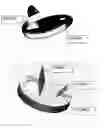
DETAILED DESCRIPTION OF THE PREFERRED EMBODIMENTSFIG. 1 as shown and describes, an external view of the opening of the beverage lid tab.
FIG. 2 is a perspective view of the internal beverage tab. The same tab as figure one, but shown in a different position. This beverage tab is used for pouring a larger volume of liquids and is located on the top of the beverage lid.
FIG. 3 is an external view of the opening of the sipping tab compared to FIG. 1; the opening of the pouring tab. As shown, both tabs are similar. They both open from an upward position. The difference is FIG. 1 is pouring tab for pouring a larger amount and FIG. 3 is a sipping tab, which is used for straw sipping, or orally sipping, a smaller volume of liquids.
FIG. 4 is a perspective view which the straw is placed and also the mouth when sipping and for drinking from the container. FIG. 4 also shows where a smaller amount of beverage can exit from the container through the sipping hole.
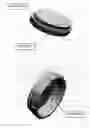
FIG. 5 as shown and described is the threading. The threads are connected to the beverage lid. The threading is circled around the inside of the beverage lid and is used to tighten the beverage lid onto FIG. 8. The threading is connected to FIG. 6, the beverage container. When both embodiments FIG. 5 and FIG. 8 are securely positioned, it secures leaks from the container.
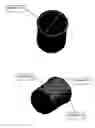
FIG. 6 is a perspective view of the beverage container without FIG. 15, the divided beverage insert container. This beverage container can also be a used as a single drink holder, by eliminating the divided insert. FIG. 6 is the only container that FIG. 15 related to. See figure number that relates to 6-12 on photo drawing. The three smaller food containers that connect under the beverage container relate to FIGS. 6-12 the food containers. They are the same containers as FIG. 6, but a smaller version without the divided insert. The diagram photo that relates to FIGS. 6-12, the smaller version, is food containers only.
FIG. 7 the inside of the beverage container views the inside of the container without the divided insert, or lid. FIG. 7 also shows that you do not have to apply the divided insert, for the use of your choice of beverage by detaching the dividing insert. The beverage container can operate Independently by fastening the beverage lid tightly onto the beverage container. It becomes a single beverage container that holds one beverage of your choice either hot or cold.
FIG. 8 is a perspective view of the beverage container threading. This particular threading of the beverage container is used for connecting the beverage container lid onto the beverage container. When assembling the beverage lid to the container this function secures a safe and tight fit. FIG. 5 as shown is a view of the first threading. FIG. 8 as shown is a view of the second threading, FIG. 5 the beverage top threading is connected to FIG. 8 the beverage container threading, by relating to the threading from FIG. 20, the food container lid threading. Both threading from FIG. 5 and FIG. 20 will work the same for FIG. 8.
FIG. 9 is a stationery system lock. This lock system keeps the divided insert container securely locked in place. The beverage container is the only container that has the locking system point section. There are two section locks, which can be found parallel from each other and around the top of the beverage container as shown in FIG. 9, it securely places FIG. 15, the divided beverage container after being placed inside of FIG. 6, the beverage container.
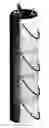
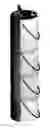
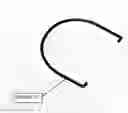
FIG. 10 as shown the placement hole for the carrying handle represents the carrying handle FIG. 17. Two carrying handle placement holds are located on each four containers. By placing the carrying handle into the handle placement hold makes each container easier to handle and manage.
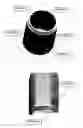
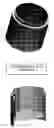
FIG. 11 as a half cut away view that shows the thickness of the cooling and heating insulation material between the walls of the beverage container. The food container view that relates to FIG. 6-12 for detail also relates to the same thickness of cooling and heating insulation that FIG. 11 describes. When placing food or beverages into any of the four containers using hot or cold food or beverages, the insulated material helps regulate the temperature.
FIG. 12 also shows a half cut away view of the bottom base and threading of the beverage container. Please revert back to the photo diagram that has been mentioned previously. See FIGS. 6-12 for detail, the food container. The bottom base is the same; there is no difference in the food container base and the beverage container bottom base. FIG. 12 the threading that is around the inside of the bottom base is where the threading of FIG. 18, the first food container top connects.
FIG. 13-17 the beverage divided container and handle previous information have been given in FIGS. 6-10 of the specification.
FIG. 18-20 the food container lids. Previous information has also been given in detailed description of this specification
Claims
What I claim as my invention is:1. A thermal insulated container in a plurality of shapes and sizes. A four piece “stackable” tote: Includes easy twist tops internally threaded within the top and bottom. These containers are also threaded externally around the top and bottom base to accommodate the internal lids. The center of each container embodies a plurality of thermal material that sustains food and beverages hot or cold. The three thermal insulated food containers allow one to carry certain foods of their choice. Included, a single thermal insulated beverage container that allows one to carry one beverage along with an extra divided container that can be inserted into the single thermal insulated beverage container. Both of the units can accommodate hot or cold beverages. The lid that connects to the beverage container consists of two functions. A tab for pouring and the other tab allocate consumption of the beverage. The lid that embodies the container is separate. It has an internal thread that twists onto the external threads that connects to the beverage container. The three lids connecting to the food containers are of a different style than of the beverage lid. What makes these three thermal insulated food container lids different? They have two connecting points. When connecting these containers together, while using these lids, the top portion of these lids' are threaded externally to insert internally into the bottom of each food container joining them together. These three thermal insulated containers with matching lids are identical in size and in shape, opposing the beverage container of a different length size. This unit is unique because it is functional. It has four detachable handles that can be used separately on each container to accommodate any circumstance. “This is my claim, my invention”.
Images & Drawings included:
Sources:
- United States Patent and Trademark Office - verify current appl. status at the USPTO↗
Recent applications in this class:
- » 20250108964 2025-04-03
TUBE HEAD HAVING AN OVAL SHAPE AND TUBE COMPRISING SAID TUBE HEAD - » 20240182212 2024-06-06
MOUTH GUARD CASE INCLUDING COMPARTMENT FOR STORING AND DISPENSING CLEANING SOLUTION - » 20230356895 2023-11-09
Siplid for a container having a twisting effect, and method for manufacturing such siplid - » 20230099766 2023-03-30
Container assembly - » 20210171248 2021-06-10
Container assembly - » 20210078776 2021-03-18
Single-use food preparation container assemblies, systems and methods - » 20200140154 2020-05-07
Unitary, tamper-evident plug with smooth pouring spout - » 20170129658 2017-05-11
DISPENSING CLOSURE - » 20150122816 2015-05-07
RECLOSABLE DISPENSER - » 20120024871 2012-02-02
Cup lid having a perimeter portion adapted to cause liquid to drain toward a central portion of the lid