Use of antiseptic active principles in pmma bone cements
US20060275339A1
2006-12-07
10/564,372
2004-07-16
Abstract:
The invention concerns the use of polyhexamethylene biguanide in PMMA bone cements, which preferably do not contain antibiotics. The cements exhibit a concentration of active principle not exceeding 1 wt. % relative to the total weight of the cement, which is a concentration sufficiently high to prevent microbial colonization of the cement surface. The cements do not cause durable alteration of the healing process.
Inventors:
- Hanns Pietsch 3 🇩🇪 Hamburg, Germany
- Berthold Nies 5 🇩🇪 Fraenkisch-Crumbach, Germany
- Frank Schilke 1 🇩🇪 Weiterstadt, Germany
Assignee:
- Biomet Deutschland 1 🇩🇪 Berlin, Germany
Interested in similar patents?
Get notified when new applications in this technology area are published.
Classification:
A61L24/0015 » CPC main
Surgical adhesives or cements; Adhesives for colostomy devices; Use of materials characterised by their function or physical properties Medicaments; Biocides
A61L2300/206 » CPC further
Biologically active materials used in bandages, wound dressings, absorbent pads or medical devices containing or releasing organic materials with nitrogen-containing functional groups, e.g. aminoxides, nitriles, guanidines Biguanides, e.g. chlorohexidine
A61L2300/404 » CPC further
Biologically active materials used in bandages, wound dressings, absorbent pads or medical devices characterised by a specific therapeutic activity or mode of action Biocides, antimicrobial agents, antiseptic agents
A61L2430/02 » CPC further
Materials or treatment for tissue regeneration for reconstruction of bones; weight-bearing implants
A61L24/06 » CPC further
Surgical adhesives or cements; Adhesives for colostomy devices containing macromolecular materials obtained by reactions only involving carbon-to-carbon unsaturated bonds
C08L33/12 » CPC further
Compositions of homopolymers or copolymers of compounds having one or more unsaturated aliphatic radicals, each having only one carbon-to-carbon double bond, and only one being terminated by only one carboxyl radical, or of salts, anhydrides, esters, amides, imides or nitriles thereof; Compositions of derivatives of such polymers; Homopolymers or copolymers of esters of esters containing only carbon, hydrogen and oxygen, which oxygen atoms are present only as part of the carboxyl radical; Homopolymers or copolymers of methacrylic acid esters Homopolymers or copolymers of methyl methacrylate
A61K31/155 IPC
Medicinal preparations containing organic active ingredients; Amines Amidines (), e.g. guanidine (HN—C(=NH)—NH), isourea (N=C(OH)—NH), isothiourea (—N=C(SH)—NH)
A61K9/14 IPC
Medicinal preparations characterised by special physical form Particulate form, e.g. powders, Processes for size reducing of pure drugs or the resulting products, Pure drug nanoparticles
Description
The invention relates to the use of antiseptic active principles in polymethyl methacrylate bone cements (PMMA cement) with an active-principle concentration which is sufficient to prevent microbial colonisation of the cement surface.
Conventional medicament-containing bone cements consist of a PMMA or PMMA copolymer powder in which, inter alia, the pulverulent medicament is distributed. After admixing of a monomer liquid (with an activator), polymerisation occurs. The cured bone cement is then a polymer mass from which the medicament located in the surface layer is released.
In order to prevent septic inflammation reactions after microbial colonisation of the cement and/or the adjacent tissue, antibiotics are used as medicament in conventional bone cement. However, the widespread use of antibiotics in bone cements is increasingly resulting in the development of antibiotic-resistant bacterial strains, meaning that it is no longer possible under certain circumstances completely to prevent wound infections. The use of more recent antibiotics is likewise not a long-term solution since bacterial strains which are resistant to the new medicament will form in the foreseeable future.
EP 701 824 (Merck Patent GmbH) describes a process for the production of active-principle-containing bone cements which may also comprise, inter alia, antibiotics or antiseptics.
WO 98/07456 (Merck Patent GmbH) relates to a process for the production of active-principle-containing bone cements and bone replacement materials or implantable pharmaceutical depots produced therefrom which may also comprise, inter alia, antibiotics or antiseptics.
EP 202 445 (Merck Patent GmbH) relates to a pharmaceutical depot which can be implanted in the body for controlled delayed release of cytostatics that, in addition to a cytostatic, may also comprise an antibiotic and/or antiseptic.
EP 234 004 (Merck Patent GmbH) describes an implantable pharmaceutical depot which comprises antibiotics and antiseptics for increasing or augmenting the action of the chemotherapeutic agent.
The object of the invention is to replace the antibiotic in conventional bone cements by a novel medicament without adversely affecting the antibacterial action on the surface of the cement. The novel medicament should, owing to its different mechanism of action, prevent the formation of resistant bacteria in the long term. The novel medicament should be selected in nature and concentration in such a way that the antibacterial action is ensured, but wound healing is not significantly impaired.
The object is achieved by the use of antiseptic active principles in a PMMA bone cement with an active-principle concentration which is sufficient to prevent microbial colonisation of the cement surface. The PMMA bone cement preferably comprises no antibiotic.
Suitable antiseptics are compounds from the following groups:
-
- quaternary ammonium compounds, such as hexadecyidimethylethylammonium ethosulfate or didecyldimethylammonium chloride,
- amine oxides, such as N-alkyl(C10-C18)-N,N-dimethylamine N-oxide or N-alkyl(C10-C18)-N,N-diethylamine N-oxide,
- pyridine derivatives, such as octenidine dihydrochloride,
- guanidines, such as polyhexamethylenebiguanide hydrochloride, and/or
- 10-undecylenic acid amides, such as 10-undecylenic acid N-ethanolamide.
Preference is given to the addition of polyhexamethylenebiguanide in a maximum amount of 1% by weight, based on the total weight of the cement. Still more preference is given to a maximum amount of 0.5% by weight, with much more preference being given to an amount of from 0.025 to 0.5% by weight. A maximum amount of 0.155% by weight of polyhexamethylenebiguanide is most preferred. In accordance with the invention, it is also possible to add more than one antiseptic active principle.
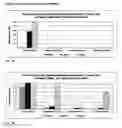
As can be seen from FIGS. 1a and 1b, admixing of only 0.155% by weight of polyhexamethylenebiguanide with a PMMA bone cement (PALAMED® plain) has the same (or higher) biological efficacy in preventing colonisation of the cement surface with germs as the admixing of 0.86% by weight of gentamicin (antibiotic) used for comparison.
The production of the bone cement according to the invention is described in greater detail with reference to two examples.
EXAMPLE 197.3 mg of polyhexamethylenebiguanide hydrochloride were mixed into 18.8 g of Palamed liquid (consisting of methyl methacrylate, N,N-dimethyl-p-toluidine and dye). The homogeneous solution was mixed with 44 g of Palamed powder (plain; without gentamicin) in a vacuum mixing system in accordance with the manufacturer's instructions. The mixture was introduced into moulds and cured.
EXAMPLE 25.3 g of zirconium dioxide were mixed with a solution of 97.3 mg of polyhexamethylenebiguanide hydrochloride in 400 mg of water. The water was removed by freeze-drying. The antiseptic-containing zirconium dioxide was subsequently mixed with 38.3 g of poly(methyl methacrylate-co-methyl acrylate) and 0.44 g of dibenzoyl peroxide. The resultant powder was added to a solution of 0.4 g of N,N-dimethyl-p-toluidine in 18.4 g of methyl methacrylate, and the two were mixed intensively. The mixture was introduced into moulds and cured.
Claims
1-6. (canceled)
7. A method of preventing microbial colonization of a polymethyl methacrylate (PMMA) bone cement surface, comprising the step of admixing polyhexamethylene biguanide with a PMMA bone cement, wherein the active principle concentration of the polyhexamethylene biguanide is 1% or less by weight of the total amount of the PMMA bone cement.
8. The method of claim 7, wherein the PMMA bone cement admixture does not contain an antibiotic.
9. The method of claim 7, wherein the PMMA bone cement admixture does not adversely affect the wound-healing process in the long term and does not significantly impair the curing process of the bone cement.
10. The method of claim 7, wherein the active principle concentration of the polyhexamethylene biguanide is in an amount of from 0.025 to 0.5% by weight of the total amount of the PMMA bone cement.
11. The method of claim 10, wherein the active principal concentration of the polyhexamethylene biguanide is in a maximum amount of 0.155% by weight of the total amount of the cement.
12. A medical implant produced from bone cements according to claim 7.
13. The method of claim 8, wherein the PMMA bone cement admixture does not adversely affect the wound-healing process in the long term and does not significantly impair the curing process of the bone cement.
14. The method of claim 8, wherein the active principle concentration of the polyhexamethylene biguanide is in an amount of from 0.025 to 0.5% by weight of the total amount of the PMMA bone cement.
15. The method of claim 9, wherein the active principle concentration of the polyhexamethylene biguanide is in an amount of from 0.025 to 0.5% by weight of the total amount of the PMMA bone cement.
16. The method of claim 7, wherein the polyhexamethylene biguanide is an antiseptic.
Images & Drawings included:
Sources:
- United States Patent and Trademark Office - verify current appl. status at the USPTO↗
Recent applications in this class:
- » 20240277889 2024-08-22
DEEP TISSUE IN VIVO PRINTING - » 20240245825 2024-07-25
MULTI-LAYERED SCAFFOLD FOR OSTEOCHONDRAL COMPLEX DEFECT REPAIR - » 20240238475 2024-07-18
PAIN TREATMENT AGENT - » 20240226369 2024-07-11
IN-SITU FILM-FORMING COMPOSITION - » 20240157021 2024-05-16
Antimicrobial bone cement - » 20240042093 2024-02-08
IN SITU SOLIDIFYING INJECTABLE COMPOSITIONS WITH TRANSIENT CONTRAST AGENTS AND METHODS OF MAKING AND USING THEREOF - » 20240000992 2024-01-04
Antipathogenic Compositions - » 20230381370 2023-11-30
POLYMER PARTICLES - » 20230310694 2023-10-05
Adhesive containing microparticles - » 20230218796 2023-07-13
Tissue adhesive for use in a treatment method in which an ophthalmological implant is implanted in a human or animal patient, and ophthalmological implantation system