Process for adding precision match, dimensional stability, and moisture resistance to jobsite finished wood flooring
US20060277861A1
2006-12-14
11/203,492
2005-08-12
Abstract:
This process, unique to the flooring industry, includes moulding and then adding dimensional stability and moisture resistance to solid wood flooring by sealing all six sides of each piece. In addition to the moisture resistance and superior dimensional stability, accurate moulding results in optimum fit and therefore less sanding needed at the job site. The final result is a floor with all the desirable characteristics of a jobsite finished floor and the added value of dimensional stability and moisture resistance throughout the life of the floor.
Inventors:
- Buddy Earl Williams 3 🇺🇸 Stuart, VA, United States
- Terri Williams Birkett 3 🇺🇸 Stuart, VA, United States
- Warren Lee Williams 3 🇺🇸 Stuart, VA, United States
Interested in similar patents?
Get notified when new applications in this technology area are published.
Classification:
B27M3/04 » CPC main
Manufacture or reconditioning of specific semi-finished or finished articles of flooring elements, e.g. parqueting blocks
E04F15/04 » CPC further
Flooring; Flooring or floor layers composed of a number of similar elements only of wood , e.g. with wooden connecting members
E04B1/00 IPC
Constructions in general; Structures which are not restricted either to walls, e.g. partitions, or floors or ceilings or roofs
Description
CROSS REFERENCE TO RELATED APPLICATIONSThis is a continuation in part of Ser. No. 11/147.738, filed on Jun. 8, 2005.
STATEMENT REGARDING FEDERALLY SPONSORED RESEARCH OR DEVELOPMENTNot Applicable
DESCRIPTION OF ATTACHED APPENDIXNot Applicable
BACKGROUND OF THE INVENTIONThis invention relates generally to the field of solid wood flooring manufacture and more specifically to a process for adding precision match, dimensional stability, and moisture resistance to solid wood flooring which will be jobsite finished.
Using solid hardwood as flooring is a very old practice. Early wood floors ranged from halves of logs or boards placed over a dirt floor to sawn wood planks fastened across floor joists. The boards were unsanded and unfinished. As technology progressed, the process for making floorboards included hand planing boards so that they were smoother. An oil, wax, or resin was sometimes rubbed into finer floors to put a “seal” or finish on the top surface of the floor. In order to fit the boards more tightly together and to add strength to the span between the floor joists, a tongue and groove was molded into the sides of the boards. The development of kiln-drying technology enabled significant improvement in dimensional stability of the wood which was affected by seasonal moisture changes. Most of the later additions to the process of manufacturing solid wood flooring increased its usability, strength, appearance, serviceability, and/or dimensional stability.
Manufacturing jobsite finished solid wood flooring prior to our new process has included some or most of the following steps: sawing logs into boards, air drying and kiln-drying the boards, planing the rough sawn boards, ripping the boards into more narrow strips, sawing out defects, molding the strips to have a tongue on one long side and a groove on the other long side, molding the ends of the strip to have a tongue on one end and groove on the other end, installing the strips in a building, sanding the strips after they are installed, and spreading several finish coats on the entire surface of the floor.
Problems with the prior process for manufacturing solid wood flooring include: the inaccuracies of moulding solid wood flooring which results in the creation of overwood, and the five non-sealed (open to moisture) sides of each strip of flooring which result in the pieces lacking dimensional stability due to moisture absorption. In the quest for dimensional stability, processes have included laminating layers of wood together. While this does give some dimensional stability in optimum conditions, engineered and floating floors lack the appeal of solid wood floors in sound, feel, and often, appearance. Efforts to make flooring dimensionally stable almost always result in a factory finished product. Factory finished products, in turn, generally lack the desirable match and appearance of a jobsite finished floor.
BRIEF SUMMARY OF THE INVENTIONThe primary object of the invention is to decrease movement in solid wood floors caused by moisture absorption due to changes in the environment. This is accomplished by increasing moisture resistance as compared to other jobsite finished floors.
It is another object of the invention to reduce acclimation time for unfinished flooring material at the jobsite.
It is another object of the invention to protect flooring from gaining or losing moisture during warehouse storage and/or transportation.
A further object of the invention to maintain dimensional stability in flooring to insure a correct and snug fit throughout the life of the floor.
Yet another object of the invention is to provide an added layer of protection to help keep flooring from being damaged by jobsite wear before sanding and finishing.
Other objects and advantages of the present invention will become apparent from the following descriptions, taken in connection with the accompanying drawings, wherein, by way of illustration and example, an embodiment of the present invention is disclosed.
In accordance with a preferred embodiment of the invention, there is disclosed the unique aspects of our flooring process which include precision moulding and factory sealing the solid wood flooring product. The new process moulding (or horizontal splitting and then moulding) uses conventional means with increased attention to accuracy to attain a more accurately moulded product than is currently available. The increased accuracy requires less sanding of the face of the strip at the jobsite, thereby saving time and money over conventional methods. Sealing all six sides of each individual strip provides superior moisture resistance and dimensional stability than is currently available in solid wood flooring which is jobsite finished. (If the alternative method of sealing fewer sides is used, dimensional stability and moisture resistance is still increased over conventional, non-sealed jobsite finished solid hardwood flooring.) Flooring from the new process has all the desirable qualities of a jobsite finished floor plus better dimensional stability and moisture resistance throughout its life than conventionally processed floors.
BRIEF DESCRIPTION OF THE DRAWINGSThe drawings constitute a part of this specification and include exemplary embodiments to the invention, which may be embodied in various forms. It is to be understood that in some instances various aspects of the invention may be shown exaggerated or enlarged to facilitate an understanding of the invention.
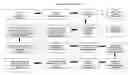
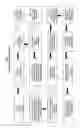
Figure B is a flow chart of the flooring manufacture and seal process.
DETAILED DESCRIPTION OF THE PREFERRED EMBODIMENTSDetailed descriptions of the preferred embodiment are provided herein. It is to be understood, however, that the present invention may be embodied in various forms. Therefore, specific details disclosed herein are not to be interpreted as limiting, but rather as a basis for the claims and as a representative basis for teaching one skilled in the art to employ the present invention in virtually any appropriately detailed system, structure or manner.
In Figure A, steps 1-12 include conventional and new process elements.
- Step 1. Green, roughsawn lumber is air dried to a moisture content of <30% using conventional methods.
- Step 2. The air dried lumber is then kiln dried to a moisture content of 6-8% using conventional methods.
- Step 3. The lumber is planed to an equalized thickness and then ripped longitudinally into narrow strips. An alternative to Step 3 (shown as 3A) is to rip roughsawn lumber into narrow strips without planing. Step 3 and its alternative utilize conventional methods.
- Step 4. The narrow strips are defected by using cutoff saws which saw out the defects using a transverse cut. An alternative to Step 4 (shown as 4A) is to add the additional process of splitting the boards horizontally in thickness before or after defecting.
- Step 5. The strips are moulded on a moulder or flooring machine/sidematcher. An alternative (shown as 5A) is to plane and then mould the strips. This process moulds a tongue and groove in the the long sides of the strip, planes the top surface of the strip, and moulds the back of the strip. The new process element in this step is to accurately reference the tongue and groove from the face of the flooring. A second new process element in Step 5 is the use of precision equipment that holds the strip in place strongly enough at the moulding points to compress all bend out of the lumber.
- Step 6. The ends of each flooring strip have a tongue or groove sawn horizontally into it, so that the ends can interlock with adjoining pieces. This is a conventional process element.
- Step 7. The ends of the strips are coated with a sealer and cured. This is a new process element.
- Step 8. The remaining four sides are coated with a sealer and cured. This is a new process element. An alternative to steps 7-8 is to only coat one or more of the non-walking surfaces instead of all four remaining sides.
- Step 9. The flooring is then stored and/or transported to be installed at the job site.
- Step 10. At the job site, the solid flooring pieces are fastened to the subfloor in a conventional manner.
- Step 11. The walking surface of the flooring is sanded in a conventional manner. This sands off the top seal coat and readies the surface for its final finish coats.
- Step 12. Finish coats are applied in a conventional manner.
The two important and unique parts of the process are 1) the precision moulding of the strip, 2) the coating/sealing of one or more sides of each strip with finish. The optimal use of this process is to seal all six sides. These two elements combine to provide the added precision needed for a near perfect finish match as well as the increased dimensional stability and moisture resistance throughout the life of the floor.
While the invention has been described in connection with a preferred embodiment, it is not intended to limit the scope of the invention to the particular form set forth, but on the contrary, it is intended to cover such alternatives, modifications, and equivalents as may be included within the spirit and scope of the invention as defined by the appended claims.
Claims
What is claimed is:1. The said process creates a moulded product that has greater precision with regard to moulding tolerances than is currently available in the market, by utilizing moulders with increased strength at moulding points to take the bend out of the solid wood in order to provide a consistent and accurate longitudinal tongue and groove match resulting in a superior fit and less sanding at the job site.
2. The process seals all six sides of each individual strip to provide superior moisture resistance resulting in much greater dimensional stability, and therefore better fit and performance for the product's life, than is currently available in the market.
Images & Drawings included:
Sources:
- United States Patent and Trademark Office - verify current appl. status at the USPTO↗
Recent applications in this class:
- » 20240399615 2024-12-05
ROBOTIC ASSEMBLY OF MASS TIMBER STRUCTURAL PANELS - » 20220001572 2022-01-06
COVERED PANEL AND METHOD FOR MANUFACTURING COVERED PANELS - » 20200094435 2020-03-26
Rapid cleaning device for summer sleeping mat production - » 20180133922 2018-05-17
Method for producing panels having recesses - » 20160221212 2016-08-04
Methods and arrangements relating to edge machining of building panels - » 20160114495 2016-04-28
Wood fibre based panels with a thin surface layer - » 20160046037 2016-02-18
METHOD AND APPARATUS FOR REPAIRING EDGE DEFECTS IN BOARDS - » 20130326989 2013-12-12
Wooden Floor Tile With Milled Surface - » 20130312874 2013-11-28
Vacuum infused repair device and method for teak decks on boats, yachts and ships - » 20120231210 2012-09-13
ENGINEERED WOOD FLOOR USING CORE MATERIAL WITH VERTICAL GLUE-LINE POSITION