Deep ultraviolet transmissive adhesive, and substrate produced by using such deep ultraviolet transmissive adhesive
US20060280960A1
2006-12-14
11/394,368
2006-03-31
✅ Patent granted
US 7,510,770 B2
2009-03-31
-
-
Sheeba Ahmed
2026-03-31
Abstract:
A deep ultraviolet transmissive adhesive capable of transmitting deep ultraviolet light which comprises a substance represented by the chemical formula given below, and a substrate produced using the deep ultraviolet transmissive adhesive,
CH2═CH—CH2—O—(CH2)2n—O—CH2—CH═CH2
In the above formula, n is an odd number represented by 2m+1 (m being a natural number).
Inventors:
- Tatsuya Kojima 19 🇯🇵 Tokyo, Japan
- Takashi Takahashi 28 🇯🇵 Tokyo, Japan
- Shinsuke Motomiya 1 🇯🇵 Tokyo, Japan
- Norio Tanaka 1 🇯🇵 Souka-shi, Japan
- Norio Tanaka 1 🇯🇵 Souka, Japan
Assignee:
- KABUSHIKI KAISHA TOPCON 352 🇯🇵 Tokyo, Japan
- Tanaka Polymer Laboratory 1 🇯🇵 Souka-shi, Japan
Interested in similar patents?
Get notified when new applications in this technology area are published.
Classification:
G06K7/10 IPC
Methods or arrangements for sensing record carriers, e.g. for reading patterns by electromagnetic radiation, e.g. optical sensing; by corpuscular radiation
C03C27/00 » CPC main
Joining glass to glass or to other materials
C03C27/00 » CPC main
Joining pieces of glass to pieces of other inorganic material; Joining glass to glass other than by fusing
C09J4/00 » CPC further
Adhesives based on organic non-macromolecular compounds having at least one polymerisable carbon-to-carbon unsaturated bond ; adhesives, based on monomers of macromolecular compounds of groups -
C08F216/125 » CPC further
Copolymers of compounds having one or more unsaturated aliphatic radicals, each having only one carbon-to-carbon double bond, and at least one being terminated by an alcohol, ether, aldehydo, ketonic, acetal or ketal radical by an ether radical Monomers containing two or more unsaturated aliphatic radicals, e.g. trimethylolpropane triallyl ether or pentaerythritol triallyl ether
Y10T428/31645 » CPC further
Stock material or miscellaneous articles; Composite [nonstructural laminate]; Of polyamidoester [polyurethane, polyisocyanate, polycarbamate, etc.] Next to addition polymer from unsaturated monomers
Y10T428/31855 » CPC further
Stock material or miscellaneous articles; Composite [nonstructural laminate] Of addition polymer from unsaturated monomers
B32B27/30 IPC
Layered products comprising synthetic resin comprising vinyl (co)polymers; comprising acrylic (co)polymers
C08F16/12 IPC
Homopolymers and copolymers of compounds having one or more unsaturated aliphatic radicals, each having only one carbon-to-carbon double bond, and at least one being terminated by an alcohol, ether, aldehydo, ketonic, acetal or ketal radical by an ether radical
B32B17/06 IPC
Layered products essentially comprising sheet glass, or glass, slag, or like fibres comprising glass as the main or only constituent of a layer, next to another layer of a specific material
B32B17/10 IPC
Layered products essentially comprising sheet glass, or glass, slag, or like fibres comprising glass as the main or only constituent of a layer, next to another layer of a specific material of synthetic resin
B32B9/00 IPC
Layered products characterised by particular substances used
B32B9/00 IPC
Layered products comprising a layer of a particular substance not covered by groups -
G02B13/14 IPC
Optical objectives specially designed for the purposes specified below for use with infra-red or ultra-violet radiation
Description
TECHNICAL FIELDThis invention relates to a deep ultraviolet transmissive adhesive and a substrate produced by using the deep ultraviolet transmissive adhesive and, more particularly, to a deep ultraviolet transmissive adhesive capable of transmitting ultraviolet rays until wavelength of about 230 nm with high transmittance and a substrate produced by using such deep ultraviolet transmissive adhesive.
RELATED ARTConventional adhesives cannot be used in the lamination of lens members for use in semiconductor inspecting devices and other precision inspecting devices used in the ultraviolet region, in particular in the deep ultraviolet region. Therefore, a fluorine-containing oil is used as a filler (cf. Japanese Kokai Publication 2003-137614 and Japanese Kokai Publication 2003-185808).
Further, WO 01/37043 A1 and WO 01/37044 A1 respectively disclose such noncrystalline vinyl copolymer-based adhesives (A) and (B) as described below.
Adhesives (A) are produced from CX2═CY2 and 0-25 mole percent of one or more monomers CRaRb═CRcRd. In this case, X is —F or —CF3 and Y is H. Ra, Rb and Rc each is independently selected from among H and F. Rd is selected from the group consisting of —F, —CF3, —ORf, —OH (when Rc═H) and Cl (when Ra, Rb and Rc each=F). Here, Rf is CnF2n+1 in which n=1 to 3. CRaRb═CRcRd units are distributed in the copolymers nearly in a random manner.
Adhesives (B) are produced from CX2═CY2 and 40-60 mole percent of one or more monomers CRaRb═CRcRd. In this case, CRaRb═CRcRd units are distributed in the copolymers nearly in an alternating manner.
However, the fluorine-containing oil mentioned above may possibly leak out. On such occasions of leakage, a marked deterioration in workability will result.
On the other hand, the adhesives (A) and (B) mentioned above are adhesives for providing ultraviolet transmissive materials which show an absorbance/micron (A/micrometer) of ≦1 in the wavelength region of 187-260 nm. In the case of such adhesives, it is difficult to synthesize the monomers for Cytop (registered trademark) and special grades of Teflon (registered trademark). At the same time, it is also difficult to synthesize the monomers of those adhesives. As a result, the product adhesives become expensive.
SUMMARY OF THE INVENTIONAccordingly, it is an object of the present invention to provide a deep ultraviolet transmissive adhesive which can avoid liquid leakage and is improved in durability against ultraviolet rays and in transmittance in the deep ultraviolet region as well as a substrate produced using such deep ultraviolet transmissive adhesive.
The adhesive according to the invention comprises a substance represented by the chemical formula given below and is a deep ultraviolet transmissive adhesive capable of transmitting deep ultraviolet light.
CH2═CH—CH2—O—(CH2)2n—O—CH2—CH═CH2
In the above formula, n is an odd number represented by 2m+1 (m being a natural number).
The substrate according to the invention comprises two lens members joined together by means of a deep ultraviolet transmissive adhesive, wherein the deep ultraviolet transmissive adhesive comprises a substance represented by the chemical formula given below and is the substrate as a deep ultraviolet transmissive adhesive capable of transmitting deep ultraviolet light.
CH2═CH—CH2—O—(CH2)2n—O—CH2—CH═CH2
In the above formula, n is an odd number represented by 2m+1 (m being a natural number).
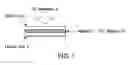
BRIEF DESCRIPTION OF THE DRAWINGSFIG. 1 shows an example of the substrate of the invention in which use is made of a deep ultraviolet transmissive adhesive according to an embodiment of the invention;
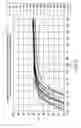
FIG. 2 shows the changes in transmittance at the times after predetermined irradiation periods in the case of the adhesive C; and
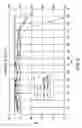
FIG. 3 shows the changes in transmittance at the times after predetermined periods of irradiation with ultraviolet light at 230 nm in the case of the adhesive C.
EMBODIMENTSIn the following, a more detailed description is given of the chemical formula CH2═CH—CH2—O—(CH2)2n—O—CH2—CH═CH2, taking, as examples, the case where m is 1 and the case where m is 2.
When n=2×1+1 (m=1), a deep ultraviolet transmissive adhesive (1) represented by the chemical formula
CH2═CH—CH2—O—(CH2)6—O—CH2—CH═CH2
is obtained.
When n=2×2+1 (m=2), a deep ultraviolet transmissive adhesive (2) represented by the chemical formula
CH2═CH—CH2—O—(CH2)10—O—CH2—CH═CH2
is obtained.
The present invention includes not only the above-mentioned two adhesives but also other deep ultraviolet transmissive adhesives such as those represented by the following chemical formulas, for instance.
When m is 3:
CH2═CH—CH2—O—(CH2)14—O—CH2—CH═CH2.
When m is 4:
CH2═CH—CH2—O—(CH2)18—O—CH2—CH═CH2
The adhesive may further contain such an additive as UT-10, OCT-2, a siloxane or a silicone. Preferably, the substrate surface is subjected to primer treatment as a measure for preventing peeling, for instance.
EXAMPLESFIG. 1 shows an example of the invention.
Adhesion experiments were carried out using the deep ultraviolet transmissive adhesives 1 and 2 mentioned above.
The substrates used were products of joining of a quartz lens 3 to a fluorite (CaF2) lens 4, and the deep ultraviolet transmissive adhesive 1 or 2 was used between the lenses 3 and 4.
The above-mentioned additive 5 may be added according to need.
Each assembly was subjected to UV irradiation in the direction of the arrow 6 from the side of the quarts lens 3.
The ultraviolet (UV) irradiation conditions were as follows: wavelength 365 nm, and intensity 300 or 450 mW/cm2.
After predetermined periods of ultraviolet (UV) irradiation, each substrate was checked for appearance (occurrence or nonoccurrence of turbidity and/or yellowing) and, at the same time, transmittance measurements were carried out.
Referring to Table 1, the adhesive 1 was used as A and B, and the adhesive 2 as C.
| TABLE 1 | |||
| Adhesive | Primer treatment | Additive | Irradiation period |
| A | x | — | 36 h |
| A | ∘ | OCT-2 | 6 h |
| B | x | — | 18 h |
| B | ∘ | — | 6 h |
| B | x | UT-20 | 15 h |
| B | x | OCT-2 | 8 h |
| B | ∘ | OCT-2 | 4 h |
| B | x | Siloxane | 24 h |
| B | x | Silicone | 24 h |
| C | x | — | 60 h |
| C | x | — | 42 h |
FIG. 2 shows the changes in transmittance after predetermined periods of irradiation in the case of C.
In this case, no additive was added and no primer treatment was carried out. The irradiation conditions were: ultraviolet wavelength 365 nm and intensity 300 mW/cm2.
FIG. 3 shows the changes in transmittance after predetermined periods of irradiation with ultraviolet light at a wavelength of 230 nm.
In this case, no additive was added and no primer treatment was carried out. The irradiation conditions were: ultraviolet wavelength 365 nm and intensity 300 mW/cm2.
As is evident from FIG. 3, ultraviolet transmissive adhesives showing a transmittance of about 92% until about 230 nm could be obtained. Thus, it becomes possible to cope with a deeper ultraviolet region without any significant chemical change or deterioration.
The adhesive C could show a satisfactory level of ultraviolet light resistance for about 60 hours and, thus, an adhesive higher in ultraviolet light resistance could be obtained.
Furthermore, the above-mentioned laminate lenses were applied to an optical system for illumination and tested for ultraviolet light resistance, whereupon turbidity and peeling, among others, were observed. However, the turbidity and peeling could be prevented by inserting plastic beads or the like between the laminated lens members.
The substrate (optical part) to be used is not limited to those used in the above examples but may be, for example, the one composed of two quarts lens members 3 joined together by adhesion.
Claims
1. A deep ultraviolet transmissive adhesive capable of transmitting deep ultraviolet light which comprises a substance represented by the chemical formula:
CH2═CH—CH2—O—(CH2)2n—O—CH2—CH═CH2
wherein n is an odd number represented by 2m+1 (m being a natural number).
2. A substrate comprising two lens members joined together by means of a deep ultraviolet transmissive adhesive, wherein said deep ultraviolet transmissive adhesive comprises a substance represented by the chemical formula given below and is a deep ultraviolet transmissive adhesive capable of transmitting deep ultraviolet light,
CH2═CH—CH2—O—(CH2)2n—O—CH2—CH═CH2
wherein, n is an odd number represented by 2m+1 (m being a natural number).
Images & Drawings included:
Sources:
- United States Patent and Trademark Office - verify current appl. status at the USPTO↗
Recent applications in this class:
- » 20230202920 2023-06-29
METHOD FOR JOINING AN OPTICAL CRYSTAL TO A SUBSTRATE - » 20190276357 2019-09-12
Method and device for integrating gemstones in glass - » 20190047910 2019-02-14
Seamless, and/or graded transition from sintered alternative-binders-based impermeable concrete to glass for architectural and industrial applications - » 20140110044 2014-04-24
Manufacturing method for glass panel with glazing gasket and glazing gasket molding apparatus - » 20130068385 2013-03-21
Automatic Facility and Automatic Method for Decorating Items made of Rough or Refined Glass or of Plastic with Raised Patterns - » 20120067085 2012-03-22
Method of manufacturing light-emitting device - » 20120000611 2012-01-05
Laser beam irradiation apparatus and substrate sealing apparatus including the same - » 20110209618 2011-09-01
Ceramic product and ceramic member bonding method - » 20110006252 2011-01-13
Encapsulated getter arranged in vacuum glazing - » 20090294072 2009-12-03
Equipment for bonding by molecular adhesion
Recent applications for this Assignee:
- » 20210407666 2021-12-30
SYSTEM FOR TELEMEDICINE DATA TRANSFER - » 20210366612 2021-11-25
OPHTHALMIC EXAMINATION SUPPORT SYSTEM - » 20200349701 2020-11-05
OCT angiography calculation with optimized signal processing - » 20200029809 2020-01-30
Blood flow measurement apparatus - » 20180247409 2018-08-30
OCT angiography calculation with optimized signal processing - » 20180168447 2018-06-21
Ophthalmologic microscope system - » 20180035887 2018-02-08
Ophthalmic operation microscope - » 20170347879 2017-12-07
Blood flow measurement apparatus - » 20170325679 2017-11-16
Ophthalmic imaging apparatus - » 20170319059 2017-11-09
Speckle reduction in optical coherence tomography images