Method for enhancing texture of wood panel
US20060288885A1
2006-12-28
11/343,727
2006-01-31
✅ Patent granted
US 7,314,071 B2
2008-01-01
-
-
Shelley M. Self
2026-01-31
Abstract:
A method for enhancing the texture of a wood panel. A pattern wood is attached to a surface of a plywood structure to form a wood panel. The surface of the pattern wood is then sanded followed by cleaning of the sanded surface. Thereafter, the surface of the pattern wood which has been sanded and cleaned is subjected to sand blasting. The sand blasted surface of the pattern wood is then coated with a first ultraviolet (UV) coating which is allowed to harden. Grooves are then formed on a lower surface of the wood panel. The wood panel is then cut to a preselected size. The surface of the pattern wood is then coated with a second UV coating which is allowed to harden.
Interested in similar patents?
Get notified when new applications in this technology area are published.
Classification:
B27D1/04 IPC
Joining wood veneer with any material; Forming articles thereby ; Preparatory processing of surfaces to be joined, e.g. scoring to produce plywood or articles made therefrom; Plywood sheets
B27M3/04 » CPC main
Manufacture or reconditioning of specific semi-finished or finished articles of flooring elements, e.g. parqueting blocks
B27M1/003 » CPC further
Working of wood not provided for in subclasses - , e.g. by stretching Mechanical surface treatment
B32B21/13 » CPC further
Layered products comprising a layer of wood, e.g. wood board, veneer, wood particle board all layers being exclusively wood
B32B38/0012 » CPC further
Ancillary operations in connection with laminating processes Mechanical treatment, e.g. roughening, deforming, stretching
B32B38/162 » CPC further
Ancillary operations in connection with laminating processes; Drying; Softening; Cleaning Cleaning
B32B2037/243 » CPC further
Methods or apparatus for laminating, e.g. by curing or by ultrasonic bonding characterised by the properties of the layers with at least one layer not being coherent before laminating, e.g. made up from granular material sprinkled onto a substrate Coating
B32B2255/08 » CPC further
Coating on the layer surface on wood layer
B32B2307/71 » CPC further
Properties of the layers or laminate; Other properties Resistive to light or to UV
B32B2317/16 » CPC further
Animal or vegetable based Wood, e.g. woodboard, fibreboard, woodchips
B32B2419/04 » CPC further
Buildings or parts thereof Tiles for floors or walls
B32B37/00 IPC
Methods or apparatus for making layered products; Treatment of the layers or of the layered products
B32B37/00 IPC
Methods or apparatus for laminating, e.g. by curing or by ultrasonic bonding
B30B7/00 IPC
Presses characterised by a particular arrangement of the pressing members
B29C65/00 IPC
Joining of preformed parts ; Apparatus therefor
B32B13/00 IPC
Layered products comprising a a layer of water-setting substance, e.g. concrete, plaster, asbestos cement, or like builders' material
Description
BACKGROUND OF THE INVENTION1. Field of the Invention
The present invention relates to manufacturing methods for enhancing the texture of a wood panel. The texture of the wood panel is almost the same as that of a natural wood panel by forming a rugged surface on a pattern wood with sand blasting.
2. Background Information
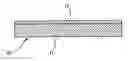
In general, as shown in FIG. 1, a normal wood panel 10 is made by attaching a pattern wood 12 on a glued plywood structure 11. However, the surface of the pattern wood 12 does not feel like natural wood due to its sanded and leveled surface.
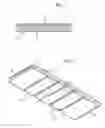
As shown in FIG. 2, a wood panel 20 is made by attaching a pattern wood 22 on top of a glued plywood structure 21 in the shape of square panels. The surface of the wood panel 20 is coated with an ultraviolet (UV) coating 23 to protect it. The sides of the wood panel 20 are cut to form grooves 24, and the shapes of a tongue 25 and the groove 24 are such that the groove 25 of one wood panel 20 receives the tongue 25 of another wood panel 20. Grooves 26 are formed under the glued plywood to maintain a specific distance.
The texture of the wood panel using the normal pattern wood is the same as above. According to this, the normal wood panel has the problem of not having a natural look and feeling because the surface of the pattern wood is sanded and leveled.
SUMMARY OF THE INVENTIONThe purpose of this invention is to make the almost same texture of natural wood by forming a rugged surface of the pattern wood through a sand blasting procedure.
The manufacturing procedure for enhancing the texture of wood panels according to the present invention is as follows. A pattern wood having a thickness in the range of 2 mm-5 mm is attached on top of a glued plywood structure. The surface of the pattern wood is then sanded and cleaned. The surface of the pattern wood which has been sanded and cleaned is then subjected to sand blasting and cleaned. The surface of the pattern wood is then coated with a first ultraviolet (UV) coating for protection and the first UV coating is then hardened. Grooves are then formed under the wood panel to provide flexibility to the wood panel. The wood panel is then cut to custom sizes. Tongue and groove connecting portions are formed on respective side surfaces of the wood panel for connecting the wood panel to other similar wood panels. The pattern wood is then coated with a second UV coating which is then hardened.
The method of attaching the pattern wood on the plywood structure is made up of two steps. First, the pattern wood and the plywood structure are pressed together at room temperature and left in the pressed state for a certain period of time at room temperature. Second, the pattern wood is pressed onto the plywood structure again under a temperature in the range of 110 to 130 degrees centigrade and then allowed to cool down.
BRIEF DESCRIPTION OF THE DRAWINGSFIG. 1 is a side cross-sectional view showing the structure of the normal wood panel.
FIG. 2 is a perspective view of the wood panel according to the present invention.
FIG. 3 shows a manufacturing process for the wood panel according to the present invention.
DETAILED DESCRIPTION OF THE PREFERRED EMBODIMENTA detailed description of the procedural steps in the manufacturing method for enhancing the texture of a wood panel according to the present invention is set forth below with reference to FIGS. 2-3.
First Procedure
In the first procedure, a plywood structure 21 with 2 or more glued layers is first prepared in accordance with the purpose for which the plywood 21 will be used.
A pattern wood 22 is then attached on top of the plywood structure 21 to form a wood panel 20. Glue is spread on the plywood structure 21 to attach the pattern wood 22 on top of the plywood structure 21. Preferably, the pattern wood 22 has a thickness in the range of 2 mm to 5 mm.
After attaching the pattern wood 22 on top of the plywood structure 21 with glue, the pattern wood 22 and the plywood structure 21 are pressed together. More specifically, the pattern wood 22 and the plywood structure 21 are first pressed together at room temperature and left in the pressed state for a certain period of time. After completion of the first pressing procedure, the wood panel 20 is pressed again at a temperature in the range of 110 to 130 degrees centigrade and allowed to cool down. The purpose of the first pressing procedure is to prevent bubble up. Because the pattern wood 22 has a thickness in the range of 2 mm to 5 mm, the glue on top of the plywood structure 21 causes the pattern wood 22 to shrink. The purpose of leaving the wood panel 20 in a pressed state for a certain period of time is to increase the adhesion. The second pressing procedure further increases the strength of the adhesion between the pattern wood 22 and the plywood structure 21.
After the first pressing procedure, the pattern wood 22 and plywood structure 21 are left in the pressed state for the certain period of time at room temperature. Furthermore, the glue for the wood panel 20 is preferably a natural vegetable-based glue which does not pose any health risks.
The reason for maintaining the temperature in the range of 110-130 degrees during the second pressing procedure is that at temperatures higher than the range temperatures, the pattern wood and the plywood structure might burn, and that at temperatures lower than the range temperatures, the adhesion force between the pattern wood and the plywood structure may weaken.
Second Procedure
The second procedure entails sanding the surface of the pattern wood 22 for beauty treatment after the first procedure. The surface of the pattern wood 22 must be vacuumed thoroughly during this stage.
Third Procedure
In the third procedure, the pattern wood 22 is subjected to sand blasting after the second procedure using a sand blaster, and then cleaned. The reason for the sand blasting procedure is to try to make the wood panel as natural as real wood by forming a rugged surface on the wood panel.
Due to the sand blasting, the pattern wood 22 has a rugged surface. The pattern wood 22 has a natural texture by sand blasting. The pattern wood has two parts that are soft and hard. The growth ring part is hard, so it can not be sanded away easily with sand blasting. But the other part is soft, so it is easily sanded away.
After sand blasting, the surface of the pattern wood 22 must be vacuumed thoroughly to remove any dust from the surface.
Fourth Procedure
The fourth procedure is to coat the top of the pattern wood 22 with a first UV coating after the third procedure to maintain the rugged surface formed by sand blasting. The first UV coating protects the surface of the pattern wood 22 from deteriorating due to scratching and humidity. After application of the first UV coating, the top surface of the pattern wood 22 is left under a UV lamp to strengthen the first UV coating.
The first UV coating must be dried thoroughly. If the fifth procedure is started before the first UV coating is dried thoroughly, the surface of the pattern wood 22 becomes not only rough, but it also becomes dusty easily.
Fifth Procedure
In the fifth procedure, grooves 26 are formed under the wood panel 20 to give it flexibility.
The wood panel is installed either on the floor or the wall. If the surface of the floor or wall is not level, the wood panel 20 might bend, crack or even break. Therefore forming the grooves 26 under the wood panel 20 for flexibility is very important because without flexibility the wood panel 20 can be ripped up from the floor or wall.
Sixth Procedure
In the sixth procedure, the wood panel 20 is cut after finishing the fifth procedure. The cutting sizes can vary with the purpose of use.
Seventh Procedure
In the seventh procedure, tongue and groove connecting portions are formed on respective sides of the wood panel 20 to allow connection of the wood panel to other similar wood panels during the installation.
Eighth Procedure
In the eighth procedure, a second UV coating is formed on the surface of the pattern wood. The first purpose for the second UV coating is to remove the scratches on the pattern wood which might be formed during the fifth or seventh procedures. The second purpose for the second UV coating is to make the surface of the wood panel stronger. But the second UV coating must leave the rugged surface on the pattern wood.
The present invention can produce new demands from consumers because of the natural texture resulting from sand blasting of the wood panel.
Claims
1.-2. (canceled)
3. A method for enhancing the texture of a wood panel, comprising the steps of:
attaching a pattern wood to a surface of a plywood structure to form a wood panel;
sanding a surface of the pattern wood followed by cleaning of the sanded surface;
sand blasting the surface of the pattern wood which has been sanded and cleaned;
coating the sand blasted surface of the pattern wood with a first ultraviolet (UV) coating and allowing the first UV coating to harden;
forming grooves on a lower surface of the wood panel;
cutting the wood panel to a preselected size; and
coating the surface of the pattern wood with a second UV coating and allowing the second UV coating to harden.
4. A method according to claim 3; wherein the attaching step comprises a first pressing step of pressing together the pattern wood and the plywood structure at room temperature and maintaining the pattern wood and the plywood structure in the pressed state at room temperature for a preselected period of time, and a second pressing step of pressing the pattern wood and the plywood structure under a temperature in the range of 110 to 130 degrees centigrade and allowing the pattern wood and the plywood structure to cool down.
5. A method according to claim 4; wherein the attaching step includes the step of attaching the pattern wood on the upper surface of a plywood structure using a glue.
6. A method according to claim 5; wherein the glue comprises a natural vegetable-based glue.
7. A method according to claim 5; wherein the pattern wood has a thickness in the range of 2 mm to 5 mm.
8. A method according to claim 3; wherein the attaching step includes the step of attaching the pattern wood on the upper surface of a plywood structure using a glue.
9. A method according to claim 8; wherein the glue comprises a natural vegetable-based glue.
10. A method according to claim 3; wherein the pattern wood has a thickness in the range of 2 mm to 5 mm.
11. A method according to claim 3; further comprising the step of forming tongue and groove connecting portions on respective sides of the wood panel before the step of coating the second UV coating.
12. A method according to claim 3; further comprising the step of cleaning the surface of the pattern wood after the sand blasting step and before the step of coating the second UV coating.
Images & Drawings included:

Sources:
- United States Patent and Trademark Office - verify current appl. status at the USPTO↗
Recent applications in this class:
- » 20240399615 2024-12-05
ROBOTIC ASSEMBLY OF MASS TIMBER STRUCTURAL PANELS - » 20220001572 2022-01-06
COVERED PANEL AND METHOD FOR MANUFACTURING COVERED PANELS - » 20200094435 2020-03-26
Rapid cleaning device for summer sleeping mat production - » 20180133922 2018-05-17
Method for producing panels having recesses - » 20160221212 2016-08-04
Methods and arrangements relating to edge machining of building panels - » 20160114495 2016-04-28
Wood fibre based panels with a thin surface layer - » 20160046037 2016-02-18
METHOD AND APPARATUS FOR REPAIRING EDGE DEFECTS IN BOARDS - » 20130326989 2013-12-12
Wooden Floor Tile With Milled Surface - » 20130312874 2013-11-28
Vacuum infused repair device and method for teak decks on boats, yachts and ships - » 20120231210 2012-09-13
ENGINEERED WOOD FLOOR USING CORE MATERIAL WITH VERTICAL GLUE-LINE POSITION