Curtain with a light adjusting structure
US20060289121A1
2006-12-28
11/165,135
2005-06-24
Abstract:
A curtain with a light adjusting structure includes an adjusting unit having a control reel module and a hanging reel. Each transversal vane includes a side frame pivotally coupled to both ends of the top of the curtain. The rear section of a first pulling cord is coupled with the lower edge of each vane and passed through the control reel module. A second pulling cord winds the hanging reel such that the front section passes around another control reel module and is situated in front of the curtain, and the rear section is fixed to the rear side of the bottom of the curtain. A third pulling cord winds another control reel module and fixes its rear section to the bottom of the curtain. Pulling the first pulling cord can lift each vane, and pulling the second and third pulling cords can draw the curtain upward.
Interested in similar patents?
Get notified when new applications in this technology area are published.
Classification:
E06B9/262 » CPC main
Screening or protective devices for wall or similar openings, with or without operating or securing mechanisms; Closures of similar construction; Screens or other constructions affording protection against light, especially against sunshine; Similar screens for privacy or appearance; Slat blinds; Lamellar or like blinds, e.g. venetian blinds with flexibly-interconnected horizontal or vertical strips; Concertina blinds, i.e. upwardly folding flexible screens
E06B9/324 » CPC further
Screening or protective devices for wall or similar openings, with or without operating or securing mechanisms; Closures of similar construction; Screens or other constructions affording protection against light, especially against sunshine; Similar screens for privacy or appearance; Slat blinds; Lamellar or like blinds, e.g. venetian blinds with horizontal lamellae, e.g. non-liftable liftable; Operating, guiding, or securing devices therefor Cord-locks
E06B2009/2622 » CPC further
Screening or protective devices for wall or similar openings, with or without operating or securing mechanisms; Closures of similar construction; Screens or other constructions affording protection against light, especially against sunshine; Similar screens for privacy or appearance; Slat blinds; Lamellar or like blinds, e.g. venetian blinds with flexibly-interconnected horizontal or vertical strips; Concertina blinds, i.e. upwardly folding flexible screens Gathered vertically; Roman, Austrian or festoon blinds
A47H1/00 IPC
Curtain suspension devices
A47H1/00 IPC
Curtains; Draperies
Description
FIELD OF THE INVENTIONThe present invention relates to a curtain that can be rolled up, and more particularly to a curtain that can adjust the light passing through the curtain by changing the lifting angle of each vane of the curtain.
BACKGROUND OF THE INVENTIONIn general, a curtain is made of a piece of cloth or canvas and sewed into one piece, and the curtain can be rolled up. Some of the curtains are made of bamboo sheets. When it is necessary to shade the sunlight, the curtain is pulled downward, and when the curtain is not in use, the curtain is rolled up all the way to the top of the window or to an appropriate height. If a user wants to shade the light to an appropriate brightness and allow breeze to blow into the room and also wants to have privacy, rolling up the whole curtain cannot adjust the light passing into the room. If an appropriate amount of light passing into the room, the curtain has to be rolled up to a certain height, so that the lower section is fully pervious without any privacy, and the upper section is still consisted of a sheet of the curtain that can shade the light. Such arrangement has drawbacks in its application.
In view of the shortcomings of the prior art, the inventor of the present invention based on years of experience in the related industry to conduct extensive researches and experiments for improvements and finally invented a practical and potential light adjusting vane assembly of a curtain.
SUMMARY OF THE INVENTIONThe primary objective of the present invention is to provide a curtain with a light adjusting structure that comprises an adjusting unit secured onto the top of the curtain, and the adjusting unit further comprising two control reel modules for clamping a first pulling cord and a third pulling cord, and a hanging reel provided for the second pulling cord to roll up the curtain; wherein the first pulling cord winds around the control reel module in the middle, so that the rear section passes through the curtain and the back of the curtain is connected to the bottom of each vane. The top of the vane is pivotally coupled to the left and right sides of a frame, and the front section of the first pulling cord is situated in front of the curtain for users to pull and lift each vane, so as to achieve the pervious effect. The second pulling cord winds around a hanging reel, such that its rear section is situated at the back of the curtain and connected to the bottom of the curtain. The front section of the second pulling cord can be drooped in front of the curtain, so that users can pull the curtain upward and adjusting the light by drawing each vane of the curtain.
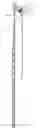
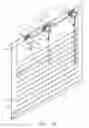
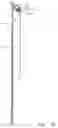
BRIEF DESCRIPTION OF THE DRAWINGSFIG. 1A is a perspective view of a preferred embodiment of the present invention;
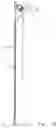
FIG. 1B is a cross-sectional view of Section 1B-1B as depicted in FIG. 1A;
FIG. 1C is a side view of FIG. 1B when operating;
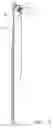
FIG. 1D is a cross-sectional view of Section 1D-1D as depicted in FIG. 1A;
FIG. 1E is a cross-sectional view of Section 1E-1E as depicted in FIG. 1A; and
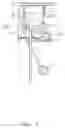
FIG. 2 is a planar view of a control reel module of the present invention.
DETAILED DESCRIPTION OF THE PREFERRED EMBODIMENTSTo make it easier for our examiner to understand the objective of the invention, its innovative features and performance, we use a preferred embodiment together with the attached drawings for the detailed description of the invention.
Referring to FIGS. 1A and 1B for a curtain with a light adjusting structure of that can be rolled up or folded, which comprises:
an adjusting unit 10, secured at the top of the curtain 20, and the adjusting unit 10 further comprising a control reel module 12 for clamping a first pulling cord 11 disposed at the middle position of the top of the curtain 20, and a hanging reel 14 provided for a second pulling cord 13 to roll the curtain 20 up, and the curtain 20 is comprised of a plurality of transversal vanes 21, and each vane 21 is made of cloth or canvas, and the curtain 20 includes a through hole 23 disposed at the bottom of the control reel module 12 for passing the first pulling cord 11. The hanging reel 14 also includes a through hole 23 disposed at the bottom for passing and connecting a second pulling cord 13. The curtain 20 includes a side frame 24 made of cloth and disposed on the left and right sides, and both ends at the top of each vane 21 are pivotally coupled to the side frame 24 on the left and right sides of the curtain 20, so that each vane 21 can be lifted to an appropriate angle as shown in FIG. 1C. The control reel module 12 of the adjusting unit 10 includes a hollow plastic housing 121 as shown in FIG. 2, and a wheel 122 is pivotally coupled to the front and rear sections inside the housing 121, and a clamping reel 123 is disposed inside the housing 121 and capable of moving vertically up and down. The first pulling cord 11 is passed between the wheel 122 and the clamping reel 123, and then through the through hole 23 of the curtain 20, and its rear section is drooped at the back of the curtain 20 and connected with the bottom of each vane 21. The front section of the first pulling cord 11 is drooped in front of the curtain 20, so that the front section of the first pulling cord 11 can be pulled downward, so that the rear section of the first pulling cord 11 drives each vane 21 to lift to an angle. The first pulling cord 11 is clamped and fixed into position by the clamping reel 123, so that each vane 21 is beveled and fixed into a position. Such arrangement allows breeze to be blown from outside into the room, and also allows appropriate amount of light to be projected into the room. Most importantly, each vane 21 is beveled to an angle, so that people from the outside cannot see what are inside the room, so as to achieve the effect of protecting our privacy.
Referring to FIGS. 1A and 1D, the hanging reel 14 is provided for winding the second pulling cord 13, so that the rear section of the second pulling cord 13 is passed through another through hole 23 of the curtain 20 and drooped at the back of the curtain. The distal end of the rear section of the second pulling cord 13 is fixed onto a transversal rod 25 at the bottom of the curtain 20. The front section of the second pulling cord 13 is wound around the hanging reel 14 at the front side of the curtain 20 and pulled transversally to another control reel module 12a on the other side of the curtain 20 as shown in FIG. 1E, and then passed between the wheel 122 inside the housing 121 and the clamping reel 123, and then drooped in front of the curtain 20 for users to pull. If the front section of the second pulling cord 13 is pulled down, the rear section of the second pulling cord 13 disposed at the back side of the curtain 20 can draw the transversal rod 25 upward, so as to draw each vane 21 upward. Further, a third pulling cord 15 is passed between the wheel 122 inside the housing 121 of the control reel module 12a and the clamping reel 123. The third pulling cord 15 is passed through the through hole 23 disposed at the bottom of the control reel module 12a of the curtain 20, and the rear section of the third pulling cord 15 is situated at the back of the curtain 20. The bottom of the rear section of the third pulling cord 15 is fixed onto the transversal rod 25, and the front section of the third pulling cord 15 can be drooped in front of the curtain 20, such that the second pulling cord 13 can be pulled.
With this structure, a user can pull the first pulling cord 11 if the user wants to draw the curtain 20 downward to shade the sunlight. Each vane 21 is lifted, and the gaps between the vanes 21 allows breeze to be blown into the room and an appropriate amount of light to be projected into the room. The plurality of vanes 21 of the curtain 20 is beveled to block the line of sight and thus achieving the effect of protecting our privacy.
If the curtain 20 is not in use, the second pulling cord 13 and the third pulling cord 15 can be pulled, so that all vanes 21 are drawn upward into a cylindrical form, and the wheel 122 inside the housing 121 of the control reel module 12a is used to clamp the clamping reel 123, and thus the vane 21 at the top of the window will not occupy much space.
While the invention has been described in terms of what is presently considered to be the most practical and preferred embodiments, it is to be understood that the invention needs not be limited to the disclosed embodiment. On the contrary, it is intended to cover various modifications and similar arrangements included within the spirit and scope of the appended claims which are to be accorded with the broadest interpretation so as to encompass all such modifications and similar structures.
Claims
What is claimed is:1. A curtain with a light adjusting structure, comprising:
an adjusting unit, coupled to the top of said curtain, and said adjusting unit further comprising a control reel module for clamping a first pulling cord and a hanging reel provided for a second pulling cord to roll up said curtain, and said curtain being comprised of a plurality of transversal vanes thereunder, and both ends of the top of said each vane being pivotally coupled to a side frame on both sides of said curtain, and said first pulling cord being passed through said control reel module, thereby its rear section is passed through said curtain and situated at the back of said curtain and coupled with the bottom of said each vane, and the front section of said first pulling cord is drooped in front of said curtain, and said second pulling cord is wound around said hanging reel, thereby its rear section is coupled to a transversal rod disposed at the bottom of the back of said curtain, and its front section is wound around and clamped by another control reel module on the other side of said curtain, and said other control reel module of said curtain is provided for winding a third pulling cord, such that said third pulling cord is passed through said curtain and disposed at the back of said curtain, and its bottom is coupled to said transversal rod, and the front section of said third pulling cord is drooped in front of said curtain.
2. The curtain with a light adjusting structure of claim 1, wherein said control reel module further comprises a hollow housing, a wheel pivotally coupled to an interior front section and an interior rear section of said housing, and a clamping reel disposed inside said housing and capable of moving vertically up and down, and said first pulling cord is passed between said wheel and said clamping reel.
3. The curtain with a light adjusting structure of a curtain of claim 1, wherein said curtain is made of cloth, and said curtain includes a through hole separately corresponding to the bottom of said control reel module and said hanging reel for passing said first pulling cord, said second pulling cord and said third pulling cord.
Images & Drawings included:

Sources:
- United States Patent and Trademark Office - verify current appl. status at the USPTO↗
Similar patent applications:
Recent applications in this class:
- » 20250109631 2025-04-03
SHADE MEMBER AND WINDOW BLIND HAVING SAME - » 20250052109 2025-02-13
AN ARRANGEMENT FOR AT LEAST PARTIALLY COVERING A WINDOW - » 20250003287 2025-01-02
WINDOW SHADE AND PANEL ASSEMBLY THEREOF - » 20240401403 2024-12-05
HIDDEN COVERING FOR TWO PANEL FENESTRATION UNIT - » 20240337150 2024-10-10
METHOD AND STRUCTURE FOR FORMING A HONEYCOMB CURTAIN - » 20240279984 2024-08-22
INTEGRATED PLEATED SCREEN ASSEMBLY - » 20240218732 2024-07-04
ADHESIVE JOINT BETWEEN WOVEN AND NONWOVEN FABRIC FOR A CELLULAR SHADE - » 20240151101 2024-05-09
ROMAN BLIND WITH SHROUD PROTECTION - » 20240076933 2024-03-07
SHADE CONFIGURED TO BE CHANGED IN WIDTH AND HEIGHT AND CONFIGURED TO TRANSFORM BETWEEN DIFFERENT TYPES OF SHADES - » 20230417103 2023-12-28
Blind, a glazing system for a terrace or a balcony, and a method for arranging a blind in connection with a glazing system for a terrace or a balcony