BRIGHTNESS CONTROL DEVICE AND METHOD FOR CRT DISPLAY UNIT AND CRT DISPLAY UNIT UTILIZING THE SAME
US20060290820A1
2006-12-28
11/425,458
2006-06-21
Abstract:
A CRT display unit with a brightness control device is provided. The brightness control comprises a main control unit generating a brightness signal controlling brightness of the display unit and a first auto brightness limit (ABL) signal according to a brightness parameter; and an offset module receiving the brightness and first ABL signals, and offsetting the first ABL signal according to the brightness signal to generate a second ABL signal keeping a ABL brightness of the display unit from being affected by the brightness parameter.
Assignee:
- BENQ CORPORATION 317 🇹🇼 TAOYUAN, Taiwan
Interested in similar patents?
Get notified when new applications in this technology area are published.
Classification:
H04N5/57 » CPC main
Details of television systems; Receiver circuitry for the reception of television signals according to analogue transmission standards Control of contrast or brightness
H04N21/4318 » CPC further
Selective content distribution, e.g. interactive television or video on demand [VOD]; Client devices specifically adapted for the reception of or interaction with content, e.g. set-top-box [STB]; Operations thereof; Processing of content or additional data, e.g. demultiplexing additional data from a digital video stream; Elementary client operations, e.g. monitoring of home network or synchronising decoder's clock; Client middleware; Generation of visual interfaces for content selection or interaction ; Content or additional data rendering by altering the content in the rendering process, e.g. blanking, blurring or masking an image region
H04N21/44008 » CPC further
Selective content distribution, e.g. interactive television or video on demand [VOD]; Client devices specifically adapted for the reception of or interaction with content, e.g. set-top-box [STB]; Operations thereof; Processing of content or additional data, e.g. demultiplexing additional data from a digital video stream; Elementary client operations, e.g. monitoring of home network or synchronising decoder's clock; Client middleware; Processing of video elementary streams, e.g. splicing a video clip retrieved from local storage with an incoming video stream, rendering scenes according to MPEG-4 scene graphs involving operations for analysing video streams, e.g. detecting features or characteristics in the video stream
H04N9/73 IPC
Details of colour television systems; Circuits for processing colour signals colour balance circuits, e.g. white balance circuits, colour temperature control
Description
BACKGROUNDThe invention is related to cathode ray tube (CRT) display and, more particularly, to a method and device of brightness control for a cathode ray tube (CRT) display unit and a CRT display unit utilizing the same.
White balance of a CRT display unit comprises adjustment of raster frame brightness, 3-inch block brightness and auto bright limit (ABL) frame brightness. The raster frame brightness is set to a cut-off condition, when the 3-inch block brightness and ABL frame brightness are being modified. When a brightness parameter is adjusted to maximum, the raster frame brightness is increased (e.g. from lower than 0.1 Ft-L to 0.5˜1.5 Ft-L), such that ABL frame brightness is increased. In general, every 1-Ft-L increase of the ABL frame brightness leads to a 0.5 W power consumption increase of the CRT display unit. Adjustment of the brightness parameter affects the ABL frame brightness and power consumption of the CRT display unit, accordingly.
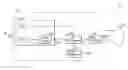
FIG. 1 illustrates a circuit block diagram of a conventional CRT display unit 10. CRT display unit 10 comprises a CRT 101 and a brightness control device 102. In brightness control device 102, main control unit (MCU) 102a generates a brightness signal Sbr and auto brightness limit (ABL) signal SABL—PWM controlling brightness of the CRT, according to a brightness parameter. An ABL compensator 102c receives the ABL signal SABL—PWM and outputs signals to an image controller 102d and a fly-back transformer 102e to control related display functions of the display unit 10. For example, image controller 102d can control a beam current of CRT 101.
As described, ABL frame brightness can still increase with brightness signal Sbr (or brightness parameter), even when voltage level of the ABL signal SABL—PWM is fixed.
Conventionally, when setting up CRT display units during manufacturing, such as processing white balance or geometry adjustment, raster frame brightness is set to a cut-off condition. However, when testing samples in the final examination or quality check (QC) stage of manufacturing, a power consumption is tested by setting the brightness to maximum, such that power consumption of CRT display units may exceed specifications.
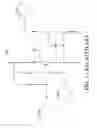
FIG. 2 illustrates a conventional circuit for brightness compensation. The circuit is complicated, consumes more layout space and cost, and may affect vertical/horizontal adjustment when adjusting the compensation of the ABL frame brightness.
A scheme for compensation of the ABL frame brightness is required to maintain power consumption of CRT display units within specifications when testing samples.
SUMMARYThe invention provides a CRT display unit, utilizing devices and methods of brightness control to generate an ABL signal that decreases as brightness parameter increases, such that the ABL frame brightness and power consumption of CRT display unit do not increase with brightness parameters.
The invention provides A brightness control device for a display unit, comprsing a main control unit generating a brightness signal controlling brightness of the display unit and a first auto brightness limit (ABL) signal according to a brightness parameter, and an offset module receiving the brightness and first ABL signals and offsetting the first ABL signal according to the brightness signal to generate a second ABL signal keeping a ABL brightness of the display unit from being affected by the brightness parameter.
The invention further provides a CRT display unit comprising a CRT, and a brightness control device comprising a main control unit generating a brightness signal controlling brightness of the display unit and a first ABL signal according to a brightness parameter, an offset module receiving the brightness and first ABL signals, and offsetting the first ABL signal according to the brightness signal to generate a second ABL signal controlling a ABL brightness of the display unit from increased with the brightness parameter, an ABL compensator receiving the second ABL signal and outputting a first and second control signal, an image controller receiving the first control signal and controlling a beam current of the cathode ray tube (CRT) of the display unit, and a fly-back transformer receiving the second control signal and controlling related display functions of the display unit.
The invention further provides a method of brightness control for a display unit comprising a main control unit generating a brightness signal controlling brightness of the CRT and a first ABL signal according to a brightness parameter. The method comprises detecting the brightness signal receiving the brightness and first ABL signals, offsetting the first ABL signal according to the brightness signal; and using the second ABL signal to maintain an ABL brightness of the display unit as brightness parameters increase.
DESCRIPTION OF THE DRAWINGSThe accompanying drawings, incorporated in and constituting a part of this specification, illustrate embodiments of the invention and, together with the description, serve to explain the features, advantages, and principles of the invention.
FIG. 1 is a circuit block diagram of a conventional CRT display unit.
FIG. 2 illustrates a conventional circuit for brightness compensation.
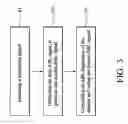
FIG. 3 is a flowchart of a method of brightness control for CRT display units according to an embodiment of the invention.
FIG. 4 is a block diagram of a CRT display unit of an embodiment of the invention.
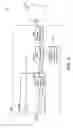
FIG. 5 is a circuit block diagram of an embodiment of brightness control unit 302 of FIG. 4.
DETAILED DESCRIPTIONFIG. 3 is a flowchart of a method of brightness control for CRT display units according to an embodiment of the invention. A CRT display unit adaptable to the method comprises at least a main control unit generating a brightness signal controlling brightness of the CRT and a first ABL signal according to a brightness parameter. The method of brightness control for CRT display units comprises the following steps.
First, brightness signal is detected (Step S1). The brightness and first ABL signals then are received, and the first ABL signal is offset according to the brightness signal (Step S2). The second ABL signal is used to keep an ABL brightness of the display unit (Step S3) from being increased with brightness parameter. In this embodiment, even when brightness parameter is set to maximum during testing, power consumption does not exceed specifications of the CRT display or QC testers.
FIG. 4 is a block diagram of a CRT display unit of an embodiment of the invention, implemented with the described method.
CRT display unit 30 comprises a CRT 301 and a brightness control device 302. The brightness control device 302 comprises at least a main control unit 302a and a offset module 302b. Main control unit 302a generates a brightness signal Sbr controlling brightness of the CRT display unit 301 and a first ABL signal SABL—1 according to a brightness parameter Pbr. Offset module 302b receives the brightness and first ABL signals Sbr and SABL—1, and offsets the first ABL signal SABL—1 according to the brightness signal Sb to generate a second ABL signal SABL—2 keeping a ABL brightness of the CRT display unit 301 from being increased with brightness parameter Pbr.
Offset module 302b generates an offset value Soff (not shown in FIG. 4) according to the brightness signal Sb and generates the second ABL signal SABL—2 by subtracting the offset value Soff from the first ABL signal SABL—1. The offset value Soff can be acquired by multiplying the brightness signal Sb with a predetermined ratio.
In this embodiment, brightness parameter Pbr can be delivered by an analog or digital signal. For example, when brightness parameter Pbr is an analog signal, after receiving brightness parameter Pbr, main control unit 302a utilizes built-in analog-to-digital converters A/D1 and A/D2 to generate brightness signal Sbr and first ABL signal SABL—1. Offset value Soff is acquired according to brightness signal Sbr:
Soff
=
[
word
×
(
S
br
-
C
)
]
×
(
A
B
)
.
First ABL signal SABL—1 is then offset to generate a second ABL signal SABL—2 according to value [SABL—1−Soff], wherein A and B are constants, “word” is data bit length used by main control unit 302a and C is a brightness threshold. For example, if brightness is 256°, C can be set to 77 when offset is required after brightness exceed 30%.
CRT display unit in FIG. 4 further comprises an ABL compensator 302c receiving the second ABL signal SABL—2 and outputting first and second control signals SC1 and SC2; an image controller 302d receiving the first control signal SC1 and controlling a beam current of the CRT 301; and a fly-back transformer 302e receiving the second control signal SC2 and controlling related display functions of the display unit.
FIG. 5 is a circuit block diagram of an embodiment of brightness control unit 302 of FIG. 4. In this embodiment, main control unit 302a is a microcontroller IC, such as IC MTV312M64 manufactured by Myson technology. Image is an IC such as IC LM1247 manufactured by National Semiconductor. IC LM1247 comprises an auto beam limiter 302d1 receiving first control signal SC1 and output Rout, Gout and Bout signal to control the beam current of the CRT 301.
Additionally, in FIG. 5, offset module 302b is implemented internally in main control unit 302a, in a form such as a software module to process the offset function. Offset module 302b can also be implemented as a hardware circuit external to the main control unit 302a.
Table 1 lists relationships between brightness parameter and power consumption without offsetting the SABL—1 signal.
| TABLE 1 | ||||
| Brightness | ABL frame | SABL—1 | power | |
| Parameter | Brightness | Voltage | consumption | |
| 0 | 28.2 | 3.78 | 72.2 | |
| 30(cut-off) | 30.0 | 3.78 | 73.1 | |
| 40 | 30.4 | 3.78 | 73.3 | |
| 50 | 31.3 | 3.78 | 73.8 | |
| 60 | 32.2 | 3.78 | 74.2 | |
| 70 | 33.2 | 3.78 | 74.7 | |
| 80 | 33.6 | 3.78 | 74.9 | |
| 90 | 34.0 | 3.78 | 75.1 | |
| 100(max) | 34.5 | 3.78 | 75.4 | |
Table 2 lists relationships between brightness parameter and power consumption with the SABL—1 signal offset.
| TABLE 2 | ||||
| Brightness | ABL frame | SABL—2 | power | |
| Parameter | Brightness | Voltage | consumption | |
| 0 | 28.2 | 3.78 | 72.2 | |
| 30(cut-off) | 30.0 | 3.64 | 73.1 | |
| 40 | 30.0 | 3.62 | 73.1 | |
| 50 | 30.0 | 3.58 | 73.1 | |
| 60 | 30.0 | 3.54 | 73.1 | |
| 70 | 30.0 | 3.50 | 73.1 | |
| 80 | 30.0 | 3.46 | 73.1 | |
| 90 | 30.0 | 3.43 | 73.1 | |
| 100(max) | 30.0 | 3.39 | 73.1 | |
Referring to Table 1, when brightness parameter is raised, because voltage level of first ABL signal SABL—1 of main control unit remains at 3.78V and ABL frame brightness (in Ft-L) increases commensurately, power consumption of the CRT display increases accordingly.
Referring further to Table 2, when brightness parameter is raised, because voltage level of second ABL signal SABL—2 offset from first ABL signal SABL—1 decreases commensurately, ABL frame brightness (in Ft-L) does not increase commensurately, such that the power consumption of the CRT display does not increase commensurately.
While the invention has been described by way of example and in terms of preferred embodiment, it is to be understood that the invention is not limited thereto. Those skilled in the technology can still make various alterations and modifications without departing from the scope and spirit of this invention. Therefore, the scope of the present invention shall be defined and protected by the following claims and their equivalents.
Claims
What is claimed is:1. A brightness control device for a display unit, comprsing:
a main control unit generating a brightness signal controlling brightness of the display unit and a first auto brightness limit (ABL) signal according to a brightness parameter; and
an offset module receiving the brightness and first ABL signals, and offsetting the first ABL signal according to the brightness signal to generate a second ABL signal keeping a ABL brightness of the display unit from being affected by the brightness parameter.
2. The brightness control device as claimed in claim 1, further comprising:
an ABL compensator receiving the second ABL signal and outputting first and second control signals;
an image controller receiving the first control signal and controlling a beam current of a cathode ray tube (CRT) of the display unit; and
a fly-back transformer receiving the second control signal and controlling related display functions of the display unit.
3. The brightness control device as claimed in claim 1, wherein the offset module generates an offset value according to the brightness signal and generates the second ABL signal by subtracting the offset value from the first ABL signal.
4. The brightness control device as claimed in claim 3, wherein the offset value equals the product of the brightness signal and a predetermined ratio.
5. The brightness control device as claimed in claim 3, wherein the main control unit is a microcontroller controlling operations of the offset module.
6. The brightness control device as claimed in claim 2, wherein the image controller comprises an auto beam limiter receiving the first control signal.
7. A CRT display unit comprising:
a CRT; and
a brightness control device comprsing:
a main control unit generating a brightness signal controlling brightness of the display unit and a first ABL signal according to a brightness parameter;
an offset module receiving the brightness and first ABL signals, and offsetting the first ABL signal according to the brightness signal to generate a second ABL signal keeping a ABL brightness of the display unit from being increased with brightness parameter;
an ABL compensator receiving the second ABL signal and outputting first and second control signals;
an image controller receiving the first control signal and controlling a beam current of the cathode ray tube (CRT) of the display unit; and
a fly-back transformer receiving the second control signal and controlling related display functions of the display unit.
8. The CRT display unit as claimed in claim 7, wherein the offset module generates an offset value according to the brightness signal and generates the second ABL signal by subtracting the offset value from the first ABL signal.
9. The CRT display unit as claimed in claim 8, wherein the offset value equals the product of the brightness signal and a predetermined ratio.
10. The CRT display unit as claimed in claim 8, wherein the main control unit is a microcontroller controlling operations of the offset module.
11. The CRT display unit as claimed in claim 8, wherein the image controller comprises an auto beam limiter receiving the first control signal.
12. A method of brightness control for a display unit comprising a main control unit generating a brightness signal controlling brightness of the CRT and a first ABL signal according to a brightness parameter; wherein the method comprises:
detecting the brightness signal;
receiving the brightness and first ABL signals, and offsetting the first ABL signal according to the brightness signal; and
using the second ABL signal to keep an ABL brightness of the display unit from being increased with brightness parameter.
13. The method as claimed in claim 12, further comprising generating an offset value according to the brightness signal and generates the second ABL signal by subtracting the offset value from the first ABL signal.
14. The method as claimed in claim 13, wherein the offset value equals to the product of the brightness signal and a predetermined ratio.
Images & Drawings included:

Sources:
- United States Patent and Trademark Office - verify current appl. status at the USPTO↗
Recent applications in this class:
- » 20220417466 2022-12-29
METHOD AND APPARATUS FOR ADJUSTING VIDEO BRIGHTNESS - » 20220201239 2022-06-23
Contrast enhanced images composited with artificial colorization - » 20220191425 2022-06-16
Display system, display method, and display apparatus - » 20220182574 2022-06-09
Display system, display method, and display apparatus - » 20220182573 2022-06-09
Display system, display method, and display apparatus - » 20210400229 2021-12-23
Method for processing static pattern in an image and circuit system - » 20210168324 2021-06-03
Detection and display of mixed 2D/3D content - » 20210075998 2021-03-11
Display system, display method, and display apparatus - » 20210075997 2021-03-11
Display system, display method, and display apparatus - » 20210075996 2021-03-11
Display system, display method, and display apparatus
Recent applications for this Assignee:
- » 20090231371 2009-09-17
APPARATUS AND METHOD FOR SUPPLYING VOLTAGE TO NOZZLE IN INKJET PRINTER - » 20080310295 2008-12-18
METHODS FOR EXTRA APPENDING DATA IN A MULTIPLE LAYER DISC - » 20080239254 2008-10-02
Projector with enhanced grounding effect - » 20080150961 2008-06-26
DISPLAYS WITH EMBEDDED COLOR TRACKING ALGORITHM BASED ON PANEL OPTICAL CHARACTERISTICS - » 20080142664 2008-06-19
SUPPORTS FOR ELECTRONIC DEVICES - » 20080132258 2008-06-05
METHOD AND APPARATUS FOR BARRING SHORT MESSAGES - » 20080113546 2008-05-15
Portable electronic device - » 20080106529 2008-05-08
PROCESSING METHODS AND SYSTEMS FOR DRIVERS - » 20080104598 2008-05-01
SYSTEMS AND METHODS FOR OPERATION SCHEDULING - » 20080098381 2008-04-24
SYSTEMS AND METHODS FOR FIRMWARE UPDATE IN A DATA PROCESSING DEVICE