Thermally conductive grease and methods and devices in which said grease is used
US20060292840A1
2006-12-28
10/571,956
2004-09-16
✅ Patent granted
US 7,695,817 B2
2010-04-13
WO; PCT/US2004/030818; 20040916
WO; WO2005/047378; 20050526
Kuo-Liang Peng
2026-09-06
Abstract:
A thermally conductive grease includes (A) a polyorganosiloxane having a viscosity less than 50 cSt (mm2/s) at 25° C. and (B) a thermally conductive filler. The thermally conductive grease is useful as a thermal interface material for electronic devices.
Inventors:
- Mark Fisher 17 🇺🇸 Midland, MI, United States
- Zuchen Lin 9 🇺🇸 Midland, MI, United States
- Shizhong Zhang 2 🇺🇸 Midland, MI, United States
Assignee:
- DOW CORNING CORPORATION 738 🇺🇸 MIDLAND, MI, United States
Interested in similar patents?
Get notified when new applications in this technology area are published.
Classification:
C09K5/14 » CPC further
Heat-transfer, heat-exchange or heat-storage materials, e.g. refrigerants; Materials for the production of heat or cold by chemical reactions other than by combustion; Materials not undergoing a change of physical state when used Solid materials, e.g. powdery or granular
H01L23/3737 » CPC further
Details of semiconductor or other solid state devices; Arrangements for cooling, heating, ventilating or temperature compensation ; Temperature sensing arrangements; Selection of materials, or shaping, to facilitate cooling or heating, e.g. heatsinks; Cooling facilitated by selection of materials for the device or materials for thermal expansion adaptation, e.g. carbon Organic materials with or without a thermoconductive filler
C08K3/013 » CPC further
Use of inorganic substances as compounding ingredients characterized by their specific function Fillers, pigments or reinforcing additives
C08K2003/2227 » CPC further
Use of inorganic substances as compounding ingredients; Oxygen-containing compounds, e.g. metal carbonyls; Oxides; Hydroxides of metals of aluminium
C08K2003/2296 » CPC further
Use of inorganic substances as compounding ingredients; Oxygen-containing compounds, e.g. metal carbonyls; Oxides; Hydroxides of metals of zinc
C08K2003/382 » CPC further
Use of inorganic substances as compounding ingredients; Boron-containing compounds and nitrogen
H01L2224/16 » CPC further
Indexing scheme for arrangements for connecting or disconnecting semiconductor or solid-state bodies and methods related thereto as covered by; Means for bonding being attached to, or being formed on, the surface to be connected, e.g. chip-to-package, die-attach, "first-level" interconnects; Manufacturing methods related thereto; Bump connectors; Manufacturing methods related thereto; Structure, shape, material or disposition of the bump connectors after the connecting process of an individual bump connector
H01L2924/01004 » CPC further
Indexing scheme for arrangements or methods for connecting or disconnecting semiconductor or solid-state bodies as covered by; Chemical elements Beryllium [Be]
H01L2924/01019 » CPC further
Indexing scheme for arrangements or methods for connecting or disconnecting semiconductor or solid-state bodies as covered by; Chemical elements Potassium [K]
H01L2924/01079 » CPC further
Indexing scheme for arrangements or methods for connecting or disconnecting semiconductor or solid-state bodies as covered by; Chemical elements Gold [Au]
H01L2924/01322 » CPC further
Indexing scheme for arrangements or methods for connecting or disconnecting semiconductor or solid-state bodies as covered by; Alloys; Binary Alloys Eutectic Alloys, i.e. obtained by a liquid transforming into two solid phases
H01L2924/3011 » CPC further
Indexing scheme for arrangements or methods for connecting or disconnecting semiconductor or solid-state bodies as covered by; Technical effects; Electrical effects Impedance
Y10T428/259 » CPC further
Stock material or miscellaneous articles; Web or sheet containing structurally defined element or component and including a second component containing structurally defined particles Silicic material
Y10T428/31663 » CPC further
Stock material or miscellaneous articles; Composite [nonstructural laminate]; Of asbestos As siloxane, silicone or silane
C08K3/22 » CPC main
Use of inorganic substances as compounding ingredients; Oxygen-containing compounds, e.g. metal carbonyls; Oxides; Hydroxides of metals
C08K3/38 » CPC further
Use of inorganic substances as compounding ingredients Boron-containing compounds
C08L83/04 » CPC further
Compositions of macromolecular compounds obtained by reactions forming in the main chain of the macromolecule a linkage containing silicon with or without sulfur, nitrogen, oxygen or carbon only; Compositions of derivatives of such polymers Polysiloxanes
H01L2924/16152 » CPC further
Indexing scheme for arrangements or methods for connecting or disconnecting semiconductor or solid-state bodies as covered by; Details of package parts other than the semiconductor or other solid state devices to be connected; Cap; Shape Cap comprising a cavity for hosting the device, e.g. U-shaped cap
H01L2224/73253 » CPC further
Indexing scheme for arrangements for connecting or disconnecting semiconductor or solid-state bodies and methods related thereto as covered by; Means for bonding being of different types provided for in two or more of groups; Location after the connecting process on different surfaces Bump and layer connectors
H01L2924/15311 » CPC further
Indexing scheme for arrangements or methods for connecting or disconnecting semiconductor or solid-state bodies as covered by; Details of package parts other than the semiconductor or other solid state devices to be connected; Die mounting substrate; Connection portion the connection portion being formed only on the surface of the substrate opposite to the die mounting surface being a ball array, e.g. BGA
H01L2224/83192 » CPC further
Indexing scheme for arrangements for connecting or disconnecting semiconductor or solid-state bodies and methods related thereto as covered by; Methods for connecting semiconductor or other solid state bodies using means for bonding being attached to, or being formed on, the surface to be connected using a layer connector; Arrangement of the layer connectors prior to mounting wherein the layer connectors are disposed only on another item or body to be connected to the semiconductor or solid-state body
H01L2224/73204 » CPC further
Indexing scheme for arrangements for connecting or disconnecting semiconductor or solid-state bodies and methods related thereto as covered by; Means for bonding being of different types provided for in two or more of groups; Location after the connecting process on the same surface; Bump and layer connectors the bump connector being embedded into the layer connector
H01L2924/00 » CPC further
Indexing scheme for arrangements or methods for connecting or disconnecting semiconductor or solid-state bodies as covered by
C08G77/20 IPC
Macromolecular compounds obtained by reactions forming a linkage containing silicon with or without sulfur, nitrogen, oxygen or carbon in the main chain of the macromolecule; Polysiloxanes containing silicon bound to unsaturated aliphatic groups
B32B5/16 IPC
Layered products characterised by the non- homogeneity or physical structure, i.e. comprising a fibrous, filamentary, particulate or foam layer; Layered products characterised by having a layer differing constitutionally or physically in different parts characterised by features of a layer formed of particles, e.g. chips, powder or granules
H01L21/20 IPC
Processes or apparatus adapted for the manufacture or treatment of semiconductor or solid state devices or of parts thereof; Manufacture or treatment of semiconductor devices or of parts thereof the devices having at least one potential-jump barrier or surface barrier, e.g. PN junction, depletion layer or carrier concentration layer the devices having semiconductor bodies comprising elements of Group IV of the Periodic System or AB compounds with or without impurities, e.g. doping materials Deposition of semiconductor materials on a substrate, e.g. epitaxial growth solid phase epitaxy
B32B25/20 IPC
Layered products comprising natural or synthetic rubber comprising silicone rubber
Description
CROSS REFERENCE TO RELATED APPLICATIONSThis application claims priority under 35 U.S.C. §119(e) to U.S. Provisional Patent Application Ser. No. 60/517,448 filed on Nov. 5, 2003.
FIELD OF THE INVENTIONThis invention relates to a thermally conductive grease (“grease”), methods for preparation and use of the grease, and devices containing the grease. More particularly, this invention relates to a grease comprising an organopolysiloxane having a viscosity less than 50 cSt (mm2/s) at 25° C. and a thermally conductive filler. The grease may be used as a thermal interface material (“TIM”).
BACKGROUNDElectronic components such as semiconductors, transistors, integrated circuits (ICs), discrete devices, and others known in the art are designed to operate at a normal operating temperature or within a normal operating temperature range. However, the operation of an electronic component generates heat. If sufficient heat is not removed, the electronic component will operate at a temperature significantly above its normal operating temperature. Excessive temperatures can adversely affect performance of the electronic component and operation of the device associated therewith and negatively impact mean time between failures.
To avoid these problems, heat can be removed by thermal conduction from the electronic component to a heat sink. The heat sink can then be cooled by any convenient means such as convection or radiation techniques. During thermal conduction, heat can be transferred from the electronic component to the heat sink by surface contact between the electronic component and the heat sink or by contact of the electronic component and heat sink with a TIM. The lower the thermal impedance of the medium, the greater the flow of heat from the electronic component to the heat sink.
Surfaces of the electronic component and the heat sink are typically not completely smooth, therefore, it is difficult to achieve full contact between the surfaces. Air spaces, which are poor thermal conductors, appear between the surfaces and increase impedance. These spaces can be filled by inserting a TIM between the surfaces. Therefore, there is a continuing need for suitable TIMs.
SUMMARY OF THE INVENTIONThis invention relates to a thermally conductive grease comprising: (A) a polyorganosiloxane having a viscosity of less than 50 centiStokes (mm2/s), and (B) a thermally conductive filler. This invention further relates to methods and devices in which the grease may be used.
DETAILED DESCRIPTION OF THE INVENTIONAll amounts, ratios, and percentages are by weight unless otherwise indicated. The following is a list of definitions, as used herein.
Definitions and Usage of Terms“A” and “an” each mean one or more.
“Bleed” means a tendency of siloxane species to migrate out of a grease onto a surface on which the grease is applied.
“Combination” means two or more items put together by any method.
The abbreviation “cSt” means centiStokes.
“Siloxane” and “silicone” are used synonymously herein.
“Substituted” means one or more hydrogen atoms bonded to a carbon atom has been replaced with another substituent.
“Surface treated” means that all, or a portion of, reactive groups on a particle have been rendered unreactive by any convenient chemical or unreactive means.
The abbreviation “W/mK” means Watts per meter Kelvin.
CompositionThis invention relates to a grease comprising:
(A) 2 to 50% by weight of a polyorganosiloxane, where
-
- ingredient (A) has a viscosity of less than 50 centiStokes (mm2/s), and
- ingredient (A) is free of hydroxyl groups, and
(B) 50 to 98% by weight of a thermally conductive filler, where
the grease is free of silica.
PolyorganosiloxaneIngredient (A) is a polyorganosiloxane having a viscosity of less than 50 cSt (mm2/s), alternatively 1 to 47 cSt (mm2/s). Ingredient (A) may be inert such that ingredient (A) does not react or increase in viscosity over time when used in the grease. Ingredient (A) may be free of reactive groups, such as hydroxyl groups. “Free of reactive groups” means that less than 0.01 wt% of the polyorganosiloxane species contain reactive groups. “Free of silica” means that the grease contains less silica than an amount sufficient to eliminate Bleed. Ingredient (A) may have a linear, branched, or cyclic structure. Ingredient (A) may be a single polyorganosiloxane or a combination comprising two or more polyorganosiloxanes that differ in at least one of the following properties: structure, viscosity, average molecular weight, siloxane units, and sequence.
Ingredient (A) may have the general formula: RmSiO(4-m)/2, where each R independently represents an organic group and m is 1.8 to 2.3. R is exemplified by substituted and unsubstituted monovalent hydrocarbon groups containing 1 to 30 carbon atoms, nitrogen containing groups, polyether containing groups, and epoxy containing groups. Examples of unsubstituted monovalent hydrocarbon groups include alkyl groups such as methyl, ethyl, propyl, butyl, pentyl, hexyl, heptyl, octyl, nonyl, and decyl and aromatic groups such as phenyl, tolyl, and xylyl. Examples of substituted monovalent hydrocarbon groups include halogenated hydrocarbon groups such as 3,3,3-trifluoropropyl and chloromethyl and cyanofunctional groups such as cyanoethyl and cyanopropyl.
Ingredient (A) may have a structure selected from:
(a) R13SiO(R12SiO)α(R1R2SiO)βSiR13,
(b) R32R4SiO(R32SiO)χ(R3R4SiO)δSiR32R4, or
(c) a combination thereof.
In the formulae above, each R1 is independently a monovalent hydrocarbon group of 1 to 6 carbon atoms, alternatively 1 to 4 carbon atoms. Each R2 is independently a monovalent hydrocarbon group of 1 to 30 carbon atoms, alternatively 1 to 10 carbon atoms. Each R3 is independently a monovalent hydrocarbon group of 1 to 6 carbon atoms, alternatively 1 to 4 carbon atoms. Each R4 is independently a monovalent hydrocarbon group of 1 to 30 carbon atoms, alternatively 1 to 10 carbon atoms. The subscripts α, β, χand δ, have values such that the viscosity of ingredient (A) is less than 50 cSt (mm2/s) at 25° C.
Methods of preparing polyorganosiloxanes suitable for use as ingredient (A), such as hydrolysis and condensation of the corresponding organohalosilanes or equilibration of cyclic polydiorganosiloxanes, are well known in the art.
Thermally Conductive FillerIngredient (B) is a thermally conductive filler. The amount of ingredient (B) in the grease depends on various factors including the polyorganosiloxane selected for ingredient (A) and the filler selected for ingredient (B). The amount of ingredient (B) may be 50 to 98% based on the weight of the grease.
Ingredient (B) may be both thermally conductive and electrically conductive. Alternatively, ingredient (B) may be thermally conductive and electrically insulating. Suitable thermally conductive fillers for ingredient (B) include metal particles, metal oxide particles, and a combination thereof. Suitable thermally conductive fillers for ingredient (B) are exemplified by aluminum oxide; barium titanate; beryllium oxide; boron nitride; diamond; graphite; magnesium oxide; metal particulate such as copper, gold, nickel, and silver; silicon carbide; tungsten carbide; zinc oxide, and combinations thereof. Alternatively, ingredient (B) is exemplified by aluminum oxide, boron nitride, silicon carbide, zinc oxide, and combinations thereof. Alternatively, ingredient (B) may comprise a metal particle having a layer of conductive material (other than the metal) on its surface. For example, ingredient (B) may comprise a metal filler having a metal oxide layer on the surface of the filler, e.g., aluminum filler having an aluminum oxide layer on the surface of the aluminum filler. Due to the reactive nature of aluminum nitride, the grease may be free of aluminum nitride.
Thermally conductive fillers are known in the art and commercially available, see for example, U.S. Pat. No. 6,169,142 (col. 4, lines 7-33). For example, CB-A20S and Al-43-Me are aluminum oxide fillers of differing particle sizes commercially available from Showa-Denko, and AA-04, AA-2, and AA18 are aluminum oxide fillers commercially available from Sumitomo Chemical Company. Zinc oxide, such as zinc oxide 205XL is commercially available from U.S. Zinc.
Silver filler is commercially available from Metalor Technologies U.S.A. Corp. of Attleboro, Mass., U.S.A.
The shape of the thermally conductive filler particles is not specifically restricted, however, rounded or spherical particles may prevent viscosity increase to an undesirable level upon high loading of the thermally conductive filler in the grease.
Ingredient (B) may be a single thermally conductive filler or a combination of two or more thermally conductive fillers that differ in at least one of the following properties: particle shape, average particle size, and particle size distribution. For example, it may be desirable to combine a first aluminum oxide having a larger average particle size with a second aluminum oxide having a smaller average particle size in a proportion meeting the closest packing theory distribution curve. This improves packing efficiency and may reduce viscosity and enhance heat transfer. Alternatively, it may be desirable, for example, to combine an aluminum oxide having a larger average particle size with a zinc oxide having a smaller average particle size.
The average particle size of the thermally conductive filler will depend on various factors including the type of thermally conductive filler selected for ingredient (B) and the exact amount added to the grease, however, the thermally conductive filler may have an average particle size of 0.2 to 80 micrometers, alternatively 2 to 50 micrometers.
The thermally conductive filler for ingredient (B) may optionally be surface treated. Treating agents and treating methods are known in the art see for example, U.S. Pat. No. 6,169,142 (col. 4, line 42 to col. 5, line 2) and U.S. Pat. No. 6,136,758. The grease may comprise 0.05% to 10%, alternatively 0.05% to 5%, alternatively 0.05% to 0.5%, of a ingredient (C), a treating agent.
The treating agent may be an alkoxysilane having the formula: R5xSi(OR6)(4-x), where x is 1, 2, or 3; alternatively x is 3. R5 is a substituted or unsubstituted monovalent hydrocarbon group of 1 to 50 carbon atoms, alternatively 8 to 30 carbon atoms, alternatively 8 to 18 carbon atoms. R5 is exemplified by alkyl groups such as hexyl, octyl, dodecyl, tetradecyl, hexadecyl, and octadecyl; and aromatic groups such as benzyl and phenylethyl. R5 may be saturated or unsaturated, branched or unbranched, and unsubstituted. R5 may be saturated, unbranched, and unsubstituted.
R6 is an unsubstituted, saturated hydrocarbon group of 1 to 4 carbon atoms, alternatively 1 to 2 carbon atoms. Component C) is exemplified by hexyltrimethoxysilane, octyltriethoxysilane, decyltrimethoxysilane, dodecyltrimethyoxysilane, tetradecyltrimethoxysilane, phenylethyltrimethoxysilane, octadecyltrimethoxysilane, octadecyltriethoxysilane, and combinations thereof.
Alkoxy-functional oligosiloxanes may also be used as treating agents. Alkoxy-functional oligosiloxanes and methods for their preparation are known in the art, see for example, EP 1 101 167 A2. For example, suitable alkoxy-functional oligosiloxanes include those of the formula (R6O)aSi(OSiR72R8)4-a. In this formula, a is 1, 2 or 3, alternatively a is 3. Each R6 may be an alkyl group. Each R7 is may be independently selected from unsaturated monovalent hydrocarbon groups of 1 to 10 carbon atoms. Each R8 may be an unsaturated monovalent hydrocarbon group having at least 10 carbon atoms.
Metal fillers may be treated with alkylthiols such as octadecyl mercaptan; fatty acids such as oleic acid and stearic acid; and a combination thereof.
Treating agents for alumina include alkoxysilyl functional alkylmethyl polysiloxanes (e.g., partial hydrolysis condensate of R9bR10cSi(OR11)(4-b-c) or cohydrolysis condensates or mixtures), similar materials where the hydrolyzable group would be silazane, acyloxy or oximo. In all of these, a group tethered to Si, such as R9 in the formula above, is a long chain unsaturated monovalent hydrocarbon or monovalent aromatic-functional hydrocarbon. R10 is a monovalent hydrocarbon group, and R11 is a monovalent hydrocarbon group of 1 to 4 carbon atoms. In the formula above, b is 1, 2, or 3 and c is 0, 1, or 2, with the proviso that b+c is 1, 2, or 3. One skilled in the art could optimize a specific treatment to aid dispersion of the filler without undue experimentation.
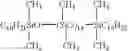
Other filler treating agents include alkenyl functional polyorganosiloxanes. Suitable alkenyl functional polyorganosiloxanes include, but are not limited to:
where n has a value up to 1,500.
Optional ingredient (D) is an antioxidant. Ingredient (D) may comprise any antioxidant commonly used in plastics such as polypropylene. Ingredient (D) may be added to the grease in an amount of 0.001% to 1%.
Suitable antioxidants are known in the art and commercially available. Suitable antioxidants include phenolic antioxidants and combinations of phenolic antioxidants with stabilizers. Phenolic antioxidants include fully sterically hindered phenols and partially hindered phenols. Stabilizers include organophosphorous derivatives such as trivalent organophosphorous compound, phosphites, phosphonates, and a combination thereof; thiosynergists such as organosulfur compounds including sulfides, dialkyldithiocarbamate, dithiodipropionates, and a combination thereof; and sterically hindered amines such as tetramethyl-piperidine derivatives. Suitable antioxidants and stabilizers are disclosed in Zweifel, Hans, “Effect of Stabilization of Polypropylene During Processing and Its Influence on Long-Term Behavior under Thermal Stress,” Polymer Durability, Ciba-Geigy AG, Additives Division, CH4002, Basel, Switzerland, American Chemical Society, vol. 25, pp. 375-396, 1996.
Suitable phenolic antioxidants include vitamin E and IRGANOX® 1010 from Ciba Specialty Chemicals, U.S.A. IRGANOX® 1010 comprises pentaerythriol tetrakis(3-(3,5-di-t-butyl-4-hydroxyphenyl)propionate).
Optional ingredient (E) is a vehicle such as a solvent or diluent. Ingredient (E) may be added during preparation of the grease, for example, to aid mixing and delivery. All or a portion of ingredient (E) may optionally be removed after the grease is prepared.
Optional ingredient (F) is a wetting agent. Suitable wetting agents include the anionic, cationic, and nonionic surfactants known in the art to act as wetting agents. Anionic wetting agents are exemplified by TERGITOL® No. 7, cationic wetting agents are exemplified by TRITON® X-100, and nonionic wetting agents are exemplified by TERGITOL® NR 27.
Optional ingredient (G) is an antifoaming agent
Optional ingredient (H) is a pigment. Examples of suitable pigments include Stan-Tone 50SP01 Green (which is commercially available from PolyOne) and carbon black such as Shawinigan Acetylene black, which is commercially available from Chevron Phillips Chemical Company LP.
Optional ingredient (I) is a flame retardant.
Optional ingredient (J) is a spacer. Spacers may comprise organic particles, inorganic particles, or a combination thereof. Spacers may be thermally conductive, electrically conductive, or both. Spacers may have a particle size of 25 micrometers to 250 micrometers. Spacers may comprise monodisperse beads. The amount of ingredient (J) depends on various factors including the distribution of particles, pressure to be applied during placement, and temperature during placement. The grease may contain up to 15%, alternatively up to 5% of ingredient (J) added in addition to, or instead of, a portion of ingredient (B).
Optional ingredient (K) is a low melting metal. Ingredient (K) may comprise Ga, In, Sn, or an alloy thereof. The low melting metal may optionally further comprise Ag, Bi, Cd, Cu, Pb, Zn, or a combination thereof. Examples of suitable low melting metals include Ga, In—Bi—Sn alloys, Sn—In—Zn alloys, Sn—In—Ag alloys, Sn—Ag—Bi alloys, Sn—Bi—Cu—Ag alloys, Sn—Ag—Cu—Sb alloys, Sn—Ag—Cu alloys, Sn—Ag alloys, Sn—Ag—Cu—Zn alloys, and combinations thereof. The low melting metal may have a melting point of up to 250° C., alternatively up to 225° C. The low melting metal may have a melting point of at least 50° C., alternatively at least 150° C. The low melting metal may be a eutectic alloy, a non-eutectic alloy, or a pure metal. Low melting metals are commercially available. The low melting metal may comprise 1% to 20% of the weight of the grease.
Method of MakingThe grease described above may be made by mixing all ingredients at ambient or elevated temperature using any convenient mixing equipment, such as a centrifugal mixer (such as a mixer commercially available from Hauschild) or a resonant-sonic mixer (commercially available from Resodyn Corporation). When ingredient C) is present, the grease may optionally be prepared by surface treating ingredient B) and any other particulate ingredients with ingredient C) and thereafter mixing the resulting treated particulates with the other ingredients in the grease. Alternatively, ingredient C) may be mixed with some or all of the other ingredients simultaneously.
Method of UseThe grease described above may be used as a thermal interface material (TIM). The grease may be interposed along a thermal path between a heat source and a heat spreader or a heat sink. The grease may be interposed by any convenient means, such as wet-dispensing, screen printing, stencil printing, or solvent casting the grease.
The heat source may comprise an electronic component such as a semiconductor, a transistor, an integrated circuit, or a discrete device.
The heat spreader may comprise a thermally conductive plate, a thermally conductive cover, a fan, a circulating coolant system, or a combination thereof. The grease may be used in direct contact with the electronic component and the heat spreader (TIM1). The grease may be applied either to the electronic component and thereafter the heat spreader, or the grease may be applied to the heat spreader and thereafter to the electronic component. Alternatively, the grease may be used in direct contact with the heat spreader and a heat sink (TIM2). The grease may be applied either to the heat sink and thereafter the heat spreader, or the grease may be applied to the heat spreader and thereafter to the heat sink. Alternatively, the grease may be used in direct contact with the electronic component and the heat sink. The grease may be applied either to the electronic component and thereafter the heat sink, or the grease may be applied to the heat sink and thereafter to the electronic component.
This invention further relates to a product comprising:
a) an electronic component,
b) an interface material, and
c) a heat sink;
where the interface material is arranged along a thermal path extending from a surface of the electronic component to a surface of the heat sink, where the interface material comprises the grease described above.
This invention further relates to a product comprising:
a) a heat spreader, and
b) an interface material on a surface of the heat spreader,
where the interface material and the heat spreader are configured to comprise a portion of a thermally conductive path between an electronic component and a heat sink, and where the interface material comprises the grease described above.
The product may further comprise c) a heat sink, wherein the interface material contacts a surface of the heat sink. Alternatively, the interface material may contact the electronic component.
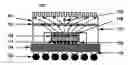
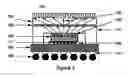
FIG. 1 shows a device 100 according to this invention. The device 100 comprises an electronic component (shown as an integrated circuit (IC) chip) 103 mounted to a substrate 104 through a die attach adhesive 109. The substrate 104 has solder balls 105 attached thereto through pads 110. A first interface material (TIM1) 106 is interposed between the IC chip 103 and a metal cover 107. The metal cover 107 acts as a heat spreader. A second interface material (TIM2) 102 is interposed between the metal cover 107 and a heat sink 101. Heat moves along a thermal path represented by arrows 108 when the device is operated.
EXAMPLESThese examples are intended to illustrate the invention to one skilled in the art and should not be interpreted as limiting the scope of the invention set forth in the claims. In the examples below, “Me” represents a methyl group.
Reference Example 1 Measurement of BleedBleed is measured using the cone-mesh oil bleeding test, ASTM D6184, at 120° C. for two days.
Reference Example 2 Measurement of BleedThe weight losses of grease samples are measured by a thermogravimetric analysis (TGA experiment). The grease is heated from 30° C. to 120° C. at 10° C./min and held at an isotherm for 24 hours under 10 ml/min N2 flow.
Reference Example 3 Preparation of PolyorganosiloxaneA siloxane with an average structure Me3SiO(SiMe2O)3(SiHMeO)6SiMe3 is reacted with 1-decene in the presence of H2PtCl6 catalyst. After the reaction, excess decenes and low molecular weight siloxanes are removed under reduced pressure at 150° C. Under a moderate reaction condition (not exceeding 140° C.), the SiH functional groups are partially converted to SiC10H21. The resulting polyorganosiloxane has a viscosity of 47 cSt (mm2/s) by a Cannon-Manning Semi-Micro viscometer at 25° C.
Example 1 Preparation of GreaseThe polyorganosiloxane prepared in Reference Example 3 (4.8 g), C1-8H37Si(OMe)3 (0.21 g), and IRGANOX® 1010 (0.04 g) are mixed with an Al2O3 and ZnO filler mixture (79.3 g). The filler mixture contains a 2:1 ratio of Al2O3: ZnO. The average particle size of Al2O3 is 10 micrometers, and the average particle size of ZnO is 1 micrometer. Mixing is performed with a Hauschild mixer. The resulting grease has a viscosity of 14,000 Poise at 0.5 s−1 shear rate under a steady rate sweep experiment on an ARES Rheometer.
Bleed is measured on the grease according to the method of Reference Example 2. The TGA trace shows that 0.22% of the weight loss took place in the first 500 minutes, and weight then stays constant. The thermal conductivity of the grease is 3.5 W/mK according to the Mathis Hotdisk method.
Bleed is also measured according to the method of Reference Example 1, and no Bleed is observed. Bleed is measured by the method of Reference Example 1 again on the same sample, except that the temperature is increased to 150° C. for two days. Again, no Bleed is observed.
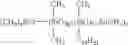
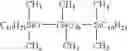
Example 2 Preparation of Grease A polyorganosiloxane having a viscosity of 29.4 cSt (mm2/s) and the average structure:
(8.4 g), C18H37Si(OMe)3 (0.4 g), and IRGANOX® 1010 (0.07 g) are mixed with an Al2O3 and ZnO filler mixture (117.8 g). The filler mixture contains a 2.3:1 ratio of Al2O3: ZnO. The average particle size of Al2O3 is 10 micrometers, and the average particle size of ZnO is 1 micrometer. Mixing is performed with a Hauschild mixer. The resulting grease has a viscosity of 1133 Poise at 0.5 s−1 shear rate under a steady rate sweep experiment on an AR2000 stress rheometer. The thermal conductivity of the grease measured by the Mathis Hotdisk method is 3.0 W/mK.
A polyorganosiloxane having a viscosity of 15 cSt (mm2/s) and the average structure:
(8.4 g), C18H37Si(OMe)3 (0.4 g), and IRGANOX® 1010 (0.07 g) are mixed with an Al2O3 and ZnO filler mixture (117.9 g). The filler mixture contains a 2.3:1 ratio of Al2O3: ZnO. The average particle size of Al2O3 is 10 micrometers, and the average particle size of ZnO is 1 micrometer. Mixing is performed with a Hauschild mixer. The grease has a viscosity of 1162 Poise at 0.5 s−1 shear rate under a steady rate sweep experiment on an AR2000 stress rheometer. The thermal conductivity of the grease measured by the Mathis Hotdisk method is 3.0 W/mK.
A polyorganosiloxane having a viscosity of 22 cSt (mm2/s) and the average structure:
(8.4 g), C18H37Si(OMe)3 (0.4 g), and IRGANOX® 1010 (0.07 g), are mixed with an Al2O3 and ZnO filler mixture (117.9 g). The filler mixture contains a 2.3:1 ratio of Al2O3: ZnO. The average particle size of Al2O3 is 10 micrometers, and the average particle size of ZnO is 1 micrometer. Mixing is performed with a Hauschild mixer. The grease has a viscosity of 2279 Poise at 0.5 s−1 shear rate under a steady rate sweep experiment on an AR2000 stress rheometer. The thermal conductivity of the grease measured by the Mathis Hotdisk method is 3.2 W/mK.
A grease is prepared by mixing ingredients comprising: 5.4 weight parts trimethylsiloxy-terminated dimethyl, methyldecyl siloxane; 0.02 weight parts dimethylvinylsiloxy-terminated polydimethylsiloxane; 0.05 weight parts IRGANOX® 1010; 0.01 weight part carbon black; 66 weight parts alumina treated with mono-trimethoxysiloxy, mono(vinyl, methyl, or butyl)dimethylsiloxane; 28 weight parts zinc oxide; and 0.1 weight parts octadecyltrimethoxysilane.
Industrial ApplicabilityThe inventors surprisingly found that the use of a polyorganosiloxane having a viscosity less than 50 cSt (mm2/s) at 25° C. yields a grease that exhibits little or no Bleed, even without the presence of a bleed inhibiting agent, such as silica, in the grease. “No Bleed” means that the grease does not exhibit Bleed when tested by the method of Reference Example 1. The grease may have thermal conductivity of 3 W/mK or greater. The grease is suitable for use as a thermal interface material in various electronic devices.
DRAWINGSFIG. 1 is a schematic representation of a cross section of an electronic device including the grease of this invention.
REFERENCE NUMERALS
- 100 device
- 101 heat sink
- 102 second interface material (TIM2)
- 103 integrated circuit (IC) chip
- 104 substrate
- 105 solder balls
- 106 first interface material (TIM1)
- 107 metal cover
- 108 thermal path represented by arrows
- 109 die attach adhesive
- 110 pads
Claims
1. A grease comprising:
(A) 2 to 50% by weight of a polyorganosiloxane, where
ingredient (A) has a viscosity less than 50 mm2/s), and
ingredient (A) is free of hydroxyl groups, and
(B) 50 to 98% by weight of a thermally conductive filler selected from the group consisting of aluminum oxide, boron nitride, silicon carbide, zinc oxide, and combinations thereof; where the grease is free of silica.
2. A grease comprising:
(A) 2 to 50% by weight of a polyorganosiloxane, where
ingredient (A) has a viscosity less than 50 mm2/s, and
ingredient (A) is free of reactive groups, and
(B) 50 to 98% by weight of a thermally conductive filler; where the grease is free of silica.
3. The grease of claim 2, further comprising at least one ingredient selected from the group consisting of: (C) a treating agent, (D) an antioxidant, (E) a vehicle, (F) a wetting agent, (G) an antifoaming agent, (H) a pigment, (I) a flame retardant, (J) a spacer, and (K) a low melting metal.
4. The grease of claim 2, where ingredient B) is selected from the group consisting of aluminum oxide, barium titanate, beryllium oxide, boron nitride, diamond, graphite, magnesium oxide, metal particulate, silicon carbide, tungsten carbide, zinc oxide, and combinations thereof.
5. A grease comprising:
(A) 2 to 50% by weight of a polyorganosiloxane having formula
R13SiO(R12SiO)α(R1R2SiO)βSiR13, where
each R1 is independently a monovalent hydrocarbon group of 1 to 6 carbon atoms;
each R2 is independently a monovalent hydrocarbon group of 1 to 30 carbon atoms; and
subscripts α and β have values such that the viscosity of ingredient (A) is less than 50 mm2/s at 25° C.;
(B) 50 to 98% by weight of a thermally conductive filler comprising aluminum oxide and zinc oxide;
(C) 0.05 to 10% by weight of an alkoxysilane having formula R5xSi(OR6)(4-x), where
x is 1, 2, or 3;
R5 is a substituted or unsubstituted monovalent hydrocarbon group of 1 to 50 carbon atoms; and
R6 is an unsubstituted, saturated hydrocarbon group of 1 to 4 carbon atoms;
(D) 0.001 to 1% by weight of an antioxidant; and
(E) 0.001 to 1% by weight of a pigment.
6. A method comprising: interposing the grease of claim 1 along a thermal path between a heat source and a heat spreader.
7. The method of claim 6, wherein the heat source comprises an electronic component.
8. The method of claim 6, where the heat spreader comprises a heat sink, a thermally conductive plate, a thermally conductive cover, a fan, or a circulating coolant system.
9. A device comprising:
a) an electronic component,
b) an interface material, and
c) a heat sink;
where the interface material is arranged along a thermal path extending from a surface of the electronic component to a surface of the heat sink, where the interface material comprises the grease of claims 1.
10. A device comprising:
a) a heat spreader, and
b) an interface material on a surface of the heat spreader,
where the interface material and the heat spreader are configured to comprise a portion of a thermally conductive path between an electronic component and a heat sink, and where the interface material comprises the grease of claim 1.
11. The grease of any one of claims 1, 2, and 5, where the polyorganosiloxane has a viscosity of 1 to 47 mm2/s.
12. The grease of claim 1, further comprising at least one ingredient selected from the group consisting of: (C) a treating agent, (D) an antioxidant, (E) a vehicle, (F) a wetting agent, (G) an antifoaming agent, (H) a pigment, (I) a flame retardant, (J) a spacer, and (K) a low melting metal.
13. The grease of claim 5, further comprising at least one ingredient selected from the group consisting of: (C) a treating agent, (D) an antioxidant, (E) a vehicle, (F) a wetting agent, (G) an antifoaming agent, (H) a pigment, (I) a flame retardant, (J) a spacer, and (K) a low melting metal.
14. A method comprising: interposing the grease of claim 2 along a thermal path between a heat source and a heat spreader.
15. A method comprising: interposing the grease of claim 5 along a thermal path between a heat source and a heat spreader.
16. A device comprising:
a) an electronic component,
b) an interface material, and
c) a heat sink;
where the interface material is arranged along a thermal path extending from a surface of the electronic component to a surface of the heat sink, where the interface material comprises the grease of claim 2.
17. A device comprising:
a) an electronic component,
b) an interface material, and
c) a heat sink;
where the interface material is arranged along a thermal path extending from a surface of the electronic component to a surface of the heat sink, where the interface material comprises the grease of claim 5.
18. A device comprising:
a) a heat spreader, and
b) an interface material on a surface of the heat spreader,
where the interface material and the heat spreader are configured to comprise a portion of a thermally conductive path between an electronic component and a heat sink, and where the interface material comprises the grease of claim 2.
19. A device comprising:
a) a heat spreader, and
b) an interface material on a surface of the heat spreader,
where the interface material and the heat spreader are configured to comprise a portion of a thermally conductive path between an electronic component and a heat sink, and where the interface material comprises the grease of claim 5.
Images & Drawings included:
Sources:
- United States Patent and Trademark Office - verify current appl. status at the USPTO↗
Similar patent applications:
Recent applications in this class:
- » 20250250412 2025-08-07
COMPOSITE SUBSTRATE AND METHOD FOR MANUFACTURING SAME - » 20250250411 2025-08-07
POLYAMIDE MOLDING COMPOSITION AND PREPARATION METHOD AND USE THEREOF - » 20250250410 2025-08-07
SILICONE RUBBER WITH ULTRAVIOLET AGING RESISTANCE AND LOW WATER ABSORPTION, AND PREPARATION METHOD AND APPLICATION THEREOF - » 20250250409 2025-08-07
MODIFIER FOR FLUIDITY OF INORGANIC FILLER, COMPOSITION CONTAINING INORGANIC FILLER, AND HEAT-CONDUCTIVE SILICONE SHEET - » 20250243340 2025-07-31
SYNTHESIS OF MELAMINE POLYMER MODIFIED ZINC OXIDE NANOPARTICLES AS A CORROSION INHIBITOR - » 20250223422 2025-07-10
FLAME-RETARDANT RUBBER COMPOSITION AND GASKET - » 20250215191 2025-07-03
COPPER-CHROMIUM OXIDE SPINEL, AND RESIN COMPOSITION AND RESIN MOLDED ARTICLE THEREOF - » 20250206915 2025-06-26
RESIN COMPOSITION, PREPREG, RESIN SHEET, LAMINATE, METAL FOIL-CLAD LAMINATE, AND PRINTED WIRING BOARD - » 20250197598 2025-06-19
DIRECT MELT-SPUN FULL-MATTE HIGH-VISCOSITY PET/LOW-VISCOSITY PET TWO-COMPONENT ELASTIC FIBER AND PREPARATION METHOD THEREFOR - » 20250197597 2025-06-19
A PLASTIC PRODUCT
Recent applications for this Assignee:
- » 20210002532 2021-01-07
Dual cure adhesive composition and methods for its preparation and use - » 20200208033 2020-07-02
DUAL CURE ADHESIVE COMPOSITION AND METHODS FOR ITS PREPARATION AND USE - » 20190308996 2019-10-10
Catalysis of dehydrocoupling reactions between amines and silanes - » 20190048652 2019-02-14
Panelized shadow box - » 20180299705 2018-10-18
Smart optical materials, formulations, methods, uses, articles, and devices - » 20180244851 2018-08-30
Method and composition for hydrosilylation of carboxylic acid alkenyl esters and hydrogen terminated organosiloxane oligomers with an iridium complex catalyst - » 20180211842 2018-07-26
Method for fabricating semiconductor device including forming a dielectric layer on a structure having a height difference using ALD - » 20180195232 2018-07-12
Coated fabric products - » 20180163001 2018-06-14
Polyorganosiloxane compositions with metal based N-heterocyclic carbene condensation reaction catalysts and methods for the preparation thereof - » 20180155371 2018-06-07
Process for preparing an acryloyloxysilane