Food sachets
US20070003719A1
2007-01-04
10/571,320
2004-09-02
Abstract:
Sachets are made from at least one thin and flexible film (10, 18) of a water-soluble and edible polymeric material, the film and/or films being shaped to define a sachet and filled with a food material (16), and being sealed to form a peripheral seal by RF welding between opposed electrodes (12, 20). The film may be of starch. The sachet and contents are added to water, without needing to be cut open, before being eaten or drunk, or cooked. For example the food material might be coffee powder or dried soup, or a mixture for making bread; the film dissolves readily and is substantially tasteless. RF welding provides reliable seals despite any powder on the surfaces of the film.
Assignee:
- STANELCO RF TECHNOLOGIES LTD 1 🇬🇧 Marchwood Industrial Park, United Kingdom
Interested in similar patents?
Get notified when new applications in this technology area are published.
Classification:
B65D85/808 » CPC main
Containers, packaging elements or packages, specially adapted for particular articles or materials for materials not otherwise provided for; Disposable containers or packages with contents which are infused or dissolved for immersion in the liquid to release part or all of their contents , e.g. tea bags
B29C65/04 » CPC further
Joining of preformed parts ; Apparatus therefor by heating, with or without pressure Dielectric heating, e.g. high-frequency welding, i.e. radio frequency welding of plastic materials having dielectric properties, e.g. PVC
B29C66/112 » CPC further
General aspects of processes or apparatus for joining preformed parts; General aspects dealing with the joint area or with the area to be joined; Particular design of joint configurations particular design of the joint cross-sections; Joint cross-sections comprising a single joint-segment, i.e. one of the parts to be joined comprising a single joint-segment in the joint cross-section Single lapped joints
B29C66/131 » CPC further
General aspects of processes or apparatus for joining preformed parts; General aspects dealing with the joint area or with the area to be joined; Particular design of joint configurations particular design of the joint cross-sections; Single flanged joints; Fin-type joints; Single hem joints; Edge joints; Interpenetrating fingered joints; Other specific particular designs of joint cross-sections not provided for in groups - Single flanged joints, i.e. one of the parts to be joined being rigid and flanged in the joint area
B29C66/53461 » CPC further
General aspects of processes or apparatus for joining preformed parts; General aspects of joining tubular articles; General aspects of joining long products, i.e. bars or profiled elements; General aspects of joining single elements to tubular articles, hollow articles or bars; General aspects of joining several hollow-preforms to form hollow or tubular articles; Joining tubular articles, profiled elements or bars; Joining single elements to tubular articles, hollow articles or bars; Joining several hollow-preforms to form hollow or tubular articles; Joining single elements to tubular articles, hollow articles or bars; Joining single elements to open ends of tubular or hollow articles or to the ends of bars said single elements being substantially flat joining substantially flat covers and/or substantially flat bottoms to open ends of container bodies
B29C66/73793 » CPC further
General aspects of processes or apparatus for joining preformed parts characterised by the composition, physical properties or the structure of the material of the parts to be joined; Joining with non-plastics material characterised by the intensive physical properties of the material of the parts to be joined, by the optical properties of the material of the parts to be joined, by the extensive physical properties of the parts to be joined, by the state of the material of the parts to be joined or by the material of the parts to be joined being a thermoplastic or a thermoset characterised by the state of the material of the parts to be joined degradable soluble, e.g. water-soluble
B65B9/042 » CPC further
Enclosing successive articles, or quantities of material, e.g. liquids or semiliquids, in flat, folded, or tubular webs of flexible sheet material; Subdividing filled flexible tubes to form packages; Enclosing successive articles, or quantities of material between opposed webs one or both webs being formed with pockets for the reception of the articles, or of the quantities of material for fluent material
B65B11/52 » CPC further
Wrapping, e.g. partially or wholly enclosing, articles or quantities of material, in strips, sheets or blanks, of flexible material; Enclosing articles, or quantities of material, by disposing contents between two sheets, e.g. pocketed sheets, and securing their opposed free margins one sheet being rendered plastic, e.g. by heating, and forced by fluid pressure, e.g. vacuum, into engagement with the other sheet and contents, e.g. skin-, blister-, or bubble- packaging
B65B51/22 » CPC further
Devices for, or methods of, sealing or securing package folds or closures; Devices for gathering or twisting wrappers, or necks of bags; Applying or generating heat or pressure or combinations thereof by friction or ultrasonic or high-frequency electrical means, i.e. by friction or ultrasonic or induction welding
B65D65/463 » CPC further
Wrappers or flexible covers; Packaging materials of special type or form; Packaging materials of special type or form; Applications of disintegrable, dissolvable or edible materials Edible packaging materials
B29C66/8322 » CPC further
General aspects of processes or apparatus for joining preformed parts; General aspects of machine operations or constructions and parts thereof characterised by the movement of the joining or pressing tools; Reciprocating joining or pressing tools Joining or pressing tools reciprocating along one axis
B29K2995/0062 » CPC further
Properties of moulding materials, reinforcements, fillers, preformed parts or moulds; Other properties; Degradable water-soluble
B29L2031/7164 » CPC further
Other particular articles; Containers; Packaging elements or accessories, Packages; Boxes, cartons, cases Blister packages
Y02A40/90 » CPC further
Adaptation technologies in agriculture, forestry, livestock or agroalimentary production in food processing or handling, e.g. food conservation
Y02W90/10 » CPC further
Bio-packaging, e.g. packing containers made from renewable resources or bio-plastics
Y02W90/10 » CPC further
Bio-packaging, e.g. packing containers made from renewable resources or bio-plastics
Y10T428/1334 » CPC further
Stock material or miscellaneous articles; Hollow or container type article [e.g., tube, vase, etc.] Nonself-supporting tubular film or bag [e.g., pouch, envelope, packet, etc.]
B29C66/71 » CPC further
General aspects of processes or apparatus for joining preformed parts characterised by the composition, physical properties or the structure of the material of the parts to be joined; Joining with non-plastics material characterised by the composition of the plastics material of the parts to be joined
B29K2003/00 » CPC further
Use of starch or derivatives as moulding material
B32B27/32 IPC
Layered products comprising synthetic resin comprising polyolefins
Description
This invention relates to a process for making sachets, particularly but not exclusively sachets containing food material, and also to the resulting sachets.
Starch is a widely used food ingredient. Transparent films made of starch, typically combined with a plasticiser, are now available commercially, for example those developed by Adept Polymers Ltd, Manchester, United Kingdom. Such films may for example be made from thermoplastically processable starch as described in U.S. Pat. No. 5,362,777 or U.S. Pat. No. 5,280,055.
According to the present invention there is provided a process for making sachets, the process using at least one thin and flexible film of a water-soluble and edible polymeric material, the film or films being shaped to define a sachet and filled with a food material, and being sealed to form a flange seal by RF welding between opposed electrodes.
In a second aspect the invention provides a process for making sachets, the process using at least one thin and flexible film comprising starch, the film or films being shaped to define a sachet, and being sealed to form a flange seal by RF welding between opposed electrodes.
The food material is one which is intended to be added to water, possibly with other ingredients, before being eaten or drunk. For example the food material might be coffee powder or dried soup, or spices, sugar, or a mixture for making bread or a cake, or dried foods such as noodles or fried rice. The food material might also comprise non-aqueous liquids such as olive oil. The sachet is envisaged as being of size between a few milliliters and about a liter, and is primarily intended for domestic use. If the film is of starch that is not water-soluble, then the contents may contain water. In a further alternative the sachets may contain only air, for example for use as bubble-wrap packaging material.
Such a sachet of food can be added to water or other ingredients without being opened, as the sachet itself will dissolve in the aqueous phase leaving no trace. The material of which the sachet is made is substantially tasteless, and in any event is a very small proportion of the total mass because the film is thin. The film preferably comprises starch, possibly with a plasticiser, as this is an inexpensive raw material; it also has the benefit of a very low oxygen permeability. Although in principle other edible polymers may be used or combined with starch to form such a film, this tends to increase the cost significantly. The polymeric material must not contain any harmful or toxic additives, but may contain compounds such as glycerol (E422) or glycerol monostearate (E471) as plasticisers, these compounds also being ingestible and dispersible or soluble in water. Previously known methods for bonding edible polymeric materials do not provide a seal of sufficiently reliable quality, particularly in situations where dusty material is likely to be deposited on the area where the seal is required.
To perform dielectric welding a high frequency electrical supply is provided to the electrodes. The supply may in principle be at a frequency between 1 MHz and 200 MHz, usually between 10 MHz and 100 MHz, but stringent limits are imposed on any emitted radio waves. In practice therefore the choice of frequency may be more limited. For example the supply frequency may be 27.12 MHz, or 40.68 MHz. Preferably one electrode is connected to a generator and the other electrode is earthed. Preferably a matching network is connected between the generator and the electrode.
In a further aspect, the invention provides a sachet formed by the method of the invention, the sachet containing a food material.
The invention will now be further and more particularly described, by way of example only, and with reference to the accompanying drawing in which:
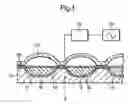
FIG. 1 shows a diagrammatic sectional view of an apparatus for making soup sachets.
EXAMPLE 1Films of starch containing a plasticiser and of thickness 50 μm are used to produce dried soup sachets which can be mixed with hot water to form soup. The sachets are formed by a flat bed process, in which a first sheet 10 of the film is laid on a flat tray 12 in which are forty-eight recesses 14 which acts as moulds. The moulds 14 are evacuated to pull the film 10 into them. Appropriate quantities of dried soup mix 16 are then dispensed into each recess in the film 10. A cover film 18 is then laid across the tray 12.
The tray 12 may then be moved to a second location, at which an upper tray 20 with a matching set of recesses is placed on top of the tray 12, and pressure is applied between them. The upper tray 20 is connected via a matching network 22 to a solid-state radio-frequency generator 24, while the lower tray 12 is connected to earth, preferably to the earth of the matching network 22. The matching network 22 incorporates variable capacitors and servomotors operated such that the impedance presented to the generator 24 remains at a constant value such as 50 Ω. This ensures that, despite changes in the load, excessive voltages are not applied between the electrodes (i.e. the lower tray 12 and the upper tray 20).
The regions of the films 10 and 18 around each recess 14 are hence subjected to dielectric heating and pressure, and the polymeric starch material melts at the interface between the two films 10 and 18. After welding has been performed, the upper tray 20 is removed, and the films 10 and 18 (now bonded together and defining forty-eight sachets) are removed from the lower tray 12. The bonded films around each sachet and then cut to remove the sachets, each with a projecting flange of bonded films.
Such a sachet can simply be dropped into a cup of boiling hot water, and stirred to form soup. The films 10 and 18 are of thickness selected to provide rapid dissolution, although with sufficient strength to be handled. Even where the films are bonded together, they still undergo rapid dissolution.
EXAMPLE 2A film 35 μm thick of thermoplastic starch is formed into a tube 14 cm in diameter by welding opposite edges of a strip together using opposed straight electrodes in a similar manner to that described in relation to the previous example. The tube is held upright, and the bottom is sealed using RF welding between two straight electrodes. A predetermined quantity (e.g. 750 g) of a bread mix is dispensed into the bottom of the tube, and the tube is then sealed above this bread mix. This seal may be performed using two straight electrodes of width 6 mm. The resulting sachet containing bread mix is then cut off from the tube, cutting half way through the seal so as to produce a 3 mm wide flange of bonded film.
The remaining half of the seal now forms the bottom of the tube, and the predetermined quantity of the bread mix is again dispensed into the bottom of the tube, and the tube again sealed above the bread mix, and the resulting sachet cut off. This process is repeated until the complete length of tube has been used up.
In the domestic context, one such sachet can be mixed with water, and baked (if it is a non-yeast mixture) or left to prove, kneaded, left to prove and then baked (if it is a yeast mixture). There is evidently no need to open the sachet, as the sachet will dissolve in the water.
EXAMPLE 3Individual servings of coffee powder are packaged into small sachets formed between rotary dies in which are opposed recesses. Two strips of film, each of thickness 20 μm, are fed between the dies, and the coffee powder is introduced into the sachets as they are formed between the dies. The films are bonded in an analogous way to that described in the previous examples: radio-frequency signals are applied between the two dies, and the signals may be coupled using capacitive couplings to the dies. The individual sachets are then cut out, leaving a projecting flange of bonded films around each sachet.
All three of these examples are situations in which the material that is being packed is likely to leave dusty or powdery deposits on the surfaces of the films to be bonded. Nevertheless good quality bonds are formed despite the presence of any such dusty deposit.
Claims
1. A process for making sachets, the process using at least one thin and flexible film of a water-soluble and edible polymeric material, the film or films being shaped to define a sachet and filled with a food material, and being sealed to form a flange seal by RF welding between opposed electrodes.
2. A process for making sachets, the process using at least one thin and flexible film comprising starch, the film or films being shaped to define a sachet, and being sealed to form a flange seal by RF welding between opposed electrodes.
3. A process for making sachets as claimed in claim 1 wherein the film is no more than 50 μm thick.
4. A process for making sachets as claimed in claim 1 wherein the RF welding uses a solid state RF signal generator and a matching network.
5. Sachets made by a method as claimed in claim 1 containing food material which is intended to be added to water, before being eaten or drunk.
6. Sachets as claimed in claim 5 wherein the food material is intended to be added to hot water.
7. Sachets made by a method as claimed in claim 1 wherein the food material is one which is intended to be added to water before being cooked.
8. Sachets as claimed in claim 5 for domestic use.
9. A process for making sachets as claimed in claim 2 wherein the film is no more than 50 μm thick.
10. A process for making sachets as claimed in claim 2 wherein the RF welding uses a solid state RF signal generator and a matching network.
11. Sachets made by a method as claimed in claim 2 containing food material which is intended to be added to water, before being eaten or drunk.
12. Sachets made by a method as claimed in claim 2 wherein the food material is one which is intended to be added to water before being cooked.
Images & Drawings included:

Sources:
- United States Patent and Trademark Office - verify current appl. status at the USPTO↗
Similar patent applications:
- » 20080000797
Food Sachet or Container - » 20130037016
Heated food sachet - » 20080118685
Preformed packaging sachet, in particular for food products
Recent applications in this class:
- » 20250115418 2025-04-10
EXTRACTION BAG, METHOD FOR MANUFACTURING EXTRACTION BAG, SHEET FOR EXTRACTION BAG, AND METHOD FOR MANUFACTURING SHEET FOR EXTRACTION BAG - » 20240359903 2024-10-31
TEA BAG - » 20220185577 2022-06-16
Brew Bag of Drink Mix - » 20210331857 2021-10-28
Filter Bag - » 20200115148 2020-04-16
Web of cleaning products having a modified internal atmosphere and method of manufacture - » 20200031569 2020-01-30
Preparing Beverages Containing Cannabinoids Using Containers with Polymer Matrices - » 20190092562 2019-03-28
Sealant Imbued Infuser - » 20190047781 2019-02-14
Machine for forming filter bags for infusion products - » 20180127200 2018-05-10
Multi-dose cleaning product and method of manufacture - » 20180029789 2018-02-01
Tea Bag with Accessible Opening